- Via Christa
- » Library
- » Paul Shorey » What Plato Said
What Plato Said
By Paul Shorey
Preface
The text of this book is a résumé of the entire body of the Platonic writings. The endeavor has been to omit no significant ideas and to give with every idea enough of the dramatic setting and the over- and undertones of feeling to forestall the misunderstandings to which abstract analyses and propagandist quotations of Plato are especially liable.
The success of this method others must judge. There are of course some omissions of detail or of repetition of Platonic commonplace, and the paraphrases are not to be treated as construes. But I do not think that I have anywhere appreciably misrepresented Plato’s intended meanings. In any case the marginal references make verification easy. With this understanding the text is submitted to the judgment of professional students. It can be read continuously, however, by others, and will be found intelligible without the aid of either Greek or footnotes. In order not to interfere with this use of the book, the notes have been relegated to the end of the volume. Their object is, first, to relate the dialogues and all the ideas of Plato to one another by cross-references that will exhibit what I have elsewhere called the unity of Plato’s thought, and, second, to interpret the thought by typical—of course not exhaustive—parallels and illustrations ancient and modern.
With the aid of the secretaries and research assistants generously provided by the Rockefeller Foundation I have read and excerpted nearly all the Platonic literature that has appeared since the publication of my Unity of Plato’s Thought some thirty years ago. The plan of this work does not require or permit me to refer to all of it, and enforced economy of space has compelled me to omit much of the material that I expected to use. For notes on the Republic I must refer readers to my translation of the Republic in the Loeb Series, and for all but the indispensable minimum of notes on the Timaeus to my earlier articles on the Timaeus and to a future study of science in Plato.
I have also found it necessary to substitute exact references |vi| to page and line for quotations of the Greek text, and to omit most of the passages which I intended to quote from modern Platonists. Specialists will perhaps perceive that they have been present to my mind. I have still quoted or referred to enough for the purposes of this book, and the bibliographies though not exhaustive are, I hope, sufficient. For aid in the preparation of these bibliographies and similar work I owe special thanks to my research assistant, Mr. Procope Costas, and for indispensable help in preparing the entire volume for the press, to my secretary and research assistant, Miss Stella Lange.
“The unity and consistency of Plato’s thought can be appreciated
only by those who study his writings as a whole.”
Though the unity and consistency of Plato’s thought can be appreciated only by those who study his writings as a whole, the synopsis of any dialogue in this book can be understood without reference to the others. Readers who wish to learn at once Plato’s real opinions (apart from metaphysics) and get some notion of the intelligence and practical good sense of this “dreamer” might turn first to the otherwise less interesting Laws. Hurried reviewers who are willing to treat the book fairly might read the synopses of the Republic, the Gorgias, the Phaedo, and two or three of the minor dialogues. I presume that no questions of “priority” will arise. If they do, I may refer to the dates and content of my previous writings about Plato. In reviewing them I find little to retract or change, though there are some sentences which, quoted apart from the qualifying context, have given rise to misapprehension.
Thanks are due to the editors of the Loeb Series for permission to use my translation of the myth of Er, and to the readers and compositors of the University of Chicago Press for their indefatigable cooperation in our Sisyphean endeavor to extirpate errors from some twenty thousand references.
Paul Shorey
|vii| The few certain facts of the life of Plato and the sources of our knowledge of them have been repeatedly collected. He was born 429-427 BC [In Aegina? Diog. L. III. 3] and died at the age of eighty or eighty-one, about 348/7 BC The ancients celebrated the seventh of Thargelion (May) as his birthday. His father, Ariston, traced his lineage to Codrus and the early kings of Attica and so to Poseidon. His mother, Perictione, sister of Charmides, cousin of Critias, was descended from Dropides, the friend and kinsman of Solon. Glaucon and Adeimantus, chief speakers with Socrates in the Republic, [On Rep. 327 C] were his brothers. Adeimantus was the elder. The Antiphon of the Parmenides, [Parmen. 126 BC, 127 A] son of Pyrilampes, was his half-brother. His name, Plato, is not an uncommon Greek name. It was variously interpreted as referring to the breadth of his shoulders, his brow, his style. He received the education of young Athenians, of aristocratic and well-to-do families. There was a tradition of his successes as an athlete, and of his experiments in verse. Before, some say after, meeting Socrates, he was said to have studied with the Heraclitean Cratylus, whose name is given to one of the dialogues. He is said to have become a disciple of Socrates at the age of twenty, [infra, p. 18] some eight or nine years before Socrates’ death in 399. After the death of Socrates, he withdrew from Athens to Megara and is supposed to have traveled with intermissions for the period of some twelve years. To this period belongs his first Sicilian visit at the court of the elder Dionysius, and the story that he was sold into slavery on the island of Aegina by the Spartan ambassador Pollis, [Zeller 414] at the instigation of Dionysius, [Ritter I. 84] and ransomed by one Anniceris of Cyrene. He may or may not have taught at Athens during these twelve years. But with his return from Sicily, about 386, is associated his purchase of an estate near the precinct of the hero Academus, [infra, p. 29] and the establishment there of the school to which he gave the name Academy. The forty years of residence, |2| teaching, and writing at Athens that followed were interrupted by his two visits to the court of Dionysius the Younger in Syracuse. [367 and 361-360 BC] Otherwise little is known of these forty years of his life, except conjectures about the dates of his writings and a few anecdotes of his relations with contemporaries. [Diog. L. III. 41-43] His will, preserved in Diogenes Laertius, [Chaignet. 73] provides for his relatives. He had perhaps previously endowed the Academy, and appointed his nephew Speusippus as the first head.
A ready writer could fill in the framework thus supplied and construct a modern novelized biography in three chief ways: (1) He could enliven his sketch by all the legends and anecdotes that gathered about Plato’s name in the eight centuries of ancient culture after his death. (2) He could expand the life of Plato as Masson expanded that of Milton, by narrating it “in connection with the history of his time” and describing at large all that Plato must have witnessed, experienced, and felt. (3) On the supposition that the chronology of Plato’s writings [infra, p. 58] is determined and that the mainly spurious letters are genuine, he could attempt to trace the necessary sequence and evolution of Plato’s thought from his Socratic discipleship and the youthful exuberance of his satires on Periclean society to the logical aridity of the so-called dialectical dialogues and the disillusionment of the Laws; and he could exercise the sympathetic historical imagination by divining the occasion and the motive of each one of Plato’s principal works, and the mood or emotional crisis which it expresses. [Ritter, I, 272] The biography of Goethe has made the development of the personality by the life and the contribution of each item of experience to the shaping of the thought and the determination of moods an obsession with scholars. They not only regard this as the first principle of a truly penetrating criticism, but it is the one thing that chiefly interests them. And when it is plausibly done, it undoubtedly attracts the general reading public more than a sober, objective interpretation of the work itself. It is admirably done in Wilamowitz’ Platon, which, if we regard it as a historical novel, is deserving of all praise. But a historical novel it essentially remains. How could Professor Wilamowitz or anyone else possibly know that the Phaedrus represents a happy picnic day to celebrate the completion of the Republic, that Plato never read the extant work of |3| Thucydides but had read the lost writings of Thrasymachus, that Plato could never have written the Laws if he had ever visited Sparta, that the Theaetetus originally contained no dramatic Introduction, [But cf. Berlin Anon. Kom., col. 3] that Plato lectured without manuscript, that Eudoxus was rector of the Academy in Plato’s absence, that Plato began to write a dialogue entitled Thrasymachus but threw it aside and wrote the Gorgias instead and later re-wrote the unfinished Thrasymachus as the first book of the Republic, that Plato brought home from his travels the plan to found a school, that the Laches, Charmides, Euthyphro, and an omitted dialogue on justice were written solely to exhibit Socrates as a type of the cardinal virtues and have no philosophical significance. Divinatory biographers affirm or suggest scores of propositions more fanciful than these, for which there is no evidence, except the feeling of their authors that they are plausible. As Campbell judiciously observes, “The less known cannot throw light on the more known: and Plato’s thoughts are better known to us than the particular incidents of Athenian life which gave occasion to them.”
“The less known cannot throw light on the more known:
and Plato’s thoughts are better known to us than the particular incidents
of Athenian life which gave occasion to them.”–Lewis Campbell
Plato presumably received the normal education of every young Athenian of good family—what he himself characterizes as the education in music and gymnastics [Rep. 376 E] established and justified by a long experience. There can be no better description of this education than the one that Plato puts in the mouth of Protagoras, [Prot. 325 C-326 E] and which in Jowett’s version is copied in all histories of education. They send the child to teachers and enjoin upon them to see to his manners even more than to his reading and music…and when the boy has learned his letters.…they put into his hands the works of great poets which he reads sitting on a bench at school; in these are contained many admonitions and many tales and laudations and encomia and praises of famous men which he is required to learn by heart [cf. Laws 811 A] in order that he may desire to be like them. Then again, the teachers of the lyre.…make their harmonies and rhythms quite familiar to the children’s souls in order that they may be more gentle and harmonious.…for the life of man in every part has need of harmony and rhythm. Then they send them to the master of gymnastics in order that they may not be compelled |4| through bodily weakness to play the coward in war or on any other occasion.
We must not forget, however, that the Athens of Pericles and Aristophanes was itself a liberal education, as Thucydides makes Pericles say, [Thucyd. II. 41] though in a slightly different sense. The vivid, if somewhat florid and fervent, rhetoric of Macaulay may here take the place of a superfluous elaboration of the obvious:
Books, however, were the least part of the education of an Athenian citizen. Let us, for a moment, transport ourselves, in thought, to that glorious city. Let us imagine that we are entering its gates, in the time of its power and glory. A crowd is assembled round a portico. All are gazing with delight at the entablature; for Phidias is putting up the frieze. We turn into another street; a rhapsodist is reciting there: [cf. infra, p. 97] men, women, children are thronging round him: the tears are running down their cheeks: their eyes are fixed: their very breath is still; for he is telling how Priam fell at the feet of Achilles, and kissed those hands,—the terrible,—the murderous,—which had slain so many of his sons. We enter the public place; there is a ring of youths, all leaning forward, with sparkling eyes, and gestures of expectation. Socrates is pitted against the famous atheist from Ionia, and has just brought him to a contradiction in terms. But we are interrupted. The herald is crying—
Room for the Prytanes.
The general assembly is to meet. The people are swarming in on every side. Proclamation is made—who wishes to speak.
There is a shout and a clapping of hands; Pericles is mounting the stand. Then for a play of Sophocles; and away to sup with Aspasia. I know of no modern university which has so excellent a system of education.
A sterner and more disillusionizing education was supplied by the experiences of war and revolution. Born in the earlier years of the Peloponnesian War, [Loeb, Rep. I, pp. xxxvi-xxxviii] the thirty-year life-and-death struggle between the Athenian Empire and the Spartan alliance, Plato was a boy of six or seven at the time of the truce of 421, hopefully styled the “Peace of Nicias,” and he was old enough to begin to take intelligent notice when after six or seven years of intrigues and tortuous diplomacy the conflict was reopened by the consequences of the disastrous adventure of the Sicilian Expedition. [415-413 BC] He witnessed the dismay of Athens and heard the comments of his relatives when in 413 the news arrived of the defeat and destruction of the magnificent Armada, [Thucyd. VI. 32 with VIII. 1. 1] whose spectacular embarkation at the Peiraeus he may have seen two years before. He shared the discomforts and distress caused by the virtual state of siege to which the Spartan occupation of the thirteen miles’ distant fortress of Deceleia subjected the city in |5| the next few years. In 410 or 409 he attained the age of military service and may have entered as an ephebus the cavalry which guarded the immediate environment against Spartan raids.
He may have fought in an undetermined battle of Megara, in which, in the Republic, [Rep. 368 A] he says that his brothers, Glaucon and Adeimantus, distinguished themselves. He may have served in the fleet at the battle of Arginusae, [406 BC] where the Athenian victory was marred by the failure to recover the bodies of the dead in the storm that followed. He probably was a witness of the scene in the Assembly when Socrates as president, as he ironically puts it in the Gorgias, [Gorg. 473 E-474 A] “did not know how to put to vote” the unjust motion to condemn the negligent generals [On Apol. 32 B] by one sweeping decree without allowing them the separate trials that the law prescribed. He shared the alternations of hope and fear in the next few years. [Xen. Hellen. II, 2. 3] He perhaps heard the wail of despair that ran up from the Peiraeus through the long walls to the city when the swift ship of state, sole survivor of the disaster of Aegospotami, arrived with the news that the Spartan fleet might be expected any day. He endured the intolerable humiliation of the destruction of the long walls [404 BC] to the music of Lacedaemonian flutes, and the Spartan occupation. He had probably overheard, as a boy of sixteen, some of the discussions that prepared the way for the short-lived conservative revolution of 411. And as a youth of twenty-three he was doubtless invited to share the counsels of his uncle, Charmides, and his mother’s cousin, Critias, and of the sincere conservatives or unscrupulous oligarchs who were planning with Spartan aid to restore the good old constitution of the fathers and do away with the “acknowledged folly of democracy” [Thucyd. VI. 89. 6] once for all. He had ample opportunity to observe the actual conduct of these reformers, the so-called Thirty, when they were once established in power, and may well have felt what the author of the seventh epistle makes him say, that their executions, confiscations, and arbitrary decrees made the mistakes and the follies of the democracy seem like (an age of) “gold.” [Ep. VII. 324 D 7] He probably had personal knowledge of many of the cases of bribery, confiscation, and judicial murder preserved for us in the orations of Lysias. He must have known all about Socrates’ refusal to obey the command of the Thirty to take part in the unjust seizure of Leon of Salamis, [On Apol. 32 C] and what |6| would have been its consequences if the government of the Thirty had not fallen. He observed with approval the abstention from reprisals of the restored democracy and its proverbial “mildness,” though in the Republic [Rep. 558 A 4; Menex. 243 E] he satirizes that democratic catchword. But the restored democracy condemned Socrates to drink the hemlock on a trumped-up charge of atheism and corruption of youth. Plato may not at this early date have explicitly said, as he did in the Republic, that all existing states are hopelessly corrupt, [Rep. 496 C-E 592 A; Laws 660 C] that the good man, unable to combat and unwilling to share the iniquities of practical politics, can only take refuge from the storm in the shelter of a wall, [Rep. 496 D] and that the only hope for the salvation of society is that philosophers should become rulers [Rep. 473 CD] or rulers philosophers. But these essential convictions must have been taking shape in his mind, and the author of the seventh epistle, whether the aged Plato or another, not inaptly puts their formulation into his mouth many years before the probable date of the Republic.
To complete this conjectural record we may add that he is said to have served in the Corinthian War, [395-387 BC] and may have fought in that earlier battle of Corinth [394 BC] in which it was formerly supposed that the mathematician Theaetetus, in whose honor the dialogue that bears his name was written, was dangerously wounded.
To return to the impressions of his youth, he may or may not have taken note at the time of the cynical argument by which Thucydides says [Thucyd. V. 85-113] that the Athenian generals justified the shameless imperialism of the unprovoked attack upon the little Dorian island of Melos. But the record of their speeches in Thucydides, which he doubtless read when it was published, would remain and blend with all his memories of cynical, war, post-war, and revolutionary ethics; and the concise, pregnant, definitive formulation by the hard-headed historian of the creed of “real politics” and ethical nihilism [On Gorg. 461 C] was probably one of the chief causes of Plato’s lifelong preoccupation with the problem which the persistent propaganda of this creed [Shorey, TAPA, XXIV, 66 ff.] presented to his age as it has to our own.
This feeling was doubtless intensified by the career of the brilliant, versatile, fascinating, unscrupulous Alcibiades, whom he must have known and who, during Plato’s most impressionable |7| years, was the most conspicuous figure in Athenian politics and life, and whose character was a topic of debate in the literature of the first half of the fourth century. Plato’s personal feeling toward him, as toward Aristophanes, was perhaps divided between moral disapproval and instinctive sympathy for the social equal and the congenial intelligence. In spite of the caricature of Socrates in the Clouds, and the calumnies which the supposed discipleship of Alcibiades drew down upon him, both Alcibiades and Aristophanes are portrayed as his familiar friends in the Symposium, and the intoxicated Alcibiades there pronounces [Symp. 215 A-222 B] upon him an encomium which is Plato’s most memorable expression [cf. infra, p. 19] of his own admiration and love.
The mature Plato was obviously, apart from his philosophy and mathematics, a scholar in Emerson’s and Pater’s sense of the word. He had read the books of his contemporaries and predecessors and had assimilated all the culture of his time. We do not know precisely when and how the young Plato supplemented by this wider reading the normal education of a Greek boy in gymnastics, music, and the memorizing of Homer and the lyric poets. And we can only conjecture how much of the knowledge which his riper writings exhibit he brought to his conferences with Socrates and to his first experiments in the writing of dialogues. But we may presume that in alertness of mind and keenness of curiosity he did not fall short of a Lysis, a Charmides, a Menexenus, a Theaetetus. And it is quite idle to dogmatize that he could not have read this or that book or treatise until his attention was called to it by Archytas in Southern Italy, or he discovered it at the court of Dionysius in Sicily.
“Plato’s acquaintance with classical Greek literature needs no proof.
He quotes it more freely and aptly than any other
Greek author except perhaps…Plutarch and Lucian.”
Plato’s acquaintance with classical Greek literature needs no proof. He quotes it more freely and aptly than any other Greek author except perhaps such late writers of bookish “reminiscent” Greek as Plutarch and Lucian. Plato’s art of quotation will be considered in a subsequent study of his style. Here we need only take note of the chief external facts. They are not quite completely but sufficiently recorded in the indexes of Fabricius, Hermann, Jowett, Apelt, and in the article of Howes in the sixth volume of “Harvard Studies.” Plato quotes or alludes to Homer, if we include some latent quotations, about one |8| hundred and twenty times. To Hesiod some twelve times. To Theognis twice. To Simonides twice. To Pindar and Aeschylus about eleven times each. To Sophocles once or twice. To Euripides eleven or twelve times. To Aristophanes explicitly twice.
Of the older Greek lyrists he mentions but does not quote Sappho and Anacreon. He quotes Ibycus and Cydias and likewise Tyrtaeus, Solon, and Archilochus.
He does not explicitly name Herodotus and Thucydides, whom he had certainly read. The extent of his readings in the pre-Socratics and the Sophists will be considered infra and more fully elsewhere.
It is doubtful whether his references to Orphic and Pythagorean literature can be traced to particular poems and treatises, and the entire subject must be discussed elsewhere in connection with Plato’s alleged mysticism and superstition.
His reading in the Greek medical writers [Cf. on Charm. 156 E; Phaedr. 270 C ff.] may also be reserved for a more special discussion of his acquaintance with contemporary and earlier science. Some minor authors are mentioned without explicit quotations from their works. Every well-read student of Greek literature will observe or divine some latent quotations or allusions, and there must be many more which in the loss of so much literature we cannot detect. The number of explicit quotations is no index of the extent of a writer’s influence upon Plato. Epicharmus and Sophron, according to tradition and in the opinion of many modern scholars were Plato’s models in mime and satire, and the relations and analogies between Plato and the in many respects kindled genius of Aristophanes would fill a monograph.
Emerson somewhere says that next to the author of a good thing is he who first quotes it. Much of the quotation throughout literature is secondhand. Montaigne, Burton, and Cudworth have been storehouses of quotations for many generations of French and English writers. Plato’s quotations were repeated by Aristotle, Cicero, Philo, Plutarch, the later Greek rhetoricians of the so-called new Sophistik, and the Christian Fathers to an extent that only a series of special monographs could verify.
The influence of the writers quoted on Plato’s own thought and expression may be divined, but it is not easily described or |9| formulated in a few sentences. As we have said, it is not proportionate to the number of explicit quotations. The most obvious impression that Plato would get from the five hundred years of precedent Greek poetry, and that his reading of Herodotus would confirm, would be a feeling of background, a sense of literary and historic tradition and of the changes and vicissitudes of human life in the long climb out of barbarism into civilization. He is well acquainted with the familiar modern topic of the relativity of law and the mores and he has several shrewd observations that would now be classified under the sciences of anthropology and archaeology. He remarks on the differences between the Ionian life depicted in Homer [Laws 680 C] and that of the Dorians of his own day. There was no fixed Mosaic chronology to check his imagination from ranging at will in the dark backward and abysm of the unknown pre-Homeric ages. [Laws 676 AB] He was, it is true, neither a critical historian nor an archaeologist nor a geologist. But for the purposes of philosophy, ethics, and criticism of life, he had a sufficient conception of the transformations of Greek civilization in the course of its history, of the infinite past of the human race before Greek civilization took shape, of geologic changes that altered the face of Attica, of the possible contributions of Egypt and the Orient to the culture of the Greeks, of lost and forgotten civilizations, of the endless diversity of human customs, tastes, opinions, and institutions, of the cataclysms and cycles of change [Crit. 112] involving corresponding changes in the lot of humanity.
These and similar ideas are most explicit in the Timaeus, the Laws, and the Politicus, but there are sufficient indications of them in the myth attributed to Protagoras [infra, p. 124] in the dialogue so named to justify the assumption that they were always present to Plato’s thought. He could, as we have said, have confirmed them by his reading of Herodotus, and, it has been conjectured, of lost treatises of the Sophists on which Herodotus and Euripides may have drawn.
In the second place, the Greek poets and dramatists were a vast storehouse of what Matthew Arnold set the fashion of calling “poetic criticism of life,” which includes not only the indirect criticism of their portrayal of action and character, but the direct criticism of their “sentences” and their explicit moralizing. |10| The four poetic prophets of the religion of the imaginative reason—Pindar, Simonides, Aeschylus, and Sophocles—had anticipated in some sort the mediation of Matthew Arnold between superstition or fundamentalism and blatant dogmatic irreligion. Their religious and ethical ideas have been discussed in all histories of Greek ethics and religion and in the chapters introductory to Plato in the Histories of Greek philosophy of Zeller and others.
“Plato is infinitely suggestive; his writings teem with ideas.
But it is not the number of his ideas but his way of dealing with ideas
that marks him as the world’s first and greatest real philosopher.”
Succeeding these, Euripides and Aristophanes, whom Plato knew intimately, had made footballs of all ideas with the agility of a Shaw and the omniscience of a Wells. As our notes and subsequent studies will show in greater detail, there are, apart from metaphysical epistemology, few ideas in Plato of which he could not have found at least the suggestion in Herodotus, Pindar, the Attic drama, Thucydides, the Presocratics, and the Sophists. Plato is infinitely suggestive; his writings teem with ideas. But it is not the number of his ideas but his way of dealing with ideas that marks him as the world’s first and greatest real philosopher. There was no lack of ideas in the society into which Plato was born. The very air, as Pater says, was sickly with cast-off speculative atoms. He must have been early acquainted with Anaxagoras, who had been a conspicuous figure at Athens in the previous generation and whose doctrines Socrates in the Apology [26] says can be bought from the orchestra for a drachma at the most, and one of whose books, according to a well-known passage of the Phaedo, [97 BC] was read aloud in Socrates’ hearing in his youth. It would be a plausible assumption that he went on from Anaxagoras to Empedocles, Parmenides, and other Presocratics. [Ar. Met. 987 a 32] He is said to have studied Heraclitus [Lysis 214 A] under Cratylus. The boy Lysis admits that he has met in writers about nature the great principle that like is friendly to like, [Zeller-Nestle I. 968] and it is not probable that the boy Plato had less intellectual curiosity. Nearly all the Presocratics are discussed, mentioned, or alluded to somewhere in Plato’s writings. The conjectural reconstruction of the systems of these thinkers occupies in recent literature a space disproportionate to our real knowledge of them. It is enough for our present purpose to note that Plato could find in them more than the germ of many ideas which are supposed to be distinctively modern. He would find in nearly |11| all of them the general conception of the reduction of this varied world to unity or to a few interchangeable elements. He would find not of course his own explicit antithesis between materialism and spiritualism, but the provocation and stimulus of it in a steadily progressive tendency [infra, pp. 345-46] to conceive true science as the mechanistic explanation of all things and the negation of all divine intervention. He would find also a conception of cycles of change, growth, and decay not differing appreciably for any practical purpose from Herbert Spencer’s cycles of evolution and dissolution, or the fancy of the most recent popularizer of the new physics that the disintegration and resolution of matter into heat may save the universe from the death by “entropy” with which nineteenth-century physics threatened it. And he would find in Anaximander, whom he does not mention, and others a more or less serious poetic and allegorical interpretation of such philosophies in the fancy that individual existence is an injustice for which the individual must pay the penalty by reabsorption into the infinite and indeterminate. An idea which again for practical purposes does not differ appreciably from the reflections in Tennyson’s ancient sage:
For all that laugh, and all that weep
And all that breathe, are one
Slight ripple on the boundless deep
That moves, and all is gone.
More specifically he would discover in Anaximander, Empedocles, and others, not of course the modern scientific doctrine of biological evolution, but its virtual equivalent for philosophical purposes, the hypothesis that life was somehow a spontaneous growth and that nature tried many experiments of which only the fitting survived, that the higher forms of life may have been outgrowths of the lower, that the prolonged infancy of man was a cause of the constitution of the family and so of the development of civilization; that the surface of the earth had been subject to vast changes in the long course of time. Empedocles, Anaxagoras, and the atomists, Leucippus, and Plato’s own contemporary, Democritus, would familiarize his mind with hypotheses about the ultimate constitution of matter which though not based on the mathematics that support and complicate similar speculations today produce substantially the same impression |12| on the lay mind even of a philosopher. From Heraclitus and the Eleatics he would derive the antithesis so vividly described by Pater, and that pervades his own philosophy, between the experience of incessant change and the intellectual and moral necessity of the assumption of stability. In Heraclitus he would find the suggestion and the poetical or epigrammatic formulation of such extremely modern ideas as universal mutability, universal relativity, and yet a reign of law or reason somehow operating in and controlling the eternal process. In the Eleatics [Shorey, AJP. XXI, pp. 205 ff.] he would find the beginnings of that dialectic of being and not-being, the one and the many, the like and the unlike, which he himself in jest or in earnest was to push to the limit in anticipation of all verbal metaphysics [infra pp. 289-90] from the neo-Platonists to the Scholastics and from the Schoolmen to Hegel and his successors. In Anaxagoras and Anaximenes he found [Phaedo 97 C ff.] to him unsatisfactory but suggestive hints of the possibility that mind in some sense of the word developed order out of chaos and introduced purpose into the cosmos. This bare and rapid enumeration is enough for our present purpose of illustrating possible sources of Plato’s thought. His own matured attitude toward these predecessors and the precise relation of his more analytic thought to their conjectures and fancies will be discussed elsewhere in a series of more special studies.
The so-called Sophists are prominent in the dialogues of Plato as they were in the Athens of his youth and of the generation that immediately preceded his. If the youthful Theaetetus is represented as saying [Theaet. 152 A 5] that he had “often read” Protagoras’ dictum that man is the measure of all things, there is no reason for doubting that Plato at twenty had read or had heard of and intended to read that and other published lectures and essays of the Sophists now lost or known to us only in the overingenious endeavors of scholars to reconstruct them as the common sources of Plato and Euripides. The Sophists, like the pre-Socratics, have been written about to excess. The word “Sophist” in casual Athenian usage [Herod. IV. 95] would have included Pythagoras, Socrates, Plato, and Aristotle. It meant learned man, professor, highbrow, “wise guy,” and was complimentary or disparaging according to the taste and culture or purpose of the speaker. In |13| Plato’s Meno, Socrates in speaking [Xen. Mem. I. i. 11] to be understood by an uneducated slave calls geometers “Sophists.” [Meno 85 B 4] The youth Hippocrates, who in the Protagoras [Prot. 310 BC] knocks Socrates up at early dawn to hear the great Sophist Protagoras who has come to Athens, thinks that Sophist means, as its etymology implies, one who knows wise things. In the more technical meaning Sophist designates a group—they could hardly be called a school—of men who from the middle of the fifth century undertook to supply the need of a developing civilization for some form of higher education to supplement the traditional education of Athenian youth in gymnastics and music. The chief Sophists directly portrayed in Plato are Protagoras, who first assumed the designation, who is the chief interlocutor of Socrates in the dialogue that bears his name and whose theories are discussed in the Theaetetus; Gorgias, prominent in the dialogue of that name, and referred to elsewhere; Hippias; and Prodicus.
They are represented as humanizers of knowledge, itinerant university extension professors without a university base. Protagoras taught the correct use of language and the art of dealing with practical affairs personal and political. Gorgias taught the art of persuasive speech and polyphonic prose, set off with the ornaments of a new rhetoric of jingle and antithesis [On Symp. 185 C] and the so-called Gorgian figures. Prodicus taught many things, but specialized on the choice of words and the nice discrimination of synonyms. Hippias, as satirized by Plato, [Hipp. Min. 368 BC] professes omniscience and teaches the elements of the sciences, the art of memory, and other things. To the man in the street Isocrates, who founded a school about 390, was a Sophist who taught the art of rhetoric combined with the discussion of the larger political questions of the day. Plato, who founded his Academy about 386 (?), was a Sophist who emphasized dialectic or argument rather than rhetoric and who insisted on a preparatory study of geometry. Plato and Isocrates distinguished themselves from the Sophists by their stability as heads of established schools, by the comparative modesty of their pretensions, by the continuity and systematic character of their teaching, and somewhat unfairly by the fact that they did not take pay so openly and ostentatiously [On Hipp. Maj. 282 CD] as the itinerant Sophists did. Isocrates boasted [Antid. 205] that his pupils were recognizably stamped with a common discipline and |14| culture. He regarded the art of sober discriminating, fluent, elegant, and adorned but not overornate or florid expression as the chief evidence of true culture, and he thought the discussion of large Hellenic problems the best theme on which to exercise and practice this art. To this teaching as a whole he, perhaps in emulation of Plato, [Passim and Busiris 49] gave the name “philosophy.” What distinguished Plato was the conception of a scientific education as opposed to a superficial drill in the arts of success. This discipline became identified in his mind with the embodiment of ethical idealism in the personality of Socrates and with his utopian plans for reforming the irremediable corruption of fourth-century Greek life and politics.
To return to the Sophists: Most of our knowledge of them is derived from Plato’s dramatic pictures of their conversations with Socrates. Practically everything that is known about them from Plato and other sources is collected in Diels’s fragments of the pre-Socratics. Quotations, excerpts, and endless discussions of the material collected in Diels swell out the enormous and repetitious literature of the subject. The modern unfavorable meaning of the word “Sophist” is derived partly from the literal acceptance and exaggeration of Plato’s satire and partly from Aristotle’s definition of the Sophist [Soph. El. 165 a 22] as one who earns money by a wisdom that is only apparent. The leading Sophists in Plato are teachers of rhetoric and humanizers of knowledge. They are not conscious preachers of immorality or contentious practitioners of captious and unfair argument. One Platonic dialogue, however, the Euthydemus, portrays a different and perhaps later fourth-century type of Sophist, who possibly in imitation or parody of Platonic dialectic substitutes eristic for rhetoric and professes to teach the ability to refute any statement whether true or false. [Euthyd. 275 E; 272 B 1] From this dialogue, from the comedies of Aristophanes, and from the misapprehension of Plato’s real attitude toward the better Sophists was derived the conventional account in nineteenth-century histories of philosophy of the Sophists as the corrupters of youth and the conscious teachers of the immoral art [Apol. 18 B 8] of making the worse, or perhaps rather the weaker, appear the better reason. They were represented [Ar. Clouds 893-94] as systematically drawing the last unsettling conclusions from the skeptical negative and materialistic principles of some of the pre-Socratics. |15| There were of course from time to time scholars who dissented from this conventional rhetoric of denunciation. In Grote’s History of Greece and his four-volume work on Plato, the apology for the Sophists becomes an obsession. He not only recurs to their defense with wearisome insistence on every possible occasion, but he systematically defends their opinions, the opinions put in their mouths by Plato, against Plato himself or the Platonic Socrates. Grote has no difficulty in showing that Plato himself does not regard the Sophists as a school engaged in a systematic propaganda of irreligion and immorality. In spite of touches of irony, Plato treats the greater Sophists, Gorgias and Protagoras, with respect and Prodicus with friendliness. They are no match for Socrates in dialectic. They teach the arts of getting on in the world as it is, and lack Plato’s conception of pure science and his passion for reforming the world. They are the mouthpieces, not the corrupters of public opinion, [Rep. 492 AB ff.] but except from the standpoint of uncompromising idealism in science, ethics, and politics, they are worthy gentlemen and estimable citizens. As against the ordinary citizen’s contempt for all intellectual pursuits, Plato, [Meno 92 B ff.] as we shall see, feels a certain sympathy and fellowship with them. [Phaedr. 275 D] Some of Grote’s successors have carried his argument still further. There is quite a literature of the rehabilitation of individual Sophists [Class. Phil., XVII. (1922), 268-71] and the justification of their opinions. Hippias is celebrated as the representative of integral education, universality of culture, manual training, and I know not what else. Protagoras becomes the honored precursor of all philosophies of relativity and pragmatism. Prodicus’ discrimination of synonyms [On Laches 197 D] is confounded with the dialecticians’ distinction of the meanings of ambiguous words in argument. And Plato is rebuked for satirizing Prodicus’ importunate obtrusion of verbal niceties that are irrelevant to the question under discussion. In general, all the sophisms attributed to the Sophists by Plato or others are treated as conscious propoundings of serious problems of logic or metaphysics, and all reasonings which Plato puts in their mouths are regarded as anticipations of modern liberal and critical philosophies, distorted and misrepresented by the “reactionary” Plato. It is forgotten that we know very little of the Sophists except what Plato tells, and that whatever may have been the suggestiveness |16| of some of their ideas, there is no evidence and no presumption [Unity, p. 68] that any one of them could have systematized and developed such suggestions as plausibly and ingeniously as Plato [infra, p. 56] has done it for them. The resourcefulness of modern philologians, however, has found a way to meet and evade this objection and to reconstruct as well as rehabilitate the philosophy and the lost writings of the Sophists. Ideas that are common to Plato and Euripides, or to either or both of them, and some later Greek essayist or philosopher are supposed to point to a common source in some lost treatise of one of the Sophists. It cannot be denied that this method has given rise to some interesting speculation and reconstructions eagerly accepted by critics who care more for novelty than for sober weighing of the evidence. The irremediable weakness of all such hypotheses is that Plato’s dramatic elaboration of such ideas colors all subsequent accounts of them and is presumably in most cases their sufficient and only source. Coincidences between Plato and Euripides need no other explanation than the fact that Plato could have seen and must have read many of Euripides’ plays, which are as full of “ideas” as Ibsen’s or Shaw’s. It is uncritical to press minor divergences as proof that the common source must have contained more than either imitator taken singly. These generalizations, which are all that we at present need, will be confirmed and illustrated by our analyses of the dialogues in which the Sophists appear and by subsequent more critical discussions of Plato’s philosophy. I do not intend to deny the existence of lost sophistic treatises which may have contained interesting and thought-provoking suggestions for Plato. I am only pointing out how slight is the real evidence for the reconstruction of such treatises and how strong is the presumption that none of them developed any idea with the consistency, the continuity, and the wealth and ingenuity of illustration that mark Plato as unique. Enough has been said here to indicate what the analysis of the Protagoras, Gorgias, Hippias, Euthydemus and Sophist will confirm: the prominent place occupied by the Sophists in the culture of the Athens of Plato’s youth and the position to be assigned to them by the side of Greek poetic literature and the pre-Socratic philosophies among the sources of the incomparable wealth of Plato’s thought. |17|
There is in every man, said an eminent French critic, a poet who dies young. In Plato the poet did not die, but was translated and transfused into the philosopher and the prose artist. We cannot follow the process, for, paradoxically enough, the earliest works exhibit perhaps the least of the poetical imagination. An exception might be made for the images of the bee and the magnet by which the poet is described in the Ion [Ion 534 B, 533 D] which a distinguished scholar fancies is Plato’s farewell to poetry. A passage of “dithyrambic” prose in the Phaedrus [238 D 3] has been still more fancifully taken as evidence that Plato wrote dithyrambs. The anecdote [Diog. L. III. 5] that on meeting Socrates Plato burned his youthful experiments in tragedy with an apt quotation from Homer may symbolize both the revolution in his mind caused by Socrates’ conversation and the lifelong conflict of poetry and philosophy in his soul, which will be studied elsewhere. This conflict is the theme of a pretty modern story, “Plato’s First Play,” by Naomi Mitchison, and of much sentimentality in many modern biographies of Plato.
No fragments remain of Plato’s tragedies, but there are extant about thirty epigrams attributed to Plato in the Greek Anthology . Some of them are obviously of later origin, but there are some very beautiful ones which are not unworthy of Plato and which there is no reason for refusing to attribute to him. Indeed, the rejection of these epigrams by scholars who accept the second, sixth, and thirteenth epistles is discreditable to modern scholarship. The epigram on his friend Dion is quoted below (p. 45). Two little epigrams are addressed to a youth named Aster, if Aster is a proper name:
Thou gazest on the stars, my star; ah, would that I might be
Yon starry skies with thousand eyes that I might gaze on thee.
The other turns on the recent discovery that the morning star and the evening star are one:
Star of the morning shinedst thou ere life was fled,
Star of the evening art thou now among the dead.
Or in Shelley’s version:
Thou wert the morning star among the living
Ere thy fair life had fled.
Now having died thou art as Hesperus giving
New splendour to the dead. |18|
Very lovely is this invitation to a weary wayfarer to rest by a shaded spring, a favorite motive of the anthology:
Here where the breath of the Zephyrs is murmuring soft in the tree-tops,
Here by this whispering pine, stay with thy face to the breeze.
Stay till my waters that babble and blend with the note of the Pan’s-pipe
Lull thee to rest and distill drowsiness over thine eyes. [Cf. Phaedr. 230 B; Laws 761 AB]
The following on Aristophanes, whether genuine or not, may at least remind us of the deep affinity between the two greatest masters of all the resources of the Greek language, and may symbolize the undoubted influence of Aristophanes upon Plato:
The Graces seeking for a shrine whose charm should never cease
Found one that ne’er shall fall, the soul of Aristophanes.
The exquisite epigram on the Euboean captives of the Persian wars buried far from the Hellenic seas in the burning sands of Ecbatana may be associated with the legend of Plato’s eastern travels, or, more critically, with the passages of the Menexenus [240 A-C] and the Laws [698 CD] which testify to his interest in their fate:
Far from the billows Aegean that boom on the shore of Euboea
Dead we lie in the wide waste of Ecbatana’s plain.
Farewell, home of our fathers, Eretria, neighboring Athens,
Fare thee well, farewell, waves of the sea that we loved.
At the age of twenty Plato is said to have met Socrates. [Diog. L. III. 6] He is reported to have “heard” him, to have been his disciple for the remaining seven or eight years of the sage’s life. How much that meant, we can only divine. Plato was an aristocratic young Athenian with many calls upon his time. He was no Boswell. And it is not likely that he followed Socrates about like the impetuous enthusiast Chaerephon who appears as his inseparable companion in the Gorgias [447 B ff.], who asked the oracle if any man was wiser than Socrates, [Apol. 20 E-21 A] and who rushes to greet him when he enters the gymnasium in the Charmides [153 B]; or the “mad” Apollodorus who in the Symposium [173 D], in anticipation of the paradoxes of the Stoics, thinks all men miserable wretches except the one sage, who in the Apology [38 B 7] offers himself with Plato and Crito as joint surety, and who in the last scene of the Phaedo [117 D] by sobbing and wailing breaks down the nerves and the composure of all present except Socrates himself. |19|
Athens was by modern standards a small and gossipy city. Plato would have had abundant opportunity to observe the piquant contrast between the strange uncouth figure, the Silenus-mask [Symp. 215 B, 216 D; Theaet. 143 E], the barefoot [Symp. 220 B; Phaedr. 229 A] begging chatterbox, the butt of Attic comedy,[Symp. 174 A] and the magic of the man’s words [On Apol. 19 BC], his power to deal with his interlocutors as he pleased, [Symp. 213 E 3, 216] and to compel everyone who approached him to render an account of his soul [Theaet. 169 AB, 169 C 5], and view his opinions in the light of reason; his ability to invent Egyptian [Xen. Mem. I. 2. 14] or any other tales; the homely phrase and low images [On Laches 187 E; Phaedr. 275 B] by which he illustrated high thoughts; the quaint evasive oath, “By the dog” [On Hipp, Maj. 288 D]; the irony that enabled him to mingle with the world yet not be of it, [Lysis 211 E, Cratyl. 411 B] the feigned defective memory that introduced the demand for dialectic [Rep. 399 E, 567 D, etc.] in place of the long speeches of rhetoric, [On Ion 539 E] the professed ignorance [Rep. 337 A, Symp. 216 E] that served to provoke joint inquiry [Apol. 38 A; Gorg. 489 DE] and that substituted the plea “I cannot” for the offensive moral superiority of “I will not,” [On Hipp. Min. 373 A] the strange fits of abstraction [On Charm. 158 D; On Phaedo 63 E] which Plato always represents as absorption in consecutive thought, [On Symp. 174 D] the sudden bursts of moral eloquence [On Meno 86 B] that awed his hearers to silence and made them feel his words set off by some superior power. “When I listen to Pericles or any other orator of the day,” says Alcibiades in the Symposium [215 DE], “I say to myself, ‘He is a good speaker,’ and that is all. But when I listen to Socrates, my soul is stirred, my eyes fill with tears and I blush for the trivialities on which I waste my days. There is none like him.”
How much of this idealized portrait is Dichtung and how much is Boswellian Wahrheit we can never know. Plato and Socrates, says Emerson, are the double star which no telescope will ever completely distinguish. That is not quite true. Plato is Plato as Homer is Homer and Shakespeare is Shakespeare, whatever their sources. But the ideal Socrates of the Platonic dialogues and the hypothetical “Socrates of history” do constitute a double star which not even the spectrum analysis of the latest philology can ever resolve. Just how much and what kind of stimulus the genius of Plato required for the embodiment of an ideal which is too good to be quite true we can only conjecture. He had doubtless taken part in such typical gymnasium scenes as he describes in the Charmides, Lysis, and Euthydemus. He had seen Socrates “pitted against the famous Sophist from Ionia” and had heard him reduce his formidable opponent “to |20| a contradiction in terms,” and what the besieged and sorely tried Athens of 407-401 may have lacked he could learn from the conversation of his elders who recalled the glories of the age of Pericles [Parmen. 127 ff.] and remembered the visits of Parmenides, Gorgias, Protagoras, Hippias, and Prodicus and their intellectual jousts in the salon of Callias, [Prot. 311 A] the son of the rich Hipponicus, or elsewhere. He had doubtless, like the young lads in the Laches [On Laches 181 A], heard much talk of Socrates and talked much himself. Like Charmides [Charm. 156 A], he may have seen him and heard him talk in the house of friends or relatives when he was himself a boy, too young to be out in society. [Charm. 154 A 8] Like Theaetetus [Theaet. 148 E], he may have puzzled over reports of the questions that Socrates was in the habit of asking and so learned that wonder [Theaet. 155 D] is the beginning of philosophy. And like the youths to whom Socrates refers in the Apology [Apol. 23 C], after witnessing the discomfiture of experts and dignitaries by the Socratic dialectic, [Rep. 539 B; Phileb. 15 DE; Xen. Mem. I. 2.40] he may have made himself a nuisance by his attempt to imitate that uncomfortable practice.
But we have now only the finished artistic result; we have no notes, memoranda, first drafts, or early letters to tell us how such masterpieces as the Symposium and Phaedo took shape or even how such simpler dramatizations as the Lysis, Laches, and Charmides were composed.
The conversation of Socrates was open to all who cared to listen. [Apol. 33 AB; Euthyph. 3 D; Xen. Mem. 1. 1. 10] He took no pay for his instruction. [Apol. 33 AB; cf. on Hipp. Maj. 282 CD] He did not, like the Sophists, undertake “to educate men.” [On Apol. 19 D; Prot. 318 E] He did not teach rhetoric like Gorgias or astronomy, music, mathematics, and the art of memory like Hippias [Hipp. Min. 368 D] or the niceties of language like Prodicus [On Laches 197 D] or the management of a house or of the state like Protagoras. [Prot. 318E-19A] He did not profess to know or to teach anything. [Apol. 20 C; Laches 200 E] “I,” he says in the Theaetetus [Theaet. 150 BC], “am like the midwife, whose function I exercise on the minds of others, myself sterile. The common reproach that I ask questions but declare no opinions of my own is true. [Rep. 337 A; Cleitophon passim] I am not wise or cunning and there is no discovery or invention that is the offspring of my soul.” [Theaet. 150 D 2; Symp. 209 D] His only knowledge was his own ignorance. [Apol. 23 AB] His only art was his ability to put questions that searched men’s souls, that stimulated and encouraged the shy thoughts of youth, that exposed the pretensions of those who on the strength of some special knack or gift claimed to possess universal or the supreme knowledge. [Rep. 598 C-E] His function, he |21| said, was that of the physician who purged men’s minds of their false conceits; [Soph. 230 B-D; Gorg. 521 E-2 B; On Prot. 313 E] it was that of the midwife who assisted in the delivery of their true and more considered thought. [Theaet. 150 B ff.]
He himself had no body of doctrine to impart. The opinions put into his mouth by Xenophon are obviously—except in so far as they reproduce commonplaces of Plato’s minor dialogues—for the most part either Xenophon’s own opinions or those which Xenophon thought would best defend the name and fame of Socrates against the charges which his judges believed and against the calumniators of his memory after his death. The Platonic Socrates is no less obviously the embodiment of Plato’s ideal of the philosopher and the mouthpiece of Plato’s ideas. If Socrates had possessed a body of doctrines and a system of philosophy with principles coherent and interdependent, he would have set it down in writing. The of late much-advertised speculation that everything in Plato’s writings up to and including the Republic is Socratic involves the monstrous paradox that the world’s most affluent and precise thinker never wrote a line and that the writer who gave consummate expression to all this wealth of thought formulated no ideas of his own till he was past the age of fifty. So gross a psychological improbability cannot be taken seriously. And in spite of the courtesy of British and the timidity of American reviewers, it has not been taken seriously by many competent scholars.
In respect of method, both Xenophon and Plato seem to confirm Aristotle’s statement [Ar. Met. 1078 b 27] that there are two things that may be rightly attributed to Socrates, inductive argument and the quest for definitions. [Class. Phil., VI, 362] The only substantive philosophical dogmas that we can with any assurance attribute to Socrates are the principles that no man willingly does wrong, that virtue is knowledge, and that all wrongdoing and error are ignorance, to which we may possibly add that it is better to suffer injustice than to inflict it. [On Laws 860 D; Xen. Mem. III. 9. 4; Gorg. 473] These Socratic principles the piety of Plato always reaffirmed, [Cf. infra, p. 640] but always as consciously edifying paradoxes subject to interpretation and explanation. How far such interpretations are covert criticisms of Socrates or mark the stages of Plato’s gradual emancipation from Socratic limitations are questions which in the lack of evidence may be left to the speculations of over-ingenious philologists. |22|
But Socrates did not mean for Plato or for the nine subsequent centuries of Graeco-Roman civilization a system of philosophy to be learned, elaborated, developed, corrected, and improved. He was a personality, a method, an inspiration, a moral and religious ideal. Our moral imagination is unable to conceive what more he could have been than the Socrates of the Apology, Crito Gorgias, Symposium, and Phaedo, and he may have been infinitely less. For that Socrates is plainly a creation of Platonic philosophy and idealizing Platonic art of which we can affirm only that the inspiration at least must have been authentic. In all things, says Epictetus (I summarize), the life of Socrates is proposed to us as a pattern. When tempted or in doubt, ask yourself what Socrates would have done. Death is no evil, or else Socrates would have thought it so. He called death and exile and poverty hobgoblins to frighten children. [Gorg. 473 D] He jested in the courtroom, scorned to abase himself [Apol. 35 BC] before his judges, and refused to renounce his mission on the promise that they would spare him. He would not permit his wealthy friend to bribe his jailer [Crito 45-46 ff.] and free him in violation of the laws of his city. He wrote hymns of praise in prison [Phaedo 60 D, 61 B] and had a kind word for his executioner at the last. [Phaedo 11O D 4] For he was strong in the faith that no harm can come to a good man in life or death. [Apol. 30 CD, 41 D] And he had taught himself to obey one law only, [Crito 46 B 5] the oracle of the higher reason in his breast. This kept him true to the mission which the gods had assigned him, despite the threats of tyrants and the clamors of the mob. This kept him true to himself while seemingly all things to all men in all the relations of life. This taught him how to deal wisely and kindly [Cf.on Phaedo 60 A] with a scolding wife like Xanthippe, a licentious pupil like Alcibiades, and enabled him always to bring back to his home the countenance of unruffled serenity with which he went forth into the world. Thinking the untested life not worth living [Apol. 38 A 5] and deeming it his special mission to help others to test their lives, he was perpetually discussing right and wrong and the moral properties and scope of things. But no debate ever agitated his spirit or drew from him an unkind word. He needed no witness [Gorg. 471 E, 475 E] to the truth of his words save the soul of the listener convinced in his own despite. For he knew that every soul is unwillingly deprived of truth. [Soph. 228 C 7] Two sayings of his will arm us for every occasion of life and death: |23| “O Crito, if this be God’s will so be it” [Crito 43 D 7]; and again, “Anytus and Meletus have power to slay me—but they cannot do me harm.” [Apol. 30 CD]
This Epictetan religion of Socrates could be reconstructed in almost identical terms [Cic. Tusc. I. 29-30, III. 15; De. or. I. 54] from Cicero or Seneca or Plutarch. It is all derived from that fourfold Platonic gospel of Socrates, the Gorgias, the Apology, the Crito, and the Phaedo. If history means the living past, this Platonic idealization is the Socrates of history, the only Socrates that we shall ever know.
“If history means the living past, this Platonic idealization is the Socrates of history, the only Socrates that we shall ever know.”
Plato’s discipleship with Socrates, if we may call it that, lasted some seven years. The story of Socrates’ condemnation by a popular court of the restored democracy in 399, [cf. infra, pp. 461-62 ff.] of his ironical defense before the jury, of his refusal to evade the laws of his country by allowing his friends to bribe his jailer, of his last day in prison spent in philosophic discourse, is told once for all in the Platonic dialogues, Apology, Crito, and Phaedo. As Matthew Arnold says of Renan’s attempt to re-write the story of the Gospels, whoever thinks to tell it better is self-deluded. And in this case there are, apart from a few easily explained divergences in Xenophon, no contradictory versions of the story to be harmonized. That Plato has idealized it is probable. Flow much, we can never know. The precise causes of Socrates’ condemnation by a democratic jury must also remain a matter of opinion and fruitless controversy. The restored democracy was very sensitive, and he may have incurred suspicion because of his association with Alcibiades, Critias and Charmides, [Xen. Mem. 1. 2. 12; Isoc. Busir. 5] members of the revolutionary government of the Thirty, his praises of the Spartan discipline, [Crito 52 E 5] his satire, if it is his and not Plato’s, [Rep. 562-65] of democratic license. His unsettlement of youthful minds [Xen. Mem. I. 2. 9] by his questioning of established institutions and ideas may have irritated some worthy citizens, and genuinely alarmed others. Plato himself deprecates the premature engagement of youth [Rep. 537 E ff., 539 BC] in such debate, though he is careful to give an edifying tone to Socrates’ own discussions with young and ingenuous minds. [Lysis 207D ff.; Euthyd. 277D-282D, 288D-290D] The attacks of Aristophanes in his Clouds are apparently motived by something more than the desire to raise a laugh at a figure that lent itself to caricature. Socrates was for him a symbol of the new thought of the radical enlightenment, [Frogs 1491] as |24| Euripides of its new literature. In this sense Socrates was a corrupter of youth. As Browning puts it:
Sokrates? No, but that pernicious seed
Of sophists whereby hopeful youth is taught
To jabber argument, chop logic, pore
On sun and moon and worship whirligig.
The charge of irreligion would not be taken seriously by the majority, but may well have turned the vote of some “fundamentalist” jurors. But it was probably, if Plato’s account is to be trusted, the defiant attitude of Socrates [Apol. 36 D, 38 A] himself that made the small majority of the jury feel that he had left them no choice but to assess the death penalty. Even then we may surmise that they did not expect the sentence to be executed, but believed that Socrates’ influential friends would contrive his escape. [Cf. Crito 44 BC ff., 45 A-C; Phaedo 98 C-99 A] No such refinements of historic doubt can remove Socrates from the pedestal where Plato’s genius has placed him as the first great martyr of intellectual liberty, [On Apol. 42] or as modern radicals naively repeat, the victim of the aristocrats. That his death marked a crisis in Plato’s life and in his feelings toward Athens and Athenian politics is in itself probable and is confirmed by the tone of the Apology, Crito, and Phaedo; the temper of the Gorgias; and hints in the Meno and Republic. [Infra, p. 146] But the attempt to determine by this general probability the order and specific motives of either Plato’s writings or his travels belongs to the domain of conjectural and sentimental biography.
The Phaedo [59 B 10] states that Plato was absent on the last day because of illness [78 A]. Socrates himself there advises the discouraged disciples to travel in search of wisdom. And this, the cessation of the Peloponnesian War, and perhaps a desire to escape from Athens sufficiently account for the assignment of Plato’s Wanderjahre to the years immediately following Socrates’ death.
The story of Plato’s travels [Diog. L. III. 6-7] is a blend of the anecdotes of a contradictory biographical tradition and our still more uncertain inferences from allusions in his writings. [Zeller 402-14, Ritter I. 86 ff. 93] Plato was a scholar like Virgil and an experiencing nature like Shakespeare. We know that he assimilated all the poetic and philosophic culture of the Hellenic past in “a synthesis without parallel before or |25| since.” Athens was the commercial centre as well as the intellectual focus of the Greek world. We may assume that Plato knew what Athens knew of Greece, greater Greece, and the encompassing barbarians, whether he learned it from Herodotus and other reading, from travelers’ tales in the Peiraeus, or from autopsy. But there is nothing in his writings that enables us to say with assurance, “Plato must have seen this.” Shakespeare probably never saw the Italy of Romeo and Juliet and the Merchant of Venice, Taine (Life and Letters [trans.], p. 85) boasts that he had accurately described the Landes without having seen them, Prescott never saw Mexico, and there is no lack of examples of modern novelists who lay their scenes convincingly in lands that they have never visited, of stay-at-home poets like Wordsworth and Tennyson, who described tropical scenery more vividly than eyewitnesses, of historians who, like Grote, construct a sufficient topography of their battles and campaigns from books and maps, of eloquent Ruskins who have never seen Greece but have written the most inspiring, if not always the most exact, descriptions of Arcadia and the vale of Sparta beneath the mighty bar of Taӱgetus.
We know that Plato visited Southern Italy and Sicily more than once. It is possible, perhaps probable, that he traveled in Egypt, and it is permissible to fancy that he was acquainted with some of the Greek cities of the coast of Asia Minor. But we cannot affirm that he “must” have seen swarms of Egyptian children learning mathematics in their games [Laws 819 A ff.] by the method of play, that he must have learned the story of King Thamous and the most ingenious inventor of letters Theuth [Phaedr. 274 C ff.] at Aegyptian Thebes, that he must have observed on Egyptian soil the hieratic permanence of Egyptian art which gave him confidence to assert in his Laws [Laws 656 D-657 A, 799 AB] that conservative legislation can stem the tides of change and fashion and fix once for all the types of a wholesome and beneficent art, or that he could not, unless he had himself gazed with awe on the Sphinx and the pyramids, represent his Egyptian priest as saying to Solon, [Tim. 22 B] “O Solon, Solon, you Greeks are always children!” He could well have written these words under the inspiration of Herodotus’ [Herod. II. 143] malicious story of how when Hecataeus boasted [Theaet. 174 E 6] of an ancestry of sixteen generations, the Egyptian priest conducted him to an |26| imposing temple and showed him the array of 345 colossal statues, the succession of his noble ancestors from father to son. We cannot say that he must have observed with his own eyes the shepherding of huge flocks or herds of geese in Thessaly, [Polit. 264 C] that he must have seen the entire city drunk at Tarentum, [Laws 637 B] that he must have heard with his own ears the patter and the contentiousness of the energumens of the most advanced sect of Heraclitean flowing philosophers at Ephesus, [Theaet. 174 E 6] that he must have measured with his own feet the long summer’s day walk from Cnossus in Crete to the cave of Idaean Zeus, [Laws 625 AB] that he must have heard on the spot the legend of human sacrifice in the mountains of Arcadia. [Rep. 565 D] Still less can we infer from far-fetched and fanciful analogies with oriental pantheisms and mysticisms that he must have inbibed the wisdom of the East at its Persian or Indian sources.
After the death of Socrates the tradition [Diog. L. III. 6] represents Plato as retiring to Megara, the home of the founders of the so-called Megarian school of philosophy, Terpsion and Euclides, who are mentioned as among those present on the last day. [Phaedo 59 C] The Megarian school [infra, p. 449] was especially noted for the ingenuity of the logical puzzles or fallacies which it propounded if it did not solve.
The “Buckle-bewitched” fancy of the brilliant but over-ingenious historian of Greek philosophy, Gomperz, attributes this tendency to the climate and situation of Megara. He quaintly says (II, 172-73): “It was the natural destiny of Megara.…to become the centre of the opposition to the systems which came from Athens. Thus the spirit of criticism throve and grew strong in the bracing highland air of the little Dorian settlement.”
The Theaetetus[cf. infra, p. 572] which, though its main purpose is psychological, presents many specimens of subtle or dramatically sophistic dialectical reasoning, is thought to be dedicated to Euclides by its dramatic Introduction, in which Euclides, who has been escorting the wounded Theaetetus on his way to Athens, explains to Terpsion how he collected and wrote down the notes of the Socratic conversation which constitutes the main body of the dialogue. Though the Theaetetus as a whole has much more human and literary interest, it is associated with the comparatively |27| arid dialectical dialogues, the Sophist, Politicus, and Parmenides, by the passages of similarly hairsplitting reasoning which it contains. And so Stallbaum and many nineteenth-century successors assign this group of dialectical dialogues to a supposed “Megarian period” of Plato’s philosophy in which the problems of logic and mere metaphysics engaged his attention before, [infra, pp. 590 ff.] and not, as now believed, after the composition of the Republic and the other artistic masterpieces of Plato’s middle period. This psychologically improbable fancy is now, as we shall see, generally rejected, though Zeller believed in it with reservations till the end. From the point of view of the unity of Plato’s thought, it makes little difference, since the Republic and the Phaedrus contain more than the germs of the ideas [infra, p. 604] and methods of these dialectical dialogues. [Unity, p. 51, n. 377] It is probable enough that Plato withdrew to Megara for a time and that his thought was influenced by his friend and co-disciple Euclides, but the extent of the influence and the attempt to rehabilitate the Megarians by the discovery of profound philosophical meanings in the puzzles attributed to them are pure conjecture, unsupported by convincing evidence.
We have no means of knowing how long or continuously Plato resided in Megara or how much of the next eleven or twelve years was occupied by his travels. It is of course more than improbable that he was continuously absent from Athens so long. And his service in the Corinthian War [Ritter I. 82] would be explicit evidence of the contrary.
If we assume Plato’s Wanderjahre to have ended with his return to Athens at the age of forty in 387 (?), there remain for him forty years of life, twenty of full maturity and twenty of approaching or realized old age, which may be thought of as beginning with his second visit to Syracuse in 367. During the first twenty years we may suppose him to have watched with the mixed feelings of a conservative yet an idealistic reformer [Loeb, Rep. I, p. xxxix] the decadent politics of declining Athens; to have established and developed his school, the so-called Academy; to have composed the Republic and many of his artistic masterpieces such as the Phaedo, the Symposium, the Phaedrus, and the Theaetetus; to have entered into relations with or formed his opinions of |28| his chief literary contemporaries, Democritus, Lysias, Isocrates Xenophon, and Antisthenes.
Plato’s political philosophy will be deduced from or associated with the Republic, the Politicus, and the Laws in the notes to those dialogues and in subsequent technical studies. The passionate, unsparing condemnations of the Gorgias, [infra, p. 146] whose date is doubtful, express the still unappeased embitterment of Plato’s soul by the judicial murder of Socrates, and also the reaction against fifth-century Periclean imperialism which Plato shared with most thoughtful conservative Athenians [infra, p. 146] of the first half of the fourth century and which even the orators who point with pride to “yon Propylaea” and “that Parthenon” acknowledge by the admission of decadence.
The Menexenus (ca. 386) has been fancifully interpreted as an apology for the condemnation of Athenian statesmen in the Gorgias and an attempt to conciliate public opinion by the returned traveler who was about to open a school and who was ambitious of taking an active part in Athenian politics. That philosophical and educational romance, the Republic, [Loeb, Rep. p. xxxi ff.] has been still more fantastically taken as a program or platform of reform and a bid for leadership.
We do not know the precise date of the establishment of the Academy or the stages by which it developed into a more or less formal school of philosophy and science. We can only divine Plato’s motives, and it is idle to conjecture which, if any, of the dialogues was intended to prepare public opinion for it or to set forth its “program.”
The mythical hero, Academus, gave his name to a precinct and grove where at the date of Aristophanes’ Clouds [Clouds 1005] there seems to have been a gymnasium, or at least an exercising ground dedicated according to one tradition by Cimon. Aristophanes’ contrast of the wholesome youths who raced with their temperate fellows [Clouds 1008] where the plane tree whispers to the elm, instead ofwasting their time and growing pale in vain disputations with Socrates, is a singular contradiction of the associations which Plato’s name has linked for all time with the olive groves of Academe. Plato was said to have taught in the Academy as Antisthenes in the Cynosarges and Aristotle in the |29| Lyceum. After his return from Sicily he is said to have bought a garden in the immediate neighborhood and in course of time to have equipped it with a mouseion or shrine of the Muses, and walks and seats for open-air lectures and discussions. This is the Academy that has given its name to the long line of similar institutions derived from it. It passed by inheritance to Plato’s successor in the school, Speusippus, and is reported as still belonging to the school nine centuries later. By what legal process, if any, this continuity was maintained or renewed we can only conjecture. The property may have been consecrated as a temple of the Muses, and the possession of a thiasos or sacred association for their worship. The tradition tells of gifts for its support in Plato’s lifetime and after, and of endowments and of lectureships there. Cicero [De fin. V. I] relates that after hearing a lecture of Antiochus in the morning at the Ptolemaeum, he, with his brother and his friend Atticus, walked out in the afternoon to the Academy, which was deserted at that time of day. In the solitude they could almost fancy that they saw Plato himself in his adjoining garden. The place, three quarters of a mile northwest of Athens, is in its barrenness disappointing to the modern tourist who brings to it memories of the beautiful lines of Aristophanes and the glorious chorus of Sophocles [Oed. Col. 668 ff.] in praise of the neighboring precinct of Colonus. Modern imagination has tried to reconstruct the life of the Academy with the aid of the later tradition, one or two references in the Platonic letters, and the idealization of the fellowship of the philosophic life in the Platonic dialogues. We hear of lectures, conversation, banquets, and rules to regulate their conviviality.
The tradition of the neo-Platonists, the Christian Fathers, and the preachers of the Middle Ages that Plato intentionally chose an unhealthy and malarial site for his school in order to subdue the flesh is not appreciably more fantastic than those combinations of modern philology which from the fact that the worship of Prometheus was established in the neighborhood infer that Prometheus in the Protagoras [320 D ff.] and throughout the dialogues is a symbol of the Academy in its conflicts with the cynic Hercules represented by the Cynosarges.
Somewhat less fanciful are the better-founded conjectures of modern scholarship with regard to the nature of Plato’s teaching |30| in the Academy. Like the “school” of Isocrates, [infra, pp. 32 ff.] established perhaps a year or two earlier, the Academy met in a more serious and systematic way than the itinerant Sophists the need for a higher education supplementary to the old Greek education in music and gymnastics. We may suppose the method and content of Plato’s teaching to have borne some resemblance to the education which he prescribes for the guardians of his Republic. [Rep. 521 C ff.] There would be the preparatory discipline of the mathematical sciences [Rep. 532 ff.] to be followed up and crowned by serious discussion and debate of ethical, political, social, and metaphysical problems. There were doubtless many modifications in practice of the rigidity of such a scheme. In spite of Plato’s disparagement of the written word, [On Phaedr. 275 D ff.] there was of course much use of books and of contemporary and earlier literature. We hear of occasional lectures by Plato himself, [Zeller 439] and of one especially famous lecture on the “Good.” We may fancy, if we please, that there were disputations conducted in the manner of the Middle Ages with Plato or some elder student as presiding arbiter. We may see in the Parmenides a lesson in logic [infra, p. 587] devised by Plato to exercise the wit of his students. The Philebus [infra, p. 317] may be interpreted as the report of a discussion guided by Plato to determine a controversy that had arisen within the school. We may conjecture that the interest in methods of classification [infra, pp. 294-95] displayed in the Sophist and the Politicus found its reflection in the exercises of the school. We may presume that more advanced students like Aristotle and visitors like Eudoxus took part in the instruction and were regarded by Plato rather as associates in the common pursuit of truth than as mere pupils. From this point of view the Academy of Plato’s later years may be and has been described as the earliest organization of scientific research and anticipation of the schools of Alexandria. This view of the Academy has in turn been denied by scholars who are hostile to Plato or who desire to maintain a different thesis. Plato, they argue, was a dreamer, an idealist, and a metaphysician and never attained to Aristotle’s serious interest in scientific fact and experiment. The poetic fancies of the Timaeus and the applications of dichotomy to biological classification [infra, p. 296] in the Sophist and the anecdotes of his direction of the mathematical studies of specialists are too slight a basis, they say, to establish the claim of the Academy |31| to rank as a real school of science. Lack of evidence and the uncertainty of the definition of science make this controversy a logomachy. Plato was undoubtedly an artist and a thinker rather than technically a student of science. But the education which he prescribed for his guardians, [Rep. 521 ff.] his interest in mathematics, and the studies which such a work as the Timaeus must have required are, as we shall see, a sufficient refutation of the prejudice that proclaims Plato the antithesis of the scientific spirit.
As head of the Academy and author of a succession of brilliant works Plato must have been known to and have known the leading writers and thinkers of his day. But our knowledge of his relations with them is limited to what we can infer from their and his works. The allusions to the Academy in the fragments of the Middle and New Comedy have repeatedly been collected. Democritus, perhaps the most eminent of Plato’s contemporaries, and the antithesis of Plato in philosophy, is never mentioned by Plato, and is extant only in fragments. The relation of Plato’s thought to his is glanced at in the notes on the Timaeus [infra, p. 617] and will be more fully considered elsewhere. At this point a few words on Lysias, Isocrates, Xenophon, and Antisthenes will suffice.
The orator Lysias had few general ideas, and could interest Plato only as a prominent writer and teacher during the years of Plato’s early manhood. Later critics commended the purity of his Attic prose style, its freedom from overbold metaphor and unusual or poetical words, and contrasted unfavorably in these respects the exuberance of the dithyrambic or mimetic passages of Plato who drew on all the resources of the Greek language and employed any word or turn of phrase that suited his purpose and mood. They also took note of Lysias’ portrayal of character, his ēthos as they termed it, his skill in putting into the mouth of his clients speeches that would seem to an Athenian jury the natural expression of their personalities and honest sentiments. Quite fanciful is the modern notion that Plato’s banishment of mimetic poetry from his ideal state would require him in consistency to disapprove of Lysias on this account. But |32| he was entirely willing to parody and satirize the Philistine banality and poverty of ideas of the successful lawyer and popular logograph. This he does in the Phaedrus, probably written soon after Lysias’ death, and later than the first book of the Republic of which the scene is laid in the house of Lysias’ more philosophic brother, Polemarchus. Plow he does this is told in our analysis of the Phaedrus. [infra, pp. 199, 204] Possible references to epideictic writings of “Lysias” may be found in the Menexenus. [Infra, pp. 185 ff.]
Isocrates was about ten years Plato’s senior and survived him nearly ten years. They lived side by side in fourth-century Athens as rival writers and heads of competing schools for fifty or forty years. They of course knew each other, and of course their writings contain many passages which may be interpreted as allusions, plagiarisms, or coincidences. They were both moderate conservatives, both idealized the good old times and the constitution of the Fathers. [Peace 41 ff., 75 ff.; Areop. 24 ff., 29 ff., 39-49; Areop 15 ff.] But Plato left their date undefined, while Isocrates assigned them to the generation that repelled the Persian invasion. [Areop. 46-51; Antid. 285-87] Both deplored and satirized the relaxed morals of the younger generation. [Infra, p. 346] But Plato associated this degeneracy with far-reaching philosophies of negation. [On Gorg. 461 C; Gorg. 517 B ff., 519 A] Both deprecated an imperialistic policy for Athens, but Isocrates late in life and perhaps mainly in imitation of Plato. [Phil. 146, Peace 37, 94-101, 79 ff.] Both were severe critics of the new radical democracy, the “last” democracy of Aristotle, and its politicians. But Isocrates dates it from the post-Periclean demagogues, [Peace 121-31] while Plato traces licentious politics and imperialism in principle back to Pericles and Themistocles, [Gorg. 503 C ff., 515 D ff., 517 B] though he admits that they were abler men than the politicians of his day. Both while celebrating the superiority of the quiet intellectual life were perhaps a little envious of the prominence and power of the practical politician and the successful teacher of rhetoric and writer for the courts. [Rep. 496 D; On Apol. 31 C ff.; Isoc. Phil. 81-82, Antid. 150-51, Panath. 9-11] And both apologized explicitly or by implication for their own abstinence from practical affairs and their political incapacity. Both praised something that they called “philosophy” above all other pursuits, and deplored its low estimate among the majority of mankind. [Isoc. passim and Bus. 49 with Rep. 495 CD] Both had a doctrine of what they called “ideas.” [Isoc. Nic. 30, 44, Hel. 54, Soph. 16, and passim] Both contrasted unfavorably the methods, the professions, and the teachings of the Sophists [Isoc. Soph. passim] with their own, and tried to show that the subjects taught in their schools tended to develop the |33| whole man, both mind and character. Both were led by their criticism of contemporary life and politics to general reflections on the philosophy and history of Greek civilization. Both agree in the expression of many commonplaces of Greek reflection and current ideas of their own day. To sum it up in modern and Victorian terms, we may conceive Isocrates as a less learned and less robust Macaulay who neglected the paragraph and wrote long sentences; Plato is a combination of Arnold, Mill, Martineau, Renan, and Ruskin—plus genius. These resemblances are of course subject to many qualifications. When two say the same thing it is not the same. Plato speaks from a higher intellectual and, whatever his personal character may have been, a more ideal moral plane than Isocrates, who even when he tries to edify perpetually slips back into the moral vulgarity of a consciously utilitarian ethics. Plato’s genius, his imagination, the intensity of his ethical feeling, his philosophic range and subtlety, impart a distinctly different tone and coloring even to commonplaces. And his philosophy proper is quite beyond Isocrates’ reach and comprehension. For this very reason Isocrates perhaps appeals to those minds that, from Aristotle down, find Plato’s idealism overstrained and his metaphysics unmeaning or oversubtle.
Isocrates never mentions Plato by name. There is one explicit mention of Isocrates by Plato, the well-known passage at the end of the Phaedrus. There, after recommending to Lysias the lesson of the dialogue, that philosophy and dialectics are indispensable to the thinker and the writer, Socrates is summoned by Phaedrus to give him a message for the fair Isocrates. Socrates, who is here, as Cicero points out, [Orator 13. (42)] the mouthpiece of Plato’s orator vaticinium ex eventu, declares that Isocrates surpasses Lysias in natural talent and in a certain nobility of temper, and that as time goes on he will make other writers in the field which now occupies him look like children and may even be led by some divine impulse to higher things, for there is a certain philosophy in his nature. At the dramatic date of the dialogue when Socrates could converse with Phaedrus, Isocrates was still young. But if the Phaedrus, as now generally believed, was written about 380 or somewhat later, Isocrates was fifty-six or fifty-seven years old when Plato condescendingly, or, it might be |34| argued, ironically, bade him cultivate his philosophic vein, perhaps in compliment to his recently published Panegyricus, perhaps with a touch of satire on his use of “philosophy,” perhaps in partial agreement with his “Against the Sophists.” However that may be, Cicero regards the passage as an expression of Plato’s sincere and definitive opinion. Cicero had learned from Isocrates many of the secrets of the ample, slightly florid, periodic, rhythmic prose which he transmitted to Bossuet and Burke and the modern world. And in reply to those critics of his day who, calling themselves Atticists, disparaged this style as Asiatic, Cicero replies [Orator i3. (42)] in a formula which he elsewhere uses [Tusc. I. 17. (39)] of Plato’s faith in immortality, that if his admiration for Isocrates is an error he prefers to err with Plato.
There is in fact no evidence of hostility between Plato and Isocrates, but there is an anecdote [Diog. L. III. 8] of a friendly conversation on poetry at a villa outside of Athens. But friends or friendly acquaintances who on the whole respect one another may be provoked by rivalry or fundamental differences of opinion and taste to occasional sharp expressions of dissent. In the Gorgias [Gorg. 463 A 7] Plato wittily parodies [Unity, n. 596] a phrase that occurs in Isocrates’ tract against the Sophists, [Soph. 17] and the Phaedrus [Phaedr. 276 A 7-8] itself parodies a sentence of the Panegyricus, [Paneg. 8] and a notable sentence of the Republic [Rep. 498 DE] clothes a reply to skeptical critics of the ideal state in the dress of an elaborate parody of the Gorgian and Isocratean figures of parisosis and paromoiosis. Such pinpricks need not imply enmity. Matthew Arnold was not an enemy of Frederick Harrison when he parodied with damnable iteration Harrison’s demand for a philosophy with principles coherent and interdependent. He did not hate Herbert Spencer when he wittily juxtaposed Spencer’s ponderous definition of evolution with Homer’s little saying, “wide is the range of words,” or the Bishop Wilberforce when he held up to incessant ridicule a proposal to do something for the Godhead of the Eternal Son. More serious is the apparent retort to Isocratean criticism at the end of the Euthydemus. [Infra, pp. 167-68] There an anonymous critic whose description and language suggest Isocrates, and who had censured Socrates for deigning to debate with eristic mountebanks, is condescendingly approved as one who does the best he can but is bidden to know his place. He is an ineffective intermediate and compromise between |35| the philosopher and the statesman and inferior to both. If there was ever any bitterness of feeling between Isocrates and Plato, it probably found lodgment in the inferior or, at any rate, more commonplace mind of Isocrates, who may have felt the condescensions of Plato hard to bear, and may have been envious of the immense prestige won by such masterpieces as the Gorgias and the Republic. At any rate, there are many passages in Isocrates’ writings which may be used to illustrate his personal feelings about his greater rival, without pressing them into the service of any theory of the chronology of the Platonic dialogues. The more obvious of these passages have repeatedly been collected. But there are many others which bring out the essential opposition between two competing ideas of culture and methods of the higher education. There are also many passages in Isocrates that point to imitation or even plagiarism of Plato, and a few passages in Plato that seem to mark him as the debtor.
Xenophon’s lifetime nearly coincided with Plato’s. But their experience of life had little in common except Xenophon’s boyhood and his brief contact with Socrates. They were contrasted types: Plato the lifelong student, teacher, thinker, artist, idealist; Xenophon the military adventurer in youth and later the exile, the country-gentleman, the hunter, the keeper of dogs and horses, the amateur author. His voluminous writings contain the suggestion at least of most ideas, apart from metaphysics and technical science, that were current in Socratic circles and the literature of Plato’s time. He was, like Isocrates, a commonplace but receptive mind, and like Isocrates may serve to illustrate the level of fourth-century thought and the ideas current among Plato’s more intelligent contemporaries. He cannot have influenced Plato much, if any. He probably wrote nothing before the year 394, at which time Plato had written probably most of the minor dialogues and perhaps the Protagoras, Meno, and Gorgias. His Symposium is obviously later than Plato’s and imitates it. He often repeats, and in his Memorabilia and his Oeconomicus he puts into the mouth of Socrates his own favorite ideas about discipline, hardihood, industry, thrift, temperance, the management of men, knowing how to rule and be ruled, and |36| other commonplaces of Greek ethics, politics, and the conduct of life. His Cyropaedia, or Education and Life of the Perfect King, concluding with a discourse on the immortality of the soul, was written long after the publication of the Republic and the Phaedo. Plato’s remark in the Laws [Laws 694 C] that Cyrus had no real education may be a contemptuous allusion to it. Plato may have looked the book over. He would have found there little to his purpose except some imitations of himself and a convenient compendium of many of Xenophon’s favorite notions: about the art of ruling men, the art of winning friends by complaisance, gifts, tact, and other devices; the art of the general, tactics and strategy, how to make war support itself, how to win the favor of the soldiers by tact, good humor, democratic fellowship, timely jests, sharing their labors and hardships and remembering their names; how to enforce discipline and obedience, how to stimulate their zeal by praise, rivalry, contests, and prizes; the necessity of keeping fit by exercise, training, hunting, working off your food, and remembering that hunger is the best sauce.
As a fellow-disciple of Socrates he must have been known to Plato. His Socratic writings borrow much from Plato. He could not possibly have remembered after so many years of campaigning the conversations of Socrates that he claims to have heard and to report verbatim. It can even be argued that he was wholly dependent upon the dialogues of Plato and other Socratics for all ideas except a few of his own favorite commonplaces that he puts in the mouth of Socrates.
There is then no evidence, and there is little probability that Plato was influenced by Xenophon. He may at the most have got some ideas from Xenophon about the Persian Empire [cf. Alc. 1. 121 A ff.] and have looked over Hellenica I in preparation for the writing of the Menexenus. The fact that neither Plato nor Xenophon mentions the other led to the surmise in antiquity that they were unfriendly and modern monographs have been written on their supposed enmity. There is no evidence for this unless we accept as such the rivalry implied in their both having written Socratic discourses and apologies for Socrates, and both having described a symposium in which Socrates took part.
There is an enormous and still growing literature about the |37| Memorabilia, the Apology, and the Symposium of Xenophon, [cf. infra, p. 462] both in themselves and in their relation to Socrates and Plato. The genuineness of the Xenophontic Apology and the authenticity of its report of Socrates’ words have been fruitful themes of controversy. The Memorabilia has been analyzed into parts supposed to have been written at different dates, and its sources in contemporary or earlier literature have been traced or conjectured. It has been combined with arbitrarily selected passages from the Platonic dialogues to construct a body of doctrine and a system of philosophy for Socrates. All the resources of philology have been brought to bear on the question of priority between the two symposia. Some of the parallels between the writings of Xenophon and the minor or Socratic dialogues of Plato will be cited in the notes on the analyses of those dialogues. All we need to observe here is the broad probability that Xenophon, not Plato, was the borrower.
A fourth notable contemporary of Plato, Antisthenes, disciple of Socrates and Gorgias, author of many lost works, prominent character in Xenophon’s Symposium, teacher or Guru of Diogenes, and so in a sense founder of the so-called Cynic school, was undoubtedly a significant personage in the intellectual life of fourth-century Athens. We know him only from a few anecdotes and the 129 fragments collected in Mullach. Some scholars think of him as the founder of the Cynic school; others say Diogenes was the founder; and still others deny that there was any Cynic philosophy. In any case it is uncritical to generalize guesses about Antisthenes’ ideas by referring them to the “Cynics.” He was of humble parentage and the antithesis in temperament and education of the aristocratic, cultured, refined, and polished Plato. In spite of his studies with Gorgias, he seems to have been a somewhat rough, crude, uncultured personage of the type that the Greeks characterized as “late learners,” and is perhaps so designated by Plato. [On Crat. 433 B] His philosophy seems to have been in the main practical ethics with occasional subordinate or polemical excursions into other fields as logic or Homeric criticism. He represents one aspect of the Platonic Socrates, the frugality, the simple life, the hardiness, the endurance, the contempt for pleasure as such, the self-control. He is |38| the embodiment of the Socrates who went barefoot in the snow, [Symp. 220 B] of the Socrates of the anecdote [Cic. Tusc. V. 32] who said at the fair, “How many things there are here that I do not want.” Many sayings in this sense are attributed to him. And some of the fragments anticipate the later Stoic and Cynic exaggerations [infra, p. 139] of the ethical paradoxes of the Gorgias. The extreme instance in this kind [Diog. L. VI. 3] is “Let me be mad rather than feel pleasure.” In Xenophon’s Symposium [Xen. Symp. III. 8, IV. 34 ff.] he divides the rôle of the jester with Philippos [Xen. Symp. V] and proves himself the most rich because he has the fewest wants as Socrates proves himself most handsome because his snub nose is more useful than a Grecian nose. This again is only an exaggeration and humorous development of a Platonic thought, the prayer of Socrates at the close of the Phaedrus: “May I deem the wise man the rich man.” Later moralists, as Epictetus and Dio Chrysostomos, quote from him many edifying sentiments. There is no evidence of any systematic ethical philosophy. Epictetus quotes him as approving the study of logic as a protection against fallacy. The statement that the beginning of education is the apprehension of the meanings of words [cf. infra, p. 161] may refer to the preacher’s development or “improvement” of all the implications of moral terms and not to the synonyms of a Prodicus or the definitions of a Socrates. A number of works are attributed to him whose titles seem to refer to questions of logic and dialectic. These works were apparently negative and eristic. Aristotle [Ar. Met. 1043 b 24-26] explicitly attributes to him the doctrine that definitions are mere verbiage, that contradiction is impossible, and that only identical propositions are allowable. [Ar. Met. 1024 632] Everything has its own proper logos; a speaker either assigns that logos to a thing or he does not. If he does, there can be no error, if he does not, he is not speaking of the thing. There is no meeting of minds and there can be no contradiction. Plato has two or three contemptuous references to late learners [infra, p. 570] who have grown old repeating these and similar doctrines with great satisfaction to themselves. Grote, as is his wont, assumes that Antisthenes propounded these paradoxes in order to draw attention to his investigation of serious philosophical problems. He offers no evidence and there is none. There are, as was to be expected, a few ideas in the fragments which coincide with thoughts of Plato. There are several propositions and paradoxes which Plato |39| emphatically contradicts and to which he may or may not intend a reference. On this basis ingenious scholars, beginning with Schleiermacher, have erected a vast fabric of hypotheses about the relations of Plato and Antisthenes. He is reported to have been angered by Plato’s refutation of him in an argument and to have retaliated by a scurrilous and obscenely punning pamphlet. There are other anecdotes that testify to a distaste which we might have assumed from the nature of the two men. Plato is supposed to have retaliated more subtly by covert disparaging allusions. Dümmler and Joël and their emulators discover such allusions and aliases for Antisthenes throughout the dialogues. Antisthenes is of course the late learner of the Sophist [Soph. 251 B] who grows old affirming that predication is impossible. He is the sophistical mountebank of the Euthydemus. He is the wild etymologist of the Cratylus. He is the Thracian Abigail of Theaetetus 174 ff. He is the author of the interpretation of the myth of Prometheus and Heracles parodied in the myth of Plato’s Protagoras. He is the Protagoras of the Protagoras who, like Antisthenes, opposes hedonism. [Infra, p. 131] Antisthenes was apparently a nominalist. He admitted the qualified object but not the quality. Or, as a famous anecdote puts it, he could see a man but could not see humanity. Here again Grote apologizes for him, [Zeller 295] and even compares him with Aristotle, since both rejected the Platonic ideas. But, as I shall repeatedly argue throughout this work, the Platonic theory of ideas is both a metaphysical doctrine and a practical affirmation of the necessity of accepting and using general and abstract ideas and words. The nominalism that rejects the metaphysical doctrine is one thing, and the cruder nominalism of the half-educated in every age that rejects the indispensable service to thought of abstraction and generalization is another. Plato is opposed to nominalism in both senses, [infra, p. 574] but he is aware of the distinction. A similar consideration disposes of all attempted rehabilitations of Antisthenes’ other logical paradoxes. They repudiate indispensable conventions and adjustments and compromises of language and thought, and it cannot be shown [Unity, p. 50] that they were intended to raise serious philosophical issues, though any fallacy or quip may be said to do that. It is not strange that Plato grew impatient of them and spoke harshly of those who used them to block the path of constructive |40| thought. Antisthenes was also a student of rhetoric. He is reputed to have said, “If a boy is destined to live with gods, teach him philosophy; if with men, rhetoric.” We have not enough evidence to determine the nature of the rhetoric that he professed or taught. The extant fragments show that he himself was endowed with a homely wit and could point his ideas and his gibes with vivid imagery and caustic epigram.
At this point the story of Plato’s life becomes inextricably involved with the question of the genuineness of the some thirteen epistles attributed to him, which in themselves, or through Plutarch, Cicero, and others who used them as unimpeachable historical authorities, are almost the only source of our knowledge of the details of his three visits to Sicily. Antiquity accepted as genuine most of these letters, and the use of them by Cicero and Plutarch left little doubt in the minds of the majority of Renaissance scholars, though some were skeptical. In the Platonic literature of the sixteenth, seventeenth, and eighteenth centuries they are generally quoted as of equal authority with the dialogues. The not entirely critical Latin dissertation of Karsten in the year 1864 discredited them with a majority of philologians for a generation or two. Jowett takes their spuriousness for granted. Chaignet writing in 1871 says (p. 99) that the most that can be said in their favor is to attribute to Plato’s nephew Speusippos those that exhibit an intimate knowledge of the philosopher’s life. Zeller [p. 483] to the end rejected them all. The historian Grote, however, characteristically accepted them all, and thirty or forty years later the historian Edward Meyer through his writings and the dissertations of his pupils or followers was chiefly influential in bringing about the present prevailing fashion which accepts most of them. There is no a priori presumption sufficiently strong to decide the question. In post-Platonic and post-Aristotelian literature there are abundant examples of false attributions and forgeries, both of letters and of treatises or dialogues. Arguments based on slight historical discrepancies can always be explained away. Plato’s memory may have failed, or again the forger may have been well informed. Apparent quotations from the dialogues may be taken as an old man’s repetition of himself, or as the reminiscences of an imitator. |41| The argument that no equal number of pages in the undisputed writings contain so few memorable sentences would be challenged. Many critics profess deep admiration for the letters. The differences in style between the longer letters and Plato’s later works are not sufficient to carry absolute conviction to most minds. The argument that the general tone of the letters is incompatible with what we infer from Plato’s undisputed writings was probably his own moral character, and certainly his moral tact, seems conclusive to the present writer, as will be more fully explained later. [Infra, pp. 53-54] But with many critics it carries no weight whatever. As far back as 1427, Leonardo Bruni, in the Preface to his translation of the epistles, finds their chief value in the fact that they present to us a more real and at the same time a nobler Plato than the ironical and satirical author of feigning dialogues. Even Bruni, however, rejects, as unworthy of Plato, the thirteenth epistle, which deals in a rather picayunish spirit with the petty details of Plato’s business relations with Dionysius. Most recent critics dismiss this objection and all arguments based on the moral tone of the epistles, with the remark that it is natural to expect that a man’s formal writings will display his character and his ideals in a more favorable light than his personal letters do.
The inclination of historians to accept the letters is understandable. They need them in their business. The letters help to fill out with picturesque detail the bare outline of Plato’s life. Our acceptance or rejection of some of them, however, is not of so great historical importance as it might seem. The two longer and better letters, if not written by Plato himself, must have been composed not later than a generation or two after his death by some Platonist who must have had access to the facts and who was himself so steeped in Plato’s later writings that he could plausibly imitate their style. The disbeliever, then, in the Platonic authorship of these letters may still use them in his account of the Sicilian episode in Plato’s life. He will merely express himself with a little more doubt about some of the details, and will reject all statements, most frequent in the inferior letters, that attribute to Plato superstition, [infra, p. 607] the affectation of a secret and mysterious doctrine, and expressions of crude vanity |42| or moral pettiness that are incompatible with what we otherwise know of his character, perhaps, and certainly of his taste.
The story of the letters then, with some added touches or confirmations from Plutarch’s Life of Lion and other sources, is substantially this: In 388, in the course of his travels in Southern Italy, Plato visited the court of Dionysius the Elder, tyrant of Syracuse, where he made the acquaintance of Dion, brother-in-law of Dionysius, who was very quick of apprehension, and who accepted his teaching and his ideals more eagerly and enthusiastically than any young man whom he had ever met. The long seventh epistle, ostensibly written in 353, after the death of Dion, opens with a plausible description of Plato’s state of mind at the time of this visit. [324 C ff.] He had been, as was to be expected of a young man of his position and family, ambitious of a political career. But the conduct of his own relatives, friends, and acquaintances in the revolutions of 411 and 404-403 disgusted him with the oligarchical party. [324 B, 325 A 5] And the judicial murder of Socrates [325 BC] by the restored democracy ripened the conviction that all existing governments were irremediably corrupt [325 CD] and that nothing less than a miracle, [326 A] or, as he was later to put it in his Republic, [326 AB] a regimen of philosophers, could redeem them. [Cf. Rep. 473 CD] Coming to Syracuse with these ideas, he was displeased [326 B] with the life of the court and the proverbially luxurious Sicilian table, but laid the foundation [327 A] for all that was to come by his conversion of Dion. [327 B 6] On the death of Dionysius the Elder and the succession of Dionysius the Younger twenty years later, Plato, then sixty years old and widely known as a writer and head of the Academy, received an importunate request [327 DE] from Dion urging him to come to Syracuse and not to let slip a unique opportunity of realizing some of the social and political ideals which they shared. [327 D 5, 328 A 7]
The epistle supplements this appeal by Plato’s own reflections on the opportunity for realizing his ideals [328 C, 328 C, 328 C 2] by persuading one man only, and of escaping the taunt that he is a theorist and man of words incapable of action. [328 C 6] This stream of thought issues in a prosopopoeia of Dion, [328 D 3 ff.] after supposed defeat and exile, bitterly reproaching Plato for having failed him. [329 B 8] Plato found the court of Syracuse split into factions. [329 C] At the end of four months Dion was exiled on a charge of treason, and his friends, including Plato, trembled for their lives. Dionysius, however, reassured |43| Plato and urged him to remain. He feared the discredit [329 D] of an open breach with the great philosopher and was genuinely attracted to him though bitterly jealous [329 D 5] of his preference for Dion. [330 AB] But he was not willing to make the sacrifices demanded by the philosophic life. [330 B]
At this point the story is interrupted by an essay on the principles of sound and helpful counsel, and its application in the counsels which Plato has to offer to the friends and kin of Dion in the crisis after Dion’s death. The narrative, [338 AB] resumed in 337 E, tells of Plato’s departure from Syracuse and Dionysius’ promise to summon him to Syracuse again and restore Dion as soon as a petty war in which he was engaged should leave him leisure. [338 B] In fact, the story continues, Dionysius sent the invitation to Plato, but requested Dion to wait another year. [338 C 4] Plato pleaded his age and the non-fulfillment of the agreement, but Dion was insistent, [338 E 5] reports of Dionysius’ devotion to philosophy [338 B 4-5] came pouring in from Sicily, and finally he received an urgent letter from Dionysius [339 B 5] himself with further assurances about Dion [339 A 1] and confirmatory letters [340 A 7] from Archytas and other friends of Plato in Tarentum. So with many misgivings [342-45 C] Plato embarked on his third Sicilian journey. But before the letter narrates it, another digression explains the manner of testing a genuine philosophic vocation and goes on to expound the reasons why the deepest truths of philosophy can never be set forth in writing as Dionysius pretended to have done. The narrative is resumed in 345 C, and, whether authentic or not, is a good story. Dionysius did not fulfil his agreements, but on various pretexts withheld a large part of Dion’s revenues. [345 CD] In his eagerness to detain the reluctant Plato, however, he proposed a compromise. [345 DE] Dion should receive his revenues on condition [346 B ff.] of continuing to reside in the Peloponnesus and giving Plato and his friends as sureties that he would not plot to overthrow Dionysius. But Plato is to remain in Syracuse [346 C 7] a year before the agreement is put into effect. A long parole intérieure of Plato balances the alternatives open to him, [346 E] and terminates in a decision to remain. [347 C] So he stayed on like a bird ever yearning to fly from its cage, [cf. Phaedr. D 7] while Dionysius was ever contriving to shoo him back. A revolt of the mercenaries [348 AB] against the reduction of |44| their pay was attributed by Dionysius to the machinations of Heraclides, who fled to avoid arrest. Theodotes, his connexion, consulted Plato, whom he found walking “in the garden” where Dionysius had assigned to him a residence. [348 CD] In the presence of Plato, Dionysius was persuaded to promise that if Theodotes agreed to produce Heraclides to answer the charges, he should be immune in the interim, and that if after his apology it seemed good to banish him from Sicily, he should depart unharmed and in possession of his property. [348 E] But on the next day Theodotes and Eurybios came to Plato with the news that the soldiers were in pursuit of Heraclides. They hurried to Dionysius; Plato, speaking for them, tells Dionysius that they are afraid lest harm come to Heraclides in violation of yesterday’s agreements. Dionysius, red with wrath, looks Plato full in the eye with the vultus instantis tyranni [349 B 5] and replies: “With you I made no agreement big or little.” “Nay, but you did though,” Plato answers, and turns away and departs. Thereafter Heraclides escaped [349 C] into the Carthaginian dominion, and Dionysius, on the pretext that the women are to celebrate a religious festival in the garden, sends Plato away [349 CD] from the protection of the Acropolis to live with one Archedemus outside. There he is warned by Athenians among Dionysius’ petty officers [350 A] that he is regarded with hostility by the soldiers and is in danger of his life. In these straits Plato sends word to Archytas [350 AB] and his friends in Tarentum who dispatch a vessel ostensibly with an embassy and induce Dionysius to allow Plato to depart with money for the journey, but with no further assurance about the property of Dion. Plato arrives at Olympia in the summer of 360, [350 BC] and reports the state of affairs to Dion, whom he finds there in attendance on the festival. To Dion’s request that Plato and his friends join him in his preparations to avenge himself upon Dionysius, Plato replies that the friends are free to do as they please, but that he himself must be excused. [350 D] He is too old for further strife, but he will offer his mediation when they are ready to receive it. By Dion’s own request [350 C 6 ff.] he has shared the hearth and table of Dionysius, who, in spite of apparently good grounds for suspicion, spared his life. So spoke Plato, [350 D 5] hating the whole business of his Sicilian wanderings and misfortunes. The letter concludes with a page of pathetic and almost eloquent |45| moral reflections on the fate of Dion, quite Platonic in tone, but hopelessly confused in style, if the text is not corrupt, and perhaps overloaded with Platonic reminiscences. [350 E] The beginning of all the mischief was the confiscation of Dion’s property. Without that Plato could have held him down and prevented all the disasters that followed. Dion’s failure and death cannot be imputed to any fault of his own [351 D 5]. The best pilot may fail to weather a hurricane. Dion was aware of the baseness of many of his associates. [351 DE] But he could not be expected to foresee the height of folly, turpitude, and sensuality that they achieved, and so he tripped and fell, enveloping Sicily in infinite sorrow. Whether Plato wrote these words or not they irresistibly recall the beautiful epigram which we may, if we please, believe that he did write (for who else could have written it?) at the age of seventy-five.
For Hecuba and Troy the fates had spun
The web of tears and sorrow from their birth;
For thee, O Dion, when the prize was won
They spilt our cup of hope upon the earth.
A people mourns now where thou liest low,
Dion, whose love once set my soul aglow.
The antithesis between Hecuba and Dion may appear strained. But Hecuba and the Trojan women were for the readers of Euripides’ plays the embodiments of the sharpest pathos, and Plato, whose hopes of a philosophical government of Sicily were blighted by Dion’s death, feels with Hamlet, What’s Hecuba that we should weep for her? “What would they do had they the motive and the cue for passion that I have?” The love of which the aged Plato speaks is that so eloquently described in the Symposium.
And if he meets in conjunction with loveliness of form a beautiful, generous and gentle soul, he embraces both at once and immediately undertakes to educate the object of his love, and is inspired with an overflowing persuasion to declare what is virtue and what he ought to be who would attain to its possession and what are the duties which it exacts. [Symp. 209 B, Shelley’s version]
The story of Dion’s ill-starred expedition is related in every history of Greece. The details do not concern the biographer of Plato. The other epistles add only a few doubtful features to the narrative that we have extracted from the seventh. Some |46| slight apparent contradictions with the facts stated in the seventh epistle have exercised the ingenuity of historians in the controversy about the genuineness of the epistles. They interest us only in so far as they afford occasion for divergent judgments of Plato’s mind and character.
The second epistle is intended to illustrate the interval between the second and third, or last, Sicilian journeys. [310 C ff.] It begins with a sophistic disquisition on the companionships of kings and men of letters, [311 D 6] and the need that Plato and Dionysius should manage their friendship rightly if they have any concern for their reputation with posterity. [312 D 2] It goes on to speak of a “sphere” and of Plato’s secret doctrines [314 B 7] which are not to be committed to writing, [314 D] and concludes with a few commissions and recommendations. To show the difficulty of arguing with anyone who believes it to be a genuine composition of the author of the Republic and Symposium, I will translate partly the passage about the sphere. [312 D ff.]
The sphere is not right. But Archedemus will explain it when he arrives. And also he must most certainly expound to you this other matter which is more precious and divine and concerning which you sent to me, being at a loss. For you say, according to his report, that the nature of the primary or the first has not been sufficiently explained to you. I must accordingly declare it to you in riddles in order that, if this letter come to be lost in the furrows of land or sea, he who reads it may not understand. For thus the matter stands. Concerning the king of all, all things are, and for his sake are all things, and that is the cause of all things good and fair. But secondarily, with regard to secondary things and thirdly with regard to tertiary. Now the soul of man is fain to learn of them of what sort they are, looking to the things that are akin to it, of which none is adequate. So now concerning the king and the things whereof I spoke it is nothing of the kind—but after this the soul says—but what, pray, does it say? [Or: Of what sort, pray?] This, son of Dionysius and Doris, is the question which is the cause of all our trouble. Or rather, the travail and yearning of the bowels in the soul concerning it. [Rep. 490 B 7 (Loeb)] From which if a man shall not be relieved he never, never will attain to the real truth. Now you told me “in the garden” under the laurels that you yourself had hit upon this thought and that it was your discovery. And I replied that if this seemed to you so you would have relieved me of a long discussion. [Cf. on Euthyd. 282 C] But that I had never yet met with anyone else who had discovered it, but my great labor had been on this point. Now you perhaps heard it from somebody or maybe you were impelled in this direction by grace divine. [Meno 99 E, Meno 98 A; Theaet. 144 A 8; Gorg. 482 A 7] And then, supposing that you had the proofs securely, you did not bind and make them fast, but they dart capriciously now this way, now that, to whatever strikes your fancy, but it is nothing of the kind.
|47| This is a fair rendering of the passage, and I fear there is, after all, little common ground of argument between those who immediately recognize that Plato could never have written this mystical theosophic drivel and those who think that they can force an edifying and Platonic interpretation upon it. If we must interpret, the sphere might be an allusion to an orrery or sphere intended to demonstrate the Platonic system of the heavens, such as was actually constructed by Theon of Smyrna, but probably did not exist in Plato’s time. The nature of the first, the second, and the third cannot be, as has been sometimes thought, a reference to the Christian Trinity. There are phrases in the Timaeus or Philebus out of which the sentence could have been patched up, and there are various ways in which a metaphysical trinity of ultimate principles can be discovered in Plato, e.g., the demiourgos, the soul, the world, or the idea, the copy, and the material in which the copy is impressed. But it is really naive to interpret a passage of this sort further or to insist on one’s guesses as to what the author of the mystification may have had in mind.
The third epistle is supposed to be written in 358–357, not long before Dion’s expedition, and is partly intended to defend Plato against the charge of participation in Dion’s preparations to overthrow the tyranny. It begins with a sophistical disquisition on the preferability of εὖ πράττειν, “farewell,” to “rejoice,” as the salutation in a letter, and goes on to discuss Dionysius’ complaint that Plato, after discouraging his intention to colonize Sicilian towns and give constitutional government to Syracuse, now co-operates with Dion [315 DE] in his endeavor to overthrow Dionysius by his own policies. Plato answers first that he did not meddle with Dionysius’ political affairs [316 A] further than to give some moderate attention to the proemia [Cf. on Laws 718 CD] of the laws. The letter then recites the story [316 C ff.] of the second Sicilian journey mainly in agreement with and probably in imitation of the seventh epistle. The letter adds in conclusion [319 A ff.] a conversation “in the garden,” in which Dionysius asks Plato if he remembers advising him to liberate Syracuse and colonize Sicilian towns. “Was that all?” asks Plato. [319 B 5] “You bade me first be educated myself.” “Well remembered,” says Plato, [319 C 3] like Socrates in the dialogues. “Educated in geometry, was it not?” sneered Dionysius; |48| to which Plato deigned no reply at the time, but now in the letter protests against the slander. The whole is so confusedly expressed that it is impossible to say whether the condition precedent of beneficent political action was to be geometry or that moral education in self-control [Gorg. 491 D] which the Socrates of the Gorgias also requires of those who would govern others. The passage is generally taken to mean that Plato, applying the principles of his Republic, insisted on geometry first, and on this, assuming the genuineness of the letter, Grote and others base the charge that Plato showed himself an impractical and pedantic idealist when confronted with the realities of practical politics. The letter is obviously spurious. And all opinions about the wisdom or unwisdom displayed by Plato in his relations with Dionysius are pure guesswork or deductions from the predetermined estimate of Plato’s character and judgment.
The fourth letter, also an obvious forgery, is an exhortation addressed to Dion after the overthrow of Dionysius and before the death of Heraclides. [Symp. 178 D 1-2] It reminds him in the words of the Symposium of his ambition for honorable eminence, bids him excel all others as men surpass children, warns him that the eyes of all the world are upon him and he must make “back numbers” of the famous Lycurgus and Cyrus, and closes with a recommendation to cultivate affability since self-will dwells with solitude.
The fifth epistle is a sophistic trifle recommending the counsels of one Euphraeus to Perdiccas of Macedonia. It concludes with what seems a confused apology for Plato’s refusal to take part in the irremediably corrupt politics of Athens. [cf. Rep. 496 C-E]
The sixth epistle, of uncertain but late date, addressed to Erastus and Coriscus, pupils of Plato, and to Hermeias, the tyrant of Atarneus, with whom Aristotle later took refugees too silly for serious consideration. It has been made the basis of many historical conjectures and fancies.
The ninth and twelfth epistles are vague, unimportant sophistic exercises addressed to Archytas. The tenth is a single moralizing sentence addressed to Aristodorus, a friend of Dion. The eleventh, vague and verbose, and impossible for Plato, is a reply to an unknown Leodamas who asks advice about the founding of a colony. He is put off with evasions, commonplaces, and |49| reminiscences of the Republic and Laws. The thirteenth epistle, addressed to Dionysius, supposedly in the interval between the second and third Sicilian visits, is concerned with personal and pecuniary affairs and commissions. Its spuriousness is placed beyond rational debate by the warning addressed to Dionysius [363 B 5] that sincerely meant letters of recommendation from Plato will begin with God and less serious with gods. This perhaps makes it superfluous to discuss the trivial details with which the forger has tried to give verisimilitude to his invention and display his knowledge of Athenian life. Plato compliments Dionysius [360 AB] on a bon mot addressed to a “beauty” of the court. He had not only profited, he said, by Plato’s presence, but had begun to improve from the moment he sent for him. [360 B] In furtherance of their mutual profit, Plato sends him some of his “Pythagoreia,” in which some scholars find the Timaeus, and of his “Divisions,” a supposed reference to the Sophist and Politicus. The messenger is one Helicon, whom Plato recommends to Archytas and Dionysius, a pupil of Eudoxus and of a pupil of Isocrates. Plato commends him [360 D] as confidently as is possible when one is speaking of man, not a base but a changeable animal. [Epist. VII. 335 E 4; Laws 804 B 9] Plato sends presents and reports on his execution of various commissions. He sends a statue of Apollo [361 A] by a promising artist, Leochares, twelve jars of sweet wine and two of honey for the boys. He returned to Athens too late for the stored figs, and the myrtle berries spoiled. He took the money for these expenditures [361 B] from Leptines. In general he will make use of the funds [361 C] of Dionysius and other friends as moderately as possible. He has daughters of his nieces to dower, [361 E] and if his mother should die her tomb would run to ten minae. And he may have other public expenditures for which he will draw on Dionysius’ funds [362 B] in the hands of Leptines, whom he commends for his zeal. In general he will keep Dionysius informed of the disposition of everyone at Athens toward him. An obscure and vague paragraph about Dion is followed by an account of presents [362 B] which Plato will bestow on the brother of Timotheus and on the daughters of Cebes, whom Dionysius “knows tolerably well” [363 A 5] as an interlocutor with Simmias in the Socratic discussion about the soul. [Phaedo 60 C ff.] The letter concludes with short paragraphs about four or five other |50| personages and greetings to his companion “ball players.” [363 D 1] The style as well as the matter mark it as undoubtedly spurious.
Epistles I, XIV, XV, XVI, XVII, XVIII, being universally recognized as spurious, and insignificant, there remains for consideration only the eighth epistle. The eighth, like the seventh, purports to be written after the death of Dion, and likewise is addressed to his kinsmen and friends. It offers them with some variations and additions in detail, substantially the same conciliatory and moral admonitions and counsels of moderation as the seventh, but unaccompanied by the personal narrative and the digression on philosophy that attends them there. There is little to take exception to in the Greek, and the main reason for doubting its genuineness is the excess and the abruptness of the Platonic reminiscences. The moral eloquence of the last three pages might almost be an extract from the Laws.
Of the last twenty years of Plato’s life we know nothing. Philologians try to fill the gap by conjectures as to the composition and sequence of his later dialogues, by the continuing influence on his mind and mood of his Sicilian experiences, by his personal relations with Aristotle and other pupils, by a few doubtful anecdotes about his relations with his contemporaries—and by the more than doubtful Aristotelian and post-Aristotelian tradition of the latest phase of his philosophy. That his mental powers remained unimpaired is sufficiently evidenced by the vast work of the Laws, [infra, pp. 355 ff.] whose solidity of content and moral eloquence almost reconcile the thoughtful reader to the failure of the earlier literary charm. It exhibits perhaps, as was inevitable, a few senile traits of repetition and self-praise and contains a few reflections on old age, [infra, p. 356] but certainly presents in this respect a remarkable contrast to the maunderings of Isocrates’ Panathenaicus. It shows, like the other “later” dialogues, no trace of the mathematical mysticism, the revised metaphysics, and the cloudy superstitions attributed to Plato by many modern critics on the doubtful authority of obscure passages of Aristotle and later writers. The contrary opinion derives its main support from the prejudiced statements of modern liberals and radicals who are outraged by a few pages of Ruskinian or Carlylean denunciations of blatant atheism, and who regard the defense of natural theology in the tenth book as in itself a document of |51| superstition. But apart from a very few pages of disputable interpretation, the main body of the Laws is obviously the product of a wise, thoughtful, indefatigably industrious and serene, if somewhat saddened, old age. The best comment on it is the beautiful passage with which Jowett concludes his analysis and takes leave of Plato:
We have seen him also in his decline, when the wings of his imagination have begun to droop, but his experience of life remains, and he turns away from the contemplation of the eternal to take a last sad look at human affairs.
The word “decline,” as we have already suggested, is of doubtful application to so great a work as the Laws except from the purely literary and popular point of view.
“Apollo, father of Asclepius, the healer of the body, created Plato as the physician of the soul”
In any case the value of Plato’s lifework would be very slightly affected even if it were true that in the weakness of extreme old age the noble light of his philosophy did “go out in a fog of mystical Pythagoreanism.” It is not in the least true, however, and the reiteration of the statement, supported only by demonstrable misinterpretation of a few pages of the Laws, [infra, pp. 405 ff.] and in the face of explicit proof to the contrary, is not creditable to modern scholarship. In the Timaeus [81 E] Plato says that while premature or violent death is painful, the dissolution that old age brings in the course of nature is accompanied by more pleasure than pain. We may please our fancies by supposing that his own end was of this kind. He is said to have fallen into the sleep of death surrounded by friends at a wedding banquet. Cicero’s scribens est mortuus [Cic. Cato 5] means only that his mind was active to the end. [Ritter I, 161] It is confirmed by the statement of Dionysius of Halicarnassus [On Phaedr. 278 D] that he continued to curl and comb the tresses of his dialogues to the last. We have spoken of his will. His tomb with the inscription that Apollo, father of Asclepius, the healer of the body, created Plato as the physician of the soul [Frazer, Pausanias II, pp. 394-95] was shown to tourists not far from the Academy. Legend and a passage of the Phaedo associated him with the swan, the bird of Apollo. [Frazer, Pausanias II, pp. 394-95] An epigram, translated by Shelley, likens him rather to an eagle:
Eagle, why soarest thou above this tomb?
To what sublime and star ypaven home
Floatest thou?
I am the image of great Plato’s spirit
Ascending heaven; Athens doth inherit
His corpse below.
The marble images of him preserved in our museums have little claim to authenticity.
There would be little point in discussing Plato’s character were it not that the most contradictory estimates have been confidently promulgated throughout the history of Platonism. There is nothing to go upon except a few dubious anecdotes and the impression produced by his dialogues and by the letters which, if genuine, could only give some of the characteristics of his later years. His admirers clothed him with all the idealisms that aroused their enthusiasm in his writings. He is for them the “divine Plato,” superior to all earthly weaknesses and living only the life of the soul, an immortal spirit sent down to the world for the instruction, edification, and redemption of mankind. Much of the distaste felt for Plato by some modern critics, of whom Landor and De Quincey may be taken as types, is due to the reaction against this excess, if any words of love and appreciation for one who has brought us such gifts can be excessive. In antiquity there were other grounds of offense dating from his lifetime and the hostility of the pupils of Isocrates and the Sophists and other victims of his satire. He was accused of envy, contentiousness, pride, snobbishness, luxury, greed, plagiarism. These charges, preserved by Athenaeus, Diogenes Laertius, the more rabid of the Christian Fathers, and other later compilers of malicious gossip, have been catalogued and sifted in modern dissertations. There is nothing to substantiate any of them. The range of his culture, the aptness of his allusions, and the wealth of his quotations may explain the accusation of plagiarism. His satire and his dialectic still impress some critics as indicative of envy, contentiousness, “Rechthaberei,” and intellectual snobbery. As an eminent American critic puts it, he writes as if thought were a game and he knew the rules of the game. Well, he did, as no writer before or since. But readers who cannot brook that superiority may be displeased. As the gentle Emerson, who was not displeased, drastically puts it:
The defect of Plato in power is only that which results inevitably from his quality. He is intellectual in his aim; and therefore in expression literary, mounting into heaven, diving into the pit, expounding the laws of the state, the passion of love, the remorse of crime, the hope of the parting soul—he is |53| literary and never otherwise. It is almost the sole deduction from the merit of Plato that his writings have not—what is no doubt incident to this regnancy of intellect in his work—the vital authority which the screams of prophets and the sermons of unlettered Arabs and Jews possess. There is an interval; and to cohesion contact is necessary.
The personal character of the man Plato, then, we cannot know with absolute certainty. But we do know the consistent spiritual temper, the unfailing moral elevation of his genuine writings, and it is permissible to believe that his personal character cannot in any reasonable probability have declined so far below that level as the malice of his ancient enemies affirmed, or as we should have to admit if we believed him the author of the second, the third, and the thirteenth epistles. But the probability of his authorship of those epistles is not altogether a question of his actual personal character, but of what for lack of a better term may be called his moral tact, his sustained spiritual tone, and its presumptive implications. It is to be distinguished both from the preaching and from the practice of ordinary morality. The writer whose implications never grate on the daintiest moral sense may or may not aim at explicit edification, may or may not yield to temptations which his writings disdain or ignore. The distinction remains, and its importance for Platonic criticism is that the presence or absence of this quality is often the best criterion for distinguishing the genuine works of Plato from the spurious. The unfailing moral good taste that characterizes Plato’s genuine writings is perhaps best defined by its opposite, moral vulgarity, which is not always or necessarily associated with serious moral obliquity. The morally vulgar man oozes self-complacency. He boasts, threatens, condescends, patronizes, dictates, and suspects. He “frankly” avows in himself and imputes to others the lower motive, the prudential, the calculating, the selfish, the cowardly, the jealous and envious intention. He delights to deflate, or, as he would today say, debunk all idealisms by a purely materialistic, economic, physical and temperamental interpretation of conduct or behavior. Now the Platonic Socrates, who is Plato’s spokesman and representative, is the ideal embodiment of the opposite of all these traits of the moral vulgarian, and in the absence of other evidence it is perhaps a reasonable presumption that Plato’s own |54| character could not have presented so flagrant a contradiction of his ideal as hostile critics and those who accept all the letters suppose. This argument is not met by the reply that men’s private conduct and speech often present a humiliating contrast with their public professions. It is not a question either of public professions or necessarily of personal conduct, but of a settled habit of speech and refinement of feeling which it is hard to believe that Plato would abandon either in letters of considerable length and formality or in dialogues of the same general purport and construction as the great number of those in which it never fails.
Some readers will feel that there are two or three possible abatements to that refinement of moral feeling which Plato’s admirers attribute to him. The keenness of his satire, for example, offends some gentle spirits who would keep all literature on the plane of lady-like afternoon-tea conversation. That is one of the ultimate differences of taste about which it is proverbially profitless to dispute. Those who believe that satire and parody are permissible weapons against pseudoscientific pretenders to omniscience and self-advertisers who exploit popular ignorance will ask only whether Plato grossly misrepresents such personages as Thrasymachus and Polus as individuals or as types. For this there is no evidence. The apology for the Sophists of Grote, Mill, Gomperz, and their followers confuses the issue, and is largely a form of propaganda for modern philosophies of utilitarianism and relativity. It is really directed not so much against Plato as against the naivete of old-fashioned scholars who interpreted Plato as literally as they sometimes did the Clouds of Aristophanes, and it fails to distinguish sufficiently the different types of “Sophist.” Plato treats Gorgias, Protagoras, and Prodicus quite respectfully. His vivacities of criticism and touches of parody in their case do not exceed the measure which nineteenth-century English scholars and men of science permitted one another in what remained essentially friendly controversy. Plato anticipates Grote and Mill in the statement that the Sophists as a whole represent ordinary popular opinion, [Rep. 492 A ff.] and he criticizes them as he does that from the point of view of an ideal which he cannot be expected to admit is impracticable. But side by side with the unconscious immorality |55| of conventional opinion and practice Plato saw, or thought he saw, a danger to the moral life of Greece in the unsettlement of all standards by what it is the fashion to call “the enlightenment,” that is, by philosophies of relativity, materialism, hedonism, individualism, culminating in ethical nihilism. These opinions his dramatic dialogues embody in typical speakers who are refuted and made to look foolish by Socrates. The right of a conservative thinker to present his opinions in this literary form can hardly be challenged. The only question that remains, then, is: Did Plato libel the Thrasymachus of the first book of the Republic and the Polus and the unknown Callicles of the Gorgias? There is, as I have said, no evidence.
Plato’s ridicule of Hippias, Meno, and Ion may possibly be motived by personal feeling. But its main purpose is the dramatic presentation of a lesson in elementary logic and the illustration of what is still today the fact that men who cannot think straight or keep to the point or define their terms may be quite successful with the public and very proficient in their specialties. The dramatic exhibition of the vanity and self-complacency of the pupil of Gorgias, the popular rhapsode, and the successful Sophist, and the parodies of Hippias’ style may be a little cruel, not to say brutal. If they are unfairly exaggerated, then Plato in these youthful skits reveals himself as personally not quite the flawless character that no reasonable critic ever supposed him to be.
Another ground of dissatisfaction with the moral tone of the Platonic dialogues is the half-serious, half-jocose sympathy of the modern reader for the victims of the Socratic cross-examination. We have already spoken of the Platonic Socrates as the incarnation of both the moral and the intellectual ideal—too good to be true. But readers who do not themselves enjoy discussion will feel that there is something overbearing in his insistence that the conversation shall always take the form of question and answer and the kind of argument in which his own superiority will be manifest. The feeling is natural, but the criticism based upon it forgets that this type of conversation was in fact widely practiced at Athens and that the Platonic dialogues were deliberately composed to illustrate it. It is uncritical, then, to judge it by the standards of the conversation of men |56| and women in eighteenth-century French salons or at twentieth-century American dinner tables or at nineteenth-century breakfasts of British literary men and bankers. As I have elsewhere said:
It was an age of discussion. The influence of the French salon on the tone and temper of modern European literature has been often pointed out. But the drawing room conversation of fine ladies and gentlemen has its obvious limits. In the Athens of Socrates, for the first and last time, men talked with men seriously, passionately, on other topics than those of business or practical politics; and their discussions created the logic, the rhetoric, the psychology, the metaphysic, the ethical and political philosophy of western Europe, and wrought out the distinctions, the definitions, the categories in which all subsequent thought has been cast. The Platonic dialogues are a dramatic idealization of that stimulating soul-communion [Symp. 209 B] which Diotima celebrates as the consummation of the right love of the beautiful; wherein a man is copiously inspired to declare to his friend what human excellence really is, and what are the practices and the ways of life of the truly good man. And in addition to their formal and inspirational value, they remain, even after the codification of their leading thoughts in the systematic treatises of Aristotle, a still unexhausted storehouse of ideas, which, as Emerson says, “make great havoc of our originalities.” [Warner Library of the World’s Best Literature, s.v. Plato]
Lastly, the reader’s resentment of the irritating superiority which Plato attributes to Socrates is transferred to Plato himself, and his treatment of thought as a game of which he knows the rules. Well, we repeat, if thought, or rather argument, is a game, Plato did know the rules better than any writer of whom literature holds record, and could hardly be unaware that he knew them. He knew every move, from the gambit to the check, and anticipated every move of all future opponents. To change the figure, his mastery of fence leaves no point unguarded. He pleads the case of all philosophies more subtly, more systematically, more plausibly, more eloquently [supra, p. 16] than their own advocates can state them. His all-embracing culture [infra, p. 497] assigns to every system a lesser place in the total life of the human spirit than is claimed for it by its inventor or exploiter. He assails with unbaited foils all ideas which he regards as harmful in their practical effects in education, morals, and politics, but he at the same time condescendingly admits [On Laws 655 E] that they are psychologically inevitable from the point of view of those who hold them. This unfailing superiority will always annoy the democratic |57| feeling of some readers. Other readers will not perceive it because they skip all the passages in which it is manifested and confine their interest to Plato the artist, the dramatist, the poet, the guide and friend of those who would lead the life of the spirit. And then there will always be some readers who, like Emerson, not only perceive this quality in Plato but rejoice in it, because, in his words, without Plato they would almost despair of the possibility of an entirely reasonable book.
|58|II. Plato’s Writings in General
We possess all writings attributed to Plato in antiquity, including those which some ancient critics rejected and a few others which recent criticism adds to the list of the probably or possibly spurious.
There is little if anything in the doubtful writings that would materially affect the interpretation of Plato’s philosophy, except some points in the cosmology of the Epinomis [infra, p. 408] and the treatment of Socrates’ daimonion in the Theages. [Infra, pp. 429-30] The opinions of the various nineteenth-century German scholars who rejected such dialogues as the Parmenides, Sophist, Politicus, Philebus, Laches, and Laws have been conscientiously recorded and examined by Grote and Chaignet, not to speak of the great German handbooks of Zeller and Ueberweg-Prächter. They are not of the slightest significance except as a part of the history of the aberrations of the human mind, and no purpose would be served by repeating them here.
More important, perhaps, is the chronology of Plato’s writings. That, if known, would in the opinion of many scholars not only add interest to the story of Plato’s life, but furnish the clue to the variations and development of his philosophy. There is now general agreement upon the broad division into three groups: the earlier, minor, “Socratic” dialogues; the artistic masterpieces of Plato’s maturity; the less dramatic and more technical works of his old age. It is generally agreed that the dramatic, minor, tentative, “Socratic” dialogues are for the most part early; that the Laws is the latest of Plato’s works; [Ar. Pol. II. 6 1264 b 6] that the more arid, undramatic, dogmatic, elaborately metaphysical, dialectical dialogues form a later group preceding or perhaps partly contemporary with the composition of the Laws; and that such artistic masterpieces as the Symposium, the Phaedo, the Phaedrus, and the Republic belong to the period of Plato’s full maturity. |59|
These opinions are said to be confirmed by the method of style statistics, the validity of which in turn is thought to be approved by this agreement. A growing majority of the more judicious critics [Friedländer II. 682-90] doubt whether this method can yet be successfully used to determine precisely the lines of demarcation between the different groups or the succession of the dialogues within them, and some concur in whole or part with the thesis of my Unity of Plato’s Thought, that we do not need to know more in order to understand Plato’s philosophy. The scholastic detail of this question, then, may be reserved for more technical studies.
The older method, however, that attempts to date the dialogues by the evolution and sequence of Plato’s thoughts is perpetually renewed, though since the publication of my Unity of Plato’s Thought with greater caution and many caveats. It rests on assumptions and methods which will not bear criticism. A single idea or a small group of ideas is selected and traced from dialogue to dialogue, and it is assumed that the relations and interdependences which seem most plausible to a modern philologian are those which actually reflect the evolution of Plato’s thoughts or determined the order of their public expression. It is taken for granted that no idea is present in any Platonic dialogue which the critic has not observed, that the absence of an idea from any dialogue is proof that it was not present to Plato’s mind at the time, [infra. pp. 610-11] that the elaboration in one dialogue of an idea that is accepted as a matter of course in another supplies conclusive evidence of their relative dates, that Plato could never have criticized youth when young or age when old, that all his utterances and all the variations in his moods and his emphasis on different aspects of truth were determined by definite incidents in contemporary history or in his own experience which the critic is able to divine, that there is no place in the literary output of fifty years for accident or caprice, and that every variation in Plato’s thoughts, moods, and literary purposes is accessible in the absence of other evidence, to the conjectures of the modern philological critic.
None of these assumptions is justifiable in theory, and all of them are discredited by the errors to which their application in practice gives rise. The employment of these methods invariably |60| leads to misinterpretations of the text. The detailed evidence for this was given in my Unity of Plato’s Thought and will be repeated with more recent illustrations in subsequent studies.
The history of the transmission of the Platonic text and of the criticism and classification of the dialogues in antiquity has been repeatedly sketched in Platonic literature and is the theme of an extremely useful, not to say definitive, book by Alline. This detail belongs either to text criticism or to the history of Platonism.
Our text of Plato is one of the best and purest that have come down to us from antiquity. Scholars who affirm the contrary are plainly thinking of very minor matters which are of little interest to any but professional text critics. Apart from obvious and long since corrected errors [Loeb, Rep. I, pp. xlv-li] and from wanton modern emendations, there are few variant readings that make any appreciable difference either for Plato’s thought or for his style.
We need not now delay to speculate whether this as well as the completeness of the Platonic corpus is due, as Grote surmises, to the preservation of Plato’s writings in the library of the Academy and their transmission in a certified copy thence to the Alexandrian library, or to the fact that Plato, being always interesting, has always been read. [Cic. Tusc. II. 3]
Our first notice of the formal and systematic bibliographical study of Plato’s writings is the account of their arrangement in trilogies by the critic and librarian of Alexandria, Aristophanes of Byzantium (ca. 260-184 BC). His trilogies included only fifteen dialogues, the rest being left unclassified. The order was not chronological. The first trilogy comprised Republic, Timaeus, and Critias (indicated by Plato himself); the second, Sophistes, Politicus, and Cratylus; the third, Laws, Minos, Epinomis; the fourth, Theaetetus, Euthyphro, Apology; the last Crito, Phaedo, Epistles.
We cannot infer that Aristophanes edited the dialogues or that his arrangement was anything more than the expression of a fanciful analogy with the drama or a recommendation to students of Plato. The word used by Diogenes Laertius is the word employed by Aristotle for the forcing of facts into a possible or arbitrary classification. This does not lessen the plausibility of Grote’s elaborate argument that the writings were to be found |61| in the Alexandrian library. The mention of letters proves only that some letters were known as early as 260 BC, [cf. supra, pp. 40 ff. infra p. 450] a conclusion which no critic who rejects all or some of the letters need be concerned to deny.
The next item of bibliographical history for our present purpose is the arrangement of thirty-six Platonic writings in nine tetralogies by the grammarian or rhetor Thrasyllus, a contemporary of Augustus and Tiberius. This also was a mere analogy and is rejected by some later critics on the ground that the fourth member of these Platonic tetralogies does not, like the satyric play that concludes a dramatic tetralogy, serve for comic relief of the preceding pieces.
To Thrasyllus is also attributed a philosophical classification of the dialogues from the point of view of method or purpose. This is of no significance for us except as an illustration of the procedure of ancient critics. It is like most classifications in post-classical literature, a conscious and pedantic imitation of the Platonic method of division or diairesis. [Infra p. 294] Dialogues are either of investigation (search) or exposition (guidance). Dialogues of search are either gymnastic or agonistic. Gymnastic dialogues are either obstetric or peirastic (mental tests). [Prot. 311 B 1] Agonistic dialogues are either endeictic (probative?) or refutative (anatreptic, upsetting).
Similarly, dialogues of exposition are either theoretical or practical. Theoretical dialogues are either physical or logical. Practical dialogues are either ethical or political. The alternative or secondary titles that specify the subject matter of each dialogue are of unknown origin. Some modern editors, as, e.g., Burnet, do not print them.
The net result of these classifications is tabulated by Grote from Diogenes Laertius as given here. [Grote, Plato (ed. 1888), I, 293-94.]
2. Apology of Socrates
3. Kriton
4. Phaedon
Ethical
On Duty in Action
On the Soul
Ethical
Ethical
Ethical
2. Theaetetus
3. Sophistes
4. Politikus
On Knowledge
On Ens or the Existent
On the Art of Governing
Logical
Logical
Logical
2. Philebus
3. Symposion
4. Phaedrus
On Pleasure
On Good
On Love
Ethical
Ethical
Ethical
2. Alkibiades II
3. Hipparchus
4. Erastae
On Prayer
On the Love of Gain
On Philosophy
Obstetric
Ethical
Ethical
2. Charmides
3. Laches
4. Lysis
On Temperance
On Courage
On Friendship
Peirastic
Obstetric
Obstetric
2. Protagoras
3. Gorgias
4. Menon
The Sophists
On Rhetoric
On Virtue
Probative
Refutative
Peirastic
2. Hippias II
3. Ion
4. Menexenus
On Falsehood
On the Iliad
The Funeral Oration
Refutative
Peirastic
Ethical
2. Republic
3. Timaeus
4. Kritias
On Justice
On Nature
The Atlantid
Political
Physical
Ethical
2. Leges
3. Epinomis
4. Epistolae XIII
On Legislation
Night-Assembly, Philosopher
Political
Political
Ethical
There would be no profit in attempting to refine upon this classification or to substitute for it some supposedly more scientific modern arrangement. Modern criticism has spent a great deal of effort on the endeavor to determine the precise motive or purpose of each dialogue in relation either to the development of Plato’s systematic thought or to the conjectured incidents and moods of his life. Indeed, many so-called analyses of the dialogues are devoted exclusively to this object. But it is quite idle, as Goethe [infra, pp. 78-79] warned his critics, to try to define a work of art by a single divined purpose or meaning. The tendency and tone of each dialogue, including variations in the expression of similar ideas, will be sufficiently brought out by our analysis. And a more systematic study of Plato’s philosophy elsewhere may point out the contribution of each to the Platonic logic and metaphysics, ethics, politics, science, religion, and aesthetics.
Externally the dialogues may be divided into those which are directly dramatic in form [Raeder, p. 49] and those in which the conversation is narrated. [Infra, p. 160] In one case, the Euthydemus, [Euthyd. 290 E-293 A] the narrative is inclosed in a purely dramatic prelude and epilogue, and even interrupted by an episodical commentary on the narration in dramatic form. In the narrated Phaedo [88 C-9 A, 102 A] there is a dramatic introduction and episode, but no epilogue. In the Protagoras the narration of Socrates is prefaced by a page and a half of direct dramatic conversation between Socrates and an unnamed companion. The Symposium begins as a narration by Apollodorus, which passes into a short dramatic dialogue between Apollodorus and an unknown companion, terminating in a request that Apollodorus narrate the account of the banquet of Agathon which Aristodemus narrated to him.
The Republic, Charmides, Lysis, and the spurious Rivals are monologue narratives of Socrates.
The Parmenides is Cephalus’ account [infra p. 287] of Antiphon of Clazomenae’s narration of Pythodorus’ narration of a conversation at his house in Athens between the then youthful Socrates and Parmenides and Zeno when they visited Athens at the season of the great Panathenaea of the year 455 BC This somewhat complicates the indirect forms of speech employed and has given rise to some unnecessary corrections of the text and to some |64| speculations as to Plato’s motives in the adoption of this form. The most plausible hypothesis is that his object was to explain the preservation of so abstract a discussion for so long a time.
The Theaetetus begins with a purely dramatic introduction to the reading-aloud by a slave of a remembered dialogue that is said to have been written out in the dramatic form [cf. infra, p. 269] because of the tiresomeness of the repeated “said he” and “said I.” From this it has been inferred that all narrated dialogues must be earlier than the Theaetetus. It of course could not prove that all dialogues in the dramatic form, as, e.g., the Laches, are later.
Plato does not mention one of the obvious advantages of the narrated dialogue, as used, for example, in the Republic, that it enables the writer to comment on the character, the actions, and the psychology of the speakers as modern novelists do. Plato of course could not make his speakers punctuate their conversation by filling their pipes, lighting a cigarette or flicking the ashes from a cigar, or indulging in the other diversions satirized by Mark Twain. There were no sufficient intervals in the report of a continuous argument for the elaborate explicitness of the James-Joycian “stream of thought,” though Plato could have found more than a hint of that literary device in the battle soliloquies of Hector in the Iliad. [Il. 21. 522 ff. 22. 110-30] He would not, if he had known it, have been emulous of the art that in A Strange Interlude exposes the nakedness of those less avowable sentiments that Iago says intrude themselves upon the consciousness of the most respectable, though at the beginning of the ninth book of the Republic he has clearly expounded whatever psychological truth underlies this trick. But though the Laws of the philosophical dialogue and Plato’s Greek moderation forbade these mannerisms and exaggerations, his comment on the conversation and bearing of his personages in such dialogues as the Republic, the Charmides, and the Euthydemus distinctly anticipates the art of the modern novelist in this respect.
Finally, in respect of their thought and their relation to the Republic, the dialogues of Plato may be roughly divided into two main groups: the so-called Socratic dialogues of search, in which no conclusion is reached, and which end in an avowal of ignorance, and the usually longer and more elaborate dialogues which profess to prove some point or establish some principle. |65| Every possible opinion as to the relation of these two groups has been maintained by eminent scholars. It has been held that they express two distinct and disconnected tendencies in Plato’s mind, which he made no attempt to harmonize. It has been conjectured that the negative dialogues represent Socrates, the positive Plato himself. It has been supposed that the minor dialogues were composed as part of a systematic plan to prepare the minds of readers for the positive exposition of the Platonic philosophy, predetermined in Plato’s mind. It has been argued that they are a criticism of Socrates. It has been maintained that many of them have no philosophic content [infra, pp. 465-66, 469, 476-77] and are merely dramatic and satirical sketches, or portraits of Socrates. It has been held that they, as well as the alleged contradictions in the dogmatic dialogues, represent the stage to which Plato’s philosophy had attained at the time of their composition, and that, if we only knew their precise dates, the dialogues would be a complete and perfect guide to the gradual evolution of his thought.
There may be an element of truth in every one of these theories. What vitiates them is the unqualified language in which they are usually expressed, and the imperturbable resolution with which every advocate treats the explanation that he prefers as the sole operating cause. Grote repeatedly says that “the affirmative vein in both [Socrates and Plato] runs in a channel completely detached from the negative.” He of course must have been aware of the psychological improbability that there should be no causal connection and no relation in the author’s mind between two groups of his writings, however different their apparent temper and style. And he himself sometimes indicates such connections by citing parallels in expression or thought. In his absolute statements, then, he is merely affirming his own thesis against what he conceives to be the contrary extreme position of certain German interpreters.
Again, it ought to be possible for criticism to profit by the suggestion that the dialogues of search are on the whole more Socratic in tone, without insisting that there is no other purpose in any of them but to portray the “historic Socrates” or to discuss or contravert his opinions; and there are doubtless sensible critics who do make this necessary and obvious distinction. But the literature of the subject is also incumbered with ingenious |66| books devoted to the vigorous and rigorous demonstration of some special thesis that admits of no qualifications or limitations. The view that all the dialogues were composed as parts of a preconceived program of philosophical teaching is usually attributed to Schleiermacher by German Platonists and historians of philosophy, and of late years, curiously enough, to the present writer, who is regarded as reviving this thesis of Schleiermacher. Schleiermacher was a very intelligent man. Whether he really held this opinion in the absolute form attributed to him we need not stop to inquire. As a matter of fact, he did not. But again it is obvious that an interpretation of Plato can make use of the possible measure of truth in this view without affirming it in a form the gross psychological improbability of which is apparent to any intelligent reader. It is not necessary to argue that the entire literary output of fifty years was deliberately planned and foreseen in Plato’s youth in order to believe that for some of the problems presented and apparently left unsolved in the minor dialogues the solutions given in the Republic were already present to Plato’s mind. Which of these “later” ideas are thus foreseen and anticipated in the “earlier” writings is a question of fact or of reasoned probability on the evidence. The rigid deduction of all conclusions from an assumed thesis contributes nothing to our understanding of Plato.
Similarly of the prevailing opinion today that the dialogues are and must be a complete revelation of the progress and evolution of Plato’s thought. It owes its present favor partly to the predominance of the idea of evolution in all modern speculation, partly to the predilection of the new biography [supra p. 2] for studying the development of culture and thought in the individual, partly to the greater interest for most readers of a story of change, growth, progress, and, as it seems, intellectual adventure. But taken absolutely, it is only a hypothesis to be tested like another. The real question is how far the critical examination of Plato’s writings actually supports such an assumption of a series of changes and developments in his thought. The history of philosophy supplies abundant examples of philosophers whose main ideas are acquired and fixed before early middle life, as well as of thinkers whose thought is constantly evolving and changing. To which type Plato on the whole belonged is to be determined |67| by close study of the evidence, not by rhetoric about the nobility of ever striving and growing and seeking.
My own formula, “the unity of Plato’s thought,” was adopted thirty years ago, partly as a challenge to what I regarded as the exaggerations of the then and now prevailing fashion. I have repeatedly explained and shall more fully explain again that I do not take it in any rigid or superstitious sense, but only as indicating the underlying presumptions and the methods of a critical interpretation of Plato’s intentions.
The more specific question to which we now return is a point somewhat too briefly treated in my Unity of Plato’s Thought, the general probability that the puzzles of the minor dialogues point forward not necessarily to a predetermined plan of the Republic completely shaped in Plato’s mind, but in substance to the solutions offered there. Without affirming a post hoc ergo propter hoc, I have observed with pleasure a number of utterances to this general effect in the Platonic literature of the last twenty-six years. Apart from von Arnim’s book, which is frankly based on The Unity of Plato’s Thought, but which is often quoted without reference to it, as a revival of the thesis of Schleiermacher, I may mention Friedländer and Taylor passim. Similarly, for example, Wilamowitz, Platon:
I, 298: “Der Kratylos ist verfasst als Phaidon und Symposion bereits geplant oder gar angelegt waren.”
II, 158: “Dass Platon selbst schon wusste was er bald im Phaidon vortragen sollte, bezweifle ich nicht im mindesten. Dass beweist der Kratylos 389 B.”
Cf. Unity of Plato’s Thought, nn. 202 and 217, with text.
I, 277, on Meno: “Platon hatte sich den Kampf wider jene falsche Methode fur den Euthydemus aufgespart, hatte diesen also schon in petto.”
And many similar passages.
Cf. also Raeder, pp. 75-76; Ritter, I, 229; Hoffmann, Der gegenwärtige Stand der Platonforschung; Appendix to Zeller, pp. 1059, 1060, 1063, “Was also der Forschung mōglich ist, ist gerade nicht eine Darstellung der Entwicklung Platons, sondern eine Darstellung seines Systems”; ibid., pp. 1063-64, “Die systematisierenden Dialoge sind in ihrer zeitlichen Folge nicht Urkunden über einen Werdegang, sondern Detailausführungen—jede einzelne durch die causa occasionalis der Dialoge vielfach eingeengt.”
Pohlenz, p. 51, on Charmides: “Die Ergebnislosigkeit beruhe darauf dass Plato wirklich keine positive Lösung habe bringen können, billige ich hier so wenig wie bei den anderen Dialogen.”
P. 100: In the Protagoras Plato did not explicitly prove that wrongdoing |68| is always harmful because he was reserving that for the Gorgias and didn’t want to make a colossus out of the Protagoras.
Cf. ibid., pp. 101, 134, 207, and the review of Werner Jaeger’s Plato’s Stellung, etc., in Phil. Woch., March 16, 1929, p. 307.
These and similar passages, which it is unnecessary to multiply, approximately express what I tried to say in one page of the Unity of Plato’s Thought [p. 13]:
Plato repeatedly refers in a superior way to eristic, voluntary and involuntary, and more particularly to the confusion, tautology, and logomachy into which the vulgar fall when they attempt to discuss abstract and ethical problems. Some of these allusions touch on the very perplexities and fallacies exemplified in the minor dialogues. They do not imply that Plato himself had ever been so confused. Why should we assume that he deceives us in order to disguise his changes of opinion, or obliterate the traces of his mental growth? Have we not a right to expect dramatic illustration of so prominent a feature in the intellectual life of the time, and do we not find it in the Laches, Charmides, Lysis, and the corresponding parts of the Protagoras? In brief, the Euthydemus, 277, 278; Phaedrus, 261, 262; the Theaetetus, 167 E; the Republic, 454, 487 B-C the Sophist, 230 B, 251 B, 259 C, and Philebus, 20 A, 15 E, show a clear consciousness of dialectic, not merely as a method of truth, but as a game practised for amusement or eristic, to purge the conceit of ignorance, or awaken intellectual curiosity. When we find this game dramatically illustrated why should we assume naive unconsciousness on Plato’s part?
The Republic, in which Plato explicitly states his solution of these problems, is a marvelous achievement of mature constructive thought. But the ideas and distinctions required for the solution itself are obvious enough, and it is absurd to affirm that they were beyond the reach of a thinker who was capable of composing the brilliant Protagoras, the subtle Lysis and Charmides, or the eloquent and ingenious Gorgias. That the highest rule of conduct must be based upon complete insight and is the possession of a few; that the action of the multitude is determined by habit and belief shaped under the manifold pressure of tradition and public opinion; that the virtues may be differently defined according as we refer them to knowledge or to opinion and habit; that opinion in the Athens of the Sophists and of the Peloponnesian war was not guided by true philosophy, and therefore was not the “right opinion” which should become the fixed habit of the populace in a reformed society; that the Sophists who professed to teach virtue taught at the best conformity to the desires and opinions of the great beast, [Rep. 492-93] and that therefore in the proper sense virtue was not taught at all at Athens; that virtue is one regarded as knowledge, or as the spiritual harmony resulting from perfect self-control, [Rep. 443 E] but many as expressing the opposition of contrasted temperaments and different degrees of education; and that endless logomachies result from the inability of the average disputant to grasp these and similar distinctions [Laws 964 A] —these are reflections that might present themselves to any intelligent young man who had listened to Socrates, and surveyed the intellectual life of the time, though only |69| the genius of Plato could construct a Republic from them. They could occur to Plato at the age of thirty or thirty-five as well as at forty or forty-five; and it is extremely naive to assume that so obvious a distinction as that between science and opinion, familiar to every reader of Parmenides, and employed to bring the Meno to a plausible dramatic conclusion, was a great scientific discovery, marking an epoch in Plato’s thought.
What now are the probabilities? Proof in the mathematical sense is of course impossible. Amid all their dramatic diversities we find two or three consistent lines of thought common to the Charmides, Laches, Lysis, Protagoras, Gorgias, Meno the Hippiases, the Alcibiades, the Ion, the Euthydemus, the Euthyphro, and the first book of the Republic, though not of course found entire in any one of them. These ideas may be briefly summed up for the present purpose as follows: We understand sufficiently the meaning and function of the ordinary arts and sciences. [On Apol. 25 B] We know what an architect, a carpenter, a shipwright, a shoemaker, a physician, a sculptor, is. We understand how they are taught, explicitly or by apprenticeship. We are aware of our own ignorance, [On Charm. 171 DE] and we are willing to take the advice of an expert in these arts. [Laches 186 B] But we expect one who claims to be an expert to point to his teacher or to a specimen of his work. [Gorg. 514 C] We understand also that excellence or “Virtue” in these arts depends on knowledge. [Laches 194 CD] The good man here is the man who knows. Can we apply this analogy to the so-called moral excellences [Alc. I. 125 A] or virtues, sobriety, bravery, justice, and the rest? To begin with, can we define them? For to discuss anything intelligently we must first define it. This Socratic quest for the definition thus occupies considerable space in most of the minor dialogues. Its significance is twofold: it is, first, an admirable and, in the age before Aristotle, an indispensable lesson in elementary logic, and, second, it points forward to the distinctively Platonic metaphysical doctrine of the transcendental or objectivized Idea. [On Euthyph. 6 D] The terminology of the definition is in fact so nearly identical with the language used “later” of the Idea that it is quite impossible to determine whether or at what point in those dialogues Plato first consciously conceived the metaphysical doctrine that the concept for which the definition seeks the formula is something more than a thought in the mind. There is nothing to disprove the supposition that he more or less consciously held the doctrine from the beginning of his published writings. |70|
Reserving that question, we return from this digression on the definition to the main line of argument common to the Socratic dialogues. Are the moral virtues or excellencies like the arts dependent on, or functions of, knowledge, [On Meno 70 A] and can they be taught? Put thus absolutely and without qualification, the question leads to contradiction and antinomies. The man who knows how to swim, to dive, to use weapons, is in a sense braver or more fearless than the ignorant novice. [Prot. 350 AB] And yet, common sense tells us that the man who faces danger [Laches 196-97] without knowledge is braver, unless we prefer to call him reckless, [Laches 197 B] than the man whose courage is his confidence [Prot. 350 B 5-6] that he knows how to save himself. And unless qualified in ways that to common sense seem hairsplitting, the doctrine that bravery is knowledge requires us to deny it to the proverbially brave lion. [On Laches 196]
Again, if virtue is knowledge, it can be taught [Meno 89 E] like other forms of knowledge. But where are the teachers? The Sophists [Prot. 327 B ff.; Ar. Eth. Nic. 1180 b 30 ff.] who profess to teach virtue understand by the word some vague general kind of knowledge superior to the ordinary arts [cf. infra, pp. 454, 481] and variously designated as rhetoric, persuasion, political science, the art of successfully dealing with men and affairs—good counsel, the art of life, efficiency in speech and action, the management of public and private business, good citizenship, “virtue” in short (Prot. 318 E-319 A). But neither in this sophistic sense nor in the ordinary moral sense [Prot. 319 E-320 A] are virtuous or successful fathers able to teach their own sons the virtue [Meno 99 B 7] or excellence which they themselves possess. The claim of the Sophists to teach it with whatever modest abatements suggested by their prudence is not accepted by the Platonic Socrates, [Meno 91 C] by such typical Athenian citizens as Anytus, the accuser of Socrates, or later by Aristotle. [Eth. Nic. 1180 b 35] The evasion that everyone teaches virtue, as everyone teaches the speaking of Greek, [Prot. 327 E; Alc. I. 111 A] is found unsatisfactory and dismissed with irony. everyone—that is, collective society—has many agencies for enforcing its own conventional notions of virtue or desirable conduct, which are described in a passage of the Protagoras that anticipates much modern psychology and sociology. [Prot. 324-27; cf.; Rep. 492] But there is no proof and little probability that the conduct thus inculcated is really and absolutely virtue in any definable and defensible sense. We are forced to take sanctuary |71| in the conclusion that in society as it now is virtue comes to those who attain it by grace divine. [On Meno 99 E]
But after waiving all these difficulties and puzzles, a deeper problem remains. The minor dialogues approach the problem of the good or, as the Republic terms it, the Idea of Good, [503 A, 517 BC] along two lines sufficiently distinguishable to be distinguished, though they finally blend in one. It is assumed that the virtues and excellencies of which Socrates seeks a definition [On Charm. 159 D] must be ultimately and in the highest sense “goods” and productive of happiness. Any definition that does not meet this requirement [Charm. 160-61] is ipso facto refuted, and for this reason all definitions of the virtues break down in these dialogues. The respondent is never able to satisfy Socrates. The things that common sense accounts goods, as enumerated in a famous skolion, [On Laws 697 B, Gorgias 451 E] are absolutely good only if they produce happiness or the good life, [On Charm. 158 A] and no “so-called goods,” not even the virtues, can do this unless they are rightly used. But right use depends upon knowledge, not the knowledge of the particular arts and sciences, but on some vaguely conceived universal and fundamental knowledge which turns out to be tautologically the knowledge of the Good. [On Euthyd. 280 E; Euthyd. 281 DE, 288 D ff.] But what Good, or what the Good is, the disputants are unable to discover. [Rep. 505 B]
The same result is reached more directly by starting from the assumption that all men desire happiness, [Euthyd. 278 E] and by seeking the art or science which will make us happy. To designate it as the royal or political art that controls all others merely restates the problem. [On Euthyd. 291 B; Euthyd. 291 DE; Polit. 305 E ff.] What is the specific function of the royal art? What does it do? It can make us happy only if it brings us both good things and the right use of them. But the right use of so-called goods depends on knowledge—knowledge of the good. The reference of the Republic to these discussions and to their tautologous or paradoxical conclusions is explicit. [Rep. 505 B 7-9, 505 C 5-9] When Grote and his followers affirm that the Republic provides no solution for the puzzles of the minor dialogues, they can only mean that it does not offer a solution that satisfies Grote, which is irrelevant to the question of the relation of these dialogues to the Republic. Whether its reasoning is satisfactory to a modern philosopher of the utilitarian or associationist school or not, the Republic does definitely meet and try to answer nearly every problem raised and left unanswered in the Socratic dialogues. The difficulty |72| about defining and teaching virtue is met by the distinction between the virtue of the ordinary citizen and the virtue of the philosopher. Ordinary civic virtue [Rep. 430 C (Loeb)] is conformity to right opinion about conduct, inculcated somehow by those who know. From this point of view it is possible to produce provisional, psychological, practically sufficient working definitions of the several virtues. They can be taught in a society which is guided by rulers and teachers who possess the philosophic virtue which depends not on right opinion but knowledge. In existing societies it is nearer the truth to say that they come by accident or grace divine. [Rep. 520 AB] The philosophic virtue which is the precondition of the reformed society and education requires the knowledge of the Good. [Rep. 505 AB] This only will transform the provisional psychological definitions of the virtues into scientific definitions by relating them to an ultimate standard, norm, or sanction. Plato will not try to confine his conception of the Good in the formula of a definition, and in his desire to exalt its importance and awaken the reader’s interest he uses poetical, symbolic language about it, which a hasty reader may mistake for the rhetoric of sentimental mysticism. But his essential meaning is quite simple. The knowledge, or, as he finally calls it, the vision of the Good, [Rep. 517 C] is attainable only through an education much more prolonged, more severe, more systematic, more abstract, and at the same time more practical than any which the Athens of Plato’s day supplied. If we still desire to know, [Rep. 435 D, 504 CD] not only the method and “longer way” of its attainment, but the positive content and full meaning of the Idea of Good, Plato has described it far more adequately than any definition could do by the social and educational order of his Republic and Laws, by the philosophy and psychology of ethics which prove the comparative worthlessness, except so far as they are necessary, of the satisfactions of our ordinary appetites, and finally by the moral and religious intensity of his affirmation that the good life after all is essentially what the plain man would call the virtuous life. [Laws 662 B] Knowledge of these things is knowledge of the Idea of Good [On Phaedo 107 C] for most practical purposes, though the metaphysician and the cosmogonist may enlarge their imaginations and extend their thoughts to the principle of goodness in all things and to the order of the heavens that declare the goodness of their Creator. [Tim. 29 DE] |73|
I have somewhat simplified and modernized the expression of these ideas in the Republic, but I have introduced no thought that is not distinctly implied there. Is there any likelihood that the systematic and reiterated statement of the problem in the minor dialogues could have been thus nicely preadapted to the solution of the Republic unless the answer was in substance already present to Plato’s mind when they were composed? By what process of fumbling and feeling the way from step to step is it psychologically conceivable that they all came to point consistently to the same conclusion? Interpreters who insist that Plato’s development in his extant writings was a hand-to-mouth evolution from dialogue to dialogue are logically bound to answer these questions as specifically as they have here been stated. These and other technical problems of the interpretation of Plato will be discussed elsewhere. Here we attempt to give a full and fair account of what Plato actually said. [Cf. Pref.] The analyses of the dialogues are intelligible singly and may be read in any order. They are here arranged in what seemed the most convenient sequence.
Euthyphro meets Socrates in the porch of the King Archon. [2 A] Each has a suit, as Euthyphro puts it, or rather in Socrates’ case an indictment. [2 B] Socrates is to answer the charge of one Meletus, an unknown, lanky-haired, hook-nosed youth of the deme Pitthos, who accuses him of introducing strange divinities and corrupting the youth. [2 CD] The boy is running to tell his mother, the state, about Socrates. He is the only statesman who begins at the right end. [3 A] Like a good gardener, he first clears out the weeds that obstruct the young shoots. Euthyphro understands. The accusation must be based on Socrates’ claim that he possesses a divine voice, an internal monitor. [3 B] The multitude is very ready to listen to calumny in matters of religion. Why, the people laugh at me as a madman when I prophesy in the Assembly [3 C] and forewarn them of things to come, though every word I have ever spoken is true. We must not be dismayed, but face them in true Homeric fashion. Socrates thinks it no great matter to be laughed at. The Athenians don’t mind unconventional opinions if the holder of them does not teach others. Euthyphro is perhaps somewhat scanter of his maiden presence than Socrates, who pours out his thoughts without reserve to all who wish to hear. [3 D] If the indictment is only mockery, they may spend a pleasant hour in the courtroom. [3 E] But if they mean it seriously, only you prophets can foretell the result. Euthyphro is the prosecutor, the pursuer, in Greek idiom, in a case that will cause many to judge him a madman. [4 A] He is pursuing, not the proverbial bird, but his own father, for the “murder” of a guilty slave: whom he had neglected and allowed to die [4 C] in prison on their clerouchic (Cleruchy, in ancient Greece, body of Athenian citizens in a dependent country holding grants of land awarded by Athens.) estate on the island of Naxos. Euthyphro must be an advanced thinker indeed, opines Socrates, if he knows that it is right to: prosecute his own father on such a charge. [4 BC] Euthyphro’s reply that the fact that the man is your father is irrelevant if he is guilty is sometimes said to be in harmony with the ironical paradox of the Gorgias [480 CD] that the only use of rhetoric is to accuse yourself and your friends and so purge their souls when they |75| sin. But Plato’s object here is to show Socrates’ real feelings on the plane of common sense and practical reality. Socrates is no Samuel Butler, and his natural sentiment of filial duty is that of the Greek people and of Plato himself, as is apparent from the Crito, the Laws, and the seventh epistle if genuine.
The transition to the discussion is effected by Socrates’ ironical proposal to become a disciple of Euthyphro. [5 A] He will then challenge Meletus in the courtroom either to acknowledge Euthyphro’s wisdom or to indict him for corrupting the old men. [5 B] Let him try it, snaps Euthyphro. There would be much more talk of him than of me in the courtroom. [5 BC] That’s just it, replies Socrates. Meletus pretends not to see you and indicts me. You must know all about what is holy and unholy. Teach me, then, what is piety. Piety, is the reply, is doing what I do, punishing your father as Zeus punished his. There follows [5 DE] a distinct anticipation of the censorship of Homeric theology elaborated in the Republic. With one of Plato’s characteristic sudden modulations of style from satire or controversial dialectic to friendly earnestness, Socrates asks, in the beautiful version of Ruskin, [6 B] “And think you that there is verily war among the gods? And dreadful enmities and battles such as the poets have told and such as our painters set forth in graven scripture to adorn all our sacred rites and holy places, yes, and in the great Panathenaea themselves the peplus, [6 C] the robe of Athena, full of such wild picturing is carried up to the Acropolis—shall we say that these things are true, O Euthyphron, right-minded friend?” Euthyphro does believe it and is prepared to tell Socrates other things about matters divine that will surprise him. I don’t doubt it, Socrates replies drily. But he as usual postpones “to another time” the exhibition of his interlocutor’s varied talents, but presses the demand for a definition. [6 D] He again reminds Euthyphro that he does not want one of the many instances of piety, [6 E] but the one idea, form, or aspect that pervades them all, the thing that makes them piety, the model to which we can look, the pattern which we can use in determining our application of the word.
The language of the definition here is undistinguishable from the language of the metaphysical theory of ideas in “later” dialogues. Euthyphro, quicker of apprehension than Hippias, is |76| willing to give his definition in the required form, the pious or holy is what is pleasing to the gods. This, if pressed, would raise, as Socrates does later, the whole problem of the relation of religion or theology to ethics. But Greek polytheism provides Socrates provisionally with another way of attack. The gods of the mythology quarrel with one another, [7 D] and if they quarrel, their differences, like those of men, must turn on the justice and injustice of certain actions, for a difference of opinion about the size or number of things would be settled by a resort to measurement. [7 C] Euthyphro tries to evade this difficulty by the assertion that all gods agree that the wrongdoer ought to be punished. [8 B] But so do all men, Socrates maintains against some demur on the part of Euthyphro. [8 C] What they dispute is who is the wrongdoer. [8 D] And like a modern lawyer putting a hypothetical question to a witness, [9 A] he asks how Euthyphro knows that all the gods think it right for a son to indict a father under all the conditions specified in Euthyphro’s case. Euthyphro objects that it would take too long to explain this point, [9 B] and Socrates, glancing at a thought that Plato repeats elsewhere, asks if there will be time to explain it to a jury.
The definition is a hypothesis [9 D] of Euthyphro which he is at liberty to modify. But even if we amend it to read that piety is what all the gods approve, [11 C 5] the problem of the relation of religion io a to ethics remains. [10 A] Do the gods love holiness or piety because it is holy, or is it holy because they love it? [10 D] Euthyphro incautiously admits that God loves the holy because it is holy. This is an abandonment of the definition that the holy is what God loves. And the fallacy, if there is one, lies in dramatically representing Euthyphro as making the inconsistent admission. He ought to have said, No, God does not love it because it is holy, but his loving it makes it holy. The subtle verbal argument that drives Euthyphro to this admission merely brings out the inconsistency in his thought. [10 A-C] In general a thing is the adjective or participle derived from the verb because of the action of the verb. It is a loved-by-the-gods thing because it is loved by the gods. The compound adjective “dear-to-god” may be substituted for the participle “god-beloved,” and so we get: It is dear-to-god because it is loved. But Euthyphro has admitted that with holy it is the other way around; it is loved because it is |77| holy. Holy and dear-to-god, then, cannot be the same. And dear-to-god is not the definition of holy but only the description of a quality not included in the definition. It is not the essence, but in Plato’s language a pathos, an affection, in Aristotle’s, a symbebekos or accident. If there is a fallacy it consists merely in reaching this conclusion through a distinction of language so subtle and shifting that ordinary usage disregards it. Aristotle (Met. 1017 a 28) says in another connection that there is no difference between ὑγιαίνων ἔστι and ὑγιαίνει. Plato finds there the difference between accident and essence, or, we might also say, between action and the state or condition resulting from the action. Our feeling of fallacy is due to the attempt to formulate a real distinction by the aid of mere grammatical accidents of the Greek language which English cannot reproduce. But the essential meaning is the question of the autonomy of ethics, debated by the mediaeval Schoolmen and still unsettled.
Socrates does not explicitly take up that question, but he concludes that to be loved by all the gods cannot be the essence or definition of holiness, for it is only a fact about it, something that happens to it, an affection or quality of it, not its substance. Euthyphro, [11 B] like Meno and Hippias, complains that Socrates’ hairsplitting quibbles unsettle every argument. [On Meno 80 A]
A little banter here relieves the monotony of dialectics. [11 CD] Socrates the sculptor resembles his ancestor Daedalus who carved statues that moved and would not “stay put” as the Meno expresses it. The Meno [80 C] also employs a different figure for a similar complaint, and the Euthyphro perhaps “anticipates” the Meno by the suggestion in the word “runs away” of the thought that it is only when bound by causal reasoning that opinions are converted into knowledge. However that may be, as the hypotheses are Euthyphro’s, [11 C 5] Socrates as usual affirms that it is the interlocutor who is responsible for the conclusions and the instability of their opinions. No, retorts Euthyphro, it is Socrates who makes the argument go round and round. Something too much of this, concludes Socrates, and returns to the point. [11 E]
Since Euthyphro is a spoiled child [On Laches 179 D] and will not disclose his wisdom, Socrates himself will take the lead and make a suggestion. He begins with a lesson in elementary logic. All that is holy is just, but all that is just need not be holy.[12 A] Euthyphro |78| does not understand this distinction between the genus and the species, or, to put it still more technically, this inconvertibility of the universal affirmative, and Socrates illustrates it by the misapprehension of the poet [12 AB] —to us unknown—who says where there is fear there is awe (shame, αἰσώς). [12 D] The truth is rather that where there is awe there is fear, for fear is the more comprehensive notion. So the holy is a part of justice. What part? is the next question. Euthyphro opines that it is the part of justice concerned with the service of the gods. [12 E] We understand the service of men and of animals that makes them better, but how can man serve god and better him? objects Socrates. [13 CD] As slaves serve masters, by assisting them. Yes, in some definite task. In what work can we co-operate with the gods and assist them? In many and fine works, says Euthyphro vaguely. [13 E] But Socrates demands a more specific answer, [14 B] which Euthyphro again says would take too long. This only he will affirm: to act and speak as is pleasing to the gods in sacrifice and prayer is salvation and the contrary is ruin.
Socrates interprets sacrifice [14 E] to mean gifts and prayer to mean petitions, and ironically reduces Euthyphro’s conception to the do ut des of popular religion in every age. It is a kind of barter and trade between gods and men. [14 E 8] Euthyphro accepts the meaning, though like Callicles in the Gorgias [Gorg. 521 B 2] he is displeased with Socrates’ phrasing of it. [514 A 4] It is a one-sided trade, continues Socrates, for what can man give god? Praise and honor, replies Euthyphro, [15 A] again thinking in terms of universal popular religion. But praise and honor cannot benefit the gods. It only pleases them. [On Charm 174 B 11] We have returned to our starting-point: piety is what pleases the gods, and Euthyphro is more cunning than Daedalus, for his creations not only move but move in a circle. [15 BC] We must start afresh and try to grasp this elusive Proteus. But Euthyphro is in a hurry and cannot delay for further discussion, and Socrates is left lamenting [16 E] that he must face Meletus without the knowledge that Euthyphro surely possesses but withholds from him.
The wealth of ideas compressed into these few pages illustrates the unity of Plato’s thought and also the impossibility of deducing the whole significance of a Platonic dialogue from a single supposed purpose. The purposes of the Euthyphro are its |79| entire content: the favorable contrast of Socrates with Euthyphro, the satire on popular religion, the lesson in elementary logic, the hint, perhaps, of the theory of ideas, the deeper problem of the relations of religion and morality, the difficulty, perhaps the impossibility, for finite minds of defining without contradictions our relations and service to the infinite that we apprehend as God. The introduction of God into any such discussion may, I fancy, be compared to the introduction of infinity into a mathematical equation.
There are, as we have seen, suggestions of many thoughts more fully elaborated in “later” dialogues. It may be plausibly argued that we are not justified in reading into Plato’s youthful writings what we have learned from the works of his maturity. But this is one of the many generalizations that must be controlled by specific facts. Contemporary philology is, in fact, more often led astray by the assumption that we cannot attribute to Plato the possession of any idea until we come to his fullest and most explicit expression of it—or to the expression that the philologian happens to remember.
The fancy that the Euthyphro eliminates piety from the list of cardinal virtues and must therefore be earlier than all dialogues that neglect to mention it among them attributes to Plato a rigidity of ethical schematism which is foreign to his thought. The four cardinal virtues [On Laws 631 CD] can easily be picked out from the sayings of the Greek poets, [Rep. 427 E (Loeb)] though with the exception of a doubtful passage of Pindar there is no one place where the virtues are explicitly and definitely limited to four. Plato’s Republic, through Cicero, St. Augustine, and other writers, is the main source of the tradition in subsequent literature. But it is obvious that this classification is adopted in the Republic mainly to provide a virtue for each one of the three social classes and one for all taken together. And even in the Republic there are incidental lists of the virtues not limited to these four. The admission that even after the Republic Plato continues to use “pious” in conjunction with the names of other virtues is a virtual abandonment of the theory. It is argued that in so doing he was not speaking scientifically but conforming to popular usage. It would perhaps be more exact to say that he is merely expressing himself naturally. Throughout earlier Greek literature, from |80| Homer down, the adjective “pious” is much more frequently used to reinforce the attribution of another virtue than the noun is used to designate a specific virtue. That is natural, as it is in English to speak of an upright and God-fearing man. In fact, piety would be isolated as a specific virtue only by the professional theologian or the fanatic. What we now speak of as the liberal religious thinker will in every age treat piety as a mood in relation to or an emotional synonym of all virtue. Plato was evidently what we should now call a liberal theologian and probably held this view as soon as he had any definite opinions about religion. In the Euthyphro piety is for the purposes of the argument treated as a subdivision of justice. It is right dealing toward God as justice is right dealing toward our fellow-men. That too is a natural enough conception, and the fact that it is explicitly stated for the first and only time in the Euthyphro does not justify the conjecture that before the Euthyphro Plato regarded piety as a distinct virtue and afterward did not.
The discussion of the “historicity” of Socrates’ speech to his judges naively assumes that the Dichtung und Wahrheit (Poetry and Truth à la Goethe’s autobiography) of Plato’s art was controlled by the critical conscience of a modern historian. Socrates may or may not have said some of the things attributed to him by Plato [34 A 1, 38 B 6] who was present. Plato could easily imitate, so far as he pleased, the forms and phrases of Athenian courtroom oratory. But there is no likelihood that just such a speech as the Apology was ever delivered to an Athenian jury. It is too obviously Plato’s idealization of his master’s life and mission and his summing-up of the things that needed to be said to the Athenian public about his condemnation by a democratic tribunal. There was a considerable now lost literature on the case of Socrates. But the supreme masterpiece in that kind has come down to us.
The calculated simplicity of the introduction; [17 ABC] the plausible distinction between his formal accusers before the jury and the comedians, [18 AB, 24 B] the accusers who have for years calumniated Socrates before public opinion [19 BC] as a star-gazing babbler and Sophist who makes the “worse appear the better reason”; [18 DE, 28 A 7 ff., 18 B] the disclaiming of all pretension to “educate men” [19 BC] and the satire of the Sophist Evenus who professes to teach virtue expeditiously for five minae; [19 DE] the account of Socrates’ mission; [20 AB] his attempted verification of the oracle that pronounced him wisest of men; [21 A ff.] his discovery that his wisdom was only the absence of the false conceit of knowledge that his questions laid bare in the Sophists, the politicians, the poets, the artisans of Athens; [21 C ff.] the enmities that he incurred from these exposures, [22 A 22 D] and the imitations of them by his youthful followers; [22 E ff., 23 C] the development of the right of questioning the opponent in a suit [33 C] into a minor Platonic dialogue that convicts Meletus of never having given a serious thought to the moral issues raised by his indictment; [26 B] the ironically fallacious argument [25 C] that it would have been to his own disadvantage to corrupt the youth of the city [Isoc. Antid. 218] in which he was to live; the protest that Meletus’ accusation of atheism [Prot. 327 B 2] confounds |82| him with Anaxagoras, [26 D] who said the sun is stone and the moon earth; the half-serious plea that he who professes to hear the admonition of a divine voice must believe in things divine and cannot therefore be an atheist [27 E] as Meletus interprets the indictment; the defiant proclamation [29 D] that while he lives he will not abandon the post assigned to him by God, [28 E] even as he did not desert his place at the battles of Amphipolis, Potidaea, and Delium, [29 DE ff.] but will continue to admonish his fellow-citizens to take thought for their souls’ welfare [30 CDE] and will still be, if the homely image may be pardoned, the gadfly, [30 E] appointed by God to sting into action that noble sluggish steed, Athens; the explanation why he confines these admonitions to individuals [31 C ff.] and abstains from politics, [32-33] which is perhaps Plato’s own apology for himself, [23 B] and which we may note anticipates Matthew Arnold’s essay [32 A] on “The Function of Criticism at the Present Time”; the citation, with apologies for the boast, but to prove his fearlessness, of his refusal [32 B] to put to vote the illegal motion to condemn the generals of Arginusae, [32 C] and of his defiance of the Thirty who bade him “bring in” Leon of Salamis; [33 E] his invocation of the testimony of friends and disciples and the parents of his pupils; [Isocrat. Antid. 240-241] his disdainful rejection of the customary appeals to the pity of the jurors, [34 C] though he too is human and not born of an oak or a rock; [34 D] and, after the verdict has gone against him, [36 B] his challenging of the jury [36 D] by proposing as the fit penalty entertainment in the Prytaneum for life; his refusal to consider prison or exile or silence, [37 B-D] because, like Aristotle’s great-souled man, he is not accustomed to think himself deserving of any evil, [38 A 8] and life without liberty to test ourselves and others is not worth living; and his final contemptuous consent to pay a fine of one mina [38 B] himself, changed to a fine of thirty minae for which Plato and other friends will be surety; and yet again after his condemnation his warning to the jurors who voted against him [39 CD] that they cannot silence the voices of criticism by putting men to death; and, finally, addressed to the jurors who voted for acquittal, the only true judges, as he hints by addressing them only by that title, [39 E-40 A] the consideration that death is no evil [40-41] since if it is an eternal sleep it will be even as one untroubled night, and few of our days are as happy as that, and if it is a departure to a better world what happiness to hold converse there with the great spirits who have |83| gone before, who will not put men to death for questioning their opinions—and the last wistful words, “There is no more to say, for we must now go our ways, I to die and you to live. Which of us goes to the better lot is known to none but God”—all this and much more is combined by Plato’s art to effect the overwhelming impression which the Apology still produces on the minds of sensitive undergraduates, and to make it what it remains to this day, the gospel of all rebellious souls who rightly or wrongly see themselves in the place of Socrates contra mundum, [Cf. Gorg. 471 B] and overlook the no less impressive conservative Platonic moral of the Crito expressed in Socrates’ refusal to wrong his country by disobedience to the law because the law has wronged him. |84|
The Crito, though short, is a masterpiece of art. [43 A] Socrates wakes at dawn to find Crito sitting by his side [Phaedo 58 E, 88 E] marveling at his peaceful sleep. Crito thinks that the state vessel, [Phaedo 58 A ff.] on the return of which from Delos the execution may take place, has been delayed at Sunium and will arrive today. [Phaedo 58 B 8] Socrates believes that it will be later, for a beautiful white-robed woman appeared to him in his dream and repeated the words of Achilles in Homer, “On the third day thou shalt go home to fertile Phthia.” [44 AB] This, the most beautiful symbolic quotation in European literature, is of course not to be misused as evidence of Plato’s superstition, nor need we ask whether the historical Socrates really had the dream.
Crito came to make a last, somewhat breathless protest against the folly and weakness of submission. Socrates need not fear for Crito. These sycophants are cheap [45 A] and Crito, with the aid of Simmias and Cebes, [Phaedo 99 A] can easily buy them off and contrive Socrates’ escape to guest-friends in Thessaly who will entertain and care for him. He need not fear, what he said in the courtroom, [Apol. 37 CD] that he wouldn’t know what to do with himself there. It will be an eternal disgrace to Crito and Socrates’ other friends [45 E] to have it said that they lacked either the influence or the will to rescue their master.
Socrates’ reply to this is to remind Crito that he is incapable of obeying anything else than the rule of reason [46 B, Phaedo 84 D, 8 II., 91 B] as it appears to him. He cannot dismiss the conclusions of former discussions because of his present situation. He is not to be frightened like a child by the hobgoblin of the power of the mob to slay and confiscate. Were their former agreements, that some opinions deserve consideration and others do not, idle talk and the childish nonsense that many deem them? He is willing to review [46 D] the question with Crito, who in all human probability is not about to die and is therefore unprejudiced.[Phaedo 91 B, 47 AB] We used to say that only the opinion of the one expert [On Laches 184 DE] and not that of the ignorant many deserves regard. That is true of material things. Is it not also |85| true of the just and the unjust, the honorable and the base? [47 CD] And if life is worthless with a diseased body, is it endurable when that part of us, whatever it is, with which justice and injustice are concerned has been corrupted? [47 CD] If it is said that the many can kill us, do we not still believe that the true end of life is not to live but to live well? [48 A, 44 D, Gorg. 511 AB] These are the principles that must govern our present discussion. We agreed that the good man would never requite wrong with wrong [49 A] as the many think that he should. Let Crito declare whether he sincerely accepts this principle. [49 B] There can be no common ground of debate [49 D] between those who acknowledge and those who reject its authority, but must needs despise one another’s counsels. [50 E ff.] If one may not wrong others still less may one wrong his father or his fatherland, and it is wronging your country to disobey her laws and make them invalid, as far as in you lies. The laws of Athens, if they could find a voice, might well address Socrates and remind him of his lifelong acquiescence in the virtual social contract by which he implicitly promised them obedience in return for all that they have done for him, and confirmed the promise by his failure to avail himself of their permission to go elsewhere if they were displeasing to him. [51 D, 52 E; Meno 80 B 5; Phaedr. 250 D] He has never left Athens to travel, even to Sparta, which he praises. Will he now run away and expose himself to taunts and ridicule and entertain the disorderly Thessalians with ludicrous descriptions of his disguise and escape?
Their speech concludes with an eloquent warning that, if he disregards and dishonors the laws of his own country, he will be the enemy of law everywhere, whether in the well-governed states of Thebes and Megara or in the world to come. These admonitions ring in Socrates’ ears as the sacred flutes in the ears of the Corybants, and make it impossible for him to heed Crito’s appeal. He can do no other, but must tread the path appointed for him by God.
The Sophist, Hippias of Elis, is satirized in the Platonic dialogues for qualities for which modern rehabilitators of the Sophists praise him. He is the representative of the gospel of the self-sufficiency, that is, the sufficiency unto himself, of the sage, but not in the Socratic and the later Cynic and Stoic sense of the limitation of his desires to a few easily procured necessities. Hippias’ self-sufficiency is his versatility, his universality, his ability, in contempt of the division of labor, to provide for all his own wants. This, which in Plato’s estimate would make him a jack-of-all-trades, constitutes him in the eyes of his modern admirers the original advocate of multi vocational, vocational, or practical education for life.
He is prominent among the assembled Sophists in the Protagoras. [Prot. 314 C, 315 BC] He lectures on astronomy and music and makes a speech amplified by accumulation of synonyms [Prot. 337 C-8 A] and harping on the opposition of nature and convention. [337 D] By nature, he says, all wise men are compatriots, but law and convention constrain us to much that is contrary to nature. This brings him credit with the moderns as the first progressive and cosmopolitan thinker. In the Hippias Major he boasts [282 DE] that he has made more money than any other two Sophists [Meno 91 D] and held his own even with Protagoras on the Sicilian Chautauqua circuit. [Hipp. Maj. 282 A] He there expresses himself in the jingle and antithesis of the Gorgian figures, [On Symp. 185 C] and though he cannot remember the issue in an argument, he claims to have invented an art of memory that enables him to recall fifty proper names after one hearing. We know practically nothing about him except what Plato tells us, and modern apologies for him express only the revolt of sympathy in some minds for the victims of the Socratic dialectic and of Plato’s satire.
The Hippias Minor issues in the paradox that if virtue is knowledge, [On Apol. 25 B] and the virtues may be compared in Socratic fashion with the arts and sciences, then it is better to do wrong knowingly than without knowing it, [367-68] for induction shows that in every science and craft the good artist is the one who can most skilfully |87| and most certainly go wrong if he chooses. Socrates does not always believe the paradox, but now he has an access, [372 DE] a paroxysm of belief, and can see no escape [376 BC] from the conclusion if the premises are admitted. We are thus warned not to take the argument too seriously. And a majority of recent interpreters recognize that Plato was aware of the fallacy and was not misled by it. It has even been fancied that it is a part of a systematic attack by Plato on the Socratic analogy between the arts and virtues and the identification of virtue with knowledge. [On Laws 860 D] Quite fanciful also is the argument that it must have been written in Socrates’ lifetime, because Plato would never have attributed so discreditable a conclusion to Socrates after his memory had been transfigured by a martyr’s death. Such conjectures belong to the domain of happy thought philology. They are just notions that occur to some reader of the dialogue. There is no proof of them, and they are no more probable than any other fancy that may suggest itself.
The dialogue is in the direct dramatic form, and there is practically no scenic setting. Hippias has just concluded a brilliant lecture, and Eudicus, speaking for a small group who remain after the lecture, challenges Socrates either to join in the applause [363 A-D] or to ask questions [Gorg. 447 D] about anything from which he dissents. Socrates, as usual, has just one little difficulty. But this time it is not a demand for a definition, but ostensibly a question about poetry, the type of topic he deprecates as futile in the Protagoras for a reason which he later repeats here: [365 D] the poet is not present and cannot be cross-examined as to his meaning. Hippias had said much about Homer. [364 B] Is he willing to answer a few questions about some points of the lecture that Socrates did not quite understand, [364 DE] and particularly about the characters of Achilles and Odysseus? Hippias, who, like Gorgias, opens a question-box after every lecture and has never met his match, [Gorg. 448 A] is of course ready to answer anything that Socrates may ask. His plain meaning [364 C] was that Homer pictures Achilles as the best man who went to Troy, Nestor as the wisest, Odysseus as the most πολύτροπος, the most shifty and versatile. Socrates understands everything except the epithet πολύτροπος. [364 E] Is not Achilles shifty too? No, replies Hippias, Achilles is most simple and true. In his answer to the embassy in the ninth book of the |88| Iliad [IX. 312] he himself says that he hates as the gates of hell the man who speaks one thing and hides another in his heart. [365 A] Homer then, Socrates infers, meant by πολύτροπος false, [365 B 8] and he thought that the false speaker and the true speaker are two different men. [Herod. II. 121] Or, since Homer is absent, will Hippias defend these propositions in behalf of Homer and himself? [365 D] He will. And Socrates, first getting him to admit that speaking falsely is an ability, not an inability, a faculty, [366 C ff.] a power to do something, proves to him by induction from the arts and sciences that the man who has the power to do right [cf. on Rep. 333 E (Loeb)] is also the man who has the power to do wrong. The induction is of the same type as that used in the Charmides [159 C ff.] to refute the definition of sophrosyne as quietness. But there is no quest for a definition here. The dulness of this long induction is then relieved by a digression.
Hippias, if anyone, ought to know what is true of all the arts, [368 BCD, Cic. de Or. III. 32] for he is master of all. Socrates heard him boasting in the agora that at his last visit to Olympia he wore only garments of his own making, had himself made his seal ring, his strigil, and his oil-flask, had woven himself his Persian belt, cobbled his sandals, and took with him to the festival epics, tragedies, and dithyrambs, as well as prose compositions of his own fashioning, and was prepared to lecture on metres and music and letters and teach the art of memory. [368 E] Can he name any one of all these arts in which the true man and the (potentially) false man differ? He cannot. And therefore his statement about Achilles and Odysseus cannot be right. Hippias replies [369 B] by complaining as others do in other dialogues, [On Meno 80 A] and as he does in the Greater Hippias (301 B and 304 A), of Socrates’ petty quibbling [369 C 6] style of reasoning. [Rep. 348 A 8] He separates off some trifling difficulty and refuses to take a broad view of the whole question. It is the eternal opposition of the rhetorician with his long speeches and the dialectician who insists on responsive answers to brief questions, which is never long absent from Plato’s mind when Socrates is conversing with a Sophist. Many passages in other dialogues and the more open parody of Hippias’ complaint [301 B] in the Hippias Major [304 AB] are a sufficient indication of Plato’s real opinion. Yet an eminent scholar fancies that Plato at this date thought Hippias’ objections justified, and Mr. Havelock Ellis observes with a naiveté that Plato’s critics think exaggerated in Hippias’ mouth, |89| “Hippias was in the line of those whose supreme ideal is totality of existence,” whereas the Platonic Socrates, to borrow the no less apt words of another modern thinker, is unable to glimpse the significance of the totality of vision which Professor Whitehead has set out with such magistral nobility.
Socrates soothes Hippias [369 D] by conceding his superior wisdom, which is the very reason why Socrates [Hipp. Maj. 286 D] hangs upon his lips and tries to get his exact meaning. [Euthyph. 5 A] But to return to Homer. As a matter of fact, Achilles is more shifty than Odysseus. In that very speech of the ninth Iliad [370-71] he contradicts himself and speaks falsely to Ajax and Odysseus and “gets away with it.” Hippias revolts at the conclusion to which he is again led, [372 A] that intentional wrongdoing is better than unintentional, and Socrates again tries to soothe him with compliments and ironically admits his own stupidity, since, whenever he meets any of those whom the Greeks deem most wise, he finds himself in utter disagreement with them. In the present problem [372 B] he cannot fix his opinions, but now believes this paradox and now doubts it, [372 D-E] and Hippias can heal him only if he will consent to eschew long speeches and proceed by brief question and answer. [373 A] He must, after his professions, Eudicus opines. Hippias complains again [373 B] of Socrates’ unfairness in debate, but consents [369 B] to renew the discussion, and another induction proves to him [373 E-375 D] that in all arts and accomplishments the voluntary wrongdoer is superior to the involuntary. Hippias’ only answer [375 D] is another protest at the monstrosity of the conclusion, and Socrates repeats his statement that he himself is in doubt, [375 D ff.] but the conclusion seems to follow inevitably from the admissions. [376 BC] A few lines from the end of the dialogue, however, Plato warns the observant reader [376 B 5] by a reservation. The one who errs voluntarily is the good man, if there is anyone who errs voluntarily. But it is a fundamental Socratic doctrine, [On Laws 860 D] which Plato himself holds in some sense to the end, that no man does err voluntarily.
The dialogue is authenticated by an explicit reference in Aristotle. [Met. 1025 a 6, Eth. Nic. 1140 b 23] The extent of its influence upon Aristotle has escaped the attention of most commentators. It is plainly the source of the distinction between a δύναμις and a ἕξις, a faculty and a habit, on which Aristotle bases his definition of virtue, and with the aid of which he disposes of many fallacies, including the Socratic |90| analogy between the virtues and the arts. [Apol. 25 B] A δύναμις or faculty, he repeatedly says, is equally capable of opposites. A ἕξις or habit is not. Plato himself was sufficiently aware of this distinction, though he does not formulate it so distinctly. Socrates, as we have seen, begins his argument [365 D] by getting Hippias to admit that the false have the power to do something, and near the end he resumes the argument [375 E] with the alternative that justice is either a δύναμις or an ἐπιστήνη, and on either supposition the voluntary action is better than the involuntary. The fallacy is too nakedly and explicitly exposed to be unconscious.
The genuineness of the Greater Hippias is still debated. If not by Plato, it is sufficiently Platonic to illustrate both the satirical humor and the logical methods of the minor dialogues. It is in dramatic form and begins abruptly. Socrates meets the fair Hippias, an infrequent visitor at Athens, because, as he says, he is overwhelmed with the affairs which his fatherland Elis can trust to no other man but him. As Mr. Havelock Ellis innocently puts it, the fellow-citizens of Hippias thought him worthy to be their ambassador “to the Peloponnesus.” The ironical Socrates is puzzled by the fact that the sages of old—the Pittacuses, the Biases, the Thaleses, and the Anaxagorases—abstained from politics, and Hippias, who thinks that they were not (like himself) equal to both public and private business, complacently accepts the suggestion that sophistry, like the other arts and crafts, has made great progress in these modern days. It is his habit, however, to praise [282 A] the men of the olden time, since he “comprehends the envy of those who live today and apprehends the enmity of those who have passed away.” Your phrases are as fine as your thoughts, [282 B] rejoins Socrates, and we must indeed admit the progress of sophistry [282 C] when we reflect on the great sums that Gorgias, Prodicus, and Protagoras have made by displaying their wisdom to the mob. [Theaet. 180 D; Rep. 493 D 5, 282 D; On Gorg. 456 A 7] Ah, but if you only knew how much money I have made, you would wonder still more, says Hippias. In spite of the competition of Protagoras, he gained huge sums in his Sicilian (let us say his South American) lecture tour, and has altogether collected more fees [282 E] than any two contemporary Sophists, [283 A] not to speak of the older philosophers who lost rather than made money. [Ar. Pol. 1259 a 17] If he does not lecture often at Sparta [283 B] and is not invited to teach Spartan youth, it is because the Spartan law forbids foreign teaching. [Laches 182-83] Socrates’ proof, by the reasoning of the Minos and the Cratylus that if the law of the Spartans deprives their youth [284 DE] of the benefit of Hippias’ instruction it is a bad law, and a bad law is no law, seems to Hippias [284 E; Rep. 340 E (Loeb)] to contradict ordinary language by its precision, |92| but he is quite willing to accept it. The Spartans themselves like to hear him talk, [285 BC] not about mathematics and astronomy and his other specialties, but about the genealogies of heroes and the founding of cities and other archaeological topics [285 D] which he has been compelled to get up for their sake. Socrates thinks that he is lucky that the Spartans did not ask him to recite the list of the archons of Athens or the popes of Rome. [285 E] But Hippias’ art of memory [Hipp. Min. 369 A] enables him to repeat fifty words on one hearing. Hippias also has a beautiful lecture [286 AB] beautifully phrased on fine and beautiful pursuits for youth, which he puts in the mouth of Nestor, advising Neoptolemus about his post-war career after the fall of Troy. [Hipp. Min. 363 A-C] He is going to deliver it at the request of Eudicus in the school of Pheidostratus, [286 B] and urges Socrates to attend and bring friends who are good judges of a speech. That shall be as God pleases, [286 C] Socrates evasively replies. But now he has as usual one little difficulty to propound. [On Hipp. Min. 363 AB] He has a friend who, when he praises some things [On 286 E] as fine and beautiful and censures others [286 CD] as base and ugly, asks him rudely how he knows what is beautiful [On Laches 190 B] unless he knows and can tell what beauty and the beautiful is. Unable to answer this question, he resolved to take his problem to the first wise man he met [286 D] and Hippias’ coming is opportune. He will teach Socrates, [Euthyph. 5 A; Alc. I. 114 B] and thus equipped Socrates will renew the battle with his critic. [Phaedo 89 C] Hippias, like other interlocutors of Socrates, is confident that the little problem which puzzles Socrates will be a slight thing for him to answer out of the great store of his wisdom. [286 E] But Socrates, keeping up the fiction of his disputatious friend, which is sustained perhaps to exaggeration throughout the dialogue, humbly petitions to be allowed to impersonate that caviling disputant [287 B 5; Rep. 393 D 6] and interpose such objections as he might raise. [287 AB] With this understanding the quest for a definition begins.
Socrates illustrates his meaning in a terminology which recalls or anticipates the Meno, and like the Euthyphro seems to imply the theory of ideas. [287 C 4] Justice is something. Things are just by justice, good by the good, beautiful by the beautiful. [Prot. 330 C 1] What is the beautiful? Hippias, like other novices, does not understand the nature of a definition. But his misapprehensions are grosser and require more insistent correction than those of Meno, Euthyphro, Theaetetus, or even Polus. He cannot distinguish |93| beautiful from the beautiful, [287 E] and says a pretty girl is beautiful. Socrates replies that his friend will insist on a definition put in the form: If beauty is what, are these things beautiful? The statement that a pretty girl is beautiful does not meet this requirement, [288 BC] for the objector will go on to ask if a beautiful mare or a beautiful pot is not beautiful. Hippias is shocked at the use of such vulgar words on so high a theme. [288 D] That is his way, says Socrates. He is not dainty, just one of the rabble and cares only for the truth. Socrates explains again that he does not want an instance but a definition. The beauty of any particular thing is relative. [289 A] The most beautiful ape, says Heraclitus, is ugly compared with man, and it may be that the wisest man [289 B] is an ape in the sight of God. What is beauty itself? [Rep. 479 A 5] Hippias’ answer was a thing that is no more beautiful than ugly. [279 D 4] What is the form, [294 A 1, On Phaedo 100 D] the presence or accession of which always makes a thing beautiful? Gold, replies Hippias, misapprehending again, as grossly as the Sophist in the Euthydemus. [301 A] But gold is beautiful only where it is fitting. [290 B] Phidias did not make the eyes of his Athena of gold. Perhaps that which is fitting or becoming is the beautiful. [Rep. 420 CD] But a figwood spoon is more fitting [290 CD] than gold to a beautiful bowl full of beautiful pea-soup, objects Socrates in Aristophanic vein. [290 E; Frogs 62] Hippias is shocked again. But Socrates insists on a definition [291 D] that will hold true always and everywhere, [Rep. 339 A (Loeb)] and Hippias, again misunderstanding, affirms that it is always and everywhere fine and beautiful for a man to live rich, in health, [Meno 77 B] honored by the Greeks, and attaining old age bury his forbears beautifully and be buried beautifully and magnificently by his offspring, which sounds like an anticipatory parody of Aristotle’s definition of happiness. Would it be beautiful for Achilles and other descendants of gods, the objector asks, to be buried after their forbears? Hippias is helpless and unteachable [292 E] and Socrates, reporting his anonymous friend, is compelled to make suggestions himself and ask leading questions [293 D] even more obviously than he does in some other dialogues. [0n Euthyph. 11 E ff.] The right kind of definition, he suggests, is that which we chanced upon when we spoke of what is fitting. Perhaps the fitting is always and everywhere and absolutely beautiful, [294 A] and is the form whose presence makes all things beautiful. Yet in fact there is no agreement among men |94| and all strife arises from difference of opinion [294 D, On Euthyph. 8 D] about what is really beautiful and fine (honorable).
From this point on the lessons in elementary logic cease and the dialogue becomes an apparently vain but extremely suggestive examination of possible theories of aesthetics. The successive hypotheses proposed and rejected are: (1) [294] beauty is the becoming, the befitting; (2)[295 C ff.] beauty is the useful, the effective; it is power; (3) [296 D ff.] beauty is what is useful and effective for good; (4) [297 E] beauty is what gives pleasure through the two noblest senses, sight and hearing.
Each of these definitions is refuted, sometimes by apparently fallacious arguments. Throughout the discussion of these definitions Hippias sometimes enters into the game with apparent interest, and is treated with friendly courtesy by Socrates in spite of some interludes of mockery. If Hippias could only go off by himself and reflect on it in solitude [295 A] he could answer the question more certainly than certitude itself. [297 E] But the impatience of Socrates cannot wait for that. The most amusing of these interludes takes its start from Socrates’ argument against the definition of beauty as pleasure through eye or ear. The cause of the beauty, he argues, [298 E (?)] cannot be pleasure, for pleasures differ only quantitatively. It cannot be the fact that the pleasure comes through eye or ear. [299 E] For if the eye were the cause, the ear would not be the cause. It must be something common to both [Rep. 346 C] but predicable of neither by itself. [300 B] That strikes Hippias as a monstrous paradox. He is sure that nothing can be true of two things that is not true of either singly. Yet there flit before Socrates’ vision many dim apprehensions [300 C 10] of examples which he distrusts because of Hippias’ superior wisdom. The false humility of Socrates’ irony [300 D] lures Hippias on to vary the reiteration of his assurance that nothing can possibly happen to two things that happens to neither. The art is that of the modern story-teller who prolongs the dulness of his preliminaries to heighten the surprise of the delayed point. The trouble with you and your associates, [301 B] Socrates, Hippias finally protests, is that you abstract from reality and separate off the beautiful and other entities and mince them up in your arguments and so the great natural continuities and corporeal totalities of existence escape you. So irrational, inconsiderate, silly, and thoughtless you are. |95|
And thus at last we are brought to Socrates’ humble confession that he has hitherto been so foolish [301 D ff.] as to suppose that he and Hippias are both two, though neither is, and that they are both nice and even and not odd or superfluous, which is not true of, either taken singly. The incorrigible Hippias is neither convinced nor abashed, and after some further discussion by Socrates of the possible meanings of the last definition, his final comment is: [304 A] Now what is all this, Socrates, but the cheese parings and splinterings and shavings of logic chopping? The really worth-while thing is to plan and shape a fine speech before a court or a council and, having persuaded them, to carry off the prize of salvation [Gorg. 511 D] for yourself, your money and your friends. Make that your aim and dismiss this picayunish trifling with words, this driveling nonsense that will only bring you the reputation of a fool and a ninny. Socrates’ own conclusion [304 E] is the proverb χαλεπὰ τὰ καλά, “The beautiful is not easy.” [Rep. 435 C 497 D, Crat. 384 B]
Though there may be some awkward transitions and a few un-Platonic expressions in the dialogue, there are no un-Platonic thoughts or methods. At most it might be argued that the ideas and terms common to the Hippias and other dialogues are too many, and too definitely related to the theory of ideas for a minor dialogue of its presumed date.
The Ion, Hippias Minor, and Protagoras are sometimes bracketed as the work of Plato’s prentice hand and representatives of his youthful exuberance and satire, but devoid of philosophical content. This is a gross misconception of the Protagoras, which experienced judges of both literature and philosophy regard as not only a masterpiece of art, but as one of the richest in its suggestions of all the Platonic writings. Of the comparatively slight Ion and Hippias (they are only about half as long as the Lysis, Laches, and Charmides), it need only be observed that while they begin abruptly with no introductory setting of a scene from Athenian life, and while a Socratic discussion with a Sophist naturally takes a more satiric turn than a conversation with youths of the best Athenian families, the thought is not so notably inferior as to forbid our classifying them with the Charmides, Laches, and Lysis and with the Apology, so far as it touches on philosophy.
If knowledge [On Phaedo 76 B] must always imply the ability to render a reason, many of the most valued accomplishments from politics to poetry must be designated respectfully or ironically as gifts of nature, instinct, or inspiration. In the Ion the irony so far predominates, and so unsparing is the satire of the rhapsode, whom Socrates congratulates on the prize that he has just borne away from the Asclepieia at Epidaurus [530 AB] and flatters with the hope of like success at the Panathenaic festival, that many scholars have pronounced the composition unworthy of Plato or at best a youthful skit redeemed by one or two fine passages. Goethe, we are told, was shocked by the crudity of its fallacies. On the other hand, Shelley greatly admired and translated it, and it has been a favorite with many critics and poets, seduced perhaps by the description of the poet [534 B] as a light, airy, winged, divine thing, and by the ingenious comparison of Homer to a magnet [533 D] that magnetizes in turn the dependent rings of interpreters and reciters who transmit his inspiration and virtue to the ultimate hearer or reader. |97|
The ridicule of Ion is perhaps a little sharp, but not appreciably harsher than that of Euenus in a casual paragraph of the Apology, [20 B] or that of Polus in the Gorgias, [463 E] or that of Thrasymachus in the first book of the Republic, or that of Anytus in the Meno. [90 A, 92 C, 95 A] We do not know how great may have been the provocation. Xenophon says that everyone knows that the rhapsodes are the silliest of mankind, and a popular reciter of Homer at Athens may have been, apart from his success in his profession, as tempting a butt of satire as any popular movie hero at Hollywood might be today. Plato may have found the complacent boasting of Ion about the huge audiences thrilled by his voice, whose tear-stained faces looked up at him, [535 E] as irresistible a temptation to the writing of satire as Juvenal [Sat. I. 32] did the litter of Matho filled with his corpulence. In any case, the main idea of the dialogue does not differ appreciably from that of the conclusion of the Meno [99-100] and from the passage of the Apology [22 A-C] in which Socrates describes how he put the poets and the politicians of Athens to the test and found that they could render no account of their virtuosity.
Ion has this special gift of so interpreting or reciting Homer as to move great audiences to tears. He, it appears, is a specialist comparable in a way to men who have written one good poem or made one eloquent speech. [534 D] He cannot so interpret other poets. He cannot answer Socrates’ argument that poetry as an art is a unit, a whole like other arts, [Symp. 223 D 5] that a good painter can judge all painters, a good sculptor all sculptors, a good musician every kind of music. [532 C-533 C] But he insists on the fact that he can interpret Homer and cannot expound other poets or do the other things that Socrates expects of him. [523 C] It is for Socrates to explain how that may be. Here again we have a distinct anticipation of a recurrent Platonic thought or method. Plato often recognizes that the breakdown of a hypothetical explanation of a fact does not do away with the fact, and that, as Aristotle and many others say after him, an error is satisfactorily refuted only when we have explained its cause. [On Prot. 353 A]
Ion then, [644 CD] who, like the subordinate speakers in Plato’s latest work, the Laws, [673 C] is aware of his own simplicity, but takes pleasure in listening to the wise, is here the mouthpiece [532 D] of this demand for a psychological explanation of the paradox of the specialist’s |98| peculiar gift combined with incapacity to render a rational account of it or to apply elsewhere the knowledge which it seems to involve; and the explanation which Socrates gives him is in substance the famous theory of poetical inspiration or madness developed in the Phaedrus, [244-45] coupled, as I have already said, with the applications of the theory as presented in the Apology [Apol. 22 A-C] and the Meno. [Meno 99 C-E] The slight differences in the expression of the idea here are no greater than was unavoidable in its incidental use in a sketch limited to seventeen pages, and it is uncritical to exploit them in support of theories of Plato’s evolution.
Ion at first [536D] scorns the notion that he is mad and beside himself when, in reciting Homer, [535 B-D] he pales and trembles like the actors who spur the sides of Hamlet’s intent. But he is quite helpless and flounders wildly when Socrates with his usual insistence on the definition of vague pretensions presses him to tell about which of the subjects that Homer treats of he claims [536 E ff.] to be an expert. He is not a charioteer, a physician, a fisherman, a prophet, a pilot, or a carpenter. He, however, grasps at the suggestion [540 D] that since Homer deals chiefly with war he may be a general potentially if not actually, since no one has ever called for his services in that capacity. [541 CD] In their horror at the crudity of the satire here commentators overlook the significant fact that the general, the master of the military art, is one of the rivals who are said to be mistaken for the true statesman in Plato’s later writings as they have been in the history of the United States. We have here a real if slight confirmation of the unity of Plato’s thought.
However that may be, Ion finally acquiesces in Socrates’ explanation. Since it is evident that his knowledge of Homer is not science, he is willing that it should be called inspiration and that he himself should be styled not a scientific but a divine interpreter [542 B] of Homer.
The satire after all is little more than the irony and the Greek frankness that characterize all Socratic conversations. An eminent scholar discovers rudeness in Socrates’ remark when Ion contradicts himself, [539 E] “No, you don’t. Are you so forgetful?…A rhapsode should have a good memory.” But Socrates elsewhere contradicts a self-contradictor in the same style, and he |99| habitually pleads his own defective memory for long rhetorical speeches while ironically commenting on his interlocutor’s failure to remember the point of the argument. The impressiveness of Ion’s description of the emotions which he shares with his audience may be marred for some readers by the cynicism of his avowal, [535 E] “If I dismiss them crying I shall laugh for the money I gain, but if laughing I shall weep for the money I lose.” But there is an exactly similar conceit in Dickens’ Hard Times. “Sissy’s father was a clown. ‘To make the people laugh?’ said Louisa. ‘Yes, but they wouldn’t laugh sometimes, and then father wept.’ ” Ion’s final complacent acceptance of the epithet “divine,” theios, [81 B, 99 CD] is thought to be an excess of satire of which the maturer art of Plato would not have been guilty. But that again is to forget that the Greeks used theios, as Cicero used divinus, much more freely than we do the word that translates them. Plato in the Protagoras [316 A] speaks of Prodicus as theios with at the most a touch of friendly irony, and the Meno, the Laws, and the Republic employ the word where we should hesitate to use “divine.” Ion’s acceptance of some of Socrates’ conclusions is perhaps an example of the Greek willingness of the personages of Aristophanes and the interlocutors of Socrates [On Hipp. Maj. 294 E] throughout the dialogues to enter into the spirit of the game. But however that may be, his half-belief that his Homeric knowledge of what is fitting and becoming for every type of character [540 B] to say under all conditions makes him an expert is not necessarily much more naive than the assertion of Mark Twain and other modern novelists that the native novelist is the only true sociological expert, or than Corneille’s estimate of himself as reported by the French critic Brunetière (Epoques, p. 105): “Corneille se piquait de connaître à fond l’art de la politique et celui de la guerre.” Finally, the contention that there are no ideas in the Ion may be further answered by the bare enumeration in the notes of some of the interesting suggestions in which it coincides with or anticipates “later” dialogues or Aristotle.
Socrates, [153 A] speaking in the first person, narrates how he returned to Athens from the siege and battle of Potidaea in the year 432, [On Laches 180 BC] and, gladly entering one of his favorite haunts, the palaestra of Taureas, opposite the precinct of Basile, was eagerly greeted by a mixed company of acquaintances and a few strangers. His mad disciple, Chaerephon, [153 B] sprang up to meet him, questioned him about the battle and the friends who had died there, and conducted him to a seat by the side of Critias that he might tell the whole story. When this was done, Socrates in turn inquired about the state of “philosophy” at Athens [153 D] and what young men had become prominent for intelligence and beauty. The reigning beauty, said Critias, glancing at the door, is just entering with a troup of admirers. It is Critias’ cousin Charmides, whom Socrates remembers as a promising boy, not yet out in society. Socrates, who always represents himself, more or less ironically, as having a “weakness for the fair,” is himself disturbed by the beauty of Charmides, [154 C] whom all the others, even the smallest boys, gaze upon as a statue. [Phaedr. 251 A 6; Xen. Symp. I. 8] Fair as his countenance is, says Chaerephon, [154 D] with a characteristic Greek distinction, his body, stripped for exercise, is more beautiful still. Socrates, as is his way, asks if he is equally beautiful in soul, [154 E] as indeed is to be expected from the scion of such a family. [On 156 E] He is, says Critias. And Socrates proposes [Gorg. 464 A, 504 BC] to strip and examine that. He is surely old enough now to be willing to engage in discussion. Yes, he is a lover of wisdom, a philosopher, [155 A] Critias replies, and in the opinion of his friends and himself has a gift for poetry. As might be expected of a descendant of Solon, [Tim. 21 BC] Socrates adds.
They arrange a playful plot [Lysis 206 CD] to present him to Socrates. Critias sends a slave to summon Charmides [155 B] on the pretext that he wishes to introduce him to a physician who will cure the headache of which the boy has lately complained [155 C] when rising in the morning. Charmides comes and there is much laughter and jostling of the throng of admirers [Lysis 207 B; Euthyd. 274 BC] striving to get as near as possible |101| to him. Socrates himself is disconcerted by the nearer presence of Charmides, [155 D] the frank direct gaze of his wide-open eyes, and the disarray of his garments that reveals a glimpse of his beautiful body. Socrates [155 E] is reminded of a verse of the poet Cydias on the danger of bringing a fawn before a lion, and anticipating an image that Plato will elaborate in the Republic, [Rep. 588-89] feels himself momentarily possessed and in the clutch of such a wild beast. [Xen. Symp. 4. 28] However, he pulls himself together, and in reply to Charmides’ question says that he does possess a simple, a sovereign remedy for the headache, which will operate only if employed together with a certain spell or incantation. [156 A] “I’ll take a copy of your incantation then,” says the boy. “If I please or not?” “If you please, Socrates.” “So you know my name?” “I ought to, for my comrades [On Laches 181 A] often speak of you, and I remember your visits to Critias.” Socrates is delighted, and feels more free to explain that he learned the incantation during his Thracian campaign from a disciple of the Thracian Zamolxis, [156 D, On Crito 44 B] who told him that the mistake of Greek physicians was that while they recognized the impossibility of curing a part of the body [156 B] without treating the whole, they did try to treat the body [156 E] apart from the soul, which is the source of all good and evil to the body. The incantations or spells for the soul [157 A] are fair reasonings or discussions which engender sobriety and temperance, and so health. Socrates had promised to treat no one [157 B] for the headache who did not first submit his soul to treatment. [On Phaedo 63 E “Without that I can do nothing for you, [On Euthyph. 6 C] my dear Charmides.” “The headache,” opines Critias, “is a godsend [157 C] if it is to procure for Charmides the betterment of his mind and the benefit of Socrates’ teaching.”
Charmides is not only beautiful in body, but temperate [157 D] in soul. Socrates repeats his praise of the family of Charmides and Critias (which is in a sense Plato’s own), celebrated by the poets for virtue and what men call happiness, and finds a transition to the theme of the dialogue [158 AB] in the consideration that if Charmides already has temperance he does not need the drug and the charm, or any spells [158 C] of Zamolxis or Abaris. And since he blushes and says that it would not become him [On Lysis 204 B, Xen. Mem. 3. 7] either to contradict his friends or to praise himself, shall we inquire together [158 D] whether he really possesses temperance? The “presence” of |102| temperance must give rise to some perception [158 E] which in turn will beget an opinion about its nature and quality. Can the boy define temperance? [159 A] He must have some notion, and as he speaks Greek he can tell it.
We thus at last arrive at the typical theme of the minor dialogues, the quest for a definition of a virtue. Sophrosyne, ventures Charmides, after some demur, [159 B] is doing everything in orderly and quiet fashion. It is in sum a kind of quietness. This does express one aspect of a word which modern scholars find as difficult to define as Charmides did. As a definition it is for the present purpose refuted by the stereotyped argument that a virtue must by hypothesis be a fine and good thing, [159 D] and quietness, slowness, whether of mind or body, as induction [159-60] from many examples [On Hipp. Min. 367-68] shows, is not always preferable to quickness, and is therefore not always good. [On 159 D]
A second definition identifies it with another untranslatable Greek word, aidōs, [160 E] modesty, the sense of shame, respect for others’ opinions. [On Euthyph. 12 AB] This is briefly disposed of on the same principle by the Homeric line: [Od. XVII. 347, Laches 201 B] aidōs is not a good thing for a beggar. Charmides [161 A] then remembers that he had heard from someone that sophrosyne [161 B] is minding one’s own business. “Was the someone Critias, you rascal?” asks Socrates. “Does it matter who said it?” the boy replies. “Not at all,” admits Socrates. “The question is, is it true?” The phrase τὰ ἑαυτοῦ πράττειν, doing the things of one’s self, was a term of praise among conservative citizens and usually in Plato. It distinguishes the ordinary sober citizen from the busybody and the meddling politician. [Class. Phil., XV, 300] Taken literally, it may be forced to mean the negation of the economic division of labor, making one’s own shoes, baking one’s own bread. Symbolically it may signify the higher division of labor in society and the soul of man, whereby everything confines itself to the function for which it is naturally fitted. The Republic [Rep. 443 CD (Loeb)] makes use of these distinctions and is perfectly clear about them. There is no reason to suppose that Plato did not understand them when he wrote the Charmides. But Charmides, [161 E] partly in order to draw Critias into the discussion, lets himself be baffled by Socrates’ insistence on the contradiction of the division of labor in the phrase, which would again prove the virtue not a good thing. The formula τὰ ἑαυτοῦ πράττειν must have been |103| meant as a riddle, but Charmides cannot or will not divine its meaning. Perhaps the author himself did not know what he meant, he says with a sly glance at Critias.
The piqued Critias, [162 C; Rep. 336 B; Gorg. 461 B, 162 D; Od. XXI. 171] who has with difficulty restrained himself thus far, intervenes: “Because you can’t divine, do you think the author of the definition equally ignorant of his meaning?” And Socrates, [162 E] assuming that Critias undertakes to maintain the thesis, asks him how he reconciles with his definition the admission that those who, for instance, make other people’s shoes, that is to say, not the things of themselves, may yet be sober-minded. Critias [163 A] takes refuge in a distinction between make and do, [163 D] which Socrates [163 D] suspects him of having learned from Prodicus, and a no less subtle but edifying misinterpretation [On Laches 197 D] of Hesiod’s “Work is no reproach,” which he takes to mean [163 C] “No kind of work is a reproach.” Socrates as usual is willing to allow any terminology, [On Symp. 205 E] including the identification of “own” with “good,” [163 D] provided the meaning is clear. Critias says his meaning is that the doing (rather than the making) of good things is sophrosyne. [161 A] Socrates raises no objection to this, but with abrupt transition asks whether the sober-minded man can be unaware that he is sober-minded.
From here to the end the dialogue involves so much metaphysical subtlety that some critics have pronounced it late, some spurious, and many feel the same distaste for it that they do for the subtler parts of the Theaetetus.
The specialist who does another’s business is sophron, Critias has admitted, [164 AB] yet he does not know whether his action is beneficial. The physician heals but does not know whether it is desirable to heal a particular patient. That is, by the Greek idiom, [164 C] “I know-thee-who-thou-art,” he does not know-himself-whether-he-acts-beneficially. [On Euthyph. 9 CD] Critias is willing to take back any error into which he may have fallen, but insists that sophrosyne is essentially knowing one’s self [164 D] and knowing what one can and cannot do, what one knows and does not know. That is the meaning of the famous Delphic inscription, “Know thyself.” [164 DE] Critias is ready to wipe the slate of the preceding discussion and make a fresh start and defend the proposition against Socrates. [165 AB] As usual Socrates protests that he knows nothing [165 B] and is only a seeker. If sophrosyne is knowledge, it is a science of something. |104| We know the work of the science of health, medicine. [165 C] What good work does sophrosyne as the knowledge of self accomplish? Critias, seizing on the literal meaning of work, points out, as Plato does in the Gorgias [Gorg. 450 D] and the Politicus, [Polit. 258 DE] and Aristotle [Eth. Nic. 1094 a 4-5] after him, that there are many arts, as, e.g., calculation and geometry, [165 E] which in Mill’s phrasing of it “do not produce utilities fixed and embodied in material objects.” That may be, Socrates admits, [166 A] but we can always say of what they are arts. What is the specific object or matter of sophrosyne? Sophrosyne differs from the other arts, Critias distinguishes, [166 C] in that it is of itself as well as of other things. Socrates must be aware of this, but he is arguing for victory. Socrates protests that the refutation of Critias [166 D] is incidental to his real interest in the subject. He examines the subject for his own sake, [Rep. 528 A] or perhaps for the sake of his friends as well. To know the nature of things [Phaedr. 276 D] is in the interest of all men.
Let us make a fresh start [167 A, On 165 AB] and ask first if it is possible to know what you know and what you don’t know—if there is any knowledge that knows itself. [Cf. 159-60] Induction seems to show that it is not so in other things, that no art, no sense, no science, no faculty, exercises itself upon itself. This argument leads up to the metaphysical problem of Aristotle’s νόησις νοήσεως, the thought of thought, as I have elsewhere shown. Plato says of it, as he says of the metaphysical problem of the Parmenides, that [169 A] its solution calls for a great man indeed. [169 C; Prot. 335 AB; Rep. 338 A 6] Critias finds Socrates’ bewilderment as infectious as a yawn, but, being concerned for his reputation with the audience, tries to conceal his confusion; and in order that the discussion may continue, Socrates proposes [169 D] to postpone the puzzle and concede for the sake of the argument that there is such a thing as knowledge of knowledge, and so proceed to inquire whether this knowledge of knowledge, or knowing one’s self, is the same as knowing what one can and cannot do, [171 D] and even if we waive this difficulty, whether knowing what one can and cannot do is beneficial. Critias reaffirms the fundamental Platonic principle [173 D 6] which Socrates has called in question, [171-173] that if we know what we can and cannot do we shall trust experts in matters whereof we are ignorant [172 D] and so all things will be well done and we shall do and fare well. But in order that the definition may fail and the minor dialogue conclude |105| with an avowal of Socratic ignorance, the Platonic Socrates here will not even concede that. [Unity, p. 17, 174 CD] The experts themselves, he again argues, may do their own work well, but they do not know whether and when it is well that it should be done. They do not know the good, that is. [174 BC] We are baffled and our argument moves in a circle, Socrates concludes. If sophrosyne is knowledge of itself only and not of the good, it cannot help us. We have not defined the mysterious entity [175 B] to which the lawgiver gave the name sophrosyne, [175 D] in spite of our many concessions for the sake of the argument. The fault must lie in Socrates himself, who is a poor investigator. If Charmides [175 E] possesses sophrosyne itself, he does not need the incantation. How can I know whether I possess it or not, the youth modestly replies, if neither you nor Critias can discover what it is? But I am willing to listen to your spell, your incantation, [176 B] until you are satisfied with me. Thus this dialogue, too, concludes with the understanding [175 C] that the youthful interlocutor is to benefit by association with Socrates [Laches 200 CD] and be the daily hearer of his words.
We have already touched on some of the reasons why Plato may have chosen in the Charmides to carry the negative dialectic farther than in any other minor dialogue. Sophrosyne is a difficult and puzzling word and virtue, [On 159 B] as Plato himself says in the Republic [Rep. 430 D ff.] and in the Laws. [Laws 627 A, 696] The association with the phrase τὰ ἑαυτοῦ πράττειν and the idea of self-knowledge suggests distinctions and metaphysical problems some of which are worked out in the Republic and in the Theaetetus, but the fuller discussion of which would have taken disproportionate space here, and indeed transformed the entire nature of the dialogue. And whatever the partial truth of the definitions proposed, it was evidently the design of this minor dialogue from the start that the interlocutors should be unable to make necessary distinctions and that all definitions should be made to appear to fail.
The scene of the Laches is an Athenian palaestra about the year 420 during the Peloponnesian War. A group of whom five or six are named have been witnessing an exhibition of the “art of fighting in heavy arms” by one who claims to be a professional teacher of the art. The dialogue is not narrated but presented in the direct dramatic form. Lysimachus and Melesias, “the unrenowned sons of the illustrious statesmen Aristides and Thucydides,” wish to consult about the education of their sons two Athenian generals, Nicias and Laches, who they believe will advise them [178 B] sincerely and not merely try to divine their wishes as too many counselors do.
The two old cronies have no such deeds to boast of to their sons [179 C] who dine with them as their own fathers achieved, and they suspect the reason to be that their fathers, busy in establishing the Athenian Empire and organizing the Athenian democracy, found no time to attend to their education, but allowed them to wanton in idleness and be spoiled. They do not wish to repeat the error in the next generation. But, to speak in modern analogies, they are at a loss to what college to send the boys, and whether they ought to elect a course in military training. A friend recommended this teacher [Gorg. 156 DE] of the art of fighting in arms. What do Nicias and Laches think of the value of his instruction? [180 A]
We should not extend the modern analogy so far as to assume that because there may now be a definite science and technique of military training an Athenian “Sophist” eager to exploit public interest in the matter must in that day of simpler warfare have had something of value to impart to the ordinary citizen-soldier of Athens which he could not learn as well or better from his older companions in the ranks. Still less should we assume that the “reactionary” mind of Plato was hostile to all endeavors to reduce practice to science. These are purely historic questions about which opinions were then and are now divided. The Platonic dialogue raises the problem to philosophic significance, first through the dramatic expression of conflicting opinions by |107| the progressive Nicias and the conservative Laches, [185 B] and then by going back under the guidance of Socrates to the previous question, what is bravery, the quality of soul which military training is supposed to foster.
Before giving their opinions, Nicias and Laches express surprise [180 BC] that Lysimachus and Melesias do not consult Socrates, who is a fellow-demesman and who habitually haunts places where he would learn of studies suitable for the education of youth. Socrates, Nicias adds, recommended to him Damon, an excellent teacher of music for his son. [180 D] Lysimachus apologizes. He himself is too old to frequent the haunts of youth. [180 D] He had heard the boys talking about a certain Socrates, but did not realize that it was the son of Sophroniscus, his own old friend and fellow-demesman. The boys, [180 E] speaking for the first and only time, assure their father [181 A] that this is the very Socrates about whom they had so much to say; and Lysimachus is pleased that Socrates does credit to his father. “And to his fatherland as well,” interposes Laches, “as I can testify who witnessed his conduct in the retreat from Delium.” “Praise from a Laches is praise indeed,” [181 C] the old man rejoins, and, like Cephalus in the first book of the Republic, urges Socrates now that they have become acquainted to make their home his resort and get to know the boys, and meanwhile to give his opinion on the question before them. Socrates demurs. He is younger than they and would prefer [181 D] to listen first to the views of Nicias and Laches.
Nicias thereupon sets forth the kind of commonplaces that would occur to a hopeful mind in favor of any new study and particularly of this study. [181 E ff.] It at least keeps boys out of mischief; it is healthful exercise, it is a scientific training for war, the contest in which all citizens are to be athletes. The possession of this training makes a man more confident in actual battle and, if this is not too trifling to mention, [182 C] will make him more seemly in his bearing and more terrifying to the foe.
Laches then opines [182 D] that while it is difficult to deny the worth of any instruction or any knowledge, there is grave doubt whether the supposed science of fighting in arms is of any serious value or is indeed a science capable of being taught at all. He has observed that the self-styled professors of this art [On Euthyd. 273 E 5] regard the military state of Sparta as tabooed ground [182 E] and make their |108| appeal to the outlying towns of Attica. Surely if there were anything in their new teaching, the Spartans would be the first to welcome it, [183 A, Hipp. Maj. 283 B] just as Athens is the Mecca of all ambitious young tragedians. Then again he has met some of these professors in action, and, as Cicero, imitating Plato, says of the professors of oratory [183 C] who cannot themselves make a speech, a curious fatality attends these professionals in actual conflict. This very Stesileos whose exhibition they have been witnessing Laches once saw [183 D] making a veritable exhibition of himself on the deck of an Athenian war vessel. The Athenian ship was grappling with an enemy merchantman, and he, an exceptional warrior, was fighting with an exceptional weapon [183 D] which he styled a dorydrepanon, a scythe attached to the shaft of a long spear. After he had made a show of himself [183 E-184 A] in ways too numerous to mention, the scythe caught in the rigging of the enemy’s ship, and as the ship glided by Stesileos tugged to release his weapon, running along the deck while the spear shaft slipped through his hands until he held on convulsively to the butt, amid the derisive clapping and laughter of the enemy crew. And when a stone fell at his feet and he let go of the spear in his fright and there it stuck swaying in the rigging of the merchantman, the crew [184 B] of the Athenian warship themselves could not contain their laughter. There may or may not be something in Nicias’ arguments, but that is my experience, Laches sums up. The abrogation of such special knowledge, he concludes, is an invidious thing and would only make the claimant more conspicuous [184 C] if he failed to justify it. And the alleged science or art must have great and indisputable value to outweigh this disadvantage. Since the two counselors differ, there is a greater need, Lysimachus thinks, for Socrates’ casting vote. [184 D] The word “vote” at once suggests to Socrates his or Plato’s favorite idea that it is expert knowledge, not a majority of votes, that must decide so grave a question as the education of our sons. [184 E] One man who knows outweighs a multitude of the ignorant. Deliberation is always concerned with that for the sake of which we deliberate, not with that which is sought for the sake of something else. [185 D] The real subject of the consultation [185 C, 185 A, 185 E] is not this particular study but the souls of the boys and their betterment. [On Charm. 156 E] And they must first know the definition of the thing about which they are deliberating, [185 B 6, On 190 B] namely |109| bravery. Socrates himself is not one who knows. He is not an expert. He has had no teacher, for he could not pay the fees of the Sophists, [186 C] who alone professed to teach virtue, and he could not discover the truth for himself. Are Laches and Nicias experts? They must be or they would not speak so confidently. [186 D] But can they or we verify our claim by exhibiting specimens of our workmanship? [186 B] What citizens, free or slave, have we made better? And if they are experts, why do they differ? [186 D] Or can it be that they are going to experiment in corpore vili on their own and their friends’ sons [187 B] and begin their pottery with the wine jar?
Lysimachus says [189 C] that he is too old for argument but would gladly listen [189 C] while they investigate the question [On Charm. 158 D] in common with Socrates, [187 CD] giving and taking reasons from one another. [On Phaedo 76 B] Nicias is amused that Lysimachus does not know that whoever approaches Socrates [187 E] will be led around to render an account of his soul and his way of life however the conversation may begin. To Nicias himself, Socrates’ admonitions are not unwonted or unwanted, and in the words of Solon, [188 B] he is glad to grow old learning every day and not think that age will of itself bring knowledge. What of Laches? [188 C] He too loves instruction and is no misologist or hater of argument, but he would add to Solon’s precept that the teacher whether old or young must be a good man whom he can respect and from whom it will be a pleasure to learn. From Socrates he is quite willing to learn, for in Socrates’ life [188 D] he has seen that harmony between a man’s deeds and his professions which is the real Dorian and the only true Greek harmony. Socrates thinks that they will better accomplish their purpose if they start from the beginning and define [188 DE] the object of the inquiry. The purpose is to impart virtue. If we know that the presence or accession [On Charm. 158 E] of something will make another thing better [189 E] and can bring about its presence, we must obviously know what that something is, or, to explain this obscure formula, [Rep. 508 D] if we know that the presence of vision improves the eyes, we must know what vision is.
What, then, is the virtue [190 B] the presence of which in the souls of the boys we desire to bring about? [190 C] If we know it we can surely tell it. Or rather let us try to define not virtue as a whole [On Charm. 159 A] but only that part of it which is relevant to the study of fighting in |110| arms. What is bravery? [Hipp. Maj. 286 E] That is easy, replies Laches. The brave man is he who keeps his place in the ranks, fends off the foe, and does not run away. Socrates [190 E] courteously attributes to his own obscurity [On Charm. 175 E] Laches’ failure to answer what he had in mind [190 E] in asking the question. Laches gave not a definition but an instance of bravery. There are other instances where brave men advance and retreat strategically as, for example, [191 AB] the charioteers in Homer, the Scythian horsemen, the Spartans at Plataea. Socrates would generalize bravery [191 BC] to include even resistance to the lure of pleasure. He wants to know the identical quality [191 E] in all instances of bravery. Laches does not understand, and Socrates as in the Theaetetus and elsewhere extemporizes a trivial definition as an example. Swiftness is the faculty or power [192 AB] of accomplishing much in little time with voice, hands, feet, or mind. That is its εἶναι, its “to be,” its “isness,” in all cases worth mentioning. [Rep. 544 A] Laches apprehends. Bravery is a kind of endurance of the soul, if Socrates wants one thing that runs through all cases. [192 BC] This like the similar definition in the Charmides [Charm. 160 D, 192 C ff.] is refuted by the postulate that a virtue must be a fine thing and foolish bravery is not fine. [On Charm. 159 D] To be fine it must be intelligent. [192 E] But the question arises, What specific intelligence? [On Ion 536 E] The man who does not know horsemanship or diving is braver than he who does [193 C] if he endures to fight on horseback or dive. Yet his endurance is more ignorant, more foolish. We have contradicted ourselves [188 D] and we are lacking in that Doric harmony of which Laches spoke. [193 DE] For though we partake of bravery in deed we fail of it in our words. [194 A] We may at least obey the word that bids us endure lest bravery herself laugh at us because we do not bravely follow up the quest. Laches is unaccustomed to such arguments, but he is interested and piqued that he cannot grasp in speech what he is sure that he apprehends in thought. Socrates thinks [194 B, Rep. 432 B (Loeb)] that the good hunter (like the good dog of the modern psychologist) is the one who keeps trying. Storm-tossed as we are, he says, changing the figure, [194 C] let us summon Nicias to the rescue. [Lysis 213 CD] Nicias thinks Socrates and Laches are on the wrong path. He has often heard Socrates say that everyone is good [On Crito 46 B] in that in which he is wise. The brave man is good. [194 D] Bravery therefore is wisdom. What wisdom? Wisdom, your grandmother! says Laches, in Greek colloquialism. That is precisely the question, |111| says Socrates, taking “what” in the logical sense [194 E] of a demand for the specific difference that makes a definition out of the genus. This introduces a somewhat acrimonious debate between Laches and Nicias, Socrates occasionally intervening. It turns at first on the familiar Socratic distinction between the special arts [195-96] and some vaguely divined higher or universal knowledge. Nicias has some Socratic ideas but he cannot quite “put them over.” The physician may know how to heal the sick, but he does not know [195 C] for which patient it will be better to die and for which to live. The specialist, that is, does not know the good. Laches sneers that Nicias must mean that the prophet is the brave man. No, rejoins Nicias, [195 E] the prophets know only the signs of future events. They know nothing of better or worse. [Theaet. 172 E] Laches thinks that Nicias is resorting to sophistry to wriggle out of the confession that he is ignorant, [Eur. Rhesus 576] conduct more suitable to a court of law [Theaet. 175, 196 B] than in such a company as the present. Socrates [196 C] believes that Nicias is serious. We must all try to make his meaning plainer. [On Gorg. 463 D] Evidently if bravery is wisdom, neither [196 E] the Crommyonian boar nor any lion can be brave. Laches regards that as a reductio ad absurdum of the theory, but Nicias distinguishes. Fearlessness, confidence, daring, are not bravery. Bravery always connotes forethought and rationality. [197 B] Laches repeats the charge of sophistry and thinks that if, as Socrates suggests, Nicias has learned these quibbling verbal refinements from Damon, the disciple of Prodicus, they are just what one would expect of a Sophist. And when Socrates insists [197 D] that it is worth while to consider what Nicias really had in mind in his use of the word, he replies surlily, [197 E] “Consider for yourself.” The discussion continues between Socrates and Nicias. [198 B] Fear is an expectation of future evil, [Prot. 358 D] and our definition must mean that the brave man is he who has knowledge of future good and evil. But knowledge or science as such is timeless. [198 D] The science of things past, present, and future is one. The prophet must not rule the general who possesses military science but the general the prophet. [199 A] It follows that if bravery is knowledge of future good and evil, it is knowledge of all good and evil. We have defined only a third part of bravery, [199 C] and if we correct our definition, it will be a definition of all virtue [Prot. 329 C ff., Laws 963] and not of bravery only. Laches is delighted with this failure. But Nicias thinks it |112| human, [200 AB] all too human, that Laches does not mind his own ignorance, provided only that his opponent shares it. As for himself, he will correct the definition with the aid of Damon and then teach Laches, [200 B] who needs instruction sorely.
They agree more amicably in advising Lysimachus and Melesias to enlist the aid of Socrates in the education of their boys, [200 CD, On Charm. 157 C] and if he consents, to look for no other teacher. There is no lack of willingness on Socrates’ part. But as the outcome of the argument showed him to be as ignorant as the others, he says that their only recourse [201 A] is to look for teachers and all go to school together [187 D, On Charm. 158 D] undeterred by either the expense or the false shame of the fear that people will laugh at students of their age. [201 AB] The company breaks up [201 C] with an appointment to meet on the morrow.
The Introduction to the Lysis suggests the banter and persiflage of Romeo’s companions in Shakespeare. Socrates narrates in the first person to an unnamed hearer: “I was on my way just outside the city wall from the Academy to the Lyceum, when I saw at the gate, near the fountain of Panope, Hippothales and Ktesippus standing in a group of young men. [Phaedr. 227 A] ‘Whence and whither, Socrates?’ said Hippothales. ‘I am making straight for the Lyceum.’ ‘Well, you’d better make straight for us here.’ ‘Where is here and who are you?’ ” Hippothales points to an open door, which, he explains, is a palaestra recently opened by an admirer of Socrates, one Mikkos, whom Socrates pronounces a very sufficient “Sophist.” It is the resort of a group who pass the time in conversations which they invite Socrates to share.
“And who is the fair?” [204 B] inquires Socrates, in the style of eighteenth-century poetry. “Opinions differ,” replies Hippothales with a blush. And Socrates, who here as elsewhere professes to be an expert in love, puts his own interpretation on the blush. Ktesippus thinks it priceless [Phaedr. 242 E 5, 227 D 1] that Hippothales should blush and hesitate to name the fair when lie has been boring everyone to death and deafness with iteration of the name of Lysis and with compositions in prose and verse in the boy’s honor, [204 D] which he recites or sings in a weird voice. Lysis, Ktesippus adds, is a boy of noble family, known thus far by his father’s name, Democrates of Aexone.
Socrates has no desire to hear the verses but in the manner of the Xenophontic Socrates embraces the occasion to suggest an edifying inquiry [204 E] as to the kind of thing an admirer ought to say to a boy friend for whom he feels a romantic attachment [Symp. 209 BC] and whose improvement and welfare he has sincerely at heart. [Phaedr. 252 DE] In short, Socrates is interested only in the substance of Hippothales’ conversation, the ideas. That is the funniest part of it, continues the irrepressible Ktesippus. He can find nothing to say but the outmoded commonplaces of an old-fashioned Pindaric ode—the victories of the family at Delphi and the Isthmus and |114| Nemea, [Nem. X. 48] and how they once entertained Heracles, the son of Zeus. Socrates [206 AB] doubts whether indiscriminate praise is best for the interests of either the lover or the beloved, and suggests that if he is given a chance to talk with Lysis, he may show Hippothales [210 E] an example of a better and more edifying kind of lovers’ talk. That will be easy. [206 C] The boy is “fond of listening,” and if Socrates will enter and sit down and converse with Ktesippus he will try to overhear what they are saying. [206 D] It is a sort of holiday in honor of Hermes, and the boys and the young men are not separated, and Lysis’ inseparable friend, Menexenus, is a cousin of Ktesippus.
The little plot is carried out. [206 E, Charm. 155] Entering in, they catch sight of Lysis standing among the boys and lads with a chaplet on his head, [207 A] a fair vision, and as good as fair. When their conversation begins, Lysis keeps glancing their way, but is too timid to approach until his bolder friend Menexenus enters and takes a seat beside Ktesippus and Socrates. Lysis then joins them. Hippothales hides behind others, [207 B] in order not to offend Lysis by a too obvious display of devotion. [210 E, Euthyd. 274 BC] A group is formed, and Socrates begins with a little banter [207 C] in the style of the Xenophontic Socrates. Which is the older of the two boys? Which is the nobler? Which is the handsomer? At which they both giggle. He will not ask which is the richer, for the possessions of friends are proverbially common. He is about to ask which is the juster and which the wiser, when Menexenus is summoned by the trainer to perform some part in the religious ceremonies of the day. [207 D] This divides the rest of the dialogue between an extremely simple, edifying discussion with the ingenuous boy and a much more subtle, dialectical argument after the return of the more forward and self-assured Menexenus.
From Lysis Socrates’ questions draw out the idea that it is not his youth but his ignorance that limits his freedom. His parents wish him to be happy [207 D, Laws 662 E] and allow him full liberty in matters that he really understands, and the moral is “get wisdom, get understanding.” [210 B, Euthyd. 282 A 6, Laches 194 D] When Menexenus returns Lysis says with charming boyish simplicity, “Tell Menexenus, Socrates, what you have been saying to me.” [211 A] “No,” says Socrates, “you try to remember it and tell him yourself.” This reminds us of the educational practice in old New England families of requiring the |115| children to report the sermon, or perhaps more pertinently of other passages in Plato [On Laches 181 A] that imply the remembering and repeating of Socratic discourses. It could also be interpreted as a Homeric device to evade tiresome repetition of the same story. Lysis, [211 C] at any rate, wants Socrates to converse with Menexenus in order to take him down a peg. He is a terrible fellow, a disciple of Ktesippus, and an eristic. So when Menexenus asks if they don’t propose to share their feast of reason, Socrates, [211 D] with Odyssean indifference to the letter of the truth, or Aristophanic readiness of invention, tells Menexenus that they have been baffled by a problem which Lysis thinks Menexenus can answer. Lysis and Menexenus are friends. [Xen. Mem. II. 4. 1] Friendship is far more precious than gold and houses and horses, but Socrates is so far from the possession of it that he doesn’t even know what it is. Can they define friendship? The Greek word is ambiguous, being also used for what we should speak of as love, though passionate love is usually eros. [212 B]
A passage of the Laws explains that there is a calm equable friendship of likes and a fierce agitated friendship of opposites, and that when either is intense we usually call it eros, love or passion. The Symposium [Symp. 199-201, 204 C] points out the errors that result from supposing love to be the beloved and not the lover. It is the lover that embodies the true nature and psychology of love. The Lysis plays bafflingly with these and other distinctions to no specific result. Its dramatic purpose, as we have seen, is probably to display the difference between Socrates’ treatment of the ingenuous boy Lysis and his attitude toward a young eristic like Menexenus. It reads precisely as if its philosophic purpose were to illustrate the mental confusion that arises when necessary and relevant distinctions are overlooked or not clearly brought out. If that is so, it may be compared, in this respect only, with the second part of the Parmenides which, whatever else it may mean, is a systematic illustration of the consequences of neglecting the distinction between is the copula and is denoting existence. The confusion in the Lysis is favored by the ambiguity of the Greek word philos, which can be applied both to one who has the feeling of friendship or love and to the quality of the object that excites it.
Socrates begins [212 B] by asking which is the friend, he who loves |116| or the beloved. Menexenus thinks that it makes no difference, but Socrates shows him that one may love without being loved in return. Horses need not love the lover of horses, or quails the lover of quails. [213 A] And babies don’t love their loving parents when they chastise them. He adds to the confusion by an outrageous misinterpretation of a quotation from an unknown poet, and from the paradox that thus those who hate us may be to us philoi arrives at the conclusion that the friends are neither the lover nor the beloved nor yet both. [213 C] What are we to do? Perhaps we are on the wrong track. [Laches 194 C] Yes, you are, exclaims Lysis with a blush. And Socrates, [On 204 B] pleased with the boy’s “philosophy,” as he is pleased by Cebes’ inquiring spirit (πραγματεία) in the Phaedo, [63 A] and wishing to relieve Menexenus, continues with Lysis. He says that a bypath of escape [Phaedo 66 B] is suggested by his incidental quotation of the poets. [214 A] They are the authors of our wisdom. Lysis has read the poet who says that God ever leads like to like, and he has also read the prose of writers on “nature and the whole” who tell us that there is a necessary bond of friendship between all like things. And in this connection the popular phrase [214 D] that reprehends the unstable man who is never the same or like himself points to the conclusion that only the good can be truly friends. And yet Socrates as usual is troubled by disquieting doubts. [214 E] What use can like have of like? What service can like render to like? And if we substitute goodfor like, the difficulty is greater still. [215 A] For the good man, qua good, is sufficient unto himself and needs nothing. But perhaps we are again wholly mistaken. For Socrates remembers hearing a wise man quote Hesiod [215 D] to the effect that two of a trade can never agree and taking this saying as the text of a magnificent development of the thesis [215 E] that friendship is always between opposites. The dry seeks and loves moisture, the cold the hot, the full the empty. He was a subtle fellow. [216 A] Menexenus welcomes this theory. But Socrates warns him that those masters of all wisdom, the eristics, will spring upon us and ask if hate is not most opposite to love, [216 C] which will lead the theory into the paradox that those who hate love.
Socrates himself is dazed. Perhaps that-which-is-neither-good-nor-bad is the friend of (loves) the good—that is, the beautiful—in accord with the old saying [Theogonis 17] that the beautiful is dear. |117| Socrates develops this conception of the neutral that is neither-good-nor-bad, which we shall meet again in the Symposium. [216-17] The body, for example, is neither good nor bad, but owing to the presence of the evil, disease, is compelled to love the good [217 B] or the remedy. A subtle digression on the meaning of presence [On Charm. 158 E] either illustrates the unity of Plato’s thought [Unity, n. 199] or indicates that the Lysis is “late.” A distinction is made [217 D] between the superficial presence of a coat of paint, for example, and the indwelling presence that really alters the nature of the thing. The neutral loves the good [217 E] when the presence of evil has not yet pervaded and vitiated it and made it bad. Just as the gods and the wise do not love or yearn for philosophy or wisdom because they already possess it, [218 A] so those whom the presence of ignorance affects with the bad ignorance that mistakes itself for knowledge do not love or desire wisdom, for they think that they possess it. The problem is solved: [218 BC] The neutral loves and is the friend of the good owing to the presence of evil.
But again a dire suspicion assails Socrates, [218 C, On 214 E] and he fears lest we have been deceived by putting our trust too soon in braggart and cheating arguments. Friendship, [218 D] the ϕίλον, like everything else must have an end, a purpose, and that end in turn its end. The series cannot continue ad infinitum. We must come to a πρῶτον ϕίλον, [219 C] a final object of love and friendship of which all others are only deceptive wraiths. [219 D] But there can be nothing beyond this first and final object for it to love as its end or purpose, and if we substitute good for dear or ϕίλον, [On Charm. 169 D] the puzzle remains. Suppose [220 E] for the sake of the argument evil to pass away and cease to exist. [221 A] Would good no longer be loved? Such desires as are neither good nor evil would still exist, and the object of desire would be dear (ϕίλον). [221 B] Then on the principle that when the cause fails the effect must fail, [221 C] good cannot be the cause of friendship and love. [Phaedr. 237 D] But who knows what would happen if good ceased to be? Is desire the cause? [Ar. Rhet. 1370] Desire is of what we lack, and we lack or feel the need of what is properly our “own” [221 DE] and akin to us. Love is of that. Hence the beloved must be akin to the lover and love him in return—a conclusion to which Menexenus and Lysis give a reluctant consent (while Hippothales is crimson with delight), and which was much debated in the courts of love in the Renaissance. But this word own or akin [222 A] may be only a synonym of the word like which we long ago rejected as the cause and explanation of friendship, and it will also lead us to admit what we denied: a friendship of the bad in so far as they are akin. [222 CD] We have been moving in a circle and have exhausted the possibilities. Socrates is on the point of drawing out some older person to aid them when the paedagogues or chaperons of Lysis and Menexenus approach the group and insist that it is late and time for the boys to go home. The jolly company at first tries to drive them away, but they are flown with holiday wine [223 B] and rude and unmanageable. [Laches 201 C] So the discussion breaks off and the meeting breaks up, Socrates observing in the manner of the Charmides [Charm. 175 A 10, Charm. 176 A] that they have only made themselves ridiculous, for though all three—he counts himself one of them—are friends, [Laches 193 E] they cannot tell what friendship is.
A greater variety of topics and literary motives is combined in the artistic structure of the Protagoras than in any other dialogue except perhaps the Phaedrus or the Republic. The story is narrated by Socrates to an anonymous comrade. He has spent the day with Alcibiades, [309] yet paid no attention to him because a handsomer—that is, a wiser—man, [Theaet. 185 E] Protagoras of Abdera, was of the company. An enthusiastic and impetuous young friend, Hippocrates, had knocked Socrates up and routed him out of bed before dawn [310 AB] with the tidings that “Protagoras is in town.” Socrates mars his friend’s point with the tranquil reply, “Why, yes, since day before yesterday.” [310 C] The youth, after describing his pursuit of a runaway slave, [Theaet. 143 A] and his delay on his return only to sleep off his fatigue, [Lysias I. 14] begs Socrates to accompany him to the house of Callias, [311 A] the son of Hipponicus, who entertains distinguished strangers. As it is still too early for that, they take a turn in the court [311 B] and Socrates tests the force of the boy by the ever recurring problem of the earlier dialogues: [Gorg. 447 D f.] Precisely what does the great professor of things in general teach? [On Ion 536 E] We know what a physician, a sculptor is; what is Protagoras? He is called a Sophist. [311 CD] But Hippocrates blushes at the suggestion that he is to present himself to the Greeks as a Sophist. [312 A, On Lysis 204 B] He is seeking a cultural, not a professional, education from Protagoras. [312 B] But even so he is acting rashly, [312 C] for he does not know specifically in what the wisdom of a Sophist consists. [On Charm. 156 E] And while he would not trust his body to a trainer [313 A] without deliberation and good counsel, he is eager to submit his soul to Protagoras [313 B] and spend his parents’ money on him without consulting anyone. Yet the risk is greater. The Sophist is [313 C] a sort of colporteur or traveling salesman of ideas and praises his own wares [313 D] like any other salesman. The buyer of food [On Laches 187 B] can carry it home in a receptacle and take advice before using it. But the purchaser of instruction [314 A, B] cannot judge it unless he is a physician of the soul, but takes it into his mind at once and is benefited or harmed. [314 C] So discoursing, they set out for the house of Callias. There, after Socrates |120| has characteristically lingered in the vestibule, to finish a discussion that has arisen en route, [314 D] they with some delay obtain admission from a surly and suspicious porter and find a notable and distinguished company of Sophists and culture-chasing citizens brilliantly satirized in Socrates’ description.
And when we entered the house, says Socrates, [314 E] we found Protagoras perambulating in the peristyle, and in his train promenaded with him on the one side Callias, the son of Hipponicus, and his half-brother, Paralos, the son of Pericles, and [315 A] Charmides, the son of Glaucon; and on the other hand the second son of Pericles, Xanthippus, and Philippides, the son of Philomelos, and Antimoeros of Mende, who is the most brilliant of Protagoras’ disciples and is studying to become a professor of education. And behind them trailed a band straining to overhear all that was said, most of them apparently foreigners whom Protagoras gathers up from the various one-night stands in which he lectures, [315 B] spellbinding them to follow like the Pied Piper of Hamelin. And there were also some Athenians in the chorus. And this chorus delighted me more than any spectacle I ever saw in my life, to observe what beautiful care they took never to get in front of Protagoras and in his way; but every time he made a turn, these hearers neatly and in order divided and wheeled off to the right and left and fell in behind with the precision of a well-drilled platoon.
Admitted to the presence of the great man, [316 A] Socrates explains their object in coming. Protagoras enlarges complacently on his own frank practice [316 CD] of openly avowing his possibly invidious profession and not masking it [316 D] as Homer, Hesiod, Simonides, Orpheus, Musaeus, Herodicus, Agathokles, Pythocleides, and many others did under pretense of teaching something else. There is little use in such disguises, [317 A] for the leading citizens are not deceived and the multitude never perceive anything but repeat what they are told. [317 B] Protagoras himself has never suffered any harm, [317 C] though he has been many years in the profession and might be the father of anyone present. [Meno 91 E, 317 C] He is quite willing to discuss Socrates’ question openly, perhaps, Socrates suspects, because he wishes to display his new admirers to Prodicus and Hippias. [317 DE] The company, with Greek eagerness to hear something new, arrange the seats for an extemporized lecture hall in |121| the room of Hippias and the conference begins. Socrates thereupon repeats his interrogation of Hippocrates to Protagoras himself. [318 A] What will he do for an ingenuous disciple? What specifically will he teach? Protagoras at first evades the question by saying that every day in every way the boy will be bettered by his instruction. [318 BC] That would be true of any teacher and all instruction, says Socrates, [318 DE] and Protagoras, thus forced to be more specific, [Cf. 311 B] replies with a glance at Hippias that he will not, like some others, thrust his pupils back into the disciplinary and technical studies of the schoolroom but will teach broadly [318 E-319 A] good counsel, the art of life, efficiency in speech and action, the management of public and private business, good citizenship—virtue, in short. That is his “profession.” Socrates thinks that this is a fine program. But he doubts [319 AB] whether “virtue,” political and social virtue, the “political art,” as he calls it, can be taught. If it can, [319 E] why have Athens’ great statesmen been unable to impart it to their sons? [319 B ff.] Why does the Athenian Assembly consult professionals [319 D] only in matters of architecture and shipbuilding, while it allows butcher and baker and candlestick-maker to pop up and advise it on affairs of state? And why [319 E] do men like Pericles have their sons taught particular arts and accomplishments by experts but leave them to graze like freed cattle on the chance that they may come upon virtue accidentally? [320 A, Rep. 520 B]
The question whether and in what sense virtue can be taught [On Meno 70 A] was much debated in contemporary Athens, as we may learn from Isocrates, Euripides, and Xenophon as well as from Plato’s own Meno. It could be answered intelligently only by means of the distinctions brought out in the Republic and which were presumably in Plato’s mind when he wrote the Protagoras. Plato is not concerned here to clear up this confusion or even to explain the obvious ambiguity whereby “virtue” at one time means ordinary morality and at another the special gifts [Meno 99 B 7 ff.] of the statesman. Protagoras undertakes to remove Socrates’ doubts [320 C] by a myth or an apologue which develops into an argument. Once upon a time the gods existed but mortal creatures were not. When fate decreed their birth, [320 D] the gods fashioned them within the earth out of the four elements, and commissioned Prometheus and Epimetheus to lead them forth to the light and equip them for life. At Epimetheus’ request it was arranged that he |122| should distribute the equipment and Prometheus revise the distribution, [321 B 7] and, not being overwise, Epimetheus or Afterthought used up the stock of nature’s gifts [320 E-321 B] in arming the animals for survival and the struggle for existence; and lest any species should perish, [321 B 5-6] he gave fecundity to the weak who were the prey of the strong. Man was left naked and shivering, [321 C 5] cast forth on the shores of life (the phrasing of Lucretius most pregnantly expresses Plato’s thought here). [321 CD] To remedy this Prometheus [Laws 920 D, Critias 109 C] stole the fire of Hephaestus and the arts of Athene as compensation to man for his lack of the natural protections [Polit. 274 C] and defenses of the animals. Thus man, [322 A] partaking of the divine, and being the only animal that believes in gods, constructed altars and images of them, invented articulate language and provided himself [322 B] with habitations and raiment. But men, lacking the political art, were still incapable of co-operation, organization, and government to defend themselves against one another, and in their warfare against the animals, and to provide for this Zeus sent Hermes to bestow on mankind the sense of justice and the sense of awe or reverence, the indispensable precondition of civilized life and bonds of union. [322 C] These qualities are not, like the skill in particular arts, specialized in individuals, but are common to all mankind. [322 DE] Hence a democratic assembly, that will take the advice only of an architect about architecture, will suffer any man to speak of public policies and the conduct of life. All punishment and reprobation of wrongdoing also rests on the assumption that all men can and must learn virtue. We laugh [323 AB] at a man who boasts of the gifts of nature or fortune or pretends to be what he is not. [323 B] But we expect him to affirm that he is honest, even if he is not. We pity the homely, the small, and the weak. [323 D] But we reproach and admonish those who lack the qualities which we believe that care and discipline and teaching impart. All punishment rests on the same belief. [324 AB] The past cannot be recalled, and only unreasoning, beastlike revenge would punish because a wrong has been done. The object of punishment [324 BC] is to better the wrongdoer and to deter others by his example, and this implies the belief that virtue is in our power and can be acquired and taught. [On Meno 93 A]
And now to drop the myth: The reason why statesmen do not teach their sons virtue is that the teachers are all mankind. And |123| therefore it is not surprising that the sons of great men have no noticeable advantage over others. [325 CD] Throughout life we are perpetually admonishing one another [Rep. 363 A (Loeb)] “Do this” and “Don’t do that,” and the school with its stories [326 AB] of great and good men, its poetry that inspires, its music that soothes and harmonizes the soul, its gymnastics [326 B] that make the body the efficient servant of the mind, enforces more systematically these admonitions of our fellow-men. everyone teaches virtue to the boy as everyone teaches him to speak Greek. [328 A] And when the boy leaves school and becomes a man the laws of the city continue this instruction and draw lines for his conduct [326 CD] as teachers trace lines for the letters to guide the fingers of children learning to write. These laws are the inventions of good and wise legislators of old. [326 D, On Laws 957 AB] They teach men to rule and be ruled. [326 E] He who deviates from the prescribed lines is chastised, or, as the Greek word denominates it, rectified or straightened, for that is the function of justice. Thus everyone teaches virtue as everyone teaches the speaking of Greek. And we need not be surprised that the sons of great and good men have little advantage over others. [327 B] We areall interested in others’ virtue. We envy no one pr oficiency in this, and grudge no one our counsel and help. [327 A] If flute-playing were indispensable to society and the state and everyone taught and encouraged it, [327 BC] everyone would play the flute well or ill, and the sons of flute-players, unless specially gifted by nature, would have no advantage over others. Socrates is the pampered child of a sophisticated civilization. If he were transported to a community of such wild and lawless savages as Pherecrates put on the stage in his last year’s play at the Lenaea, he would yearn for the wickedness of the Benedict Arnolds and the Calibans of orderly and law-abiding societies. But now he wants to know who teaches virtue. [Meno 92 E, Apol. 24 E] It is no more possible to name the teachers of virtue than to name the teachers of speaking Greek or to discover [328 A] any special teachers of the arts which the sons of artisans pick up from their fathers and their fathers’ fellow-craftsmen. Protagoras’ modest claim is that he reinforces [328 B] this general teaching a little more effectively and so is worthy of his hire. Whenever his charge is disputed, [Ar. Eth. Nic. 1164 a 24, 328 C] he invites the student to enter a temple and make oath as to the value of the instruction, and he then asks no more. |124|
The Protagoras is “a striking testimony to the unity of Plato’s thought, as the large number of precise parallels to the political and social ideas and the expressions of later dialogues proves ”
This “myth” is plainly the composition of Plato and not of Protagoras, otherwise Plato would owe to Protagoras the greater part of his own social and political philosophy. There is not the slightest probability that Protagoras or anyone else except Plato could have composed it. The speech of Agathon in the Symposium, that of Lysias in the Phaedrus, and the speeches of Alcibiades, Critias, Prodicus, and Hippias in the Protagoras itself are sufficient evidence that Plato could imitate any style. This does not mean that Plato may not have taken suggestions from Protagoras’ treatise, “On the State of Things at the Beginning,” or that he did not, as Philostratus says, imitate Protagoras’ solemn and supine style. It means only that the wealth, the refinement, the concatenation of the ideas and the systematic composition of the whole are Plato’s. The coincidences with Herodotus may point to common sources for some ideas. The coincidences with Aristotle and later writers cannot be proved not to be due to their reading of Plato himself.
Like the speeches of Glaucon and Adeimantus in the second book of the Republic and the speech attributed to Protagoras in the Theaetetus, it is “a monument of the fairness of Plato’s mind.” The case of Protagoras is put in the most favorable light possible. It is also a striking testimony to the unity of Plato’s thought, as the large number of precise parallels to the political and social ideas and the expressions of later dialogues proves. It is obviously not, as some unphilosophical and uncritical interpreters have maintained, a brilliant but philosophically insignificant performance. It is rather, as critics more widely read in the history of ideas have shown, replete with valuable and surprisingly modern thoughts. It is obviously not, as has likewise been maintained, merely or mainly parody and satire of the writing and teaching of the Sophists. It is a startling and almost exhaustive anticipation of what modern sociologists style the theory of “social control” exercised through teaching, literature, conversation, custom, and law in a sophisticated civilization such as that of fourth- and fifth-century Athens or our own. There is little or anything in it which Plato’s “later” or maturer thought would not always have accepted as a true account of things as they are. The difference between Plato and the Protagoras of his philosophical drama is that |125| Plato is not content with things as they are. Protagoras supports the forces of social control by teaching more effectively and eloquently the normal ethical, social, and political opinions of average well-meaning citizens. Plato wishes to expropriate, to “impress” as it were, these forces of social control and to enlist them in the service of his own ideals to be elaborated later in the Republic and the Laws. But the exact parallelism on the lower plane of the descriptions in the Protagoras with the influences which Plato later proposes to convert to his own uses is evidence that the outlines at least of his social and political philosophy were clearly present to his mind when the Protagoras was written.
At the close of Protagoras’ speech [328 D] Socrates remains spellbound [On Euthyd. 290 A] like Adam listening to the angel or Lucian to Nigrinus, [Nigr. 4 and 38] but finally, recovering himself, presents one little question, [On Hipp. Min., 363 AB] which Protagoras will readily resolve. [328 E] For while an ordinary rhetor is as helpless as a book to explain his meaning, [329 A, Phaedr. 274-75] and if asked a question goes sounding on as a bronze cup [On Euthyd. 300 B] when struck rings on till a finger is laid upon it, Protagoras is equally skilled in long speeches and in dialectic. Socrates’ question [329 B] is the problem which still occupies Plato at the end of the Laws, [963-64] and which it would not be easy to answer in a formula today. In what sense is virtue one and in what sense many? [329 CD] Are the chief, the so-called cardinal, virtues diverse names for one thing? Does the possession of one involve all others? That is easy, replies Protagoras. They are parts of virtue, not as one bit of gold is a part of the nugget, but as one feature is a part of the face. But assurely justice is a something, argues Socrates, [330 C] and this thing justice is just, and the thing holiness is holy. If someone now should ask: [330 E] But did you not say that the parts of virtue are distinct and different? I would reply that was Protagoras’ statement not mine. How about it, Protagoras? [331 A] Is not the thing holiness a just thing, is it unjust? [331 BC] It is not quite so simple as that, replies Protagoras; but being uninterested he adds: What difference does it make? Let it be as you please. [331 CD] Socrates does not wish to debate a concession made in this spirit, but to examine Protagoras’ real opinion. Are not the virtues on his view unlike and separable? Protagoras demurs to their unlikeness. We cannot call things unlike because they differ in some particular. |126|
Without delaying to clear up this logical problem which is fully explained in the Philebus, [13 C-E] Socrates in view of Protagoras’ irritation gives the argument another turn. [332 A] One thing can have only one opposite. Folly is the opposite of both sophrosyne and wisdom. [333 AB] How can that be unless sophrosyne and wisdom are one? That, of course, is sophistry. If sophrosyne has two meanings, one of them may be virtually identical with wisdom while the other is something quite different. The fallacy is obvious and was apparent to Plato, who explicitly points out in the Euthydemus [275-76, 277 D ff.] that the chief source of fallacies is the double meanings of words. As an ancient critic observes, the systematic application of this principle was Plato’s chief contribution to logical theory and practice. It was Plato, he says, who introduced τὸ δισσόν. It was enough for Plato’s dramatic purpose here to represent Protagoras as forced to admit the identification of one of the cardinal virtues, sophrosyne, with wisdom. [333 B] Socrates then enters upon an argument which, from still another meaning of the verb σωφρονεῖν (namely, to be level-headed or sensible), would reach the same result by identifying the truly expedient or beneficial with the good. [333 E] But Protagoras, exasperated by this dialectic, seizes the occasion to deliver a speech on the relativity of good. [334 A] Manure, he ingeniously concludes, is good for the roots of plants and deleterious to their leaves. Olive oil is good for the skin and bad for the digestion. The company applaud [cf. 336 D] and Socrates, alleging a bad memory [Meno 71 C] and an engagement elsewhere, declares his inability and his lack of time to follow long speeches. [335 C] Discussion is one thing, and speech-making another. [336 B 2-3] Protagoras who, like Dr. Johnson, throughout regards the discussion as a contest of wits, not a quest for truth, objects, as Attic orators do, [335 A] that he cannot allow his adversaries to prescribe his method of conducting his case. Socrates’ proposal to depart and break up the discussion calls forth a protest from the company, and Alcibiades, Critias, Prodicus, and Hippias [335 CD] deliver characteristic speeches endeavoring to reconcile or compromise this opposition between dialectics and rhetoric. Alcibiades, the friend of Socrates, and by nature a vehement partisan, [336 E] makes the point that Protagoras professes to be proficient in both long and short speeches. [336 B f.] Socrates admits his inability to speak at length. If Protagoras will likewise acknowledge his inferiority in dialectic, |127| that will satisfy Socrates. [336 C] Otherwise let him meet Socrates on his own ground and not expatiate at lengths that will make the audience, though not Socrates, lose the thread of the argument. Alcibiades, who like Protagoras regards the conversation as a contest, thus says for Socrates what the infallible moral tact and unfailing Attic courtesy that Plato attributes to him would not allow him to say for himself. Socrates merely says [335 C] that he wishes he could make or remember long speeches, but since he cannot, [335 E] Protagoras must adapt himself to his weakness if they are to debate. Critias the politician proposes [336 DE] a compromise between the extreme partisan views. [337 A ff.] Prodicus balances and defines synonyms [On Laches 197 D]:
The auditors of such a debate ought to be impartial but not neutral in their sentiments. They should listen to both impartially but take the part of the wiser, not the worse. And I implore you, Socrates and Protagoras, to make mutual concessions and to contravene but not to controvert. For contravention is the argumentation of friends, but controversy is the disputation of opponents. Thus will you, the speakers, receive approbation but not acclamation from us, since approbation is the critical judgment of the mind, while acclamation may be the hypocritical flattery of the tongue. And we, your hearers, will enjoy gratification, not delectation, for gratification is the mind’s delight in learning and delectation is the body’s pleasure in eating.
Hippias descants on the opposition of nature and law and is prodigal of synonyms and florid imagery [337 C ff.]:
Gentlemen all, we who are assembled here are friends and kinsmen and fellow-citizens of the world by nature and not by convention. For consciousness of kind makes all like-minded men friends, but the tyranny of convention constrains us to many unnatural deeds. Shameful indeed it were that we philosophers of nature and wisest of the Greeks, assembled at this very center and prytaneium [hearth-fire] of Hellenic culture and meeting in its most cultured and happy home, should show ourselves unworthy of this prestige and height of dignity and fall to wrangling like the basest vulgar. Accept then, Socrates and Protagoras, our mediation. Neither do you, Socrates, insist on an overprecise, meticulous, mincing, and logic-chopping dialectic, but relax the reins of discourse that our diction may be more splendid and copious. Nor should you, Protagoras, spread and unfold all your canvas to the breeze and sail forth into the vast sea of eloquence out of sight of land, nothing before and nothing behind but the sky and the ocean. Rather ought you both to keep to the middle of the road and choose a prytanis, an overseer and a presiding moderator to hold you to the just mean and measure of discourse.
It is finally agreed that Protagoras may ask Socrates any questions he pleases, and when he is satisfied Socrates in turn |128| may question Protagoras. [338 CD] Protagoras thereupon, true to his conception of the discussion as a personal contest, [335 A] says that the ability to interpret the poets is a test of culture, [338 E] and that he will ask Socrates to interpret the poem of Simonides which is also “about virtue.” [339 A] Protagoras looks for no further relevancy than the bare word. He is not interested in definite propositions or in the problem which Socrates had started. [339 B f.] The poem of Simonides rebukes Pittacus for saying that it is hard to be good, and yet goes on to affirm by implication that to become good is hard but not impossible. What is the explanation of the contradiction? This interesting digression [339-47] contributes to the general picture of the intellectual life of Periclean or Platonic Athens, but it contains little or nothing that bears on the main argument. It has been endlessly discussed in the endeavor to reconstruct Simonides’ poem. We know the poem only by the quotations from it here. We can only conjecture whether it really contradicted itself and whether the antithesis between being and becoming is read into it by Plato. And it is perhaps a matter of opinion whether Plato himself fully appreciated the fallacious character of the fanciful interpretations proposed in jest or in earnest by Socrates, [339 E ff.] and by Prodicus who comes to his aid, [On Hipp. Maj.] with preposterous distinctions [341 D] which he himself would admit to be only jests to try Protagoras. And in general we may doubt whether Plato would or could apply to the interpretation of literature the critical precision that marks his thought in all other fields. The one certain Platonic opinion that emerges is the conclusion that it is idle in discussions of this sort to invoke the testimony of poets [347 DE, On Hipp. Min. 365 CD] who, being absent, cannot be cross-examined, and whose meanings will always be wrested to suit the purpose of the quoter. [347 D] Gentlemen and scholars do not need flute girls [On Symp. 176 E] or the borrowed voices of the poets to entertain their leisure. Their own conversation suffices. [348 A] This faintly anticipates the comparison of the written and the spoken word in the Phaedrus. [274-75, supra 329 AB] It is valid for ordinary practice today, in spite of the faith of a few critical minds that it is usually possible to determine with certainty the true meaning of any text if the context is sufficient. After some byplay of demur by Protagoras, Socrates, [348 B ff., Gorg. 505 D, Gorg. 457 C-458 A] with many conciliatory and complimentary precautions returning to his original question, [349 AC] formulates again the problem of the unity of |129| virtue as the previous discussion left it, and invites Protagoras to restate his position, [349 D] which he does to the effect that four of the virtues are tolerably like one another, [Laws 630 B, E] but courage is quite different. Socrates proceeds to identify courage, too, with wisdom by arguments analogous to those used by Nicias in the Laches. [350-51] A mistaken, foolish, unwise confidence is not courage but madness. Yet Protagoras has said that the courageous are the confident. [349 E] That is true, retorts Protagoras, [350 C] but I did not say that the confident are the courageous. [351 AB] Skill or madness may inspire confidence and power. [Eurip. Bacchac 945]
We of course cannot infer from Protagoras’ protest against the direct conversion of a universal affirmative that the logical principle was unknown to Plato who explicitly states it in the Euthyphro. [On Euthyph. 12 A] And it is quite fanciful to suppose that Plato intended to compliment Protagoras on the “discovery” of this principle. Protagoras, though no match for Socrates, is represented throughout as an intelligent speaker by all ordinary standards, and the trifling temporary advantage that he gains here serves to break off the argument for the identification of courage and wisdom which was developed at greater length in the Laches and is sufficiently sketched here for Plato’s present purpose. Some critics think that Socrates is baffled; others that he disdains to answer so trivial a point. At any rate he goes off abruptly on another line. [351 B] He has already attempted to prove the identity with knowledge of two of the cardinal virtues, courage and sophrosyne, and has incidentally indicated the impossibility of divorcing the third, justice, from sophrosyne or from piety. [Cf. 333 C] In continuing the discussion, [351 AB] instead of developing the proof that justice also is a form of knowledge, he brings forward an argument that would establish Socrates’ case for all the virtues at once. This, I think, is the most obvious but by no means the only reason for giving the argument this turn. Knowledge, Socrates affirms, and Protagoras concurs, [352 B] is the strongest principle in the soul and necessarily dominates passion and appetite. But the majority of mankind do not agree with us, [352 D] Socrates says, ironically or courteously identifying Protagoras with himself, but reiterate the commonplace that we know the right and yet the wrong pursue. We must explain [353 A] to them the state of mind that they thus wrongly describe. It is really ignorance. [357 C] If |130| they realized that pleasure is the good [358 CD] they could not consistently speak of being mastered by pleasure to choose evil. [355 A-C] For that would be equivalent to saying that they choose pain [355 DE] in preference to pleasure, or that they accept a lesser good in compensation for a greater evil. Since good and pleasure and pain and evil are differing names for the same things, [355 B] we must speak consistently in terms of one or the other but not confuse our minds by employing both terminologies at once. And pleasure certainly is the good, Socrates argues, [353 D, 354 A] if we take into account the perspective of near and far and include in our estimates all the pleasurable or painful consequences of every act. [356 E, 357 D] This art of measuring pleasures and pains, then, is virtue, and such an art of measurement [357 B] is a form of knowledge. The doctrine is essentially that of Epicurus and of modern hedonism, or utilitarianism, which adds nothing to it except the formula or qualification, “the greatest good of the greatest number,” which would raise the immoralist issue: “What have the greatest number done for me that I should prefer their good to my own?”
The precision with which Socrates states the argument is a good example of Plato’s powers of philosophic expression at so early a date, if the Protagoras is an early dialogue. The main bearing of this argument on the logical structure of the Protagoras as a whole is, as we have said, that, if successful, it would prove at once the identity of all the virtues with knowledge. But this is probably not Plato’s only purpose in introducing it here. To the reader of the Phaedo and Gorgias it is an apparent paradox that Socrates should maintain, with whatever qualifications, the thesis that pleasure is the good. The conventional explanation of the contradiction is either that Plato is only satirizing the Sophists, or that in this youthful work he developed a paradox which he regretted ever after. Modern utilitarians, on the other hand, regard the passage as one of the best pieces of reasoning in Plato, and are pleased that he for once recognized the truth. Others by selecting and emphasizing single sentences in the Protagoras and Gorgias are able to argue that there is, strictly speaking, no contradiction. And it is true that by pressing the qualification that the good is not immediate pleasure in itself but the final outcome of a right and true estimate of pleasures and pains, it is possible to reconcile the doctrine with |131| the dialectic of the Gorgias and the psychology of the Philebus and maintain that there is no inconsistency or contradiction. The discrepancy of tone and feeling remains. The spirit of the Gorgias is not that of the Protagoras. The eloquent protest in the Phaedo against balancing pleasures with pleasures and pains with pains instead of purging the soul and rising at once to a higher sphere will leave on no reader the same impression as the dry argument of the Protagoras. The bearings of the whole problem on the Platonic ethics will be examined elsewhere. Here we are concerned with Plato’s probable literary motives and intentions. In spite of its length, its wealth of thought, its brilliancy, the dialogue, like the Theaetetus, concludes on the same note of indecision and bafflement as the minor so-called Socratic dialogues. The personified argument [361 AB] laughs at Socrates and Protagoras who have ended by contradicting their own original contentions. Protagoras, who insisted that virtue can be taught, is unwilling to admit that it is a form of knowledge. Socrates, who doubted its teachability, maintains that it is knowledge, the one thing that can be taught. We are not expected to acquiesce in this conclusion but to think further, in the direction of the Republic, as already said.
But apart from the philosophical implications, there is another motive, generally overlooked. It is quite certainly one, I do not say the only, purpose of Plato to attribute hedonism to the Sophists. [351 D] It is true that Protagoras himself shrinks from the crude avowal of this doctrine. He is, like the worthy fathers in Republic II, [362 E-363 A] unconscious of the implications of his own teaching and practice. But he has nothing else to offer when challenged, [354 C] and the insistence with which the challenge is addressed to the other Sophists and their ready acquiescence in, their eager welcome of, the unqualified formula that pleasure is the good is a further revelation of Plato’s purpose. This is confirmed [355 A] by passages in other dialogues in which Sophists enthusiastically welcome any apparent identification of pleasure with the good. The attribution of this doctrine to the Sophists, then, is one of the many incidental purposes of the dialogue and one of the proofs that Plato did not, even at the date of the Protagoras, wish the theory to be taken quite seriously. Here, as elsewhere, the study of |132| Plato’s dramatic and literary art is indispensable to the interpretation of his thought. The dialogue closes with Socrates’ expression of a desire to clear up the difficulties that baffled them, and Protagoras’ compliments to Socrates on his enthusiasm and his method of conducting an argument. He is himself the least envious of men and predicts future distinction for Socrates.
The Gorgias holds a specially significant place in the interpretation of Plato’s philosophy because of (1) its analogies with the Republic and more especially with Book I., sometimes called the Thrasymachus [infra, p. 214-15]; (2) its apparent contradiction of the hedonist theory expounded in the Protagoras; (3) its embodiment of Plato’s bitterest idealistic mood of condemnation of the democracy that put Socrates to death; (4) the appearance in it for the first time, as many think, [492-94] of Pythagorean and Orphic ideas or imagery and an interest in mathematics [451 B]; (5) the many controversies as to its date in relation to the Meno, Phaedo, Protagoras, and Euthydemus. Its composition and dramatic construction are more essential to the interpretation of the thought than is the literary art of even such masterpieces as the Phaedo, Phaedrus,, and Symposium. Our analysis will make this plain.
As in the Meno, a slighter, more abrupt introduction than the dramatic prefaces of the Charmides, Lysis, Laches, Protagoras, and Republic plunges us at once into discussion. [447 A] Socratesand his inseparable Chaerephon [On Charm. 153 B] enter an unnamed place alittle too late for the feast of reason [On Lysis 211 CD] with which Gorgias has been entertaining the company. Chaerephon, [447 B] who had detained Socrates in the agora, is ready, in the words of the proverb, to heal the hurt himself has made. He thinks that he can persuade Gorgias to repeat the performance. Callicles invites them to his house where Gorgias is staying. But the conversation apparently continues on the spot. Socrates will hear Gorgias’ lecture “some other time.” [447 C 3, On Lysis 205 AB] Now he would like to ask him a few questions. [447 D] It is a part of Gorgias’ “profession” to open a question-box, in modern phrase, after every lecture, [Hipp. Min. 363 AB] and no one, he later says, [448 A] has asked him anything new for some years. That’s fine, says Socrates; [447 CD] Chaerephon, ask him who he is. Chaerephon for a moment is puzzled, but, having perhaps read the Protagoras, [Prot. 311 DE] requires but a hint to catch Socrates’ meaning and at once begins a typical Socratic interrogatory. But Polus, Gorgias’ brash disciple, [448 AB] who is a sort of Bottom who wants to |134| play all the parts, proposes that he be substituted for Gorgias, who must be tired. After a slight interchange of discourtesies, Chaerephon agrees and begins in the manner of the Protagoras. We know what a physician or an artist is; what is Gorgias? Polus replies with a flood of laudatory verbiage: [448 C] “There are many arts among mankind from experience by experiment derived. For scientific empiricism controls the situations of life by technique, but in the absence of the experimental attitude chance determines all. Various are the sciences of which various men variously partake. The best men are exponents of the best. Of these is Gorgias who represents the fairest of all. On this Socrates’ comment [448 D] is that Polus is evidently better trained in rhetoric than in dialectic. He does not answer the question, [448 E] but pronounces an encomium. [Euthyph. 13 E 12, Polit. 281 CD, On Hipp. Maj. 286 C] He does not tell what Gorgias’ art is but praises it. Socrates prefers to question Gorgias himself.
The interruption and suppression of Polus, [449 A] it may be observed, prepares us for his leading role in the second division, we may almost call it act, of the dialogue. The discussion with Gorgias is conducted in terms of strict courtesy. Instead of the controversy in the Protagoras, [334-35 ff.] a studiously polite and cautious appeal from Socrates [449 B] induces Gorgias to substitute the method of brief question and answer, [449 C] in which he also claims to excel, for the long speeches to which he is more accustomed. [Prot. 336 BC] Though the style of Polus has been parodied, there is no parody or dramatic reproduction of Gorgias’ style. His use of the abstract κύρωσις, [450 B] “validification,” and similar terms may be characteristic. But he does not, like Hippias in the Hippias, [Hipp. Maj. 282 A] or the unknown at the end of the Euthydemus, use the so-called Gorgian figures. The chief, perhaps the only, touch of satire [On Symp. 185 C] is the naive complacency [449 DE] with which he regards answering yes or no as a serious compliance with Socrates’ preference for short speeches. The quest for a definition of rhetoric [On Charm. 159 A] is conducted on the lines of similar inquiries in the minor dialogues and, as already said, virtually repeats the Introduction to the Protagoras. What is the object, the matter of rhetoric? [449 D 1] It deals with λογοι or discourses, says Gorgias. [449 E 1] But so do all arts in a sense. What differentiates rhetoric? [449 E-450 B] It belongs to the arts that are solely or mainly concerned with words [Polit 258 D, Ar. Eth. Nic. 1094 a 4] and not with the production of material things. But so do arithmetic and logistic. [450 D 6-451 A-C] Yet we can |135| distinguish them. [451 D 7] The claim that rhetoric treats of the greatest of human afFairs is ambiguous and disputable. A familiar drinking song [451 E] recites that health is best, beauty second, and riches honestly come by third. [451 A-C] The arts or artists who procure these goods would all dispute the primacy of rhetoric. Every art aims at some good. [452 D 2-3] What is the good of rhetoric? By this persistent pressure for specification Socrates drives Gorgias to the more definite pronouncement [452 E] that rhetoric is concerned with persuasion in public gatherings, such as juries and political assemblies. From this Socrates extracts the definition often quoted by later writers that rhetoric is the artisan of persuasion. [453 B] He has a surmise what that means. But if Gorgias doesn’t mind, he will ask questions, [453 C] as if he didn’t understand that so the argument may proceed in orderly fashion to the ascertainment of truth [453 B] which he trusts is what they both desire. The renewal of the demand for further specification [453 E] then brings out the point at which Socrates had been aiming: that rhetoric does not like the sciences produce an instructive, educative, and coercive conviction, [454 E] but only a persuasive opinion. There is perhaps a touch of Aristophanic humor in the technical tone of the Greek which the English terminations in -ive imperfectly reproduce. We return to the topic of the Protagoras. [455 B, Prot. 319 BC, 322 D] In a matter of engineering the city consults an engineer. [455 CD] About what, specifically, does the rhetorician advise and persuade? [455 D] Gorgias will unveil the entire significance and force of rhetoric. [460 A] He meets Socrates’ difficulty provisionally by pointing out [Prot. 352 B] that it was Themistocles who advised the Athenians to construct their harbors and Pericles [455 E] who persuaded them to build the long walls. Socrates is still puzzled. The power of rhetoric must be something superhuman, but what is it? [456 A] Ah, if you only knew the whole story, exclaims Gorgias complacently. Why, again and again I have persuaded patients to submit themselves to the knife when their physicians could not move them. And similarly if the assembly were about to choose a public physician [456 B] the rhetorician could get himself elected, if he chose, and the physician would be nowhere. In short, [456 C] there is no subject about which the rhetorician would not be more persuasive than the expert before a crowd.
Gorgias switches the subject from the definition of rhetoric to ethics by his unconsciously immoral self-complacency as he dwells on the advantages his virtuosity as a rhetorician gives him over the expert in any field.
The thing to note here is that the subject is switched from the definition of rhetoric to ethics [Cf. 459 C 3] by the unconsciously immoral |136| self-complacency with which Gorgias dwells [453 E] on the advantages that his virtuosity gives the rhetorician over the expert in any field. An eminent modern interpreter, failing to feel this, actually says that there is nothing in Gorgias’ utterances at variance with the most delicate modern feeling. It is true that Gorgias guards himself with an apologetic commonplace of all the professors of the new education in his day. The teacher who imparts a skill, a faculty, [456 C-457 C] is no more to be blamed for its misuse than is a professor of boxing if his pupil boxes his mother. Socrates again makes a polite and deprecatory appeal to Gorgias [457 CD] to bear with his dialectic. He divines a contradiction [457 E] in what Gorgias has said. He himself would even more gladly be refuted [458 A] than refute since it is better to be freed from error than to free another. [458 A] And there is no greater evil than false opinion about these highest concerns. [Rep. 450 E-451 A] Gorgias is willing to continue the discussion but fears that they may be detaining the audience. [458 B] Chaerephon [458 C, On Prot. 317 D] bids them listen to the applause, and Callicles [458 D] says he never enjoyed anything so much in his life as this conversation. Socrates thereupon elicits a contradiction [Rep. 539 C 6] by asking Gorgias whether he will impart this trick of persuasion [459 C] to an immoral pupil, or [459 D] if the pupil does not “know justice,” will teach him that too. Gorgias of course carelessly affirms [459 E] that he will “teach virtue” too [460 A, Meno 95 C] if necessary. Socrates, with what common sense will regard as a fallacy, [460 B] argues that the pupil who has been taught justice is just and cannot misuse his rhetoric and that Gorgias’ two statements are therefore contradictory. [460 C ff.] This is Plato’s way of bringing out the latent immorality of Gorgias’ attitude and of preparing the transition to the next stage of the argument. [461 A] The discussion, Socrates says, has issued in an apparent contradiction, [Parmen. 135 A 7] which it will require a great deal of thought to clear up. [Charm. 162 A, Prot. 361] If the dialogue ended here, it would be analogous to one of the minor so-called Socratic dialogues, or to the first book of the Republic taken by itself, or to the Protagoras in the light of its conclusion. But common sense of course will not admit without qualification either that the teacher of a specialized skill is morally bound to teach “virtue” too or that the pupil who has been “taught justice” is necessarily just. Polus, who, like Thrasymachus in the first book of the Republic, [Rep. 336 B] has |137| listened with increasing irritation to Socrates’ dialectic [Charm. 162 C] and who is outraged by this defiance of common sense, here intervenes in a speech spluttering with indignation and anacoluthons:
How now, Socrates, do you yourself really believe what you are saying [461 BC] about rhetoric? Do you suppose [461 B] merely because Gorgias was too timid to not make the further admission [482 D] that the rhetorician wouldn’t know also the just, [487 AB] the honorable and the good, and teach them himself if his pupil came to him without that knowledge and then out of this admission a contradiction developed in the argument which is just what you love and always purposely lead up to by your questions—why whom do you suppose will refuse to say that he himself doesn’t know justice and can teach others? No one but a hayseed and a fundamentalist would be so tactless as to drag his moral sentiments into the conversation in that fashion.
This intervention of Polus definitively transfers the discussion from rhetoric as such to the question of the ethical ideal. Polus holds, with Callicles later in the dialogue, [492 C] Thrasymachus in the first book of the Republic, the speakers in Thucydides, La Rochefoucauld, Mandeville, Mr. Bernard Shaw, and the new psychology of today that moral fine language is only a specious disguise of men’s real motives, the appetite for pleasure and the love of power. Socrates’ tone toward him is harsher and more rude in its irony than it is to any other personage in the Platonic dialogues except perhaps Hippias, Ion, and Callicles. He and Gorgias will gladly be corrected by Polus. [461 C] That is what young people are for. But Polus must eschew long speeches. [461 D] “Whaddye mean,” is the reply, [449 BC] “mayn’t I say as much as I please?” “It would be hard on you,” rejoins Socrates, [461 E] “if you alone were deprived of liberty at Athens [Rep. 562 E] where every man is free to say what he will. But it would be still harder on me [Meno 86 E] if I were not free to depart and not listen to your tirades.” Polus [462 A] professes like Gorgias to be able to ask and answer. [Prot. 336 C] Let him take his choice. He does and asks what Socrates himself says rhetoric is. [Prot. 338 CD, 462 B] Do you mean what art it is? It is no art; it is the thing which Polus’ book says created art, an empiricism, a knack, like cookery, designed to flatter and please. That may not be Gorgias’ rhetoric, Socrates courteously adds, for they did not succeed in defining that. [462 E] But the rhetoric he has in mind is not an art [463 A] but, with latent parody of Isocrates, the affair of a conjectural and enterprising spirit, a good mixer with a |138| good approach. It is a subdivision of flattery, or, to be more specific, [463 D] the shadow of a part of politics, the phantom of a section of social science, [Ar. Eth. Nic. 1180 b 30] he adds in one of those obscure formulas that in Plato are used to arrest attention and are always followed by an explanation. [463 D] Polus waits for no explanation but wants to know whether rhetoric is honorable or base. Base, says Socrates, if I must assume that you understand. Nay, says Gorgias, as impolite to Polus as is Socrates, I myself don’t understand. Of course not, replies Socrates, I have not yet explained myself. [463 E, Laws 698 E 7] But this colt is young and skittish. Socrates thereupon, introducing the parallelism of mind and body [On Charm. 156 E] that runs through all Platonic thought, explains [464-65] that there are four real and four pseudo-arts or arts of flattery: gymnastic for the health and beauty of the body, counterfeited or “understudied” by the pseudo-art of cosmetics, medicine for the cure of bodily disease and the restoration of health, imitated by cookery, which produces the semblance of health, legislation for the health and “justice” for the restoration of health of the soul, and sophistic, the false understudy of legislation, as rhetoric is the false minister of (the administration of) justice. [464 D] Like the geometricians, we may express our meaning in a proportion. [465 C, Phaedo 107-8] As cosmetic is to gymnastic, sophistic is to legislation, and as cookery to medicine, so rhetoric is to (the administration of) justice. The pseudo-arts of flattery aim at pleasure, not the good. [465 A] If a jury of children or childish men [464 D] had to pass on the physician and the pastry-cook, the physician would die of hunger. The false so-called arts are empiric knacks, [465 A] for they can render no rational account of their procedures. [On Phaedo 76 B] The multitude can make nothing of these distinctions [465 C] and confound rhetoricians and Sophists. And indeed if the mind did not preside over the body and distinguish the cook from the physician, [465 D] but the body measured all things by its own gratifications, [Phaedo 72 C] the original chaos of Anaxagoras (Polus is “experienced” in that) would be grandly realized. All things would be jumbled together and medicine, hygiene, and cookery would be confounded. [465 E] Socrates has spoken at inconsistent length, [519 D] but he could not explain himself with less. Polus [466 A] is uninterested in these discriminations but asks insistently, So you think rhetoric is flattery? [Prot. 331 B] To which Socrates sharply but somewhat unfairly replies, No, I said a subdivision |139| of flattery. [On Ion 539 E] If you can’t remember now, what will you do when you are older? The explicit moral issue is then raised by a verbal transition. [466 B] Do you think rhetoricians are regarded as base flatterers? said Polus. I don’t think they are “regarded” at all, replies Socrates. And so we pass to the affirmation of those Socratic moral paradoxes which in a more rigid pedantic form are the paradoxes of the Stoics, as Cicero points out, and were handed down to the Middle Ages and the Renaissance [466 E ff.] by Boethius. The rhetoricians and politicians do what seems good to them, not what they really please or desire. For all men desire the good, and unjustly won power and success are not real goods. Strictly speaking, the power to do wrong is not power at all, if by hypothesis power is a good thing. [466 E, On Charm. 159 D] Men do not will the things they do, but that for the sake of which they do them. [467 C] All neutral things, things neither-good-nor-evil, [468 E] are desired for the sake of the good, [On Laches 185 D, On Lysis 216 C, 467 E-468 B] and all that men do is a pursuit of the good. [Rep. 505 A, 505 D 11] The power to kill and rob your enemies unjustly is not a good. [On Phileb. 20 D, 468 E ff.] It is better to suffer wrong than to do wrong, though neither is desirable. [469 B, 509 D, 469 C, Laws 829 A] Any man with a dagger under his arm can kill whomsoever he pleases in the agora. [469 D] Any man with a torch can burn the Athenian arsenal, if he will take the consequences. Is that kind of power a good? [469 E, 470, 471 A-D] The “happiness” of Archelaus, the wicked usurping tyrant of Macedonia, who has murdered his kin and waded through slaughter to the throne, which Polus alleges in refutation of Socrates’ outrages on common sense, does not move Socrates. [470 E, Theaet. 175 C 4] He does not even know whether the great king is happy. [Isoc. 2. 4, Ar. Soph. El. 173 a 26] For he knows nothing of his culture and righteousness. Polus is again arguing as a rhetorician not a dialectician and substituting witnesses or testimonies of opinion for argument. [471 AB] The successful and wealthy citizens of Athens whose names are on the monuments of the Street of Tripods or on the dedication in the Pythion will testify that Archelaus is happy, but Socrates wants proof, not testimony to opinions. [472 E] He is prepared to maintain that the wicked will be less unhappy if punished and so “cured” than if allowed to live out their lives in wickedness. And he cannot be swayed from this belief [473 B] by the opinions of the multitude [Rep. 362 A] or by the bugaboo of the crucifixion that may befall a righteous man unjustly condemned. [473 C] Socrates is no politician, [473 E] and only last year when he happened to be |140| president of the assembly [474 A] he made himself ridiculous by his inability to put to the vote an unjust and unconstitutional decree. If Polus will listen to argument, Socrates will secure the only testimony for which he cares, [474 AB] the witness and assent of Polus [475 E] himself to the truth that it is worse to do than to suffer wrong. Polus, less wary than Thrasymachus in the Republic, [Rep. 348 E (Loeb), Laws 662 A, 627 D] admits that it is more shameful to do than to suffer wrong, [Polit. 306 A, 474 C, 474 E] and by developing all the implications of “shameful” Socrates proves that wrongdoing must also be worse, a greater evil. [474 DE] Fair (καλόν), says Socrates, means either more pleasurable or more beneficial, or both. Polus [475 A 3] is pleased by this apparent reduction of the καλόν to the pleasurable [On Prot. 354 C-355] and what he regards as its synonym, the good. [Meno 78 CD, Hipp. Maj. 295-96] But, argues Socrates, if injustice is more shameful and ugly than justice, [475 BC] it must by the same token be either more painful or more harmful or both. It is not more painful. [475 DE] It must therefore be much more harmful or evil, and no man can therefore prefer it to justice. [476 A-D] Again, since striking hard implies hard struck, and in general the qualifications of the active and the passive must be the same, if to punish is good and honorable, it is good and honorable to be punished. The dogmas of the Socratic and Stoic ethics immediately follow. [477 BC] Injustice, the disease of the soul, [505 AB] is a greater evil [On Rep. 445 AB] than sickness, the evil of the body, or poverty, [Laws 697 B] which is evil in respect of external goods, and, reveling in the paradox, Socrates concludes that the true use of rhetoric, if it has any use, [480 BC] would be to get your friends punished and procure impunity for your enemies to continue a life of sin. [480 E]
At this point [481 B] what may be called the third act begins with Callicles’ question to Chaerephon, Is Socrates in earnest? The chief features of Plato’s art exemplified in the remainder of the Gorgias are (1) “modulation,” that is, the apt variation of mood and theme that makes the long stretches of dialectic tolerable and redeems the whole from monotony; (2) the dramatic representation of Socrates as always able to defeat, if need be by their own devices, the spokesmen of sophistry and immoralism; (3) the sustained power that happily surprises after a seeming climax by achieving a climax higher still. The impression left upon the mind of the reader by the brilliant speech which Plato’s open-mindedness puts in the mouth of Callicles [482 C-486 E] is that though it may be in a sense answerable, it is in its eloquence and |141| energy unsurpassable. Socrates at first does not attempt to surpass it. Like the Socrates who has to follow the pyrotechnics of Agathon in the Symposium, [Symp. 198-99] he begins with gentle irony and some elementary distinctions, [487 A] advances through a victorious if sometimes quibbling dialectic to conclusions which he finally confirms by a moral eloquence which soars to heights that leave far below the adversary who seemed unsurpassable.
The same feature may be discovered in the Republic, though it is less obvious there, for the immoralist eloquence with which Glaucon and Adeimantus recapitulate the thesis [Rep. 357-67] of Thrasymachus is separated by seven books from the final climax of moral and spiritual eloquence that outsoars it, and this again is divided into two flights, one at the end of the ninth book and the other after a modulation into argument that relieves the emotional strain, at the end of the tenth book.
Callicles “is Plato’s dramatic embodiment of all the immoralist tendencies of an age of enlightenment and emancipation from old conventions and inhibitions.”
There could be no better preparation for the appreciation of the third act of the Gorgias than a discussion in the smoking compartment of an American Pullman car on the first principles of ethics and politics with a Russian Jew immoralist who maintained that there is no morality in the world of Jack London, Darwinian nature, the survival of the strongest, international relations, American politics, and competitive business, and that the fundamental fallacy and hypocrisy of puritanic America is its lip-service to the Emersonian “sovereignty of ethics.” What can be said, if not to convince, at least to baffle and silence, such a disputant? That is the problem of the Platonic Socrates as he turns to confront Callicles. Of Callicles himself we know only what Plato tells us. He is Plato’s dramatic embodiment of all the immoralist tendencies of an age of enlightenment and emancipation from old conventions and inhibitions. He may or may not be also a real person. He is sometimes said to be a pupil of the Sophists, but this is true only in the sense in which it might be said that Mr. Bernard Shaw, Mr. Russell, Mr. Dreiser, are pupils of Darwin, Spencer, Schopenhauer, and Nietzsche, or that Mr. Aldous Huxley is a pupil of Huxley. Gorgias, Protagoras, Prodicus, and even Hippias are never represented as talking in the style of Callicles, and Callicles himself [520 A] is as contemptuous of the Sophists as is Anytus in the Meno. [Meno 92] He merely draws the last consequences of the doctrines of naturalism, relativism, |142| subjectivism, individualism, that are in the air. He goes the whole length of the latent immoralism whose openly avowed consequences [461 C] abashed Gorgias and Polus. [482 D] He thus, like Thrasymachus in the Republic, [487 B] presents the ultimate problem of ethical philosophy in the form in which the direct Greek intelligence of Plato prefers to face it. What sanction remains after the “labefactation” of all the old religions and moralities by the new philosophies?
If, Callicles begins, [481 C] Socrates is right, we are living in a topsy-turvy world, and the true world would be the world of Herbert Spencer’s “altruistic competition” and Mr. Archibald Marshall’s Upsidonia. Socrates ironically replies that without community of experience all mutual understanding would be impossible. [481 DE] That community exists. Callicles is in love with the Athenian demos and Demos the son of Pyrilampes. Socrates is in love with Alcibiades and philosophy. Neither is able to contradict the objects of his love. [482 AB] But Socrates’ darling, philosophy, less capricious than Alcibiades, always says the same things—the things which Callicles has just heard her say. Let Callicles refute them if he can. [482 BC] Otherwise he will be at variance with himself—a disharmony far worse than an untuned lyre. Socrates is a mob orator, talking to the gallery, [482 C] rejoins Callicles. He has abashed Gorgias and Polus [482 DE] by his favorite trick of shifting the argument back and forth [483 A] from the right of nature to the right of convention and law. [483 AB] Injustice is more shameful only by convention and conventional law. Morality and equality are the refuge of the weak. Nature bids the strong man take his advantage and overreach the many. And by nature and the law of nature the domination of the stronger is not only the better but the nobler thing. [Rep. 348 E]
For this reason, [483 C ff.] while by convention it is regarded as unjust and shameful to try to overreach other men, and men call this doing wrong, Nature herself, I take it, declares the truth [Laws 714 C, 715 A] that it is right and just that the better man should have more than the inferior, and the stronger than the weaker. The evidences of this truth are many both in the conduct of other animals and among men in the dealings of entire states and tribes. We see that this is the only rule and test of justice, that the stronger should rule the weaker and have the advantage of him. If it |143| were not so, tell me on what principle of justice did Xerxes march against Greece or his father against the Scythians or there is no end of examples. But, I tell you, men do these things in accordance with the nature of justice. [483 E] Yes, by heaven, and in accordance with law, the law of Nature, though perhaps not by this law of slave morality that we lay down, molding the best and strongest among us; catching and taming them while young like lions, chanting our spells to them and bewitching them, we enslave them [Rep. 563] and tell them that they ought to accept equality and that this is the honorable and the just. [484 A] But if ever, I take it, a man arises of sufficient natural force, he shakes off these shackles; he breaks through and escapes these bonds; he tramples under foot our scraps of paper and Sunday-school hymns and all our laws and conventions that contradict Nature, and, rising up in the revolt of youth, stands forth our master, he who was our slave, and then the true justice of nature flashes upon our sight. [484 B] The poet Pindar himself confirms this by his praise of the violence of Hercules, that made might right. The philosophy that is the object of Socrates’ devotion blinds his eyes to this plain truth. Philosophy [484 C] is a suitable and becoming pursuit for ingenuous youth. But, pursued too long, [484 D] it is the ruination of a man and keeps him ignorant of the realities of life and politics and of the feelings, desires, and characters of men. [484 DE] The philosopher cuts as sorry a figure in political life [Theaet. 173-74] as the practical man does in a philosophic discussion. [Rep. 517-18, 487 CD] Each, in Euripides’ phrase: [484 E] “Devotes his days to what displays him best.” Philosophy becomes [485 B] a free-born youth as lisping a free-born child. But it ill becomes a man [485 D] to shun what Homer calls the man-ennobling agora and spend his days whispering in a corner with a few boys. I am your friend, Socrates, and am moved to admonish you in words like those which Zethos the spokesman of the practical life in Euripides [485 E] addresses to his brother Amphion the artist, the musician, the theorist. “You’re careless of what most should be your care,” [486 A] and you “Set a boy’s mask on your gifts of nature.” “No word of yours has weight in courts of law,” to you “The plausible and persuasive are unknown.” “You cannot give strong counsel for a friend.” Is not such resourcelessness disgraceful? [486 AB] If the sorriest of accusers haled you into court [On Crito 45 A] you would be dazed and helpless and |144| peak like John-o’-dreams unpregnant of your cause. And if your adversary chose to assess the death penalty [Apol. 36 B] you would be put to death. What can be the wisdom of an art of life that “Worsens thus the better gifts of nature,” and makes a man incapable of defending or saving himself or his friends, and reduces him to the condition of a veritable outlaw whom—[486 C] pardon the rudeness—anyone can box on the ears with impunity. Nay, be advised by me. “Practice the nobler music of affairs.” Leave to others these subtleties and refinements—piffle, shall I call them or moonshine—that “Leave a man to roam unfurnished halls.” [Hipp. Maj. 304 A 5] Cease to emulate these splitters of profitless hairs and pattern yourself rather on men of substance and repute who have everything handsome about them.
Socrates with ever deepening irony replies [486 D] that he has surely found in Callicles the true touchstone of his soul, [On Sisyphus 387 DE] a counselor whom he can trust. For Callicles combines in himself qualities rarely found together. [487 AB] He is wise like Gorgias and Polus, but unlike them he is frank and cannot be intimidated into self-contradiction. [Meno 90 B] He is well educated, as many Athenians would say. And he is friendly, for his advice to Socrates [487 C] is the very sentiment which Socrates heard him express in conference with a group of his own intimates. They were debating how far it was prudent to carry the pursuit of wisdom. And the opinion prevailed that it was best to pull up in time lest it carry you too far and you become too wise for your own good. [Crat. 399 A 5] If Socrates errs, he errs unwillingly. [488 A, On Laws 860 D] And if he can be brought to assent to Callicles’ view of the good life (it is the greatest of all questions), [On Laches 188 CD, Laws 689 A] his practice shall conform to his principles or Callicles may deem him a worthless weakling. Callicles’ Pindaric doctrine of natural justice, then, is that the better ought to rule the inferior. By “better” Callicles means stronger. [488 CD] But the many are stronger than the one, [488 C-489 B] and the many do not believe this doctrine. By Callicles’ own principles, [Theaet. 171 A] then, the law of the many is the law of the stronger and so the law of Nature. [489 C] Callicles is outraged by the fallacy, if it is one, and Socrates as usual explains that his only object in putting the worst interpretation on a formula [Rep. 338 D (Loeb)] is to get it defined. [489 D] “Superior” is as ambiguous in Callicles’ philosophy as “superman” in Nietzsche’s. [490 B ff.] A slight interlude of altercation brings this out. Is the superior to eat more food or wear bigger |145| shoes? asks Socrates, purposely misunderstanding as in the first book of the Republic. [490 E] “You always say the same things,” sneers Callicles. “Yes, and about the same,” is the retort. [On 482 AB]
Callicles thereupon declares [491 AB] that by “superior” he means the politically intelligent and enterprising who are fit to rule. [491 B 2, C 7, Prot. 349 E] Will they rule themselves too? asks Socrates, thereby directly raising the ethical issue. [491 D] Callicles does not understand, or affects not to understand; and Socrates explains that he means nothing profound but just ordinary self-control and morality. [491 E] Callicles’ contemptuous reply is an explicit fresh statement of immoralism. [492 A 5] Morality is merely rationalized weakness, conventional window-dressing, piffle, and moonshine. [483 B 5] The strong man [492 C] gives free rein to his appetites and has the power to provide their satisfaction. The multitude [Meno 77 B ff., 492 A 8] condemn him and praise justice [Rep. 366 D 2] to veil their lack of manly spirit. On the theory that those who need nothing are the happy, [492 E] stones and corpses would be happiest of all. Here as elsewhere, before directly arguing the issue Socrates makes a half-serious appeal to mysticism, [Meno 81 B, On Phaedo 62 B] symbol, intuition, and ancient authority. The symbolism is said to be Pythagoreanism learned in Italy. [Supra, p. 8] But that makes no difference.
It may be that, as Euripides put it, [Frag. 639, 830, Ar. Frogs 1477] “Who knows if life be death and death be life?” The body is the tomb of the soul, [492 E] the carcass the casket. [493 A] And after other untranslatable puns or “etymologies,” the part of the soul that feels appetite and desire [493 BC] is compared to the legendary sieve of the Danaids. Or to take another image from the same school, [493 D] the sober life fills its vessels with wine, honey, and milk, and the man goes about his business. The life of insatiate appetite is constrained to spend its days in perpetually refilling leaky jars. Callicles [493 E-494 A] is unmoved by these images, for happiness, he says, that is pleasure, consists precisely in the perpetual influx and efflux [494 B, Tim. 43 A]—the life of a cormorant, in short, is Socrates’ caustic comment. These images, which are illustrations of an argument, not the argument it is to be noted, are a distinct anticipation of the fundamental ethical doctrine of the negativity of sensual pleasures, as explicitly set forth in the Philebus [44 ff.] and the ninth book of the Republic. [583 B ff.] Plato does not develop it here. Socrates forces the issue by asking if pleasure includes every kind of sensuous satisfaction [494 C] even to the easing of an itch in any part of the body. [494 E] And when Callicles rebukes |146| him for giving the conversation that turn, [494 E-495 A] he replies that the fault is Callicles’, who refuses to make any distinction between pleasures. Callicles maintains his ground, if only to save his consistency, and Socrates, [495 CD] after a little word-play of altercation, proceeds to refute him with what most modern readers regard as wearisome or fallacious dialectical subtlety. [495 E ff.] A thing cannot at the same time be or cease to be both good and evil. But we do get and get rid of pleasure and pain at the same time when the pain of thirst is relieved by the pleasure of drinking. [498] Again if we take into consideration the pleasure which the coward and the base feel when the enemy retire, the base feel about as much pleasure and pain as the good, but they are surely not equally good, though if pleasure is the good, good is equally present with them. It is not necessary to inquire now whether this and Socrates’ other illustrations (497-98) are sound logic or psychology, for Callicles, [497 B] after complaining of the sophistry and consenting to continue only at Gorgias’ urgency, abandons his extreme position, [498 E] and, when Socrates sums up the argument, says [499 B] that he was jesting and that of course he recognizes that some pleasures are good and some bad. With the aid of this admission Socrates, with some repetition of his arguments with Gorgias and Polus, [499 E] reinstates his distinction between arts that aim at the good and empiric practices that strive only to please. [500 B] And thus he prepares the way for that embittered indictment of Athenian democracy and the arts that minister to it which expresses the mood in which Plato wrote the Gorgias.
There is no lack of explanations of this mood [supra, pg. 24]—the judicial murder of Socrates, the cold fit of the fourth century following the hot fit of the fifth, the reaction, that is, of most sober-minded conservative fourth-century writers against imperialism and the excesses of democracy, and perhaps chief of all the conflict between Plato’s ideals and the degenerate reality which finds a somewhat different and less passionate expression in the Republic and the Laws. This mood is explicable and justifiable, and the expression of it is magnificent. But it is quite idle to contrast the language of the Gorgias with other incidental milder or more carefully qualified utterances in the Meno [93 A] or Phaedrus [269 E] or Menexenus [238 CD] as evidence of Plato’s self-contradiction or in support of conjectures as to the precise date of the Gorgias or |147| the circumstances in Plato’s life that caused him to give vent to his feelings and let himself go for once. It is enough to note that in this glorious composition he unburdens his very soul with all the divine intensity of Dante. [499-500] All the arts that minister to the pleasure of the moment, [500-501] regardless of good, in whatever fine phrases disguised, are, as said before, forms of flattery. There is a flattery of the body as by cookery, and a flattery of the mind. [501 D] And there is flattery of the single soul and of the crowd. The arts on which Athens prides herself, the music of the flute, the cither, the soloist who sings to the lyre, [501 E] yes, and gorgeous and solemn tragedy herself, are merely [502 B] flatterers of the collective soul and taste of democratic Athens. [502 BC] They give the public what it (or its lower self) likes, not what it needs. [Laws 659 AB, Isoc. Antid. 133] Tragic poetry stripped of music, metre, and rhythm is only discourse, [502 C, Rep. 601 B] a form of rhetoric addressed to the mob [Laws 817 C 4] in the theatre, as political rhetoric is addressed to the mob of the Assembly. [502 D] Does political rhetoric aim to please or to benefit? Callicles [502 E] tries to stem the tide with a distinction [503 A] that some orators are sincerely concerned for the good of the people and some are not. But Socrates sweeps on—then there are two kinds, and the art of the one kind is flattery. Callicles when challenged to name examples of the better kind can think of no contemporary [503 BC] and falls back on the names of Themistocles, Cimon, Miltiades, and Pericles. [503 C] Our estimate of them, Socrates continues, depends on our acceptance of Callicles’ ideal of life and statesmanship. The good craftsman in any art does not work or speak at random, [503 DE] but with the definite purpose [506 D 6] of realizing a type or ideal which he contemplates. The finished product [504 A] must be a harmonious structure of right arrangement and beautiful order. [504 BCD] Such an order in the body is health, and in the soul it is the law and the submission to law that we call soberness and righteousness. [504 D] The true and scientific rhetor will make this his aim and direct all that he says and does to this end. [505 AB] For if life is worthless with an unhealthy body, [512 A] how much more so with a diseased soul. [On Rep. 445 AB] Therefore it is only the healthy body or soul that may safely indulge its appetites. [Symp. 186 B-D] The diseased soul is better for the restraint [505 B] upon its desires that is chastisement. [505 C, 478 A, 477 A]
The word “chastisement” irritates Callicles, who refuses to take further part in the discussion. [507 DE, Erastae 137 C, Soph. 229 A, On Laches 197 E] And after some banter |148| and word-fence Socrates, [505 D] who is unwilling to leave “the myth without a head,” resumes and carries on the argument, [506 CDE] asking and answering his own questions. He emphasizes the points of the preceding argument, [507 AB] restates the doctrine of the unity of the virtues, repeats his favorite “fallacy” that the virtuous man will do well and so “fare well,” [507 C, On Charm. 173 D] and reaffirms the conclusion [507 D] that the happiest man is he who does not need chastisement, but the second in happiness is he who needing it receives it, and then modulates into [507 E] one of the climaxes of Plato’s moral eloquence. The life of unbridled appetite is the life of a brigand. It is the endless and interminable pursuit of an illusory satisfaction which has already been compared to the sieve of the Danaids, [493 B ff.] and which the Phaedo (84 A) compares to the web of Penelope. Such a one is dear to neither god nor man, for he is incapable of communion and harmony, [508 A] and it is union, friendship, order, harmony, the sages tell us, that hold together the heavens and the earth and gods and men. This has escaped Callicles for all his wisdom. He is unaware of the power of geometrical equality among gods and men, and thinks that the true aim of life is to grasp at everything and overreach others, for he is heedless of geometry. [508 BC] And then, checking his eloquence in mid-flight, Socrates comes down to earth with the challenge to refute the argument or accept its conclusions [508 BC] —all the paradoxes, in short, which Polus’ shamefacedness constrained him to accept. Callicles [508 C ff.] has challenged Socrates to abandon a way of life [486 BC] that leaves him, as it were, an outlaw, helpless in the hands of anyone who chooses to strike him or treat him with contumely. But Socrates [508 E] retorts that it has been proved by a logic of iron and adamant [509 A] that it is better to suffer such wrong than to inflict it. [509 B] And if this is so—Socrates is only a seeker [409 A]—but if this is so, and Callicles cannot refute it, the most shameful [On Charm. 165 B] helplessness is that which leaves a man impotent [Apol. 28 B 4] to save himself from doing wrong. Is this so or not, friend Callicles? [509 C] Let us compare the two evils and the ways of defense against either. [509 C ff., 469 C] In order not to suffer wrong [522 D] we must either rule the state ourselves [510 A] or stand in with the gang that does. [510 AB] Callicles abandons his sullen silence [510 B ff.] to approve this sound sentiment of practical politics. But, continues Socrates, the wise tell us [On Lysis 214 B] that like is friend of like. In order to be the friend of the rulers [510 BC] you must |149| assimilate yourself to them and be such as they. [On 511 A] The tyrant will despise his inferiors and fear his betters. [Rep. 567 BC, 510 C, 513 AB] No feigning will suffice. The ruler’s friend must think, feel, praise, and blame as he does, and fawn upon his power. That is the moral of practical politics [510 D, Rep. 365 AB (Loeb)] for every keen young man who desires to succeed in life. In that way he will have escaped suffering wrong, but at the price of the greatest of all evils, [511 A] the corruption of his own soul by his imitation of evil men. And don’t you know, retorts Callicles, that the imitator [511 B] may put to death the man who disdains to imitate? Socrates knows it [On Euthyd. 279 B] if he is not deaf, for it is dinned into his ears on every hand. But he says it will be a bad man killing a good man. And is not that precisely the intolerable thing? asks Callicles, [On Symp. 179 D, Parmen. 135 BC] perhaps momentarily falling out of his role as the uncompromising immoralist. Not so, replies Socrates, in the strain of Coleridge’s Good Great Man, or of Jesus’ “Whosoever will save his life shall lose it.” The principle [511 B ff.] that safety, salvation, and survival are the aim of life and the test of excellence would carry Callicles farther than he wishes to go. [511 C] On that principle swimming that saves from drowning would be a noble art, or, if that is a trivial instance, the art of the navigator [511 D] brings a shipload of passengers safe from Egypt to the Peiraeus for a two-drachma fare at the most, and the navigator [511 DE] does not plume himself but disembarks and walks about the Peiraeus as modestly as any ordinary citizen. For he knows [512 A] that he has landed his passengers [n Charm. 164 AB] no better men than they were when they embarked, and he does not know which of them would have been happier if he had let them drown. And again, [512 B] if salvation is the test, the engineer saves whole cities from destruction and would have plenty to say for himself and his art, yet Callicles [512 C] deems him an inferior and would not give his daughter to him. [512 C 6]
Ah, my friend, have a care lest true nobility and the good [512 DE, Phaedo 69 A f., Apol. 38-39, Isoc. Archid. 91] are something else than keeping safe and surviving! Perhaps we may rather say that the true man must neither love nor hate his life but how long or short permit to heaven, and try to live well the portion that falls to his lot, the lot that the women say none can escape. We are not asking which is the safe but which is the good life [512 E]—is it the life of power bought at the terrible price of likening one’s self to the souls of the possessors of power? For no pretense will serve. [513 AB] To please Demos, the demos |150| of Athens or Demos the son of Pyrilampes, you must be such as they are in your very inmost soul, and think and say the things it pleases them to hear. [513 A] You will then have power. So Thessalian witches are said to have power to draw down the moon, but at what a price! Callicles [513 C] is for the moment overawed by the intensity of Socrates’ feeling, [On Meno 86 B] but like the majority of mankind he is not convinced. [513 C] The love of Demos in his soul resists Socrates’ appeal, [Alc. I. 132 A] and it would require many repetitions of the argument to convert and convince him. Socrates engages him [513 DE] in discussion again. The true object of government, [513 E] then, is the improvement of the souls of the citizens. [503 E] The good counselor in any business [514 B ff.] must prove his competence by reference to his teachers [Laches 186 B] or by giving specimens of his workmanship. [515 A, Laches 186 AB] What private citizen has Callicles made better before he sets up as a public physician of the soul? [514 E 7, 515 B 4] You are invidious, Socrates, is the reply. But Socrates [515 BC] insists that his only object is to define and choose between the two ideals. Did the older statesmen whom Callicles commends make the citizens better? [515 E] Is not Pericles said to have made the Athenians chatterboxes and grafters by habituating them to live on doles from the treasury? Yes, said by Spartanomaniacs, Socrates. Well, rejoins Socrates, we ourselves know that after Pericles had moralized the Athenians [516 A] they impeached him for embezzlement. [516 DE] They ostracized Cimon that they might not hear his voice for ten years, and but for the prytanis would have hurled Miltiades of Marathon into the executioner’s pit. [516 AB] We do not call a man a good caretaker of horses and cattle if they are gentle when he takes them over, and after he has had the care of them they kick and butt and bite. Man is an animal [517 A] and Pericles was a caretaker of men. These elder statesmen, it would seem, did not use successfully either the flattering rhetoric or the true. [517 AB] But no statesman of today can match the deeds of the men I have mentioned, objects Callicles. You ignore the issue, replies Socrates, [517 C, On Charm. 174 B 11] and our discussion keeps revolving upon itself and returning to its starting-point. When, supposing that you recognize my distinction [518 A] between the twofold service of mind and body for pleasure and for good, [518 B] I ask you to name the good political servitors of Athens, your reply is as if for good physicians and servitors of the body you named Thearion the pastry cook and Mithaikos, author of the Sicilian |151| cookbook, and Sarambos who kept a delicatessen shop. [517 B] I have no fault to find with the elder statesmen, regarded merely as ministers to the people’s desires, [518 C ff.] but I think that they were better servants than our present politicians and better providers of what the public desired. But as for altering these desires [517 B 5, Symp. 186 D 2, Theaet. 187 C] and not catering to them and endeavoring to persuade or constrain the citizens to the course of action that would make them better men, in this those elder statesmen were no whit better than the men of today. And this I maintain is the sole function of a true statesman. [517 C, 519 A] But as for ships and walls and docks and shipyards, revenues, and things of that sort I agree with you that the elder statesmen were better providers of them than the men of today. But your praise of them [518 C, E] is as if you should praise a cook who fattened and fed men up and filled them with unwholesome flesh and then claimed to be a great physician. So people say that these elder imperialists made our city great. [518 E] But they are not aware that its present puffy and festering condition is due to those very statesmen, for without any regard to sobriety and righteousness [519 A] they filled it up with harbors and naval stations and docks and fortifications and tribute money and other foolishness. And even as when repletion and plethora bring disease men blame not the cooks who fattened them, but the attendants at hand, so the Athenians [519 AB] will hold responsible for the painful deflations of their imperialistic expansions not Cimon or Pericles, but the politicians of the hour, [Thucyd. 7. 14] Alcibiades, it may be, or Callicles himself. For the rest, [519 B] the complaints of the ingratitude of democracy toward its statesmen [On 516 DE] are as illogical as the complaints of the Sophists [519 C] that they have been wronged by the very pupils to whom they have “taught virtue.” [460 E, Isoc. Soph. 5-6] Callicles is quite willing to abandon the Sophists [520 A, Meno 91 C ff.] to Socrates’ censure. But he does not perceive that the case of the statesman is the same. Yet no statesman can reasonably complain of unjust treatment [519 C] at the hands of the people whose training and education he has himself controlled. [520 A] Sophist and statesman alike are exposed to the retort that if they had done their work rightly and bettered, not flattered, their pupils, they could not be wronged by them. [520-21]
To which service of the state [521 A] does Callicles invite Socrates—that which ministers to the appetites and desires, or that which resists them for the sake of the good? The ministerial |152| service, Callicles admits. You mean to that which will flatter their desires. [521 B] Yes, if you choose to put the worst name upon it, for if you do not serve them in this way—Don’t tell me again that anyone who pleases will kill or plunder me lest I reply again that he will be a scoundrel and will make an ill use of his ill-gotten gain. [521 C] You seem to suppose, Socrates, is Callicles’ warning or threat, that you live apart and are in no danger of being haled into court by some rascally prosecutor. I must be senseless indeed, Socrates replies, if I do not suppose [486 B] that anything may happen to anyone in this city and especially to me. [521 D] Shall I tell you why? I am one of the few, not to say the only statesman in Athens, who pursues the true science of politics. The aim of all my words is to do good, [521 DE] not merely to please, and I am unskilled in the subtleties of the rhetoric of the law courts. [521 E, Apol. 17 BC] As I was saying to Polus, my trial [521 E] will be that of a physician who is accused before a jury of boys [464 D] of corrupting and destroying them with drugs and knives and reducing them to the most painful straits. [522 B] So I shall be accused of corrupting youths [Meno 80 A, Rep. 515 D 6] and reducing them to embarrassment by my questions. [524 A 7] And it will avail me as little as the physician to plead that I do it for their good. [522 C] I do not admit that this helplessness is shameful. As I have said before, the really disgraceful resourcelessness is the inability to defend one’s self against doing, not suffering, wrong. [522 D] But if I shall be condemned to die [509 D, Laws 829 A] from lack of the resources of the rhetoric that flatters, you will see me bearing my death easily. [Apol. 38 D] For death itself no man but a thoughtless coward fears. [522 E, On Laws 727 D] The really dreadful thing is unrighteousness, to go down to the house of death with a soul corrupted and marred by evil deeds.
That is the moral [523 A] of an ancient tale which Callicles will deem a fable, [On Phaedo 61 B 4] but which Socrates will relate as the word of truth. Under the older dispensation of Cronos and in the beginning of the reign of Zeus, the last judgment [523 ABC] was held on the day of death when every man was still clothed with the body, [523 B 6] begirt with possessions, and could summon troops of friends to testify in his behalf. [523 D 4-5] The judges were dazzled by these externals, and their own vision was dimmed by the investiture of their own living bodies. The wardens of Hades and the Islands of the Blessed complained [523 B] that the wrong souls came to them respectively. So Zeus bade Prometheus conceal from men [523 DE] foreknowledge |153| of the day of death, so that no man could tell the hour when his soul would be required of him. [523 E] And Zeus appointed his sons [524 A] Minos and Rhadamanthys and Aeacus to judge the dead, stripped naked of their bodies [523 E, Crat. 403 B 5] and all the appurtenances of life, scrutinizing soul with very soul. As the corpse of a whipped slave still bears the welts of the lash, so the souls [524 BCD] of the dead keep the stigmata of the misdeeds that have marred and scarred and deformed them. [524 E] When such a soul comes before the judge he does not know that it is the soul of a tyrant, a great king, a potentate. [526 B] He only knows that it is an evil soul. And so attaching to it a mark [Rep. 614 C] to distinguish the curable from the incurable, he sends it away to punishment in Tartarus with scorn and contumely. But the soul of a philosopher [526 C] who has minded his own business in life and not been a busybody [On Charm. 161 B] he contemplates with awe and admiration [Phaedo 114 C] and dismisses to the Islands of the Blessed. The object of punishment is to benefit. [On Prot. 324 AB] But it is not possible to benefit incurable sinners. [525 C] They serve only as examples and warnings to others, [525 D] as Archelaos will if Polus’ tale of him be true. Most of the incurables [525 DE] are princes and potentates, less happy in this than the poor and the powerless [Euthyd. 281 D 7] who lack the opportunity to commit great and irremediable crimes. [Alc. 1. 134-35] Curable sinners are healed in the end, [525 B] but only after a long and painful sojourn in Tartarus. There is no other cure for sin except through suffering. [526 DE] Believing this tale, Socrates makes it his one aim to keep his soul unspotted from the world [Rep 621 C] and present it clean and pure to his judge. [527 A] At that bar of judgment it is the Callicleses of this world who will peak, like John-o’-Dreams, unpregnant of their cause and be helpless and resourceless [527 A] to defend themselves. And there it is they who may be struck and contumeliously treated and dragged away to the prison house. Callicles may deem this an old wives’ tale, and he might well laugh it to scorn if the three wisest of the Greeks in their long debate with Socrates had been able to show that any other way of life profits a man in the end, [Rep. 361 B, Aesch. Sept. 592] but that which will make him not seem but be good and will keep him safe on the day of judgment. In all the war of words and contradictory arguments [527 B] this faith and this truth alone have stood fast and come forth triumphant. Be not troubled, then, when men speak evil of you. [527 C] Do thou bear with patience the contumely and the blows that are |154| thought to bring dishonor. [527 D, Apol. 30 CD, Peter 3:13] No real harm can come to a good man who has first exercised himself in the ways of virtue. When we have so prepared ourselves, we may undertake political action or whatsoever seems good to us. We shall so be better counselors than now when we contradict ourselves and are never of one mind about the things that concern our peace most nearly. Let reason be our guide, [527 E] the reasoning which has now revealed to us [On Crito 46 B] that to live and die in the practice of righteousness and virtue—this is the true way and the life, not that way of life to which you invite me, for it is nothing worth, dear Callicles.
Many critics regard the Gorgias, and more particularly the third “act” of it, as a mere medley of word-catching arguments and sublime moral eloquence crowned with a myth of immortality. Such criticism, as we have seen, overlooks the artistic construction by which the discussion of rhetoric passes into the opposition of the two contrasted ethical ideals and the conflict of moralities advances to the climax in which the two predestined champions confront each other as the two brothers in the Seven against Thebes. It takes no note of the art by which the dialectics and the passages of satire and eloquence relieve one another at suitable intervals. And lastly, having once adopted this preconception, such critics fail to scrutinize the thought closely enough to perceive the relative justification in their place of the alleged fallacies. The tracts of captious dialectic are dramatically appropriate as illustrations of the superior ingenuity of Socrates at this game. They are logically justified as answers to the crudity of the extreme position which Socrates’ opponent is represented as provisionally maintaining. They are morally redeemed by the fact that Socrates accompanies them with a perfectly clear if allegorical suggestion of the central scientific principle of the Platonic ethics, the negativity of the pleasures of sense, and that in compensation for Callicles’ helplessness in dialectics the most eloquent statement of the immoralist’s case in European literature is put into his mouth.
The Meno is pronounced a little gem by John Stuart Mill and is thought by many critics, ancient and modern, to be the best introduction to the study of Plato. One eminent scholar chooses to fancy that it is the program of the Academy.
Meno, a wealthy young Thessalian and pupil of Gorgias, abruptly asks Socrates the current question, [70 A] Can virtue be taught? Socrates ironically replies that such wisdom has departed from Athens to Thessaly [70 B-71 A] where Gorgias has taken up his abode. There is a drought of wisdom at Athens and he and the Athenians do not even know what virtue is. [On Laches 190 B] Socrates cannot remember what Gorgias used to say about virtue [71 C] when he was at Athens. [Hipp. Min. 365 CD] Will Meno remind him? Or since Gorgias is absent, let Meno himself define virtue. [71 D] Meno thinks that is easy, [Hipp. Maj. 286 E] but though an educated man, who has studied rhetoric and pre-Socratic philosophy with Gorgias, [71 E, 82 E] and who, as later appears, knows geometry as a matter of course, [On Gorg. 508 A] he has never reflected on logic and dialectic. He gives examples instead of definitions, and does not apprehend the distinction [73 DE] between virtue and a virtue. In place of a definition [72 A] he offers Socrates a whole swarm of virtues, or rather a “topic” [Crat. 401 E, Theaet. 146 D] for a rhetorical discourse on the diverse virtues of men, women, children, free and slave. [71 E-72 A] There is plenty to say about virtue, he opines. The lesson in the elementary logic of the definition which Socrates imparts to him follows the lines of similar discussions in other minor dialogues. Socrates employs a terminology equally applicable to mere logic and to the Platonic theory of ideas. [On Eythyph. 6 D] He wishes to know the essence of the thing (οὐσία), [72 B] that which it is as or qua such, the form owing to which it is what it is everywhere, and on which we fix our eyes in order to understand it, [72 C] the common quality that runs through all virtues [Phileb 13 B] or is predicated of all, [74 A] and that makes them virtues, [73 D 1, 73 A, 73 C] and in respect of which they will not differ, that by which, the identical way by which, they are what they are, the identical thing on or in them all everywhere. [75 A]
There are many virtues, says Meno, [74 A] bravery, wisdom, magnificence, |156| and others. [74 D] So, rejoins Socrates, there are many differing or even opposite figures, [On Laches 192 AB] but figure as such can be defined as [75 B] the only thing that always accompanies color. If a contentious and eristic interlocutor [75 CD] objected that he didn’t understand color, I should reply: “I have spoken. Refute me if you can.” But to a friend like Meno I will answer more dialectically in terms which he admits that he knows. [76 A] Figure is the limit of solid. And what is color? demands the irrepressible, bird-witted Meno. Socrates entertains him with a pseudo-scientific definition in terms of the philosophy of Empedocles, the teacher of Gorgias. Hear and perpend, as Pindar hath it: Color is an emanation from form [76 D] commensurate with, and perceptible to, vision. [Rep. 545 E 1] Meno prefers this “tragic” definition, but if he could remain at Athens for the mysteries, [76 E] he would perceive that the definition of form is better.
At last, having some notion of the point, Meno offers in the words of an unknown poet the characteristic Greek definition that virtue is to take pleasure in fair things [77 B] and have power (to procure them). Socrates thereupon first puzzles him with the Socratic principle that all men delight in fair or fine, [77 B-78 B] that is, in good things, and no one willingly chooses evil, and then, taking good in Meno’s sense of worldly goods, [78 DE] and with ironical harping on the word “procure,” [78 E] constrains him to interpret power as meaning power to procure good things justly and with justice. But justice is a part of virtue, [79 A] and the definition reduces to the tautology that virtue is power to act with a part of virtue. [On Prot. 329 D, 79 B] To understand that we must first know what virtue is. [79 C] Meno is unable to produce a satisfactory definition of virtue, and, growing weary of this dialectic, [80 A] he complains that Socrates resembles the torpedo fish that numbs and paralyzes all that it touches. He has often spoken eloquently of virtue and now can say nothing. Socrates suspects Meno of likening him in order that he may liken Meno in turn. [80 CD] For the likenesses of the fair are fair. Socrates will not fall into the trap. If the torpedo fish is itself numb and paralyzed, he admits the likeness. [Prot. 348 C] For he himself is at a loss when he baffles others. [On Charm. 165 B] He does not know what virtue is, and Meno bears a certain resemblance to one who does not know. Socrates is willing to join him in the search. But how will they recognize virtue when they find it, objects Meno, if |157| they don’t know what it is? To this eristic and lazy argument, [80 D] which has exercised commentators and philosophers for more than two thousand years, Socrates replies with a sudden modulation into Plato’s lofty style. He has heard from men and women wise in things divine and competent [81 A] to render an account, and from poets like Pindar that the soul is immortal, [On Phaedo 76 B] that it has seen all things in its past voyagings through strange seas of experience and that all that we learn here is reminiscence, a recovery of that lapsed knowledge. [Lysis 214 B] And since all nature is akin, the recollection of one thing only, [81 DE] if we are brave and industrious and do not yield to this eristic argument, may enable us to recover all. Socrates proceeds to prove this by extracting from one of Meno’s attendant slaves, [82 B-86] who has never studied geometry, a demonstration of the proposition about the square of the hypotenuse. Incidentally, he points out the moral that the slave supposed that he knew what length of line must be the base of a double square, and that the first condition of his learning better [84 BC] was the puzzlement and numbing that cured him of this false conceit of knowledge. [On Lysis 218 AB, Polit. 277 D] These opinions have been stirred in him as in a dream, and repeated questionings will convert them into knowledge. [Cf. 98 A] Meno is, he knows not how, half convinced, [86 B 5] but the only thing that Socrates after all is prepared to affirm positively is the practical answer to Meno’s difficulty. We shall certainly be better men, [86 BC] more valiant and less idle in the pursuit of truth, if we believe that it is somehow possible to learn what we do not know, than if in the belief that it is impossible we supinely abandon the search.
Socrates then proposes [On Charm. 158 D, 86 C] to return to the common quest for the definition of virtue [On Laches 190 B] as the condition precedent of any further knowledge about it. But the spoiled Meno, [76 B 8] who wishes to rule Socrates but does not try to rule himself, [On Laches 179 D, 86 D 6] in order that he may be a free man, insists on his original question, Can it be taught? [On Gorg. 491 D, Rep. 562 E 9] They compromise on a method of hypothesis. [86 E] If virtue is knowledge or science, it can be taught—or “recollected” [87 BC]—the term is indifferent—if not, not. The argument that it is knowledge proceeds on familiar lines. [87 D] A virtue must be assumed to be good. [On Charm. 159 D] And if nothing can be really good apart from the knowledge that makes a right use of it, virtue must be knowledge. [88 C, On Euthyd. 280] All the man depends on the soul [88 D] and all the soul depends on knowledge. [88 E] |158| If goodness came by nature, [89 B] we would diagnose good children and lock them up on the Acropolis more securely than our gold, lest aught corrupt them. But since it does not come by nature, it must come by teaching. This conclusion is blocked by the difficulty of the Protagoras, [89 E, Prot. 324 D ff.] Who are the teachers? Socrates appeals to Anytus, one of his accusers in the Apology, whose unmotivated entrance on the scene has troubled some critics of Plato’s dramatic art. Anytus is described with elaborate irony as the model of all that the Athenian people expect in an educated man and a good citizen. [90 AB] We know the teachers of cobbling and medicine, Socrates argues; who are the teachers of virtue? By analogy [90 D] it should be those who claim to be professionals in that function, the Sophists. [91 AB] Heavens, no! protests Anytus. They are the corrupters of youth. [91 C] As Anytus admits that he has associated with any Sophist, Socrates thinks he must be a diviner to be so certain what they are. [92 C 6, On Laches 195 DE] But if they are not the teachers of virtue, who are? [92 E] Why look for special teachers, Anytus continues. [93 A] All good citizens teach virtue and any good citizen is a sufficient teacher. Has not Athens had many good citizens? She has and still more has had, replies Socrates, but have they been able to teach their own virtue? That is the point.
Without going over this familiar ground again, [93-94] we need only observe that Plato here as elsewhere feels a certain sympathy for the Sophists and rhetoricians when they are assailed by the ordinary Athenian politician or Philistine who is contemptuous of all intellectual pursuits. [94 E] Anytus thinks Socrates is lightly speaking evil of great men and threatens him [Burnet on Apol. 18 B] with the consequences in the style of Callicles in the Gorgias. [Gorg. 521 C] And Socrates continues [94 A] the conversation with Meno, observing first that when Anytus learns the real meaning of speaking ill, he will no longer be angry. [95 B] Meno agrees that the parents themselves doubt whether virtue can be taught. [95 C] And as for the Sophists, he approves of Gorgias who makes no such claim, but only professes to teach men to speak. The poets too—Theognis, for example—contradict themselves on the question, [95 D] as Socrates proves by quotations. [96 A] Does Meno know of any other subject on which such confusion reigns? He does not. [96 B]
The discussion has issued in two contradictory propositions: |159| (1) that virtue is knowledge and can be taught, and (2) that there are no teachers and therefore it cannot be taught. It might have concluded on this puzzle in the manner of the minor dialogues. But the thought occurs to Socrates that for some practical purposes right opinion may take the place of knowledge. A man who had never been to Larissa but had a correct opinion [97 A] about the way thither would be as safe a guide as one who had made the journey and knew. The difference is that right opinions are unstable [97 DE] and like the fabled statues of Daedalus will not stay on their bases unless they are bound—[Tim. 45 B 4] bound by causal reasoning which converts them into knowledge. This causal reasoning [98 A] is the anamnesis of which we were speaking. Such is Socrates’ conjecture. [98 AB, On 86 B] But that there is some real difference between right opinion and knowledge is, he thinks, not conjecture but one of the few things that he knows. While right opinion endures, [98 B] it is for practical purposes as good a guide as knowledge; and since we have agreed that virtue cannot be taught and therefore is not knowledge, the virtue of the statesmen of Athens who cannot teach their sons must be due to right opinion and to grace divine, [99 E] like the inspiration of prophets and soothsayers and poets. [100 A] But if there were a statesman who could teach his own virtue and train up his successors, he would be, as Homer says of Teiresias, [Od. X 495] the only living, breathing reality amid the shades.
“…in a casual and careless democracy ‘virtue’ is not systematically and philosophically taught, but does come to some by fortunate temperament and grace divine. In a reformed state the virtue of the multitude, based on right opinion, will be effectively taught and inculcated and drilled into them, and the virtue of the philosophic governors will be knowledge and genuine insight.”
The object of these analyses is not primarily the systematic interpretation of Plato’s philosophy, which is reserved for more technical studies elsewhere. But it will be an economy to warn the reader here against the naive fancy that the Meno marks the precise point in Plato’s development at which the notion of right opinion first occurred to him and brought about a revolution in his thought. Plato’s explicit doctrine, as plainly stated in the Republic, [493 A 1-2] is that in a casual and careless democracy “virtue” is not systematically and philosophically taught, but does come to some by fortunate temperament and grace divine. In a reformed state the virtue of the multitude, based on right opinion, will be effectively taught and inculcated and drilled into them, and the virtue of the philosophic governors will be knowledge and genuine insight. They will fulfil the prophecy of the Meno, and be able to educate their successors.
|160| The Euthydemus is a dialogue narrated by Socrates, introduced, concluded, and once interrupted [290 E] by a direct dramatic conversation between Socrates and Crito. It is at once an Aristophanic farce, a satire on the sophistries of the age before logic, a treatise on logical fallacies, and a notable example of the art of modulation and variety in unity in Platonic construction. Like the Charmides and Lysis, it is a gymnasium scene. [Theaet. 144 C] Socrates, about to leave the Lyceum, is checked by his divine monitor [272 E] and observes two eminent visiting Sophists, Euthydemus and Dionysodorus, giving to a circle of admirers an exhibition of their proficiency in the art of disputation—their ability to overthrow with knockdown arguments anything that may be said, [272 AB] whether true or false. [273 B ff.] Socrates and his friends draw nigh and discussion is engaged between the two groups and their leaders. The tricks, the quips, the evasions of the precious pair, marked as two of a kind by the persistent and ingenious use of the Greek dual, include nearly every fallacy in Aristotle’s book of fallacies and in the textbooks of logic today, from “Have you left off beating your mother?” to “Take a walk on an empty stomach—whose empty stomach?” The fun consists partly in the outrageous character of the Sophists’ logic, partly in the ironical humility with which Socrates, while avowing his helpless inferiority, contrives to suggest the conclusive answer to every fallacy. [278 E-282 D, 288 D-290 D] The monotony of the jest is relieved by the earnest of two little specimen discourses of Socrates [On Lysis 207 D] with one of the lads, which he offers as samples of his way of conversing with youth.
The two Sophists, who used to teach “fighting in arms,” military science, and self-defense in the courtroom, claim that they have added to their other accomplishments the ability to teach “virtue” [273 D, Apol. 20 B] most expeditiously and effectively. This is what they profess. [Xen. Mem. 3. 1. 1] The rest is now a side issue, an avocation, not a vocation. [273 E] Socrates greets them as very gods. He will be satisfied if today they exhibit their skill in one little preliminary matter. [274 D] Are they masters of the protreptic art? [275 A] Can they exhort to the |161| study of philosophy and pursuit of virtue [274 B] one who is uninterested or who does not believe that virtue can be taught? [On Meno 70 A] They of course do not apprehend his point, but are prepared to affirm that they can do anything. They begin at once on Socrates’ young friend, Cleinias, [275 C] who like Charmides has had some practice in answering questions, [Charm. 154 E] by asking him whether those who learn are the wise or the ignorant. [Symp. 203-4] The Greek words are even more ambiguous than the English, and one of the pair whispers to Socrates [275 E] with a broad grin that, whatever the answer, the boy will be confuted. Before Socrates has time to warn him to be on his guard, [Theaet. 166 A 5] the blushing and embarrassed youth replies [275 D, On Lysis 204 B] that it is the wise (the clever, the smart) who learn. That is refuted by the argument [276 AB] that the pupils do not know what they go to the teacher to learn and therefore are unwise. But again after a burst of applause the other Sophist [276 BC] elicits the answer that it was the wise or clever students who learned what they were taught, and therefore those who learn are the wise. This provokes a still more vociferous outburst of applause and laughter, and Euthydemus, like an expert dancer making a double turn, goes on to ask whether learners learn what they know or what they don’t know. All our questions, Dionysodorus [276 E] whispers to Socrates, are of this inevitable quality.
They continue to play with the ambiguities of wise, ignorant, learning, and understanding, to the utter confusion of the boy, till Socrates, seeing that he is getting into deep water, interrupts [277 D 2, Symp. 176 B 4] and draws the moral with which he ironically credits the Sophists: They are merely initiating the lad [On Meno 76 E] in the elements of education by these fantastic Corybantic rites. [On Crito 54 D] The first thing to observe, as friend Prodicus [On Laches 197 D] is always remarking, is the right use of words. The Greek word manthanein [277 E] sometimes means “know” or “understand,” and sometimes [278 A] “learn” or “apprehend,” and the Sophists are pointing out to the boy that he had overlooked this ambiguity. This sort of exercise, Socrates opines, is only sport, because it teaches nothing about real things. [Soph. 239 E ff., Ar. Soph. El. 165 a 12] It only enables us to trip people up by playing on the double meanings of words, as practical jokers draw a stool from under one who is about to sit down and then laugh to see him sprawling supine. Socrates has thus indicated at the beginning the chief source of |162| all fallacies, and whatever farcical absurdities may ensue, the reader is forewarned.
Meanwhile, [278 E] by way of relief from these verbal gymnastics, Socrates [On 275 A] offers a specimen of his own amateur method of protreptic or hortatory discourse. It is, in effect, a résumé of a minor Platonic dialogue: [278 E] All men desire to “fare well,” to have many “goods” as wealth, health, bodily vigor, family, power, honor—virtue, Cleinias will add, though some would dispute that, and above all wisdom, which completes the list of “goods.” Good luck, [279 D] they finally agree, is superfluous, for the man who knows how is generally speaking the lucky man in any crisis. But none of the things that men call goods [290-81] are really goods unless wisely used. Unless wisdom guides, even the virtues may do more harm than good. [281 E] Hence wisdom is the only certain and absolute good, [282 B] and to gain this one may without dishonor serve and subject himself to its possessor [Symp. 184 C]—provided wisdom can be taught. [282 C] Cleinias thinks it can, and Socrates, thanking him for delivering them from so long and difficult an inquiry, concludes that this is a specimen [282 D] of his simple, unscientific, hortatory discourse which he presents only in order to elicit something more scientific from the Sophists. [282 E] Let them show what wisdom, what specific knowledge, will make men happy and good. Their response is to argue [283 D] that if his friends wish Cleinias to become wise, they wish him to be what he is not, that is, not to be. Fine friends and lovers they are. This ill-omened word [283 E-285] provokes a dramatic altercation between them and Ctesippus, an admirer of the boy. On your own head be that falsehood! exclaims Ctesippus. There is no such thing as falsehood, they reply. You either speak (of) a thing by itself or you don’t. [284 B] No one can say the thing that is not. Hence all speech is of things that are. [284 C] Why yes, but not as they are, interposes Ctesippus. Good men [284 D] tell the truth and speak of things as they are. Then good men speak ill—of evil things, rejoins the Sophist. You bet they do, and they will speak ill of you if you don’t watch out. [284 E] Do they speak hotly of hot things? They do, and they speak frigidly of frigid jesters like you. Socrates tries to appease the quarrel with the remark [285 A] that it is not worth while to wrangle about the use of words. [On Laches 186 C] If the Sophists have discovered or learned how to “destroy” men so that they will not be bad and foolish [Parmen. 163 A 8] but be good |163| and wise, he is willing not to be. If his friends are afraid for Cleinias, let the Sophists try their art on the vile Carian corpus of Socrates himself. They may cut him up and boil him in a pot as Medea did Aeson, if only they will make him (not-to-be-bad but) to-be-good; and Ctesippus, too, is ready to be flayed like Marsyas for virtue’s sake. He contradicts them [285 D] not in anger but only to answer what seems to him mistaken. Contradict, the Sophist picks him up—there is no such thing as contradiction. Everything has its own logos. [Laws 895 D] One either does or does not say that which is. That which is not is nothing. If I speak of the thing and you of something else, you are not contradicting me. [286 B]
Two things are to be noted in this passage: First, the beginning of the method hereafter employed by the Sophists of taking any word used by their interlocutor as the starting-point of a fresh quip or argument; second, the fact that Socrates’ further ironical observations about the fallacy of being and not-being which has always surprised him, which he attributes to Protagoras, and which he says refutes itself, [286 BC] prove conclusively that Plato is already perfectly clear in his mind on this point, and that the corresponding passages of the Republic and the Sophist are only varying developments of ideas long since familiar to him.
“Socrates’…observations about the fallacy of being and not-being…prove conclusively that Plato is already perfectly clear in his mind on this point, and that the corresponding passages of the Republic and the Sophist are only varying developments of ideas long since familiar to him.”
Having now made everything clear to the intelligent reader, Plato can afford to let himself go in satire and Aristophanic farce. The fallacies attributed to the Sophists become more and more outrageous, and Socrates’ evasions or suggestions of the right answer [287 AB] become mere hints to the discerning. If there is no error, how can you teach, as you said you do. [Theaet. 161 DE] “Said!” they retort. “Deal with what we say now; the past is a bucket of ashes.” “But what does ‘deal with’ mean except ‘refute,’ which you say is impossible?—Are things that ‘mean’ alive or soulless?” “Alive.” “Then how can words mean?”
To relieve the weariness of unbroken farce, [288 CD] however, a continuation of the protreptic discourse with Cleinias is introduced. The conclusion of the former discussion was “Get wisdom, get understanding.” But what kind of wisdom? Surely not the specialized skill of the arts and crafts. In all these there is a divorce between the art itself and the art of using its products rightly. But we were looking for the knowledge that makes the right use |164| of “goods.” [290 A] This cannot be the art of rhetoric, which is only a form of magic or spellbinding, and moreover the writers of speeches cannot use them. [289 D 3] It is not the art of the general, [290 CD] which is only a branch of the great art of hunting, and all hunters turn over their prey to others to use. [290 C] The mathematician, if he has any sense, makes over his catches to the dialectician. [Rep. 531 DE] The general who captures a city or a camp delivers it to the statesman. [290 D] The general’s art cannot be what we seek—a suggestion with which Socrates credits Cleinias. [291 A] Or, if Crito is skeptical, perhaps some higher being said it. Higher, indeed, says Crito. In any case the reported dialogue ends like all minor Socratic dialogues—in bafflement. The royal art, the political art, the art that will make us happy, seemed to be the termination of their quest. [291 D] But what this royal art is and what kind of wisdom it imparts they could not discover but pursued it idly like children chasing larks. As in the Aeschylean line, this art sits at the helm of the ship of state directing the course of everything. But what specifically is its function, [291 E] its work, as medicine produces health and farming food? It must be good and nothing is really good but knowledge or science. [292 B, Cf. 280 E, On Lysis 216 C] All other things are neutral, neither-good-nor-bad. If it is the knowledge that transmits itself only and makes others good, we ask again, “Good for what?” And this damnable iteration brought us out by the same door where in we went.
In other words, Plato could not or would not insert here the entire teaching of the Republic and the Politicus. [Cf. supra, pp. 7 1-72] The artistic purpose of variety, relief, and contrast having been accomplished, Socrates appeals in his distress to the two Sophists, and the farce is resumed [293-304] and the mirth and fun grow fast and furious—always, however, with sufficient indication to the intelligent reader of the distinction between this eristic and true dialectic and of the way in which Socrates could have met every quip and fallacy.
Euthydemus offers to prove [293 B] that Socrates already possesses this knowledge, which Socrates thinks is better than being taught it at his age. Socrates knows something. [293 BC] He is knowing. He cannot be not-knowing. [Theaet. 164 B 5, 165 C 6-7] Hence, he, and everyone who is knowing of anything, knows all things. And the two Sophists claim to know all things, including the number of the stars, |165| though, when rudely pressed by Ctesippus, they balk at the proposed test [294 C] of their knowledge of the number of each other’s teeth. Does Socrates doubt it? He doesn’t doubt their wisdom, he replies with Attic courtesy. [295 A]
Euthydemus then gives the argument another turn. [295 B] Socrates is knowing with and by that with which he knows; is he not? They insist on a categorical answer and will give no explanation of their meaning, and admit no qualifications or distinctions. [295 B ff.] He is always knowing then, [295-96] and he must not add the qualification “when he knows” or “of what he knows” or “by that with which he knows.” When he tries to turn the tables on them by asking if they know that good men are unjust, Dionysodorus [297 A] falls into the trap and blushes. But Euthydemus [297 B] shifts the subject by picking up an allusion of Socrates to his brother, [298 A] whom he might invoke to help him fight the many-headed Sophist, [cf. infra, p. 477] and arguing that anyone who is a brother, father, or relative of anyone is a brother or father of everyone. For he cannot be both a father and other than a father. The banter of Ctesippus [298] turns this into a farce. And again Euthydemus picks up the incidental expression “many good things” [299 A] to argue that you can’t have too much of a good thing, [299 B] and if it is good to drink medicine it is good to drink a cartload. Ctesippus, who is catching on, counters [299 C] with “Yes, if you are as big as the colossal statue at Delphi.” If gold is good, continues Euthydemus, it would be good to have your belly full of it. [299 D] And Ctesippus again counters with the story [Herod. IV. 65] that the wealthiest Scythians fill their craniums with gold and drink from their “own” gilded skulls and see them. Do they see things possible to see [300 A] or impossible? quibbles Euthydemus, playing on the analogy of Greek idiom. And to Ctesippus’ [300 B] “You say naught” he replies with the question. Is it possible to speak (of the) silent? And if it is not, as Ctesippus admits, how can he speak of stones and iron? They aren’t silent, retorts Ctesippus, on his mettle in the presence of Cleinias; they cry aloud when I pass the smithy.
Ctesippus pursues his advantage and so exults in his victory and in Cleinias’ amusement [300 D] that he swells to ten times his natural size and fills the place with his guffaws. Socrates checks Cleinias. [300 E] Why do you laugh at such beautiful things?—Did you ever see a beautiful thing? asks Dionysodorus, picking up the |166| word. [301 A] “Yes, many.” “Are they different from, or identical with, the beautiful?” Socrates, “greatly embarrassed” by this problem of the Platonic philosophy, replies in the terminology of that philosophy that they are different from “the beautiful itself’ but a certain beauty “is present” with them. “If an ox is present with you are you an ox?” Dionysodorus crudely asks, “or because I am present with you are you Dionysodorus?” “God forbid,” says Socrates. “How, then, can the presence of one thing with another make that other other?”
Plato, of course, is not going to discuss the theory of ideas in this connection. So Socrates attacks the Sophists with their own weapons. [301 B] The beautiful is the beautiful, the same is the same, and the other is the other. They have missed this little point, [301 C] but otherwise have done their business as befits good craftsmen. On that principle, says Dionysodorus, [301 D] it is fitting to “do the cook’s business” by carving, flaying, and boiling him. This, Socrates thinks, [301 E] sets the crown on their wisdom. But the exhibition is not yet ended.
You can do what you please with your own animals. [302 A] Have you a Zeus Patroos? Euthydemus’ mistake provides Socrates with a temporary evasion. Ionians have no Zeus Patroos, but they have [302 CD] an Apollo Patroos, a Zeus Phratrios, and an Athena Phratria. [Ar. Soph. El. 176 b 1 ff.] Well, continues the Sophist, you have them, they are yours, they are living things, they are animals. [302 DE] You can sell them or give them away. “Bully, [by] Herakles,” shouts Ctesippus. “Is Herakles a bully or is bully Herakles?” And at this climax [303 B] the laughter, the applause, and the clapping of hands made the very columns of the Lyceum ring, [Rep. 492 C] and Socrates was moved to make a speech congratulating them [303 C] on their mastery and praising the popular and benevolent character of their art. [303 E] It is so easy that Ctesippus picked it up in a few minutes. They must not be too generous or everyone will learn it and pay them no thanks. They would best talk [304 AB] only with one another or with those who pay them money. [On Hipp. Mj. 282 CD] Rare things are prized, and water, though best of all things, as Pindar says, [Ol. I. 1, Ar. Rhet. 1364 a] is the cheapest. Socrates concludes his tale by proposing that he and Crito enrol themselves as pupils of the precious pair. [304 BC, cf. 272 D] They make no condition of age or ability or abandonment of business. It is enough if the pupil pays. |167|
To make sure that there shall be no misunderstanding, a serious conversation between Crito and Socrates is appended. [304 C f.] Crito, like other Athenians, [On Lysis 206 C] is always eager to hear some new thing. He feels the absurdity of his censuring Socrates. [304 D] But he reports the criticism of a dignified bystander [304 E] on these drivelers who bestow on things of no account an unaccountable zeal, and are the wisest practitioners of this kind of discourse. Do you not blush, Crito, he says, for your queer comrade, who is willing to submit himself to fellows who don’t care what they say and who catch at every expression? And yet, he repeats, [305 A] they are the ablest men in this kind today. The critic, Socrates is told, is not an orator of the courts, but one who trains such. [305 C, Isoc. Antid, 41] They are the class that Prodicus described [305 C] as occupying the twilight zone between philosophy and politics. They think they are the wisest of men and would be so esteemed but for the philosophers [305 D]—though when drawn into private debate they cannot hold their own with fellows like Euthydemus. [305 E] They argue plausibly that they participate in both philosophy and politics, [Gorg 484 C] in each moderately and in due measure. It is not easy to convince them [On Phaedo 82 B 8] that while a mixture of things good and bad [306 A] is better than the one and worse than the other, a mixture of two good things of different or conflicting tendencies is inferior to either. [306 B] The application is obvious, whether philosophy and politics are good or evil, or one is good and the other bad. [306 C] These men who claim the first place are really in the third. We need not for this reason disparage them, but should hold them for what they are, and should approve every man who devotes himself to any intellectual undertaking and manfully works it out. As for Crito’s hesitation about the education of his son because many so-styled educators are so queer, Socrates reminds him that in every occupation the majority are bad. We must ask whether culture, education, philosophy, the pursuit of wisdom [307 A, Erast. 133 C, Isoc. Antid. 175] is in itself a good thing, and if it is, devote ourselves to it heart and soul, father and son. [307 C]
There is danger that the interest of the four or five incidental ideas of this passage already noted may distract our attention from its main purport and purpose. The anonymous critic is surely Isocrates, or a disciple of Isocrates, though Plato, by not using his name, leaves himself free like a modern novelist to disclaim |168| any personal intentions. The critic expresses himself in Isocratean style, and his invidious identification of (Platonic) philosophy and dialectic with the eristic of the Sophists is a well-known touch of Isocratean malice. It is this which provokes the sharpness of Socrates’ retort. The main lesson of the whole dialogue is perhaps conveyed in the remark that this rhetor and publicist cannot hold his own in discussion with eristicsEuthydemus. That recalls the statement in the Parmenides [Parmen. 135 D, 136 E] that a man cannot attain to wisdom without exercising his mind on what seems foolish logic chopping to the multitude. Eristic and dialectic are divided by as thin partitions as great wits and madness. One must study sophistry to overcome it. It is more than probable that this moral is in Platonic fashion suggested in advance by the warning of the daimonion [272 E] that constrained Socrates to linger in the gymnasium [Apol. 40 A 6] and so not miss the intellectual exercise of this bout with the Sophists.
The Phaedo is both an artistic and a philosophic masterpiece. But though the dramatic structure provides an appropriate framework for the ideas, it is not an organic body on which they depend. The dialogue is often referred to as Plato’s treatise on the soul, but the question whether its theme is immortality or the Ideas is as idle as the debate whether the subject of the Republic is justice or the ideal state. There is a broad suitability in making immortality the theme of discussion on the day of Socrates’ death. That is all. Indeed, the apparent subordination of the ideas of the Phaedo to the predetermined purpose of proving personal immortality has obscured for many readers their philosophical significance and their influence on Aristotle.
The student of Plato’s art will first take note of the skill with which the long series of severe dialectical arguments is broken up and distributed [63 B-E, 69 A ff., 76 BC, 81-82, 84 C-85, 89 B ff., 90 E, 96-100] through the story of Socrates’ last hours and relieved by episodes of pathos and moral eloquence. A further dramatic touch is added by the vicissitudes of the argument for immortality [On Prot. 316 AB] and the hopes and depressions that accompany its retreats before objections and its rallies to meet them.
Phaedo, [57 A, Symp. 172 B, Charm. 153 C 3] who was present, narrates at first in a low, quiet, colloquial tone the story of Socrates’ last day to Echecrates at Phlius, and possibly, as is conjectured, to an audience of Pythagoreans. [58 D, Xen. Mem. IV. 1. 1] It is always a pleasure to him, he says, to recall his memories of Socrates. [Prot. 315 B 2] There were present of Athenians Apollodorus, Critobulus and his father Crito, Hermogenes, Epigenes, [59 B] Aeschines, Antisthenes, Ctesippus of the deme of Paeania, Menexenus, and others. Plato was ill. Of strangers there were present Simmias and Cebes, Phaidondas from Thebes, and from Megara Euclides and Terpsion. Aristippus and Cleombrotus were reported to be in Aegina. [59 D] On the news that the ship from Delos had arrived, the friends assemble at the prison a little earlier than usual, wait while the officials, the eleven, are releasing Socrates from chains, and entering find him with Xanthippe who bursts into lamentations and is led away home at her |170| husband’s bidding. [60 A] There is nothing in this or in her absence at the end to justify the notion that Socrates’ attitude toward her is harsh and inhuman. [116 B] He spends several hours with her and his family in the afternoon.
Socrates, [60 B] rubbing down his leg, numbed by the chains, remarks on the close connection of pleasure and pain [Gorg. 496 E] and thinks that if Aesop had observed it [Phileb. 50 B] he would have represented them as a creature with two heads and one body. [60 C] That reminds Cebes that the poet and philosopher Evenus [60 D] commissioned him to ask why Socrates while in prison had versified [Apol. 20 B] and set to music Aesop’s fables. [Phaedr. 267 A] It was from no desire to rival Evenus’ reputation as a poet. [60 E] It was because a dream frequently admonished him to make music. He had supposed it to mean the daily music of the philosophic life, [61 A] but now, scrupulous not to neglect the possible literal interpretation, he had written a proemium [61 B] to Apollo and selected as a theme for verse the fables of Aesop, [Herod. 1. 46] which he knew, because a poet must compose tales, not arguments, and he himself was not an inventor of tales. Tell Evenus that and bid him follow me with all speed, adds Socrates with an Aristophanic touch. [Frogs 1508-9] If he is a philosopher he will wish to do so. It is not lawful for him to end his life by violence. [61 C] Cebes as an associate of the Pythagorean Philolaus [61 D] must understand that, though he may wonder if this is the one absolute prohibition [Symp. 181 A, 182 A 8] in a world where everything else may be either good or bad [Prot. 334 A-C] according to circumstances. [Isoc. Panath. 223] The secret doctrine that we are on ward and must not desert or try to escape [62 B] is too deep or too high for Socrates. [Laws 902 B, 906 A] But he can understand that we are chattels of the gods and should await the bidding of our master. [Crit. 109 B 7, Eurip. Or. 418]
But, objects Cebes, [62 DE] why should the philosopher wish to leave this world which good gods govern? Socrates is pleased by the inquiring spirit of Cebes [63 A] and the opportunity of an argument. And Simmias adds the further point [63 A] that his friends are hurt by Socrates’ willingness to leave them. [Eurip. Hippol. 1441] Socrates will defend himself [63 B] and will try to be more convincing than he was in the courtroom. He believes that there is something after death [Cf. 114 D] and something better for the good than for the bad. [Eurip. Alc. 745] At this point [63 C] the leitmotif of the impending death is introduced for the second time. [63 D] The keeper sends word that a larger dose of hemlock [61 E] will be needed if Socrates heats himself with discussion. [63 E] Let him prepare |171| a larger dose then, is the characteristic non possumus of Socrates’ reply.
The argument proceeds. [63 E] Death, the separation of soul and body, [Gorg. 524-25] is something which a philosopher who dies to the body [64 C] every day he lives ought to welcome. [64 D ff.] Philosophy is the quest [65 CD] of reality, the apprehension of pure ideas, grasped only by thought, [65 DE] without the obtrusions of sense, [66 A, 65 B] in which even the poets tell us there is no truth or reality. He who laments at the prospect of death is not a philosopher, [65 BC] a lover of wisdom, but a lover of the body, and therefore a lover of wealth and of honor. And not only are the body and its appetites perpetual impediments [66C] to the higher activities of the soul, which they clog with loves, desires, fears, and phantoms. They are the real causes of war [Rep. 373 DE (Loeb)] and faction and strife, for the pursuit of wealth makes war inevitable, and the service of the body compels us [66 DE] to pursue wealth as well as deprives us of leisure for philosophy and the pure contemplation of reality. The philosopher will strive to purge himself of this infection, for it is not lawful for the impure to lay hold on the pure. [67 C] If the endeavor of philosophy is to release us from these chains of the body, how unreasonable not to welcome the complete release which is death. [68 AB, Cratyl. 403-4, Eurip. Suppl. 990-1030] If men have willingly died in the hope of reunion with earthly loves, how much more gladly should the lover of wisdom go to that unseen world where only he may hope to see wisdom face to face. What ordinary men call bravery is a form of cowardice. [68 CD] They face danger from dread of something that they fear more. [Rep. 442 E-443 A] So their temperance is a prudential calculation [68 E] of the pains that intemperance may bring in its train. The reality of what men call virtue [68 C] is found only in those who dominate their bodily appetites and purge their souls of them. The so-called virtue of the lovers of the body is a balancing of pleasures and pains against one another, while true virtue and wisdom are a purification of the soul from all subjection to such appetites and desires.
Ah, my dear Simmias, have a care [69 A] lest this may not be the right way of barter and exchange where virtue is concerned, [Gorg. 512 D 7] to balance pleasures against pleasures and pains against pains and fear against fear and greater against less like coins. It may be that the one true currency for the interchange of all these things is wisdom, and that all our actions and choices when bought and |172| sold at this price and with this coin become in very deed bravery and temperance and justice and, in a word, true virtue, when conjoined, I say, with wisdom, whether pleasures and pains and all other things of the sort are present or absent. But when they are divorced from wisdom and interchanged with one another I fear [69 B] that what we then call virtue is truly a thing only fit for slaves and utterly devoid of soundness and truth, while the reality and the truth is in very deed a sort of purifying of the soul from all these things, and temperance and justice and bravery and wisdom itself are a purification. This is the truth at which the mysteries hint: [Matt. 20:16, 22:14] Many are thyrsus-bearers but few are genuine bacchants.
Cebes is pleased with this moral eloquence, [69 E] but has his doubts about the dogma of immortality and demands proof. [70 A] Men are inclined to believe or fear that the soul is a breath, a vapor that death disperses and destroys. Socrates opines [70 BC] that even a comedian could not say that in discussing this theme today he is prating of what does not concern him.
The first proof offered is the apparent sophism that everything grows out of or is produced from its opposite. [70 D ff.] If waking did not come from sleeping as sleeping from waking, [72 C] all things would fall on sleep and Rip Van Winkle wouldn’t be in it. And if in the cycle of correspondence integration did not compensate for disintegration, evolution for dissolution, all things would in one another’s being mingle [Gorg. 465 D 4-5] as in the philosophy of Anaxagoras, [and heterogeneity [Symp. 187 A] would be swallowed up in indefinite incoherent homogeneity. [On Theaet. 183 A] By this law of correspondence, then, death comes from life and life from death, and if the living come from the dead, the dead must be living in the other world. [72 DE] To this Cebes adds the suggestion that Socrates’ favorite doctrine that all learning is reminiscence [72 E] is a further confirmation. That doctrine, he says, with obvious reference to the Meno, [Meno 81 C ff.] is proved by the fact that skilful questioning can elicit geometrical truth [73 A] from those who have never been taught geometry. Socrates develops the thought. [73 C] It is a case of the association of ideas which, including association by likeness and unlikeness, is here explained for the first time in literature. [74 A ff.] Experience never can give us the mathematical ideas which sensation and perception awaken in our minds. [74 DE] There are no perfect circles or equalities in |173| nature. Yet we do conceive them, and we feel how far concrete circles and equalities fall short of the ideal [75 B] toward which they strive. This feeling is due to reminiscence, which is a kind of association of ideas. We are reminded by the imperfect copies in the world of sense of something that we have seen or known in another state of existence. [76 B] We are not born with knowledge of these things, for real knowledge can render an account of its ideas, and Simmias fears [On 63 D] that tomorrow no man will be left who can really render an account of the matters that we are discussing. We have to recover this knowledge. What we call learning, then, is really glimpses of a former sight, and recovery of a knowledge that is our “own.” [75 E, On Lysis 221 E] And so, generalizing, as surely as pure ideas and pure ideals exist, [76 DE] so sure it is that our souls existed before they entered the bodies [77 A] whose perceptions give us the imperfect approximation to the ideal.
The combination of this argument [77 C] with the preceding principle of the generation of opposites from opposites is supposed to prove the past as well as the future existence of the soul. Yet doubt persists. There is a child within us [On 70 A] who fears that death may disperse the life-breath, especially if one dies in a high wind; and when thou art gone where shall we find the magician to charm this terror away? Wide is Hellas, and many are the tribes of the barbarians [Isoc. 1. 19] among all of whom you must continue the quest, replies Socrates, in a possible allusion to Plato’s travels.
After this relief from dialectics we renew the argument and confirm our conclusion by analogies. [78 B ff.] Surely a composite and material thing is more likely to perish [78 C] than a simple, immaterial essence. The soul is in every way more akin to the immaterial, [Ar. De an. 405 a 30] the unchanging and the eternal, the body to their opposites. [79 B] And as opposed to the mutable multiplicities of sense, [78 E] the invisible things, apprehended by the mind, [78 D-79 D, Symp. 211 B 4] from which the objects of sense take their names, are realities that never change. [Phaedr. 247 D 7, Tim. 52 C] It is when the body is too much with it [79 C] that the mind is dragged down into the world of change [80 A] and itself wanders and is dazed and confused. [94 C, Rep. 474 C] Moreover, the mind rules the body when they are conjoined. If, as we learn from the Egyptians, a well-conditioned body [80 C] under favorable circumstances when embalmed survives death so long, what may we expect of the soul? Will it not |174|return to its like [80 E-81 A] released from mortal passion and soilure? Yet earthly souls may be drawn back to earth [81 D] by their unpurged appetites [On Phaedr. 248 CD] and appear as phantoms and wraiths about tombs. We may fancy that they wander until they are reincarnated [Rep. 611 D, Gorg. 524 CD] in animals that typify their several dispositions, [82 B] the sensuous in asses, cruel tyrants in wolves and kites, the tame domestic “moderate” kind [Rep. 619 C] who have practiced the ordinary virtues without intelligence, in bees or ants or some other political animal. The philosophers only will return to the gods. [82 C] They alone truly love wisdom, and desire to be free [114 C] from the impediments which the body puts in the way of its acquisition. They only control their appetites and instincts for these reasons and not from fear [On 68 C] of waste, as the lovers of wealth, or fear of disgrace, as the lovers of honor. Their virtue is not the weaving from such sensations of a Penelope’s web perpetually undone. [84 A] Philosophy, which releases them from the prison-house of the appetites, [82 E] teaches them that, as even the poets say, all the reports of the senses [83 A] are full of deception, [65 B] and bids them retire from these things as anchorites into the world of pure thought. [83 B] It is in order not to forfeit this release that they abstain from sensual excess, for they alone know that every sensuous pleasure and pain rivets the soul to the body as with a nail, and strengthens the animal faith for which only the material is the real. Their contemplation and the food of their thought is the true, the divine; and so living, and expecting in death the riddance from all mortal misères and the return to their true home, [Rep. 346 E (Loeb)] they will await it without fear.
After a moment of awed silence, [84 C, On Meno 86 B] Socrates, observing Simmias nd Cebes talking in low tones, asks [Rep. 449 B] if they have any objections to raise. They have, but hesitate to speak [84 D] for fear of giving pain to Socrates. [84 E-85 AB] They must think him, he replies gently smiling, less of a prophet than his fellow-servitor of Apollo, the swan which sings in its death hour, from pure joy, for no bird sings when sad. [On 63 D] He is ready to continue the discussion so long as the Athenian eleven permit. Simmias is emboldened to speak. [85 B] No man can be certain in so difficult and obscure a matter; yet he is a weakling who does not test all the theories proposed to the uttermost, and either discover the truth, or, failing that, take the best and most plausible of human hypotheses as the raft on |175| which he sails through the voyage of life. [85 D] Unless—unless, he wistfully adds, we can find some divine logos, some word of god which will more surely and safely bring us to the haven. [86 A] Simmias’ difficulty is that the soul may be only the organization of the material elements of the body, [86 B] hot, cold, moist, and dry, a harmony, so to speak, of its strings which can no more be expected to survive the body’s dissolution [86 C] than sweet song to maintain a disembodied existence when the lute is broken. Socrates suggests that they hear Cebes’ objection so that he may have time to consider his answer to both. [86 E] Cebes’ difficulty also embodies itself in an image. [87 B] May not the body be the vestment of the soul? One man wears out many garments, yet the man dies at last still wearing the last garment. The soul may survive the body. It is not therefore immortal and indestructible. [88 B]
Echecrates, here almost in the role of the chorus in tragedy, expresses the discouragement of the original audience at this apparent overthrow of what seemed a sure proof. Is there no argument that we can trust? [88 E, Crito 43 B 7, Phaedr. 263 C 4, 271 E 1] Phaedo remembers with admiration the characteristic sensitiveness and quickness of perception with which Socrates noticed the discouragement of the company then at this sudden reversal of what had seemed so securely established. Playing, as was his wont, with Phaedo’s hair, [89 B] he said, “Tomorrow I suppose you will clip these fair locks.” “I suppose so, Socrates.” “Nay, clip them today if the argument is dead and we cannot revive it, and vow like the Argives not to let them grow till victory is ours. [89 C, Hipp. Maj. 286 D 7] Let us renew the battle and I will be your helper, your Iolaus, while yet ’tis light. But however that may be, let us be on our guard [On Euthyd. 297 D, 89 D] against the hatred and distrust of reason, against misology, the worst intellectual habit of all, that of not finding, of not looking for certainty in anything. The greatest misfortune that can befall any man is to become not a misanthropist but a misologist, a hater of reason, argument, and rational discussion. [Lysis 218 D 2] Misanthropy is due to the reaction from excessive trust to excessive distrust [89 E] in disregard of the truth that extremes are rare in all things. [90 A] The majority of men are mediocre—not bad, wherein, however, the analogy between arguments and men does not hold,” [90 B] Socrates slyly adds. “But as uncritical experience leads to misanthropy, so uncritical dealing with arguments makes men hate and distrust |176|reason and discussion because reason and discussion sometimes mislead and disappoint. [90 C] And so eristic and contentious debaters come to believe that they alone have apprehended [Rep. 538 DE] the great truth that there is nothing sound and stable [Cratyl. 440 CD] either in things or in our reasonings about them. [Rep. 454 A (Loeb)] Let us rather attribute our failures to ourselves [90 D] and not to the nature of things or the defects of reason.” [90 E] It may be that Socrates in the present case is unconsciously prejudiced by his situation [91 A] and is like uneducated debaters contentiously and unphilosophically eager to prove his thesis. [Crito 46 E, Gorg. 457 CD, Laches 196 B, Charm. 166 D 5] If the soul is immortal his faith is well; if his belief is an illusion the error will soon perish with him. [91 B] But their concern must be not for Socrates, but for the truth. [91 C] Else like the bee he will die, leaving his sting behind.
Several considerations dispose of the analogy of a harmony. [92] First, it is a mere analogy [92 CD] and stands in irreconcilable conflict with the valid proof that the soul possesses ideas, ideals, and a priori judgments not derivable from present experience. And, furthermore, [93 A] a harmony cannot go counter to the elements or parts of which it is composed. Again, a soul regarded as an entity, an essence [93 B] or, to anticipate, an Aristotelian substance, either is or is not, [Rep. 523-24] as a finger is or is not a finger. It does not, like qualities, admit of degrees of more or less. [93 AB] But a harmony would be more of a harmony and a larger harmony if it were more harmonized and to a greater extent, supposing such a thing possible. [93 BC] And if we are to apply the theory seriously to the soul, it will compel us to say that virtue and wisdom in the soul is a harmony within a harmony or superadded to it, and that is inconsistent with our original assumption that soul cannot be more or less soul. [94 A] By this principle, if the soul is a harmony it can never be more or less of a harmony—it can never in fact partake of disharmony or evil at all. All souls will be equally good and there will be no evil soul. [On Euthvph. 9 DE] A hypothesis that involves such absurdities cannot be right. [94 AB] Moreover, as already suggested, a harmony cannot go counter to its parts. [93 A] If the soul is a harmony [93 BC] it can act only as the ductless glands and the tension of the nerves determine. Its opposition to its appetites and Odysseus’ rebuke to his own heart become inexplicable.
The precise interpretation of this passage has been disputed from antiquity to the present day. Against the interpretation |177| here given it has been urged that the ancient musicians denied that a harmony could be more or less harmonized. [93 AB] Plato himself seems to state it as an assumption that might be challenged, and some ancient interpreters explained that by more or less he meant only louder and fainter. In any case, the argument starts from the fact that soul cannot be more or less soul, which would seem to require the antithesis that on the contrary a harmony may in some sense be more or less harmony. This incidental philological problem must not confuse our apprehension of the essential meaning of the passage. Harmony in Greek means also structure or organization. Galen and later writers sometimes use the synonym “crasis” in discussing this argument, which is also the word used in Parmenides’ statement [Diels, I, 163, frag. 16] of a materialistic psychology, and by Simmias himself as a synonym of harmony. Plato’s main argument [86 B] is thus entirely independent of all musical association; but to the confusion of literal-minded logicians he does not scruple to play with the musical meaning of the word and to base further confirmations on it. The theory that the soul is a harmony means that the soul is only a name for the total structure and co-ordination of the parts of the body. Socrates’ argument is in its essence a refutation of materialism. It shows that no plausible identification of the soul with a hypothetical material organ or instrument will bear thinking out or can be realized in imagination. That is true. It is virtually repeated in the later satirical account [96 B] of Socrates’ youthful endeavors to understand materialistic psychology, and it is scientifically proved for all subsequent psychology in the Theaetetus.
The analogy of the garment [95 B ff.] is in effect a challenge to produce a definite and conclusive proof of the absolute imperishability and immortality of the individual soul. Plato was as well aware as we are that this cannot be done. But he was willing to make a show of proof by identifying the soul with the idea of life, which like other ideas comes and goes unchanged while the objects which it informs come into being and pass away. A philosophical commentary on the entire passage would involve the theory of ideas, its relation to the Aristotelian logic, its bearing on the problem of causation, including teleology or the theory of final causes and the Idea of Good, and, lastly, the rather idle |178| question which has already occupied too much space in recent Platonic literature, whether the experiences described by Socrates really belong to Socrates or to Plato, or, as I think more probable, are both or rather typical. In any case we have to note, as already said, that much of the philosophical significance of the passage is independent of the validity of the proof of personal immortality, and, second, that Plato’s literary art has so ingeniously complicated the question that to this day there is little agreement among commentators as to the precise description of the fallacy which most admit is present somewhere in the argument.
The severity of the dialectic is relieved as usual by little human or humorous touches and dramatic incident, and as Homer cast description into the form of action, so Plato, like Matthew Arnold and other modern imitators of Arnold, presents argument in the form of a personal quest for the truth. [96 A ff.] When I was a young man, Cebes, says Socrates, I was marvelously enamored of the wisdom which they call the study of nature or natural “history.” [Cratyl. 392 A 1] I thought it would be a lordly thing to know the causes of everything and why it comes into being, passes away and exists. [96 B] And many a time I turned my thoughts upside down and inside out investigating such problems as this: Is it as some affirm by means of a certain fermentation of heat and cold that animal life coagulates, and is the blood the organ of thought or is it air or fire, or is it the brain that furnishes the sensations of sight, smell, and hearing, from which are derived memory and opinion, while from memory and opinion, in turn attaining to stability, arise knowledge and science? And considering the decay of these things in turn and all the phenomena of earth and heaven, [96 C] I finally grew so muddled in mind that I decided that I was entirely incapacitated for this sort of inquiry. Socrates goes on to say that, dissatisfied with this type of explanation, [97 B] he looked about for some other account of the causes of things. [97 CD] Anaxagoras’ doctrine, [On Theaet. 143 B] which he heard somebody reading from his book, that mind is the cause of everything, appealed to him. But on reading the book himself, [98 B] he found to his disappointment that Anaxagoras made no use of his principle, [98 D] but explained everything mechanistically [99 B] which is as if we should confound cause and condition and assign as the cause of Socrates’ presence |179| in the prison the structure of his bones and muscles [99 A] and not his idea of the best, his faith that it was better to tell the jury the truth and better not to bribe the jailer and let those same bones and muscles carry him off [Crito 53 B-D, 52 D, 50 A] to live in dishonored and dishonorable exile in Boeotia. Failing to discover either a mechanical or a teleological philosophy of causation, [99 CD] he fell back on the simpler theory of ideas as the second-best thing. He feared lest, as those who try to view an eclipse of the sun directly [Laws 897 D] and not in some reflection are blinded, so he might be blinded in soul [99 E] if he attempted to apprehend things directly by the senses. So he took refuge in words or discussions. The analogy is not perfect, for he does not admit that discussion is a less direct approach to truth than sense. At any rate, he fell back on reasoning and discussion. His method [100 A] was to assume a proposition, a hypothesis, and posit as true whatever agreed with it. The proposition, the hypothesis, he now proposes to assume [100 B] is the reality of his much-talked-of ideas. If that is granted, he can explain his simple theory of causation and prove that the soul is immortal. If the ideas are causes, all other notions of causation must be dismissed. The cause of any state or quality, as beauty, is the presence of or participation in [100 D]—it makes no difference which—the idea of that state or quality. Plato is apparently aware that this in modern terms is only a tautological logic, or, as I have repeatedly put it, a consistent and systematic substitution of the logical reason for all other forms of cause. That is the primary meaning, whatever the metaphysical implications. It is, says Socrates, a simple and perhaps a foolish method, but it is his own and is at any rate safe. But as already said, [100 D-101 CD] it must be used exclusively. [100 E] Simmias is not taller by a head, and two is not two because one thing has been added to one, [101 BC] or contrariwise because one thing has been split in twain. [101 C] Two is two because the idea of two or the dyad is present with it, and Simmias is taller than Socrates because [102 C] there is present with or in him a tallness relative to the smallness in Socrates. The right method of dealing with this and all hypotheses is to develop its consequences and observe whether they are consistent or inconsistent. If the hypothesis itself is challenged, we must support it by an other higher or more general hypothesis, and that in turn, if need be, by another, till something sufficient is reached. [101 E] To discuss |180| thehypothesis and its consequences at the same time is the method of muddle-headed eristics.
The proof of the immortality of the soul that follows [103 C-107] is an intricate argument that virtually identifies the individual soul with the imperishable idea of life. Plato’s art manifests itself in the skill with which he has so complicated the fallacy that modern interpreters rarely agree as to its precise location or description. We cannot infer from this conscious art Plato’s own belief or disbelief in personal immortality. That, as modern examples show, is a faith or unfaith, a hope or despair that cannot be safely deduced from a man’s philosophic or scientific opinions. The question has been and will be discussed elsewhere. As regards the Phaedo, [107 B] we can only repeat his own words. The magnitude of the question [cf. 85 C] and our sense of human weakness force us to doubt. No rational man will affirm that our fancies of the world to come are literally true. [114 D] But if the soul is immortal, something like them must be true, and since the stake is hen an eternal hazard, [107 C] it is good to dwell upon them and repeat them like a spell or incantation. [Infra, p. 537]
After all this argument and narration, the dialogue is apparently to conclude with a myth—like the Gorgias and the Republic. If the soul is immortal, [114 D] Plato believes that it is well to let the imagination exercise itself on the possibilities of its after-existence, even while recognizing that it is all a play of fancy. Socrates pictures the universe as he conceives it. [107-8 ff.] The picture is in purpose akin to other images which Plato invents in order to get the ratio of sensuous to ideal existence into a proportion. Other examples are the Divided Line in the Republic, [509 D f.] where the term eikasia or “conjecture” is generalized for reflections in mirrors and water, which are to things as things are to ideas; the image of the cave, [514 ff., 517 AB] where the cave and the fire and the shadows are to the ordinary world and the sun what these are to the ideas and the Idea of Good; and the vision [247 C ff.] of the super-Uranian world in the Phaedrus. [109 B ff.] Similarly, here we are told that the earth we live in is an obscure region of marshy sediment, while the true surface of the earth [109 E] is at the circumference of the air above looking out on the brightness of space. The description incidentally anticipates the Apocalypse [110 B-111 B] and the modern idea of the beauty of the universe, the chorus of the angels in Faust, Bryant’s |181| “Song of the Stars,” and Tennyson’s “We should see the globe we groan in fairest of their evening stars.” Then, to complete the proportion, we descend beneath the surface of that earth in which we dwell and picture a subterranean world, a sort of Dantesque hell. [111 CD] Some of the depressions, hollows, and cavities of the earth are deeper than that in which we live; some shallower. All are interconnected by devious subterranean channels through which infinite waters, hot and cold, flow from one to the other of these bowls, [111 DE] as it were, as the lava streams in Sicily flow, bearing mud and slime in their course. The main cause of their oscillations [111 E-112 A] is a great central shaft bored right through the earth, to which Homer [Il. 8. 14, 481] refers by the name of Tartarus. All the streams [112 A] flow into and debouch from this Tartarus and take their quality from the earths through which they flow. Within this bottomless hollow [112 B] the waters surge to and fro, drawing winds in their train as in the alternations of breathing. [Tim. 79 AB] When the waters return to the region that we call “below,” they fill up the rivers of that world [112 C] like irrigators plying the shadoof. When they surge back to our side of the world, they fill our receptacles in turn, and the waters, running through their wonted channels, create seas and lakes and rivers and fountains; and then, diving beneath the earth, [112 DE] some at the point of issue, some opposite to it, after longer or shorter circuits, fall into Tartarus once more, some far, and others a little, below the point at which they were pumped out, [112 E] but none below the centre, for beyond that the path would be uphill for them from either side. Among these manifold streams are four of special note, Ocean, [112 E] the outermost, that encompasses all, opposite Ocean Acheron, that, after flowing through desolate regions, comes to the Acherusian Lake [113 A] where the souls of the dead are gathered at appointed times. Midway between is Pyriphlegethon, [113 AB] that, issuing into a fiery region, creates a lake of boiling water and mud, larger than Mare Nostrum, and, coiling about the earth, comes to the verge of the Acherusian Lake, but does not commingle its waters therewith, and then, [113 B] after many subterranean windings, falls into Tartarus lower down. This is the source of the lava streams that sometimes overflow the earth. Opposite this the fourth stream, which the poets call Cocytus, issues into a wild, savage, and gray-blue place, named Stygian, and makes a lake |182| called Styx. Its waters acquire dread virtues there; and then, sinking beneath the earth and circling in the opposite direction to Pyriphlegethon, it meets it at the Acherusian Lake; neither does it mingle its waters with any, but, after a circuit, it falls into Tartarus at the opposite point from Pyriphlegethon.
Now, [107 D] when the souls of the dead come to the place to which his daemon conducts each, they submit themselves to judgment. [Rep. 614 C ff.] Those who have lived fairly good lives mount vehicles appointed for them and journey to the lake where they abide, undergoing purification for their sins and receiving rewards for their good deeds. [113 E] The incurable are hurled into Tartarus, from which they never issue forth. [Rep. 616 A, Gorgias 523 B 3] Those whose sins are great, but not incurable, must needs be cast into Tartarus, [114 A] but after a year the wave spues them forth, those guilty of manslaughter to Cocytus, those who have wronged their parents to Pyriphlegethon. And when they come to the Acherusian Lake, [Laws 857 A] they cry out and supplicate their victims [869 AB] to pardon them and receive them to the lake. If they win grace, [114 B] they come forth and find surcease from their pain; if not, they are swept away and must return from year to year till the souls whom they have wronged relent. Those who are judged to have lived exceptionally holy lives are delivered from the prison-house of this world and sent to dwell aloft [114 C] in the habitations of the pure in the earthly paradise. And of these, [82 C] those who have been sufficiently purified by philosophy live without bodies for all time to come [Gorg. 526 C] in even fairer habitations, which words and time fail us to describe. [Phaedr. 248 D 3]
But this is the cause, [114 C, Gorg. 526 DE. Rep. 618 C-619 A, 621 CD)] dear Simmias, why a man should bend all effort }n this life to achieve wisdom and virtue, for fair is the prize and the hope is great. [114 D] No sensible man would affirm that these things are precisely as I have described them, but that something like this is true, if and since our souls are immortal, we may repeat and venture to believe. It is a noble venture, and we ought to croon such words over to ourselves, which is why I have spun out the tale to such length. [114 DE] So let every man be of good cheer who in his life has disdained the lower pleasures as alien to his real self and productive of more harm than good, and who has arrayed his soul not with external decorations, but with the ornaments that belong to it, even sobriety, righteousness, courage, freedom, and truth. [115 A] Such a man may await without |183| fear his passage to that unseen world. You, friends Simmias and Cebes, and the others will journey thither each in his due time, I even now, as a poet might say, hear the one clear call of fate and the summons to join the innumerable caravan [cf. Menex. 236 D 5]—and I think it is time for me to bathe and spare the women the trouble of washing a dead body.
But the human interest of the Phaedo is too warm to conclude on this impersonal note. We return to the prison and Socrates’ last moments, narrated with the simplicity of supreme art. What messages have you, Socrates, [115 B] and how shall we bury you? asks Crito. My message is what it has always been: [On Apol. 29 DE] Take thought for your own souls and live in view of the life to come. [115 C] To bury me you must first catch me, the real me [Laws 959 A-C] that will have eluded you and flitted away. [On Alc. I. 130 C 3] Do not say “bury Socrates,” since to speak ill is not only in itself discordant, but it harms the soul. Bury my body as you think fit and as custom requires. [115 E]
Then follow the three simple immortal pages that have drawn tears from sixty generations of readers—the bath, to save the women the trouble of washing a corpse; the long interview with his wife and children and his last injunctions to Crito; the return to the company of friends; [116 CD] the entrance, with the warning that the hour has come, of the attendant, who bursts into tears and is thanked by Socrates for his sympathy; [116 E] Crito’s protest that the sun is still on the mountains, [On 63 D] and that others in like case feast and indulge their senses [116 E for hours after the final summons; Socrates’ reply [117 A] that others may think they gain by this but that he would only gain his own self-contempt by thus greedily straining for the last few drops of a spent life; the steadfast look, as of a bull, [117 B] with deep-set eyes beneath shaggy brows with which he confronts the bearer of the cup and inquires what he must do and whether it is lawful to offer a portion in libation to any god; [117 BC] the calm serenity of countenance with which he drains it off, praying for “quiet consummation” and peaceful passage hence; the temporary withdrawal of Crito, [117 CD] unable to bear the sight; the tears of the company and the sobs of Apollodorus, whom Socrates rebukes, [117 DE] “having heard” that a man ought to die amid propitious sounds, which was why he dismissed the women; [117 E] the chill that gradually crept toward Socrates’ heart, when after walking about he lay down; the enigmatical last words, |184| [118 A] “Crito, we owe a cock to Aesculapius, see that the debt is paid”; the final movement of the body, and the reverent closing of eyes and mouth by Crito, who has returned. “Such was the end, Echecrates, of our comrade, a man, as we should say, the best of all the men of that day whom we knew, the most righteous, and the most wise.”
The little Menexenus is a strange blend of jest and earnest, of satire and patriotic eloquence. Its date, the only certain date of a Platonic dialogue, may be plausibly fixed about the year 386, by the latest event to which it refers. Plato would have been about forty years old. There are many conjectures, none of them verifiable, as to its purpose and purport. Plato may have wished to show that he could write oratory too. He may have wished to prove his patriotism and propitiate those whom the attack on Athenian statesmen in the Gorgias [515 B-519 D] had offended. He may have wished to compete with Isocrates and give a practical illustration of his own theory of epideictic rhetoric. He may have amused himself by yielding to a casual impulse to write. The genuineness of the little work is beyond question, and we need not waste time on the arguments of the athetizers, some of whom have recanted.
The dramatic introduction recalls the manner of the Phaedrus. [On Lysis 206 D] Socrates meets Menexenus, fresh from the agora and senate-house. [234 A] The young man is evidently planning to enter politics and to continue the tradition of his house, which always supplies the Athenians with rulers. [234 B] Possibly, he says, if Socrates approves. But now he has come from a meeting of the council for the appointment of a speaker at the public funeral of those who died in the last war. Socrates, who, Menexenus says, is always “guying” the orators, [235 C] launches into an ironical felicitation of the dead, [234 C ff.] on the magnificent funeral they will receive, and the encomiums [235 A] that will be pronounced over them by orators whose topics of praise include what is and what is not true, [On Symp. 198 D] and who hold us spellbound by their fine language. [On Euthyd. 290 A] He himself on such occasions feels himself [235. B] swelling visibly with pride in his country, and if strangers accompany him, this augmentation of his dignity and self-importance lasts for several days. Menexenus opines [235 C] that the time is so short that the speaker will be at a loss and will be compelled to extemporize. [235 D] Nonsense, says Socrates. These rhetors keep a stock of patriotic commonplaces on |186| hand, and it is easy to extemporize when you are praising Athenians to Athenians. The real test of an orator would be to praise Athenians to an audience of Peloponnesians. Menexenus, like Phaedrus a little piqued, [235 DE] asks Socrates if he could do as well himself. [Phaedr. 234 DE, 235 DE] He could. His teachers have been Aspasia and Connus, [236 A] and even an orator who had been educated by Lampros and Antiphon could praise Athenians among Athenians. Menexenus challenges him [236 B] to make good his boast, and Socrates recalls (a monstrous anachronism) a speech for the occasion, which he learned from Aspasia, [Phaedr. 278 D] who pieced it out with reminiscences and remainders from the speech she prepared for Pericles.
Socrates, [236 D] after some dramatic byplay of demur in the manner of the Phaedrus, [Phaedr. 228 D, 237 AB, 243] recites the speech. It begins with a slight parody [On Symp. 185 C] of the Gorgian and Isocratean figures of antithesis and assonance: In act these men have received the recompense that is their due, and, thus honored, proceed on their destined way attended by the public cortège of the city and the private escort of their friends; and now [On Laws 636 A] in speech too the guerdon that remains to pay the law bids render them, and so we must.
Then follow [237-39] the familiar topics of the Athenian funeral oration in praise of Athens, interspersed with didactic comments on the proper method and style for such speeches. [Symp. 194 E 4]
We will praise first [237 B] their birth and then their deeds. They are autochthons, true children of the soil. Their land is dear to the gods, as proved by the strife and judgment of Athene and Hephaestus. [Ar. Rhet. 1357 a] It is the motherland of men, as proved by the certain sign that it first bore the grain that is the appointed food of man, [237 D] the only creature that knows justice and the gods. The earth does not imitate the woman, but the woman the earth. [Lucret. V. 810-16] Being free from all grudging and envy, her sons distributed this food to all the world. [238 A] Thereafter she produced the olive, soother of toil, [238 B] and the mysteries of gods that we need not name, since we know them.
So born and bred, [238 C] the ancestors of these men always maintained the same constitution under different names. Some call it democracy; some give it other names. It is in reality an aristocracy [238 D] or rule of the best, as chosen by the approving judgment of the multitude. Kings we have always had, sometimes elective, |187| sometimes hereditary. But power is in the hands of the people who give office and rule to those whom they deem the best. No one is excluded by poverty or by the obscurity of his ancestors. The one criterion is the reputation for wisdom and goodness. The equality of our birth [238 E] is the source of this constitution. We are no nondescript rabble whose unlikeness gives birth to unlike governments, tyrannies, and oligarchies, where the citizens look upon one another as masters or slaves; but our equality of birth seeks equality before the law.
Socrates—that is, Plato— [239 B] then passes over the prehistoric and mythical achievements of Athens on the ground that the poets have revealed them to all men in song, and, entering upon a survey of Greek history [239 D ff.] from the Athenian point of view, shows that a philosopher can deal quite as licentiously with historical facts as an orator when it suits his purpose.
As he warms up to the subject, however, sincere patriotic feeling prevails over satire and the ironical manipulation of the facts of history. [240-41] He celebrates with genuine eloquence the liberation of Greece by the Athenians, [237 B] the only true-bred, autochthonous Hellenes [242 D, 245 D] in whom hatred of the barbarians is ingrained [243 B, On Polit. 262 D] and instinctive, their self-sacrificing helpfulness toward the other Greeks, [243 E] their exemplary moderation in their own civil wars. And he concludes with an apostrophe to the children of the glorious dead, expressing what their fathers said or would wish to have said to their sons, which Cicero tells us was read annually at Athens and which is still read in schools throughout the world today as one of the world’s noblest and most inspiring utterances of essential patriotism.
To our sons this message: [246 D] The virtue of your sires is proved by their readiness to die rather than bring shame on you and the generations to come. Bear our words in mind, and whatsoever else you do, conjoin it with the practice of virtue. Without this, [246 E] all other possessions and pursuits are vain and shameful. [247 C] The coward piles up wealth for another, and beauty and strength conjoined with a dastard soul only make its shame more conspicuous. Science divorced from righteousness is knavishness, not wisdom. [247 A] Therefore first and last and evermore strive with might and main and strenuous endeavor to surpass us and your forefathers. In this rivalry our victory will be our |188| shame and our defeat our joy. You will surpass us if you do not live on our fame. [247 B] To have it is a glorious inheritance; to waste and spend it and not transmit it to your children augmented by deeds of your own is most shameful and unmanly. If you heed this admonition, [Soph. Antig. 898] you will descend to us loved and loving, on your appointed day. If you neglect it and play the weaklings, [Phaedo 115 A] there will be none to give you glad welcome.
Our parents we bid bear their lot as best they may. [247 D] The gods have granted the chief of their prayers. They did not ask for immortal but for good and honorable sons. It is not easy for a mortal man [247 D 6] to have all things fall out in accordance with his heart’s desire. If you are truly goodly sires of goodly sons, [Laws 687 C] you will be moderate in your grief. [247 E] “Nothing too much” is an old and excellent saying—yea, most excellent. He whose happiness depends as nearly as may be on himself alone and not on the vicissitudes of another’s lot [248 A] is the truly sober, wise, and valiant man. He will take fortune’s buffets and rewards with equal thanks, never too much elated or depressed by her caprices. [248 B] Such men we show ourselves today; such we expect you to be. If indeed the dead feel aught, this and not your mourning and lamentation will please us best. We commend our wives and children to your care, [Laws 926 D ff.] who in caring for them will best forget your grief, [Isoc. Peace 8] and to the state that will provide for the education of the one and the old age of the other.
Menexenus thinks [249 D, On Laws 731 D] Aspasia fortunate, indeed, if she, a woman, can compose such speeches as that. “Come and see for yourself,” rejoins Socrates. “Nay, I have met Aspasia and know what she is.”
Many regard the Symposium as Plato’s artistic masterpiece. In detail it offers abundant illustrations of the niceties and the beauties of Plato’s style. In structure it is quite simple. Apollodorus, [172 C] who has been a follower of Socrates about three years, in conversation with an anonymous friend tells how Socrates long ago took one Aristodemus as an uninvited guest to the banquet which Agathon gave on the night after his first victory in tragedy and repeats, as Aristodemus reported them, [173 A] the after-dinner speeches made on the general theme of love. Apollodorus had verified Aristodemus’ account of them by questioning Socrates himself, [173 B] and his own memory of them is fresh, for he recited them a day or two ago to a friend on a walk from Phaleron back to town.
The chief larger feature of the literary art as it affects the thought is the succession of speeches skilfully arranged to exhaust many aspects of the topic, to secure variety and relief, and to lead up, in the Platonic manner, to the rhetorical climax of Agathon’s speech, which turns out to be not the climax after all, because a greater height of idealistic eloquence reveals itself behind in the speech of Socrates.
An afterpiece [212 D] portrays the irruption of the half-drunken Alcibiades upon the party, his delivery of an encomium [215 A ff.] on Socrates instead of a speech in praise of Eros, and the final scene when all the others have departed or fallen asleep, [223 D] in which Socrates forces the drowsy Agathon and Aristophanes to admit that so far as poetry is an art, a really scientific poet could compose both tragedy and comedy.
Socrates, [174 A] freshly bathed and wearing his sandals, meets Aristodemus and urges him in Homeric phrase [Il. II. 408] to go with him “uninvited to the banquet of the good,” [174 DE] but himself falls behind in meditation on a problem. Aristodemus’ embarrassment at entering without his sponsor is relieved by the Attic courtesy of Agathon, [174 E] who assures him that he did his best to find him yesterday. A servant reports that Socrates has withdrawn [Phaedo 83 A] to a |190| neighbor’s portico and disregards his summons to dinner. [175 A] The banquet begins and Socrates [175 C] at last entering is urged to recline next to his host that Agathon may absorb the wisdom that came to him in the portico. It would be a fine thing, Socrates says, thus stamping as spurious the superstitious thirteenth epistle, [Ep. XIII. 360 B] if knowledge could be siphoned by personal contact from one to another as water flows through wool into the emptier of two cups. [175 DE] What in any case is his disputable wisdom compared with that of Agathon which shone forth before thirty thousand Athenians?
When after eating they turn to their wine, [176 A] it is agreed that there shall be no compulsory drinking, since most of the company have not yet recovered from the potations of the bigger banquet of the previous night which Socrates had avoided. Eryximachus, [176 E] the physician, further proposes that they dismiss the flute-girl to play to the women inside and entertain themselves like scholars and gentlemen with conversation. For the subject of their talk he suggests the praise of love. It is “not his tale” but a theme suggested by Phaedrus whom he has often heard complain that while formal rhetorical encomiums have been composed on every conceivable trifle, [177 C] love has hitherto been overlooked—so great a god!
All approve, [178 B] and Phaedrus, who speaks first, beginning with the general praise of love and the neglect of the poets to tell of his birth, develops the thought familiar to modern readers from Coventry Patmore and Tennyson—not to go back to Dante and Guido Guinicelli—that
There is no subtler master under heaven
Not only to keep down the base in man
But teach high thoughts and honorable deeds,
or, as he puts it, in a much-quoted phrase, to teach the sense of shame for what is base and emulation [Ep. IV. 320 A 4] for what is honorable and fair. [178 E] An army of lovers would be invincible. Love only can teach men to die for another, as Alcestis died for Admetus, [Eurip. Alc. 155] and Achilles to avenge Patroclus. These all honor, but Orpheus [170 D] the cithara-player, who did not dare to die, the gods dismissed with a cheating phantom.
Pausanias wishes to introduce a distinction. [180 CD] There are two |191| loves, as there are two Aphrodites, the heavenly and the earthly or Pandemian. We should of course praise all gods but observe their differences. [On Lysis 216 C] Love in itself is neither good nor evil. All actions are what our use of them makes them. [180 E-1 A, On Euthyd. 280 E f.] We must speak well of all gods but distinguish their functions. [Rep. 331 C (Loeb)] The followers of the Pandemian Aphrodite do what they happen to. Their love is the love of the body, not of the soul. [181] The nobler Eros reveals itself especially in the friendship of man and youth, [Cf. 200 C, Phaedr. 252 D-253 C] in the eagerness of the lover to mold the youth in all excellence, [184 C, Theocr. 13. 8-15] the readiness of the beloved to submit to the only slavery that is not disgraceful, [184 C 6, Cf. 183 A 6, Euthyd. 282 B] voluntary subservience to one who imparts wisdom or virtue to the soul. At even the perjuries of lovers the gods laugh, men say. [183 B] The love of a coral lip will pass with the first bloom of the body that kindled it; the higher love [181 B] of soul and character is as enduring as they. The true lover [183 E] does not love boys, [181 D, Alc. I. 103 A, 130-31, Prot. 309 A] but waits till the promise of youth gives assurance of its fulfilment. This ought to be law. The good are a law to themselves.
These are the main points of Pausanias’ speech, intermingled with some local hits on the Spartans and Thebans, [182] and some touches of humor and Greek sentiment distasteful to modern feeling.
When Pausanias came to a pause, [185 C] to express it in polyphonic prose, it was the turn of Aristophanes, but he had the hiccoughs, and challenged the physician Eryximachus [185 CD] either to prescribe a cure or to speak in his place. Eryximachus does both. Aristophanes is to hold his breath, gargle, tickle his nose, and sneeze. The physician’s speech [186-89] generalizes love or desire as a physiological and cosmic force of attraction and repulsion to be observed in animals, plants, and all things, and applies Pausanias’ distinction of higher and lower to this larger idea. The two loves, the wholesome and unwholesome appetite, are found in our bodies, and medicine is the science of the loves of the body in respect to repletion and inanition. [186 C] The physician substitutes healthy for unhealthy desires [Theaet. 167 BC] and reduces hostile opposites to harmonious love and friendship. This tension [186 D] and reconciliation of opposites is a universal principle, epigrammatically but illogically expressed by Heraclitus when he says that differing from itself it is drawn together like the harmony of a bow or |192| a lyre. For so long as it differs there is no harmony. The harmony begins when the difference ceases. But at any rate the principle can be observed [Tim. 80 A] in gymnastics, farming, music, and in the use of music in education. [187 DE] It can be observed in cooking, whose aim is to reconcile pleasure with health, and in the changes of the seasons and the weather. [188 BC] Everywhere we must take note of the two loves and foster the good and suppress the bad.
Aristophanes begins [189 A] with some humorous remarks on a sneeze as the cure of hiccoughs. He marvels that the cosmic order of our bodies [189 B] has to be restored by such a convulsion. After some further banter Aristophanes offers as his contribution to the theme what some have thought a parody of Empedocles, a Rabelaisian myth of the original spherical man-woman with four hands and four feet and other parts to match. The gods split this creature [190 D] for its arrogance and presumption, symbolized in Homer’s tale [Od. XI. 314] of Otus and Ephialtes who piled Pelion on Ossa, and, if we are not good, will divide us again as the Arcadian union was divided by the Lacedaemonians [193 A] and will split us into silhouettes like the flat reliefs on tombstones. They left the navel as a mark of this division, [191 A] and turned our faces round so that we might contemplate it as a warning admonition. This warning might also warn modern interpreters not to take the details of the teleology of the Timaeus too seriously. More serious is the interpretation in which passionate love has always recognized itself, that love is really the quest for the divided half of ourselves [191 D] and the yearning for an impossibly complete reunion. [192 D]
Agathon and Socrates remain. [194 A] A little banter between them [cf. Crit. 108 C] about their stage fright relieves the attention before Agathon’s speech. Agathon, Socrates says, is accustomed to a larger stage. But when the question arises which is more awesome, a large audience or a few wise men. Phaedrus interposes a veto. [Xen. Mem. III. 7.] If Socrates can find a handsome fellow to argue with, [194 D] the subsequent proceedings will interest him no more. [223 A]
Agathon’s speech, composed in “polyphonic prose,” is a performance worthy of the brilliant youth in his hour of triumph. It is in one aspect a specimen and a parody of the rhetorical art of encomium. It employs in advance many of the topics enumerated |193| by Aristotle and later rhetoricians. [195 AB] It repeats the idea of the Lysis and some pre-Socratics that love brings like and like together and anticipates the Politicus and Timaeus [195 CD] in the conception of a primeval chaos [Polit. 273 B, Tim. 53 A] which Agathon says was ended by the rule of love. The so-called fallacies in which humorless critics have seen Plato’s intention to disparage Agathon are the jesting quips of an after-dinner speech. [195 DE] Love is soft, because he dwells in men’s hearts and does not, like Homer’s Ate, [Il. XIX. 92] walk on their heads, which are often “solid ivory.” [196 C 5] He is temperate, for temperance is mastery over pleasure, and no pleasure can master love. He is just, because the laws, rulers of the city, ratify voluntary contracts, [196 BC] and everyone is willing to do anything for love. He is brave, for even Ares couldn’t resist him. [196 D] He is wise, for he makes everyone a poet [196 E] and no one can teach what he does not know. He is master and teacher [197 B] of Apollo, the Muses, Hephaestus, Athena, and of Zeus himself, lord of gods and men. The speech culminates in a Platonic tour de force of parody or emulation of the Gorgian style. [197 C] Love brings
To mortals peace, to wind-vexed ocean calm,
And to the tired couch sweet slumber’s balm.
He alienates hostility, conciliates civility, bringing us together in the union of such communion with one another, in festivals, dances, and sacrifices, leader and guide. To mildness impelling, all wildness expelling, donor of kindness, disowner of unkindness, gracious to the good, beheld by the wise, beloved by the gods, desired by the hapless, acquired by the happy. Of wantonness, daintiness, luxury, grace, desire, and longing the sire; regardful of the good; regardless of the bad; in labor, in terror, in yearning, in learning, guide, consorter, supporter, and savior best; of all gods and men the glory; the leader fairest and rarest whom every man should follow fairly, fair hymns reciting, wherein delighting he casts his spell on the minds of gods and men alike.
A burst of applause [198 A] proclaims that Agathon has spoken worthily of himself and of the god. And Socrates finds in it a confirmation of his stage fright in following so brilliant a speaker. From another point of view the purpose of Agathon’s speech is to provide a climax which we think cannot be matched until |194| we find it surpassed by the speech of Socrates. In order to separate these two culminations by the relief of a prosaic level, Socrates begins very quietly with a few remarks and questions intended also to point the contrast between rhetoric and dialectic. [198-99 B]
The usual method of encomium is to attribute all good qualities, false or true, to the object praised. But Socrates can only tell the truth. He never agreed to praise love in this style. His tongue may have promised, his mind did not. [199 A 5] Farewell. Agathon is compelled to admit that he has identified love with the beloved, not, as he should have done, with the lover. [199-200-201] In fact, he did not know what he was saying. [201 B 12] He (Agathon) is not irritated as Callicles is in the Gorgias (505 C). Love, Socrates continues, is not itself all the fine things which Agathon’s encomium attributed to it. It desires what it hath not, the beautiful. This true philosophy of love Socrates modestly and courteously says is not his own. He learned it from the prophetess Diotima. [201 DE] He too once lauded love as a potent and beautiful god. But Diotima, after inflicting a lesson in logic, explained to him that love is not a god but a demon, [202 DE] the intermediary and the interpreter between the gods and men. Love, a little interpolated myth explains, [203 B] is a child which Penia or Want got to be begotten upon her by Poros, Resource, when he was drunk with nectar at the banquet in which the gods celebrated the birth of Aphrodite. And love thus partakes in the conflicting qualities of his contrasted parents. [203 C ff.] He lacks like his mother, and like his father is an eager and enterprising seeker, hunter, sophist, juggler, and philosopher, or lover and pursuer of wisdom. [Lysis 218 A] No god is a philosopher or a lover of wisdom, for God already possesses it; [Phaedr. 278 D] no hopelessly ignorant being, [204 A] for hopeless ignorance is precisely the false conceit of knowledge without the reality [205 D]—the self-suffciency of self-content. [192 E] Love is not the desire for the other half, nor yet for our own, unless by “our own” we mean the good. [205 E 3] It is not the love of the whole, for men will cut off hands and feet if they think that best for them. [Xen. Mem. I. 2., Matt. 5:29-30] The misapprehension of Agathon and Socrates about his true nature is due to the fact that they identified love with the beloved instead of with the lover. [204 C] Just as the habit of language specialized poiesis [205 B] or “making” to one kind of creation, poetry, so ordinary usage limits love to one |195| kind of desire. [205 D] But in reality all thirst for good and happiness is the supreme and cunning lure of love for every creature. [206 A ff.] What we ordinarily call love is a special form of the desire that good shall be eternally ours. That is impossible for a mortal creature. The nearest semblance of it is reproduction that secures a kind of immortality by succession. [206 B] Love, then, is the desire of reproduction in the beautiful, for the ugly repels it. [206 D 2] Beauty is the Moira and Eilithuia, the fate and the birth-goddess of generation. The obscure definition as usual is explained. It is the yearning for an immortality and a permanence which the conditions of mortal existence withhold. For the Heraclitean principle that all things flow and change applies not only to our bodies but to our souls, our characters, our opinions, our pleasures and pains, which are never the same from day to day. [207-8] Knowledge itself is a perpetual forgetting and recovery, not a fixed thing. This instinctive yearning for something that endures and abides explains the irrational potency of love even in animals and the sacrifice of the individual to the offspring. [208 AB] It is the passion of eternity, [208-9] which ordinary materialistic minds can satisfy only by leaving children of the flesh to take their place after them, while poets and statesmen point to their poems and institutions and say, “these are my children.” [209 DE] This thirst for immortality, then, is the common principle that manifests itself in the instincts of animals and in that last infirmity of noble minds, [208 CD] the love of fame, which would be incomprehensibly irrational if it were not a form of the desire for immortality. This reveals itself in poetry and in the work of inventive craftsmen. [Apol. 22 C 9] But its noblest manifestation is the love of social order, the passion for soberness and righteousness, and the conversation on these high themes [Rep. 402 D] of elder friends with youths of beautiful souls and—if it may be—beautiful bodies. [Gorg. 487 E]
“Knowledge itself is a perpetual forgetting and recovery, not a fixed thing.”
This is the first stage [209 E] of initiation into the philosophy of love. But there is a higher mystic doctrine [On Meno 76 E] in which Diotima doubts if Socrates can follow her. The passion for the beautiful, which begins as devotion to one beautiful body, [210 B] generalizes itself in the love of all bodily beauty, and then rises by successive gradations [Ar. Pol. 1338 b 1-2] through the love of beautiful souls, thoughts, laws, institutions, to the contemplation of the infinite sea of the beautiful, and the final apprehension of the absolute, timeless, spaceless idea of a |196| beauty that transcends all the particular embodiments whose beauty is derived from it by participation, and which come into being and pass away while it remains eternally the same. This alone makes life worth living for the philosopher and confers upon him immortality [212 A] so far as that is attainable for man.
This climax is followed and relieved by the afterpiece of the irruption of Alcibiades and his comus-band. A noise as of revelers is heard outside, and then the voice of Alcibiades in the fore-court shouting for “Agathon, Agathon!” [212 D] Thereupon, attended by a flute-girl as Dicaeopolis in the Acharnians, flushed with wine, and crowned with a wreath of ivy and violets as Aristophanes in Browning’s Aristophanes’ Apology, he stands at the door and proclaims that he has come to crown Agathon, [213 A] and will enter only on the stipulation that the company is to drink with him. Invited to make a third on Agathon’s couch, he starts on discovering Socrates [213 B] lying in ambush for him as the third, and after some banter proposes to crown not Agathon but the marvelous head of Socrates who wins the victory in speech over all men always, [213 E] and not merely once as Agathon yesterday. He then appoints himself arbiter bibendi and challenges Socrates to drain with him a huge half-gallon cooler filled with wine—to no effect, [214 A] as he foresees, since no man has ever seen Socrates drunk, however much he drinks. [220 A] As his contribution to the entertainment of talk that must accompany the drinking of Greek gentlemen, he will not add another encomium on love but will praise Socrates himself, challenging Socrates [214-15 A] to deny the truth of anything that he may say. Socrates resembles the hollow figures of Sileni [215 B] in the shops, which when opened are found to be full of images of gods. Marsyas the satyr cast a spell on men by his fluting, but Socrates with no instrument but bare words has charms to compel them [215 D ff.] to self-examination, conviction of sin, and even tears. His pretense of ignorance [216 B ff.] is a satyric trait; so are his lifelong irony toward all men [216 E] and his habit of taking all things in jest. Yet there is a deep seriousness beneath it all, and Alcibiades has seen the images of the gods within. And, being drunk, and warning the servants and the profane [218 B] “to clap the heaviest of doors upon their ears,” he will, like those who have been bitten by the tarantula, tell to his fellow-victims, the other lovers of Socrates, who have all shared in the Bacchic madness of |197| philosophy, the tale of his own attempt to seduce the master by his youthful beauty and of Socrates’ superhuman continence.
There is much more to tell. Socrates is no less invulnerable to all other temptations and human weaknesses. In the campaign of Potidaea [Charm. 153 A] none could match him in the endurance of hardships. He walked in the snow barefoot, [220 B] and the soldiers eyed him askance. Once, meditating on a problem, he stood fixed in thought from dawn to dusk and all the following night, [220 C] and then, with a prayer to the rising sun, [220 D] went about his business. In the battle it was he who deserved the prize of valor which the partiality of the generals allotted to Alcibiades [220 E] whom he saved when wounded. Again in the retreat from Delium when Alcibiades was in the cavalry and could observe [Laches 181 B, 221 A] Socrates and Laches among the heavy-armed, his composure warned the pursuing enemy that if they assailed him they would catch a Tartar. [221 B] He strode along, in the words of Aristophanes’ Clouds, [l. 362]
As a penguin advances with sidelong glances
defiantly strutting and bridling.
There is none like him. [221 C] We may compare Brasidas to Achilles and Pericles to Nestor, but there is no parallel [221 D] in Homer or elsewhere for Socrates. His words too, like himself, have this Silenus quality; externally they are full of homely and trivial images, [221 E-22 A] but, opened up, they alone appear to contain sense and reason.
A burst of laughter rewards Alcibiades’ frankness. [222 C] There is some further playful contention for the seat next to the handsome Agathon. [222 D-223] Then another band of revelers breaks in and all is disorder. Eryximachus and Phaedrus [221 B] and others of the weaker heads depart. Aristodemus, the narrator, sleeps through the long winter night and wakes at cock-crow to discover [223 CD] the indefatigable Socrates drinking and debating with the sleepy Agathon and Aristophanes who can hardly follow his proof that a truly scientific poet could write both comedy and tragedy. [223 D] Having put them to sleep, [Laches 180 BC] Socrates goes to his accustomed haunt, the Lyceum gymnasium, [Lysis 204 A] washes himself, and passes the day there as usual until evening summons him home to rest.
The contrast between the classic architecture of the Symposium and the Gothic art of the Phaedrus merely expresses the fact that the two apparently distinct subjects of the Phaedrus, love and rhetoric or literary criticism, and the variety of its motives and episodes are not combined in as obvious and harmonious a sequence and unity as are the successive speeches of the Symposium. It is not, for that, less interesting and enjoyable in its own way. The dramatic introduction is one of the best-known things in Greek literature and has been endlessly imitated, paraphrased, and discussed from Cicero [De or. I. 28] to Macaulay and from Macaulay to the present day.
Socrates meets Phaedrus, [227 A 5] who, after a morning of study with the orator Lysias, [Laws 789 D] is going in obedience to the precepts of his physician Akoumenos [Symp. 176 D] for a walk without the walls to recon his lesson, and though, like Dr. Johnson and Gibbon and Mme de Stael, Socrates prefers [230 D] the streets and men to the trees that can “teach him nothing,” [Crito 52 B] he is lured like an ass by a green bough to accompany his young friend [Lysis 211 AB] by the promise of a recital of Lysias’ speech. [227 D] But before he lets Phaedrus practice on him, he catches sight of the manuscript [228 D] peeping from inside the youth’s himation and, with much comic banter, [Rep. 327 C] insists that it shall be read verbatim. Their walk brings them to the spot by the banks of the Ilissus [229 B] where Boreas is said to have carried off Oreithyia; and to Phaedrus’ question whether he believes the legend, Socrates replies with a satire [229 C] on the rationalizing science of mythology which has lost nothing of its point today: It would not be surprising if I were as skeptical as our savants. Then I could interpret it as a symbol. [229 CD] The girl played too near the edge of the cliffs and was blown over by the north wind. These symbolisms are very nice and pretty, my dear Phaedrus. But they are the affair of ingenious and laborious persons whom I do not envy. For once started on that path, you must go on to rehabilitate or rectify Hippocentaurs and Chimaeras dire, Gorgons and winged steeds and monstrosities innumerable, and explain the |199| hidden meaning that lies in them. This sort of philosophy takes up a great deal of time, and all my leisure is preoccupied by the Delphic inscription which bids me know myself, [On Charm. 162 DE] and find out if I can whether my real self [Rep. 588 B ff., 603 D, 611 BC] is the complex, passionate, smoke-blinded Typhon huge ending in snaky twine of appetites [Charm. 155 DE, Tim. 72 D] that I sometimes seem to be, [230 A] or a simpler, gentler, humbler, cleareyed creature by my true nature participant in the grace of God.
Walking barefoot in the cool streamlet, [229 A] they finally settle themselves in the grass beneath a shady plane, and Phaedrus [230 BC] reads the speech, which some [Cic. De or. I. 28, 230 E] ancient and modern commentators insist must be Lysias’ own, while others more reasonably point out that there is no evidence of this, and that Plato could copy any writer’s style. [227 CD] Lysias’ paradox is that youth should bestow its favors on the non-lover rather than on the lover, which Socrates says would be most democratic and popular, if he would only add “on the old rather than on the young, on the poor rather than on the rich.” The speech is a commonplace development of the topics of such a thesis, [231-34 C] with no hint of the imaginative realization of the power of genuine passion to idealize and purify, if not to justify, its excesses. Phaedrus admires both the expression and the thought, [234 CD, 235 B 2] but Socrates, while conceding the neatness and finish of the phrasing, thinks that Lysias himself would not claim as much for the ideas. [235 A] There is too much confused repetition of commonplace. [Cf. 264 A ff.] Socrates, inspired perhaps by Sappho or Anacreon, could do better himself. [235 C] He feels the inspiration welling within him, [236 C ff.] and with some demur and banter and the rejection of Phaedrus’ demand [235 DE] that he abstain altogether from the obvious and indispensable topics [Isoc. Soph. 12-13] of Lysias’ argument, he veils his head, and begins, [237 A] after a mock-heroic invocation of the Muses, a discourse [Rep. 545 D, Ar. Rhet. III. 7. 1] that systematically deduces the preferability of the non-lover from the definition [237 C] and the psychology [237 E] of the conflict of passion and reason in the soul. This psychology of the struggle [238] between propensities and ideals is supported by an etymology of Eros [238 BC] as absurd as any in the Cratylus, and Socrates checks himself (as there) [On Laws 701 CD] with the remark [Crat. 396 DE] that he is almost speaking in dithyrambs and apprehends nympholepsy. He, however, continues his demonstration [238 D] that the inherent selfishness and fickleness of passion [239-241] makes the lover a less trustworthy, less profitable, and more disagreeable |200| companion to youth than the calm and considerate non-lover. And when his poetical diction [241 D 1] finally culminates in the hexameter line, wolves are enamored of lambs [Cf. Il. 22. 262] as the loved one is loved of the lover, [Cf. 238 CD] he checks himself in affected terror and refuses to speak further.
After a pause, [241 D] a little banter, and comment on the noonday heat, Socrates announces [242 A] to Phaedrus’ delight that he feels the inspiration of another speech, [243 A] a Stesichorean palinode, to the majesty of love, [Rep. 586 C, Isoc. Hel. 64] which they have wronged by two speeches [243 C] more to be expected from brutal sailors than from men of gentle and noble disposition. His wonted monitor, the divine voice, [On Theaet. 144 AB] checks him and will not let him depart [242 BC, On Euthyph. 3 B] until he has made amends and washed the bitter brine of impiety from his ears [243 D 4] with the potable stream of a truer speech. [242 E 2] If Eros is a god or at any rate something divine, he cannot be evil. [Symp. 202 DE, Rep. 379 BC] The recantation proves by the example of the priestesses of Delphi and Dodona and the Sibyl that madness is not always an evil [244 AB] and expounds the famous doctrine [244-45; 244 B, 244 D 5, 245 A 1,249 D 4] of the four kinds of inspired madness and frenzy, the prophetic, the orgiastic, the madness of the poet and of the lover. The madness of the Muses, [245 A 2] taking possession of a tender and virgin soul, quickens and stirs it to revel in song and adorn many fair deeds of the men of old for the instruction of posterity. But if any man not thus inspired knocks at the doors of poesy in the fond belief that art alone will suffice to make him a poet, he will never attain the goal, but compared with the poetry of madness the poetry of the sober will vanish and come to naught.
The proof [245 BC] that the lover’s madness is not an evil but a blessing to himself and the beloved will be long, and will involve the whole question of the nature of soul, divine and human. [245 C 2] The clever will disbelieve it; the wise will believe. [245 C 5] All soul, as being the first principle of motion [Phileb. 30, Epin. 981 AB, 982-83] on which all generation depends, is immortal. Only divine wisdom could define its nature. [On Laws 641 D] But we can describe its likeness. [Rep. 506 E] It is like a charioteer (reason) who drives two steeds, one disciplined (emotion, passion, thumos) and the other unruly (appetite). [246 B 6] All soul has charge of the soulless and [Laws 899 B] patrols the heavens, assuming different forms. The soul that loses its wings [246 C] sinks till it enters an earthly body and forms a mortal animal. [246 CD] The immortal animal, soul and body |201| conjoined forever (Arnold’s magnified non-natural man), is a figment for which we have no evidence of sense or reason. But let this be as pleases God. The “power of the wing” [246 D 3] tends to lift the earthy aloft to the habitation of the gods. [246 E] Beauty, wisdom, and goodness feed and foster this power; their opposites waste it and destroy. First fares forth in heaven the mighty leader, Zeus, driving his winged car and taking thought for all things and ordering them aright. In his train follows the host of divinities and daemons marshaled in eleven bands. For Hestia alone abides in the dwelling of the twelve gods. [247 A] Many are their evolutions and blessed visions within the heavens, [On Tim. 40 B] each minding his own appointed task; and he who wills and has the power may join their company. For envy has no place in the choir divine. [247 A 7]
But when they go to that nourishment and banquet whereof we spoke, straight up to the apex of the vault of heaven they proceed till they [247 C] stand on the revolution of the outer periphery and contemplate what no poet has sung, the world of pure unchanging ideas outside, which are visible only to mind and not to sense. That is rather the life of the gods. [248 A] Mortal souls see more or less of the ideas in proportion [250 A 2] to the skill of the charioteer and the quality and discipline of the steeds. [248 AB] Those who by fault of the charioteer, [248 A] or vice of the evil steed, [247 B] are weighted down and fail of the vision limp away with broken wings [248 A] and are nourished on opinion. [248 B 5] This struggle to catch sight of the plain of truth is so fierce because it is the law of Adrasteia that the soul which has caught sight of reality is safe [248 C] for another period of the cycle.
When a mortal soul is borne down by its earthly freight [248 CD] and loses its wings, it enters into higher and lower ranks of men, corresponding to the extent of its vision of the ideas. The soul that has seen most becomes a philosopher, [248 DE] a lover of beauty, a musician, or a lover. The next becomes a lawful king or warrior, the third a statesman or money-maker, the fourth a gymnast or physician, the fifth a prophet, the sixth a poet or imitative artist, the seventh an artisan or farmer, the eighth a sophist or demagogue, the ninth a tyrant. [248 E] But no soul that has not seen something of the ideas can ever enter into the human form, [Rep. 620 AB] for it is distinctive of man [249 BC] to apprehend the manifold plurality of sensation in the unity of the idea. [On Theaet. 147 D 8] And this is recollection |202| ἀνάνμησις {=} anamnesis} [On Meno 82 B] of the things that the soul beheld when in company with God it looked beyond the things that we now say are, [249 C, 247 E] and looked out upon the things that really are. [Tim. 37 E, 52 C, 249 D] And for this reason only the soul of the philosopher, [Symp. 218 B, Gorg. 458 D, Rep. 494 A, Phaedo 64 B, Euthyd. 306 E, 307 B] whose inspired ecstasy is mistaken for frenzy by the multitude, grows wings. For so far as may be it always communes in memory with the things communion with which makes God divine. [249 C]
The pertinency of this myth to the fourth form of madness, [249 D] that of the lover, is that, [250 B] unlike justice, sophrosyne, and other ideas, the idea of beauty has a not wholly inadequate embodiment in the world of sense. Could the eye behold in like manner a true likeness of Wisdom, what passion would she inspire! [250 D 5] But, as it is, [Theaet. 169 C 1] Beauty alone of all ideas has this prerogative. And so the lover’s perception [250 BC] of the beauty of the beloved reawakens the memory of the lost heavenly vision [250-51] and kindles that yearning for the ideal which is love. Plato proceeds to mingle jest with earnest in a style that displeased some ancient critics and disconcerts some modern admirers: Under this spell the lover is completely absorbed in the beloved [252 A] and careless of all human respects. Explain it [251 AB] if you please as the growing pains of the wings or an effluence and influence from one body to the other, [251 CDE] or say with pseudoscience that “beauty acts by relaxing the solids of the whole system.” At any rate, this is the power that mortals call Eros and immortals Pteros [251 B] from the constraining power of the wing. [Cratyl. 440 D 3] One may believe all this or not, but it is the true cause [On Meno 86 B 5] of the potent feelings whose operation in human life we proceed to describe.
Ideals are as various as the pursuits of men. [252 C] The true lover seeks by his companionship to mold [252 D ff.] the beloved in the likeness of his own patron divinity and his own ideal—political, poetic, philosophical. That is the essence of true love which engenders in the soul of the beloved an eidolon [255 DE] of Eros Anteros that he calls friendship, not love. [On Lysis 212 B] But the unruly steed, [255 E] the appetite, has other demands to which the lovers sometimes yield [253-54]—the better sort with misgivings and rarely. [256 C 6] But sensuous intimacy without ideal passion, prudential, niggardly, higgling, calculating love, [256 E-257 A] will send the Philistine soul bowling around the earth and under the earth for nine thousand years. [On Phaedo 81 E] This, dear Eros, is our palinode decked in poetic phrase for Phaedrus’ sake. Let |203| Lysias take heed and like his brother, Polemarchus, turn to philosophy that Phaedrus too may no longer halt between the philosophy of love and rhetoric.
The three speeches provide the text and the concrete matter for the discussion of rhetoric and literary criticism which occupies the last third of the dialogue. A pretty digression at this point relieves monotony and forms the bridge to the new topic. Phaedrus admits the superiority of Socrates’ second discourse [257 C, Ar. Poet. 1456 a 18] and fears that Lysias will seem tame if he consents to vie with it. He may not consent, for a politician recently taunted him as being a mere speech-writer, a scribbler of words. [257 C] Plato, as we have seen, sympathizes with his rivals and the objects of his satire [Meno 93-94, Rep. 492 A] as against outside Philistines. And Socrates replies 257 D[] that Lysias is not so easily frightened by the appellation of “writing fellow” or “high-brow.” The very men who affect this contempt for writers are themselves ambitious [257 DE] to attach their names to written records as their authors. [258 A-C] For what else are the laws and the decrees of the Assembly? [On Laws 858 C, Minos 316 DE, 258 D; Symp. 180 E, On Euthyd. 280 ff.] It is no shame to write, but only to write badly. Shall we discuss, then, the principles of good and bad writing? [258 E, Cic. De or. II. 5, Phileb. 42 C ff., Rep. 583-84, Gorg. 493 E ff. Phaedo 69 B 7] Why else care to live, replies Phaedrus, except for the pleasures of the mind that are not like the pleasures of the body preconditioned by painful wants and therefore only fit for slaves? [258 E, On Theaet. 172 C] Yes, indeed, says Socrates, [259 A, Od. XII. 39 ff., 155 ff., Symp. 216 A 7] leisure is ours and the cicadas chirping above our heads would mock us if we let them cast the spell of the sirens upon us and lull us to sleep in the noonday heat and quiet like ignorant shepherd louts, instead of conversing and exercising our minds. [259 B] They once were men, and when the Muses were born, they were so enamored of song that they forgot to eat and ere they knew it were dead. And now it is their office [259 C] to report to the several Muses the men who honor and serve each of them here. So there are many reasons [259 D] for discoursing and not slumbering at midday. Yes, there are, says the awe-struck Phaedrus. [On Meno 86 B, 259 E] The first requisite of good writing is knowledge. [Hor. A.P. 309 ff.] The orator who thinks it enough to know what will seem plausible to the mob is capable [260 A] of charming them into the belief [260 BC] that an ass is a war horse or of sowing the wind and reaping the whirlwind by persuading them that evil is good. [260 D] And if the rhetorician insists that knowledge avails nothing [260 E] without the art |204| of persuasion, [261 A] we deny that it is an art unless it is based on philosophy. Rhetoric is more than the oratory of the courtroom. [261 A 8] It may be generalized to cover all influence upon men’s minds by speech, [271 CD] including even the false dialectic that plays with the ambiguity of abstract words in the manner of the “Eleatic Palamedes” [261 D 6] who made the same things seem like and unlike, one and many, to his hearers. [261 D 8] Men are more easily misled by words whose meanings differ slightly [261 E 7] and so may be used to lead by insensible transitions to a desired conclusion. [262 A ff.] And only he who knows the real meanings can do this effectively. The first step in this process is to define the subject in such wise as to point to the conclusion desired. The speech of Socrates did this. The speech of Lysias did not. He right valiantly said what came into his head and no sense of artistic or literary necessity determined the order of his topics. Like the famous epitaph on Midas, [264 D] it can be read in any order.
“Men are more easily misled by words whose meanings differ slightly
and so may be used to lead by insensible transitions to a desired conclusion.…The first step in this process is to define the subject in such wise
as to point to the conclusion desired.”
The second speech of Socrates, with its four kinds of madness, though much of it was jest, as all writing must be, offers a serious illustration of the method of division and classification which underlies all science, and even a possible science of rhetoric. [266 B] Socrates is a lover of these distinctions and divisions, which at least serve to make our meanings clear, and he follows as in the footprints of a god [Od. II. 406, III. 30, etc.] those who can practice this method and divide the one into its species or parts and recombine the many in a synoptic unity. Rightly or wrongly, the name that he gives to them is “dialecticians.” Lysias and the rhetoricians of the day know nothing of this method. Their entire art consists of technicalities, tautologies, and a pseudoscientific terminology [267] with which Socrates makes merry. [268] The claim that these technicalities make rhetoric an art is as if a man should think himself a physician because he has memorized the effects of certain drugs, a tragedian because he can develop the commonplaces of pathos and pity and fear, an orator because he understands brachylogy and eiconology. [269 A] An Eryximachus, a Sophocles, a Pericles, would laugh at such pretensions [Symp. 177 A, 186 ff.] and ask with us if he knows also the occasion and measure of their application [268 B] and how to combine them in a harmonious whole. [268 D 5] This petty technique is not the art but only the indispensable preliminary, [269 B 8] the grammar (in modern phrase) of the art. The successful practice |205| of this as of any art calls for a combination [269 D] of natural ability, science, and study. But the art or science of it requires first a broad philosophic culture [270 A] such as Pericles acquired from association with Anaxagoras, and, second, an application to the material of rhetoric of the true scientific method of Hippocrates. [270 C ff.] We cannot understand the soul without the nature of the whole [Lysis 214 B 5] or even the body without this method. [Charm. 156 B ff.] Hippocrates and right reason bid us ask first, Is the thing simple or divisible into species? and then, What is the power to affect or to be affected by other things of the thing itself and of every one of the species into which we subdivide it? A scientific rhetoric, then, would not only distinguish, [271 D] as we have said, ambiguous from unambiguous words, but would classify souls and arguments [261 E, 263 A, Laws 962 D] and go on to show that such-and-such types of soul are influenced by such-and-such arguments for such-and-such reasons. And this theoretic knowledge must be supplemented by a discipline that will enable the student to recognize instantly the type [271 E-272 A] and apply in practice the principles which he has learned. [272 C 1] Is there any easier way? Will it be enough to get up the opinions of mankind [262 C 2, Rep. 493] and rely on the trick of the Sicilian method of Tisias, [273 A 7] the substitution of probabilities for facts? If a brave little man is brought into court for assaulting a big coward, [273 B] must neither tell the truth, but must the one rely on the probabilities of the case and the other affirm that there were several assailants and so risk refutation? But to waive this trivial instance, we have already pointed out that in general the scientific manipulation [271 D] of resemblances and likelihoods depends ultimately on knowledge of the truth. [262 A, Polit. 278 B, Rep. 435 D, 272 A] It is a long way, but there is no escape from the method of Hippocrates [273 E, Phaedo 62 DE, 69 DE]—a labor which it is well worth while to undertake in order to please our masters, the gods, but hardly in order to curry favor with our fellow-slaves. So much for the question of technique or art.
The larger question, [271 B] whether it is more seemly to write or not to write, reminds Socrates of the tale of the Egyptian Theuth, [274 C] who first invented letters and submitted his discovery to King Thamous, who said: [274 E, Rep. 601 DE] The inventor is not the best judge of the use. Your invention is an aid not to memory but to suggestion and prompting. It will produce the semblance, not the reality, [275 A] of knowledge, and your disciples, hearing of many things without |206| real understanding, will be supposed to have many ideas and being wise in their own conceit will be inconsiderate and difficult to deal with.
O Socrates, [275 B] you lightly invent Egyptian or any other tales, says the perhaps slightly piqued Phaedrus, and is rebuked for paying more attention to the vehicle than to the substance of the lesson, unlike the simple-minded ancients who were content to receive the word of truth “from a rock or a tree.” [Apol. 34 D 5] Socrates’—that is, Plato’s—point is that the written word cannot defend itself when misunderstood. [275 D] The book maintains a solemn silence. The written word is at best an image of the living word that is inscribed together with knowledge in the disciple’s soul. [276 A] The flowers of literature are gardens of Adonis which the true teacher cultivates in the hours of leisure which others give to sport and drinking bouts. [Cic. Pro. Archia VI. 13] Such a teacher may treasure up his writings, though written in water, as memorials against the oblivion of old age [276 D] or as aids to others who may follow in his footsteps. But he will not take them seriously in comparison with the words of real knowledge that his art of dialectic plants and sows in fitting souls—thoughts capable of defending themselves and containing within themselves the seeds of immortality by succession and transmission to the disciples of his disciples.
“Grant that I be beautiful within and that what I have without
may content what is within. May I think wisdom wealth,
and of gold give me so much
as only the sober-minded could bear or carry.”
And so we are prepared to answer the questions [277 A] with which we began. Good writing is writing that is based on clear-cut distinctions and divisions of thought, and that adapts different styles to differing types of souls. [277 BC] It is disgraceful to write if you suppose that writing can ever adequately embody and express the stability and the clarity of truth. [277 D] It is honorable if you are aware that all writing is a game and that none can be quite serious in comparison with the dialectics of question and answer. The best writings are only reminders [278 A] of the discourses that are the true children of the mind. [But cf. Symp. 209 CD]
And so our final message [278 BC] to Lysias or to Homer or to any statesman or orator is that if the writer knew the truth about the things of which he spoke and was able to defend it and make his writing seem a poor thing in contrast with his spoken word, then he deserves a higher name than author, orator, or poet. To call him wise would be to give him an appellation that belongs only to God. [278 D] But we may fitly call him a lover of wisdom or |207| philosopher. But he who cannot thus surpass what he has slowly and painfully composed, twisting his sentences this way and that, gluing them together and adding and taking away, we shall more properly denominate a poet or an author or a drawer-up of decrees. And what message, Phaedrus asks, [278 E] shall I take to the fair Isocrates? [supra pp. 33-34] Say that I think that he is far superior to Lysias in talent, and of a nobler temper or temperament. [279 A] If he continues as he has begun, he may make all his rivals in that kind look like children. And if he is not content with that, it may be that some diviner impulse will lead him on to higher things, for there is a tincture of philosophy in his nature. The heat has abated, and before they depart Socrates addresses a final prayer to Pan, which is one of the most notable things in Plato:
Dear Pan and other gods who haunt this place, [279 BC] grant that I be beautiful within and that what I have without may content what is within. May I think wisdom wealth, [Laws 817 A 5] and of gold give me so much as only the sober-minded could bear or carry.
|208|Book I.
The first book of the Republic [327 A] might have been for convenience treated as the last of the minor or Socratic dialogues. Socrates narrates to an unknown interlocutor that he went down to the Peiraeus “yesterday” with Plato’s brother Glaucon to witness the rites of the Thracian Artemis, Bendis, [On Phaedo 118 A] and pay his devotions to the goddess. As they were turning their faces homeward, [327 C] Polemarchus and Adeimantus, Plato’s second brother, held them up with friendly importunity and playful threats. They must stay to dinner and see the festivals of the night. [328 AB]
There is to be the innovation of a torch race on horseback, and there will be opportunity of a good talk with the lads. At the house of Polemarchus [328 B] they find his brothers Euthydemus and Lysias the orator, and the rhetor Thrasymachus of Chalcedon and Charmantides of the deme of Paiania and Cleitophon. The aged father of Polemarchus, Cephalus, has been sacrificing to the gods and sits crowned with garlands on a pile of cushions, [328 C] a companion picture to the beautiful boy Lysis in the Lysis (106 E), and a prefiguring type of the happy old age reserved for the just and righteous man at the conclusion of the whole work. [612-13] Like the worthy Lysimachus in the Laches (181 C), he greets Socrates cordially and urges him to frequent his house and be a companion to his sons. [328 DE] Socrates likes to converse with the aged who have gone ahead on a way on which we must all follow, and he gives the conversation an edifying turn by asking Cephalus what is the chief benefit he has derived from his wealth. [330 D] He is not one of the self made nouveaux riches [Loeb as loc.] who are such bad company because they will praise nothing but money. [329 A] Cephalus does not share the common view of the deprivations of old age. It is rather a blessed release [329 C] from the passions that agitate youth. [329-30] He admits that wealth may alleviate its discomforts. But the chief use of money [331 B] is that it enables a man to keep all his promises and to pay all his just debts to gods and men, and depart in peace with no fear of those terrors of the unseen world at which he may have laughed before, [330 E] but which now appal his |209| very dreams with dark surmise. Is this then justice? [Laws 904 D] asks Socrates, to pay your debts and tell the truth? [331 C] Or does the definition need qualification? For surely it would not be just and right to return a dagger to a madman [331 C] merely because you owed it to him.
The definition is faulty. [331 D] “Not if we can trust the poet Simonides,” [On Prot. 339 ff.] Polemarchus interposes.
At the beginning of controversy Plato tactfully withdraws the old man Cephalus [On Hipp. Min. 365 D] who laughingly makes over the argument to his “heir” Polemarchus on the plea that he himself must attend to the sacrifices. Simonides, Polemarchus avers, [331 E] defines justice as rendering to each his due. Socrates, as is his wont, affects to think it impossible that a wise and godly man should be mistaken, [Hipp. Min. 365 B] but claims the right to interpret his ambiguous utterance. The return of the weapon in the case supposed [332 A] is no “due,” because only good is due from friend to friend. But Polemarchus declares that to an enemy is due that which befits him—evil. [332 B] The due then, Socrates infers, [On Charm. 162 A] is an enigma for the befitting. As medicine renders (due and befitting) drugs to bodies, and cooking (due and befitting) condiments to foods, so justice renders [332 D] (due and befitting) benefits and harms to friends and foes. [Xen. Mem. IV. 2. 15] This commonplace of Greek popular morality [On Crito 49 A] is deeply repugnant to Plato’s higher ethical feeling. [333-34] It is satirized and refuted by a further extension of the Socratic analogy between justice and the arts. [On Apol. 25 B] The demand for specification is first pushed home. What is the specific “work” of justice [On Ion 536 E] as shoes are that of cobbling? After several failures [333 CD] Polemarchus is reduced to affirming that it is the keeping safe of money when out of use. Justice, then, is useful for the useless—a not very worthy function. The definition is thus refuted [333 DE] by the method so often employed in the minor dialogues. [On Charm. 139 D] Furthermore, in the arts capacity is twofold: [334 AB] the physician can both heal and kill; the general can keep his own counsel and “steal” a march on the enemy. By analogy [On Hipp. Min. 376, Xen. Mem III. 1 6] the best guardian of money is the ablest thief, and so Socrates concludes with grave irony that the justice of Homer and Simonides is an art of stealing—with the reservation that it is for the benefit of friends and the injury of enemies.
This puzzles Polemarchus, [334 B] who, however, reiterates that it is just to help your friends and harm your enemies. But he assents |210| to an amendment [cf. 361 AB] based on subtle distinctions between the seeming and the real friend. [Xen. Symp. 8. 43] It is just to benefit a real friend who is a good man. [On Crito 49 A] Socrates then rejects the entire notion of a good man harming anyone by an application of the idea of function [335, Ion 537 C, Xen. Mem. IV. 2. 12] or specific work which plays a large part in the subsequent argument. To harm anything is to impair its specific excellence and fitness for its specific work—to make a dog a worse dog, a horse a worse horse. But justice is the specific virtue of man. To harm a man is to make him unjust, and this is plainly not the work of a just man any more than it is the “work” of heat to chill or of a horseman to spoil a horse. The just man, then, will harm nobody, and the definition as interpreted cannot be the intended meaning of Simonides or any of the blessed wise men. It must be the saying of some tyrant [336 A]—a Periander, a Perdiccas, a Xerxes, or the Theban Ismenias priding himself on the power, as he deems it, of ill-gotten gains. What, then, is the definition of “justice”? A minor, tentative dialogue might close here.
Thrasymachus [336 B] is outraged by what he regards as sophistical quibbling issuing in a conclusion repugnant to common sense and universal practice. Unable to restrain himself longer, he brutally interrupts [336 BC] with the demand that Socrates instead of asking captious questions and evading with his accustomed irony the expression of his own opinion shall declare explicitly what justice is. No mere substitution of a synonym, the profitable, the beneficial, the advantageous, will be accepted. [337 D, cf. 339 A 3, On Euthyph. 6 E f.] Thrasymachus demands a definition that shall explain the facts, and could give one himself if he chose. After some demur and dramatic byplay he propounds it. Justice is nothing else than the advantage of the superior—the stronger. [338 C] By this formula, which was probably current at Athens, Thrasymachus means that justice has no existence apart from legal enactment, and that in all forms of government [338 DE] the politically stronger party legislates to maintain its domination and in its own interest. The formula expresses two distinct feelings: (1) The revolt of positive hard-headed minds against sentimental or metaphysical definitions of law and justice. Law, they say, is not the perfection of reason or the distribution made by mind, or the voice of God. It is simply [On Laws 722 E-723 A] the command of a political superior to a political inferior. (2) But with this political positivism is often associated a |211| Machiavellian cynicism. And it is on this that Thrasymachus is represented as dwelling with most complacency. Some critics think this caricature. But the feeling that prompts him is shared by men as diverse and as estimable as Montaigne and Grote. His philosophy of life is that of Callicles in the Gorgias. [Gorg. 483 ff., Theaet. 167 C]
The part of a “man” [Gorg. 510 A-D []] is to “stand in” with, to stand well with, the stronger party—to win by force or cunning the power to gratify his appetites, help his friends, and harm his enemies; to commit injustice if needs be, not to suffer it. This is the justice of nature and the strong as opposed to the conventional justice of the weakling and the slave. [334 A] The supreme embodiment of this ideal is the successful tyrant. The refutation of this doctrine is the main theme of the Republic as of the Gorgias. But the serious discussion of it begins only after its restatement in more philosophical form at the opening of the second book. In the first book [494 C-499 C] Socrates plays with Thrasymachus as he does with Callicles in the Gorgias, using arguments that suffice to silence an opponent but which carry real conviction only to those who accept them as the shorthand or symbolic expression of deeper truths. And first, [338 CD] to Thrasymachus’ infinite disgust, Socrates as in the Gorgias [489 BC ff.] affects to take the formula literally in order to elicit a more precise explanation of the meaning. Thrasymachus plainly does not mean that if much eating of beef is the advantage of the stronger athlete it is therefore justice. This “misunderstanding” removed, Socrates again invokes the distinction between the apparent and the real. [339 C] The stronger are not infallible and may command what is really for their disadvantage. [Theaet. 178 A, Cratyl. 429 B] There is a suggestion here of the sudden shift from the standpoint of common sense to that of the ideal with which Socrates so often baffles and irritates his opponents. Common sense contemplates obvious worldly “goods,” the goods per se of the apostle of common sense, Aristotle, in respect to which the stronger is not likely to err. But Socrates is hinting at the true interests and “goods” of the soul. The argument, however, does not take that turn. Nor does Thrasymachus accept the suggestion of Cleitophon [340 B] that he meant “justice is what the stronger supposes to be for his advantage.” He resorts rather to the refinement that the “superior” as such and ex vi termini cannot err, [340 D] and thereby delivers himself into Socrates’ hands. He has himself |212| shifted from the concrete to the abstract, from realism to idealism. The superior is no longer the politically dominant, but the intellectual, moral, or professional superior. And the old analogy of the arts is again pertinent, [341 AB] and after an acrimonious dramatic interlude is again applied. [341 C ff.] The craftsman as such may be called infallible. [Ion 540 B] But by parity of reasoning the craftsman as such, pilot or physician, is not a money-maker, but is a mere embodiment of the craft as such. And the craft and the ideal or abstract craftsman [342] exist solely for the due performance of their function. They have “as such” no personal interest or advantage or none except this of doing the work right. Their aim is the advantage of the inferior whom they serve. [342 E] Socrates establishes this by inductions to which Thrasymachus yields reluctant assent until, foreseeing his defeat, [Prot. 333 E, Gorg. 505 C ff.] he becomes abusive and then launches into a long tirade [343 AB ff.] in which he falls back to the plane of the real, and positive politics. The shepherd fattens the sheep not for their good but to eat them. [343 B] Justice, to employ another current formula, [343 C] is the other fellow’s good and the harm of the innocents who practice it. The just man always gets the worst of it in any private dealing. [Laches 180 B] And if he holds office, he neglects his own affairs and offends his friends by his puritanism. [343 E] The honor men bestow upon the successful tyrant [344 AB] reveals their real convictions. They censure injustice only from fear of suffering it. [344 C] In reality, injustice is the nobler and more advantageous thing.
Having deluged their ears with this speech [344 D] as a bathman empties his bucket, Thrasymachus is about to depart. But Socrates implores him to remain and determine a question so vital for the whole conduct of life. He reminds him that he has abandoned the notion of the shepherd “as such” and returned to the concrete shepherd [345 CD] who is interested in prospective mutton. But the generalization still holds [345 D] that every ruler “as such,” whether in politics or the crafts, consults the interest of the ruled. It follows, though Thrasymachus thinks it an absurd paradox, that the “true” ruler accepts the office of rule unwillingly and demands a wage. [346 CDE] This becomes obvious in the arts if we abstract the money-getting aspect of each art as something distinct from its true aim and function. It will then appear that the craftsman as such seeks the good of the inferior whom he serves, and regards |213| his own wage only in his distinct capacity of money-getter. [347] In the political art the motive that constrains the true artist to serve is not so much the positive wage or meed of honor as the penalty [347 C] of being ruled by worse men if he does not. And in a city of good men [On Laws 678 E] the competition would be not to hold but to escape office.
Justice then is not the advantage of the stronger. [347 E] But the larger problem raised by Thrasymachus’ assertion that injustice is better than justice remains. [348 AB, On Hipp. Min. 373 A] This thesis Socrates proposes to debate dialectically rather than in set speeches pro and con. Thrasymachus does not affirm that justice is vice—it is only a most noble simplicity. [348 C] But he will maintain that injustice is virtue and wisdom and justice the contrary. [348 E] Socrates is unable to refute this paradox by the method employed against Polus [349 A] in the Gorgias. [Gorg. 474 ff.] For Thrasymachus is too wary to admit that injustice, though profitable, is disgraceful, [Gorg. 482 D ff.] thereby disjoining the utile and the pulchrum, the turpe and the malum. [349 B-350 C] Socrates is therefore compelled to resort to dialectical subtleties which interest us chiefly as an illustration of the “game of question and answer.” [349 D] Thrasymachus is lured from the self-evident proposition that a man is like what he is [Prot. 331 DE] to the careless admission that he is what he is like—i.e., that he who is like the good and wise is good and wise. [349 B ff.] He also cheerfully concedes that the unjust man [On Gorg. 483 C] tries to overreach and do better than, or get the better of, both the just and the unjust—his like and his unlike; while the just man [349 E] seeks to get the better of only the unjust—his unlike. But, recurring to the analogy of the arts, [Alc. I. 125 A] the craftsman, who in respect of his art is the good and wise man, [Laches 194 D] tries to do the same as his like or fellow-craftsman, and only tries to outdo or do differently from his unlike, the unskilled layman and bungler. In this respect, then, the just man is like the artist or craftsman, i.e., he is like the wise and good [350 BC] and therefore by the principle already admitted he is the wise and good. [350 D] Thrasymachus, who has waxed very hot under this interrogation, ironically accepts this conclusion. If he tried to explain himself, he says, Socrates would accuse him of talking to the gallery. And after some demur Socrates [351 AB] goes on to confirm by another consideration the inference that justice is also inherently “stronger” [351 C] than injustice. There must be honor even among thieves. A community |214| of robbers can accomplish nothing unless they maintain some sort of fair dealing among themselves. Thus, alike in the individual and the state, injustice is a principle of weakness and dissension and justice a source of strength. [352 AB] By way of doxology Socrates adds that the gods, being just, will love their likes.
He then recurs to the question whether the just man or the unjust has the happier life. 352 DIt is already answered by implication. But the ideas of function (ἔργον) and specific excellence (ἀρετή) provide another method of approach. [353 A] The function of a thing is the work which it alone can do or it can do best. Its specific virtue is the quality essential to the right performance of its function. The function of the soul is oversight, deliberation, counsel, ruling, living. The entire argument here, in Republic X, and in Laws X, rests on the assumption which a materialist would reject that the function of “soul” [Laws 892 B] is not the vegetable or animal life but the spiritual (right) living. The virtue of the soul Polemarchus had already been compelled to admit is justice. Without justice, then, the soul cannot live well, i.e., fare well (εὐπράττειν), be happy. [On Charm. 173 D] Thrasymachus, though silenced, is not convinced. [On Lysis 211 CD] And Socrates compares their feast of (dialectical) reason [354 B] to the dinner of gluttons who snatch quickly at every dish but rightly enjoy none. [354 C] If he does not know what justice is, how can he really know whether it is a virtue and whether it makes its possessor happy or unhappy?
The first book is admirably adapted to the place of proem assigned to it by Plato. [357 A, On Laws 718 CD] It might conceivably stand alone as a dramatic dialogue in the “earlier” manner. As Plato’s report of a Socratic conversation about justice, it might take its place beside the search for a definition of temperance in the Charmides, and of courage in the Laches. As a dialectical defense of justice against injustice, it resembles in its reasoning the proof of the superiority of the good to the merely pleasurable in the Gorgias. A still closer parallel to the Gorgias could be obtained if, omitting the discussion of the state, we supplemented the dialectics of the first book with the moral eloquence of the ninth and the mythical conclusion of the tenth. But though we may amuse ourselves with such comparisons, it is impossible to prove that the first book was intended for separate publication. Dümmler’s |215| reconstruction of a Thrasymachus antedating the Gorgias remains an ingenious conjecture merely.
Book II.
The second book opens with an impressive statement by Glaucon and Adeimantus of the moral problem presented by the doctrine [358 C] which Thrasymachus holds in common with countless others. Justice is a mere convention of the social contract [On Euthyd. 279 B, On Crito 51-52] devised when men discovered that the pains of suffering wrong outbalance the pleasures of wrongdoing. [358 E-359 AB] Injustice is inherently better for the strong, who can practice it with impunity. [359 BC, 366 D] Justice is weakness. [359 C ff.] Give the just man the ring of Gyges, the cap of invisibility, and the greed which is inherent in human nature [On Laws 875 B 7] will lead him in the path of the unjust. We estimate justice and injustice now solely by the consequences [360 D-361 CD] which the fears and hypocrisies of men attach to them. [361 E-362 A] Let the just man be misunderstood and crucified. Let the unjust man (the height of injustice) maintain a reputation for justice to the end. So we shall learn which life is inherently preferable. [362 BCD] The unjust man can even buy off the gods by splendid offerings, sacrifice, and prayer. [362 E] And not only do immoralists reason thus, Adeimantus adds. Conventional religion and morality, [363 AB] from Homer and Hesiod down, rest on the same prudential calculation of consequences. Fathers commend honesty to their sons merely as the best policy. [363 C] Musaeus and Orpheus paint a material paradise. The reward of virtue is to be an eternal drunk. And they also tell us that wealth can purchase from heaven pardon [364 BCE, Cf. infra, pp. 397-98] for past and indulgence for future crime. [363 E ff.] And poets and prose-writers unite in declaring that virtue is honorable but painful, while vice, though perhaps conventionally disgraceful, is surely pleasant. [364 AB] And they felicitate and praise successful wickedness, and speak with ill-disguised contempt of the unhappiness and bad luck of the virtuous. [365 AB] What inference will a clever youth draw from all this? Will he not infer that the true way of happiness for him is to practice injustice and evade the consequences by cunning or force or by joining a gang? [Xen. Mem. IV. 4. 21-22] There are political clubs that will protect him if he gets into trouble, [365 D, Theaet. 173 E 4, Thucyd. 8. 54, 366 A, 365 DE] and he can buy out the law with his profits. If there are no gods or they are careless of mankind, he need not concern himself with them. Socrates has charmed Thrasymachus into silence. [On Euthyd. 290 A, 358 B] Let him convince such a youth as we suppose. Let him prove the intrinsic |216| and necessary superiority of justice, [367 E] whether known or unknown to gods and men. [580 C 6-7, 427 D, 392 C] Conventional and prudential arguments we may accept from others. [367 DE] From Socrates who has given his life to these questions we expect something more.
This is the challenge. The remainder of the Republic is the answer to it. Socrates’ thesis is finally established in the ninth book by three distinct arguments: (1) The analogy between the happiness of the just man and that of the ideal state, which involves the fundamental Platonic conception that justice is the health or right order and true polity of the soul. The entire discussion of the state in Books II.-VIII. is expressly subordinated to this result. (2) The preference of the virtuous wise man for the just life proves its preferability. For he alone has had experience both of higher and lower pleasures. (3) The lower and more sensuous forms of pleasure for the sake of which men commit injustice are not truly pleasurable, being mixed with and preconditioned by pain. [584, B, C ff.] In the Gorgias [Gorg. 493 E-494 C] by implication and in the Philebus [Phileb. 42 C ff.] explicitly, this proposition is made the psychological or metaphysical basis of the Platonic ethics.
From another point of view the Republic may be more simply divided as follows:
Book I.: Introduction.
Books II.-IV.: The development of an ideal out of a typical or “natural” city, [374 ff.] by the specialization of function and a reformed education of the military and ruling class; [427 E ff.] the definitions of the cardinal virtues in terms of the three faculties of the soul corresponding to the three classes of the population, and the conception [444 C-445 B] of justice and happiness as the health and right order of the individual or the social organism.
Books V.-VII.: The completion of the ideal state by the rule of the philosophers and the higher philosophic education required for the apprehension of the idea of good.
Books VIII.-IX.: Survey of degenerate and inferior types of city and man, leading up to the portrait of the unhappiness of the tyrant and the conclusion of the argument.
Book X., Supplement: (1) Confirmation of the banishment of the poets by psychological considerations; (2) the myth of immortality.
In order to decide whether the just man is happy, [368 C] we must know what justice is. [On Laches 190 B] The idea and similitude of justice is the same in the individual and the social organism. [368 E ff.] But in the state, [Laws 829 A] justice is writ large so that we may read it more readily. Socrates |217| therefore proposes to observe the growth of a typical city in order to discover in it justice (and injustice). There is of course a distinction between a typical natural city that shall merely exemplify ethical ideas on a large scale and an ideal state that shall be an embodiment of justice. The approximation to the ideal is made through seemingly irregular steps. [369 E] Plato purposely complicates his argument by beginning with the indispensable minimum of a city, a simple rustic community answering to the ideal of the Cynics or Rousseau, which he half-wistfully, half-seriously pronounces the true city. [372 C ff.] This is transformed into a normal Greek city, owing to Glaucon’s scorn for what he styles a city of acorn-eating “pigs,” and Socrates’ recognition that a fully developed sophisticated society is a better sociological laboratory. [372 E] This “luxurious” or “inflamed” city is in turn “purified” by the principle of the specialization of function and the reform of education. It pleased Plato to unfold his design in this order, and we may ignore as impertinent Aristotle’s captious criticism of the minimum city and modern hypotheses as to the composition of the Republic based on alleged inconsistencies.
The origin of society is the helplessness of solitary man. [369 B] The principle of the division of labor [370-71] is represented as adding to the farmer the builder, the purveyor of clothes, toolwrights, cowherds, and other assistants, and traders and merchants. [373 BC] The gradual increase of wants and the admission of luxury at Glaucon’s demand still further enlarge and differentiate the population of workingmen, until by a process which Herbert Spencer calls “the multiplication of effects” the original hamlet develops under our eyes into a normal Greek city.
The principle of the division of labor casually introduced has far-reaching consequences and proves to be one of the dominant thoughts of the entire work. [373 DE] War is not banished from Plato’s utopia. It is an inevitable accompaniment of the struggle (for land) that arises when the simple life of the “necessary” state is once abandoned. The principle of division of labor requires that [374 CD ff.] the tools should be made by toolwrights and that soldiering should be treated as a specialty. The all-important function of the soldiers, then, demands a peculiar endowment and a special training. [375 B] The “guardians” must be high-spirited and fierce to |218| enemies yet gentle to friends. [Xen. Mem. II. 7. 14] These are the qualities of a good watchdog. [Oecon XV. 4] And your dog is also in a sense a philosopher or lover of wisdom—a quality essential to a guardian. He actually barks at those he does not know [376 E] in order to show his hatred of ignorance.
This training of the soldier class is made the occasion of what Rousseau calls “the best treatise on education in the world.” Education is considered under two heads: the training of the mind and heart, or music, and the training of the body, or gymnastic. Both are in reality chiefly concerned with the soul. The problem of the educator is to combine the two in just measure, avoiding the opposite extremes of effeminacy and irritability, on the one hand, of brutality and stolidity, on the other. [375-76] Under “Music” [376 E ff.] Plato treats first of the problem which now occupies our “kindergartners,” the moral and the emotional effect of the stories we so recklessly tell our children. He dwells on this the more because thoughtful Greeks had during the preceding century been waking up to the blasphemous immorality of their traditional anthropomorphic mythology. [377 D] Such tales as Homer and Hesiod tell about the gods must not be told to our alumni, [378 A] says Socrates; [379] and in pursuance of his criticism he lays down three canons of sound theology: [Laws 800 B] (1) that God (the gods) is the author of good only, [379 A-C] (2) that God never deceives, [381 E ff.] (3) that he never changes. [380 D ff.]
Book III.
Poetical and popular pictures of the terrors of the future world are also deprecated [Book III. 386 AB]—as engendering an unphilosophical fear of death that is least of all suitable to a soldier. And the censure is extended to other immoral and unedifying passages in Homer descriptive of the conduct of heroes and demigods of old. [392 AB] But, Plato ingeniously adds, we cannot yet proscribe the teaching by poetry that the unjust may be happier than the just—for that would beg the question of our entire argument.
The detail of Plato’s censure of Homer has lost much of its interest for us, and may seem to occupy a disproportionate space in the economy of the Republic. Its historic significance is very great. It is the chief source of the polemic of the Greek Christian Fathers against the pagan mythology. And if not the origin, it is the chief field of exercise of the allegorical interpretation of literature in antiquity. Allegory was invoked in defense |219| of Homer against Plato’s criticism. Since, in the words of Heracleides, Homer was impious if he did not allegorize, he must have allegorized. But Plato anticipates this evasion: The young cannot distinguish the allegorical from the literal interpretation, [378 D] and the first impressions on their plastic minds will be indelible.
But in quest of true principles of education [392 C ff.] Plato examines not merely the material content of the poet’s teaching but its form and spirit. In a discussion from which Aristotle’s Poetics borrows much, [392-93] he distinguishes the equable flow of epic narrative from the more vivid imitative speeches which are the source of the mimetic art of Attic tragedy, mimetic in the narrower sense of the word. All art is of course, broadly speaking, mimetic in that it expresses character and feeling, and imitation of aught but the good is dangerous [394 D] to the stability and unity of the soul. This raises the whole question [Laws 669 CD] of the admission of tragedy and comedy and of realistic art generally into our state, [396 B] and perhaps still further problems. We follow whither the wind of argument blows. [394 DE] By the principle of division of labor it is impossible to imitate, still more to practice, [395 A, Symp.223 D] diverse and incompatible things. Knowledge we must have of madmen even, but to imitate them is dangerous. As we shall later see, we are assimilated to what we take pleasure in. [398 A] There is no place for the many-sided versatile man in the true state, and if a poet of this type comes to us, we will marvel at him and admire him, but crown him with fillets and pour ointment on his head and send him away to another city. [398 ff.] Plato, anticipating the thought of Wordsworth and Ruskin, argues that the music we hear, the tone, temper, and rhythm of the poetry we read, the aesthetic quality of the statutes, the pictures, the architecture we con¬ template in our daily walk, the aspects of nature that surround our impressionable years, all tend to mold and fashion by silent sympathy our inner spiritual life through the sensuous organism. The true statesman and educator will demand that the silent, daily, cumulative irresistible pressures of these subtle forces shall conspire for good rather than for evil. Then and only then, as Socrates beautifully says, [401 CD] “will our youth dwell in a land of health, amid fair sights and sounds, and receive the good in everything; and beauty, the effluence of fair works, shall flow into the eye and ear like a health-giving breeze from a purer |220| region and insensibly draw the soul from earliest years into likeness and sympathy with the beauty of reason.” The detailed and technical application of these principles [398 C] to the modes of Greek music [400 E] and the faint beginnings of a science of Greek metres need not be considered here.
It is not the body that determines the quality of the soul, [403 D] but the soul that fashions the body. [On Charm. 156 E] In gymnastics Plato, like other thoughtful Greeks, disapproves of the heavy habit of the professional athlete and prefers [404 B] a more flexible and simple regimen for the training of soldiers who are athletes in the greatest of contests. [403 E] Even Homer may be cited to confirm the advantages of the simple life. [404 B] Complexity and luxury give prominence to medicine and law, the signs of a defective education. [405 A] Well-bred freemen should not need to import their justice from without, [405 B] nor should they require the physician except for surgery and prompt treatment of acute diseases. A real workman has no leisure to be sick. [406 D] Modern valetudinarianism with its headaches and its flatulences is incompatible with the duties of a citizen or the serious pursuit of knowledge. [407 B] It was unknown to Homer, [406 AB] who prescribes no diet when once the wound has been dressed, This coddling of disease was invented by Herodicus [On Prot. 316 D] for the torment first and chiefly of himself and then of many successors. [Ar. Rhet. 1361 b] The proportion of truth and exaggeration in Plato’s satire hardly needs to be pointed out to readers endowed with a sense of humor. Macaulay’s solemn contrast between Baconian benevolence and Platonic ruthlessness is beside the mark. Plato, as we shall see elsewhere, derives many ideas of scientific procedure from the medical science of his day. [On Charm. 156 E] In the Timaeus he does full justice to the value of diet and of expectant and alleviating medicine. Here his literary and ethical purpose is different. Recurring to the analogy between medicine and justice, [408-9] Socrates points out that while a physician is the better for much experience of disease even in his own person, [409 A] the best judge is one who, innocent and naive in youth, attains only late to the knowledge of evil. [409 CD] A precocious knowledge of the world hurts the smart, suspicious man, and Plato holds with Burke that “they who raise suspicions on the good on account of the behavior of ill men are of the party of the latter.” A nicely adjusted education is required [410 D ff.] to maintain the true mean of refinement |221| and strength, between the extremes [411 D] of effeminacy or “misology” that result from an exclusive devotion to either music or gymnastic.
Our state can be preserved only by the presence [412 AB] of perpetual overseers or superintendents, who must have the same conception of it as the founders. But the principles having been established, we need not legislate for details. [412 BC] The rulers will be the elder guardians whose capacity to guard the principles of their education and their devotion to the state [412 DE] must first have been tested as by fire [414 B] in both pleasure and pain. They will be the guardians proper, and the rest of the soldiers may henceforth be called helpers and allies. Even in the ideal state Plato, in Emerson’s words, plays Providence with the vulgar. The acceptance of Greek mythology proves, he thinks, that mankind will believe anything that they are taught. [414 CD] Let us tell the guardians and helpers, then, a profitable tale. Their early life and education was all a dream. [414 D] They were really bred in a subterranean cavern, [On Menex. 237 B, Tim. 40 B 8] sons of the motherland whom it is their duty to defend. God mingled gold in the composition of the rulers, [415 AB] silver in the helpers, iron and copper in the farmers and craftsmen. The classes will generally breed true. [415 BC] But not always. The safety of the state depends on assigning every man in whatever class born to the function designated by his metal. Let there be an oracle that the state will perish when a man of bronze guards it. [415 E] The allegory which Huxley thinks still valid for today hardly needs exposition. The guardians and their helpers will establish the soldiers’ “lairs” at some suitable point of vantage in the city. They will receive for this service a modest stipend from the citizens. They will eat at common tables and hold all things in common, and we will tell them that it is not lawful for them to contaminate, by the possession of the earthly gold for which so many unholy deeds have been done, the divine gold in their composition. [416-17] Declining from this austere rule and seeking private advantage, they will become tyrants instead of helpers, and so, [Laws 697 D 6] hating and hated, plotting and plotted against, will destroy the state which we have fashioned.
Book IV.
The objection that the rulers are not happy Socrates meets, first, by a hint of a higher conception of happiness than the popular estimate, and, second, by the statement that the aim of |222| our polity is not to [420 D] “attach” to the guardians a happiness incompatible with their duties, but the right performance of their functions by all, [421 C] and so much happiness for each as is compatible with that. [420 C] An artist does not paint the eyes of his statue purple because that is the most beautiful color. [Hipp. Maj. 290 B] We might dream of a workman’s Elysium [420 E] and clothe the laborer in purple and fine linen. But we know that wealth and poverty alike [Laws 807 A, Polit. 272 C, Laws 919 B, 421 D] are corrupters of good work. The objection that our city will lack the sinews of war [422 AB] in conflict with other states is answered by pointing to the training of its soldiers and the unity of its population. [422-23] Other cities are divided against themselves. Each is two at the least, a city of the rich and of the poor. Ours is a unity. The maintenance of this unity must be the limit to the city’s growth [423 B] in size. Its salvation, Socrates reiterates, [424 A] will depend upon the preservation of its system of education and its institutions, including the obvious principle that wives and children must be the proverbial common goods of friends. [Cf. 416 D, On Lysis 207 C] Rightly started, the growth of such a state moves in a circle. The good breeding and education of one generation make them better parents of the next. Especial care must be taken to avoid those innovations in “music” [424 B] that insensibly draw after them a revolution in the feelings and habits of the people. [424 DE] Assuming these principles, we may omit further legislation in detail. [425 B-E] If these are corrupted, the multiplication of laws will be vain. [On Laws 769 D, 425 B] Existing states resemble valetudinarians who implore the physician’s aid but will not [425 E] alter their bad habits. And remedial legislation is merely the cutting-off of the Hydra’s heads [426 E] by politicians who think themselves statesmen because the people tell them that they are. [427 B] The organization of religion Plato discreetly leaves to Apollo. [427 D, On Laws 759 C]
And now the state being completed, we proceed to look for justice. [427 E] Socrates assumes that the state is “good” and that goodness implies the four cardinal virtues. [On Laws 631 CD] If we find the other three, justice will be the remainder. [On Theaet. 193 B, 428] Wisdom is plainly the virtue of good counsel residing in the rulers. Bravery may be defined as [429 BC] the conservation under all stress of temptation by pleasure or pain of the opinions inculcated by the rulers [Laches 195 A, Prot. 350 C 3] as to what things are or are not really terrible. [430 BC] It is embodied in the warrior class and may be called political or civic bravery [430 C 3] to distinguish it from higher philosophic insight, [On Phaedo 82 AB] on the one hand, and |223| mere temperamental or animal fearlessness, on the other. Temperance (as we have seen in the Charmides [On Charm. 159 B]) is more puzzling, on charm. It is a kind of harmony, symphony, or right order in the soul [430 E] described by the paradoxical expression “self-mastery” or “self-control.” This implies a higher self dominating the lower—even as the nobler class rules the lower in our state. [Cf. 442 AB, Laws 639 B] Though specially manifested in the orderliness of the masses, [431 C] it is not the virtue of a class but the unanimity and concord that maintains the harmony of all three classes in respect of the seat of authority both in the individual soul and in the state. [431-32] Justice too, after a little dramatic delay at the crisis of the action, [432 B ff.] is seen to be a universal principle pervading the life of all classes. [433 AB] It is a form of the division of labor or doing one’s own business, [On Charm. 161 E] with which we began. Economic specialization and division of labor, however helpful, are relatively insignificant compared with the minding of its own business by each of the three fundamental classes in the state. [433-34] That the rulers should rule wisely, the soldiers defend bravely, and the craftsmen labor faithfully in their vocation, this is essentially justice as writ large in the state.
But the definition if valid must also fit the individual man. [434 D] We must prove the actual existence in the soul of three faculties corresponding to the classes in the state in terms of which our definition is expressed. Strictly speaking, this would require “a longer way” and a more exact method. [435 D] But we can prove it sufficiently for the present purpose. [435 E ff.] It is obvious in general that the characteristics of nations and communities are derived from the like qualities in their individual members. If Athens is clever, Thrace brave, and Phoenicia avaricious, it is because individual Athenians, Thracians, and Phoenicians possess these qualities. [436 A] The difficulty begins with the question whether knowledge, high spirit, and appetite are separate faculties or merely differing functions of the whole soul. To determine this nice psychological controversy sufficiently for his ethical purpose Plato enters into details of logic highly significant for his own time but of mainly historical interest for us. [436 C-437 A] Against sophistic contradiction-mongers he first establishes the principle of contradiction. [437 A] No thing can be, do, or suffer opposites at the same time, in the same respect, and the same relation. [437 BC] Now desire and repulsion, willing and rejecting, are contrary movements in the |224| soul. The thirsty soul as such merely desires drink, [437 D ff.] not good drink or drink qualified in any way. Qualification of the object would correspond only to some qualification in the subject of the desire. [438 AB] The qualifications need not be identical. But if one term of the relation is left unqualified, the other is so also. [438 D] The thirsty soul then wills and moves toward one thing—drink. [439 B] If it (if King David or Sir Philip Sidney) does not drink, the principle that checks and pulls it back must be distinct from that which thrusts it on as a brute to the gratification of desire. Heraclitus epigrammatically says that the hands both push and draw the bow. But in fact one hand pushes and the other pulls. [439 D] We may then fairly distinguish in the soul the unreasoning appetite from the calculating reason. The separateness of the spirit or thumos Plato establishes more lightly. [439-40] It is not identical with appetite, for we are often angry with our baser appetites. And in the conflict of reason and appetite, spirit normally, and unless perverted, takes the part of the reason. A man who knows that he is in the wrong finds it difficult to be angry. But injustice arouses unquenchable wrath in a high-spirited soul. [440 BC] Again the distinctness of thumos from the reason [440-41] is manifest in the countless instances, from Homer down, in which reason rebukes feeling as a subject. The existence in the soul of the three classes [441 C] is sufficiently proved for our purpose, and the virtues may be defined in terms of their relations in the individual as they were in the state. Justice is [443 CD] the performance of its own funct}on by each faculty of the soul [On Charm. 161 E, 161 B]—the reason ruling, the disciplined emotions assisting, the appetites obeying. Injustice is [444 B] the faction and disorder that results from the reversal of this principle. [442 E] This subjective definition will endure all vulgar objective tests. [On Phaedo 78 B] The man who is just in this inner and spiritual sense is not likely to steal or defraud, or betray or perjure himself for gain, or commit adultery.
Our dream is realized [443 B] and the principle that each should attend to his own business has received its higher interpretation. Justice, then, is the harmony and health of the soul [443 CD] and injustice is disease and discord. [445 AB] The question with which we began is answered. [Gorg. 505 AB, 512 A, Crito 47 DE] For if life is not worth living with a sick body, how much less with a diseased soul. Nevertheless, having reached this height of speculation, [445 BC] Socrates proposes to review the degenerate |225| types of state and man [On Laws 693 D] in order to compare their unhappiness with the happiness of the just man and the ideal state. The comparison is worked out with a wealth of interesting detail in the eighth book and the first part of the ninth, and is the basis of the formal argument already considered. Books V., VI., and VII. are called a digression. But they are, as we shall see, the keystone of the arch in the completed structure, and there is not the slightest reason for supposing that they were inserted in their present place by an afterthought.
The fourth book, though it yields a provisional answer to the original question, does not meet all the difficulties of the minor dialogues or complete the conception of an ideal state. Nothing is said of the “good” and little of the political or royal art, the two ideals or regulative ideas to which all problems of ethics and politics are finally relegated in the tentative dialogues. [Cf. supra, pp. 71 ff.] And no provision has been made for the continuance of the intelligent direction and supervision which Socrates pronounces indispensable for the preservation of his city. The guardians and assistants have received a purified form of the normal Greek education in music and gymnastics. They have not been taught the political art [On Euthyd. 291 B] which will enable them, unlike the empiric statesmen of Athens, to train up successors. [Meno 100 A] They do not know the idea of good, the focus of all relative and partial ethical and political ideas, the scope and aim of all human endeavor, the unity in which the diversity of the virtues, [Laws 963-64] as defined psychologically, finds explanation and significance. The wanton city has been purified. The typical city has drawn nearer to the ideal. It does not fully express it.
Book V.
Glaucon and Adeimantus insist on a fuller explanation of the lightly dropped paradox [449] that the wives and children of the guardians shall be the proverbial common goods of friends. [Cf. 424 A] And Socrates after some demur and deprecation of ridicule expounds in detail: (1) the doctrine that women have the same capacities as men though usually in lesser degree, [451 E-457] and that the wives of the guardians should therefore share their education and occupations; (2) [458 E-466] an ingenious system of communistic marriage confined to the guardians, destined to secure (a) [459 AB] the improvement of the human breed, (b) [460 D] the immunity of the women from petty cares, (c) [462-65] complete unity and harmony of feeling in |226| the state or at least in the dominant class. These ideas are playfully described [457 B] as two great waves of paradox, and each is discussed from the point of view (1) of feasibility and (2) of desirability. The question of feasibility, however, tends to be confounded with the “third wave,” [473 C] the larger problem of the possibility of realizing the ideal state, and is in the end virtually identified with it, when, as Socrates is describing some details of the military life of the guardians, [469 B ff.] and setting forth the principles of international law that should regulate wars between Greeks, Adeimantus challenges him to prove the possibility of such a state, [471 C] assuming the desirability to be conceded. To this demand Socrates first replies with a plea for ideals as types and patterns [472 D] in art and political science irrespective of the likelihood of their complete realization. And then with much affected demur he advances to meet the third wave of paradox, [473 C] the famous proposition that either philosophers must become kings or kings philosophers, [473 D] if a true city is ever to exist in the world of fact.
The next two books and a half may be taken as a commentary on this sentence. What do we mean by philosophers and what is the higher education that will develop their native powers and fit them for the function of guardians of the state? [475] Philosophers are lovers of wisdom—of true wisdom [475 C-D]—not of curious sights and sounds. By true wisdom Plato means thought, abstract ideas, general conceptions—a systematic and coherent philosophy of life such as can be achieved only through the severest discipline of the higher mental faculties. All this is expressed in the terminology of the Platonic doctrine of ideas. Universals, ideas, notions, are treated as things, hypostatized entities. They belong to the world of true being and unchanging reality. The particulars of sense which the world thinks so real are imperfect copies of the idea and hold a place midway between true being and absolute non-being or nothing. This metaphysical doctrine has been and will be discussed elsewhere. {Editor’s note: search this document on the terms “being” and “non-being”} The ethical and political thought of the Republic is practically independent of it, and can be interpreted without error if we everywhere substitute for Platonic idea, for absolute being and the like, the equivalents, clearly defined concept, principle, rule, type, norm, ideal, etc. Plato means that though superficial cleverness may make a successful politician, the power of severe and consecutive abstract |227| thought is required to deal with the problems of philosophic statesmanship. The philosopher-kings must be born with this capacity, and the education in music and gymnastics must in their case be supplemented by a higher education in abstract science and dialectic destined to develop it. Plato assumes that the power to apprehend abstractions is the natural outgrowth of general intellectual superiority, and that it normally is accompanied by and develops the noblest moral qualities. He fully recognizes the necessity of supplementing it by practical experience. But it was natural that he should chiefly emphasize what was newest and to his own age most paradoxical in his doctrine—the idea that politics, “sociology,” government, the most complex of the sciences, demands in its adepts the highest development of the powers of abstract reasoning. [476] Socrates, with a half-playful employment of metaphysical language, explains to Glaucon his distinction between lovers of wisdom and lovers of sights and sounds. [476-77] Knowledge is of being; ignorance of not-being. [477 AB] If there is anything between being and not-being, we may assign it to the faculty intermediate between knowledge and ignorance. [477 C ff., On Meno. 98 AB, Tim. 51 D] Faculties can be distinguished only by their functions and objects. Knowledge and opinion are obviously distinct, since one is infallible and the other fallible. Being is the object of knowledge. What is the object of opinion? Plainly the things of sense which are continually changing and never retain the same predicates—they are and are not. [478 E] They are midway between being and not-being, as opinion is midway between knowledge and ignorance. [Hipp. Maj. 289 D] The opinions of the many about the beautiful and the base or ugly [479 D] in this respect resemble things of sense, and not the fixed ideas of reason. The lovers of sights and sounds, then, and of the equally mutable popular beliefs must not be angry if we distinguish them as lovers of opinion [480] from the philosophers or lovers of wisdom.
Book VI.
The philosophers having been thus defined, it is obvious that government should be intrusted not to blind leaders of the blind, but to those who alone possess ideals [484 C, Phaedo 79 C] and clearly apprehended aims. [484 D, 539 E] It remains only to insure that men of this type shall not be lacking in practical experience. [485-86] Socrates proceeds to enumerate the virtues [503 CD] of the philosopher or of the ideal student which he complacently deduces from their ruling passion [Theaet. 144 AB, Laws 709 E]—the |228| love of knowledge and truth: [285 C] “Do you think that a mind habituated to thoughts of grandeur [486 A, Theaet. 174 E] and the contemplation of all time and all existence [Laws 709 A] can deem this life of man a matter of great concern or think death a terrible thing?” [On Laws 727 D] But Adeimantus objects that though he is unable to refute the successive inferences of Socrates’ dialectic, [487 B, 357 B] he is, like others in such case, silenced but not convinced. [Hipparch. 232 B] It is a game of draughts in which Socrates is master. [487 C] everyone knows that as a matter of experience the philosophers or scholars in politics cut a sorry figure. [Theaet. 173 C ff.] They are cranks, not to say rascals, at the worst and useless to the state at the best. [488] Socrates meets the objection by a parable. Old Demos the shipmaster has an unruly crew whose factions acclaim as the true pilot the man who is cunning to get control of the helm and turn the ship over to them. [488 E] The real pilot whose whole study is on the art of navigation they count useless [Polit. 299 B] He has no skill to seize the helm—he only knows how to steer the ship. [On Phaedo 70 C, 489 DE] It is not his business to beg them to be ruled [489 BC] but theirs to ask him to rule. The epigram that the wise go to the doors of the rich is a lie. Rich and poor when sick must go to the door of the physician.
The “uselessness” of the better sort is explained. It remains to show how inevitable is the corruption of the majority. The philosophic nature, Socrates repeats, [490 BCD] is compact of many noble qualities. [491 B, Cf. 496 B] It is a rare product. And its very virtues, [Phaedo 69 C, On Laws 697 B] not to speak of lesser “goods” that may accompany it, as wealth, high birth, and beauty, put temptation in its way. [491 C] Corruptio optimi pessima {Editor’s note: corruption of the best is the worst of all} is a universal law. [491 DE, 495 B] A weak nature is ineffective for good or ill. [Supra, p. 15] It is not the “Sophists” who corrupt young men to any extent worth mentioning. [492 A ff., On Meno 93-94] The loud-voiced judgments of the multitude in dicastery, assembly, and theatre are the chief corrupters of ingenuous and high-spirited youth, [493 A] and only special grace can save the young philosopher [On Meno 99 E, 492 D] from their irresistible educational and molding force. [Laws 696 A, 493 ABC] The Sophists merely teach as “politics” or “virtue” the opinions and preferences of “the big beast” [293 C] the public, and call the necessary the just. The multitude is incapable of philosophy. [494 A, Cf. 503 B, On Laws 655 E] And the philosopher is inevitably disparaged by them and by those who cater to their whims and seek to curry favor with them. [494 BC] They flatter the brilliant youth of the philosopher and fawn upon his promise of power, [Alc. I. 104 BC] filling |229| him with inordinate expectations and windy conceit [494 D] so that he cannot listen to the still small voice of chastening admonition which warns him that he must toil like a slave to acquire the sense which he lacks. And if haply any (Alcibiades? [Alc. I. 135 E]) incline his ear, [494 E] they are ready to tear the monitor (Socrates?) to pieces.
Thus philosophy, abandoned by her true wooers, [495 CD] is constrained to wed contemptible weaklings [Theaet. 173 C 7, 495 E]—little bald tinkers who seek a refuge from the mechanical arts in the dignity and honor that attach to her name even in her low estate. [496 B, Phaedo 69 CD] A remnant remains preserved by grace divine or happy accident or even ill health, “the bridle of Theages.” [496 DE] Under present conditions they can do little except keep their own souls unspotted from the world: “For all these reasons, I say, the philosopher remains quiet, minds his own affair, and, as it were, standing aside under shelter of a wall in a storm and blast of dust and sleet, and seeing others fulfilled of lawlessness, is content if in any way he may keep himself free from iniquity and unholy deeds through this life [cf. 331 A] and take his departure with fair hope, serene and well content when the end comes.” [497 A] But in an ideal state their true nature would manifest itself. [497 C] Such a state, supposing it to be the one we have described, [497 D] must contain a permanent embodiment of its constitutive principles. [412 A, 502 D] It must pursue philosophy, but not in the premature and intermittent fashion of our young men. [On Laws 632 C, 497 E-498 A] Proper training of the body [498 BC] must precede the severest exercises of the mind. And exclusive devotion to philosophy [On Prot. 326 BC] must be the reward and crown of a life spent in the military [cf. 540 AB] and political service of the state. Only when such men rule can the true city exist among Greeks or barbarians, [499 CD] now or at any time in the immeasurable past or future. [498 CD, On Laws 676 AB] Thrasymachus and others may scorn our enthusiasm, but we will not desist until we either persuade them or instil something in their souls that will profit them when, born again, they meet with such discourses as these. [500 AB] The people will not be jealous of the true philosopher, for his nature is uplifted above jealousy and petty strife and gossip, and [500 C, cf. 486 A] assimilated to the eternal order which he contemplates. His eye is fixed on the heavenly patterns [500 D ff.] which he will strive to reproduce in the plastic material of life, [On Cratyl. 389 C] thus delineating the true image of man [501 BC, Cf. 589 D 1, On Theaet. 176 B] which Homer tells us is the likeness of god. His reign on earth is a dream, but not altogether an impossibility. |230| [On 472 C-E, 502 AB] The principles that we have accepted may commend themselves to others. Their acceptance by one monarch and his obedient subjects would be sufficient. [Laws 709 E]
Meanwhile our task is to describe the education [502 D] that will train such philosophic rulers. Assuming that they unite the seemingly [503 BC, 375 C, On Theaet. 144 AB] incompatible qualities of the steadfast and the quick temperaments, we must add to the tests already imposed the discipline of the severest studies. [503 E, 412 E ff.] The looser methods which we employed in defining the virtues in relation to the three faculties of the soul will not suffice for them. [504 B] We said then that there was a longer way, and by this longer way they must proceed [435 D, Phaedr. 274 A 2] if they are to attain a higher knowledge than that of the virtues as we defined them—the highest knowledge of all—the idea of good. [505 A]
As I have elsewhere shown, [infra, p. 455] the plain meaning of this is that some ultimate and consistent conception of “good” is the presupposition of any “science,” of ethics, politics, or sociology. In practice it is enough for the ordinary man to be “good” and to possess a working formula or definition of the virtues. But a philosopher must give a reason why it is “good” or desirable to be brave, chaste, etc. Such a reason rests ultimately on some final conception of the summum bonum—as pleasure, the development of character, utility, the realization of the will of God, or the survival of the fittest. Plato’s doctrine of the idea of good, then, is the affirmation that a philosophic statesman must (1) possess such a conception; (2) be able to prove, define, and defend it against all assailants; and (3) systematically and consistently deduce from it all his ethical teaching and political practice.
To ask what, then, is the idea of good, or to complain that Plato never tells us what it is, is to misconceive his meaning altogether. Like other ideas it is hypostatized, and sometimes described in the language of poetry and mysticism. But on that score we might equally ask: What, then, is the idea of beauty, or the idea of a bed? The idea of good is not primarily a substantive idea at all, but a regulative ideal for the constitution of ethics, politics, and social science. If we insist on a further concrete content, we shall find it only in the social, political, and ethical ideals of the Republic and Laws as a whole—a Dorian and Pythagorean ideal of order, harmony, discipline, and restraint |231| opposed to the laxity of the Athenian democracy. It is frequently said that the idea of good is identical with the Deity. Goodness is the most conspicuous attribute of God. The sun is a symbol of the godhead as well as of the good. The beauty and order of the cosmos are manifestations of God’s goodness working through benevolent design upon the intractable matter of chaos. God and the good, then, are associated ideas that may seem to be identified in the language of poetry and mystic devotion. But the statement that the idea of good is God is meaningless.
That nothing that we do or know [505 A] is any good without the good, Glaucon has “often heard,” [Crito 46 B] though he is now inclined to feign ignorance in order to draw Socrates out. [505 B] The multitude affirm that the good is pleasure, the finer spirits that it is intelligence. [505 C] But the one are compelled to admit that there are bad pleasures; the other are unable to say what knowledge. They can only repeat that it is knowledge of the good. Thus the subject is full of perplexity. [505 D] Yet no one can be a suitable guardian of the fair and just [506 A] who does not know in what way they are good. [506 BC] Glaucon demands that Socrates, who has given all his life to these studies, shall himself define the good, [367 DE, 505 DE] the thing that all men divine, pursue, and desire, [On Phileb. 20 D] and not merely repeat the opinions of others. [506 DE] But Socrates is not winged for so high a flight. He can only body forth his surmise in an image. [Phaedr. 246 A, Laws 897 DE] For this he recurs to the distinction between the one and the many, [507 BC] the ideas of reason and the particulars of sense and opinion. [476-80] The sun, [507-8] the cause of light and so of vision and visibility, is the offspring and analogue of the idea of good in the world of sense. [508 BC, 555 E 5] As the eye sees clearly when turned toward the light of day but is dim and blind in the dark, so in the intelligible world [508 CD] the soul perceives real truth and attains to fixed knowledge as opposed to wavering opinion only in the light of the idea of good. [508 AB] As the sun is not identical with either vision or visibility, yet is through light the cause of both, [Plotin. Enn. 1. 6. 9., Manilius II. 115] as the eye is not the sun but is the most sunlike of the organs of sense, [508 E ff.] so the good is itself neither intelligence nor intelligibility yet the author of both. Nay more, as the sun (its warmth and motion) is the cause of generation and growth, [509 B] though not itself either, so the good is the cause of real existence and essence, though itself raised above |232| existence and supra-essential. [509 C] This statement, which Glaucon laughingly pronounces a marvelous hyperbole, we may accept if we please merely as a religious and mystic ejaculation; or in accordance with the interpretation of the good already given, we may find a simple and definite meaning for it.
In cosmogony the good is the supreme cause, [Tim. 29 DE] for the reason that the goodness of God made out of chaos the cosmos which we can understand aright [Tim. 46 DE] only by tracing in it his benevolent design. The good is above existence because for Plato the category of intelligible design possesses a higher reality than the mere physical existence of the chaotic elements out of which it (whether in the order of time or of logic) constructed the world we know. As the Phaedo puts it, [98 C-99 A] the real cause of Socrates’ remaining in prison instead of running away to Megara or Boeotia is not the bones and sinews that move his body, but his belief that it is better to obey the laws of his country—in other words, his idea of good. These meanings are still more apparent in the field of human life and institutions with which the Republic is mainly, I never said exclusively, concerned. A law, an institution, a way of life, or system of education derives both its existence and its intelligibility from the design, purpose, or ideal of its authors. In the world as it is, statesmen and leaders are not distinctly conscious of any such ideal or definite aim, nor have they the mental grasp to apply it consistently if they had it. The rulers of the ideal state will possess and consciously and consistently apply such an ideal, and that conception of good will be the cause and the explanation of everything that they do. It is thus above all existence and yet its cause both as existent and intelligible.
But this is to anticipate. Socrates first dwells on the distinction between pure thought or reason and “understanding” or opinion. For the main object of the higher education is to discipline the powers of pure reason as a propaedeutic to the apprehension of the good—in the sense already explained: The distinction is illustrated by another image. [509 D] A line unequally divided represents in its longer section the intelligible world of ideas presided over by the idea of good, and in its shorter portion the world of sense and opinion ruled by the sun. Suppose the segments of the line to be divided in the same ratio as the |233| whole. The subdivisions of the smaller may then represent at the lowest stage of reality images and reflections, [510 A] and above them the so-called real objects of sense. [510 BC] The corresponding divisions of the intelligible world are, [511 B] at the top, the domain of pure ideas [Phaedo 65 DE] apprehended by the reason and studied through the dialectical method, and below them ideas, it is true, but ideas apprehended by discursive thought and studied by the inferior method of the “sciences,” as, e.g., mathematics. [510 CD] The method of science is inferior to that of dialectics in two points: (1) Science assumes hypotheses (the definitions and axioms of geometry) into the validity of which it refuses to inquire. (2) Science embodies and contemplates the ideas in sensuous images. It uses “real” things (geometrical blocks or diagrams) as copies of the ideas which it studies, [510 E] just as “real” things themselves are copied by images and reflections [511 B] in mirrors and water. Dialectic, on the other hand, [cf. 510 B 6-7] deals with the pure ideas undistorted by imperfect sensuous imagery; and if its assumptions or hypotheses are questioned is always ready to push the inquiry back beyond hypothesis to first principles. The literature of misinterpretation of this passage is so great that some further explanation of its simple meaning is called for. Plato is elucidating a real difference of minds and methods which he was the first to explain. And we must not lose sight of the validity of this distinction in our eagerness to defend or assail his application of it or the metaphysical implications which it may seem to involve. There is, in fact, a difference between thinking in sensuous imagery and thinking in pure abstractions (or words). The scientific habit of reasoning from unquestioned assumptions does differ from the philosophical readiness and ability to extend indefinitely the analysis of the presuppositions either of science or of common sense. The practical value of the distinction remains even though we affirm that all thought is ultimately dependent on sensuous imagery, and even though we deny that dialectical analysis can ever reach a metaphysical “absolute” or ἀνυπόθετον. And its significance for Plato’s purpose and Plato’s time would be little impaired if we should decide that in the intellectual life of today what Plato calls the lower type of thought is the more valuable. Plato’s chief concern is to make clear the distinction, and to affirm that the rulers of the ideal |234| state must be prepared for what he deems the higher type of thought by a prolonged and severe discipline in the lower. “That which is beyond hypothesis” is for him primarily not a metaphysical entity, the “unconditioned” or “absolute” of the moderns, but a mere hypostatization of the dialectician’s ability and willingness to continue the analysis indefinitely, if need be. In speaking of pure ideas and the reason he is not making a Kantian distinction between the understanding and the reason, or affirming any psychological doctrine as to the relation of conceptual thought to perception. He is insisting on the difference between minds that can and minds that cannot reason swiftly, clearly, distinctly, subtly, in abstract and general terms, not merely in the technical terminology of a particular science but on all matters of general human concern. The imagery in which these thoughts are embodied undoubtedly suggests the metaphysical problems which modern interpreters find in the passage. It is permissible to develop these metaphysical implications in a systematic exposition of what we suppose to be Plato’s “philosophy.” But we should be as scrupulous as Plato himself is careful to distinguish the practical application of his principles in education, ethics, and politics from the metaphysics which he suggests but never affirms. The main argument of the Republic is entirely independent of them, as Plato himself repeatedly indicates.
Book VII.
Socrates employs another image. The “real” world is a cave in which men sit fettered with their backs to a fire [514] and able to see only the shadows cast on the farther wall of the cave by moving objects behind them and before the fire. These they take for realities, [517 A] and resist and resent the philosopher who would drag them up [515 C-E, Theaet. 175 B 9] the painful ascent to the realm of day and the dazzling light of the sun, the ultimate cause of all. [516 BC, 509 B] He who has made this ascent will not prize very highly the wisdom [516 DE] of the cave—the empiric observations [486 A] of the coexistences and sequences of the shadows; and when he first returns to it he will seem as helpless in the dimness [Soph. 230 B-D] as does the philosopher in the courtroom or the lawyer in the courts of philosophy. [517 A, 517 D, Theaet. 172-73, Gorg. 48 DE, On Euthyd. 273 E 5] The application of the image and the conclusion are obvious.
The intellect is one and education is not what the professions of the Sophists proclaim it, [518 BC] the implanting of intelligence in |235| those who possess it not, [518 CD] but the conversion of the intellect from the shadows to the realities. The so-called (ethical) virtues are actually created by habit and drill like the “virtues” of the body. But the intellect is a diviner faculty [519 A] whose power shows itself even in the cunning of little souls [Theaet. 173 A, 195 A] that employ it for base ends. Had such souls submitted to a circumcision, [cf. 611 D] as it were, of the sensuous nature in youth [cf. 533 D] and a conversion of the eye of the mind to higher realities, [Symp. 219 A] they would discern them as keenly as now the shadows. [519 B] Our city must not be ruled by such men, nor must it suffer the philosophers who have seen the true sun to dwell idly [519 CD] in the beatific vision as colonists of some island of the blest. [Gorg. 526 C] They must descend into the cave again and take their part in its labors and rewards—however contemptible. [Laws 803 BC] We do not wrong them in requiring this. [519 E] They are not the casual products of accident—[419-20, 466 A] or grace divine like the good men who may arise in existing states. [Polit. 301 DE] We have bred them as king bees in the hive. [520 A] And when once their eyes are wonted to the dimness, they will discern the shadows [Laws 941 B, 520 C] far better than those who have never seen the realities. [517 D, 484 C] Yet they will regard this political service as a necessity, not a privilege. [540 A, 500 D] For this, as we have seen, is the one condition of good government [347 D] that the rulers should not seek office for private gain [345 E] but should condescend to it from a higher and preferable life of their own. [521 AB] And there is no such life save the life of the true philosopher. [540 D, 580 D ff.]
It remains, then, only to describe the studies [521 C] supplementary to the preparatory education in music and gymnastics that will effect the conversion of the mind whereof we speak, and as our rulers are to be athletes of war, [On Laches 182 A, 521 D] they must incidentally be studies suitable to a soldier. Beginning with arithmetic, [522 B] Socrates proceeds to show that geometry, [528 B] plane and solid (which is now shamefully neglected), pure mathematical physics, and astronomy all possess these qualities. [523-24] They present apparent contradictions which provoke and awaken reflection. They presuppose and develop the faculty of conceiving abstractions [525 D] and of reasoning consecutively which is the indispensable prerequisite [527 AB, 527 DE] for the apprehension of the “good.” [529 AB] And the study of mathematics, if pursued for the sake of knowledge [526 C] and not of huckstering, incidentally quickens the intellect for all other studies. [526 B, Laws 747 B, 819 C] The many interesting sidelights which the discussion casts upon |236| fourth-century science will be considered elsewhere. For the broad understanding of this part of the Republic, as well as for the interpretation of the “scientific” details in the Timaeus, it is essential to bear in mind Plato’s main purpose. He is not assailing modern experimental science. He is proposing a curriculum for mental discipline and the development of the power of abstract thought, [528 C, E 3] and incidentally predicting the mathematical physics and astronomy [530 C] of the future and advocating the guidance of “projects” and the endowment of research. [528 B 7, 528 C] It is uncritical to quote isolated sentences torn from their total context [e.g. 525 C 2, 527 B 5,] in these pages as proof that Plato’s “science” [531 B, 532 A 6] proposed to spin the universe out of the thinker’s inner consciousness.
All this, however, is only preparatory to dialectic, [532 ff.] the crown and consummation of the philosopher’s education. [534 E, On Phileb. 58 D] The man of science, the mathematician, is not necessarily a good reasoner. [531 E, Theaet. 146 B] The dialectician is he who can take a synoptic survey. He must learn to view his studies [537 C] not in isolation but in their mutual relations and interdependence; and, as we have seen, he must be able, renouncing sensuous imagery and hypothesis, [532 C, 526-27] to rise through the pure ideas of reason to the idea of good [530 B 7] (when that is the relevant highest principle) and descend from it to the particulars of sense. Socrates will not attempt to describe the faculty and power of dialectic [532 E] in its perfection or to portray the consummation and beatific vision to which it conducts the adept. [533 A] He will merely affirm again that dialectic alone, discarding hypotheses and sensuous imagery, can bring to this goal those who have been properly prepared for it by the training prescribed in the inferior sciences.
Dialectics [533 BC] is the only pursuit that seeks truth for itself with no ulterior motive and no regard to productive utility or the opinions and desires of men. And more specifically Plato sums up the practical outcome of the whole matter in language which John Stuart Mill would approve. [533 C, 534 BC] Unless a man can define in his discourse and distinguish from all other things the “idea” [On Phaedo 76 B] of good [Laws 966 B] and as it were in pitched battle running the gauntlet of all objections, and striving to refute them by realities, not by plausibilities, proceed without stumbling or tripping in his argument to the end, you will affirm that he neither knows the good itself nor any particular good, but if he apprehends any |237| shadowy adumbration of the good, he apprehends it by opinion [534 C] and not by knowledge. “And dreaming and dozing through his present life, before he awakens here he will arrive at the house of Hades and fall asleep forever.”
From these heights we descend to practical regulation of the order and distribution of studies. As already indicated, the higher education is to be reserved for those who are worthy [536 C] and capable of it in youth [Laches 188 AB]—else we shall bring still more ridicule and shame on philosophy. The earliest training [535 C, 536 BC] must be imparted pleasantly and through play [495 C ff., 536 E] that we may discern the natural capabilities of the children. [425 A, Laws 797 AB] Severe studies must be intermitted during the two or three years devoted to [537 A, 537 B] heavy gymnastic training. At the age of twenty a selection may be made of the most promising students, and the higher education may begin with a survey of the relations and connections of the studies already pursued. This is the only kind of knowledge that abides. [537 C] At the age of thirty another selection [537 D] picks out those for whom the final discipline of dialectic is reserved. [537 E] We shall thus escape the danger of unsettling moral and religious faith [538 D, 539 BC, Phaedo 90 BC] through the canvassing of all questions by immature minds. [538 A f.] An adopted son ignorant of his birth and brought up amid sycophants in a wealthy household would on learning that he was not the son of his self-styled parents presumably be less regardful of them and pay more heed to the fawning and flattering sycophants. Similarly, the lad who finds himself unable to answer captious objections to precepts which he has been taught to respect, and who is unable to discover any other rule of life ceases to respect anything, and the habit of eristic disputation soon makes him skeptical [538 D, Phaedo 89 DE] of the existence of any fixed and settled truth and ready to lend an ear to whatever flatters his instincts. But a mature and sober mind will not thus be intoxicated [539 C] by disputation but will distinguish [Symp. 218 B, On Prot. 317 DE] the investigation of truth from the captiousness of eristic. [538 BC] Boys who imitate the Socratic elenchus bring discredit on the whole pursuit. [Apol. 23 C]
Five years may be assigned to the practice of dialectics, and [539 E] at the age of thirty-five our students will be required to “descend into the cave” [519 C] and for fifteen years take their part in the offices of peace and war. Those who emerge triumphantly [540 A] from all these tests will become at the age of fifty the real rulers and |238| guardians of the state. [500 DE] Fixing their eyes on the idea and pattern of the good, [529 B 2] they will endeavor to embody it in their own lives and in the life of the city, for the most part devoting themselves to philosophy but each taking his turn in the necessary service of the state. [540 B] So living, they will depart to the “islands of the blest” [519 C, 540 C] when they die, and will receive the honors due to gods [519 C] if Delphi consents or, failing that, those due to godlike men. [On Laws 759 C, Cratyl. 398 BC] This is not altogether a dream. [540 D, On 472 C-E] It will come to pass whenever true philosophers or a true philosopher shall govern men. The change will be most speedily effected [541 AB, 415 D] by banishing to the fields all above the age of ten and educating the children [Laws 736 A-C, Laws 644 AB] in the new order of things. [752 C, 813 D]
Book VIII.
We have now returned to the point from which we digressed at the beginning of the fifth book. [43 A, On Laws 857 C ff.] The ideal state has been described and its practicability assumed. It is good (though Socrates conceives a still higher ideal), and divergent types must be corruptions of it. [544 D, 548 D] To disregard the innumerable minor varieties, there are four typical forms: [544 A, 545 B] the Cretan or Spartan “timocracy” [544 C] or government by the principle of pride and honor, the oligarchy, the democracy, and the tyrannis. [544 DE] Assuming four (five) corresponding types of individual character, [435 E, 445 CD] since states derive their qualities from their citizenship, [579 C 5, 591 E 1] Socrates proceeds to trace the progress of degeneration [545 ff.] from monarchy or aristocracy (the ideal state may be either) to tyrannis [545 C]—the whole with the avowed purpose of determining the original question, the relative happiness of the just and unjust man. [544 A] The causes of the beginning of the deterioration lie beyond our ken. [545 A] While the rulers are at one, [545 D, 465 B] every state endures. If we ask the Muses how dissension first arises among the guardians and helpers, [On Laws 683 E, Phaedr. 237 A] they will tell us playfully in tragic style [546 A] that everything that has a birth has also an end. [Laws 677 A] For all organic growths there are periods of productiveness and sterility. For mortal births this is determined by an obscure number which our guardians will sometimes miss [546 D] and so breed for the state at an unpropitious season. They will thus be forced to place in office men of an inferior strain [546 E-547 A] who in turn will be less efficient guardians of the purity of our four Hesiodic races. [415 AB] The silver, the gold, the iron, and the bronze will become mingled and confused, [547 B] and so anomaly and dissension will arise. The men of iron and bronze will |239| tug in the direction of money-making and the acquisition of private property. The golden and silver men, being already rich by nature, [547 B] will strive to maintain virtue and restore [521 A, 416 E] the original constitution. A compromise results. [Phaedr. 279 C, 547 C] The rulers will divide the land and set up private establishments. [548 A] They will still reserve for themselves the functions of war and government, and the flocks of which they were the guardians [417 AB] they will convert into Perioeci and slaves. Their state will hold the mean [547 C] between aristocracy and oligarchy. It will resemble the ideal state [547 D] in the specialization of function, [416 E] the common mess of the rulers, their abstinence from labor, and similar customs; but in their exclusive devotion to war and their distrust of culture and philosophy it will be peculiar. They will cherish a fierce secret lust for wealth and luxury, being controlled only by fear of the law [548 A] and not by the Muse of philosophic reason. [548 B] They will exhibit a mixture of qualities [549 B, 548 C] among which the predominant high-spirited type will be most conspicuous. [549] The corresponding individual type will be contentious, self-willed, slightly inaccessible to ideas, [Laws 777 D] harsh to slaves, courteous to equals, subservient to authority, [549 B] a gymnast and a hunter, in youth a contemner of wealth but avaricious in old age. [549 BC]
We may trace the genesis of the timocratic youth thus: He is the son of an easy-going father in a badly governed state. He hears his mother complaining [549 C ff.] that she is at a disadvantage among the other women because of his father’s lack of ambition and manly spirit. [549 E] The very servants admonish him that when he arrives at man’s estate he must recover the debts and avenge the injuries which his father overlooks. Thus drawn one way by his father and another by the world, he settles down upon a middle state [550 B] and yields the sovereignty of his soul neither to reason nor to appetite but to the intermediate principle of spirit. [553 BC]
Oligarchy arises out of timocracy [550 C] by the development of the greed of gain that lurked in the timocratic man. [Cf. 549 B, 530 E] For there is a fatal opposition between money and virtue, [591 D] and when one rises in the scale of honor the other sinks and is despised. [Laws 795 B, 742 E, 831 C] A property qualification is established by violence or terrorization. [551 AB] And so the oligarchical state comes into being. [551 C] Its defects are many. Wealth would be a sorry criterion of a pilot, [Polit. 299 BC, cf. 488] and it is a still worse one for the ruler of a state. The oligarchic state is composed |240| of two hostile communities, [551 D] the few rich and the many poor, and the rulers will find themselves few indeed if they go forth to battle without arming the populace. The specialty of function breaks down in this state, and this first admits pauperism by allowing its citizens to mortgage and sell their patrimony. Such prodigals are drones in the hive. [552 C] Some drones have stings, others are stingless—the one become criminals, the other paupers in old age. [552 D] Wherever beggars are in evidence criminals lurk concealed.
“Wherever beggars are in evidence criminals lurk concealed.”
The oligarchic or plutocratic man [553 AB] is the son of a timocratic father who has held office and lost his all in suits brought by sycophants in the name of the state. The humbled son hurls the principle of pride and honor from his bosom’s throne [553 B] and establishes there as his ruling passion the greed of gain, [553 C] allowing his spirit to admire nothing but wealth, [330 C 8] and his reason to think of nothing but how to make two dollars out of one. [Laws 698 A, 553 D] He is penurious, thrifty—the kind of man that the multitude praise [554 A 10, 556 C, 554 A]—gratifies only his necessary desires, [Phaedr. 256 E, Meno 90 A] and honors the blind god wealth above all others. [554 B, Laws 631 C] But the appetites of the drone lurk within his nature and reveal themselves [554 C-E] in his treatment of orphans, wards, and the defenseless generally, [Laws 777 DE, 926-28] though they are ordinarily held in check by other elements of his character and his fear of consequences. [554 E] Externally respectable, he is in soul the apt image of all the vices we have already discerned in the oligarchical city.
Democracy arises from the abuse of the principle of wealth. [555 B] Intent on money-getting and moneylending, [555 DE, Cf. 553 D] the oligarchical rulers allow high-spirited men to fall into hopeless poverty and so swell the number of drones armed with stings. [555 E-556 A] They are unwilling to check the shameless pursuit of wealth either by prohibiting the alienation of patrimonial estates or by refusing to enforce monetary contracts in the courts [556 AB, Laws 742 C 1] and requiring all such dealings to be based on confidence and good faith. [849 E, 915 E] They themselves and their offspring grow lax and effeminate. [On Laches 179 D] The wiry, sunburnt man of the people [556 D] despises such fat asthmatic weaklings when he has opportunity to observe them closely [Aristoph. Frogs 1086-98] in battle or bivouac or on the march, and begins to think [556 DE] that it is his own lack of spirit that allows such fellows to keep their wealth. [556 E] A slight occasion or impulse from without is enough to raise the |241| spirit of faction in such a state, and an avowed democracy arises when the party of the poor revolt [557 A] and, killing some of the plutocrats and exiling others, compel the remainder to live on a footing of equality. Democracy is the reign of liberty—and license. Every man says and does what he pleases, [557 C] and there is an infinite diversity [Xen. Rep. Ath. II. 8] which takes the eye as a richly broidered robe delights boys and women. The student of politics (sociology) will find every type of life and character exposed to view [557 D] in democracy as in a great mart of institutions. And how charming is the universal good nature and freedom from [Euthyd. 303 D 6, 553 A 4] pedantic restraint! [557 E, Laws 955 BC] You serve in the army or on the jury or hold office or not as you please. [558 A] The condemned criminal perambulates the streets like a revenant and cherishes no ill will. [Andoc. I. 99] No culture, no tedious training or special qualifications, are exacted [558 B] of the candidate for office if only he profess himself the people’s friend. [Ar. Knights 188-93] It is a delightful anarchic and parti-colored polity [558 C] granting equality to equals and unequals alike. [Gorg. 508 A, Laws 744 BC]
The democratic youth [558 CD] is one who like his father, the oligarchic man, at first strictly represses his unnecessary and spendthrift appetites and indulges himself only in necessary and profitable pleasures. [559 A] Necessary are the pleasures which we cannot live without, or which conduce to health and efficiency of mind or body. Others are spendthrift and unnecessary. [559 D] This youth is corrupted by association with fierce drones and sharing in their “unnecessary” pleasures. The change of government in his soul is precisely analogous to that which converts oligarchy into democracy. [560 A-C] There are alliances and invasions from without and reactions from within resulting in factious strife, exiles, and restorations among the divided instincts and appetites of his soul. Finally the vacant acropolis of his mind, [560 B] abandoned by its true guardians, [Tim. 90 A, Laws 961 D] learning, discipline, and right reason, is seized by false and imposturous reasons. [560 C, Phaedo 92 D] They close the gates of the citadel, admit no embassy of sage discourses [560 CD] from wise elders, and defeat and hurl forth to exile reverence which they call silliness, temperance (moderation) [cf. 474 D (Loeb] which they dub cowardice, and economy which they decry as boorishness [Thucyd. 3. 82] and illiberality. In their stead [560 E] initiating the young man with extravagant rites, they introduce in splendid cortège insolence which they call breeding, anarchy which they euphemistically term liberty, |242| prodigality under the name of magnificence, and shamelessness proclaimed manly spirit. The typical democrat, [561 AB] however, is he who is so fortunate as not to be entirely debauched, but who when the turmoil and fever of youth is passed settles down on a sort of compromise, receives back some of the exiled principles, and establishes a democratic equality of all appetites and inclinations in his soul. [561 BC, Gorg. 404 CD] He will not listen to the doctrine that some pleasures are (inherently) bad [Phileb. 13 B ff., Prot. 353 C ff.] and ought to be kept down, but honors all alike [561 B] and gives all the turn of the lot as the mood takes him [561 C]—one day he drinks wine and abandons himself to the lascivious pleasing of the flute, [cf. 411 A] and the next he is all for cold water and spare fast that oft with gods doth diet. He alternately goes in for gymnastics and dolce far niente or for war, business, and politics, and bounces up in the Assembly [Prot. 319 D] to say whatever comes into his head. [561 DE, Symp. 181 B 1] He is not one man, but all mankind’s epitome, [cf. 557 D] and there is no principle of order or restraint in the free, happy, and diversified life which he leads.
As the abuse of the plutocratic principle [562 B] developed oligarchy into democracy, so the excess of liberty in democracy engenders tyranny. Intoxicated by the unmixed wine of liberty, the democracy reviles [562 CD] as cursed oligarchs all rulers who enforce law and order, and as poor-spirited slaves all citizens who obey. [Gorg. 461 E] All discipline and subordination is decried [491 E, Laws 890 A] as incompatible with freedom. [562 E] The father fears the son rather than the son the father. [563 B] Citizens and aliens, men and women, teachers and pupils, young and old, slaves and masters, mingle familiarly in democratic equality. Like master, like dog,” says the proverb. [562 E] The very animals catch the infection, and cattle and asses solemnly jostle you and take the wall of you on the public ways. [563 C, Laws 942 D] So sensitive at last becomes the spirit of the citizens [563 DE] that they pay no heed to any laws, written or unwritten. [Laws 701 B, Laws 793 A] They will have no master over them.
This excess, [563 A] by a law that holds in the moral as in the physical world, [Lysias 25. 27] provokes a reaction to the opposite extreme from democracy to tyranny. [Isoc. 8, 108, 564 B] The same pest enslaves democracy that destroyed oligarchy—the multiplication of the drones. [555 DE] Under democracy released from restraint [564 DE] and permitted to hold office they are absolute masters the more energetic acting as leaders and speakers, [564 D 10, 573 A 4] the stingless multitude swarming and buzzing |243| about the bema and permitting no others to be heard. In the universal pursuit of money [564 E] the most industrious and orderly become on the whole the most wealthy; and these busy bees are the natural prey and spoil of the drones. [565 A] The real power rests with a third class of the population, the “workers,” [Soph, 223 D] if they care to exercise it. But they can be lured to the Assembly only by a share of the honey [564 E 10] which the leaders of the drones squeeze from the rich, keeping the greater part for themselves. [565 B] The well-to-do, in attempting to protect themselves, incur the suspicion of hostility to democracy. They become “oligarchs” whether they will or no, and impeachments and conflicts in the courts follow. [565 BC] The popular party maintains a leader or “protector,” [565 D] and from this root the tyrant grows. In the Arcadian legend [Ar. Knights 1128, 565 DE] he who tastes of the human entrails mingled with offerings from many other victims is fated to become a wolf. [619 C 1] So the popular leader who pollutes himself with judicial murder, [566 a] and raises the standard of confiscation and agrarianism, [Laws 684 E, 737 B] will either be slain by his enemies or become himself a wolf. He may be driven into exile and return by force of arms a finished tyrant, [566 B] or his enemies, unable to secure his banishment, seek to assassinate him. Then he makes the famous request for a bodyguard [Herod. I. 59] to protect the people’s friend. [Ar. Rhet. 1357 b 32] The innocent folk grant it, fearing for him but not for themselves. And then his wealthy enemies suspected of undemocratic sentiments, [566 C] perceiving that discretion is the better part of valor, stand not upon the order of their going but flee incontinently to exile. Those that are taken are put to death, and the protector, his foes overthrown, [566 CD] bestrides the state like a colossus, and the making of the tyrant is complete. [Il. XVI. 776] At first he is a king of smiles; [566 DE, Shaks., Henry IV, I. 1. 3, Eurip. I. A. 334 ff.] he denies that he is a tyrant and scatters promises freely. Once secure in his seat and when he has disposed of or compromised with his exiled enemies, he provokes wars that the people may still feel the need of a leader, [Polit. 308 A, 566 E] and that he may expose the defenders of liberty to danger. [567 B] If any of his supporters protest, he must put them out of the way. And in general whosoever are brave, noble, wise, of good repute, [Laws 832 C, Gorg. 510 BC] are suspect to him. He must purge the state of the best, [567 B] and choose his intimates from the base remnant. [580 A] Such is his happiness. So living he will need [567 DE] more bodyguards, mercenaries, winged alien drones, or slaves of the citizens [568 A] whom he will enfranchise and |244| make his familiars—thus verifying Euripides’ saying that tyrants are wise from living with the wise. [568 AB, Theag. 125 B] And we may observe in passing that tragic poets must pardon us if we banish them from our state as lauders of “godlike” tyranny. [394 D, 398 A, 598-99] Their sonorous eloquence is well suited to turbulent democracies [360 C 3, Gorg. 502 B] and the courts of tyrants, [Laches 183 AB] but its breath somehow fails on the steep heights of the true polity. [568 D]
For a time the tyrant will maintain his motley crew568 [568 E] on the proceeds of confiscation and the sale of sacred property. [574 D 1] This failing, he will fall back on his father’s estate. The Demos that bred the tyrant will have to support him and his dissolute band. And if the old sire bids the prodigal son depart [569 AB] from his home with his revelers, [569 A 8] he will learn too late what a monster [362 A 2, 466 C 2] he has nourished, no kindly nurse of his old age, but one who will not shrink from striking his father. [Cf. 574 BC] Thus the tyranny is open and avowed, [569 B] and Demos, fleeing the smoke of obedience to law, falls into the fire of slavish despotism.
Book IX.
The “unnecessary” and lawless desires that lurk in the most respectable of men [571-72, 558 D] reveal themselves in the riotous fancies of dreams when the higher nature is asleep. [572 B, Ar. Eth. Nic. 1102 b 5, 572 D] The tyrant is generated when such desires obtain complete sway in the soul. Upon the son of our typical democrat the drones renew their attack. They set up in his soul a ruling passion, [572 E-573 A] a winged spirit of desire, as leader and “protector” [Symp. 205 D, AlC. I. 135 E] of his unnecessary appetites, which buzz about it and foster it [564 D, 573 AB] until in its frenzy it slays and exiles all better thoughts and inclinations. [560 CDE] Love, drunkenness, madness, are all tyrannical moods [Symp. 197 B, 573 BC] and may serve to depict the temper of the tyrannical man. The young nestlings of importunate desires [573 E] ever hatching out in his soul still clamor for more. To satisfy these [574 BC] he must beg or steal from his father or, failing that, use violence and strike him. [569 B, Laws 880 E ff.] The analogy with the political tyrant [574 DE] completes itself and the man becomes in fact what he was in his most lawless dreams. [574 E, 576 B] If the number of such men in a city is small, the harm they work is relatively speaking insignificant. [575 B] They merely indulge in a little stealing, [Gorg. 508 E, Xen. Mem. I. 2 62] housebreaking, purse¬taking, highway robbery, sacrilege, and kidnapping, or it may be bear false witness and take bribes. [575 C] If they are many they establish the most tyrannical among them as actual tyrant of the state [574 BC]—one who, as he was ready to strike his father or mother, |245| will not shrink from violating and enslaving the dear fatherland [575 D] or motherland, as the Cretans call it. [414 E] This would be the consummation of the tyrant [576 C] who being most base is also the most wretched, [Gorg. 473 C-E] and the more miserable the longer he plays the tyrant [576 C 3-579 D 7]—whatever the multitude may say.
With this defiant anticipation of the conclusion [473 A 2] Plato introduces the first of the three arguments [500 D 2, Gorg. 473 E 5] by which in this book the original question is settled: The virtue and happiness of each type of man [576 C] will be proportional to these qualities in the corresponding city. The tyrannized city [544 DE, 591 E] is the basest and also the most wretched—if we are not dazzled by the splendor of the tyrant’s court, raiment, and retinue, [576 D 8, 591 D 8, 619 A 2] and similarly, [577 AB] if we assume that we have lived with tyrants and can read the inner man, and have seen him naked of his tragic vestments, we shall see that the tyrant’s soul is the most miserable of all. In both the better part is enslaved to the worst. [577 DE, 577 D 10] The soul that is the slave of desire cannot do what it really wills. [445 B 2, Goorg. 467 B] It is always hungry for more and the perpetual prey of repentance and alarms. [Laws 661 B,, 577 E] The consummation of such wretchedness [Gorg. 493-94, 578 C] is when the tyrant’s soul inhabits the body of an actual tyrant. [578 DE] He is like the owner of many slaves who should be suddenly wafted from the protecting neighborhood of his fellow-slaveholders to a lonely place where he could secure himself [579 A] only by fawning upon his own slaves. Or rather we must conceive him girt about by neighbors who abhor slavery and will not tolerate one man’s claim [579 AB] to be master of another. To such tremors and alarms is the tyrant prisoner. Full of greed and desire, [579 B, 578 A] he cannot stir abroad to enjoy fair sights and sounds like other freemen. [Laws 736 E, Xen. Hiero I. 12] He must cower in the dark corners of his palace like a woman. Unable to govern [Laws 781 C] himself, he is forced to govern others. [579 C, On Gorg. 491 D] He is a slave and a coward, faithless, friendless, joyless, a vessel of wrath [580 A] fulfilled of iniquity and vice, a curse to himself and the world.
And now, [580 B] like the judges at the games, let us declare the order of the contestants for the highest prize of happiness, and proclaim by voice of herald or our own lips that the son of Ariston [580 BC, Phileb. 66 A] pronounces happiest the true aristocrat or kingly man [Laws 664 B] who is king over himself first, and most miserable the tyrant [Gorg. 491 D, 580 C 6] who with soul enslaved by desire attempts to rule others [367 E 4, 427 D]—alike whether they are known or not known to be such. [445 A, 612 B] This is one proof. |246|
A second is that, of the three primary types [580 CD ff., 581 C 3] of men whom our provisional tripartite psychology distinguished, the lover of wisdom [582 AB] has necessarily, as a man, experienced the alleged delights of sense and ambition [581 DE] and therefore his judgment must be ratified that pronounces the life of philosophy most happy. But the sensualist and the slave of ambition [582 AB] have never tasted the joys of philosophy and cannot estimate them. Moreover, the philosopher’s experience is accompanied and interpreted by the other two criteria of sound judgment [582 DE] in every matter—intelligence and discourse of reason or logos. [583 A] From every point of view, then, his estimate is valid. [589 BC, Laws 663 C]
The third argument [583 B] is the unreality and relativity of the lower pleasures. The sick say [Phileb. 36 A ff.] that there is no greater pleasure than health; and, on the other hand, the cessation of pleasure [583 CD, Phileb. 45 B] is accounted pain. The neutral quiescent state [584 A] is confounded now with the negative, now with the positive pole of feeling. This appears from the observation of pleasures which are not preconditioned by pain. [584 B] Agreeable odors, for example, are preceded by no [Phileb. 51 B, E] disagreeable inanition and their cessation is not painful. But the majority of bodily pleasures [Tim. 65 A, 584 C] are merely the filling of an aching void, the riddance of uneasiness. [584 D, Gorg. 493-94] The illusion is [Phileb. 42 C, Phaedr., 458 E] that of one who moving toward the centre from below should suppose himself to be [585 A, Tim. 62 CD] really moving “up,” or of one who should mistake gray for white through ignorance of the true white. [585 B] Again hunger and thirst are inanitions of the body as folly and ignorance are of the soul. [Gorg. 493 E, 585 DE] The nourishment of the soul is more nearly akin to true being [Protag. 313 C 6, Phaedr. 248 B 5] and yields a higher and more real delight than the unsatisfying repletions of sense. [Soph 223 E, 586 AB] Yet it is for the latter that the multitude with eyes bent earthward contend [Phileb. 67 B] like cattle butting and goring one another with horns and hooves of iron. They fight for the false pleasure in ignorance of the true as in Stesichorus’ version [586 C] of the legend the Greeks at Troy contended for the wraith of Helen [Phaedr 243 AB, Isoc. Hel. 64, Eurip. Hel. 600 ff.] whose true body was in Aegypt. No less unreal and unsatisfying are the gratifications of passionate emotions as anger, ambition, envy, and contentiousness. But the soul of the philosopher in which each faculty performs its proper function enjoys the proper pleasures of each [586 DE] and, humanly speaking, the true pleasure. We may estimate the interval between him and the tyrant. [587 BC] The tyrant is at the |247| third remove from the oligarch [cf. 445 D] and the oligarch is the third from the king or aristocrat. [Menex. 238 D 2] The superficial ratio is three times three, or nine. But if we look below the surface and probe the tyrant’s misery in all its depth, [587 D] we must cube the number and admit that the kingly man is more happy in the ratio of 729 to 1—an apt number [587 E, 588 A] to measure the nights and days that round out the years of mortal life.
And now we may sum up the whole argument in an image. [588 BC] Conceive—since language is plastic we can—a multiform [588 D, 473 A] monster of changing heads, a lion, and a man united [Tim. 70 E, Charm. 155 DE] like the tripartite chimaera of fable, [Phaedr. 229 D 6] but enveloped in the outward sheath and semblance of a man. [588 E ff.] The advocates of injustice then affirm that it is profitable to starve the man, suffering the brute beasts to wax strong and wrangle, and drag him this way and that. But he who praises justice [589 B] would have us so live as to make the man master of the many-headed beast [cf. 441 A] to tame and guide it with the lion’s aid. [589 D] What better criterion is there of the fair and honorable than that it subjects the brute to the human [cf. 501 B] or rather the divine? [589 E] It would not profit a man to take much gold and sell his son to cruel slavery. [590 A, Matt. 16:26] Shall it profit him to sell his own soul, to enslave [Laws 726 ff.] the divinest part of his nature for such base bribes as Eriphyle [Od. XI. 326] took to betray her husband’s life? What is wantonness but the [590 AB] emancipation of the many-headed brute? What self-will and peevishness but the predominance of the lion and the snake? [590 C, 495 E, Rivals 137 B] And why is “base mechanic” a term of reproach if it does not mean such a weakening of the higher faculties that they cannot rule the lower? [590 DE] For this cause and not to wrong them, as Thrasymachus supposed, [343 B ff., Laws 713 D ff.] we set over such men a ruler in whom the higher principle prevails [Alc. I. 135 BC, Polit. 296 BC] in order that all alike may be governed by the highest and best. [Xen. Mem. 1. 5. 5] This is the true significance of law—an ally of our better nature. [590 E] And this is why we withhold liberty from children [Lysis 207 E, Laws 808 D] until we have established a polity in their souls and enabled the better part of themselves to take the place of our authority. [591 BC, 380 B 2] How shall impunity in wrongdoing profit a man [On Prot. 324 AB, Gorg. 472 E, 480 AB, 505 AB, Laws 728 C] if chastisement tends to tame the brute beast and restore to the soul a health and order which are as much more precious than bodily health as soul is more worth than body? The wise man will make it his chief aim [591 C-E, 544 DE, 579 C] to preserve the polity in his soul and the true harmony of his faculties. [Laches 188 D] By this aim he |248| will estimate all studies and pursuits [618 C, 443 E]—the pleasures and even the health of the body, [Gorg. 541 E f., 591-93] the just measure of wealth undazzled by vulgar conceptions of happiness, and all public and private honors which he will accept or reject as he deems best for the health and right order of his soul. [Cf. 496 DE] He will not take part in the politics of his earthly city except under providential leading. “He is born to other politics.”
Man’s “true city is that which we have portrayed—the city of the ideal.
It exists nowhere upon earth today. But a pattern of it is laid up in heaven.
On this he will fix his eyes and by this govern himself.”
His true city [592 AB] is that which we have portrayed—the city of the ideal. [Luke 17:21] It exists nowhere upon earth today. But a pattern of it is laid up in heaven. [Theaet. 176 E] On this he will fix his eyes and by this govern himself.
Book X.
The tenth book, though in strict logic an appendix to the main argument, deals with two topics which Plato could hardly omit [394 D]—the deeper philosophical justification [363 C-E] of the banishment of the poets and the rewards of the just man in the life to come. The structure of a literary work cannot be deduced by mechanical rules and is always exposed to cavil. There is no perfect plot. But it is not easy to see what better place Plato could have chosen for the treatment of these topics. It is characteristic of Plato’s art to relieve the monotony of uninterrupted eloquence by the interposition of level passages of colloquy or dialectic. The ninth book ends on a height of moral eloquence from which Socrates descends to argumentative discussion only in order to prepare us the better for the still loftier flight of the closing myth. Similarly, in the Symposium the heights of Agathon’s and Socrates’ speeches are brought out by the plain of familiar conversation that intervenes. It is of course conceivable that the renewed discussion of poetry was provoked by some contemporary criticism of the views expressed in the second and third books. But it is idle to base a theory of the composition of the Republic on such possibilities. It is better to accept Plato’s explicit statement [595 AB] that the psychology of the later books was required to bring out the full significance and justification of his doctrine. In Books II. and III. criticism is directed mainly upon the content of Homer’s teaching. Here the reality of “poetic truth” and the wholesomeness of poetic emotion are called in question. The earlier criticism was met in antiquity by the explanation that Homer allegorized. [Supra, pp. 218-19] The challenge of the tenth book gave rise to the literature of the defense of poesy |249| from Aristotle to Sir Philip Sidney, from Shelley to Professor Woodbury. Plato’s rejection of poetic truth [596 A] is ostensibly based on the theory of ideas [479 D] stated in its simplest and seemingly most naïve form, [Phaedo 76 D, 100 B 5] a fact which of course cannot be used to date the passage or to trace the evolution of the theory. [597 B] God makes the idea of a couch—the essential reality. [596 B] The artisan copies or embodies the idea in the so-called real couches of experience. [Cratyl. 389, 597 ABC] The artist with colors or highly colored words copies the copy [601 A] in such fashion as to deceive the ignorant. [596 D] He in a sense can create everything, including himself. He is a marvelous Sophist indeed. [Eurip. Hippol. 921] Art, then, is a creator of illusions at three removes from reality. [598 99] If Homer possessed [598 C-E, Soph. 233 A] the reality of the universal knowledge attributed to him by his admirers, why was he not a legislator [599 DE] like Lycurgus and Solon, [600 A] a general like Agamemnon, inventor or discoverer as Thales and Anacharsis, [600 B, Laws 782 C, 600 BC] founder of a religion or a way of life with Pythagoras? [Prot. 315 A] He was not even esteemed as a teacher like Protagoras and Prodicus. The illusion that the poet knows all things is due to the spell of fine words and rhythm. [598 E, 601 AB] Stripped of these, the sayings of the poets make a sorry show. [Gorg. 502 C] Again, from another point of view [601 C ff.] we may distinguish in reference to everything the user who knows its virtues and defects, [Euthyd. 289 BC] and the maker who to perform his task successfully must acquire right opinion from the user. [602 AB] The artist has neither the knowledge of the one nor the sound opinion of the other. He is a mere imitator—a copyist.
A still graver indictment is the fact that he appeals to the emotional and irrational part of the soul. Reason protects us against illusion [602 DE, Phileb. 41 E f., 55 E] by measuring, weighing, calculating; poetry fosters it for no good ends. So poetry [Prot. 356 CD, 603 E ff.] indulges the emotional part of us in the luxury of fictitious woes—and thus goes directly counter [604 B ff.] to the discipline and philosophy of life which teaches us to preserve an intelligence unclouded by passion in difficulties, and to endure grief with equanimity and composure. [605 C] It subtly corrupts even the best of us by stimulating the lust for tears and excitement [606, 387 CD, Laws 732 C, 960 A] in fictitious sorrows where we think it no shame to indulge them, [606 B, 395 C, Laws 656 B, 669 BC] forgetting that we shall thus be led to abandon ourselves to them in reality. [606 E] So when the encomiasts of Homer tell us that this poet has been the educator of Hellas, and that we ought to study him and take him for the guide of our lives, |250| we may love and honor them [607 A] for their devotion to the highest thing they know. We may concede that Homer is the most poetic of poets and the first of tragedians, [595 C] but we must stand firm in the knowledge that the only poems we can admit [605 CD, Theaet. 152 E 5] into our city are hymns to the gods and praise of good men. [Laws 801 D] “For if you grant admission to the honeyed Muse [Laws 302 C] in lyric or epic, in song or verse, pleasure and pain will be lords of your city instead of law and that which shall from time to time have approved itself to the general reason as the best.” Reason constrains us to this decision, and there is an ancient quarrel between philosophy and poetry to which many old sayings testify. [607 BC, Laws 967 CD] If the mimetic and dulcet Muse can justify her existence in a well-ordered state, we shall listen to her gladly, and we will grant a hearing to any apologist who desires to plead for her in prose or verse. We are very conscious of her charms, “and thou too, dear friend, art thou not thyself beguiled by her and chiefly when thou dost contemplate her through Homer?” [607 D, Laws 776 E, 658 D 6, 682 A] But great is the prize for which we are striving, [Phaedo 95 A, Phaedo 114 C] and what shall it profit a man if he gain the whole world of poetry and art and lose his own soul? [608 AB, 589 E, On Laws 662 B]
Yet the greatest rewards of virtue [608 CD] have not been mentioned, those which attend upon the immortality of the soul [Crito 54 BC, Supra, p. 229]—something which Socrates, to the real or affected surprise of Glaucon, undertakes to prove easily. [608 E ff., 498 D]
It is a general truth that nothing can be destroyed except by its own specific evil, as iron by rust, grain by mildew. Injustice, the specific evil of the soul, [352 DE (Loeb)] does not even tend to destroy it, except indirectly, as when a malefactor is executed. On the contrary, [610 DE] it often makes the malefactor very lively and very wakeful.
If, then, souls are immortal, [611 A] they must always be the same. They cannot grow less, since none perish, [Phaedo 72] and if mortal things became immortal to increase their number, all things would finally be immortal. [Phaedo passim] The immortality of the soul, then, is proved by this and other arguments. [Phaedr. 245 CD] But to learn its true nature we should need to contemplate it in its first and purest state, and not as now, marred by communion with the body and other miseries, so that, as men say of the sea-god Glaucus, crushed, mutilated, and incrusted with accretions of shells, seaweed, and |251| rock, we can hardly divine the original shape. To recover that we must look elsewhere, to the soul’s love of wisdom, its divine apprehensions, its immortal yearnings, and the things to which it is truly akin. [611 E, 494 D, Phaedo 79 D, 611 D, Phaedo 81 CD] We must conceive what it might be if cleansed and scraped clean of all the earthy and stony accretions [Phaedr. 250 C] that now cling to it because of its devotion to the sensuous [Tim. 42 C] delights that are accounted happiness. [On Charm. 158 A] So and so only could we learn whether it is indeed manifold or single [Phaedr. 271 A 7] in its simplicity, and what is the truth about it and how. [Tim. 72 D]
The guerdons of righteousness, worldly or other-worldly, were explicitly excluded [367 E] in the original formulation of the question whether justice is or is not intrinsically its own reward. But now, having proved his case independently of these, Plato thinks that no one can fairly object [612 B 7, Laws 802 A 8, Soph. 243 A 4] if he points out that in fact honesty is usually the best policy even in this world, and that there is good hope that the legends of a life and judgment to come are in essence true. He withdraws what Emerson calls the immense fallacy of the concession that substantial justice is not done here and now. Even in this world the unjust man, however fairly he may start upon the race, is certain to stumble and falter before the goal is reached, [Laws 730 CD] and it is the righteous man who wins in the end. [Eurip. El. 955] And then, unwilling to forego any sanction of right conduct, Plato rises from the region of dialectic demonstration to the world of faith, aspiration, and trust, and offers us in place of the rejected gross material paradise of Hesiod and the Orphic poets one of those beautiful tales [363 CD] of the after-judgment and retribution in which Martineau, their best interpreter, finds a genuine if somewhat melancholy and uncertain anticipation of triumphant Christian hope.
It is not, Socrates says, [614 B, Od. IX. 2 ff.] the tale to Alcinous told that I shall unfold, but the tale of a warrior bold, Er, the son of Armenius, of the tribe of Everyman. His body fallen in battle was taken up sound on the tenth day, and on the twelfth day he came to life on the funeral pyre and related what his soul had seen. [614 C] He said that it journeyed with a multitude to a weird place, where two openings side by side faced two mouths in the heavens. [Gorg. 524 A, Phaedo 107 D, 113 D] Between them sat judges [Gorg. 524 E, 526 BC, Gorg. 526 B 7] who after judgment fastened tablets before and behind on the just and the unjust, and sent them by |252| the right hand up to heaven or by the left hand down to hell. [Matt. 25:33-34, 41] He, they said, was to be the messenger to mankind [614 D, Luke 16:27-31] from that other world and must observe all things there with care. So he said that he saw the souls departing through the openings and by the other two mouths others returning, squalid and dusty from beneath the earth, or pure and radiant from heaven. [614 E] They encamped on the meadow [Gorg. 524 A 2, 421 B 2] as at a festival and acquaintances greeted one another and asked and answered questions concerning the dread things that had befallen them in hell and the things beautiful beyond compare that they had seen in the heavens.
To tell it all would take all our time. [615 A] The sum is that penalties and rewards were tenfold [Phaedo 113 D-E] on the assumption that the space of human life is one hundred years. [615 C] And there were special provisions for infants that died as soon as born, and especially harsh penalties [Phaedo 113 E] for impiety and murder. He heard one ask for Ardiaeus the Great, who had been a wicked tyrant a thousand years before. [615 D] No chance of his coming here, was the reply. For among our chief terrors was this, [Phaedo 113 E] that when on the journey back souls incurable or insufficiently purged of guilt [Gorg. 525 DE] (they were mostly tyrants and great malefactors) approached the mouth, it bellowed and thereupon savage men of fiery aspect [Euseb. Praep. Ev. 13. 13] laid hold on them and bore them away. [Gorg. 525 DE] And we saw there this Ardiaeus and others, mostly tyrants, [616 A] whom they bound hand and foot and carded on thorns by the wayside, proclaiming the cause to all that passed by, [Phaedo 113 E] and into what pit of Tartarus they were to be hurled. And everyone trembled lest he hear the voice, [Gorg. 526 B, Eurip. Or. 265] and they came forth gladly when it was silent.
After seven days they journeyed [616 B] from the meadow, and they came in four days to a spot whence they discerned, extended from above throughout the heaven and the earth, a straight light like a pillar, most nearly resembling the rainbow, but brighter and purer. To this they came after going forward a day’s journey, and they saw there at the middle of the light the extremities of its fastenings [616 C] stretched from heaven, for this light was the girdle of the heavens like the undergirders of triremes, holding together in like manner the entire circumference. And from the extremities was stretched the spindle of Necessity, through which all the orbits turned. Its staff and its |253| hook were made of adamant, and the whorl commingled of these and other kinds. And the nature of the whorl was this: Its shape was that of those in our world, [616 D] but from his description we must conceive it to be as if in one great whorl, hollow and scooped out, there lay, inclosed right through, another like it but smaller, fitting into it as boxes that fit into one another, and in like manner another, a third and a fourth, and four others, for there were eight of the whorls in all, lying within one another, showing their rims as circles [616 E] from above and forming the continuous back of a single whorl about the shaft which was driven home through the middle of the eighth. Now the circle of the first and outmost whorl had the broadest rim, that of the second was next, and third was that of the fourth, and fourth was that of the eighth, fifth that of the seventh, sixth that of the fifth, seventh that of the third, eighth that of the seventh; and that of the greatest was spangled, [617 A] that of the seventh brightest, that of the eighth took its color from the seventh that shone upon it. The colors of the second and fifth were like one another and more yellow than the two former. The third had the whitest color, and the fourth was of a slightly ruddy hue, the sixth was second in whiteness. The staff turned as a whole in a circle with the same movement, but within the whole as it revolved the seven inner circles [On Tim. 36 C] revolved gently in the opposite direction to the whole, and of these seven the eighth moved most swiftly, and next and together with one another [617 B] the seventh, sixth, and fifth, and third in swiftness [On Tim. 36 D] as it appeared to them moved the fourth which returns upon itself, and fourth the third and fifth the second. And the spindle turned on the knees of Necessity, and up above on each of the rims of the circles a siren was fixed, borne around in its revolution and uttering one sound, one note, and from all the eight there was the concord of a single harmony. [617 C] And there were other three who sat around at equal intervals, each on her throne, the Fates, daughters of Necessity, clad in white vestments with filleted heads, who sang in unison with the music of the sirens, Lachesis the things that were, Clotho the things that are, and Atropos the things that are to be. And Clotho with the touch of her right hand helped to turn the outer circumference of the spindle, pausing from time to time. Atropos with her left hand in like manner helped |254| to turn the inner circle, [617 D] and Lachesis alternately with either hand lent a hand to each.
Now when they arrived they were straightway bidden to go before Lachesis, [On Phaedr. 235 C] and then a certain prophet first marshaled them in orderly intervals and thereupon took from the lap of Necessity lots and patterns of lives and went up to a lofty platform and spoke, “This is the word of Lachesis, the maiden daughter of Necessity, [Laws 923 A] ‘Souls that live for a day, now is the beginning of another cycle of mortal generation [Aesch. Prom. 83, 547] where birth is the beacon of death. [617 E] No divinity shall cast lots for you, but you shall choose your own. [Phaedo 107 D 7] Let him to whom falls the first lot first select a life to which he shall cleave of necessity. But virtue has no master over her, and each shall have more or less of her as he honors her or does her despite. [Tim. 42 A] The blame is in your choice; God is blameless.’ ” [On Theaet. 176 A] So saying, he flung the lots out among them, and each took up the lot that fell by his side, except himself; him they did not permit. And whoever took up a lot saw plainly what number he had drawn.
And after this [18 A] the prophet placed the patterns of lives before them on the ground, far more numerous than the assembly. They were of every variety, for there were lives of all kinds of animals and all sorts of human lives. There were tyrannies among them, [Laws 661 D 7] some uninterrupted till the end and others destroyed midway and issuing in penuries and exiles and beggaries, and there were lives of men of repute for their forms and beauty and bodily strength otherwise, and prowess and the high birth and the virtue of their ancestors, [618 B] and others of ill repute in the same things. But there was no determination of the quality of soul, because the choice of a different life inevitably determined a different character. But all other things were commingled with one another and with wealth and poverty and sickness and health and the intermediate conditions. And there, dear Glaucon, it appears, is the supreme hazard for a man. [Phaedo 107 C 4] And this is the [618 C] chief reason why it should be our main concern that each of us neglecting all other studies should be a seeker and learner of this, if he can learn and discover the man who will give him the ability and the knowledge to distinguish the life that is good from that which is bad, and always and everywhere to choose [443-44, 591 E] the best that the conditions allow, and taking into account all |255| [Laws 662 B, Phaedo 107 BC, 114 C] the things of which we have spoken and estimating the effect on the goodness of his life of their conjunction or their severance, to know how beauty commingled with poverty or wealth and [618 D] combined with what habit of soul operates for good or evil, and what are the effects of high and low birth and private station and office and strength and weakness and quickness of apprehension [Phaedr. 237 D 8] and dulness and all similar natural and acquired habits of the soul when blended and combined with one another, so that with consideration of all these things he will be able to [618 E] make a reasoned choice between the better and the worse life, with his eyes fixed on the condition of his soul, naming the worse life that which will tend to make it more unjust and the better that which will make it more just. But all other considerations he will dismiss, for we have seen that this is the best choice, for [619 A] both life and death. And a man must take with him to the [360 B 5, Gorg. 509 A 1] house of death an adamantine faith in this, that even there he [Laws 661-62, Gorg. 527 BC] may be undazzled by riches and similar trumpery, and may not precipitate himself into tyrannies and similar doings and so work many evils past cure and suffer still greater himself, but may know how always to choose in such things the life that is [Laws 691 C] seated in the mean, and shun the excess in either direction, both in this world so far as may be and in all the life to come, for this is the greatest happiness for man. [619 B]
Always choose “the life that is seated in the mean,
and shun the excess in either direction, both in this world
so far as may be and in all the life to come,
for this is the greatest happiness for man. ”
And so then too the messenger reported that the prophet spoke thus, “Even for him who comes forward last, if he make his choice wisely and live strenuously, there is reserved an acceptable life, no evil one. Let not the foremost in the choice be unheedful nor the last be discouraged.” When the prophet had thus spoken, Er said that the drawer of the first lot at once sprang to seize the greatest tyranny, and that in his folly and greed he chose it without sufficient examination, and failed to [619 C] observe that it involved the fate of eating his own children, and other horrors, and that when he inspected it at leisure he beat his breast and bewailed his choice, not abiding by the forewarning of the prophet. [On Phaedo 90 D] For he did not blame himself for his woes but fortune and the gods and anything except himself. He was one of those who had come down from heaven, a man who had lived in a well-ordered polity in his former existence, participating in virtue by habit and not by philosophy; and one may perhaps |256| say that a majority of those who were thus caught were of the company that had come from heaven, inasmuch as they were unexercised in suffering. But the most of those who came up from the earth, since they had themselves suffered and seen the sufferings of others, did not make their choice precipitately. For which reason also there was an interchange of good and evil for most of the souls, as well as because of the chances of the lot. [619 E] Yet if at each return to the life of this world a man loved wisdom sanely, and the lot of his choice did not fall out among the last, we may venture to affirm from what was reported thence that not only will he be happy here but that the path of his journey thither and the return to this world will not be underground and rough but smooth and through the heavens.
He said that it was a sight worth seeing to observe how the [620 A] several souls selected their lives. It was a strange, pitiful, and ridiculous spectacle. The choice was determined for the most [On Phaedo 81 E] part by the habits of their former lives. He saw the soul that had been Orpheus’, he said, selecting the life of a swan. From hatred of the tribe of women, owing to his death at their hands, it was unwilling to be conceived and born by a woman. He saw the soul of Thamyras choosing the life of a nightingale. Fie saw a swan changing to the choice of the life of man, and similarly [620 B] other musical animals. The soul that drew the twentieth lot chose the life of a lion. It was the soul of Ajax, the son of Telamon, which, because it remembered the adjudication of the arms of Achilles, was unwilling to become a man. The next, the soul of Agamemnon, likewise from hatred of the human race, because of its sufferings, substituted the life of an eagle. Somewhere in the middle of the lots the soul of Atalanta caught sight of the great honors attached to an athlete’s life and could not pass them by but snatched at them. After her, he said, the soul of Epeius, [620 C] the son of Panopeus, entered into the nature of an arts-and-crafts woman. Far off in the rear he saw the soul of the buffoon Thersites clothing itself in the body of an ape. And it fell out that the soul of Odysseus drew the last lot of all and came to make its choice, and from memory of its former toils having attained surcease of ambition, went about for a long time in quest of the life of an ordinary citizen who minded his |257| [On Charm. 161 B] own business, and with difficulty found it lying in some corner [620 D] disregarded by the others, and said when it saw it that it would have done the same had it drawn the first lot, and chose it gladly. And in like manner, of the other beasts some entered into men and into one another, the unjust into wild creatures, the just transformed to tame, and there was every kind of mixture and combination.
But when, to make a long story short, all the souls had chosen their lives in the order of their lots, they were marshaled and [620 E] went before Lachesis. And she sent with each as the guardian [617 E, Phaedo 113 D] of his life and the fulfiller of his choice, the genius that he had chosen. This divinity led the soul first to Clotho, under her hand and her turning of the spindle to ratify the destiny of his lot and choice, and after contact with her the genius again led [Laws 960 C] the soul to the spinning of Atropos to make the web of its destiny irreversible, and then without a backward look it passed [621 A] beneath the throne of Necessity. And after he had passed through that, when the others also had passed, they all journeyed to the plain of oblivion, through a terrible and stifling heat, for it was bare of trees and all plants; and there they camped at eventide by the river of forgetfulness, whose waters no vessel can contain. They were all required to drink a measure of the water, and those who were not saved by their good sense drank more than the measure, and each one as he drank [621 B] forgot all things. And after they had fallen asleep and it was the middle of the night, there was a sound of thunder and a quaking of the earth, and they were suddenly wafted thence, one this way, one that, upward to their birth like shooting stars. Er himself, he said, was not allowed to drink of the water, yet how and in what way he returned to the body he said he did not know, but suddenly recovering his sight he saw himself lying on the funeral pyre.
And so, Glaucon, [Phil. 14 A 4, Laws 645 B] the tale was saved, as the saying is, and was [Theaet. 164 D 9, 621 C] not lost. And it will save us if we believe it, and we shall safely [496 DE, Gorg. 526 DE] cross the river of Lethe, and keep our soul unspotted from the world. But if we are guided by me, we shall believe that the soul is immortal and capable of enduring all extremes of good and evil, and so we shall hold ever to the upward way and pursue |258| righteousness with wisdom always and ever, that we may be [Laws 693 B 4] dear to ourselves and to the gods both during our sojourn here [621 D] and when we receive our reward, as the victors in the games go [465 D (Loeb)] about to gather in theirs. And thus both here and in that journey of a thousand years, whereof I have told you, we shall fare well.
Etymology, said Voltaire, is a science in which vowels count [393 D] for nothing and consonants for very little, and Plato said something [394 AB, 414 CD] like it before him. Acting on this principle, Plato in the Cratylus parodies the etymological speculations of his day, makes punning etymologies the vehicle of numerous Platonic thoughts and fancies, suggests sound principles of the science of language by means of outrageous etymologies, illustrates how the testimony of language can be forced to support alternately [411 B ff., 401 D ff.] the Heraclitean philosophy of flux and change or the Parmenidean philosophy [439 C, 437] of rest and stability, decides in consequence [438, 440 C] that we must know things themselves before we can safely use words to prove their nature, and concludes with a hint that his [440 CD] own theory of ideas offers the surest refuge from the disintegrating and inapprehensible stream of change, which the partisans [411 BC] of the flux transfer from their own minds to nature and from nature to their minds. Etymological punning or symbolism recurs in several other dialogues as a feature of style and method. The tendency only culminates in the Cratylus, in which it runs rampant but is obviously not to be taken seriously. In this respect it resembles the more serious method of diaeresis or logical division, which is employed moderately and rationally in many dialogues, but is systematically and playfully exaggerated in the Sophist and Politicus. This is about all that we need to know in order to understand the Cratylus, but speculative philology seeks to know much more. It tries to discover much more than the tradition tells us of the personalities of Hermogenes, Cratylus, and Euthyphro, and of the tendencies in contemporary thought that Plato may intend them to symbolize or satirize. It searches later Greek etymological lexicons for parallels that may point to the sources of the etymologies which Socrates propounds. It makes use of the statistics of style to determine the precise date of the dialogue and then tries to correlate this date with the stage in the evolution of Plato’s philosophy which it discovers there. Some of these questions will be examined |260| elsewhere. Our present concern is rather to study the literary structure of the dialogue and the almost farcical humor which associates it with the Euthydemus, to observe the wealth of suggestions and ideas that make it, again like the Euthydemus a testimony to the unity of Plato’s thought, and to take note of the fact that, whether early or late, it shows Plato “already” in possession of many of the principles which he elaborates more fully in the Theaetetus and the Sophist.
Hermogenes and Cratylus [383 A] have been disputing and refer their debate to Socrates. Cratylus maintains that there is and [390 A] must be a natural fitness of names to things among Greeks and [cf. 427 D] barbarians. He cannot or will not define his meaning further, but is humorously certain that Hermogenes, who always [383 B-384 A] loses on his investments, is no son of Hermes, the god of trade, though all men should call him so. What is Socrates’ opinion about “the [384 B] rightness of names”? Socrates repeats with a variation his favorite proverb, “Fair or fine things are hard—to find out.” If he had heard Prodicus’ fifty-drachma course of lectures he would be completely informed. But as he could afford only the one-drachma course, he can only profess his willingness to join [384 CD] in a search for “the truth.” Hermogenes has never been able to convince himself that names rest on any other basis than convention and agreement. We are as free to change the names of things as we are to give new names to our servants, and whatever [385 A] we call a thing is its name. Socrates tests the theory by the extreme case: Is the name which any individual gives to a thing as valid as that by which the whole city calls it? Is there [385 BC] such a thing as true and false speech? And may names, the smallest “parts of speech,” be likewise true or false? And, if what anyone calls a thing is its name, may it have as many [385 D] names as anyone gives it?
Hermogenes, unmoved, maintains his thesis, [Meno 74 AB] and Socrates compares it [385 E] to Protagoras’ thesis that all things are relative since man is the measure of all things. [Theaet. 152 A] Does Hermogenes believe that? He is in doubt, and Socrates provisionally disposes of the [Theaet. 161 DE] Protagorean paradox by an argument elaborated in the Theaetetus, [Unity, pp. 67 f.] that it is incompatible with our belief that one man is [386 A-C] wiser or better than another. Hermogenes is also quite willing [386 D] to reject the opposite paradox of Euthydemus that everything |261| [386 E] both is and is not at the same time. Things, then, have stable [Theaet. 155 E 5] natures of their own, independent of us. Now actions are a kind of [387 B] thing and speech is a form of action, and hence if we are to [387 C] speak rightly we must speak in accordance with the nature of speech. [388 A] Language—the name—is a tool. Socrates presses the analogy. The weaver uses a tool provided by a craftsman, the smith, who knows the art of making it. So the teacher uses the tool of language transmitted by the rule of custom and created [389 AB] by the imposer or maker of names—the rarest of craftsmen. If a tool is broken the craftsman who replaces it does not copy it but fixes his eye on the natural type or idea, the tool in itself. [389] His task is to put this type or idea into the appropriate material, [389 E] iron or wood as the case may be. He doesn’t use the same iron, but if he reproduces the type, the form, the idea, the tool is right, [390 A] alike among Greeks and barbarians. The judge of its [390 B] rightness is the user. And similarly the user of names, [390 C] who surely is the dialectician, he who knows how to ask and answer questions, [391 AB] is the judge of the work of the lawgiver who imposes names. There must be, then, some rightness of names, which it remains for us to learn. The best way to learn would be to pay fees and gratitude to the Sophists, [On Charm. 158 D] but as we are poor we must search for ourselves. [391 E] Perhaps we may start from a line of Homer, who says that the gods call the river Xanthus, but men Scamander. [392 B] Or if the gods are too high for us, take the case of Hector’s son whom the men in Homer called Astyanax, but the women Scamandrius. [Il. 6. 402-3, 392 C] The men surely knew best, and Homer [392 D] hints the reason for the name. It was because his father ruled Troy. So the name Hector itself means “holder” or “possessor.”
We are on the trail [393 AB] of Homer’s idea of the rightness of names. [Rep. 415 AB (Loeb)] We expect all creatures to breed true. The offspring of a lion will normally be called a lion or by some variation that [393 D] preserves the essence of the thing, that is, the meaning. Letters [394 A] are our “elements,” and the expert may deal with them as the [Laws 660 A] druggist colors drugs so that the layman fails to perceive essential identities. [393 D] We may put in and take out letters provided we [394 B] preserve the essence. Hector and Astyanax have only the one letter t in common, but the meaning is the same. A list of etymologies [395 A] illustrating this principle follows, on which Hermogenes’ comment [396 D] is that Socrates seems inspired. Socrates |262| attributes [cf. 399 A] this afflatus to Euthyphro, with whom he had talked [Phaedr. 241 DE, 238 CD] that morning. He will abandon himself to the infection and [397 A 5 ff.] purify himself tomorrow. Now he will follow out the type upon which [On Laws 681 C] they have stumbled and which seems to indicate that names are not accidental but have some kind of rightness—however misleading they may sometimes be, as, e.g., when [397 B] imposed as the expression of a prayer or a hope. Perhaps some [397 C, cf. 438 C] names were imposed by some more-than-human power. We may begin with the names of the gods. The ancients, like the [397 CD] barbarians today, believed in the divinity of the sun, moon, and the heavenly bodies, and so theos itself is derived from thein, to run, [398 B] expressing their motion. Daemons are daëmones—knowing— [398 D] heroes are rhetors and lovers (erotic). Another ingenious, too ingenious, [400 D] list of etymologies follows—to 400 C. Hermogenes begs Socrates to return to the names of the gods. Socrates shrinks [400 D] from that with Herodotean real or affected unction. If we have any sense at all, the one fairest way to speak of them is to say that we know nothing of the gods or of the names by which they call themselves which must necessarily be right. And the next best thing is to invoke them as we do in our prayers [401 B] by whatsoever names they may prefer. But he makes a start as custom bids with Hestia. The original namegivers were [On Phaedo 70 C, Phaedr. 270 A 1] no ordinary men, but meteorologists and masters of wise patter. Hestia, for example, is an equivalent of ousia, as the dialectic form essian and our use of estin, “it is,” for anything that has ousia prove. [401 D] It is derived from ōthein “to thrust,” and indicates [402 A] the belief of the namegivers in the principle of Heraclitus that [402 E] all things move and flow. We have struck a very hive, a swarm of wisdom. [Meno 72 A, Rep. 574 D] It looks as if names in general had been imposed to [409 C] illustrate this theory. After several more etymologies of the names of gods, a “dithyrambic” etymology of Selene the moon proves that the namegivers anticipated Anaxagoras’ recent theory that the moon has its light from the sun. Some examples are given of the principles that words ultimately taken from [409 E f.] the barbarians cannot be explained by Greek etymologies and that [414 C] the older Greek words are so mutilated and disguised by [421 D, 425 E] time as to be almost unrecognizable. The speech of women [418 C 1] sometimes preserves the older forms.
In 410C he enters upon the etymologies of ethical and psychological |263| [411 B] terms and the systematic application of the philosophy of [411 BC] Heraclitus to language. The ancients, like our wise men of today, grew dizzy contemplating the flux of things and did not [On Phaedo 90 D] blame themselves and the turmoil within for this, but thought that there was nothing stable and fixed in the nature of things. So they made all words of good meaning imply motion and the fostering of motion, and all terms of disparagement suggest repose and [411-21] the checking or thwarting of the stream of change.
And what is the natural rightness of the ultimate rootwords [422 A] on which all these etymologies depend? The rightness of elementary words must rest on the same principle as the rightness of their derivatives. [422 CD] All names must express somehow the nature of the things named. [422 E] If we had no speech, we would imitate things by signs and gestures. A name must indicate them by articulate sounds, [423 C] not by barking like a dog and crowing like a cock but by [423 E] imitating in letters and syllables the essence of everything of which we use the verb “to be” and say that it is. The namegiver, [424 A] the lawgiver of whom we spoke, is the artist who can do this with names. [388 E-389 A] He will first divide and classify the letters, [424 CD, 393 D] the “elements” of which names are to be formed, the vowels and consonants, the surds and sonants, and likewise [424 D] look for the classes, the forms, the species of the entities to which he is to apply names. Then as painters use now one color, [424 E] now another, and now a mixture to imitate the likeness of a man, [Rep. 501 B] so he will compose of elemental letters nouns and verbs, and then, [425 A] by the art of naming or rhetoric, or whatever we please to call it, [Hipp. Maj. 304 A] construct the great and beautiful totality of a speech or discourse. [Phileb. 16 C] That was the procedure of the ancients [Phaedr. 244 B 7] who invented language, and that, however difficult, is the only right and scientific method to examine and criticize their work.
Plato protests [425 C] that his science of language here, as his science of nature in the Timaeus, [On Tim. 29 BC] is only a probable tale, only the [Laws 641 D] opinions of men. Truth in such obscure matters is reserved for the gods. He adds, like Aristotle, speaking of astronomy or biology, that even a little knowledge is precious and worth while. Absurd as the imitation of essences by letters may seem, it is our only resource, unless we prefer, like embarrassed tragedians, [425 D] to bring in the deus ex macliina to loosen the knot, and say that [426 A] the gods imposed the first names—or resort to the evasions |264| already suggested, that they were borrowed from the barbarians or that they have been altered beyond recognition in the course of time. But anyone who claims to deal scientifically [426 B, On Soph. 219 A] with language must first and chiefly clarify his ideas about the words on which all others depend. And there is no other intelligible explanation of these except the natural adaptation of the sound of letters, or of their formation by our organs, to meanings. Anticipating modern speculations in this kind, Socrates offers some concrete illustrations of the force of the letters [426 C] rho, iota, sigma, delta, gamma, etc. Rho, for example, is the [426 E] organ of all movement; iota is a thin sound that can slip in and out through everything. He asks Cratylus if this way of explanation satisfies him. [427 E, 428 A] Cratylus and Socrates agree that certainty [428 C] is beyond their reach, but Cratylus is satisfied with Socrates’ oracles, [428 D] whether inspired by Euthyphro or some Muse.
But Socrates, as usual, just when the problem seems to be solved, [On Lysis 214 E] is assailed by importunate doubts. To be self-deceived is the worst of all deceptions, for the deceiver is always with you. [428 E] Words are instruments for teaching things. That teaching [On Soph. 219 A, 429 A] is an art or science. But there are poor artists in every art. [429 B] Some of the original namegivers may have been mistaken about the nature of things and so have imposed names wrongly. Cratylus rejects this. A bad law is no law. A mistaken name is no name. [429 D] And from this he advances to the familiar fallacy that there is no such thing as speaking falsely because you cannot say the thing that is not—in other words, nothing. Plato postpones the explicit logical analysis of this fallacy to the Sophist. But his ridicule of it in the Euthydemus and the common sense with which he disposes of it here show that he understood the matter perfectly. [429 E] Cratylus stubbornly resists. You cannot speak, say, pronounce, or utter what is false. You can only agitate your organs and make a noise. [430 A] Socrates, employing a method which recurs in the Theaetetus, [Theaet. 193-94] argues that just as we can assign a picture [430 B] to the right or wrong object, so there may be a rightness or a wrongness [430 D] in the application of words. In the case of words, [Soph. 263 AB] right means true and wrong means false. Cratylus demurs. There may be error in pictures but not in names. And Socrates presses his illustration more explicitly. I can point [430 E] your eyes to the wrong picture and say, “That is your picture,” |265| or I can pronounce for your ears the wrong name and say, “That is your name.” What is the difference? Cratylus yields, [431 A] to the relief of Socrates, who says, “This is not the time to debate that issue to a finish.” [On Charm. 169 D] We may then no more expect all [431 C] names to be perfect likenesses than all pictures. Cratylus again [432 A] objects. If you change some letters in writing a name you cannot say that you have written the name badly. You haven’t written it at all. That may be true of numerical aggregates, Socrates distinguishes. Ten isn’t ten at all if you take one away from it. [432 CD] But that is not true of qualities and likenesses. If we require the likeness or imitation to be perfect, it will no longer be a likeness but a double of the thing. It is of the nature of a likeness that we perceive that it falls short of the reality. If we are not to approach the truth of things in the manner of certain [433 B] “late learners,” we must admit that the name cannot be the [432 E] double of the thing. It is enough that it approximately renders [433 C] the type or the outline. Cratylus will not contend but is still unconvinced. And Socrates patiently explains again. There [434 B] could be no pictures if colors had not a natural likeness to objects. We can conceive of no rational explanation of language except on the hypothesis that elementary letters in some way [433 E] imitate the essences of things. The alternative is to admit Hermogenes’ view [cf. 385 A] that language is a purely arbitrary convention.
Cratylus [434 BC] must join Socrates and Hermogenes in testing the hypothesis. The letter lambda we said expresses smoothness and softness. But in the word sclerotes, “hardness,” it helps to express the contrary. [434 E] “That,” objects Cratylus, “is merely habit.” “But what is habit but convention?” Meaning in that case is conveyed by its opposite. [Phaedo 74 A] A symbol can express its opposite only by the principle of convention, which we have to admit side by side with reason, just as in the interpretation of nature [Tim. 48 A] we are compelled to recognize an admixture of necessity with design. Cratylus’ silence [435 B 4] is taken for consent. The far-fetched and [435 C 4] strained etymologies to which the uncompromising pursuit of the principle of likeness commits us compel us to recognize this cheap and vulgar principle of convention in the formation of language. But what do names do for us? What is their force and function? [Ar. De an. 405 b 26] They teach us things. But if the original name-giver [436 BC] made mistakes, they will mislead us. It is not safe just to |266| follow words. Cratylus falls back on his old contention that a mistaken name is no name at all. And he argues that the consistency with which names point to the Heraclitean flux proves that they must be right. Consistency in this case proves nothing, replies Socrates. If the original hypothesis was wrong, all that [436 CD] follows may have been forced into harmony with it as in a geometrical demonstration from a wrong diagram. This principle of method does not really contradict the Phaedo where contradiction in the consequences of a hypothesis is a reason for [Phaedo 101 D] choosing another hypothesis. It is not there meant that agreement in the consequences is in itself a proof that the hypothesis is sound, still less that we should not, as here admonished, [Crito 48 E] exercise the greatest care in the adoption of a hypothesis. But the emphasis in the Phaedo is on the point that we must not, like eristics, argue at the same time about the hypothesis and its [437 A-C] consequences. And, in fact, many etymologies of which Socrates gives examples seem to accord with the opposite Parmenidean philosophy of stability and rest. Cratylus surely does not think [437 D] that the truth is to be determined by a majority vote.
Again, [438 B] if names are the sole teachers of things, how did the first [438 C] namegivers learn about things? Perhaps the first namegivers were the gods. [Cf. 397 C] Would gods have made them signify contrary philosophies? But the names of one of the series are not names at all, insists the obstinate Cratylus. To which Socrates replies again that a majority proves nothing. Language, he admits, does seem to support the flowing philosophy. But that, as we have already seen, may be because the creators of language [439 C] transferred to things their own inner confusion, and seek to plunge us and all things into the eddies in which they themselves are whirling round and round. But suppose my dream were [439 D] true, and that the beautiful and the good exist, not a beautiful face but beauty itself, and so with all other entities. Do these perpetually move and change? If they did we could not predicate any quality of them, not even a that or a so. For while we pronounce the predicate the thing has changed. But that which always abides unchanged never goes out from, never departs [440 B] from, its own form. If it were always changing, not only could it [Theaet. 157 A, 166 BC] not be known, but there would be no such thing as the knower and the known. But if these entities of which we speak exist, |267| then [440 C] the flux of Heraclitus is not the law of all existence, for it does not apply to them. This is not an easy question to decide. But no man of sense will abandon himself to the testimony of words and their inventors, and putting his faith in them pass condemnation on the nature of things that it is like a leaky pot [440 CD] or a man afflicted with the flux. Perhaps that is so, and then again perhaps it is not. It behooves us to pursue the inquiry energetically and bravely now or hereafter.
The Cratylus again shows how idle it is to try to determine the purpose of a Platonic dialogue by a single conjectured design in Plato’s mind. The main theme of the Cratylus is obviously the relation of language to thought and reality, with much incidental parody and satire of contemporary speculations on the origin and nature of words. But it is also a discussion of the flowing philosophy of Heraclitus and his philosophers from a different point of view than its application to psychology in the Theaetetus. The conclusion points directly to the theory of transcendental ideas as the only escape from the flux. That was always Plato’s opinion, and it is in a quite intelligible sense still true today. If any critic chooses to affirm that this conclusion or the idea that we must learn things from things not from words was for Plato the real purpose of the dialogue, it is as impossible to refute his opinion as it is for him to prove it, but a mere opinion it remains. The Cratylus confirms the unity of Plato’s thought by the distinct affirmation and the distinctive terminology of the theory of ideas, as also by its “anticipation” of the arguments of the Theaetetus. It will be said that there are differences. Of course there are. The emphasis, the perspective, the point of view, vary with the subject from dialogue to dialogue, and Plato could not be expected to repeat himself verbatim. Such differences may sometimes be significant of actual developments in Plato’s opinions. But to rest the interpretation of the dialogues on the presumption that they must always be that is to commit one’s self in advance to systematic misinterpretation. There is no such presumption. It is quite fantastic, for example, to maintain that in the Symposium Plato recognizes only one idea, the Idea of Beauty; that in the Cratylus he still only dreams of the doctrine, or is thinking of concepts, not |268| ideas; and that in the Phaedo at last the theory is fully developed. What possible philosophic meaning could attach to the hypostatization of one idea? And anyone with a feeling for Platonic style must recognize that the tentative and hesitating language of the last two pages of the Cratylus is playful and ironic. Plato has no more doubts than he always had as to the issue between the relativity of the flowing philosophy and the stability of the absolute ideas. It is the great problem of Tennyson’s Two Voices, or of Plato’s Timaeus in contrast with Lucretius’ De rerum natura. The ideas, as he says in the Republic and the Parmenides, [On 440 B] are hard to accept and hard to reject. But the dubitative language of the Cratylus is in the manner of a Ruskin or Carlyle satirizing materialistic and “Vibratory” philosophies. Perhaps it is so, and then again perhaps it is not. The irony is that of Matthew Arnold, who, in the face of the formidable assertiveness of the Huxleys, the Tyndalls, and the Spencers, would wish to express himself as a being of dim vision and limited faculties. Lastly, the Cratylus, as the notes on this resume partly show, like the Euthydemus and in a minor degree the little Euthyphro, is an abbreviated repertory of thoughts and classifications that seem to have been a part of Plato’s permanent store.
|269| It is arguable that the Theaetetus is the richest in thought of all the Platonic dialogues. The psychological problems that it raises are still hotly debated, and the interpretation of the Theaetetus itself remains in the forefront of the discussion. But philological interpretations of the dialogue miss the main point that its theme is psychological and that the logical problems whose practical solution is reserved for the Sophist are here just glanced at episodically and with conscious humor. With this we are not now chiefly concerned, but rather with its composition and structure regarded as the framework and the setting of the thought.
Euclid of Megara, meeting Terpsion, tells him that he has [142 AB] just accompanied to the harbor the fine man Theaetetus, being conveyed sick and wounded to Athens from the battle of Corinth. [142 C] Euclid remembers Socrates’ prediction of Theaetetus’ future eminence. [143 A] He has notes of a conversation between Socrates, Theodorus, and Theaetetus, [Lysis 211 AB] which on a visit to Athens he took down from Socrates’ account of it and corrected and amplified on subsequent visits. [Meno 82 B] His “boy” will read it, if Terpsion so desires. [Rep. 327 B 3, 143 BC] It is written in purely dramatic form to avoid the tiresome repetitions of “said I” and “said he” in the narrative form.
The dialogue follows. [143 D ff.] The scene is, as in the Charmides, an Athenian palaestra, which, however, is not pictured as there. Socrates questions Theodorus of Cyrene, [143 D] an elderly mathematician, [146 B, 183 D, Charm. 153 D] the teacher of Theaetetus, what youths of promise he has met at Athens. [144 AB] Theodorus praises Theaetetus in language which recalls the description of the ideal student in the Republic. He is a fortunate blend of the quick-witted, but usually quick-tempered and unballasted type and the more stable temperament, whose stability turns to sluggishness in the labors of the mind. But his mind works with an unfaltering smoothness and efficiency that can only be compared to the gentle, silent flow of a stream of olive oil. Theodorus does not remember the name of the boy’s father, [144 BC] but points the boy out to Socrates, and with |270| the [144 D] familiarity of a teacher bids him “come here” to meet Socrates. [144 E] Socrates leads off in the manner of the earlier dialogues. Theodoras has likened the snubnose of Socrates to that of Theaetetus. [145 A] But Theodorus is not a painter, an expert in likenesses. [On Laches 184 DE] He is an intellectual expert, a geometrician, and an astronomer, and [145 B] his praise of Theaetetus’ soul, therefore, merits our attention and [Charm. 154 E] requires us to verify it by examining Theaetetus. From Theodorus, [145 CD] Theaetetus learns geometry, astronomy, and the like, which are forms of wisdom or science or knowledge. What is knowledge? [146 A] That is what Socrates would like to know. [Sisyph. 387 D 7, 146 B] Can any of the company tell him? He hopes he is not importunate in urging them to play this game. [But cf. Rep. 539 BC Theodorus thinks [Rep. 531 DE] dialectics a more suitable game for youth. He is a mathematician and [Rep. 536 CD] too old to learn this new trick. Theaetetus, therefore, is to be the respondent. He, as happens in the minor dialogues, at first offers instances or examples in place of a definition. [146 CD] Science or knowledge is geometry, and the other [On Meno 71 E Laches 190 E] sciences, cobbling and the other arts. Socrates, as in the minor [Meno 72 B f., 146 E] dialogues, explains the nature of a definition. He does not wish [Laches 191 DE] to enumerate items, but to define the thing itself, and exemplifies his meaning [147 A] by defining clay not as potters’ and imagists’ and [147 C] brickmakers’ clay, but as earth kneaded up with water. Theaetetus’ training in mathematics enables him to grasp the point readily. [147 CDE] He and a friend (the “young” Socrates) had recently generalized into a definition and a formula some examples which Theodorus had given them of integers and incommensurable quantities and their roots. Since numbers (powers or roots) [Phileb. 16 CDE] are infinite, they tried to grasp them in a unity. They divided all such numbers into two classes, and called those that can be produced by the multiplication of equals square, and those that cannot, oblong. This slight generalization is the point. It is a mistake to read profound mathematical meanings into [148 AB] the passage, though it does suggest the idea of incommensurability. [Laws 819 E 10 ff.]
But for all that [148 B] and despite Socrates’ praise, Theaetetus is unable to say what knowledge is. He has tried before, [148 E, On Laches 181 A] having heard of Socrates’ questions. But he is unable to answer the question or desist from puzzling his head about it. His mind is in travail, Socrates replies, because it is pregnant. Socrates can |271| help him, [149-50] for he is the son of a midwife and practices his mother’s profession on the mind, not on the body. After considerable elaboration of this comparison or allegory, of which interpreters possibly make too much, Theaetetus responds to Socrates’ exhortation [151 D, Charm. 160 E 1] to say boldly what he thinks and submit it to test, by hazarding the opinion that knowledge is nothing else but sensation or awareness. [151 E] Socrates at once identifies this proposition with Protagoras’ [152 A] doctrine of relativity and his formula, “Man is the measure of all things.” [Cratyl. 439-40] It is further, Socrates says, akin to the Heraclitean philosophy [Tim. 49-50, Parmen. 163-64] of universal motion and change, [152 E, Il. 14. 201, 302] which can be traced back to Homer’s Ocean, the father of all things, and Tethys their mother. Socrates develops all the consequences of this theory [152 D] with a gusto and an Aristophanic zest which mislead [153-54] some modern critics into thinking that it was Plato’s real opinion, while others maintain that in spite of his unfair polemics he has stated or quoted the case of Protagoras so strongly that he is unable to answer it.
The philosophy of common sense, the Protagoreans would say, [155 AB ff.] leads to hopeless contradictions. A thing cannot become greater or less without changing, yet six dice are more than four, and less than twelve, and Socrates, whose height has not changed, is taller this year and will be shorter next year than Theaetetus, who is growing.
The Protagorean solution [166 B] of this puzzle is going to be that [158 E] there is no thing, or that every changing relation makes it a new and different thing. [159 CD, 102 C] The explanation in the Phaedo is that the idea of tallness is present with Socrates this year and the idea of shortness next year. These explanations do not, as modern critics say, illustrate the primitive quality and the inadequate logic of Plato’s thought. On the contrary, they are examples of his amazing ability to translate any idea into the terminology of any system and conduct the argument in these terms. Pie states everything alternately in terms of the reason and of the physical cause, but never mixes them.
Reserving further discussion of these problems, we note now [155 CD] only that Theaetetus is dazed with wondering at them and Socrates, in an endlessly quoted and commented passage, tells him that such wonder is the parent of philosophy, as Hesiod already hinted when he made Iris the child of Thaumas. [155 D, Theog. 265, 780] |272|
“Plato is careful to distinguish crude materialism,
which recognizes only what can be grasped with the hands
and denies all reality to actions, generations, and the invisible,
from the subtler ‘mysteries’ of the psychological idealists.”
Most of the arguments of modern philosophies of materialism and relativity are glanced at. But Plato is careful to distinguish [155 E ff.] crude materialism, which recognizes only what can be grasped [Cratyl. 386 E 7] with the hands and denies all reality to actions, generations, and the invisible, from the subtler “mysteries” of the psychological idealists. These argue that all things are change and motion, and [156-57] the so-called object is only a momentary eddy in the flux, the instant of contact of the motions from within and the motions without. [157 A] The object and the subject are alike possibilities of sensation, and neither exists apart from or before this [157 B] momentary contact. We ought as far as possible to eschew all the conventional static expressions that imply existence and [183 B] permanency and make language as free-flowing, inconsecutive, and dynamic as experience. The theory holds not only for all particular perceptions of sensations and qualities, but for those [157 BC] collections or aggregations of qualities which we call “things.” It is further confirmed by the impossibility of proving that the [158 ABC] perceptions or fancies of waking and health are more true than those of disease and dreams. Consistently carried out, the theory explains all the logical difficulties that it raises. Any change in the composition or proportion or relations of the qualities that [158 E] constitute a “thing” makes it a different thing as a whole and [159 CD] therefore a wholly different thing. Socrates sick and Socrates well are distinct entities, and hence the sweet is sweet to the one and sour to the other.
Theaetetus and Theodorus [157 C] cannot make out whether Socrates speaks [161 A] in jest or in earnest; and modern critics in like case [163-64] are further baffled by his first attacking the doctrine with obvious [164 C 9, 165 BCE] fallacies and then conjuring up the ghost of Protagoras to protest [166 A ff.] against this mistreatment and to restate his theory so effectively that it has become today a classical text of modern pragmatism. The first objection is not a fallacy. Why did not Protagoras say [161 C] “A dog-faced baboon is the measure of all things”? This is coarsely put in Plato’s irritation, but is a legitimate retort upon relativity, whether taken as ultimate metaphysics or as a polemical antidote to dogmatism. If there is no other truth than the immediate sense of the individual, why, as Plato seriously adds, [171 C] make man the standard rather than any sentient creature? The explicit statement of the argument in |273| this form by Plato deprives of all base the conjecture that the “dog-faced baboon” is not Plato’s own expression but is his satire on the coarseness of Antisthenes.
More apparently serious is the argument that if every man [161 DE] is the measure of his own wisdom, no one need go to school to Protagoras; [Euthyd. 287 A 9] and that the testing of one another’s opinions by dialectic becomes a piece of elaborate and egregious folly if the [162 A] Truth of Protagoras is true and he was not mocking us from the inner shrine of his book. [162 D] Protagoras’ supposed protest, however, that all this is mere demagogy, and his demand for [163-65, 164 CD] real reasons are answered at first, it is true, by outrageous fallacies which Plato [165 B, 165 D] explicitly admits to be such, and then by serious argument. [165 A]
The fallacies are justifiable only as urged against a crude literal identification of sensation with knowledge. So the fallacies of the Gorgias are fair answers to the [165 D] literal identification of [Gorg. 499 B] pleasure and the good, which Callicles at first maintains and then abandons. In both cases they are withdrawn as soon as their purpose is served. In the Theaetetus these fallacies are further answered by the speech of an imaginary Protagoras [166] conjured up from the other world to defend his theory. The substance of his argument humorously translated into the language of [166 D-167] the theory is that every creature is limited to its own perceptions. One opinion cannot be more true than another, but it may be better, more salutary. Teaching is therefore still possible.
The teacher, the wise man, [167 BC] substitutes salutary and helpful opinions for opinions that are deleterious and destructive. Apart from ultimate metaphysics, this is virtually the modern pragmatist’s demand that we suppress the idea and the name of truth and falsehood in language and thought and substitute “that which works or profits”; and apart from metaphysics the practical answer to such paradoxes, and Plato’s answer in effect, is that it is idle or impossible to suppress distinctions which the common sense of mankind has always found useful, and which are so ingrained in language that even those who reject them cannot eschew them in their own speech and thought. Modern pragmatists take note chiefly of the strength and validity of this apology in respect of the relativity of the immediate perceptions of sense, which Plato [Symp. 206-7, 208 A] is willing to concede provisionally for the |274| argument’s sake, though he feels a strong distaste for the rhetoric that harps on it. They overlook two points which show that Plato attributes [Tim. 49 D ff., 51 A] to Protagoras further reasonings which he could not possibly approve. It is arguable, [On 161 A] but there is no evidence, that this is an injustice to the historical Protagoras. But that hypothesis has no bearing on Plato’s opinion or on the problem as Plato presents it. Protagoras is represented as supporting his theory by the fallacy, which Plato never took seriously, that [167 A] not-being is nothing and we cannot say the thing which is not. He is further made to affirm the thesis of Thrasymachus and Callicles [167 C] that justice is only what seems just to the temporary [Rep. 338 C-9 A, Gorg. 483 ff.] rulers of the state—their own security and advantage. No [On 161 A] speech which contains these two propositions can represent Plato’s own opinions.
In a little dramatic interlude [168-69] that relieves the severity of this argument Socrates insists that Theodorus shall take the place of the boy Theaetetus in the more serious refutation of Protagoras that is to follow. The first argument advanced by Socrates is the so-called peritrope, to use the later technical term, that the opinion of Protagoras destroys itself, for, if truth is what each man troweth, and the majority of mankind in fact repudiate Protagoras’ definition of truth, [170-71] it is on Protagoras’ own pragmatic showing more often false than true. This looks too much like a trap or trick of logic to be convincing, and Plato does not dwell upon it. Yet it is a legitimate objection to the imposition of the Protagorean and pragmatic conception of truth upon ordinary speech and thought. Whatever our distaste for dogmatism, truth for the ordinary man means something more than his own or his neighbor’s present individual impression or opinion, and it is futile to try to banish that something more from thought, speech, and experience.
The more serious argument is that present opinion, unless it is that of the scientific expert, cannot be the criterion of the future. [171 E] Men may assert if they please that as hot is only what I feel to be hot, so justice and piety are only what the state affirms to be just and pious, but when it comes to good, benefit, future utility, [172 AB] they will not acquiesce in the semblance but want the reality. [172 B] This is the form that the theory of relativity assumes when not pushed to extremes. And this opens to us another |275| long discussion [172 CD] which, having leisure, we are free to undertake. For unlike lawyers and petty politicians, the philosopher has leisure to follow the argument whithersoever it leads him. Such is in the Greek the obvious though sometimes misunderstood [172 D-177 C] transition to the eloquent digression that describes by way of relief to all this dialectic the two contrasted types which are similarly opposed to one another in hardly less eloquent passages of the Gorgias and the Republic. [Gorg. 484-86, Rep. 515-18] No summary can do justice to it. It must be read entire. [Hermann, VI, 243] A scholiast, indeed, avers that it should be learned by heart.
Those who have dallied too long with philosophy [172 CD, Gorg. 484 D] cut a sorry figure in the courtroom. [Rep. 517 D, Laches 196 B] They are freemen, accustomed to leisure and liberty to follow the windings of their own thoughts. But those who have knocked about in courtrooms all their lives are slaves of the water clock [172 E 1, 201 B 2] and are fettered by the precise wording of their pleadings and affidavits. They cannot think disinterestedly, for the issue is always the main chance or life itself. [173 A, Rep. 519 A] This makes them tense and keen and crooked of soul, and clever in their own conceit. The pressure of dangers and fears on young and tender minds deprives them of all chance of [173 C, Euthyd. 307 B 7] straight and wholesome growth. But the philosophic choir—we speak [Rep. 489 D, 496] only of those worthy of the name—from youth up hardly [173 D] know the way to the courthouse or the market-place. The fellowships [Rep. 365 D, Thucyd. 8. 54] of gangsters for carrying elections, and midnight revels [On Symp. 176 E] with flute-girls have no charms for them even in their dreams. Knowing nothing of the skeletons in their neighbors closets, [174 C] they are tongue-tied in the recriminations of the courtroom. They are not even aware of their own ignorance; their bodies [173 E] only inhabit the city, their minds are ever voyaging through [Polit. 272 C] strange seas of thought alone, scrutinizing and interrogating all existence. [174 A] Like Thales, whom the dainty and gracious Thracian Abigail mocked for falling into a pit while gazing at the stars, their minds are so preoccupied with the general nature of man that they are hardly aware of the existence of the man next door. And so, whether in private conversation or public debate, [174 C] their ineptitude provokes the laughter not only of Thracian [Rep. 518 B 2] maids but of the mob. They are “dumb-bells” who have no “come-back” because they know no evil. And when others pronounce [174 D] encomia, their silly laughter makes them thought veritable |276| zanies. [On Polit. 275 A] For a great monarch seems to them only a shepherd, [Laws 681 A] a swineherd, or a cowherd penned in a hillside corral, condemned [On 172 C] to ignorance from lack of leisure, governing the most unmanageable [Laws 766 A, 808 D; Polit. 292 D] and tricky of animals, and counted rich and happy [174 D] because he squeezes much milk from his charges. Philosophers cannot be dazzled by the extent of the tyrant’s domain, for [Rep. 486 A] their thought ranges over the whole earth. If any such boasts of [174 E] seven rich grandsires or traces his lineage back through twenty-five [175 A] generations to Heracles, they laugh at his dim and limited vision and the narrowness of mind that cannot realize that each of us has had myriads of ancestors, Greeks and barbarians, rich and poor, kings and slaves. And so their mixture of arrogance and naivete furnishes abundant laughter to the multitude.
But drag [Rep. 515 E-516 A, 175 BC] one of this multitude up and out from their pleas and rejoinders of “how I wrong you” and “you me” to the consideration of right and wrong in themselves, or from the question [Gorg. 470 E] whether the Great King is happy to the problem of true king-ship [Rep. 519 A] and human happiness in general, and then that keen little [175 D] lawyer-like soul will give the philosopher his revenge. Suspended from those dizzying heights and looking down from that unaccustomed [Gorg. 486 B, 527 A] elevation, dazed, helpless, and stammering, he will provide laughter not for Thracian maids and the uneducated who have no perception of his plight, but for all who have been [On Phaedo 69 B 7] bred as freemen and not as slaves. Such is the character of each. The man of liberal breeding and leisure to whom we give the title of “philosopher” or “lover of wisdom” may without disparagement appear foolish and a nobody when he is summoned to servile ministrations, for he has no skill to pack up a kit with neatness and dispatch, or to sweeten a pudding or flavor a [175 E] fawning speech. And the other, his counterpart, is deft to perform all such menial services smoothly and readily, but he cannot dispose the garb of a freeman about his shoulders like a gentleman, nor can he find the fitting harmonies of speech to hymn aright the veritable life of gods and godlike men. The [176 A, On Meno 86 B] awe-struck Theodorus thinks that there would be less evil in the world if all men could be brought to Socrates’ way of thinking. But Socrates replies that evil is inevitable, as the opposite of good. It dwells not with the gods, but haunts this mortal |277| [176 AB] nature, and our only escape from it is to become like to God as far as may be.
“Evil is inevitable, as the opposite of good. It dwells not with the gods,
but haunts this mortal nature, and our only escape from it
is to become like to God as far as may be.”
The real reason for being just is this, and not, as the many say, [Rep. 361 A, Phaedo 83 E] that we may enjoy the reputation of goodness. That saying [On Gorg. 527 AB] is the veritable old wives’ drivel. Knowledge of this truth is the only real wisdom, and all mere cleverness divorced from this [176 D] is knavery. We must not concede that unjust men are wicked, to be sure, but smart, for they glory in the reproach and think that we are telling them that they are not vain cumberers of the earth but real men, who will survive in the struggles of politics. They believe that the only penalties of wickedness are blows [176 E-177 A] and death, and they have no conception of the true penalty, which is to grow like to the pattern of godless evil in the world and unlike the pattern of the divine, and so to live the life that conforms to the model that they have copied. Clever as they [Euthyd. 305 D 6] deem themselves, we may observe this much, that if ever they [Gorg. 527 AB] submit to examination of their opinions in private, and consent [On Phaedo 76 B] to render an account of them, they finally are dissatisfied with [177 B] themselves and all their rhetoric droops and withers away and they are no better than children.
But all this, Socrates concludes, [177 BC] is a digression. Shall we not return to the argument? [On Euthyph. 11 E] Theodorus, like Matthew Arnold and Professor Wilamowitz and many other modern readers, feels that for a man of his age these eloquent and edifying reflections are pleasanter hearing than the severity of dialectic, but he consents with a sigh. And Socrates picks up the argument at the precise point where it was dropped. [172 B 6] The moderate Protagoreans [177 C] affirm that what seems to me is for me in other matters and particularly [177 CD] in the matter of justice, but they lack the audacity to [177 E] affirm this of the good or the beneficial. Whatever politicians may say of the relativity of justice, their real purpose in legislation is the beneficial. Socrates generalizes this reference of the good to the future and argues that however it may be with present [178 A] sensations and impressions, the experts are better judges of the future. And if men err in this forecast as they surely sometimes do, then on their own definition their justice is not justice. [178 BC] And so in other fields. The patient knows whether the room is hot or cold to him now, but the physician is more likely to know whether the patient is going to feel fever or chill tomorrow. The diner knows whether the food tastes good, but the cook’s forecast |278| of how the dinner is going to taste is more trustworthy. The jury feels the persuasiveness of the argument they are hearing, [178 E] but Protagoras can more expertly foresee what arguments will [Phaedr. 271 D 5] be persuasive to a jury. Theodorus regards these considerations [179 B] as conclusive, though he also thinks the peritropé argument a sufficient refutation of Protagoras’ paradox. There are many [179 C 2] other objections to the theory in its application to ethics, Socrates says. But in respect of present sensations, perhaps, it is true. Let us test this flowing essence more closely.
This is a shift back to the identification of the Protagorean relativity with the Heraclitean “all things flow,” and for a few pages Plato repeats and exaggerates into caricature his satire on the extreme form of this doctrine. His real meaning is that it is for practical purposes a useless, self-advertising paradox of pseudoscience. [181 A 4] You cannot argue with the flowing philosophers, for [179 D-E, 180 A] their language and their ideas flow like their philosophy, and you cannot pin them down to any intelligible static statement. [180 C] We have to take up ourselves the problem presented by their paradox, or rather, we find ourselves between the lines in the [180 E f.] game of pull-away, in the battle of paradoxes between the “all things flow” of Heraclitus and the “all things stand still” of the Eleatics and Parmenides. The partisans of motion are committed to the faith that all things move in both senses of the [182 D] word—change of place and change of quality. But this, as already [183 A] said in the Cratylus (439 D), makes intelligible speech and rational thought impossible. The attempted complete elimination of the static from language and thought destroys coherent [183 B] connected speech and leaves at the most a jumble of adverbs [183 C 2] and ejaculations. The attempt to support relativity by “all things flow” [183 D] breaks down. Socrates evades the request for a similar criticism of the Eleatic paradox that nothing moves, professing [184 A] great respect and awe for Parmenides and fear lest he misapprehend him. Plato is reserving this topic for the Sophist; or at any rate he is reserving it, and he personally feels less distaste for the paradoxes of absolute rest than for those of absolute motion.
Here he returns to Theaetetus’ identification of knowledge with sense-perception. This is finally refuted by an argument which may be only loosely designated as Kantian. It does suggest |279| to a modern reader the distinctive Kantian thought that [184] sense-perception itself contains an intellectual element. Mind, thought, knowledge, implies a certain central unity (of apperception) which the mere juxtaposition of unrelated sensations cannot give. It is monstrous to suppose that separate sensations [184 D] huddle within us like the Greeks in the wooden horse at Troy, and do not meet in some unifying centre, call it soul or what you will. If we are to speak precisely, we do not see with our [184 C] eyes or hear with our ears, but through them. And knowledge resides, [186 D] not in the mere separate affections of sense, but in the conceptions common to all the senses and in the thought that [186 C 3] relates them and estimates them in terms of reality and future benefit. Theaetetus is commended by Socrates for admitting [185 DE] that these “common” thoughts have no material organ, but that the mind examines them itself through itself. [Phaedo 67 D, 66 A, 65 C]
The first definition [187 B, On Euthyph. 11 E] thus disposed of, Theaetetus with some [187 C 4] assistance from Socrates proposes a second. Knowledge is true opinion. But that suggests to Socrates the old puzzle: What is [On Prot. 353 A] false opinion and what is the psychological explanation of error? [187 D] How is it possible? From this point on, and indeed from the resumption of the argument after the digression, the literary interest of the Theaetetus is less than in the first part. The only [191 C ff.] appreciable exceptions are the image of the wax tablets and of [197 D] the birds in the aviary employed to illustrate the problem of error. Apart from these two notable images and their suggestions for psychology, the style of the second half of the Theaetetus resembles that of the dialectical passages of the Sophist and Parmenides. This makes it, like parts of the Lysis, Charmides, [Lysis 216 ff., Charm. 167 ff.] and Gorgias, [Gorg. 495 C ff.] distasteful to readers who do not care for psychological and logical analysis—to Matthew Arnold, for example, and to Professor Wilamowitz, who explains this aridity by the hypothesis that we have here not a finished composition, but the preparatory notes which Plato hastily put together when summoned away from Athens to Syracuse. There is of course not the slightest evidence for this fancy, which is supported by a complete misunderstanding and mistranslation of the page of transition to the digression. The detailed analysis of this part of the Theaetetus belongs to a more systematic discussion of Plato’s metaphysics. |280|
There are two ways of approach to the explanation of error or false opinion—the practical or logical and the metaphysical or psychological. [188 C-D] Plato himself distinguishes the two approaches [On 167 A] as the method of being and not-being, and the method of knowing and not-knowing. [188 A] He begins with the method of knowing and not-knowing, is apparently baffled, devotes a perfunctory [188 D-189 B] page to being and not-being, a problem which he is reserving for the Sophist, and returns to various modifications of the method of [188 A 2-4] knowing and not-knowing. He is clearly conscious of what he [188 C 6] is doing throughout. The first failure of the method of knowing and not-knowing [188 A] is due to the deliberate adoption of the unmediated opposition between knowing and not-knowing, the refusal to recognize any intermediate gradations or processes, or the possibility of both knowing and not-knowing in any sense of the words. [188 D ff.] We cannot have the false opinion that Socrates is Theaetetus if we actually know or do not know either both or neither.
“Thought is a discourse of the soul with itself
terminating in a decision or,
as the moderns would say, a judgment.”
After the brief interlude on being and not-being, and the conclusion—to be qualified in the Sophist—that false opinion is opining things that are not, Socrates returns to the method of knowing and not knowing in the guise or disguise of the suggestion [189 B 12] that false opinion is “allodoxy,” the mistaking of one thing for another. [189 C] Theaetetus, as usual, eagerly embraces the new idea, but Socrates, [On Lysis 214 E] as is his wont, becomes aware of difficulties. [189 E] Thought is a discourse of the soul with itself terminating in a [190 B] decision or, as the moderns would say, a judgment. Did Theaetetus ever say to himself that fair is foul, just unjust, or in short [190 C] that one thing is another, one thing is another thing, Socrates insists deprecating all wordplay on the idiomatic use [191 AB] of the Greek word ἕτερον, “other.” In his distress and perplexity Socrates proposes to withdraw the admission that it is impossible in any sense to know what you don’t know. Perhaps it is possible in a sense which may be illustrated by an image. Suppose [191 CD] that each of us has in his soul a lump or block of wax, the gift of memory, the mother of the Muses. This supposition will incidentally account for many of the differences between men’s minds. The hardness or softness, the purity or impurity, and the sufficiency or insufficiency of the wax will explain memory, [194 CD] forgetting, and the confusion of impressions and ideas almost as |281| easily as twenty-five hundred years later they will be explained by softening of the brain, hardening of the arteries, and the greater or less resistance of the “synapses.” If all perceptions from without or ideas that we conceive within the mind are impressed on this wax and remembered so long as the stamp persists, we can perhaps find an explanation of false opinion. Instead of the bare antithesis “know” and “not-know,” we now have four terms, “perceive” and “not-perceive,” “know” and “not know.” And after the puzzling but not really difficult [193 BC ff.] elimination of all obviously impossible combinations, false opinion is found to consist in a mistaken relation between things that we both know and perceive. Perceiving Theodorus and Theaetetus at a distance, we refer the perception of Theaetetus [193 BC, Cratyl. 430 E] to the stamp of Theodorus in the wax, to its footprint, so to [194 C 4] speak, in order that a recognition of it may take place.
Theaetetus welcomes [195 B] the conclusion with enthusiasm, and [cf. 189 C, On Phaedo 70 C] again the vexatious prattler Socrates, who can never let go of or [195 C] have done with any argument, raises an objection. How will [195 E] they account for errors within the mind, errors in pure thought, as when we say five and seven are eleven. There can be no question of a wrong relation between perception and knowledge (memory) there. To meet this difficulty Socrates, as ingenious as the astronomers who added epicycle to epicycle or as the twentieth-century physicists who meet every emergency of the [197 C] laboratory with a new theory of the atoms, substitutes an aviary for his block of wax. Some of the birds are in flocks apart from [197 D] the others, some in small groups, and some singly flit through [196 D ff.] all the others. Let us, he says, in defiance of eristic critics shamelessly define knowledge while still seeking for false opinion in the endeavor to define it. We have, in fact, been compelled to use the words “know” and “not-know” as if we understood [197 B] them throughout. Instead of saying that to know is to have knowledge, [197 C] let us say it is to possess it. If the mind is a sort of aviary, empty at birth and gradually filled, we have all the birds in the aviary but possess only the bird in the hand. In one sense (i.e., potentially or unconsciously) we have all the birds in the aviary, in another (actually or consciously) we have only the bird that we “apprehend” at the moment (the bird at the focus of consciousness). [198 CD] This does away with the difficulties or |282| [199 C, Euthyd. 276 D ff.] fallacies that turn on the knowing and not-knowing of the same thing. [199 AB] Those who please may play with the quibble. We say that error and the mistaking of one thing for another take place [Aelian Epist. rust. 19] when we catch a dove instead of a pigeon in our aviary. And yet—and yet [199 C 10] if we know both, how can false opinion arise from [On 189 C] the mistaking of one knowledge for another knowledge? Theaetetus, [On Hipp. Maj. 294 E] entering into the game, ingeniously suggests that some of [199 E, 200 A 12] the birds are ignorances. But that, Socrates, or the eristic whom he imagines, [On Hipp. Maj. 286 E] points out, only brings us around once more to the puzzle with which we began. If we know knowledges and ignorances, how can we mistake one for the other? Shall we again distinguish and subdivide different species of knowledges and ignorances and [200 BC] invent aviaries within the aviary, an infinite series? This discussion [On Lysis 219 C] and the images that illustrate it bring out incidentally many principles of psychology that may be considered elsewhere. Their bearing on the main argument is simple. The fact of error is certain. What is the explanation? Plato uses the wax tablet to illustrate one type of error—the erroneous judgment of a new incoming perception, saying, “That man is Socrates” when he is Theaetetus. The image of the aviary is introduced to illustrate errors within the mind and the distinction between actual and potential, conscious and unconscious knowledge. [195 E] The example, five and seven are eleven, has no profound significance and no special reference to mathematics. It is taken as the most obvious and indisputable case of a common experience. Any other mistaken judgment or utterance that did not involve immediate reference to a new perception would serve as well.
Kant’s evasion, that we can start with seven and adding five units one by one verify in imaginative perception the truth that five and seven are twelve, is irrelevant to Plato’s point. Normally the mind functions correctly and reproduces the right association: five, seven, twelve. Why does it sometimes go astray so that we say five, seven, thirteen? A materialistic explanation in terms of misplaced switches or wrongly inserted telephone-board plugs in the nervous system, if offered as a real explanation and not a mere illustration, commits its proponent to materialism and nominalism as a whole. The question then arises, Does he recognize and admit this commitment or not? |283| If he does, the entire issue of materialism and all its metaphysical implications is raised. If he does not, Plato’s problem recurs. Why do the judgments, the associations of our mind, sometimes go astray? That this is not merely the primitive puzzle of Plato’s naive thought appears from the desperate attempts of Royce in his Religious Aspect of Philosophy to solve the problem. Royce was acquainted with Kant’s answer, if Plato was not. But it did not satisfy him. He had studied the Theaetetus and perhaps perceived that the breakdown of the attempt to explain mental error by the physical imagery of the wax tablets and the aviary symbolizes the failure of all future hypotheses of this kind from Malebranche to present-day materialists and behaviorists. This was probably Plato’s intention, though I hope I shall not be accused of saying that he foresaw Malebranche and the behaviorists. This significance of the Theaetetus is generally overlooked, and it would be dogmatically denied by uncompromising modern physiological psychologists.
“…each of the subdivided processes or elements of
knowledge is only a channel of connection with a central
consciousness that passes judgment on every cognition
and either knows or does not know it.”
The apparently sophistical dilemma “know or not-know” seems to be got rid of by the material mechanism that enables us to divide up the absolute “know” into a graduated series of processes of cognition—shock, sensation, perception, memory images, discussion, thought, etc., and we fancy that we have explained error as a maladjustment in these processes—a misplaced switch—a crossed telephone wire. But on closer scrutiny we find that the working of the whole system depends on the switchman or the president of the road, or the operator at the centre—and they are not wires or switches. Or, to drop the metaphor, each of the subdivided processes or elements of knowledge is only a channel of connection with a central consciousness that passes judgment on every cognition and either knows or does not know it. The fallacious antithesis, know or not-know, is, in the final psychological analysis, justified, i.e., real, as against all attempts to divide up the central consciousness and distribute it to its instruments in space and time. The only possible answer to this argument is that
Theaetetus recalls [201 CD] a third definition, that knowledge is right |285| opinion coupled with logos. This is for practical purposes substantially Plato’s own view. Transcendentally, knowledge is the apprehension of the idea. In human life it is the dialectician’s reasoned mastery of his opinions implying stability, consistency, and the power to render exact account of beliefs. Plato reserves the terms “knowledge,” “intelligence,” “pure reason,” for the man who co-ordinates his opinions, unifies them by systematic reference to higher principles, ideals, and “ideas,” and who can defend them in fair argument against all comers. This is not a definition, but it is quite as good a description as the most modern of his critics can produce. This view is set forth in the Republic [Rep. 534 BC] in the context necessary to make it intelligible. It would not have suited Plato’s design to repeat or anticipate that description in the Theaetetus, which is cast in the form of a dialogue of search. Moreover, it is one thing to give a general definition of knowledge and another thing to describe the state of mind to which the term “science” or “knowledge” par excellence is applicable. Sensible perception is not a synonym or definition of knowledge, or, according to Plato, knowledge in the highest sense. But it is the most certain and the only knowledge we possess of some kinds of objects. And the recognition of this fact in various passages of the Theaetetus would in itself make a satisfactory all-inclusive definition of knowledge impossible. Accordingly, Plato brings the dialogue to a plausible conclusion by discussing (and rejecting) various possible meanings of logos, none of which yields a good definition.
If logos means “rational explanation,” the ingenious theory continues, [201 DE] it follows that elements (letters) are not “cognizable” [202 B 2] (for so the author of the theory phrased it). They can only be named. [202 B 7] But syllables (compounds) are both knowable and expressible [202 D] since resolution into their elements is knowing them. Socrates’ conclusion, [205 C] at first strenuously opposed by Theaetetus, [206 A-D] but confirmed by experience as well as by argument, that the syllable (compound) is not the composition of its elements but a new emergent idea, is a symbolic anticipation of the perpetually rediscovered truth that the whole is not always the sum of its parts, and its qualities cannot be deduced from them. There are many references to this Platonic principle in Aristotle, and modern writers frequently enunciate it as a new and striking thought.
To save the theory [206 C ff.] three possible meanings of logos are proposed: [208 C 5, 207] (1) the mirroring of thought in speech, (2) the enumeration [208 C ff.] of the elements or parts of a thing, (3) the definition. None of these [206 D] will define knowledge. Everyone not deaf and dumb [On Charm. 159 A] can express his thought, and logos in this sense cannot distinguish knowledge from opinion. The second meaning of logos [207 A] would require us to know Hesiod’s hundred parts of a wagon in order to know the wagon. [Works and Days 456] Furthermore, to recur to our illustration of letters (elements), one who spells Theaetetus correctly, [208 A] enumerates the “elements” of Theaetetus by right opinion and not by knowledge if he spells Theodorus with a t and not a th. Lastly, if we take logos to mean “definition,” it might at first [208 D] seem that a thing was defined if distinguished from everything else; as, for example, when we say that the sun is the brightest of the heavenly bodies that circle the earth. But on closer examination difficulties arise. If we define Theaetetus by mouth, nose, eyes, etc., we have not distinguished him from other men. If we add the difference snub-nosedness, we have still not distinguished [209 A] him from Socrates. The peculiar difference of his snub-nosedness must be stamped as a memory image on the mind if we are to recognize him by right opinion tomorrow. But when [209 D] we thus already possess right opinion of the difference, how can the tautologous addition of right opinion of difference convert our opinion into knowledge? Thus none of the three meanings of logos yields a definition that will endure scrutiny.
Theaetetus [210 B] is no longer pregnant. He has brought forth more [cf. 149-50] than was in him with Socrates’ aid, and all his deliverances have proved to be wind eggs.
The dialogue closes, like the minor dialogues, with a failure to find the definition sought. In the minor dialogues it did not suit Plato’s dramatic purposes to anticipate the definitive expression of the ideas of the Republic or to produce his working and practically sufficient definitions of ethical terms. Here I think he is aware that no definition of knowledge that goes beyond a tautological formula can be given apart from a complete and definitive psychology. Those who challenge this statement should produce their definition and their definitive psychology.
The structure of the Parmenides is the abrupt juxtaposition of a dramatic introduction in which there appears no loss of Plato’s earlier cunning in this kind, and some forty pages of arid dialectic that anticipates and beats Hegel at his own game. The only qualities of literary art displayed in this monotonous concatenation of abstractions are the swiftness, the precision, and the exhaustive symmetry with which all types and examples of the equivocations and fallacies of all possible future systems of verbal metaphysics are classified, distributed, and marshaled toward the foregone conclusion, formulated by Damascius in antiquity and Herbert Spencer in modern times, that our apprehensions of ultimate things are inextricably involved in contradiction, and reality is unknowable and inexpressible: “If the one is and if it is not, it and other things both are and are not, appear to be and appear not to be all things in all ways, both in themselves and in relation to one another.” [166 C]
The dialogue is recited (an impossible tour de force of memory) by Plato’s half-brother Antiphon, who in turn heard it from one Pythodorus, who was actually present at the remote date of a [126 C] conversation between the then youthful Socrates and Parmenides of Elea, [127 AB] then aged sixty-five, and his disciple Zeno, aged forty.
Cephalus of Clazomenae [126 A] narrates that, meeting Plato’s brothers Adeimantus and Glaucon, he told them that he and his companions have heard that Plato’s half-brother knows by heart a conversation [126 B] which he learned from Pythodorus. At Adeimantus’ suggestion [127 A] they proceed to the house of Antiphon, whom they find giving out a bridle for repair. His interest in philosophy [Rep. 498 A] is a thing of the past. But he still [Gorg. 484 C] remembers what he committed to memory as a youth, [Tim 26 B] and, after some demur, recites the conversation [127 CD] as Pythodorus told it to him. When Pythodorus, Parmenides, and Aristoteles, afterward one of the “Thirty,” joined the company Zeno had nearly finished reading a lecture in which he defended Parmenides’ thesis of the unity of existence |287| by the argument that the assumption of a pluralized world [128 BD] involves as many contradictions as does the hypothesis of unity. Socrates, with some perfunctory compliments to Zeno’s ingenuity, [128 A] and his “friendship” for Parmenides, points out that Zeno [129 A ff.] has developed the antithesis of the one and the many in concrete things only. An individual man is one in a sense and yet is [129 BC] many parts and admits of many predicates. That is all very well, [Phileb. 14 E 1, Soph. 251 AB] but somewhat obvious and not at all surprising. Socrates would admire much more the philosopher who could exhibit [129 CDE] similar contradictions in the realm of pure ideas or abstractions—who could show, for example, that the idea itself is both one and many.
Parmenides asks Socrates if he himself draws the distinction [130 B] of which he speaks between abstract ideas and the things that partake of them. And when Socrates replies that he does, Parmenides questions him further as to the precise extent and [130 CD] meaning of the doctrine. Are there ideas of all things? Not only of mathematical and ethical conceptions and of natural and manufactured objects, but of even the most trivial and unworthy things? Socrates shrinks from this last conclusion, but [130 E] Parmenides, expressing a thought that recurs in Plato, admonishes him that philosophic truth is not concerned with the greater or less dignity of the object. Parmenides goes on to criticize the theory. By what metaphors can things be said to participate in the idea, and how can the idea be imparted to a multiplicity [131 AB] of things without losing its apartness and its unity? Will it be apart from itself?
Again, if it is necessary to assume an idea in order to account [132 A] for the resemblance of different objects of the same class, why not assume another idea to explain the likeness between the [On Lysis 219 C] idea itself and the objects, and so on in infinite series? They are unable to solve these and other objections to the theory. Socrates’ [132 BC] suggestion that the idea may be only a concept of or in the mind, and Parmenides’ objection that the concept must be a concept of something, which something will virtually be an idea, raise metaphysical problems which may be considered elsewhere. The metaphorical evasion that the ideas are patterns in [132 D] nature which the things named after them copy is found equally unsatisfactory. And there is the further culminating difficulty |289| [133-34] that if the world of ideas and the world of things are separate and distinct, God cannot know particulars and the ideas will be forever unknowable to man.
Nevertheless Parmenides himself admits that without the assumption [135 B] of fixed ideas thought and dialectics become impossible. [Soph. 250 C 9] What shall we do? Parmenides, who apparently here is the [130 E 1] mouthpiece of Plato himself, admonishes Socrates that he is too [135 C] young and insufficiently prepared to answer these ultimate questions and to define, as is his constant endeavor, such large ideas as the good, the just, and the beautiful. He must first train his [135 D, On Phaedo 70 C] mind in a kind of logical exercise that the multitude will deem [135 C 8, Theaet. 169 C 1] foolishness. The method of such mental gymnastics is to select [On Phaedo 101 D] a hypothesis and work out all the consequences of both its affirmation [135-36] and its negation. As an illustration they select the hypothesis that the one is or is not, that the many are or are not. Thereupon follow the forty pages of Hegelian dialectic already characterized, distributed under nine subordinate hypotheses.
The Neoplatonists interpreted this dialectical exercitation as a theological treatise on the unknown and unknowable One.
The prevailing view today is that the first part of the dialogue marks a crisis in Plato’s thought, when he himself became aware of the insuperable objections to his theory of ideas and of the necessity of a reconstruction of his entire philosophy, to be carried out in later dialogues—a reconstruction for which, as a matter of fact, there is not the slightest evidence. My reasons for rejecting these and all other over-ingenious interpretations of the dialogue are indicated in the notes and have been and will be more critically explained elsewhere. All such theories ignore the obvious fact that every philosophy that admits any metaphysic or religion is exposed to objections essentially identical with those here brought against the theory of transcendental ideas. Any philosopher who cannot or will not accept the alternative of pure positivism or thoroughgoing materialism must disregard or evade these difficulties as Plato did. [Phileb. 15 B ff., 16 C ff.]
Briefly then, I believe that the second part of the Parmenides is a conscious exercise in logic, a systematic exhibition of the fallacies that arise from the confusion of is, the copula, with is referring to real existence, as well as incidentally of other metaphysical fallacies explained in the Sophist and to some extent in |290| the Philebus and Theaetetus, and parodied in the Euthydemus. I hold that the illustration of these fallacies is too symmetrical and exhaustive to be unconscious, and that the points of agreement with the Sophist are too numerous and precise to be accidental coincidences. Plato knew what he was doing. He was putting the principles of all future systems of bad metaphysics out of his way in cold storage instead of messing them up as [15 DE] Aristotle did in his Metaphysics. The introduction to the Philebus [16 A] is proof enough that he was not in the least agitated by the obvious objections to his theory of ideas. He had always known them and disregarded them. The theory, he felt, was an indispensable working hypothesis of logic as well as the expression of [476 A] an ultimate idealistic faith. It was, as the Republic implies, hard [532 D] to accept and hard to reject. But here as everywhere Plato draws a sharp and easily recognizable line between the problems of ultimate metaphysics and the practical postulates of common sense.
A great deal of ink has been spilled over this dialogue, and the profoundest mystical meanings have been discovered in its symmetrical antinomies. To rational criticism nothing can be more certain than that they are, as already said, in the main a logical exercitation more nearly akin to the Euthydemus and the Sophist than to the Timaeus, and that they are not meant to be taken seriously except in so far as they teach by indirection precisely the logic of common sense expounded in the Sophist. Indeed, [245 E] the dialogue could be aptly characterized by this sentence of the Sophist: “One thing is linked to another in a concatenation that brings ever increasing bewilderment about what has been said before.” In style, however, the Parmenides presents few, if any, traces of the elaborate “late” manner of the Sophist, and this fact makes the identity of doctrine the more significant. The method of argumentation employed is characterized in the Phaedrus as a kind of rhetoric, and in the Sophist as mere eristic.
It is equally foolish to deny or to take seriously the antinomies (ἐναντιώσεσιν) that arise from the communion of ideas and the relativity of “being,” “not-being,” and “other.” Such contradictions are nothing difficult when one knows the trick.
Many passages of the Parmenides closely resemble arguments and expressions which are ridiculed in the Theaetetus and Sophist, |291| and which are presumably little more serious here than the reasoning of Agathon’s speech in the Symposium 196 C. In the Theaetetus 180 D, the words, “in order that even the cobblers may apprehend their wisdom and may no longer foolishly suppose that some things are at rest and some in motion,” show Plato’s real opinion of these absolute antinomies. In general the Parmenides exemplifies what the Sophist (245 E) ironically terms “those who try to speak precisely of being and not-being.” The dialogue itself abounds in hints that it is not seriously meant. It is recited by one whose light has gone out more completely [Rep. 498 AB] than that of Heraclitus’ sun, and who now is devoted [126 C] to horsemanship. Parmenides himself characterizes it as a kind of intellectual gymnastics which it would be unseemly to practice in the presence of the uninitiated, and explicitly terms it a [137 B 2] laborious game. He chooses as his respondent the youngest interlocutor, on the ground that he will be least likely to play the [137 B 7] busybody—that is, to interrupt the flow of plausible ratiocination by distinctions like those with which Socrates checked the stream of fallacy in the Euthydemus. [293 C, 296 A-C]
This prevailing tone of the second part of the Parmenides is not incompatible with the presence there of some serious [142 B-155 E] thoughts. The second and longest hypothesis, though full of quibbles and fallacies, expounds the essential teaching of the Sophist [Soph. 259 AB] with regard to the relative being and not-being of human logic. And indeed, the entire argument, as we have said, teaches by indirection the logic of the Sophist. The groups of contradictory conclusions deduced from the hypothesis that the One is and that the One is not derive almost wholly from the equivocal meaning of “is”—from taking “is” or “is not” to signify now the absolute uncommunicating being or not-being which the Sophist [Soph. 258 E] dismisses as impracticable, and now the relative being and not-being, or otherness, which the Sophist [Soph 257 ff.] establishes as the only tenable use of the terms in human logic. And near the beginning of each hypothesis we are distinctly warned of the sense in which “is” and “is not” must be taken.
This is perhaps sufficient; but another way of putting it will bring out the parallelism with the Sophist still more clearly. The eristic combated in the Sophist may be resumed in two chief fallacies: (1) The noumenal unity of the idea is incompatible |292| with any suggestion of change, relation, or multiplicity. The ideas will not communicate or mix. Predication is impossible. You cannot say “Man is good,” but only “Man is man” and “Good is good.” (2) The negative, “is not,” denotes absolute [Soph. 238 C-241 A, etc.] nonexistence, which is unutterable and unthinkable. Plato answers in substance: (1) We must admit the mixture of ideas, the seeming multiplication of one idea by communion with others, [Soph. 256 AB] as a condition of intelligible speech. Without it we cannot even [259 E, etc.] predicate existence, identity, and diversity. (2) Absolute not-being [Soph. 250 DE] is no more nor less a problem than absolute being. The [258 E] only not-being that finds a place in intelligible speech is otherness— [Soph. 257 ff.] that which is not this, but is some other thing. Now in the eight or nine hypotheses of the Parmenides these two principles are alternately and systematically violated and recognized—the consequences in each case being drawn out in close parallelism to those indicated in the Sophist. In the absolute positive [On Euthyd. 284 A] theses the ideas are taken in self-identity, in isolation, χωρίς. The one has no parts, and the exclusion of parts is found to shut out [137 C-142 A] all predicates that imply multiplicity, space, time, or number. [Tim. 52 B] And since these are the forms in which being appears, we [141 E] cannot even say that it is. There is neither knowledge nor [142 A, Soph. 248 C ff.] speech of it. In the absolute negative theses, not-being, (μὴ ὄν) is taken to exclude every sense of εἶναι, with a similar result. In the hypotheses concerned with relative being and not-being the reasoning is reversed. If we speak at all of unum and alia we imply existence in some sense. The existent one is two (unity and existence), has parts, and so by necessary implications is clothed [142 C 4 ff.] in all the predicates of space, time, and relation. Instead of abiding [Soph. 244 D ff] in isolation, the one everywhere united with essence, οὐσία, [144 B] is divided up among the indefinite multiplicity of “things,” ὄντα. And it is explicitly affirmed that this is true of the most [144 E 5-6] abstract and ideal unity that we can conceive.
Similarly, starting from the assumption that μὴ ὄν (or μὴ ἕν) [160 C, 160 E 8] means something, and something different, we deduce first “participation” [158 A, Soph. 256-57] in various predicates, and finally the defiant paradox [258 B 10, 162 A] of the Sophist that μὴ ὄν ἔστι. The doctrine of these relative hypotheses is that of the Sophist. The reasoning of the absolute hypotheses is that of the preliminary ἀπορίαι in Sophist 237-46, and it is, as we have said, well described in Theaetetus’ language |293| there (245 E). In view of these facts, it is idle to attempt to date the Parmenides and the Sophist by their philosophical content, though we may acquiesce in the opinion of the style statisticians that [supra, pp. 59, 66] the Parmenides is earlier. The substantial identity of doctrine does not, of course, exclude many minor differences in the literary form and the secondary purposes of the two dialogues. One object of the Parmenides, for example, is to illustrate exhaustively [Euthyd. 300 D 1] the “both and neither” of the eristic caricatured in the Euthydemus. [Cratyl. 386 D] The absolute hypotheses issue in blank negation. In order to make the “both and neither” plausible, some reasoning from the absolute point of view is introduced into the relative hypotheses.
Again, it is not easy to say how much importance Plato attached to the third division of the argument in which the contradictions of the first two hypotheses, and, by implication, of all the others, are resolved. Contradictory predicates (the “both”) cannot be true simultaneously—they belong to different times. The “neither” belongs to the instantaneous moment [156 D 5-E 1] of transition, the “sudden” which is outside of time altogether. It would be possible to read a plausible psychological meaning into this ingenious solution of the Zenonian problem of change. But it cannot easily be translated into the terminology of the theory of ideas. Pure being admits of neither of the contradictory predicates, and the ideas as noumena are outside of space and time. But the “one” which is here spoken of as out of time, and without predicates at the moment of transition, is apparently not the idea, but any one thing which may participate in the ideas. This consideration, and the fact that the ἐξαίϕνης is never mentioned again, seem to indicate that it was only a passing fancy. It nevertheless suggests answers to the problem of change which are still debated by the subtlest of modern physicists and philosophers.
The wealth of thought of the “dialectical” dialogues makes them quite as interesting in their different way to the student of the history of ideas as the earlier masterpieces of satire, moral eloquence, and dramatic portraiture are to the generality of readers. They have little of the grace and charm of the earlier dramatic pictures of Athenian life and conversation.
In the Sophist, [216 A] after a brief Introduction which represents the dialogue as a continuation by appointment of the Theaetetus, Socrates appears only as an interested listener to the dialectic of an Eleatic guest [217 D] who conducts the argument, with Theaetetus as assenting respondent. The few jests are ponderous and the satire is richer in thought than in wit. The question which Socrates [217 A] abruptly proposes for discussion by the Eleatic is the meaning of the words “sophist,” “statesman,” “philosopher.” Are they synonyms? And, if not, what is the definition of each? We have now only the name in common. What is the meaning and what is the thing?
The Sophist and Politicus, then (the Philosopher was never written), are ostensibly quests for the definition of those terms. [Supra, p. 71] The minor dialogues often seek definitions, but always unsuccessfully. Here the definition is reached by a half-serious elaboration of the method of division, which contemporary comedy [Supra, p. 30, Epicrates fr. 11, Kock II 287] parodies as characteristic of the Platonic Academy, and modern conjecture fancies is significant of the increasing interest of Plato’s later years in science and in biological classification. The method, as exemplified in the Sophist, is this: The term to be defined is subsumed under some very large inclusive group, [219 A] as, for example, the concept art or science, and this group or class is successively subdivided by dichotomy, as in Porphyry’s logical tree or the game “Animal, Vegetable, or Mineral,” until the original term is definitely “located” in the last division. |295|
To take the trifling example [218 D ff.] used by Plato as an explanatory illustration: Fishing is an art, not of production but of acquisition, of acquisition not by consent but by capture; not of open |295| but of furtive capture; capture not of inanimate but of living things; not of things that live on land but of things that live in liquid; not of creatures that live in air but in water; not by nets but by strokes; not by night but by daylight; not by strokes [221 B] from below, but by a hook suspended from above. The final definition is a summation of all the right-hand distinctive or differentiating qualifications.
This seems as simple as the “safe” method of cause in the [100 D] Phaedo, and in both cases Plato is plainly smiling at his own [Cratyl. 425 D] terminology. The humor is not so broad, but it is as unmistakable [infra, p. 308] as that of the Cratylus. Distinction, division, and classification are fundamental methods that pervade all Plato’s thought. Plato may have been interested in seeing how far the method could be carried, and he may have regarded it as a useful, logical exercise for students. But in the Sophist and Politicus he is obviously playing with it. He clearly recognizes that formally correct dichotomy may lead to half-a-dozen definitions of the “sophist,” and in the Politicus he supplements it by other methods for distinguishing the statesman from those with whom he is often confused. No mechanical procedure will infallibly yield a true definition of the essence. All depends upon the tact with which the original one, the concept to be divided, is chosen and the insight that selects at each turn the most significant principle of subdivision. The process of dichotomy is only a mechanical aid to exhaustive search and the discovery of all relevant distinctions. The elaboration of it as a method of definition in the Sophist and Politicus is a mere episode. It is not thus exaggerated in the Philebus, Timaeus, or Laws. And this exaggeration—caricature, we may almost say—is therefore of little importance for Plato’s “later thought.”
Against this interpretation the testimony of Aristotle and other more or less plausible considerations are sometimes urged. Aristotle argues that the method of division cannot prove but only assumes the definition, and he is at considerable pains to show that it does not anticipate his discovery of the syllogism. His view of the matter is sufficiently accounted for by the probable preoccupation of the school with these exercises about the time that he came to Athens, and by his jealousy for his own originality. The technical detail of this complicated question |296| may be found in my paper on The Origin of the Syllogism,
and will be more fully considered elsewhere, together with the ingenious and, as I believe, mistaken attempt to distinguish philosophically and metaphysically the divisions of the Sophist and Politicus from the divisions mentioned in the earlier dialogues. It is enough here to repeat that Plato does not really claim that the method, mechanically employed, proves anything. The further hypothesis that the method is a product of the concrete scientific studies which engaged the attention of Plato’s later years belongs to a critical study of Plato’s relation to science. Meanwhile we may observe that the Laws, the work which must have occupied most of Plato’s time during these years, is concerned not with science or logical method, but with social reform.
The random application of the method of dichotomy yields [231 D] six definitions of the “sophist” which the Eleat enumerates. He is (1) a hireling huntsman of rich young men, (2) an importer of spiritual wares, (3) a retail dealer in the same, (4) a peddler of his own productions in this kind, (5) an athlete of eristic debate, [231 E] (6) somewhat ambiguously, for it seems to confound him with [231 B 8, 231 A 6] the philosopher, a purifier of the soul from opinions that are obstacles [227 BC, 239 D 2] to instruction. Purification is a subdivision of discrimination or separation. Our dialectical classification is not concerned [227 A, Parmen. 1130 E] with higher and lower but only with relevant distinctions, as, e.g., the distinction between purification of the body [226 D 6] and of the soul. Purification or purging removes the evil and leaves the good. [Rep. 567 C 4] The evil of the soul, like that of the body, has [228 A, Tim. 86 B] two forms, disease and ugliness. Disease or faction in the soul [Rep. 470 D, 440 E 5, 228 C] is the conflict of reason and opinion with desire, appetite, and [On Phaedr. 237-38] pleasure. Ugliness is disproportion, which in things that move causes them to miss the mark. This aberration of the soul from [228 D] the mark of truth is ignorance, and every soul is ignorant against [228 C, 229 A] its will. In the body the remedy for disease is medicine, and for [Gorg. 505 C] ugliness gymnastics. In the soul the cure of disease is chastisement [Erastae 137 C ff.] and the cure of ignorance is instruction. But there are two forms of ignorance, and therefore two kinds of instruction. [229 C] The grosser form of ignorance is the double ignorance that mistakes [on lysis 218 AB] itself for knowledge. The old-fashioned remedy for this is admonition. But some, observing that admonition, mere precept |297| [230 AB] and preaching, accomplishes little with much toil, have found a better way. By skilful questioning they bring out the [On Phaedo 79 C] “wanderings” and self-contradictions of the ignorant man who [Apol. 23 C ff.] thinks he knows and convict him of ignorance to the entertainment [Rep. 539 B] of the bystanders and his own betterment. He is freed [230 D] from his stiff and stubborn opinions and blames himself only. [On Phaedo 90 D] Until thus purged he can receive no nourishment from instruction. We may hesitate to call the practitioners of this method “sophists” lest we identify them with the philosopher whom [231 A 6] they resemble as the wolf resembles the dog. Resemblances are [231 AB] slippery things to be handled with much caution. However, if for the present purpose we let that pass, then the confutation by questions of the vain conceit of knowledge which is a part of the educative division of the instructive division of the psychic half [231 B 7] of the purgative half of the discriminative art will be the noble and nobly born art of sophistry.
These tentatives bring out various aspects of the sophist which have been touched upon in earlier dialogues. But six definitions are no definition. [232 A] They obviously have not grasped his essence, the one unifying principle in his different aspects. This the Eleat [232 B] arbitrarily, or by intuition and observation, decides to [233 B, 232 C] be his habit of contentious contradiction. He is prepared to dispute [Euthyd. 272 AB, 233 C] anything and therefore seems to his admiring pupils to [233 A, Rep. 598 C-E (Loeb)] know everything. But universal knowledge is an impossibility. It is not knowledge but opinion. The sophist is found to be a producer [233 C, 234 CD, 234 B] of illusion or false opinion by words, as the painter is by colors.
This raises the old puzzle, How is illusion, error, false opinion, [On Theaetet. 167 A] possible? To say the thing that is not is to say nothing. That seems to us a foolish quibble. But underlying it is the problem [cf. infra. p. 581] of the full psychological explanation of error which baffles inquiry [supra p. 282] in the Theaetetus as it does today, because its solution would require a definitive epistemology and a complete explanation of the [infra p. 572] interdependence of mind and body. The mainly psychological discussion of the problem in the Theaetetus is a still valid demonstration of this truth. No spatial image, whether invented or supposedly taken from the anatomy of the nervous system, can represent the synthetic unity of consciousness and memory. None can explain the comparison of past and present |298| impressions in an unextended focal point of consciousness. None can represent, except in the vaguest poetical figure, a psychical mechanism that now operates correctly, yielding right [infra p. 581] opinion, and now incorrectly, resulting in error. The Sophist [236 E, 238 D] therefore renounces the attempt at a psychological, epistemological, [251 AB] or metaphysical solution of the question and aims only at [254 C] avoiding self-contradiction. But its dialectic provides a practical working formula against the logical fallacy, and lays the foundation of logic by distinguishing the is of existence from the copula.
That is the purport of the long digression [237 A ff.] on the meaning of not-being, which is perhaps the main theme of the dialogue. Its place in the architecture of the dialogue is obvious enough. By Greek idiom, falsehood or error is saying or thinking the thing that is not. When the Sophists were accused of promulgating [239-40] false opinion, some of them more or less seriously argued that to opine what is false is to opine what is not, and what is not is nothing. I have repeatedly maintained that Plato never took this quibble seriously, but that, his patience being exhausted, he finally in theSophist clarified the confusion of thought that it involved and laid the foundations of logic by explicitly distinguishing the copula from the substantive is, and explaining as clearly as was feasible in the Greek idiom of his day the nature of negative and affirmative predication and the structure of the simple sentence. I hold that while it is always difficult to draw the precise line between logic and metaphysics, Plato does draw it as consciously and as distinctly in the Sophist as the greatest modern logicians, not excepting John Stuart Mill, have done. And when either before or after the Sophist, Plato, speaking as a metaphysician, seems to contradict some of the purely logical expressions of the Sophist, I think that it is uncritical to press such contradictions and enlist them in the support of any theory of the development and changes in Plato’s philosophy. They are inherent in the subject, and no philosopher who admits [supra, p. 289] any ontology or religion in opposition to thoroughgoing materialism can escape them.
Absolute being, Plato admits in the Sophist, and illustrates at length in the Parmenides, involves as many self-contradictions and antinomies of thought as absolute not-being. But the fallacies |299| of absolute being trouble only metaphysicians, while the fallacy of absolute not-being, the μὴ ὄν fallacy, was a real nuisance in contemporary Greek discussion. Furthermore, absolute being was needed as a symbol of the Ding an sich, the something more than the shadows of the cave that all religions and philosophies, all thinkers except dogmatic positivists and materialists, divine behind the veil. Absolute not-being had no such transcendental associations for Plato’s mind, and, except for a few muddled mystics who belong to the history of Platonism and not to the interpretation of Plato, has never been an edifying symbol of anything. Only very matter-of-fact logicians will refuse to see in these considerations an explanation, perhaps a justification, of Plato’s different treatment elsewhere of the two [250 E 6] conceptions which a sentence of the Sophist admits to be equally baffling. [Cf. 254 C 5, 477 ff. (Loeb)] In the Republic, for example, Plato varies his terminology to suit his theme. He needs the transcendental absolute Being for the world of ideas as opposed to the world of sense, for the symbolism of the Idea of Good, the image of the sun, the cave, and the conversion from the shadows to the realities. It would have been singularly tactless to preface these passages with an explanation that ὄν like μὴ ὄν is a relative term, and that all ὄντα with which human logic can deal are likewise μὴ ὄντα There is no occasion for the ὄντα, and μὴ ὄντα of practical logic here. Absolute not-being is consigned to total ignorance as it is in the Sophist. [Cf. infra, p. 300] Pure being is reserved for the ideas, as it is in the Timaeus, [37 E 7 ff.] which was written at a time when the results of the Sophist were certainly familiar to Plato. Its antithesis, the world of phenomena, [Rep 479 D] is described as tumbling about between being and not-being—as a mixture of the two; the things of sense are always changing—they are and are not. It was not necessary to dash the spirit of mystic contemplation and enthusiasm by the reminder that the ideas themselves, when drawn down into the process of human thought, move to and fro and partake of both being and not-being, though he does practically say it in Republic 476. We are concerned in the Republic only with the broad contrast between the two worlds. To say that the objects of sense and the notions of the vulgar tumble about between being and not-being is merely another way of saying that they belong to the domain of the mixed or relative being |300| and not-being described in the Sophist. Only a deplorably matter-of-fact criticism can find in this adaptation of the terminology to the immediate literary purpose a concession to a fallacy ridiculed throughout the dialogues. And the arguments that would prove the results of the Sophist unknown to the author of the Republic would apply almost equally to the Timaeus; for there, too, Plato calmly reinstates the absolute ὄν which the Sophist banishes from human speech as no less contradictory than the absolute μὴ ὄν, and treats as an inaccuracy the expression τὸ μὴ ὄν μὴ ὄν εἶναι, the practical necessity of which the [Unity, n. 411, Parmen. 162 AB] Sophist proves and the Parmenides illustrates. Yet the treatment of the “same” and the “other” in the psychogonia proves that the analysis of the Sophist was familiar to the author of the Timaeus.
The detail of this part of the Sophist involves questions of the text and of Plato’s relations to the pre-Socratics that need not [237 A] be considered here. But the essential ideas may be rapidly resumed. The logic of common sense compels us in defiance of Parmenides to affirm that not-being in some sort is, since error is. [237 B] We do utter the word “not-being” and must apply it to [236 E, 238 D] something or hold our tongues, if we would avoid self-contradiction. [238 C 10, 239 B] Taken absolutely, it is unutterable and unspeakable. The [242 A] sophistical catch about not-being has always been too much for the Eleatic, who is here the mouthpiece of Plato.
The many-headed sophist, [cf. infra, p. 477] who compels us to prove that not-being is, when charged with error rejects all appeals to the [240 A] senses and experience and argues from language and words only. We must meet him on his own ground and generalize the meaning attached to the word eidolon or illusion. And this will compel us [241 D] to “lay hands on our father Parmenides” and insist that in a [242 C] sense not-being is and being is not. The pre-Socratics who have told us [243 A] mythical tales about being and not-being have talked over our heads regardless of our understanding. The Eleatics say that being is one. Others affirm that beings are many, that [242 E] they intermarry and have offspring and wage war with one another continuously, as Heraclitus says, or in cycles alternating [243 B 7] with cycles of peace, as the laxer muse of Empedocles declares. [Phaedo 96 A] When he was young the Eleat thought he understood the expression “not-being,” but now—look at it! We think being more |301| [242 C] intelligible, but under scrutiny it may prove no less puzzling. Since we are at a stand, we may challenge these thinkers to tell [244 A] us what they mean when they utter the word “being” and when [244 B] they affirm that being is one. Are one and being names of the [244 CD] same thing, or are there two distinct names and therefore more [244 E ff.] than one being? If being is, as Parmenides says, a whole, is the whole composed of parts, is whole an attribute of being, or is [245 C] being identical with whole and therefore detached from itself? This logic of the Parmenides (the text is sometimes doubtful) [245 E] culminates in the sentence which we took for the motto of the Parmenides. [Supra, p. 290]
So much for those who [245 E 6] refine about being and not-being. But [246 AB] there are others who approach the problem in a different way. There is a sort of battle of the giants between the materialists who recognize the existence of only what they can touch, and the [246 AB] “friends of ideas,” who wage war with them warily from [246 BC] invisible heights, affirming that bodiless ideas are the real essence. [On Theaetet. 162 A] The material bodies and the “truth” of the other school on they break up and comminute in their arguments, and pronounce them [246 C 1, Theaetet. 179 D] not essence but a flux of becoming. And so the battle rages. [246 D] Can we exact an explanation from them?—preferably by reforming the materialists whose responses will then be more valid, or failing that, by extracting a few admissions from them. [246 E] They must admit that there are bodies that are alive, that [247 AB] the soul or principle of life is something, and that [On Charm. 158 E, Phaedo 100 D] some souls are just by the presence of justice, which therefore must be something. [On Prot. 330 CD, 349 B] And surely soul, justice, and wisdom are neither [Tim. 32 B 4, 247 B] visible nor tangible, and are therefore immaterial. Some of them, replies Theaetetus, will affirm the soul to be material, but will be ashamed to say this of wisdom. They are indeed improved if [247 C] they are ashamed of anything, for nothing can abash the true- [cf. on 242 B] sown sons of the soil, but they insist that whatever they cannot [247 DE] squeeze with their hands is nothing at all. But we may challenge them (and, as will appear, the immaterialists) [Rep. 437 AB (Loeb, On Gorg. 508 AB)] by a definition of our own: Anything which has any power whatever [247 E 3-4] to act or be acted upon exists. Being is power or potentiality.
It is a provisional [248 A] definition which we may suppose them to accept with us, subject to change. The “friends of ideas” distinguish essence, with which we commune by the soul, from |302| [248 B] generation or becoming, with which we enter into communication by the body. But surely this communication is either action or suffering, [248 D] and hence being. The soul knows and essence is known. To know and be known are actions or passions, or [248 E] both, and so a kind of motion. We cannot really suppose that that which exists in the completest sense has neither motion, life, soul, nor intelligence, but abides unmoved, mindless, solemn, and sanctified.
The practical result for the main argument of this edifying digression, which has been mistakenly supposed to mark a revolution in Plato’s later philosophy, is that motion (as well as the Parmenidean rest) must be recognized as being or entity. There [249 B] can be no intelligence if nothing moves, nor yet if all things move. The very idea of identity cannot exist without rest and stability. The philosopher then can admit the dogma of neither extremist school, but, returning to common sense, he must recognize [249 CD] as being, in the formula of the boys, “all that moves or does not move.”
To resume the question of being: [250 A] Motion and rest are both [250 B] being, and being itself is a third notion in our mind distinct from [250 C 6] either. Being then, as such, neither moves nor is at rest. Whither [350 C 9, Parmen. 135 B 8] shall we turn our thoughts to clear this up? Or shall we conclude that since being and not-being are equally obscure, we can only endeavor to arrange our own language about them in the [251 A] most suitable way? It is the old problem of the one and the [251 A 8-9, Phileb. 14 DE] many. A man is many parts and is many predicates. This provides [251 B] a feast for young disputants and late learners. How can [251 CD] one thing be many? Man is man and good is good. But you cannot say man is good. We answer them with a general challenge: Do you admit that some “beings” communicate with or participate in others or not? [252 AB] If not, all schools are alike overthrown. [252 C] All of them, if they say anything, have to use the words “be” and “is” and “apart from others” and “by itself,” thereby refuting [cf. 238 D 6, On Theaetet. 167 C] themselves out of their own mouths, like the ventriloquist. [252 D] On the other hand, if all ideas can blend, contradictories will mingle and rest will move and motion be at rest. There remains [253 A] the supposition that, like vowels and consonants or high and low notes, some ideas will and some will not unite with few, [253 CD] many, or all others. There is needed an expert to determine |303| these relations, namely, the dialectician, who can divide by genera [253 D] or classes and not mistake the same for the other or the other for the same. [Tim. 237 AB, 43, DE]
Seeking the sophist, we have found the philosopher. [cf. 231 A, 231 E] The sophist takes refuge [254 A] in the darkness of not-being, and the philosopher [Rep. 518 AB] was hard to discover from the excess of light in which he dwells. [254 CD] Let us select a few of the largest ideas or classes, and if we cannot attain to perfect clearness about being and not-being, we may at least know what to say of them within the limits of the present inquiry and may with impunity affirm that not-being really is not-being. We have now three kinds (ideas): [255 A] motion, rest, and being. We predicate “to be” or “is” of both motion and rest. They cannot either of them be being. They both partake of the same and the other. These are two additional classes, [255 E] making five in all. Let us consider their relations. Motion is other than rest. It is by participation in being. It is [256 A] other than the same and so it is not the same, but it is the same with itself by participation in the same. Then we need not scruple to say that it is and is not the same. It is by participation in the same in relation to itself, and is not by communion with the other which separates it from the same. This principle applies to all classes, genera, or ideas. The nature of the “other” makes [256 E] each not to be, and participation in being makes each to be. These and similar paradoxes need not trouble us now that we have admitted that the classes (ideas) communicate with one another. [257 B] Furthermore, not-being does not mean the opposite [257 C] of being, but only something other. Negation does not signify oppositeness, but the not before the words, or rather things that follow it only shows that they are something else. The nature of [257 C 7, Rep. 476] the other is as minutely subdivided as is knowledge. The not-beautiful [257 D, Symp. 201 E] is the other of the nature of the beautiful. The not-beautiful is the setting of (something) that is, in opposition to [257 E] (something else) that is, an antithesis, in fact, of being to being. And so every negative term denotes being as truly as does its [258 C] corresponding affirmative. Parmenides forbade us to seek that which is not, or not-being. But we have so far transgressed his [258 DE] prohibition that we have found the idea or definition of not-being: The portion of the subdivided nature of the other that is opposed to each several subdivision of being really and truly is |304| that which is not or not-being. We are not speaking of the opposite [258 E] of being, which we long ago dismissed. That which is not, [259 AB] is, and that which is, is not, in countless ways. Let anyone who [cf. 247 DE] denies this give better reasons than ours or hold his peace. But [259 CD] merely to play with the contradictions and paradoxes of which we have spoken is not refutation, but the mark of a novice in [259 DE] reasoning. To try to isolate everything from everything else is the destruction of all reasoning, for speech and the sentence [259 E] (logos) arise from the conjunction or communion of kinds (ideas).
We have proved [260 B-D] that not-being is, and thus that error and illusion are possible. But as a last resort the sophist may argue that speech and opinion or phantasia are not among the kinds that can participate in not-being. Theaetetus is discouraged by [261 BC] this new obstacle. But the Eleat reminds him that they have already overcome many difficulties, and faint heart never captured a city. The little episode shows that Plato is at last resolved [261 B 6] to anticipate at any cost of dialectical prolixity every possible [Cratyl. 430 D 9 ff.] objection. And it serves as a transition from the metaphysics of logic to the elements of syntactical logic that follow. Some words in sequence yield a meaning, while the continuous juxtaposition of others does not. There are nouns, the names of things, and verbs, the names of actions. Neither nouns nor verbs alone will make a sentence. The first conjunction of a [Cratyl. 424 E ff.] noun and a verb is the primary and simplest sentence. Every sentence must have a quality. The quality of “Theaetetus sits” [263 A] is to be true, that of “Theaetetus is flying” is false. The true logos says things that are (beings) about Theaetetus, the false says things other than those that are, namely, that are not (not-beings). [263 B 9] It states not-beings as beings. The outcome of all this [Euthyd. 284 C 8] tiresome analysis, then, is the common sense of Cratylus 385 B 7 and 430. [263 D] Thus false speech is a wrong synthesis of nouns and [263 E] verbs. The extension of the argument to phantasia and thought [On Theaet. 189 E] is easy. For thought is merely internal speech, and phantasia is [Theaet. 161 E, Ar. De an. 428 a 26, 264 B] a blend of sensation and opinion. The task was not endless after all. We have made good progress, and it only remains to apply our results to the definition of the “sophist,” which was held up by the objection that falsehood is impossible. We can [266 DE] now reaffirm the subdivision of the art of illusion into the eikastic |305| and phantastic species. The eikastic produces illusory (objective) images, the phantastic illusory impressions in the victim’s mind. The phantastic again subdivides according as the worker [Epin. 975 D, Symp. 215 C 7] of illusion uses other instruments or only his own body. Dismissing the first for others to analyze, we bisect the second by knowledge and ignorance. Some such imitators know what they imitate; others do not. Similarly, when the imitation is not of material things, but of such ideas as justice, many try to “imitate” in words and deeds the true form of justice and virtue without knowledge. We have no name for this distinction, for early thinkers were too lazy or stupid to make and mark the [267 E] distinctions that thought requires. Let us call the one kind doxo-mimetic and the other factual-mimetic. The sophist belongs to the first and we spy a rift for dichotomy in that. The simple-minded [On Theaet. 172 C] do not know that they do not know. But the sophist has tumbled about in argument too much not to suspect his own ignorance.
One more doublet and we are done. [268 B] The insincere producer of [On Hipp. Min. 373 A] illusion in the mind of a crowd by long speeches may be called “demologic.” He who does it in private by reducing his interlocutors to self-contradiction is not the sophos (or wise man), but with a derivative appellation we at last perceive the long-sought and finally found real and true—sophist. [Supra, p. 297] In conclusion this resultant definition of the sophist is summed up in the manner of the definition of the angler. [221 A ff.]
We cannot, then, infer the immaturity of Plato’s thought [258 D ff.] either from the satisfaction that he expresses in the solution of the “problem” of not-being or from the supposed defects of his terminology from the point of view of modern post-Aristotelian logic and grammar. It was natural that he should be pleased at having analyzed so explicitly that there was no excuse for further misunderstanding a puzzle which in fact caused considerable confusion of thought in the age before logic; and to describe this complacency as his surprise at the “discovery of the concept” is meaningless. In no intelligible sense is the explicit statement of the distinction between the copula is and the is of existence a discovery of the concept. That was “discovered” and adequately described, if not by Socrates himself, then certainly in the quest for the definition in the minor so-called Socratic dialogues. |306| Plato analyzes the problem of not-being in terms of the Greek idiom that was the chief cause of the special form which [257 B] it took for the Greek mind of his day. His conclusion that not-being [258 E-9 A] is otherness may sound quaint to ears unaccustomed to [Parmen. 160 C 5] Greek idiom and familiar with modern languages and post-Aristotelian terminology. But it was sufficient for Plato’s purpose and would make the matter clear to all intelligent contemporaries. It is irrelevant for the modern logician to object that when we say a thing “is not” the attention is fixed not on the something other that it is, but on the bare fact of a specific negation. That may be more or less true, psychologically speaking, but it is nothing to Plato’s purpose, which was to dispose of a vexatious fallacy in terms of the idiom that gave rise to it, and at the same time to reserve the right from the point of view of [Tim. 37 E] metaphysics and religion to speak of, or hint at, an absolute and transcendental Being.
It is true, then, that his generally correct practice does not prove that Plato had explicitly thought out a logical theory and established a fixed and consistent terminology. But neither does his failure to go out of his way to mention any particular point of logical theory or his lack of any particular term found in Aristotle or later logicians prove that his own theory was positively wrong or that he was himself confused with regard to any important principle or distinction. It would be admitted that the occasional direct conversion of a universal affirmative where it does not affect the argument or is obviously dramatic cannot outweigh the evidence of the Euthyphro [Euthyph. 12 A] and other dialogues that Plato understood the principle perfectly. It ought to be equally recognized that if he sometimes shows a clear understanding [On 257 B] of the distinction between contrary and contradictory, his occasional careless use of the terms in ways that do not affect the argument creates no presumption that he had forgotten or lost sight of the distinction. To prove that his theory was positively mistaken or that his mind was confused with regard to any important logical principle, it must be shown either that his practice is distinctly wrong or that his partial statements of the theory are defective in such a way as to imply real misconceptions. He was not trying to work out an Aristotelian science and system of logic. He was only trying to deal with such current |307| fallacies as actually inconvenienced him. [Rep. 436 BC (Loeb)] We cannot infer that he did not understand the function of the copula merely because he does not happen to say as explicitly as Aristotle once or twice does that other verbs may be analyzed into copula plus predicate. The criticism of the logic of the Sophist by Apelt, Grote, Zeller, and many Aristotelians and modern logicians takes too little account of these considerations of Plato’s style and purposes, and of the differences between Greek and English idiom. Greek idiom, for example, made it natural and almost inevitable to attach the negative to the predicate and not to the copula. Plato’s practice in this regard cannot be used to show that he misunderstood the matter. It is equally irrelevant to insist overmuch on the deficiencies, from the point of view of modern grammar, [262 ff.] of Plato’s analysis of sentence structure and the incompleteness of his terminology for the distinction between the predicate and the copula. His account of the matter is true as far as it goes and is sufficient for his purposes. He was not interested in drawing finer grammatical distinctions than were needed in his own dialectic, any more than he wished to distinguish nuances of synonyms that were irrelevant to the argument in hand. How many modern thinkers are conscious of such distinctions or find occasion to use them except when they are compiling Latin grammars? We may note, then, but need not make too much of the fact that his grammatical terminology is only the germ of that which, developed and elaborated by Aristotle, the Stoics and the long line of grammarians ancient, mediaeval, and modern, is still a theme of scholastic controversy today.
The dramatis personae of the Politicus are those of the Sophist, with the addition of a younger Socrates, who is a silent listener there and in the Theaetetus, but here takes the place of Theaetetus as respondent. [257 C 7] It is represented as a continuation of the Sophist, [258 B, 284 B, 286 B 10] which it quotes, and is closely related in thought to the Laws and, by the myth, to the Timaeus. Its style and its tone [272 C, 301, 302] of mixed pathos and satire in the reluctant abandonment of impracticable ideals mark it as probably late. But there is nothing in the thought to necessitate or strongly confirm this view. It cannot be shown that Zeller, Grote, or more recently Pohlmann are led into error in the interpretation of the thought by their assumption that it precedes the Republic, and the attempts of others to show that the doctrine must be late are either fallacious or prove at the most that it is genuinely Platonic.
After some brief introductory banter [257 AB] and exchange of compliments between Socrates and Theodorus, the Eleatic stranger abruptly enters upon the quest for the definition of the statesman [258 B] with the standardized opening: Does he not claim to be a representative of some science or art, and, if so, shall we not begin our inquiry with a dichotomy, a classification of the sciences in order to “locate” him more exactly? From this point to the end the dialogue is a didactic exposition by the Eleatic with the younger Socrates as an assenting and largely monosyllabic respondent.
Much of the dialogue is devoted to the illustration and, as some critics affirm, the perfection, of the method of dichotomy set forth in the Sophist. In form it is an attempt to define by this method the true statesman—to discriminate him sharply from other rulers and caretakers and in particular from the politicians, sophists, rhetoricians, and generals who usurp the name at Athens. This problem, which corresponds to the discussion of being and not-being in the Sophist, [237 A ff.] is illustrated and its tedium relieved by a myth, [268 D-275] and by elaborate analogies and illustrations |309| from those arts [308 D ff.] which like politics begin by selecting, separating from dross and purifying their materials. Remarks [268 D 8] are made on the necessity of thus mingling jest with earnest, and [277 D] of employing concrete imagery or patterns to illustrate abstract thought. [283 B f., 286 B] The charge of undue prolixity is anticipated. Our object [285 D 6, Laws 683 E] is the elucidation of sound method, and for that no briefer treatment of the theme would suffice. [Cf, 261 DE]
In general, Plato tells us, [284 E 11] the clever men who proclaim that all things are subject to number and measure [285 A] have neglected to observe that there are [283 D 7, 283 E 10, 284 b 10] two distinct types or ideas of measurement: the purely relative mathematical measurement of one thing against another, and the measurement in reference to [283 D 8, 283 E 3, 283 E 11] fixed, absolute standards of the suitable, the just mean or measure in every art and procedure. “Long” and “short” as terms of censure applied to a philosophical discussion have no meaning except in the latter sense. That such absolute standards exist Plato cannot delay to prove except by a summary form of argument employed in the same way to cut short discussion in the Phaedo and Timaeus.
The proposition to be proved is indissolubly bound up with another proposition which the opponent can hardly reject. In this case, as surely as the various arts and sciences exist, so surely is the μέτριον or absolute measure of fitness a reality. For all arts and sciences postulate it. This simple thought has often been misunderstood. It is implied in the doctrine of ideas, in Plato’s polemic against mere relativity, and even in the remark attributed to Prodicus in the Phaedrus [267 B]: He said that he was the sole discoverer of the true art of speech; what was needed was neither long nor short speeches but commensurate ones. The fact that it is explicitly stated “for the first time” in the Politicus proves no more than does the fact that it is never stated again. Plato happened to formulate it only once, but it is clearly involved in the scorn of the Republic 531 A for measuring things by one another.
To return now to the definition by dichotomy: [258 D-259 D] The art of the statesman, which may be generalized to include that of the king, master, and ruler of a house, as well as that of the competent adviser of a king, is rather a theoretic than a merely practical |310| art. The king does not work with his hands, but with his mind.
Some theoretic arts are content with judging; others issue commands. [260] The royal art commands and is not merely a spectator. A further division points out that it traffics in its own [260 E 7] commands and does not, like heralds, merely transmit the orders of others. [Prot. 313 D]
Again, [261 BC] all such commands aim at a result, a production, a genesis, and all generation subdivides into animate and inanimate. The king commands animate creatures, not singly but in herds. [261 DE] We might jump at once to the conclusion that he commands [cf On Phileb. 16 C] a human herd, but sound method bids us continue the division step by step till we reach man, not troubling ourselves [262 B 4] overmuch about names for the distinctions that we note or [263 A 6, 264 B 4] about the charge of prolixity, or the metaphysical problem of [265 A, 286 B] the precise distinction between subdivisions that mark ideas and [263 B] those that only break up the matter into its parts. This slower and more cautious procedure has the further advantage of suggesting some salutary reflections. It will save us from taking [262 D] ourselves too seriously. We shall not subdivide mankind into Greeks and—barbarians, as those intelligent birds, the cranes, [263 D] might distinguish cranes and—others. And we shall only smile [266 C] if our dichotomies at one stage bracket man with the sturdiest [266 D] and least fastidious of creatures—the pig. A scientific procedure [On Parmen. 130 DE] is not concerned with degrees of dignity.
The elaboration of the method on this principle, which doubtless had a biological interest also, finally distinguishes the king [267 A-C] as the shepherd of the hornless, biped herd of men. The entire [cf. 305 E 6, 311 C 8] process is resumed in a humorous definition in the style of the Sophist, πολιτικόν coming in at the end. [Supra, p. 591]
But all this [267 D] is obviously insufficient for our purpose. We have [267 E] not really separated the king from the various claimants who, [268 C] in fact, are confused with him. We must make a fresh start and [268 D] intermingle jest with our earnest in the form of a great myth.
Deep truths [268 E] are hidden in many ancient fables. The legend [268 E-269 A] that the quarrel of Atreus and Thyestes reversed the course of the sun and stars and the tradition of a reign of Cronos and of [269 AB] early men born from the earth are dispersed fragments of one |311| great truth [Tim. 22 CD, Symp. 189 DE, 190 B 7] which explains many things and which no one has expounded ere now. [On Phaedr. 247 C, 269 C]
The world in alternate cycles revolves one way, guided by God, and the reverse, by its own spontaneous motion, as a thing [269 D] endowed with life and intelligence by the great architect. To abide ever unchanged pertains (by metaphysical necessity) only [Symp. 208 A] to the divinest things. Body is not of this order, and the universe, [Tim. 38 A, 41 AB, 48 AB, 52 A] though endowed with many blessings by its author, it must be admitted, partakes of body. Only the leader of all [269 E 6] movements can always turn itself the same way. The world [Rep. 380 D ff.] cannot do that; nor may we suppose that God turns it different [270 A, Laws 896 E] ways, nor that two gods with opposite intent cause its contrary [270 A 2] movements. There remains only the supposition that at one [270 A 5, Tim. 41 B] time it is guided by its Creator and derives from him an artificial [270 A 4] immortality, and at another, left to itself, revolves of its own motion through countless cycles of time.
Let us trace the consequences of this assumption. [270 BC] All changes are [Rep. 380 DE, 404 A] deleterious to living things, and this, the greatest change, [Laws 797 D-8 A, Tim. 22 C, Crit. 109 D] would be most destructive of all. When the cycle opposite ours began, [Laws 677 A] all living creatures grew younger, white hairs turned to black, [270 DE] the man became the child, the child dwindled into the infant, and the infant shrank to nothing and vanished away. It [271 A] logically follows that in that cycle men were born again from the earth, not from one another. This tradition, handed down to us from those who lived at the end of that cycle and the beginning of ours, is wrongly doubted by many skeptics today. [271 B 3]
It is to that cycle also that the legend [271 D] of the age of Cronos refers, when all things grew spontaneously and there were no [271 E] governments and no marrying and giving in marriage. Men [Laws 713 DE] were shepherded and cared for by beings superior to themselves, [272 A] the gods who divided up the government of the world. They did [Pind. Ol. 2. 69] not have to labor the earth, and bivouacked in the open air of a [272 BC] temperate clime. Where they happier than we are in this age of Zeus? Who can say? If they made good use of their opportunities and their gift of conversing with the animals for the acquisition of knowledge about the distinctive differences of each, it is easy to see that they were infinitely happier. If they idly feasted [Rep. 420 E (Loeb)] and told stories to each other and to the beasts, the decision is no less easy. [271 D]
|312|
But awaiting some trustworthy revelation about these matters, let us turn to the end and purport of our tale. When the [272 E 5] appointed end of the cycle came, the steerer of the universe let go the helm, retired to his post of observation, and inborn and [273 A] inevitable desire began to turn the world the other way. All the departmental gods abandoned their provinces. The great world felt the sudden shock of reversed motion, and, quivering through all its frame, brought about another cataclysmic destruction [Laws 677 A] of life. In course of time the tumult and the confusion settled down into a kind of order and calm, and the world governed itself and all within it remembering and imitating as 273 B 1[] far as might be the teaching of its author and father, at first [Tim. 28 C] more precisely, later less accurately. The cause of its tendency to degenerate, and the source of all evil, is its material constitution [Tim. 53 A, Symp. 195 C, Tim. 46 C. 53 AB, 273 C] inherited from the original chaos before the cycles began. The order introduced by the Creator is the cause of all good. While it was guided by the Creator and in the first years after he [Crit. 120 E 1, 121 A 8-9] abandoned the helm, the good tended to prevail. But with the lapse of time came forgetfulness and the encroachments of the [273 D] ancient disharmonies, until finally the god who established this order, being concerned for it, lest dissolved in the storm it sink back into the realm of chaos and old night, took his place at the helm again and healing the harms and diseases incurred in the [273 E 3, Phileb. 15 D 8] cycle of its self-government so preserved it an ageless and deathless creation. [Il. XII. 323]
But to return to [273 E] the beginning of our tale and its application [274 B 1] to our theory of politics. When our present period began, all the [273 E, 274 A] strange phenomena which we said marked the beginning of the divine cycle were reversed. Men were no longer born from the earth but from one another, and being no longer cared for by their divine guardians, they had to take the first painful steps [274 C 4] in civilization by themselves. And they would have failed and [Prot. 322 B] perished by starvation or been torn apart by the wild beasts but [Laws 681 A, Prot. 321 CD] for the gifts of the gods as recalled in legend—fire from Prometheus, [On Laws 679 B 1, 654 A] the mechanical arts from Hephaestus and Athene, and [274 E] seeds and plants from others. And the point and application of [Supra, p. 310, 275 A] all this is that in our first attempt to define the king, we failed to [271 E] distinguish the kings of the age of Cronos, superior beings who [Laws 713 DE] took entire charge of the flock, from the human kings of today, |313| who will have a more limited and specific function, which it is incumbent on us to discover and distinguish from the work of [275 BC] their subordinates and all other claimants. For our present rulers and politicians are not much better or wiser than their subjects in respect of culture and breeding.
This myth incidentally shows, as do the Timaeus and the Critias, that Plato retained in old age his mythopoeic imagination and his plastic mastery of language. Its relevancy to the argument of the Politicus, Plato explicitly has told us, is that it compels us to distinguish the mythical ideal of a shepherd of the people, who plays Providence to his flock, from the modern ruler who leaves other specialists to feed, clothe, and house them and confines himself to his specific task of government. In other words, it emphasizes the demand often repeated in Plato for a [On Euthyd. 291 B] precise definition of the specific function and service of the royal or kingly art, and, as Zeller says, rejects with a touch of (“wistful” [Rep. 372 D (Loeb)] he should have added) irony ideals drawn from a supposed state of nature. The Homeric description of a ruler as shepherd [276 B] of his people was once a reality. Now there are many who dispute [Rep. 488 B] his exclusive claim to this function and deny that there is any political art. All this, of course, is not to be taken literally. It is a symbolic expression of Plato’s recognition that the government of an ideal tyrant is impracticable. So Renan or Mr. H. G. Wells might have admitted that their conception of government by a committee of mandarins or samurai of science was only a fancy. It has been argued that this marks a change from the feeling of the Republic, a difference due to Plato’s Sicilian experiences. And it is sometimes said that the Laws exhibits a [cf. supra, pp. 66 ff.] return to the belief in the beneficent tyrant. Plato’s moods and the emphasis that he lays on particular ideas may or may not thus alter from dialogue to dialogue. But he did not really regard his Republic as realizable, and the beneficent tyrant in the Laws [Laws 709 E] is invoked only as the easiest and speediest means of accomplishing the revolution. The serious doctrine of the Laws is [296 B ff., 297 A-C, 300 E 11 ff.] essentially that which he goes on to expound in the Politicus.
There is none who can be trusted in politics with the absolute, [301 E 1, 293 A ff.] arbitrary power that we yield to experts in the sphere of their [294 A 7, 295 E, 297 D 5] own arts, and that would be the ideal of government if we could [298-99, On Laws 766 A] find the expert. Man is the hardest creature to govern, and he [292 D] who knows how to rule is king, whether he rules or not. But [292 E 9, 301 D, Laws 875 A] there are few experts in the arts and fewer in the art and science of government. Neither the democracy nor the mob of the rich [Rep. 520 B 6] could ever acquire this art. No king bee, we say, arises in the [301 E] human hive, no man of such superhuman quality of mind and body that he can be trusted to govern as an expert in disregard of the written law. In default of that we must reluctantly put up with [294 B 3 ff.] the second best, the government of fixed, inflexible law [294 D 10, 295 AB] that cannot adapt itself nicely and equitably to the individual case. [On Laws 875 D]
In conclusion, [303 B ff.] the ruler or king is further discriminated, as in [303 E—4 A, 304 CD] the Euthydemus and Gorgias, from the pretenders or subordinate [304 E-5 A] ministers who usurp his name, the rhetorician, the general, the [305 B ff.] dicast. Lastly, his special task is defined. As implied in the Meno [309 C] and Euthydemus and stated in the Republic, he is to teach virtue and inculcate right opinion. And that his teaching may be effective and the seed fall on good ground he is, like the rulers [Laws 773 AB, 930 A] of the Republic and the Laws, to control marriages and the propagation of the race, [310-11, 306-7] especially with a view to blending by both [306 D 6-E 10, 307 D] eugenics and education the oppositions of the energetic and sedate temperament. [307 E, On Theaet. 144 AB, Rep. 375 C]
The accompanying classification and criticism of forms of government imply no change of opinion unless we assume that Plato was bound to repeat himself verbatim. The classification of the Republic is first the ideal state governed by philosophic wisdom, whether kingdom or aristocracy, and then in progressive decadence timarchy, oligarchy, democracy, tyranny. The Politicus apparently recognizes seven states: one, the right state (302 C), the only polity deserving the name (293 C), in which the rulers are ἐπιστήμονες. Six others are obtained by distinguishing [Rep. 338 D (Loeb)] the good and bad forms of the three types recognized in [Pind. Pyth. II. 87] ordinary Greek usage. We thus get monarchy, or royalty, and [291, 301] tyranny, aristocracy and oligarchy, and democracy, lawful and [302 C ff.] lawless. The differences are due mainly to the necessity of presenting a continuous descending scale in the Republic. This leaves no place for a good form of democracy or a good monarchy apart from the ideal kingdom. The fundamental distinction of the scientific state once noted, Plato plays freely with the conventional terminology, and no inferences can be drawn from |315| his “contradictions.” There are countless forms of government if one cares to look beyond the conspicuous εἴδη. In the Republic [Rep. 544 D] the good oligarchy, the aristocracy of the Politicus, is a timarchy. In the Menexenus [238 D] the good democracy of Athens is an aristocracy governed by kings! In the Laws, [693 D] from the historical point of view, all governments are regarded as variations of the two mother-types, the Persian absolutism and the Athenian democracy. But in respect of the ease with which reform may be effected, the tyranny ranks first, the kingdom second, a certain type of democracy third, and oligarchy last. The significance of the opposition of the two temperaments for the definition of the virtues and the antinomies of the minor dialogues is discussed elsewhere. Grote strangely affirms that these difficulties are not touched in the Politicus.
The Philebus was selected by Dionysius of Halicarnassus as a type of Plato’s simpler Socratic style. The majority of recent critics more plausibly see signs of Plato’s later manner in the poverty of the dramatic setting, the ponderousness of the jests, and the curious elaboration of phrasing and logical framework. The introduction presents again the problem of the one and the many and the objections to the theory of ideas advanced in the Parmenides, and, like the Parmenides, but more explicitly, hints that these puzzles are due to the limitations of human reason. [Apol. 23 C, Rep. 539 B] They are a game for boys and are the source of both conscious and [Rep. 454 A (Loeb)] unconscious eristic. It bids us disregard them and, assuming ideas, to deal with them and our subject according to the true dialectical method set forth in the Phaedrus.
In the Philebus [16 C] this method is said to be a gift of the gods delivered to mankind by Prometheus together with a most radiant fire and transmitted to us by the ancients who were wiser than [Cratyl. 425 A, On Meno 76 E] we and nearer to the gods. This playful mysticism and a few apparent ambiguities in the description of the method have made this page one of the most frequently and gravely misinterpreted passages in the entire Platonic text. Its plain and still useful logical meaning has been distorted by metaphysical interpretation, and it has even been used in support of the attribution to Plato himself of the meaningless “later” doctrine that the ideas are numbers. We need here only note that Plato does [15 C] not state that these metaphysical problems must be solved before [16 AB] we can so proceed. Pie merely says that we must come to such an understanding about them as will prevent the puzzle of the one and many from confusing our inquiry. We have no reason to look for a solution of them in the subsequent course of the argument. None is given. There was, as we have seen, none to offer. [AJP, IX, 282] The attempts of modern scholars to find one are very ingenious. But they are not supported by Plato’s words, and they proceed on the erroneous assumption that he thought it possible to give any other than a poetical and mythical account of the |317| absolute, or to say more of the noumenon than that it exists. The elaborate apparatus of classifications and categories employed to decide whether pleasure or intelligence is more nearly akin to the good is due, apart from Plato’s interest in dialectical exercise, to his unwillingness to treat the problem of the good in isolation. His imagination and religious feeling require him to [55 B] associate the ethical good of man with the principles of order, [30 AB, 65 ff.] harmony, measure, beauty, and good in the universe. We thus get many interesting analogies with the Timaeus, but no solution of the problem of ideas. The direct classification and estimate [19 B] of the different species of pleasure and intelligence, which [50 E ff., 55 C] was all the ethical problem required, is subordinated to a larger [23 C 4] classification of all things which, however, deepens and enriches our conception of the psychological and ontological relations of the elements of merely human good and happiness. [23 C ff.]
The real subject of the Philebus, then, is ethics. It completes the theory of the Platonic ethics by elaborating the doctrine of the negativity and comparative worthlessness of the pleasures of sense, [583 B ff., 584 AB] already set forth in the Republic and distinctly suggested [Gorg. 493 E, 494 C, Phaedo 84 A 5] in the Gorgias, Phaedo, and Phaedrus. Its slight dramatic [Phaedr. 258 E, Tim. 59 D 2] framework is the transfer of the thesis that pleasure rather than intelligence is the good, from Philebus, its original proponent, to [11 A-C] Protarchus, who is now to defend it, and the continuance of the discussion under the figure of a contest between pleasure and intelligence for the first and second prize of victory. Socrates [20 A] guides the debate, and the appeal of the young men not to baffle [Rep. 453 C 7] them with unsolved puzzles and questions which they cannot answer offhand marks the change of tone and method still more apparent in the Laws [On 627 B] from that of the so-called dialogues of search. It is in fact sometimes fancied to be a reproduction for students, not for the general public, of an actual debate under the guidance of the master of the Academy. The question has been raised why Plato reintroduces Socrates as leader of the discussionafter representing him as only a listener in the Sophist, Politicus, and Timaeus.
Was it because the Philebus is a return to the ethical problem of the Protagoras and the Gorgias? There has also been much speculation as to the cause of the recurrence to this theme at this time. Was it due to the maintenance in the school of the |318| [Eth. Nic. 1101 b 27, 1172 b 9 ff.] thesis of Eudoxus reported by Aristotle that Pleasure is the Good? Such inquiries may add to the interest for the philological student of the dialogue. But the imperturbable resolution to answer them on insufficient evidence distracts attention from what should be our main object, the ascertainment of Plato’s own meaning, of which there need be no reasonable doubt. His purpose is to clean up finally and explicitly the problem of the [12 CD] relation of pleasure (in all senses of the word) to the good, which had been discussed dramatically or incidentally in earlier dialogues. In preparation or aid for the main ethical argument Socrates introduces many valuable disquisitions on psychology and logical method, from which, as we have said, overingenious interpreters have tried to construct a system of Plato’s “later” metaphysics. The sustained or repeated image of the contest for the first or second prize grows somewhat wearisome. The facetiousness is ponderous or far-fetched. The frequent resumes of the state of the argument, though conducive to clearness, are painfully didactic. The abruptness and the occasional obscurity of the transitions called forth in antiquity a special treatise on the transitions in the Philebus. There is little either of the earlier dramatic charm or, except for the final sentence, of the stately moral eloquence of the Laws. There is no myth. These literary demerits, if such they be, are more than redeemed for the philosophic student by the subtlety and profundity of the ideas.
The good which all creatures desire and seek, Socrates argues, [20 D 1, 61 A] must be something completely adequate and sufficient in itself. [Ar. Eth. Nic. 1097 b 8, 20] If either pleasure or knowledge is the good, it must, like the [361 C-2 A] hypothetical just and unjust man of the second book of the Republic, and the theory in the Cratylus [Cratyl. 384-85] that language is conventional, [20 E 3] stand the test of the extreme case—it must hold good [On Euthyd. 284 A, Ar. Eth. Nic. 10097 b 14, 20 E ff.] when either is completely isolated from the other. There must be no consciousness even of the pleasure and no pleasurable feeling [21 CD, But cf. 33 B] associated with the pure intelligence. As nobody would accept [22 A] either of these alternatives, the good life is evidently some [61 A] mixture of the two, and neither can claim the first award. The [22B] contest is for the second prize. Philebus’ divinity is not the [27 C 4-5] good, and to the retort, “neither is your mind,” Socrates in a [22 C] much-misinterpreted sentence replies with Platonic unction, “But it may be otherwise with the true divine mind.” The decision, |319| Socrates opines, requires an elaborate logical and psychological [Symp. 219 B 4, Laws 962 D 4] machinery—other shafts, Plato says—which, however, practically reduces to the distinguishing of the different species of [19 B, 32 B] the indeterminate word “pleasure.” In order to distinguish them, however, Socrates undertakes to assign them their places [22 A] in a quadripartite classification of all things. The mixed life suggests one term of this classification, and the mixture already referred to [16 C] of the finite and infinite in human thought and speech [23 D] concerning ideas and particulars supplies two other terms. The cause of mixture is an obvious fourth. And Socrates jocosely admits that if he needs it he will introduce as a fifth the [23 D 10] cause of separation. We have thus as our four terms peras, limit; apeiron, the boundless or unlimited; the mikton, or mixed; and the principle of aitia, or cause. Socrates explicitly says that this classification is to be used as an instrument for the solution of [23 B 7] the ethical problem, Is pleasure or intelligence more nearly akin to the good? He does so use it. The terms, however, suggest obvious analogies with similar terms in other Platonic dialogues and in other philosophies. Cause of course may be identified with other expressions of that conception. The boundless suggests, among other things, indeterminate matter or space. The principle of limit may be taken to include anything that defines and bounds, mathematical conceptions or definable ideas and forms. The mixed could plausibly be associated with the concrete world [Tim. 50 C 5] of things in which indeterminate matter is shaped by the form [27 D 7] and stamp of the idea. But Plato explicitly says that the mixed includes the life of mingled pleasure and intelligence, as well as every kind of mixture. There can be no objection to pointing out these analogies or to the view that they were present to Plato’s mind as they suggest themselves to us. The really debatable question is, Did Plato mean what he said? Was he using them instrumentally and in subordination to the problem explicitly proposed for discussion at the beginning of the dialogue? Or did he intend them to be taken as an enigmatic reconstruction of his entire philosophy and expect us to equate them mechanically and literally with the terms of which they remind us in other dialogues? The presumptions are all in favor of the interpretation that accepts Plato’s own statements and their plain application to the course of the argument. There is no evidence |320| except the spurious letters and unverified and unverifiable modern hypotheses that Plato ever expounded his philosophy in this enigmatical and riddling fashion. His method everywhere is to be almost painfully and minutely clear and explicit. He habitually tells us precisely what he is trying to do and why he does it. There is no reason except the ancient superstition of a secret doctrine and the ingenuity of modern philological speculation for assuming that he would insinuate in this indirect and obscure fashion important philosophical principles. The dramatic fallacies and the thought-provoking inconclusiveness of the minor Socratic dialogues are quite another matter. And there are special reasons for the failure of the Protagoras and the Theaetetus to conclude anything. Plato’s classifications are always, like his definitions, the extemporized logical machinery for a given purpose. They are not proposed as Aristotelian crystallizations of absolute truth. For example, the definitions of the virtues in the fourth book of the Republic are significant mainly in their context and are never repeated.
The four terms in the Philebus represent for the purposes of the argument characteristic Platonic generalizations of the ideas which they suggest by natural associations. Peras is a generalization of the idea of limit, whether it be the limitation of matter by form, of chaos by the principle of order and measure, of appetite by reason, or of the indeterminate genus by a definite number of species and subspecies. The apeiron cannot be confined to boundless space or matter, though it doubtless suggests that among other things. It also means the indefinite multiplicity of particulars as opposed to the unity of the idea. It is the indeterminate, anything that admits of more or less. But it especially means for the argument of the Philebus the inherently insatiate limitless character of undisciplined desire and appetite, a [493-94] conception which is found “already” in the Gorgias. The mikton [27 D 8-9] is almost illogically generalized to include any and every mixture of different or opposing principles. In some of its meanings [26 D 8] it might be equated with the offspring of the idea and of the [Tim. 50 D 3] mother of all generation in the Timaeus. But as the mixed life of pleasure and intelligence, the meaning that is most relevant [27 D, 25 B, 26 B 6-7] to the argument of the Philebus, it obviously may not. Cause, aitia explains itself. It obviously includes every expression of |321| the idea of cause, scientific, metaphorical, metaphysical, and [29 E ff.] theological. Plato himself tells us this in the Philebus and develops in this connection the teleology of the Phaedo and the Timaeus, [30 E 6] in a digression which he characterizes as “play” only because the reasoning lacks the rigor of pure dialectics. He is [29 A] willing to risk the scorn of the smart fellows who affirm that all is haphazard. If our bodies come from the universe, the macrocosm, [Tim. 41 D] must not the universe possess a soul from which our souls are derived? If the principle of cause operating on the other three principles produces in us and the things about us life and the power of self-healing and regeneration in living bodies, [30 B] must not the same principle which may be fairly called “wisdom” and “intelligence” contrive in the greater world of the [Symp. 188 A] heavens beauty and other values in the order of years, months, and the seasons? [Laws 886 A]
It is the power of cause, then, that produces in the nature of [30 D] Zeus a kingly soul and a kingly intelligence, and other fair [On Cratyl. 400 E] things in others, by whatsoever name it pleases them to be called. Intelligence, then, nous, belongs to the category of cause.
To return to the main ethical problem, this entire classification is actually employed in the Philebus for the conduct of the argument. [31 A, 27 E] Pleasure is not akin to the good, because it is inherently boundless, [35 E, 41 D] unlimited, insatiate. Intelligence is akin to [28 C, 30 E] the good, because it is akin to the principle of cause and because it is everywhere a principle of limit. And when the good for men [61 B] is proved to be the mixed life that pays due regard to both [61 CD] pleasure and knowledge, intelligence again is awarded the preference because the right quality and due proportions of every mixture, including this one, are determined by intelligence. The schematism of the argument is somewhat fancifully elaborated in the manner of Ruskin. But the argument itself is perfectly sound and perfectly intelligible, and there is not the slightest need, and therefore not the slightest justification, for the gratuitous assumption that the whole is a covert insinuation of a system of cosmogony and metaphysics. The suggestions of these things are at the most suggestions which are falsified at once as soon as they are pressed into the service of a formal system. Such is the reasonable and most probable interpretation of the Philebus. It may be further confirmed by the contradictions of |322| the interpreters who endeavor to discover in it a hidden metaphysics, and by the misinterpretations of Plato’s text by which such speculations are usually accompanied.
These preliminaries settled, we may note that the larger part of the dialogue is occupied with the psychology and classification of pleasures, in preparation for the decision.
“Some affections of the body penetrate to the soul
and some remain unperceived or unconscious.
Desire and appetite for what is lacking involve memory
of the opposite state of repletion. Desire then and impulse,
the principle of life, pertain to the soul.”
Pleasure and pain [31 AB] belong to the boundless but have their seat [Phaedo 86 A] in the mixed—the living body. The dissolution of the harmony [31 D ff., 32 B, E] of such an organism is pain, its restoration pleasure. There is [32 C, 33 C] also a pleasure of the soul in hope or expectation, dependent on [34 A 10] memory and recollection, which may be distinguished from memory. Some affections of the body penetrate to the soul and [33 DE] some remain unperceived or unconscious. Desire and appetite [34-35] for what is lacking involve memory of the opposite state of repletion. [35 CD] Desire then and impulse, the principle of life, pertain to [35 E] the soul. We thus apprehend a type of life consisting in alternate [54 CD, Gorg. 493-94] repletions and inanitions, pleasure and pain. But there is a [36 A] mixture of pleasure and pain when the pain of bodily inanition is accompanied by expectation of immediate repletion.
Are all these pleasures true, [36 C] or may some be false? Protarchus [37 E, 38 A] vigorously sustains what would be the modern thesis that true and false [41 B] apply to ideas and judgments, but are meaningless in [42 ff.] relation to the actual feelings of pleasure and pain. Socrates insists [Ar. Eth. Nic. 1152 b 31] on extending the analogy of false perceptions and opinions to false, that is, unreal, illusory, harmful pleasures, as poetic and colloquial usage in fact does.
“…the habit of pursuing pleasure, of thinking and speaking
of it as the good, tends to make the world of sense seem
more real than that of thought and spirit. The contrary is the truth.
The world of sense is a pale reflex of the world of ideas, and the
pleasures of sense are inherently unreal, illusory, and deceptive…
what we mistake for positive pleasure is usually the neutral state,
the absence of uneasiness, the cessation of pain.”
It is generally said that Plato is mistaken in this. If he errs he errs wilfully. For the critics have advanced no arguments which Plato does not anticipate. His real meaning is that the habit of pursuing pleasure, of thinking and speaking of it as the good, tends to make the world of sense seem more real than that of [On Phaedo 83 D] thought and spirit. The contrary is the truth. The world of sense is a pale reflex of the world of ideas, and the pleasures of sense are inherently unreal, illusory, and deceptive, and may in [Unity n. 147] sound logic be termed false, as fairly as the erroneous opinions that accompany them. They are false because composed of hopes and imaginations not destined to be fulfilled; false, [41, 42 b, Laws 663 B] because exaggerated by the illusions of distance in time or contrast; false, because what we mistake for positive pleasure is usually |323| [42 C ff.] the neutral state, the absence of uneasiness, the cessation of pain. [Rep. 583 D]
In support of the analogy between false perception and [37 ff.] “false” pleasure Plato sketches a psychology of perception and false opinion. We perceive a distant object vaguely and in our [On Theaet. 189 E] opinion or parole intérieure name it perhaps wrongly, saying to ourselves, [38 CD] “That dim thing is a man.” Or if we have a companion, our judgment expressed in speech becomes a logos. There [39 A] is a scribe within us who writes out in the soul as it were in a book the opinions, true or false, that result from the conjunction [39 B] of memory and the perceptions of sense. And after the scribe [39 C] there is an artist who paints images of these opinions. These may be images of hopes and expectations relating to the future. [39 E 5] For all our lives we teem with hopes. The hopes of the good are [40 B] usually fulfilled, while those of the evil are in a sense false. [39 E] Again, pleasure and pain, as we said, admit of more or less, and [41 D] our object is to measure them rightly. But the illusions of distance [41 E] mislead us here as in perception, and they make the pleasures false as they do the perceptions. [42 AB]
Once more, [42 CD] we said that the destruction of our natural condition [31 D] is pain and its restoration pleasure. But there is an intermediate state which is neither, and which we may piously assume to be the condition of the gods. Wise men may tell us that [43 A] our bodies are always changing. But they forget that all the [43 B, On 33 DE] changes do not affect our consciousness, do not reach the soul. [44 C, Rep. 362 B 5] Other wise men, whose noble fastidiousness we may use for our [439 E 9, 51 A] purpose without accepting their exaggerations, affirm that all pleasures are illusory and negative—a mere release from pain. [45 E] This much at least is true, that the most intense pleasures and [Eryxias 405 DE, Laws 734 B] pains belong to disease and an ill-conditioned body and soul, not [46 A 3] to health and excellence. They are like the scratching of an itch, [46 D] and the very extravagant language of the votaries of pleasure betrays their nature. [47 B]
We have already spoken [47 CD] of the mixture of pleasure and pain that results from the contrast between the bodily state and the [47 E] expectation of the soul. But there are mixtures of the two in [Il. XVIII. 109-10] the soul itself. Such are the pleasure of anger whereof Homer speaks, the pleasure that we take in tragedy, and the strange [48 A ff.] blend of feeling in phthonos or envy which is the principle of |324| comedy. We laugh at the portrayal of the self-ignorance even of [49 C] our friends in life and on the comic stage—unless it is the self-ignorance of the powerful whom we fear. Thus our reasoning reveals to us in dirges, tragedies, and comedies, not only on the stage, but in all the tragi-comedy of life that pains are commingled [50 A] with our pleasures. The example drawn from phthonos and comedy might be extended to the mixture of pleasure and pain in fear and love and other feelings. But we must hurry on [50 D 7, Anth. Pal. XI. 85] and cannot make a night of it.
There are also unmixed pleasures—the pleasure of the aesthetic [Hipp. Maj. 297 E, Ar. Eth. Nic. 1118 a 2] contemplation of pure colors, pure mathematical forms, that have little likeness to the scratching of an itch, the pleasures [51 D 1, Rep. 584 B, Tim. 65 A, 66 D] of smell, though trifling—and generally the pleasures of learning and knowledge which are not conditioned by precedent [52 D] pain. Such pleasures are surely more true as well as more pure. [53 A] A little pure white is more truly white than a mass shaded with admixture of other hues. Let this case stand for all.
We may also [53 C] thankfully make use of the suggestions of other [On 44 C] subtle thinkers who tell us that pleasure is a genesis, a becoming, and not a substance or essence. Now all genesis is for the 53 D-54 sake of substance and not the reverse. We may distinguish generally as the higher and more dignified thing that toward which other things strive and for the sake of which they become. They [53 D] may be symbolized in the relation of the lover to the beloved. [54 CD] This consideration also excludes pleasure as a genesis from the [35 E] category of the good. He who chooses the life of pleasure prefers a life of generation and decay to the stable neutral state most [55 A 7] favorable to thought. And still further confirmation may be [55 B] found in the many absurdities to which the unqualified assumption [supra, p. 146] that pleasure is the good leads.
We have analyzed and classified pleasures. [55 C] It remains to discriminate the kinds of intelligence. There are two chief kinds: [55 E] those that make use of number and measure, of which carpentry [56 B] and architecture is the type, and those which like unscientific [56 A] music, as in the playing of the flute, rely on “conjecture.” [57 D 4] But there is a further distinction which eristic reasoners overlook. [56 D] Number and measure themselves are divided into two kinds: the philosophical, which deals with pure numbers, and the unphilosophical, which works with concrete numbers. But |325| higher still [57 E] we as dialecticians must rank dialectics that treats [58 A] of being and sameness and similar ideas. We need not contend [58 A-C] with Gorgias who maintains that the art of persuasion is the highest. That may or may not be the most serviceable to men. [58 D 5] We are speaking of the disinterested love and pursuit of truth. If there is any such faculty and passion in our souls it is that we mean. [59 A 3, Tim. 59 CD] The study of nature and the origin of the cosmos is concerned with generation and matters of opinion, not with eternal realities. [59 C] Dialectics alone deals with the abiding, the true, the pure, the things that ever remain the same and unmixed. To it only belong those fairest words “reason” and “intelligence.”
We have now defined [59] the species or kinds of both pleasure and knowledge, and restating the original issue may pronounce [60] our decision.
Argument, as often in Plato, is described as an action, an adventure. The commingling of pleasure and intelligence is dramatized. The doorkeeper may safely admit the less pure forms of [62 CD] knowledge provided the higher knowledge is present also. A man must in fact possess the imperfect knowledge of the senses [62 B 8] if he is to be able to find his way home. So, to change the figure, [62 D] we may safely let all forms of knowledge flow into the basin of our [Il. IV. 453] Homeric waters-meet. But we must be more cautious in dealing with the kinds of pleasure. Necessary pleasures must of course be admitted. Pleasures themselves would be willing to admit all forms of knowledge to association with them. But if we consult wisdom and intelligence about the admission of [63 C 8, On Ion 536 E] pleasures they would reply ambiguously, What pleasures? They [63 D-64] would certainly reject the maddening pleasures that are a hindrance to the life of thought. [Phaedo 66 CD] But they would welcome the true [63 E] pleasures as akin to themselves. Our quest is the good in man and [64 A] in the All, and truth is surely its first constituent. A mixture that lacks measure and proportion is not a true order or [64 E] compounding but a disastrous disorder confounding its possessor. Thus the undefinable good takes refuge with the beautiful, which is inseparable from measure and proportion. The affinities of the kinds of pleasure and the kinds of intelligence to these [64 AB] three ideas will determine their rank in the mixed or good life.
The conclusion of the Philebus is one of the passages that |326| especially require interpretation by flexible yet critical literary considerations rather than by the rigid logic of an imputed metaphysical system. It is not really possible to disprove conclusively the belief that pleasure is the good. Otherwise it would not still be affirmed as self-evident by many modern thinkers, from Bentham to Herbert Spencer and his successors. All that Plato could do was to exhibit the contradictions of normal human [Gorg. 495 B] experience and language that result from the crude and unqualified [supra, p. 146] affirmation of the thesis; to represent dramatically Socrates as able to defeat and reduce to self-contradiction any maintainer of the thesis; to satisfy the intensity of his own feeling on the subject by confirming Socrates’ victory in argument with plausible supplementary analogies, and finally to crown the whole with moral and religious eloquence. That is what he actually does in the Gorgias, the Philebus, and, less directly, in the Republic and the Laws; and there is every reason to suppose that he knew what he was doing and recognized the limits of mere argument in this matter.
The Philebus does not attempt to define the good which the Republic pronounced to be undefinable, nor does it undertake to [65 A] prove directly that intelligence in itself is the good. If we cannot hunt it down with one idea, Plato says, we may apprehend it by three: beauty, symmetry, and truth. The conclusion of the long and indirect argument is that intelligence is more nearly akin to the good than pleasure as such. The chief value of this argument, it may be thought, resides rather in the ethical and psychological analyses that lead to the conclusion than in the conclusion itself. However that may be, the final formulation of the argument is that the good, or, at any rate, the good life, is a mixture of pleasure and intelligence, since their complete separation not only would be acceptable to nobody but is a psychological impossibility. [Supra, p. 318] The value of a mixture, the argument continues, is determined not so much by its contents as by the rightness of the principles and proportions by which they are mixed. Intelligence is, it is true, an element of the mixture, but it is also closely akin to the principles that make the mixture right and acceptable, which pleasure obviously is not. The second prize, then, in the figure that runs through the entire dialogue falls to intelligence and not to pleasure. This is the essential |327| argument, stripped of the imagery which clothes it. But Plato, as we have seen, [On Phaedo 78 B] likes to confirm by further analogies conclusions that deeply enlist his feelings.
The dividing line between the argument and the confirmations is not so clearly marked in the Philebus as it is in many other cases. But the last few pages of the dialogue, though they repeat and sum up the argument, belong mainly to what we have described as supplementary confirmations. That is the main meaning of the list or scale of five or six gradations of the good. Plato is fond of such scales or lists and uses them [Phaedo 81 E-82 A, Phaedr. 248-49, Tim. 42 A-D, 91 D ff.] sometimes satirically and sometimes as the more serious expression of his own preferences and sense of values. The main purpose of the scale in the Philebus is to satisfy Plato’s feelings by removing pleasure as such to the fifth or sixth place from the nearest expressible approximation to the transcendent and indefinable good. The scale may suggest other metaphysical meanings, but they are not to be pressed or taken too seriously or erected into a system. [66 A 8] There is no real obscurity in the passage except in the doubtful text of one word which need not appreciably affect the sense. The purpose that we have attributed to Plato is quite plain, and the allegory or symbolism is perfectly transparent. The pure principle of measure is put first because the Platonic idea itself is a kind of measure or definitive form that shapes and limits the indeterminate matter of things. The principle of symmetry and its synonyms is distinguished from measure and placed second partly to indicate what has already been explicitly said, that we are compelled to apprehend the good largely through beauty, and also because this adds another item to the list that depresses pleasure to the sixth place. Nous as such comes next to supply a third item and also because the Philebus has already distinguished our finite human intelligence from the mind in the universe to which it is akin or of which [supra, p. 317] it is in a sense a part. Human intelligence, including opinions, is the fourth item, since, though in theory we are contemplating universal as well as human good, the ethical problem is the good for man, the good life. The fifth place is thus assigned to the purer and harmless pleasures and the sixth by means of a quotation [66 C 8] of an Orphic line, which may have possibly suggested the entire scheme, to the pleasures for which Philebus claimed the |328| first place. Incidentally it may be noticed that both the method and the style of this hierarchy of precedence and dignity, and much in the content, are replete with suggestions for Neoplatonism.
The conclusion displeases Grote and all hard-headed critics who deprecate the “contamination” of “scientific ethics” with edification. Pleasure is fifth in the scale. “It is not first, even [Rep. 586 A, 67 B 2] though all beasts and cattle affirm it by their pursuit of what [Tim. 69 D, Prot. 354 CD] delights them. In these the multitude put their faith as augurs in birds and so deem the loves of the animals surer testimonies than the divinations and the reasonings of the philosophic muse.”
The Timaeus is sometimes said to be one of the most arid and obscure of the Platonic dialogues. It is certainly one of the richest in thought and most heavily freighted in matter; yet there is no dialogue which requires for its full comprehension more consideration of the author’s design and the literary art by which he realized it. We cannot understand it at all unless we perceive that Plato’s purpose is to present a swift and pregnant summary of what he knows to be the imperfect science of his day from the point of view of that teleological interpretation of nature which Socrates desiderated in the Phaedo [99 CD] but could not find [Phaedo 96-99] in the philosophy of Anaxagoras or discover for himself. [AJP, IX, 406]
The reader, if a man of science, may or may not be in sympathy with the literary art and the devices of style that systematically throughout give purpose precedence over mechanism or necessity. An apologist might plead that in spite of, perhaps because of, this deliberately imposed unity of tone Plato has packed more matter into these few pages than the seemingly more sober science of Aristotle ever compressed into the same space. But however that may be, unless the critic perceives that the Timaeus is in large measure a conscious tour de force of style, he will not do justice to Plato’s meanings.
Plato undoubtedly intends seriously the central thought that the universe somehow is a product and revelation of intelligent design and beneficent purpose. And if that is superstition, he is, like some of the greatest modern men of science, superstitious. But he never uses this faith in what he deems the primary causes to disparage scientific study of the secondary, instrumental, mechanical causes, and he rarely if ever falls into the [Xen. Mem. I. 4. 6] trivialities of the Xenophontic and Bridgewater treatise style of argument from design. What hasty, hostile, and uncritical readers mistake for that is only the rhetoric and literary art employed to give consistent coloring and unity of tone to his prose poem as a whole. The distinction may seem subtle, but it is |330| sound and indispensable for the understanding of the thought of what is in some respects Plato’s masterpiece.
Like the Parmenides, the Timaeus falls into two distinct unequal and quite different parts—a readable introductory dialogue which constitutes about one-seventh (in the Parmenides one-fourth) of the whole, and a didactic technical exposition which in the Parmenides takes the form of a metaphysical dialectic with an assenting respondent and in the Timaeus of a continuous speech or treatise de rerum natura. [Supra, p. 287] The more technical details of this treatise have been and will be studied elsewhere.
The Introduction, by an afterthought, represents the Timaeus as the second member of a trilogy, or perhaps tetralogy, of which the Republic would be the first. Socrates meets by appointment Timaeus of Locri, of whom nothing is known, Critias, Hermocrates, who may or may not be intended for the Syracusan statesman known from Thucydides, and an unknown fourth person who may or may not be Plato himself. They [17 A 2] are supposed to have been silent hearers of the Republic “yesterday,” [17 B, On Lysis 211 CD] and are to entertain Socrates today by a feast of reason of their own providing. Socrates, in explanation of his wishes in the matter, begins with a brief summary, not of the Republic as a whole, but of the outstanding features of his ideal state [17 D, On Charm. 161 E] depicted there—the division of labor and of classes, the special [18 A, 27 B 1] education of the military class, their simple communistic life, [18 B, Rep. 415 D-417 B] and the peculiar and memorable provisions for marriage and the [18 C, Rep. 457 D ff.] generation of children. The sequel and the Critias will show that these are the chief points relevant to Plato’s present purpose. [17 C-19 B, On Rep. 543 C (Loeb)] The résumé occupies only two pages, and it is quite idle to ask why [Friedländer, II, 600] Plato did not insert an accurate analysis of the Republic here, or to conjecture that he may be referring to an earlier edition or to some lost work. [Ritter, I, 216-17]
Socrates goes on to say that what he wishes is to see the [19 C] citizens of this state in action—to observe their deeds and their speeches in some war worthy of them. But who are [19 D] competent to treat worthily so great a theme? Poets can imitate only what they have experienced. [Theaet. 149 C, On Phaedo 99 E] It is even harder to imitate in word than it is in act what is not thus known. The [Prot. 315 AB, 19 E] Sophists, who wander from city to city, have no experience of |331| statesmen who are also philosophers. [Euthyd. 305 DE, 306 BC] There remain only men of [On Theaet. 193 B, 20 A] broad culture, experience, and scientific imagination like Timaeus and Hermocrates. To them Socrates appeals.
Hermocrates replies [20 CD] that a suggestion made by Critias yesterday [On Prot. 311 A] when they were walking back to the lodging where he entertains them will supply them with a theme. Critias explains. [20 DE ff.] The theme is a story which, as a boy of ten, when he and his [21 B, supra, p. 1] companions were reciting the poems of Solon—which were then new—and other poets at the Apatouria, he eagerly heard from his ninety-year-old grandfather and namesake, who had heard it [20 E 2] from Solon or perhaps from his own father, Dropides, who, as Solon’s poems testify, was his friend and kinsman. [Ar. Rhet. 1375 b 32]
On his visit to Egypt, [21 E] Solon entered into conversation with the priests of Sais, [Herod. II. 28, Plut. De Is. 9, Aristoph. Ach. 142] a town of the Delta, very friendly to the Athenians. To lure the priests into discussion of Egyptian antiquities Solon began to talk to them [22 A] about the early legends of Greece, whereupon an elder priest exclaimed, [22 B] “O Solon, Solon, you Greeks are eternal children,…you are always youthful in your souls, for you have in them no thoughts made venerable by old-time tradition, nor any science hoary with age. [22 B 8] The reason of this [Eurip. El. 701, 22 C] is the conflagrations and floods symbolized by your myths of Phaethon and the like. [Laws 677 A, Polit. 270 CD] These cataclysms periodically wipe out your civilization [22 D] and leave only a few unlettered shepherds on the mountains, to begin the cycle anew. [23 A, Laws, 676, 782] From [22 D] such destruction the Nile preserves us, and our records are therefore the oldest, [Ar. Met. 980 a 27, Polit. 272 C 4, Law 781 E, Ar. Pol. 1329 b 28 (Newman), 23 A] and take note of all noteworthy ‘differences.’ The race of man is eternal, and our temples are the guardians of its history. It is thus that we have preserved the [23 C] tradition of the most lawful government and glorious deeds of [23 E] your Athens before the last great flood, nine thousand years ago, which you have forgotten.”
At Solon’s request [23 E-24 A] the priest recalls the tale, and, complimenting [23 D, 24 C, Menex. 237 CD] Athens as the land chosen by the goddess, the land [Ar. Rhet. 1390 a 4] whose soil and climate naturally produced the most intelligent [24 BC] men, dwells on the friendship of Sais for Athens and the resemblance between the institutions of Egypt and of that older Athens. The tale [infra, pp. 350 ff.] is the famous story of Atlantis, an island in the western sea, larger than Libya and Asia combined, whose [24 E] empire extended also to Egypt and Tyrrhenia. With this barbarian |332| power [25 BC, Menex. 242 E 2] ancient Athens, as leader of the Greeks, waged [Laws 698-99] a glorious war in defense of Europe, which it liberated even to the pillars of Hercules. Then in one wild day and night the [25 D] warriors of Athens were swallowed up by the earth, and Atlantis sank in the sea, leaving no trace but the shallow muddy bottom which makes the western ocean impassable.
Critias [26 AB] has thought this story over in the night, and so vivid are the memories of what we learn in childhood that all the [26 B, Parmen. 126 C] details are present to his mind. He is prepared to use the tale to gratify Socrates’ wish. They will assume—it is a plausible [26 CD] assumption—that those ancient Athenians are the citizens of Socrates’ ideal state living under the institutions described [Laws 684 A] “yesterday.” This will give them a real historical basis for their picture of the ideal state in action. But before Critias takes up the tale, [27 A, 27 A 4] Timaeus, who is the scientific member of the company, [Cf. 90 E 2, On Lysis 214 B] will tell the story of creation and nature down to the birth of man. [Class. Phil., VII, 248]
The remaining five-sixths of the piece is Timaeus’ or rather Plato’s discourse on creative evolution, his pre-Socratic prose poem, his hymn of the universe, his anticipatory defiance of the negative voice of Lucretius’ De rerum natura, his Bruno’s Dell’ infinito universo e dei mondi, his Schelling’s Bruno, his Poe’s Eureka, his Jean’s The Mysterious Universe.
A demiurgus [28 A, Rep. 507 C 7] or supreme artisan does not precisely create the universe [cf. infra, p. 338, AJP, IX, 297-98] out of nothing but reduces a vaguely visioned preexistent [30 A, 28 B, 29 B] chaos to a cosmos by the use of the eternal ideas as his [On Euthyph. 6 E, 53 B 4] models or patterns. On the principle that like is known by like [37 A] he creates a soul of the universe out of certain categories of the [35 B, AJP, X, 54, Taylor, Tim., pp. 146-47] Platonic logic, psychology, or metaphysics, and the harmonic ratios of the Greek musical scales, and places it in the body of [34 BC, 36 E, 40 A] the world, or rather the body of the world in it, for the regulation [38 C] throughout all time of the movements of the sun, moon, planets, and stars, [39 AB] and the courses of time, which is the moving [37 D, 37 E] image of eternity. For days and nights and months and years came into being together with the heavens and are portions of time. Was, is, and will be are forms of time which in the confusion [On Phileb. 16 A] of our thought we transfer to the eternal essence which [38 B] is only from everlasting unto everlasting. But the more curious [On Laws 701 CD, cf. 87 B 9] consideration of this topic belongs to another subject. |333|
Such is the framework, the mold into which Plato pours his accumulation of facts, ideas, and fancies. It is obviously myth, allegory, or symbol—the precise synonym does not matter. [27 BC] Timaeus first at Socrates’ suggestion invokes the gods, with [Phaedr. 273 E 7] Herodotean or Platonic unction, that his words may not be displeasing to them.
We must begin [27 E] by distinguishing the world of unchangeable [28 A] being known only by thought from the world of becoming, apprehended [Rep. 546 B 1] by opinion and sense perception. The thing that an [28 AB] artisan models on an eternal pattern is fine and beautiful. If he [28 B] makes use of a generated pattern it is not. The universe, the [On Cratyl. 400 E] heaven, or whatever designation pleases it best is a generated [28 A, 28 C] thing known by opinion and sense. It must have had a cause. To discover the maker and father of this all is difficult, and, having found him, to declare him to all mankind impossible. [29 AB] But we may ask which pattern he used. Even to say that the [Laws 898 C 6] world is not beautiful would be impious. It is the fairest of all births and its artisan the best of causes. He must have used an [29 B] eternal model. The world, then, is a likeness, and since all discourse is like its subject matter, all speech about this visible [On Phaedo 107-8] world is only a likely and probable tale. As genesis is to essence, [29 CD] belief is to truth. We cannot expect exactitude or certainty. But if our tale is not less probable and consistent than the many accounts given by others, I, the speaker, and you, the hearers, being mortals, must be content.
“The world…is a likeness, and since all discourse is like
its subject matter, all speech about this visible world is only
a likely and probable tale. As genesis is to essence, belief is to truth.
We cannot expect exactitude or certainty.”
Socrates is pleased with this proemium [On Laws 718 CD] and Timaeus proceeds. [29 E] What cause moved its architect to form this world of generation? [On Phaedr. 247 A] He is good. And goodness grudges nothing. He wished [30 A, 53 B] the world to be as like himself as possible and so he reduced the disorderly motions of chaos to order because order is best. [30 B, Cic. Nat. deor. II. 8; III. 9] He gave the world a mind because intelligent things are better than unintelligent, and a soul because mind cannot exist apart from soul and life. [Phileb. 30 C, Parmen. 132, Soph. 239 A] The world, then, being a living thing, [30 C] must be patterned on life and not on any particular living thing [cf. 37 D] or class of living things, but on the universal idea of the living thing or zōon, [AJP, X, 50; IX 294; Unity, p. 37, n. 256] for it was to contain all visible living things as that all their ideas. [30 D] As that is one, because if there were a second [31 A, Rep. 597 C, On Parmen, 132 A] there would have to be a third as their model, so this world |334| in the likeness of its divine idea is and always will be [31 B, 55 CD, 92 C] the one and only begotten heaven.
The material universe, [31 B 5] then, was composed of fire and earth [Soph. 247 B 3, 31 C] in order to be visible and tangible, and of the two other elements [32 AB] required to establish a unifying proportion with these. [32 C, 33 A] It comprehends all of this matter in order that, being unaffected [0n Rep. 523 C 3 (Loeb)] by harmful impingements from without, it may be perfect, [33 D 2, 34 B 2, 68 E 3, 68 1 3] immune from disease and old age, solitary, sufficient unto itself, [33 BC, Quintil. I. 10. 40] its own companion, a blessed god. Its sphericity corresponds [Cic. Nat. deor. I. 10, II. 1] with the comprehensiveness of its model idea. It needed no eyes or other organs, for there was nothing outside to see or hear, [33 CD, Soph. 265 E] and there was no air to be breathed. By art and design it is so constructed as to be nourished by its own waste. It would have [33 D, cf. 43 B] been vain to give it hands and feet, for its motion is that which [40 A] answers to its shape, and is akin to the movement of thought [34 A] revolving upon itself.
Such was the reasoning [34 AB] of the eternal God concerning the god that was to be. [Cf. 92 C, Pliny N.H. II. 1-2] As a living thing it has a soul composed most [cf. supra, p. 332] mysteriously of categories of thought and ratios of harmony. The entire composition of soul was apportioned to two circles, the outer circle of the same and the inner circle of the other, [36 B 8] which were made to cross each other like the letter X. The undivided movement [36 C] of the outer circle controlled and carried with it to the right the contrary movements of the inner circle, of whose seven divisions three moved with equal, four with unequal, speed. [39 A, 40 BC] The details of the apparently irregular movements [Laws 821-22] in which they overtake and are overtaken by one another and [40 D] twist their orbits into spirals could not be explained without an [Epin. 978 D] orrery or a planetarium. To reveal them to man and so teach [39 B] him number, God kindled a light in the second orbit from the earth. Thus men take note of night and day and months and years, but they do not perceive that the movements of the planets are also time. But we might apprehend that the perfect year [39 D] is completed when, measured by the revolution of the same, they all come back to the starting-point.
The mind and soul of the world [34 BC] were created not as our random [38 B] human speech describes them here, but before the body [supra, p. 332] which they were to rule. And when the body was framed within it, [36 E, On Phaedr. 245 C 9] the soul, turning upon itself, became the first principle of |335| life and thought that shall not cease while time endures. And these [37 AB] silent motions of the same and the other in contact with the divided and the undivided throughout the universe report to all the soul identities and differences which, when they relate [Soph. 253 CD, 43 E f.; Theaet. 194 B 3] to the objects of sense, are true opinions, and when to the objects [37 C] of reason, are intelligence and science; and these, is the defiant conclusion, [Rep. 571 C (Loeb)] surely can exist nowhere but in a soul. [Cf. 46 D]
And the father, contemplating this created image (glory and delight) [37 C, 36 D 8] of the eternal gods, saw that it was in accordance with his mind, and was well pleased. [Gen. 1:31] He could not make it eternal, [Cf. on 41 B, p.332] but he purposed to make it as far as possible still more like to [37 D] its pattern. In order that the universe may represent the idea of living thing of which it is a copy, it was made to contain the [Phileb. 16 D 2] four types of living things corresponding to the four elements [39 E] and inherent in that idea, namely, heavenly bodies, birds, fishes, [40 A] and land animals. First of these are the fixed stars and the divine heavenly bodies composed mostly of the element of fire. These the demiurgus placed in the circle of the best thought to [Rep. 529 C (Loeb)] be a true decoration of the spangled heavens. He gave them [40 AB] two motions, a forward movement determined by the revolution [On Gorg. 482 AB] of the same and a revolution upon themselves ever thinking [40 B 7] the same thoughts about the same. Of the “planets” we have already spoken. The choric dances of the stars, their oppositions [40 D 1, AJP, X, 58] and conjunctions and progressions, are taken for portents [40 BC] by those who cannot reckon. Earth, our nurse, packed closely about the axis of the universe, he made guardian of night and day, first and eldest of the divinities within the heavens.
These are the visible gods. [40 D] The list and the genealogy of the invisible Hesiodic and conventional gods we must take on faith from the testimony of the ancient heroes, their descendants. [Laws 931 A, Phaedr. 246 C, Crit. 107 AB, Epin. 980 C ff.] The law accepts the testimony of relatives in family matters.
And after the birth of the visible gods and of those who show themselves when it is their good pleasure to do so, the demiurgus [41 A-D] in a stately speech tells the created gods that since they had a beginning they are not inherently immortal but that his [41 B, 32 C] will shall preserve them from dissolution. He will now create [43 A] the immortal part of the souls of men, and depute to the created [42 E ff., 69 CD] gods the fashioning of their bodies, which will return to whence they came, and of the mortal soul of sense and passion. |336|
Out of the left-over materials [41 D] of the world-soul he forms souls [Rep. 621 B (Loeb), AJP, X, 59] equal in number to the stars. From the vehicle of its own star [41 E, On Phaedo 113 D] each soul surveys the universe and receives the creator’s warning of the tests it will undergo in its inevitable incorporation [43 A 5] into a mortal body subject to influx and efflux. When its reason has dominated the turmoils of sense and the promptings of [Rep. 611 D, 42 B] passion and purged it of earthy and mortal accretions, it will [On Phaedr. 248 DE] return to its pristine state and star. Until then its transmigrations [infra, 90 E, 42 C] will depress or elevate it in the scale of being according as [On Laws 904 CD, On Rep. 617 E (Loeb)] it rises or sinks in the scale of moral worth. They are warned, and he will be blameless of their self-incurred ills.
So speaking, [42 DE, Phaedo 83 E 1] he sowed them among the planetary organs of time, [Prot. 322 A, Laws 902 B 5] to be the most pious of animals, man, and himself abided [42 E] in his own place. His children, the created gods, receiving from [Cf. 69 C] him the immortal principle of a mortal animal, took up their tasks in imitation of their father, and borrowing from the world [On 41 D, 43 A] the matter that would be restored to it, they fashioned the body of man of the four elements whose disorderly movements and [Cf. 64 B 5, 67 D, Phileb. 33 DE] the sensations that come from them penetrate to the soul, [43 DE, Rep. 405 C 1] dislocate the harmonic intervals of the circles, confuse the apprehensions [43 E-44 A] of the same and the other, and confound the reason [44 AB, Polit. 273 A] of every soul when first it is enchained in a mortal body.
This body [44 CD] the gods framed with reference to the purposes and the protection of life. That the round head might not come to grief tumbling about the hollows and elevations of the earth, [41 E, 44 DE, On Phaedo 113 D] they gave it for vehicle an elongated body provided with extensible and flexible limbs. When the stream of nourishment [44 B] and growth dwindles the soul attains calm, the circles recover their proper movement and take note of the same and the other correctly. And if a sound education co-operates, the man becomes [Rep. 535 D 1, 44 C] normal and sane. If he is careless, he lives a lame life, [Laws 634 A 2, Rep. 534 D 1] and returns unbettered and senseless to Hades.
The purposes of our makers are especially apparent in the [45 AB] instruments which they created for all the foresights of the mind [Theaet. 184 D]—the organs of sense, and chief among these the light-bearing eyes. The physical details of their structure and function, [46 C 2] the causes of sleep and dreams and of the reversal of right [46 C 7] and left in the mirror which Timaeus describes are, he says, the [Laws 897 B 1] secondary or “necessary” causes which the gods made use of as |337| helpers in furtherance of their main designs. The primary cause [47 A] or reason is that if men had never seen the sun and moon and the regular movements of the heavenly bodies, they never could have formed the conception of number or of time, or been aroused to those speculations about the nature of the universe [47 AB] which have given birth to philosophy, the greatest gift of God to man. Why harp upon the lesser gifts of sight, the loss of [Rep. 527 E 2 (Loeb), 47 B] which one who lacked philosophy if stricken blind would idly deplore? [47 CD] Similarly, the true purpose of hearing and speech (logos) [67 BC, 80 AB] is to lead men to philosophy, and the right use of musical sound is to calm and harmonize the disorderly movements of [75 E] the soul. What enters the mouth subserves necessity, but the stream of speech that issues from it [Matt. 15:17-18, Mark 7:18 f.] is the servant of the mind. [80 B 6-7] The harmony of high and low notes yields pleasure to the senseless but joy to the sensible.
So far we have spoken [47 E] mainly of design and the final causes, but the transition to physics and physiology compels us to recognize [46 CD] the secondary causes which God uses to realize the idea [On Phaedo 99 A 2] of the best, but which the multitude mistakes for the first. For [47 E-48 A] this universe is, after all, a composite structure, a compromise [AJP, IX, 295] resulting from a conflict of beneficent purpose with recalcitrant necessity. [48 C 1, Theaet. 205 C 2] The four “elements,” which are not even syllables, [48 B, Phaedr. 247 C] and their transformations have never been explained. We shall [48 C, On Phileb. 58 D] not attempt to go back to the absolute beginning or beginnings [Rep. 435 CD, 40 B] by our present methods. But our guesses may come a little [48 D, Class. Phil., XXIII, 70] nearer to first principles than our predecessors’ did.
For the study of design [48 E] we needed only the assumption of [49 A-51 A] two principles, the idea and the copy. We must now add as the [51 A 5] receptacle and mother or nurse of all generation that mystic [52 D 4, 50 C] and baffling notion of the space, place, or neutral colorless medium [50 E, 51 B] in which all material transformations take place, and into [50 C] which in some incomprehensible fashion the eternal ideas and [49-50] qualities of things enter and impress themselves. These fleeting [Cratyl. 439 D] transformations of the elements elude the fixities of language and thought. We must never say that this thing is fire or fire this [AJP, X, 63-64] thing, but only that such or such a quality, appearing [49 E] now here, now there, is fire or white, as the case may be.
The only abiding thing [50 C 1] is the receptacle, which never departs [Cratyl. 439 E 5, Rep. 380 D 8] from its own nature. It must in itself possess none of the qualities |338| [50 E] which it receives but be as neutral as the base which artists [50 C, 51 AB] use in preparing perfumes. How the ideas or qualities enter into [53 C f.] this receptacle is a mystery of which we shall speak later.
But is there an idea of fire? [56 B, 51 BC] Are these ideas real? Or is all we say [AJP, X, 65] of them mere words? Yes, we still affirm the reality of these [On Polit. 284 D, 51 D] eternal ideas, which is as certain as the distinction between pure [37 B] intelligence and right opinion. Distinct they surely are. The [51 E, Gorg. 454 E-455 A] one is produced by teaching, the other by persuasion. The one [37 B, Meno 98 AB] is unalterable, the other subject to change. All men have opinions but only a few intelligence. Our philosophy must take account [52 A, On Phaedo 78 E] of three things, then: the idea, its namesake and sensible copy, and the eternal reality of place that provides an abode [52 B] for all generation and is itself apprehensible from its very inapprehensibility by a bastard reasoning in which we can hardly [52 B] put our faith. It is on this that we fix our thought as in a waking [Laws 904 D 3] dream when we affirm that everything must be somewhere and that [Phaedr. 247 D 8] what is nowhere is nothing. That commonplace is true [AJP, X, 67-68] only of the image which is the fleeting phantasm of something else and as an adumbration has to borrow its very existence [52 CD] from its medium. But the sleepless and true reality exists in [Symp. 211 A] itself and not as one thing in another.
To return [AJP, X, 68, 53 C] to the elements. We can express all that is true in materialistic (Democritean?) atomism and all that is known to the science of our day, and yet preserve our own principle of order and design and beauty by assuming the four elements to be shaped in the receptacle of generation by the four regular solids (recently discovered) which in turn may be constructed of two types of triangles. This hypothesis will account as well as can be expected for all the known transformations of matter.
We speak of earth, air, water, and fire as “elements” or letters, [48 B] whereas they are not even syllables. No one has explained their origin, [supra, p. 285, On Phaedr. 247 C] and, as already said, we shall not attempt an ultimate explanation for which our present method is insufficient. We seek only the most plausible account of God’s reduction of chaos [53 B 4, 53-57] to order by the use of numbers and forms, and of the [49 B 8, 54 B 8] transformations of matter, which we seem to witness. The disordered [52 E 6-7] movements of chaos, like a winnowing fan, sifted the [53 A] seeds of things and forced like into contact with like. Traces [53 B 2] of the elements existed in the absence of God and before he |339| introduced order and measure. [53 B 5] Our principles postulate that he did this in the best and fairest possible way. If anyone can show a better, [54 AB] we willingly concede him the prize. But our assumption [53 CD] is that the elements, being solids, were constructed from the planes and triangles that generate solids. There are [53-54] two typical triangles, the right-angled isosceles triangle, four of which [55 C] form a square, and twenty-four or six squares a cube, [55 D] which we will call the element of earth. The triangle constitutive of the other three elements is that scalene which is half of an equilateral triangle and whose hypotenuse is double the lesser side. Six such scalene triangles juxtaposed, two and two by their lesser sides so that the extremes of the lesser sides and the hypotenuses meet in a point, form an equilateral triangle, and four of the last or twenty-four of the elementary triangles shape [55 A-C ff.] the pyramid which as the first, smallest, and sharpest of solids [56 AB] we assign to fire. Similarly, the combination of eight or forty-eight yields the octohedron for air and of twenty or one hundred and twenty [55 C] the icosahedron for water. A fifth combination [56-57] (the dodecahedron) God used to adorn the universe. The transfermations that we witness are due to the breaking-up and reconstitution of these forms in their conflicts with one another and [58 B] under the pressure of the revolution of the universe. Earth [56 D] when divided can only recombine as earth, for its triangles are [56 D] disparate from those of the other elements. The twenty faces of water yield two parts of air (16) and one of fire (4), and in the [56 E-57 AB] same manner all other possible dissolutions and recombinations may be plausibly explained. Modern science now tries to evade the stagnation which it calls “entropy” by the action of “cosmic rays.” The mechanical principles on which Plato relies to [58] perpetuate the processes of change are the revolution of the universe, [58 B, 60 C 1] which, there being no vacuum, compresses the elements [59 A, 79 B 1, 79 C 1] into collision; the inequalities of the elements, whereby the smaller penetrate the interstices of the larger and the larger crush the smaller; the tendency of every element to seek its own place, [58 BC, 57 C] whereby, e.g., the fire that may result from the decomposition [53 A] of air or water rises, and the water that is formed from the [58 C 3, Phaedr. 245 E 1] breaking-up of air sinks. Hence the perpetuation of the genesis [58 A 3] of non-uniformity and motion which prevents the four elements from segregating each in its own heap, or, since Plato is obviously |340| thinking of Empedocles, we may add, blending indistinguishably in a sphaeros, either of which conditions in the Empedoclean cycle requires fate or supernatural intervention to start the world anew.
The fact that Plato [80 C 3] admits no actio in distans compels him to conceive all “necessary” causation as push, thrust, and pressure. Thus, e.g., primary respiration begins with the outrush of the [79 D] warmed breath seeking its like or its own place. There are two exits. [79 D 7, 79 C 3] The air that issues from the mouth or the pores of the [79 C 6] body pushes the external air around to one or the other of these [79 E 10] entrances and so the process continues. Similar explanations, [80 A] we are told, must be found for cupping, deglutition, the movements of projectiles, the magnet and musical harmonies resulting [80 AB] from the overtaking of slow movements by swift.
The matter-of-fact objections of Aristotle and others to Plato’s physics and his theory of matter will be examined elsewhere. Plato expressly says that it is only a plausible tale, but that it is quite as rational as and much neater than the atomic theory (of Democritus?). It is. And it is also much nearer to the latest guesses of science. Plato of course was aware that a combination of triangles and surfaces is not in itself a [56 B 5] solid pyramid or the sensuous quality of fire. It has to be solidified, [Class. Phil., XXIII, 357] and in some inexplicable way “made fiery” by the “presence” [61 C 6] of the idea of fire, and sensation has to be preassumed. But [65 B 6, 77 E] what is “solidity” in the physics of today? And how do we explain the transformation of nervous “shocks” into sensation and consciousness?
The remainder of the Timaeus is, with the exception of a few
eloquent or witty passages, technical detail—a rapid survey of what in modern parlance would be called physics, chemistry, meteorology, physiology, and medicine.
The details may be found in the works referred to in the Bibliography, especially Zeller, pages 769 ff., 789 ff., and the commentaries of Martin, Stallbaum, Archer-Hind, and Taylor. A bare enumeration suffices here. First come the “kinds” of matter (58-61), fire and air with their species flame, smoke, mist; the “kinds” of water (58 D), as, e.g., metals that melt and flow and cool (58 E) and in particular gold, adamant, bronze, and |341| rust (59 AB), hail, ice, and snow (59 E), the saps, oils, pitch, and wine which heats the soul together with the body (60 A 5); the “kinds” of earth (60 B), rocks, earthenware, lye, and salt by the [60 E, 61 BC] word of the law dear to heaven; and mixed “kinds,” as, e.g., glass. Then come the qualities of matter. These presuppose [61 C, 61 DE] sensation which we assume and postpone. The chief are [62 B] heat and cold, hard and soft (relative terms), weight which involves [62 C, 63 E] an explanation of the relative terms up and down, smooth and rough, and, most important of all, [64 A] common sensations, pain and pleasure, which, broadly speaking, are affections that do violence to or restore the natural state of the body with a motion that is sufficiently sudden and intense to penetrate to consciousness.
After common sensations come the specific sensations of [65-66, 66 D] tastes, smells, which have no fixed species and can be classified only as [67 B, 67 C ff., 68] pleasant and unpleasant; sounds, and colors. Then after the poetic episode [69 A ff.] of the postponed creation of the mortal soul, [69-70, 69 E ff.] we pass to what may be called “physiology”: the circulation of [87 A 3-4, 89 E 4] the blood, the localization of the three parts of the soul in the [71 A ff., 72 C] body and thereto of the liver, the spleen, the heart, the viscera (72 E), the bones (73 B ff.), the flesh (74 C ff.), the hair (75 E ff.), [75 B ff., 76 C] the muscles (74 B, 75 CD), and the head, seat of the sovereign reason. [90 A]
Plants, [77 AB] we are told, were created for the sake of man. They live and feel but have no consciousness. A complicated description is given [76-77] of the purposes and mechanism of respiration and the incidental employment of some of its mechanical principles in the explanation [79 ff.] of cupping and the magnet and of pitch and [81-82 ff.] harmony in music. The remaining topics are the nature and [83] treatment of diseases, the four humors, some moral reflections [89-90, 91] on these themes, generation, metempsychosis, and reversed evolution. [82 AB] Diseases of the body are classified as affecting (1) the [82 C ff.] four primary elements; (2) the tissues and structures derived from them, marrow, bone, flesh, blood, and the humors; and a [84 CD] third class due to air, phlegm, and bile. As in the Laws and virtually in the Symposium, [Symp. 188 AB, 186; Laws 906 C] disease is generalized as πλεονεξία, the unnatural overreaching or excess [82 A] of one element in relation to another. The severest diseases are those due to a reversal of the natural order [82 C] of growth and development, as, e.g., when |342| [82 E, 84 B] flesh is resolved back into blood instead of being produced from it. When a mixture of phlegm and black bile spreads to and perturbs the revolutions in the head, this disease of the most sacred part of the body is most fittingly called the “sacred disease.”
The disease of the soul [86 B] is folly of which there are two kinds, [Soph. 227 E-228 A, Phileb. 63 D, 45 DE] madness and ignorance. Intense pleasure and pain are diseases [86 CD] that blind the intelligence. Sexual incontinence is a disease due to porosity of bones and overabundance of seed, and, like most other forms of incontinence, is mistakenly supposed to be voluntary. Most diseases of the soul, in fact, have their source in an evil condition of the humors of the body, and since they are not [87 B] healed but rather fostered by bad governments and mistaken education, parents are more to blame for the results than children, [Cf. 38 B 4-5] educators than their alumni. That is another story. But we should all, so far as may be, pursue the good and eschew the evil.
“The disease of the soul is folly of which there are two kinds,
madness and ignorance.…The remedies of disease may be
generalized as the preservation or restoration of symmetry and
balance, especially the larger harmony of mind and body.”
The remedies of disease may be generalized as the preservation or restoration of symmetry and balance, especially the larger harmony of mind and body. The rule is not to exercise [88 B, Sallust Cat. 8] the body without the soul or the soul without the body. Motion [Laws 789 D, 791 A, Symp. 189 A] or exercise is the chief preservative of health and corrective of internal disorder—preferably self-motion, second, motion by [89 B] conveyance; third, and only as a last resort, purging by drugs. For a disease is in a way itself an organism with a predetermined course of life and the irritation of it by violent interference usually [89 C] does more harm than good. Dieting is better than drugging. [Rep. 406-7 (Loeb)]
The Middle Age found in the Timaeus the Trinity, the cross of Christ, and the Holy Ghost (World-Soul). And with a little good will a twentieth-century transcendental physicist can read into it the latest Pythagorean identification of mathematics and reality, the universality and relativity of motion, the illustration of relativity by impossible experiments, the evolution of the elements, the vista of elements beyond elements and atoms within the atoms, the demand for physical explanations of [70 B 1-2] weight or gravity, not to speak of the circulation of the blood, [Rabelais, III, 4] the nervous system, and the conception of disease as a living entity, [83 E] and the “laws of nature.” |343|
A hostile and matter-of-fact criticism enumerates many absurdities which if taken literally as Plato’s considered beliefs seem to confirm the impression that he is, after all, a primitive thinker of unscientific temper, whose interest for us is purely historical.
Many critics have missed the irony [71 D ff.] of the statement that the polished surface of the liver was designed by the gods for the entertainment of the lower soul in sleep and its guidance by images which, however, Plato dryly adds, must be interpreted by men in full possession of their wakeful reason. The signs on the liver, he warns the superstitious, are valid only in and for the living. [72 B] After death they are too obscure for precise interpretation. Other interpreters have missed or misapprehended the humor of the reversed evolution: The gods, foreseeing that degeneration [76 E] would evolve women and other animals from man, thoughtfully provided man with rudimentary claws and hairs. Birds, [91 D] we are solemnly told, are descended from light-minded, unphilosophic men who in their simplicity supposed that sight [Cf. Rep. 529 BC] supplied the most solid proofs about the things aloft.
No sensitive reader can fail to appreciate the high poetry of [69 C ff.] the creation of the mortal soul by the inferior deities: And they, imitating the Demiourgos took over from him the immortal principle of the soul, and round about it turned as a vehicle the mortal body, and therein they constructed another type of soul containing within itself dread but inevitable affections, pleasure, [69 D, Prot. 354, C 4] the chief bait and lure of evil, pain that makes men flee from the [Laws 875 BC, Phileb. 67 B 2] good, and thereto confidence and fear, a brace of foolish counselors, wrath that will not be assuaged, and hope that is easily led astray. And commingling these with unreasoning sensations and desire that attempts all things, they compounded by ineluctable necessity the mortal spirit of man.
Swinburne, who is said to have corrected the proofs of Jowett’s Plato, surely had this in mind when he wrote:
Before the beginning of years,
There came to the making of man
Time, with a gift of tears;
Grief, with a glass that ran; |344|
And the high gods took in hand
Fire, and the falling of tears,
And a measure of sliding sand
From under the feet of the years;
And wrought with weeping and laughter
And fashioned with loathing and love,
With life before and after
And death beneath and above,
For a day and a night and a morrow,
That his strength might endure for a span
With travail and heavy sorrow
The holy spirit of man.
But the true soul, Plato admonishes us, [90 A] is no earthly plant rooted in appetite and ambition, but the reason, which God has [On Symp. 202 E] given each of us as his attendant daemon or guardian angel, and [AJP, X, 78] which in token of its kinship with the divine has its place [90 B] facing heaven in the highest part of the body. The mortal soul must [Ar. Eth. Nic. 1177 b 31-34] of necessity think mortal thoughts. The soul that loves learning and wisdom should think thoughts immortal and divine and so, [Symp. 212 A 7] in the measure possible to man, become immortal itself.
Critics who find the Timaeus obscure also speak of the heaviness, the aridity, and monotony of its style. This, as already pointed out, is a misapprehension of the problem which Plato set himself, and a failure to appreciate the literary art that found the appropriate style for its treatment. For the Timaeus, as we have said, is to be studied as a great scientific poem, a hymn of the universe, rather than as a masterpiece of metaphysics. Though rich in thought, it is not “the focus to which the rays of Plato’s thought converge”; it is not the “inmost shrine of the edifice,” but rather, as Jowett well says, a “detached building in a different style.” We must not look to it for revelations of the inner meanings of the Platonic philosophy. It is merely the grandest of those literary digressions which Plato allowed himself when he laid aside for a time the discussion of eternal realities (methods of abstract reasoning) and enjoyed a relaxation that brought in its train no repentance, in [59 CD] hunting the trail of plausible conjectures about the things of generation. As in the Menexenus Plato re-writes the typical Athenian funeral oration and charges it with moral meanings |345| of his own, so, to compare great things with small, the Timaeus is his treatise on “Nature or the All.” But, as he himself says, [Phaedr. 269 E 4] all the greater arts require the stimulus of what the multitude would regard as idle and airy prating about nature, and his mind is more at ease amid the mighty movements of cosmic agencies than in devising consolations for the average Athenian.
Besides the grandeur of his theme, Plato had, to quicken and stimulate his genius here, a distinct sense of opposition to his models. There is, after all, no very deep ethical or philosophic contrast between the Menexenus and the Periclean or pseudo-Lysian funeral orations. But in setting forth his general conception of the universe and man’s place therein, Plato was conscious of a distinct and typical antithesis between himself and the predecessors he sought to imitate or surpass. When men have passed out from the mythologic stage in which they ask not what is the cause of rain but “who rains,” there remain for thinkers but two typical cosmogonies: (1) that which treats the universe as a vast machine sufficiently explained when we have ascertained the mechanical laws of its action; (2) that which looks upon the cosmos as a living organism guided or informed by a purpose that bears some intelligible relation to man’s ideas of order, beauty, and right. The Timaeus is the earliest and grandest statement of the teleological view outside of the Bible. But, as Lange and Benn, after Bacon, have shown, the opposite or mechanical interpretation of the universe had been constantly gaining in Greek thought from the time of Thales. In Empedocles it is but faintly disguised by the mythical garb. Empedocles is essentially an esprit positif. As such he is commended by Renan and disparaged by Hegel. The nous of Anaxagoras is hardly more of a spiritual force in physics than the God of the discreet and mechanical Descartes. In Democritus, whose influence [AJP, IX, 402, n. 1] is felt the more strongly throughout Plato that he is never named, all disguises are thrown off. All other things exist νόμῳ, in reality (ἐτεῇ) there exist only ἄτομα καὶ κενόν—“vanishing atom and void, atom and void into the unseen forever.”
This picture of a mechanical universe was displeasing to Plato’s imagination. [AJP, IX, 404, n. 4] The dogmatism and assurance that has always been held characteristic of materialists offended him. And, above all, he had come to regard all forms of ethical skepticism |346| and cynicism [Laws 891 C, 886 AB] as ultimately traceable to the doctrine of the priority of matter over mind taught by these clever men. It was, he believed, in the school that taught “that as art and reason come from nature, nature cannot come from art and reason” [Gorg. 482 E, 483 E; Rep. 344 C] that Callicles and Thrasymachus learned to contrast [Laws 890 A] the grace of nature with the tyranny of human law, and thus to set in harmful opposition two terms whose suggestions ought to [AJP, IX, 405, n. 4] be blended in reason and the good. It was from hearing that [Laws 897 A, Epin. 988 C] matter and its movements are prior to soul and its movements, and that the gods exist by art and not by nature, that these [Laws 888 E 5] advanced thinkers had come to regard human legislation as an [Laws 889 E 1-2] art whose positions are not true, or true only as maintained by power in the interests of selfishness. To refute this skepticism it is necessary to establish by argument, and maintain by consistent use of language, the priority everywhere of soul, art, design, and intelligence, to matter, chance, and blind nature. In a matter so essential to the welfare of society, the slightest show of plausible proof must be welcomed, and here, if anywhere, the [AJP, IX, 406] lawgiver would be justified, as Emerson says of Plato, in “playing providence a little with the vulgar sort.”
The teleological view of nature, then, was not merely consonant with Plato’s intellectual beliefs and imaginative sympathies (Phaedo 97 E)—it was a fundamental ethical postulate of the lawgiver, to be maintained at all costs. The mark of that view is the explanation of the universe by means of the “higher” rather than the “lower” elements in the constitution of man. The simplest statement of this analogy, virtually identical with that in Xenophon’s Memorabilia, [I. 4. 8; IV. 3. 14] is to be found in Socrates’ question in the Philebus (30 A): Whence came the soul in our bodies unless the body of the all has a soul? But to appreciate its full moral significance in Plato, we must recall again the passage of the Phaedo [98 E ff.] where Socrates, criticizing the philosophy of Anaxagoras, and discriminating between causes and conditions, declares that the true cause of his presence in prison is his own conviction of right, immortalized in the Crito, and not the structure of his body or the physical force that holds him in his narrow cell. The detailed application to the universe of this view of causation, in antithesis to the prevailing mechanical theories, is suggested but not attempted there. Plato always |347| felt that the mechanical explanation of the world as put forth by the science of his time was vulnerable. He always recognized that the teleological interpretation of things belonged rather to the world of poetry and aspiration than to that of exact thought, and for this reason his main intellectual effort was spent in working out psychological and dialectic problems of [Origin of Syllog., p. 7] method with the noncommittal language of the theory of ideas.
But it was natural that he should make one attempt to fix in words the vision of creation in which his imagination sought refuge from the vortices of Democritus, and that attempt, owing perhaps quite as much to the unique conditions of the time as to the genius of the author, issued in a consummate literary masterpiece. [Cf. supra, p. 11] The brilliant guesses of the Ionian physicists supplied him with all the general conceptions that we have today, while his imagination was not checked by the immense body of verified fact of which modern science requires the constructive philosopher to take account. It was still possible for a gifted amateur to speak with plausibility if not with authority. He could still argue with confidence that all attempts at a history of creation were merely guesses at truth, and that his guesses were quite as consistent as those of his opponents, and infinitely more beautiful. The verified detail of science makes it impossible for the modern controversialist to compose an alternative picture to the universe of Haeckel or Spencer. And modern chemistry and biology force him back upon subtler defenses than the defiant assertion that he who attempts creative synthesis and analysis ignores the difference between man and God (Tim. 68 D), or the humorous suggestion that nails and hair were given to man in prevision of his degeneration into animals needing claws and fur (ibid. 76 DE). The modern appeal to our ignorance can only quote Hamlet’s “There are more things in heaven and earth” and murmur with trustful hope “behind the veil, behind the veil.” For these reasons, and on account of the incomparable splendor and majesty of its diction, the Timaeus will probably remain the finest statement of the teleological idea in literature. That Grote should see in the Timaeus only a foil to the superior brilliancy of the Republic, and that John Stuart Mill should be repelled by “the fog of mystical Pythagoreanism in which the noble light of philosophy in Plato was extinguished,” |348| is natural. They had too little feeling for imaginative style, and were too much preoccupied with modern polemics to understand anything of Plato’s later work. And the Timaeus in Grote’s summary hardly makes a better showing than in the sapient resumes of La Harpe, Draper and Bain, Lewes, and the too numerous histories of science that have innocently followed them. But when eminent English scholars find in the Timaeus “a labored march in the dialogue and a degree of confusion and incompleteness in the general design,” one asks in amazement whether they can ever have read the work aloud and felt the swift, bounding rhythm of the pregnant sentences; whether they have adequately considered the nature of the literary problem involved in the attempt to condense into ninety pages a teleological cosmogony and an enumeration of the chief results already won by nascent Greek science. It is comparatively easy to be at ease in lauding love to youthful enthusiasts, as in praising the Athenians at Athens (Menexenus 235 D); but to put soul, life, movement, and organic unity into the enormous mass of subtle thoughts and concrete details of the Timaeus required a far different and not less noble “art of words.” The problem of style in the Timaeus was not by lightness of touch and dramatic vivacity to bring down a great theme to the intelligence of readers who had no part in the ways of discipline whereby such things must be set forth ()Timaeus 53 C); but to lend unity, dignity, and rhythm to what in other hands would have proved a mass of jarring and discordant details. Unity, speed, moral unction, and religious awe are the keys to the art as well as to the thought of the Timaeus. [Phileb. 31 D] To speak rapidly in brief compass of the greatest things is its motto. The swift, resonant periods flow on through the strophe of design and the antistrophe of necessity, to the epode of the glory of the cosmic God, almost with the movement of a Pindaric ode. And if the unavoidable details of the physical constitution of the elements and of animal anatomy and pathology threaten sometimes to mar the stately harmony of the whole, they yet serve, like Pindar’s enforced enumerations of the victor’s trials and triumphs, to give us a sense of truth and fidelity to realities.
Unity and speed are attained by frequent rapid anticipations and parallelisms of expression, back references, and resumes, which, as it were, by invisible rivets (43 A) combine the discordant |349| elements into an organic whole; by a subtle and discriminating use of the particles; by the frequent employment of concrete linked participial constructions; and by an occasional well-calculated abruptness relieving the monotony of an uninterrupted Isocratean rhythm. Moral and religious unction are secured by a conscious discrimination of synonyms, by a subtle use of the particles, by pregnant use and emphatic positions of qualifying adjectives and adverbs, and by a never failing Aeschylean grandeur of poetic diction. But the chief artistic instrument of the Timaeus is the Demiourgus. He is no abstract metaphysical principle. He is an embodiment at once of Plato’s favorite conception of artistic purpose as opposed to lawless chance or arbitrary convention, and of the purer monotheistic aspirations which the great religious poets of the preceding generation had associated with the name of Zeus. He is the scientific workman of the Cratylus, [389 A 2 ff.] the embodiment of the principle of cause in the Philebus, [27 AB] the ἔντεχνος δημιουργὸς of the Laws (903 C), the τεχνίτης implied by the θείᾳ τέχνῃ of the Sophist (265 E), the supreme χειροτεχνῶν of the Republic (596 C) who may be compared to an artist who makes all other things and also himself. But he is all this conceived no longer as a vague abstraction, but as a true God, mundi melioris origo, who has [Polit. 273 C 1] checked the violence and injustice that prevailed in the world, and by the power of wise persuasion [Tim. 48 A] has partly redeemed things from the dominion of chaos and ancient night. And he is also [42 E] the Lord of heaven and earth, who abideth in unchanging unity, untouched by the blasphemies of anthropomorphic poets; the moral ruler of the universe, whose eye no evildoer shall escape [Laws 905 A 5 ff.] though he take the wings of the morning or dive to the uttermost [Tim. 47 AB,42 BC, Aesch. Ag. 176] depths of the earth; the well-wishing but awful judge, who [42 D, Rep. 617 E] hath set man’s feet on the way of wisdom, made him the arbiter [Laws 904 C, Gorg. 525 B 7] of his own fate, and established forever the law of learning [Rep. 619 D, 620, Laws 728 BC] through suffering and of woe for the worker of evil. By his operation and that of his created ministers, description is, in accordance with the precept of Lessing, transformed into action; the causal relations of things are revealed to us as the preconceived purposes of God contending with the limitations of necessity; anatomy is transfigured into a poetical making of man before [86-87 B] the beginning of years (69 CD, 42 E), and pathology into an ethical lesson.
The unfinished Critias, if later than the Timaeus and contemporary with the Laws, exhibits again Plato’s mastery of vivid description and moral eloquence unimpaired to the end. The style statisticians find that it exactly conforms to the norm of Plato’s later style. But no literary critic who reads it as a whole immediately after, Politicus, Timaeus, Philebus, and Laws will receive that impression. It has something of their stately elaboration. But it is much more vivid, clear, animated, and picturesque. That may be because of the subject, which is always more significant for Plato’s style than the date. The geology and landscape of ancient Attica and the Herodotean description of the empire of Atlantis that is to clash with that older ideal Athens, which Plato imagines to have been the realization of his Republic, in a grander Persian War for the defense of civilization, stamp themselves on the imagination of every reader, and there are few unfinished things in literature that so kindle the thirst for more as does the proemium of the final speech of the Creator to the inferior deities.
The design of this unfinished prose epic is indicated in the [Tim. 27 AB] Introduction to the Timaeus. There Socrates expresses the desire [Tim. 19 C] to see the citizens of his ideal city in action. It is accordingly arranged that after Timaeus has recited the story of Genesis or the natural history of creation, Critias shall take up the tale of the beginnings of human civilization. He will make use of the story which Solon brought back from Egypt, and, assuming that [Tim. 23 DE] the Athens of nine thousand years ago was Socrates’ philosophic state, will narrate the history of the more glorious Persian War in which she saved Europe from subjugation by a monstrous barbarian empire which occupied the continent or island of Atlantis west of the pillars of Hercules. This was the main theme which Plato’s idealizing patriotism, working a little differently than in the Menexenus, substituted for what in the Laws [692 D 1] seemed to him the sordid realities of the historical war of Athens with the despotism that sought to enslave Greece. Some |351| of the coloring and details of his picture may have been suggested by Herodotus’ description of Ecbatana, Babylon, and Sardis, and the irrigation canals of Mesopotamia. The fortifications and the ports of Atlantis may be an imaginative enlargement of the docks, arsenals, harbors, and long walls of imperial Athens, with some suggestions from those of Syracuse. Plato’s imagination may also have been stimulated by the tradition of the power and magnificence of the sea-kings of Minoan Crete. [275 B 3] But Plato, like the Socrates of the Phaedrus, could easily invent Egyptian or any other tales. Atlantis itself is wholly his invention, and we can only divine how much of the detail of his description is due to images suggested by his reading, his travels, and travelers’ tales.
Timaeus [106 AB] with a sigh of relief hands over the theme to Critias. He prays that the god, created anew in his words, may preserve so much of his discourse as is sound, and that if he has erred he [Rep. 337 D] may suffer the due punishment of error, which is to be corrected. [106 B] Critias before beginning asks for indulgence. He is to speak of [Tim. 29 C] things remote and dimly known. In literature as in art we are [107 AB] naturally more critical of representations of things that we know well, as, e.g., the human body, than of descriptions of natural or divine things of which our knowledge is imperfect. Socrates [108 AB] promises him indulgence, humorously anticipating a like request from Hermocrates [108 D] in his turn. Critias then, invoking the goddess [Theaet. 191 D, On Tim. 27 C] Memory, begins his tale, as Timaeus closed his, with prayer.
The war that he is to describe [108 E] took place nine thousand years ago. Instead of a Homeric or Herodotean catalogue Critias will introduce [109 A] the various tribes that participate in it as the action unfolds itself. By way of prelude he will describe only the protagonists on either side, Athens and the empire of Atlantis. The [Euthyph. 6 BC, Rep. 379 E-80 A, Menex. 237 D 1] gods, not by strife but by just and friendly allotment, divided [109 B, Polit. 271 DE] among themselves the supervision of the world, and as kindly shepherds [109 C, Heraclit., frag. 11, Diels] steered and guided their flocks, their possessions, not [Prot. 321 D 8, Laws 920 D 7, Polit. 274 CD, Tim. 24 D 2] by blows but by the persuasion of the soul. Hephaestus and Athena, akin both by birth and by the community of philosophy and the arts, took charge of Attica, a land adapted to virtue and [Menex. 237 CD, 109 D, On Menex. 237 B] intelligence. They planted there a breed of children of the soil whose names are in part dimly remembered! Cecrops, Erechtheus, |352| [110 A] Erichthonius, and other predecessors of Theseus. But their deeds have been forgotten, owing to the cataclysms which [109 DE] at the end of every cycle leave a few solitary unlettered mountaineers [Tim. 23 A 3, Laws 677 AB] to begin the development of civilization again. At the beginning of every such cycle men’s minds are absorbed in mere [110 A] living. Mythology and archaeology begin with the leisure that [Ar. Met. 981 B, 20-23] comes when the necessities of life have been supplied. Some things can be recovered by inference. That women then shared [110 B] the pursuits of men is apparent from the armed statue of Athena. And similarly we may assume that the constitution of this early Athens in other respects resembled that which we described “yesterday” in the separation of the warrior class or [110 D] guardians and their acceptance of nothing but a livelihood from the producing class. [Rep. 416 E 2]
The boundaries of that older Attica extended to the isthmus, and on the north to the summits of Cithaeron and Parnes. The heights, Plato says, with humorous reference to a contemporary [110 E] controversy with the Boeotians, descended to the sea, leaving the land of Oropus on the right. The mountains, which now supply pasturage only for bees, were filled with pasturing cattle and were well wooded. Until quite recently, indeed, they were [111 C] covered with mighty trees which supplied timbers for roofs that [Pind. Pyth. 4. 265] still survive to bear witness to what they were. The land, which [110 E 7, Laws 704 D 5] still yields every kind of fruit and grain, produced them in greater abundance then to support a large body of men released from the labor of the soil, for there was plentiful water which the [111 D] impermeable clay conserved. But now the rains of nine thousand years have swept the rich surface soil away to be lost in the [111 A] sea which is everywhere deep on the coasts of this projection [111 B] from the mainland, and left the denuded rocks like a bony body whose flesh has been wasted by disease. The Acropolis then extended [112 A] to the Eridanus and the Ilissus. It included the Pnyx [111 E 3, Rep. 433 D, On Rep. 598 C 1 (Loeb)] and Mount Lycabettus and was covered with soil. Farmers, who were just farmers, and artisans inhabited its levels and its slopes. The warriors dwelt on the summit about the temple of Athena [112 C] and Hephaestus. They lived simply without gold and silver, [On Laws 691 C] eating at common messes and choosing the just mean between arrogance and illiberality. They transmitted a similar life to [Rep. 372 D 3] their children’s children and were careful to keep their numbers |353| [Rep. 414 B] ever the same, about twenty thousand. They were guardians of [112 D] their fellow-citizens, and the rest of the Greeks accepted their [112 E] leadership willingly. They were renowned throughout Europe and Asia for the beauty of their bodies and the virtue of their souls.
The corresponding description of the empire of the Atlantids contains few ideas of general and philosophical interest. But it reveals Plato as a story-teller who in picturesqueness and fertility of invention vies with Herodotus, Lucian, and Swift. [113 A] Critias does not forget to explain that the numerous Greek names in his narrative are Solon’s translations of the Egyptian priest’s rendering of the Atlantid originals. In fact, Plato took some of the names from the poets and perhaps invented others. [113 C] Critias begins with an elaborate genealogy, perhaps in parody of early Greek logographers. Poseidon, to whom the lot of Atlantis [113 D] fell, married Clito, the daughter of one of the aborigines who lived on a height in a fertile plain that faced the sea, about the [113 E] middle of the coast line of the island. There were born to Poseidon and Clito five pairs of male twins whom he made kings over ten divisions of the island. To the eldest of the first pair of twins [114 A] he gave the home of his mother and the adjacent domains and made all the others his vassals. The god himself protected the [113 DE] central hill by two inclosing bands of earth and three circles of water, which, as there were then no ships, were impassable. [115 C ff.] Later generations dug a ship canal from the sea inland to the outermost circle of water, built bridges over all three circles, constructed roofed waterways across the intervening strips of land, and executed in addition many other mighty works which Plato describes with such Dantesque precision that they can be represented on a map. To point the contrast with Athens, he [114, 115, 116, 117, 118] dwells in the manner of Herodotus on the luxury, wealth, and numbers of her adversary. In addition to the enormous resources of the island the Atlantids drew tribute from their dependencies on the mainland where their rule extended to Egypt [119] and Tyrrhenia. They mustered 120,000 cavalry, 120,000 hoplites, 10,000 war chariots, and 1,200 ships. The effect is that of [Pers. 1-57, 895-906] the choruses in Aeschylus’ Persae. Critias describes further their [119-20] temples, their rites of worship, and the solemn oath which the ten kings interchanged when, to debate on their common interests, |354| they held reunions at intervals of five and six years alternately, honoring the even and the odd numbers alike. The contents [120 A-D] of this oath or social compact resemble that which the Laws [Laws 684 AB] attributes to the founders of the three Peloponnesian kingdoms.
Such and so great was the power, [120 D] concludes Critias, almost in the phrasing of Herodotus, that God directed against this region of ours on the following pretext or occasion. This final page of the Critias resembles the eloquent moral sermons of the Laws in its edifying tone and the speech of the Demiourgos in the Timaeus [Tim. 41 A-D] in its style. It is arguable that the intensity of Plato’s ethical purpose tempts him here to attribute to the earlier generations of the Atlantids a moral nobility for which little in his previous description has prepared us and which is not quite consistent with his main design of contrasting them as Orientals with the Athenians. But no reader of the original or of Ruskin’s beautiful version, which I quote, will care to insist on that cavil.
Through many generations, so long as the God’s nature in them yet was full, they were submissive to the sacred laws, and carried themselves lovingly to all that had kindred with them in divineness; for their uttermost spirit was faithful and true, and in every wise great; so that, in all meekness of wisdom, they dealt with each other, and took all the chances of life; and despising all things except virtue, they cared little what happened day by day, and bore [121 A] lightly the burden of gold and of possessions; for they saw that, if only their common love and virtue increased, all these things would be increased together with them; [Menex. 246 E] but to set their esteem and ardent pursuit upon material possession would be to lose that first, and their virtue and affection together with it. And by such reasoning, and what of divine nature remained in them, [121 A 9] they gained all this greatness of which we have already told; but when the God’s part of them faded and became extinct, Rep. 391 E 11 (Loeb) being mixed again and again, [121 B 5] and effaced by the prevalent mortality, and the human nature at last exceeded, [Rep. 417 B 5] they then became unable to endure the courses of fortune; and fell into shapelessness of life, and baseness in the sight of him who could see, having lost everything that was fairest of their honour; while to the blind hearts which could not discern the true life, tending to happiness, it seemed that they were then chiefly noble and happy, being filled with all iniquity of inordinate [Tim. 41 A] possession and power. Whereupon, the God of gods, whose Kinghood is in laws, beholding a once just nation thus cast into misery, and desiring to lay such punishment upon them as might make them repent unto restraining, gathered together all the gods into his dwelling-place, which from heavens centre overlooks whatever has part in creation; and having assembled them, he said.…
In spite of Lucian’s sneer, “colder than Plato’s Laws,” the masterpiece of Plato’s old age was more closely studied and intelligently appreciated in antiquity than it is today. It has happened to eminent modern scholars to deal with verbatim quotations or obvious reminiscences of the Laws with no recognition of their source. It has been a commonplace of criticism to contrast its prosy preachments and tediously minute prescriptions with the fresh, dramatic charm of the minor dialogues and the large, poetic idealism of the Republic. Critics who have lost their way between the comprehensive design and the labyrinthine detail have pressed a few confused or corrupt passages, a few awkward periods, a few abrupt or strained transitions into the service of the thesis that it is an incoherent aggregation of fragments put together by some Philip of Opus out of Plato’s Nachlass. Deviations from the Republic required by the very design of the work, its hypothesis, as Isocrates, Plato, and Aristotle would put it, are exploited as evidences of a fundamental revolution in Plato’s social and political opinions. The custom, in systematic expositions of the Platonic philosophy, of relegating the Laws to an appendix, as it were, and the neglect of the many definite coincidences of thought and formula with the more dramatic dialogues have confirmed the impression that the fullest and most explicit enunciation of Plato’s teaching is of interest only to professional philologists. Its noble and stately, if sometimes monotonous, rhetoric has been confounded with the flat, unraised style of the epistles or the solemn and cumbrous preciosity of the Epinomis for the maintenance of the genuineness of those plausible imitations. A few petulant Carlylean declamations, a few wilful Ruskinian boutades, have completely blinded liberals of the school of Grote and Gomperz to the true historical significance of this unique combination of an Aristotelian wealth of good sense, political wisdom, and discriminating observation with a divinatory insight and a depth of Hellenic feeling that forever elude the dialectical net and the |356| would-be exhaustive categories of that semi-alien encyclopaedist. The repetitions, the apologies for digressions, the allusions to the weakness of old age, the self-checks, and the self-praise have provoked comparisons with the senile maunderings and self-complacency of Isocrates’ latest work.
Deprecation of this injustice does not commit us to the paradox that the Laws portrays persons with the dramatic vividness of the Protagoras and Gorgias, or embodies abstractions with the high imaginative vision of the Republic. There are tedious tracts. There is something of the didacticism, the repetitiousness, the self-complacency, and at the same time the hopelessness, if not the moroseness, of old age. The years have altered not only the emphasis of Plato’s moods, but perhaps some of his minor opinions. The style, with some gains, has lost flexibility, simplicity, and colloquial charm. Little tricks of manner have passed into mannerisms.
It is a question of degree, of the weight to be attributed to these things in the interpretation of Plato’s philosophy and the history of his personal development. I think that recept criticism has overemphasized them, and I shall endeavor to show by my analysis (1) that the Laws is in Plato’s conception essentially finished, and is on the whole as well composed as is any equally long and fact-laden treatise in ancient—or in modern—literature; (2) that the slight and easily explicable divergencies from the thought of the Republic are completely outweighed by all-pervading correspondences in principle and in detail; (3) that allusions to methods and ideas of the dialectical dialogues, and explicit solutions of problems dramatically presented in the minor dialogues, make the work almost a complete compendium of the Platonic philosophy; (4) that the precision, the stately rhythm, and the religious unction of the style deserve to be studied for themselves and not merely as foils to the more obvious charms of the earlier dialogues.
The existence of the Republic prescribed for an artist of Plato’s versatility a different design for any subsequent treatise on politics and sociology. He was no Isocrates to spend forty years redeveloping the topics and diluting the ideas of the prize composition that “had beggared him.” Fundamental truth must, of course, be repeated. But many things he had said once for |357| all, and could thenceforth take for granted by implication and allusion. The formal demonstration of the thesis of the Gorgias that virtue and happiness coincide, the censure of Homeric theology, the definition of the virtues in partial resolution of the puzzles of the minor dialogues, the psychology and pedagogy of the scientific studies of the Academy as a propaedeutic to dialectics, the embodiment in a series of poetical allegories of the regulative concept of the idea of good—these topics, occupying more than half of the Republic, are, as we shall see, presupposed and, when required by the argument, repeated in the Laws. But an explicit rediscussion of them was not called for except on the assumption that Plato had changed his opinions, which is begging the very question at issue. Nor can we expect him to rewrite such a masterpiece of art as the evolution of democracy and tyranny out of the ideal state in the eighth book, or to recast the eschatological myth that crowns the whole. In the Gorgias and the Phaedo, Plato had already preluded to this incomparable Vision of Judgment. And after the story of Er, anything that even he could have composed on this theme as a conclusion to the Laws would have been an anticlimax. He therefore incorporates the “sanction” of the idea of immortality in his main argument by a few explicit references, fills the space which its fuller exposition would have occupied with the theodicy of the tenth book, and concludes his latest work, not on a high poetic and religious climax, but with an almost pathetically patient and lucid summary [cf. infra, p. 406] of the simple principles of his lifelong teaching and his political philosophy.
The Laws, to put the plot in a nutshell, is an elaborate project of legislation for a supposed new colony to be founded by the Cretans in a deserted part of their island, set in a large, loose framework of disquisition on the principles of education and good government, and the philosophy of Greek history, and interrupted, or rather relieved in its necessarily arid detail, by edifying moral and religious discourses and eloquent diatribes against the radicalism and license of the innovating spirit of the age. To appreciate, however, the real logical coherence, if not always artistic unity, that links its infinite detail to its rambling argument, we must first grasp firmly some of the leading ideas that dominate and inform the entire work. There are, of course, |358| if we include restatements of the principles of the Republic and the Politicus, many recurrent and guiding thoughts: The dependence of all reform on education, and the conception of moral education as the development and inculcation of instinctive right habit and true opinion in relation to pleasure and pain; the determination of morals by mores; the futility of legislation whose spirit and aim is counteracted by the unregulated habits and tastes of private life; the consequent censorship of education, music, and art; the subordination of art to ethics, and the deprecation of change; the insistence on specialization of function, and the subjection of all life and action to austere discipline and regulation; the anticipation of the Aristotelian doctrine of the mean and its application to the theory of a mixed government; the denunciation of the unlimited love of money; the distinction between the self and the things of self, between the three kinds of “goods,” between the two kinds of equality, between the good and the necessary. But dominating these and the entire political philosophy of the Laws are the three fundamental interrelated principles that politics is an ethical science, that the true statesman subordinates everything to a conscious unitary moral end, that the prohibitions and penalties of positive law ought to be accompanied by explanatory or hortatory preambles.
The first three books of the Laws may be termed in modern parlance a sociological and historical introduction. Captious critics object that it is disproportionately long. But if the work is thought dull now, what would it have been if Plato had limited himself to the promulgation of a code for the new colony? It is Plato’s avowed intention to make it an edifying textbook, and [859 C] he justifies his many digressions by the reminder that we are not but are only becoming legislators. [Ar. Eth. Nic. 1180 b 29]
Book I.
In form the Laws is a dialogue between an Athenian, who clearly represents Plato, and two quite simple-minded interlocutors, the Spartan Megillos and the Cretan Cleinias. Their conversation is somewhat improbably supposed to be held during [625 B] a walk from Cnossos to the cave of Idaean Zeus on a long [722 C] summer day. Apart from one pretty allusion to the shade trees [625 BC] and meadows on the way, there is no mise en scene or dramatic setting. The dialogue begins abruptly with the Athenian’s question, |359| God is it, [624 A] or some man that is thought to be the author of the provisions of your laws? God, it is God, is the Cretan’s reply. The emphasis and triple repetition do not mean that Plato anticipated the Trinity or that the state of Plato’s old age is to be a theocracy as Dunning and many others have inferred. It is [On Tim. 36 E] simply an example of Greek religious feeling and of that unction of style that closes the Republic with “fare well” and each division of the Divine Comedy with the stars. From this start the [626 D 5] Athenian leads his simple interlocutors on to the consideration [On Laches 185 B 10] of first principles. The character of institutions, the Cretan thinks, depends on topography and climate. But the aim of the Cretan legislator was preparedness for war, since war, explicit or [626 CD] tacit, is the natural condition of all states. The Athenian generalizes the idea of war to include individuals and the conflicts [627 A] within the soul. This involves the puzzling idea of self-control, [Rep. 431 A] the superiority of the better to the worse, not of the worse to the [627 B] better. Whether the worse is ever superior to the better is a contentious [627 D] question which we may waive. Our topic is legislation, not argument about the seemliness of words in relation to conventional [627 E] opinion. Government by consent is best. But he who [628 A] rules by consent does not assume war or faction as the basis of [628 D] his polity. Victory over self is not the best thing but only an [Gorg. 478-79] indispensable means, like medicine, and the true statesman will [628 DE, Cf. 803 D, 829-30] make peace, not war, his end. There are two kinds of war, external [629 C] and faction. The poet Tyrtaeus praises the heroes of external [630 A, 77 ff.] war; Theognis, the man who can be trusted in faction. [630 B] Trustworthiness involves all virtues, but brutal mercenaries can be hired to face the foe in battle. Bravery in this sense is the lowest virtue, and perfect justice the highest. We must assume that the divine legislators of Crete and Sparta aimed not at bravery but at all virtue, and we must classify laws not by the [630 E, 714 BC] external occasions of their application but by their reference to [Gorg. 515 BC] all forms of virtue. Such a classification of real goods alone [632-32] would supply a philosophical scheme for a complete code of laws.
Goods are of two kinds, human and divine. The human are dependent on the divine, and if any city wins the greater good, [631 B, Menex. 246 E] it acquires also the lesser. If not, it is deprived of both. The [631 C] lesser goods are health, beauty, physical strength, and fourth |360| wealth, not the blind (god), but the keen-sighted that follows wisdom. First of the divine goods is wisdom; second is a sober habit of mind accompanied by intelligence; third, when blended with these and with bravery, is justice; and fourth is bravery. The divine goods precede the human by nature and the legislator [631 D] must so order them All his other commands to the citizens must refer the human goods to the divine and the divine to the sovereign reason.
In their marriage unions, in the birth and nurture of children, male and female, and in all the conduct of their lives from youth to age, he must keep watch and ward over them and teach them what to honor and what to hold in disesteem. He must have been a watchful observer of their pains, their pleasures, their appetites, in all their associations and dealings with [632 A] one another and of the serious passion of their loves, and must [On Hipp. Maj. 286 C] apportion praise and blame to these things rightly in the very language of his laws. And again he must be observant of their angers and fears and the perturbations of their souls in misfortune [Rep. 413 E-414 A] or in the escape from bad fortune by good and in all the affections that befall men in disease, war, poverty, and their opposites, and he must teach and define the honorable and the base disposition of soul in all these contingencies.
After this the lawgiver [632 B] must needs study and regulate the acquisitions and the expenditures of the citizens, the forming and dissolution of their contractual obligations, voluntary or involuntary, and the presence or defect of justice therein. He must assign due honor to those who yield willing obedience to the laws and for the disobedient prescribe definite penalties, until, arriving at the end of every human polity, he ordains the manner [632 C] of burial for each and all, and the honors that they shall severally receive. He whose discernment has devised such a polity will finally place at the head of his constitution guardians of the laws, some functioning by right opinion, others by real [632 C] knowledge, that thus reason binding all things together in unity may exhibit them subservient to soberness and righteousness, and not to the greed of wealth and the pride of ambition.
This program is not superstitiously followed, but it sufficiently outlines the main course of the argument. There are many translations and matter-of-fact analyses in which those who are |361| interested may find any slight details omitted here. The legislator, as said, must provide guardians, some guided by wisdom, others only by right opinion. Provided our meaning is clear, it [633 A] matters little whether we speak of the virtues as parts of virtue. [On Laches 191 DE] Courage may be generalized to include resistance to the pleasures [633 D] that flatter desire and make wax the hearts of the seeming [633 E] austere. It is more shameful to be vanquished by pleasure than by fear and the Pythian lawgiver cannot have intended to ordain [Rep. 535 D, Tim. 44 C] a lame and halting valor. What Cretan or Spartan institutions [634 A] teach men to taste of pleasures and yet remain masters of them? [634 E] Spartan and Cretan youths must praise their own laws, but others, when youths are absent, may criticize them. For [635 AB] knowledge of what is amiss may bring a remedy if the criticism is uttered in a kindly spirit. There is surely need of a discipline intemperance as well as in bravery. But here Crete and Sparta [635 E 7, Gorg. 503 D 7] have no advantage over casual happy-go-lucky governments. The complications of things make it hard to realize in deed [636 AB] what we affirm in words. Gymnastics are good. Yet they have [cf. 836 C] led to faction and unnatural practices. Pleasure and pain are [636 DE] two natural springs. Their right use is happiness. If a Spartan boasts that you would never see the whole city drunk at Sparta as at Tarentum, an Athenian might retort with criticism [637 BC, Cf. 806 A-C] of the license of Spartan women. But we are examining principles. [637 DE] Many peoples condemn intoxication; others practice and approve it. The Spartan retort, “put arms in our hands and we chase them,” proves nothing. [638 A] Victories and defeats are accidents of history and irrelevant proofs of superior merit. [638 B]
Men are too hasty [638 C, On Hipp. Maj. 286 C] in praise and blame. The argument for and [638 E, Polit. 286-87] against intoxication and the use of wine may serve as an example [639 C] of the right method. We can judge a practice rightly only if [640 E, 639 D] it is rightly managed. Convivial drinking bouts have never been [640 D, 671 D] rightly conducted. Their president or ruler should himself be sober and wise. So managed, they might contribute not a little to education, and education produces good men and brings victory, [Herod. I. 166] while victory, begetting insolence, often produces the opposite. [641 C] There are Cadmean victories, but no Cadmean education. [641 D] The service of wine to education is a delicate point in which only the assurance of a god would justify dogmatism. [641-42] But the Athenian is willing to state his opinion if he can do so |362| without offense. And he can, for Megillus’ family is proxenus of Athens at Sparta and he has learned to love Athens by defending it. [642 C] He loves the language and believes that good Athenians [642 CD, 951 B] are exceptionally good because their goodness is of grace divine and not enforced. [Rep. 520 B, On Meno 99 E]
The power of education is such that he who is to be good at [643 B] anything must practice it from childhood in jest and earnest. He must begin early to love what he is to do as a man. Education is fundamentally not the acquisition of a trade or a technique, [643 DE] but the development of good citizenship. Mere smartness without wisdom and culture does not deserve the name. As a rule, [644 A] those who are rightly educated become good. There are in man [644 C, Tim. 69 D] two opposing counsellors, pleasure and pain, and thereto [Phileb. 39 DE] opinions about the future, whose common name is expectation, fear, and confidence, and over all the estimate of better and worse [644 D, Theaet. 177 D, Minos 314 C 1] which when it is the decree of a state is named law. Each of us is a puppet, a plaything of God, or perhaps his serious creation—we do not know—and there are cords that pull the puppets [645 A] this way and that. Our task is to co-operate with the gentle guidance of the golden cord of reason, and make ourselves the ministers of law, that everywhere the golden kind may prevail [645 B] over the others. So the myth of virtue and the tale that we are [Rep. 621 B] puppets will be saved and the paradox of self-control will reveal its meaning, and we shall understand that the city or the man who has attained truth about his propensities and his ideals must follow it in his life. And so when virtue and vice have been distinguished, we shall know what to think of education and all other pursuits, and shall perhaps not deem it a waste of time to [645 C] discuss so seemingly trivial a matter as the right use of wine.
Wine, then, [645-46] intensifies temptations and relaxes inhibitions. [646 B ff.] To the objector who asks who would put an enemy in his mouth to steal away his brains, we reply that we take into our bodies [Gorg. 521] harmful drugs that will benefit them in the end. If there were a [647 E] drug that intensified fear and weakened courage, legislators would gladly use it to test the bravery of their citizens. There is no such potion. But for the other kind of courage, the temperate sobriety that will not yield to our lower impulses and undisciplined instincts, [648 B] we have such a drug in wine. Our rulers |363| may use it as a safe test of character in such regulated banquets as we have described.
Book II.
Primary education, [635 A] we repeat, is getting a right attitude toward [Polit. 309 C] pleasures and pains. Intelligence and stable right opinions [653 BC, 689 B] come later, and he is lucky who gets them in old age. When reason arrives, [Laches 188 D; Rep. 412 A (Loeb)] the harmony of feeling with reason is virtue. By [654 CD] education we now mean the training of youth in pleasure and pain to like and dislike the right things. The festivals of the [653 D] Muses, Apollo, and Dionysus have been given by gods to men [653 E] as a release from cares and the hardships of life. No young creature can be quiet. [654 A] But man alone has a sense of rhythm and [654 B] order in his movements. Hence music and dancing. The well-educated man [Cf. 966; Hipp. Maj. 286 C ff.] will sing and dance rightly or beautifully. But what is right and beautiful? All control of education will be [654 E; Rep. 432 B (Loeb)] worthless unless our hunt discovers this. The beautiful in all [655 B] things is intimately associated with the good. And to sum up, [659 B ff.] we will call things that are symbols of virtue beautiful and those that represent or imitate vice ugly. [Rep. 401-2]
Why, then, do our judgments vary? [655 C] The multitude affirm that [655 D] pleasure is the criterion of art and music. That which [655 E] imitates our own character gives pleasure. If a man’s nature is opposed [Ar. Eth. Nic. 1099 a 12] to his acquired habits, his praises will necessarily contradict his feelings; he will take pleasure in things that he is [656 A] ashamed of in the presence of those whose judgments he respects. [656 AB] The result of these contradictions is that he will be mentally assimilated to what he likes. Good laws, then, will not allow [656 C] poetically gifted natures to employ in the education and [829 CD] educative entertainment of the young any rhythms that happen [656 DE] to give pleasure to the poet. They order these things better in [Cf. 799 A] Egypt where the types of art have been fixed for ten thousand, really ten thousand, years. Without delaying to criticize Egypt in other respects, we may use this as proof that legislation can [657 AB] regulate these matters. There the spirit of hedonistic innovation [657 B] is powerless to corrupt tradition by stigmatizing it as Victorian.”
Now we feel pleasure when we think we fare well, and when we feel pleasure we think that we do fare well, and, being happy, [657 D] cannot keep quiet. The young will dance and sing spontaneously. But when the pert and nimble spirit of youth abandons us |364| elders, we yearn to recall it and in our hours of relaxation we [657 E] praise and prize most the artist who pleases us best. Is pleasure, [658 C-E] then, the only test of art? We elders would take most pleasure in a good recital of Homer by a rhapsode; young men and educated women delight in tragedy; children will choose the puppets and older boys comedy. [658 E] Who shall decide? Pleasure may [Rep. 582 C-E] be the test of art, but it must be the pleasure of the best and the [On Laches 84 DE] best educated. The true critic and judge will not accept the judgment of the mob or yield to their clamors. His business is [659 B; 701 A] to teach, not to be taught. To give the people what it likes [659 C] creates a theatrocracy {sic} and corrupts the pleasures of the audience. [Gorg. 502 BC]
We return to the point [659 CD] that education is the habituation of [643 C f., 653 A] the young to the rule of right reason, as established in custom [659 E] and law. But youthful souls cannot endure unmitigated seriousness. [Cratyl. 394 A 7; Lucret. I. 935 ff.] Hence as physicians contrive to make salutary foods pleasant to the taste, and unwholesome foods distasteful, so our poets must be persuaded or compelled to use beautiful words and rhythms to imitate the motions and tones of virtue. There may be [660 B] some attempt at regulation in Crete and Sparta, as compared with other Greek cities. But that does not suffice. It is [660 C] unpleasant to denounce incurable abuses. But we must. Our demand [660 E-661 E] is that the absolute and idealistic ethics of the Gorgias [662 A] and Republic be affirmed and taught. It is not enough to declare [cf.733] that the immoral life is shameful or bad. We must affirm it the [Rep. 581 E] least pleasurable. Plato is as certain of this as of the existence of [662 B] the island of Crete. His faith in the “sovereignty of ethics” is as fixed as that of the Catholic church as proclaimed by Cardinal Newman in a paragraph deprecated as extravagant by [662 DE] Dean Inge. If a lawgiver or a father admits that there are two types of life, the righteous and the happy, he can find no answer [Lysis 207 D 7] to the boy’s question: Don’t you wish me to be happy, father? [663 AB] The only safe doctrine is that which refuses to divorce pleasure from righteousness. The lawgiver must somehow convince youth that, whatever the feelings of the unjust, from the point of view [Ar. Eth. Nic. 1176 a 16-18] of the just man the righteous life is the more pleasurable. [663 C] And surely the judgment of the better soul is the more valid. [663 D] This is the truth, and if it were not, a lawgiver worth his salt would affirm it for the good of the young. It may be thought not |365| easy to persuade them, yet the general acceptance of the story of Cadmus and the dragon’s teeth shows that men may be [664 A; Rep. 414 C] taught to believe anything. All our choruses, then, must unite [664 B] in chanting that the gods declare the best life to be the pleasantest. [Rep. 580 B 9, 581 E 8] A Dionysiac chorus of elders is an odd thing, but it must [665 B, 666 A] join in the chant. The young do not need wine, and it is a mistake [666 B] to add fire to fire. But we may use wine to bring back the plasticity of youth to chill and stiff old age and overcome its reluctance [666 E] to let itself go in song and dance. Cretans and Spartans may not understand this, for their polity is that of a camp, not of a city. [667 A 9] We do not mean to disparage them but follow where the argument leads.
We may distinguish [667 BC] in all things that please and in all arts (1) the pleasure itself, (2) what we may call correctness, and (3) benefit. [667-68] An imitation may give pleasure, but it is to be judged by its correctness and its benefit. Music, then, which is [668 B] an art of imitation, is to be estimated not by pleasure but by the truth of its imitation of the beautiful and the good. The competent [669 AB] judge must know, first, what it is; second, that it is true and right; [668 C] and, third, that it is good. He cannot know the third without the second. [669 B] There is especial danger that bad music [669 C-670 B] will induce the love of bad characters and moods. Our chorus of elders must be sufficiently educated in music to avoid the incongruity of words, gestures, and tune with characters, and the realist’s [Rep. 396 B (Loeb), 397 A] confounding of the voices of men, the cries of animals, and the noise of instruments. And they must disdain the mere virtuosity and technique of instrumental music divorced from [670 B] the significance of words. For they are to be our judges. It is [700 E-701 A; 734 B 6] absurd to suppose that the mob can distinguish good and bad music. [Prot. 317 A; 670 DE] In this sense and not in technique the elders must have received a more accurate education than the multitude. [Cf. 963 A]
And, to return to our point, [671 A ff.] the inhibitions of age must be removed by the exhilaration of wine, if they are to lead the [671 CD] choruses that chant in praise of the virtuous life. And the legislator must devise sympotic laws to preserve order at our drinking bouts and put into those whose self-control is thus relaxed that [647 A 10] fear of the Lord which we call aidōs and the sense of shame. So regulated, [671 E] conviviality will foster friendship, not breed quarrels. [672 A] Let us not then disparage unqualifiedly God’s gift of the vine. |366| The legend [672 B] that the madness of wine is Dionysus’ vengeance for [Cratyl. 400 D] Hera’s treatment of him we may leave to those who think it safe to tell such tales of the gods. [Herod. II. 61, 65, 171] What we say is that before the [672 CD, 653 E] coming of reason every creature raves and cries and prances in [657 C] disorderly fashion, and that the gifts of Apollo, the Muses, and Dionysus rightly used are remedies for this disorder, and not punishments. But the choric art includes not only the music that restores health and harmony to the soul, but the movements [673 A] of dancing, which in so far as they promote the excellence of the body may be generalized as the art and science of gymnastics. [673 B; Cf. 796 D] In the presence of a Spartan and a Cretan we cannot omit that. But to summarize our discussion of intoxication: We approve it only when regulated as we have prescribed, but not if left to the license of personal caprice. And we would restrict [674 A] the practice, as the Carthaginians do, more rigidly than the Cretans and Spartans. No general on campaign must use wine, no slave, no member of the government, no pilot, no juryman, no counselor, no one must drink it by day except for health, nor by night if he contemplates procreation. We shall not need many vineyards. [674 C]
Book III.
The starting-point of political and social philosophy [676 A ff] is the thought of infinite past time and the endless changes and transformations [677 A] of life that it has witnessed. There is truth in ancient legends that tell of floods and cataclysms and the periodic destruction of mankind. [677 BC] We may start with the rebuilding of civilization after such a flood by the rustic survivors on the mountain slopes. They would be unacquainted with the arts and sophistications of cities, and all tools and their uses would have perished. [677 CD] If civilization had been continuous from all eternity, there could be no new discoveries today or in recent centuries. [678 A] From these primitive survivors, wandering lone and afraid in the vast solitudes, have come all the cities and arts that we know—all the wealth and all the woe. Their simple life could not furnish [676 A] perfect types of virtue or of vice. Progress was gradual, not [678 B, On 679 B] sudden or catastrophic. After a time they found courage to descend [678 CD; Thucyd. I. 2. 2] from the heights. Communication and travel were difficult. Iron and copper had been lost and the mines destroyed; there could be little woodcutting, and such tools as remained [678 E] soon wore out. There were no wars. For loneliness made them |367| welcome the sight of their kind; and in the abundance of pasturage and hunting there was no contention for food. [679 AB] There was no lack of utensils and clothes, for God gave men the arts of molding and weaving, which do not require iron, in anticipation of such needs. [Lucret. V. 1112 ff.] They were not poor then, nor, since there was no gold and silver, rich. They were good for these reasons and because of [679 C] the “simple-mindedness” that made them believe what they were told of good and evil and the gods. [679 C] They were not quick to think evil like the smart youngsters of today. What [680 A] need had they, then, of law, and who was their lawgiver? They lived by custom and patriarchal law, which is in itself one form of polity. [680 BC] It is a kind of “dynastic” rule found among Greeks and barbarians, and attributed by Homer to the Cyclopes.
They have neither “dooms” nor counsel-taking assemblies,
But they inhabit the heights of the mountains that soar into heaven,
Dwelling in hollow caves and each one lays down the law to
Wife and children himself and none pays heed to another.
The innocent Cleinias thinks this Homer must have been a charming poet. He has heard some other good things of his. Megillus opines that he describes an Ionian rather than a Spartan life. [680 D] At any rate, these verses may testify to the fact that government was once the rule of the fathers and elders.
The next step [681 A] would be a group of such in the foothills ringed around with a fence of rubble to guard them against the beasts. When many such groups unite, each preferring its own folkways and gods, [681 C] the necessity of making a choice brings us all unawares [681 CD] to the beginning of legislation. They must appoint delegates to make a selection among the laws and establish a kind of aristocracy of the former “heads,” or, it may be, a royalty. [681 E] Homer again is witness to a third stage when he speaks of the founding of Ilium in the plain. [Il. XX. 216 ff.] This could happen only after [682 BC] many years when they had forgotten the terrors of the flood. [682 CD] Other cities, too, were founded which warred on Ilium for ten years, during which factions and disorders arose at home, and expulsion of tribes which returned from exile calling themselves Dorians instead of Achaeans because their leader was a Dorian. [682 E] And from this point on the Spartans take up the tale—or fable.
We have thus a historical basis [683 AB] for our reflections on the philosophy of politics and the causes of the conservation and |368| destruction of states. [683 C; Menex. 239 D 5] Let us transport ourselves in imagination to the time of the founding of Argos, Messene, and Lacedaemon. We can now verify in an actual case the principle that governments [684 A] are dissolved only by themselves. There was a sort of social compact. [On Crito 51-52] The kings swore not to make their rule more severe, the people not to upset the government, and all three states to aid one another against any violation of these principles. [684 CD] These states were also fortunate in starting with a comparative [cf. 736 C] and sufficient equality of property, which removed the chief causes of faction and the greatest embarrassment of modern legislators.
Why, then, did they fail, and fight with one another and [686 CD] truckle to the barbarians? It is a natural human illusion when contemplating such a power to think wistfully of all the good it might have accomplished if rightly used. But what is our criterion when we say “rightly”? The common desire of human nature is that all or most things should happen in obedience to [687 C, 687 CD] the bidding of our own souls, and on this desire we base our unconsidered prayers, whereas we ought to pray not that things may conform to our will, but that our will may conform to our reason. [687 E] As we said in the beginning, the aim of legislation [688 A] should not be war, but virtue; and so the argument returns upon itself. [688 BC; On Phaedr. 251] And we affirm in jest or earnest that prayer as the expression of desire is unsafe unless guided by reason. Men and nations [688] are shipwrecked on conduct. This is the lesson of that history, then and now and for all time to come. The Peloponnesian federation broke down not from insufficiency in the arts of war, [Menex. 247 A; On Lysis 218 AB] but from what we may term the grossest ignorance, the disharmony [689 A; On 645 B] between the feelings and the moral judgment, the revolt [Rep. 341 BC, 442 AB] of the populace of appetites in the soul against its natural rulers. [689 AB, 689 CD] We will exclude from office the cunning and the quick if they are ignorant in this way, and admit and count wise their opposites, [689 E] though they can neither swim nor read. Rulers we must have, and there are many claimants and claims of rule: [690 A] the claim of parents, the claim of birth, the claim of age, the claim of the master to rule the slave, of the strong to rule the weak, [On Gorg. 484 B] as Pindar is quoted, the claim of wisdom to rule ignorance—[690 C] and we may add the claim of the fortunate and favored of heaven. [690 D; Ar. Pol. 1301 b 5] The conflict of these claims is a fountainhead of faction. |369| And we may well ask [Rep. 426 D (Loeb)] light-hearted legislators how they propose to treat it. [690 E] Forgetful of Hesiod’s admonition that the half is more than the whole, those kings abandoned themselves [691 A] to luxury, broke their oaths, and sought to overreach the laws. It is easy now to see what ought to have been done, but if anyone [691 B] had foreseen it then, he would have been wiser than we.
The mean is better than the extreme everywhere. [691 C] No mortal soul can endure in youth unlimited and irresponsible power. Sparta was saved by the Providence or the historical accidents [691 E] that tempered the autocracy of the king, and gave it a mixed government of two kings, a senate of elders, and the check or bridle of the ephors. If this had happened in the other two kingdoms, Hellas would not have been shamed as she was in the Persian invasion; for our defense, although we won in the end, [692 D] was disgraceful. It was only the tardy union of Athens and Sparta that prevented the hybridization of the Greeks and other peoples under a Persian conquest.
The object of our censures [693 BC] is to determine the principles of statesmanship, and whatever the end we name—temperance, wisdom, or friendship—we always mean one and the same thing. [693 C] There are two mother-types of polities, [693 DE] of which all others are diversifications, the autocracy of Persia and the liberty-loving democracy of Athens. Each has degenerated from its earlier and better condition. [694-96] The Persian monarchy has been corrupted by [Laches 179 CD] luxury and the relaxed womanish and undisciplined education [Alc. I. 121 C ff.] of the heirs to the throne. No such education can produce excellence, [694 A; Rep. 492 E] which is the one thing a state should honor provided it is accompanied by sophrosyne. Without that puzzling and indefinable quality [On 627 A] no cleverness, no other virtue, is of any account. [696] First of goods are the goods of the soul, if conjoined with sophrosyne; [697 B] second, the goods of the body; third, possessions.
We have been betrayed into these moral reflections by consideration of the Persian rulers who, through exaggeration of [697 D 6; Rep. 417 B 2] the principle of despotism, governed in their own interest, hating and hated, and bred a population lacking in public spirit, useless for self-defense, and holding nothing in honor but wealth. [698 B ff.] The excesses of the spirit of liberty in like manner destroyed the good old constitution of Athens that reared the victors of Marathon, when the citizenry was divided into four classes—and awe |370| was their master, [698-99] and all were servants of the law. On this theme the Athenian speaks with the patriotic eloquence of the Menexenus [240-41]—and worthily of his country, the Spartan says. In [700 A] the good old times the people was not master of all things, but was, [424 BC ff.] so to speak, the willing slave of law. The corruption of music and art, as said in the Republic, [701 BC] led the way in the development of a licentious liberty, that bred Titanic natures who paid no heed to law, to oaths, or to faith or the gods. Shall we pull up the argument like a bolting horse and ask what is the pertinency of all this? [On 705 D] It is, as we have said, that the true aims of the statesman [701 D] are moral and may be described again as freedom, harmony, and right reason. [701 E ff.] It was to point this moral that we discussed the two types of government, the Persian and the Athenian, and the Dorian camp, and the city of Dardanus on the foothills, and the earliest men, survivors of the flood, and before that the question of music and the use of wine. We sought to discover the best city and the happiest private life. The test of our conclusions [On 681 C] would be their application. And by a fortunate chance we may apply them, or a selection of them, to a new colony which the community of Crete proposes to found in a deserted part of the island. Let us begin.
Book IV.
The new city [704] will have the soil of Crete, not too fertile, yet producing all things so that there will be little need of imports. It will fortunately be some ten miles distant from the seemingly pleasant, [705 A] but really salt and bitter neighborage of the sea. Our one aim [705 D] in these considerations, it will be remembered, is the virtue of our citizens, and to this sea and sea-power are adverse. From maritime warfare even soldiers acquire bad habits—a thing always to be shunned. [706 CD; Laches 191] It was not Salamis that saved [707 C] Greece but Marathon and Plataea. And in any case, the object of life and politics [Gorg. 512 DE] is not survival, but goodness, whether the time be long or short.
“The object of life and politics is not survival, but goodness.”
The population [707 E] of the new colony will come from all Crete [708 A] with some admixture of Peloponnesians. The ideal would be [708 B] rather a homogeneous population swarming like bees from one centre. [709 A] The difficulties of dealing with a mixed population tempt us to say that the human legislator is impotent and [709 B] chance rules all—or rather God, and with God chance and opportunity. Yet something remains for human art, and the political |371| artist may declare what he would pray for as the best conditions for the exercise of his art. [709 E] Give me a dictatorship, he would say—a city ruled by a young tyrant. [Cf. 735 D, 739 A, 710 C] He must have a [Rep. 487 A, 503 C] keen intellect and memory, an enterprising and magnificent spirit, and with these qualities temperance or sophrosyne in the [Rep. 430 E (Loeb)] ordinary, not the philosophical, sense of the word. And he must [On 690 C, 710 CD] be fortunate in having as counselor a true legislator. Our meaning is that the conjunction of such a tyrant and such an adviser [710 DE] is the condition of the most speedy and efficient establishment [712 C] of the good state. We are not proposing a tyrannical government [Rep. 577 AB ff.] in perpetuity. But no aversion to the name of “tyrant” can alter our conviction that if our ideal ever has been or ever [Rep. 473 CD, 499 C] shall be realized it must be by the union of political power with [711 D] philosophic and divinely inspired love of sobriety and righteousness.
“…while we are ruled by mortals our only salvation is
the reign of law, by which we must understand
the rule and apportionment of reason.”
To return to the molding of our city. [712 B] What shall be its constitution? Not democracy, oligarchy, aristocracy, or monarchy as understood in present practice. [712 E] For these are not polities but factions. The mixed governments of Sparta and Crete are the only existing polities that deserve the name. [713 A; Polit. 268 E ff.] A mythical illustration will bring out our point. [Polit. 274 B, 271 E] In the age of Cronos men were ruled by superior beings because Cronos knew that no human soul can endure autocratic power. But while we are ruled by mortals our only salvation is the reign of law, by which we must [713 E] understand the rule and apportionment of reason. Such government by the higher part of ourselves is the nearest practicable [714 BC] imitation of the mythical government by gods. We come back again to the fundamental issue. Laws are not to be classified by [On 693 C] forms of government, but by their reference to the moral end of on all law. So long as men believe that justice is the advantage of the stronger, that is, of the existing rulers, so long as they recognize might as the chief of those claims to rule of which we spoke, so long as men fight to gain office and use it for their selfish ends, [715 B] our governments will only be factions. There can be no salvation [cf. 700 A] except where the law governs and officeholders are servants [715 DE] of the law. That is a truth which old eyes discern more clearly than young. [Symp. 219 A] When our citizens are assembled, we must first exhort them. God is the beginning, the middle, and the end, and eternal justice is his minister. Happy the man who walks |372| humbly In their train. But he who exalts himself and abandons [716 C] God shall destroy himself and his city. God is the measure of all things, not man. [Rep. 352 B; Lysis 214] God loves his like, and he is likest God who imitates God’s goodness. [Theaet. 176 BC] The worship of God by the wicked is labor lost. [716 E-717 A]
“God is the beginning, the middle, and the end, and eternal justice is his minister.…God is the measure of all things, not man. God loves his like,
and he is likest God who imitates God’s goodness.”
We have, as it were, set up the target of our chief end. [Phileb. 23 B 8; Symp. 219 B 4] Among the shafts [717 B] that we aim at it will be (1) due service of all gods and minor divinities; [On Crito 50 E] (2) honor and subservience to parents, not only in deed, but in words, [Eur. Hec. 403] for light and winged words may draw after them the heaviest penalties, (3) the fulfilment of all due [718 A] obligations to others, as the detail of our legislation will prescribe. But there are some things that need to be said by way of [718 C] persuasion rather than of command. Their object is to prepare the minds of the hearers to receive more favorably what follows. [718 D; 890 D 2, 907 C 5] Even a slight result of such exhortations will be welcome, for there are none too many who follow after righteousness, and the multitude prefer the broad way that leadeth to evil to what [719 C; Phaedr. 245 A] Hesiod calls the sweat and the steep path of virtue. The inspired [Meno 99 CD] poet, we have said, imitates contrary types and characters, and, not knowing which is best, often contradicts himself. But the lawgiver must not say two things about one, but always one and the same. For example, there may be a moderate funeral, or one [719 DE] whose expenditure exceeds or falls short of the mean. The poet [719 E] will choose the one that suits his personages. The lawgiver will [On 691 C] prescribe the just mean and we may ask him to define it. Shall he [720 A] command and threaten and pass on to another law, or, as boys beg of their physicians, shall he treat us in the gentler of two ways? There are two kinds of physicians, the rough and ready empirics who run their rounds from slave to slave and deliver their ukases without explanation, and the cultural [cf. 857 CD] who educate themselves and their patients by discussion of their [Xen. Oecon. XV. 9] maladies and prescribe only after persuasion. Which is the better way for the legislator?
Since marriage and procreation are the starting-points of states, we may illustrate the distinction by a specimen law of [721 B] marriage in the two styles. The first will read: Citizens shall marry between the ages of thirty and thirty-five on penalty of, etc. The second will explain that marriage and children are the only satisfaction of the inborn desire for immortality, and that |373| it is impious [721 C 7, 838 E 7] to deprive one’s self of this with deliberate intent. [On 718 CD] He who heeds shall be scatheless. He who does not shall be fined, that he may not seem to win ease and profit by his selfish celibacy. [722 AB; Prot. 343 A] Surely, although the Spartans usually prefer brevity, [On Polit. 286 B] it would be silly to sacrifice our main object in order to spare a few words. And it is gross oversight in legislators to employ only force when they might blend it with the efficacy of persuasion. [722 CD] Our whole conversation from dawn to midday thus far has been [Rep. 357 A; 531 D 8] only an introduction to the laws. Generalizing, we may point out that all speeches have proems, all music, all musical [On Phaedr. 247 C] nomoi, as they are called, preludes. But no one hitherto has spoken of a prelude or preamble to real laws. Good laws should have two parts: the law proper, which is the command, and the preamble, [On 718 CD] the object of which is to win good will and attention and so make the law more intelligible. There should be such a [723 B] preamble to the laws in general and to each particular law. Our discourse on duties to the gods and parents and the dead, although not delivered as such, was the first part of a general preamble. [724] We may complete it by a consideration of the right conduct of life in serious business and relaxation, in respect of our souls, our bodies, and our possessions, [On 697 B] which will educate both the speaker and the hearers.
“Good laws should have two parts: the law proper,
which is the command, and the preamble,
the object of which is to win good will and attention
and so make the law more intelligible.”
Book V.
The second half of the general proemium with which the fifth book opens is an eloquent sermon and résumé of Plato’s practical ethics and religion which might be instructively compared with the paraenetic discourses of Isocrates. [On Soph. 230 A] It is full of sound admonition and quotable sayings much quoted or paraphrased in the later classical literature of moral and religious edification. [727 A] All men in youth think they know how to honor their own souls. [727 B; On Phaedo 90 D] They blame others, not themselves, for all evils. They fear death without reason. [727 D] They dishonor, not honor, the soul by [728 DE] preferring to it pleasure or wealth or life or beauty, or even health. [631 C; Rep. 591 C] For all the gold on or under the earth cannot weigh in [728 A] the scales against virtue. They do not understand the true punishment [728 B] of wickedness, which is to be cut off from the communion [Cf. 904 E; Theaet. 176 E-177 A] of the good and likened to the evil. They do not believe that [728 C] it is better to be justly punished than to evade the penalties of wrong. And so in respect of their bodies and their possessions [728 E] they are unaware that the mean is better than the extremes of |374| excess or deficiency. [On 691 C] A temperate and reverent spirit is a better inheritance than much gold. And we shall give that to our children not by rebuking them or bidding them respect their elders [729 B] but by reverencing the child ourselves. It is not our admonitions but our example that is effective. It does more harm than good to be always “shoving our Christian feelings down their throats.” Above all, we should teach them to be servants of the laws, and to deal justly with the stranger and suppliant who are [729 E, 730 A] under the protection of heaven. So much of our relations to others.
In the conduct of our own lives, [730 C] truth is the leader of all goods for men and gods. [Cf. 630 A] For the truthful man is the trustworthy. Untrustworthy is he who loves voluntary falsehood, while he who loves the involuntary is the fool. Neither is to be envied. The faithless man is detected in the end and condemned to a solitary and joyless old age. [Rep. 613 DE] Honorable is he who himself does not do wrong, but thrice honorable is the man who checks the injustice of others. [731 A; On Phaedr. 247 A 7] The rivalries of virtue should be free from envy.
But no soul can maintain the fight against injustice without [731 B] a spirit of righteous indignation. Yet remembering that no man [731 CD; On 860 D] does wrong willingly, we should not abandon ourselves to womanish waspishness but temper our wrath with gentleness and [On Prot. 324 AB] wherever possible inflict remedial, not exemplary, punishments. [731 DE] The source of most evils is self-love in the bad and not in the [Ar. Eth. 1263 b 2; 731 E] good sense of the word. For love is blind. Knowing, so to speak, [732 A] nothing, we think we know all, and so not trusting to those who [On Charm. 171 DE] really know, we inevitably fall into error. It is well to remind ourselves of even more trifling things. For recollection is the inflow [Symp. 208 A] that replaces a continuous outflow of knowledge. We should abstain from violent laughter and excessive emotion, and [732 CD] remain calm in prosperity and hopeful in adversity. As these [732 E] admonitions are addressed to men, not gods, we must again recur [733 ff.] to the topic of pleasure and pain and insist on the necessity of inculcating the truth that the righteous life is actually the most pleasurable in the end and when the account is summed. All contrary opinions are due to illusions or ignorance. The life of temperate pleasures and moderate pains is happiest because it inevitably yields the more favorable balance of pleasure, not to speak of beauty, right, virtue, and honor. [734 D; Ar. Pol. 1323 b 11] |375|
“Moderation is best. For that, we believe, is indispensable, and
real poverty is not the decrease of wealth but the increase of appetite.”
The proemium ends. [734 E] But Plato has still much to say before discussing the [735 A] two aspects of a polity: (1) the appointment of officials and (2) the determination of the laws which they are to administer. Reverting to ideas and images of the Republic and the Politicus, he points out that every weaver selects his warp and woof. Every good artisan cleanses, purifies, and purges his [735 B] material before he is willing to deal with it. Every herdsman purges his flock. [735 CD] The legislator must do the same—more or less [736 B] drastically according to his opportunities. This is difficult. But since the word is easier than the deed, [Rep. 473 A (Loeb)] suppose it done. We are, like the Heraclidae, [Cf. 684 D] fortunate in that we start with comparative equality. [737 AB] Moderation is best. For that, we believe, is indispensable, and real poverty is not the decrease of wealth but the increase of appetite. No true statesman will legislate until he has done away with [Rep. 426-27 (Loeb)] this main cause of dissension—gross inequalities of wealth.
What, then, is the right distribution? [737 E] Let us assume for concreteness [Ar. Pol. 1265 a 30 ff.] a population of 5,040 landholders and defenders of the distribution. That, because of its many divisions, is a convenient number. [738 B] No man of sense will disturb the shrines or sanctities of tradition, and in all our territorial divisions, precincts [On Crito 44 B; 738 DE] must be assigned to some god, daemon, or hero. Such places of assembly will serve the sociability and the knowledge of one another [Isoc. Antid. 130; Ar. Pol. 1326 b 16] which the citizens of a well-ordered state must have. The ideal state, or pattern state, if it exists or ever shall exist, will have all things in common and a spirit of perfect unity. That is for gods or sons of gods. Ours is a second best. And if it please God, [739 E] we shall yet finish a third. One son shall inherit the home lot and the number of hearths shall not be changed. There are [740 E] various devices to secure this result, including finally the sending-out of colonies. We must try not to hybridize our citizenship by admitting men of bastard training. But with necessity [741 A] even a god cannot contend. The lots shall be accepted on these and other conditions and recorded in the shrines on cypressial memorials. [741 E] No citizen shall engage in trade or possess gold or silver. [742 A] The coins indispensable for affairs shall be legal tender at home but worthless abroad. Those who must travel [742 B] shall receive an allowance of pan-Hellenic money to be accounted for on their return. [Cf. 774 C; 742 C] There shall be no dowries, no deposits, |376| no loans at interest. [Ar. Eth. Nic. 1162 b 30, 1169 b 9] The law will not enforce such contracts. [742 DE] Wealth and power and virtue are incompatible aims, public or private. [Ar. Eth. Nic. 1162 b 30, 1169 b 9] The statesman must choose between them; he cannot have both, [743 ABC] and should not attempt impossibilities. The right mean in gaining and spending will make men good but never very rich. Our citizens must not, in their quest for wealth, forget [744 B ff.] the things for the sake of which wealth is sought. We cannot have absolute equality since the citizens will bring unequal sums to the new state. But we will fix as the minimum the value of the lot with its equipment and as the maximum four times its value. On this basis we distinguish four classes of citizens and determine their privileges and duties by the principle of proportionate equality. [745 A; On 741 C] There shall be records of all property. The city [745 B] shall be at the centre of the territory. The city and the land shall be divided into twelve portions consecrated to the twelve gods, and there shall be twelve corresponding tribes, and every allotment shall have two pieces, one near and one far.
All this we know is a daydream. [746 AB; On 739 C] But that does not lessen its value as a pattern. [746 C] The humblest artist should be permitted to complete his work consistently and then submit it to judgment. [746 B-747 AB] The number 5,040 and its factors will have many uses in the detail of our institutions and business which it may seem petty to prescribe. [747 B] But the mathematical studies that the consideration of them will impose on the young will greatly profit the mind if they are not used to foster the huckstering spirit of Phoenicians and Egyptians. [747 CD] Yet we must not attribute all differences between races to legislation and institutions. Climate and the lie of the land may determine much, and some countries naturally produce better men than others. [On 625 D] And we cannot overlook the possibility that some regions are divinely favored.
Book VI.
Good laws [751] are futile and ridiculous if the officials who administer them are bad. But how secure well-born and well-trained officials from a rabble of new settlers? [751 D] Once we have entered the lists, excuses will not serve. We must finish our fable [752 A] and not leave it to wander headless. Sparta and Athens are remote and disdainful. [753 A] Cnossus must take charge of the new colony in no perfunctory manner and appoint nineteen of the colonists and eighteen of her own citizens to the most important of all offices, the first board of thirty-seven wardens of the law. |377| Later [753 B] there shall be a complicated and safeguarded method of election of this board. [753 E-754 AB] But some machinery will be needed to start and organize the new government. The beginning is more than half, proverbially, of the whole. Cnossus, we say again, must care for the new state and set it on its feet and then leave it to live and prosper as it may. [754 C] The Cnossians must select one hundred of the settlers and one hundred of themselves as a board of organization. The law-wardens of whom we spoke shall hold office not more than twenty years or beyond the age of seventy. They shall keep the records of the four classes of property-holders [754 E] and pass judgment on all citizens who make false returns, and exercise other functions [755 A] to be specified in connection with other laws.
Complicated provisions follow [755-56] for the election of generals and other military officers and of a council of 360. [756 B ff.] The methods of election [756 E] are devised to secure the just mean between a monarchical and a democratic government. The equality that democrats praise [757 BC] is an equivocal term. The geometrical and proportional equality at which we aim is the judgment of Zeus and political justice. Yet to avoid faction we must sometimes concede the use of the arithmetical equality as well as of the so-called equity which is a modification of strict justice and also of the principle of the lot. A state like a ship at sea requires [758 A] uninterrupted watchfulness. [758 B-D] A twelfth of the guardians must thus be on guard during each of the twelve months in rotation to meet all the exigencies of public affairs. [758-59] There will be many minor officials, supervisors, market stewards, priests and priestesses, etc., chosen partly by election and partly by lot, in order to blend democratic with other principles of government. [759 B; On 691 E] Delphi is to be consulted on all religious matters, [759 C] and shall co-operate in the appointment of a board of interpreters. [759 D]
Nothing shall be left unwatched in the city, [760 AB] and the policing of the territory shall be in charge of five land stewards from each of the twelve divisions. These shall select sixty young men from each tribe who during their two years of service shall patrol all divisions of the territory in such wise as to become acquainted with every part of it at every season of the year. [760] They shall fortify and embellish the country, [761-62] conserve its waters and natural resources, and, in modern parlance, function as a band of Boy |378| Scouts. Under the presidency of the five [762] they shall also exercise judicial functions in minor cases, and like all officials be subject to an audit. [762 BC] They shall eat at a common mess and be liable to penalties [762-63] for absenting themselves by day or night. As servants of the public they will themselves have no servants, and through service will learn the first requisite of good citizenship, how to rule and be ruled. They will eat plain food, coarse and uncooked, and harden themselves by hunting. [763 B] There is no more important branch of learning than the knowledge of their own country that they will thus acquire.
Provision is next made [763-64] for the election of market and city stewards and their duties and limited judicial authority. [764 C] There will be two kinds of officials for music and gymnastics, officers of [765 B] education and those who control competitive games. A choir manager shall be elected under supervision of the law-wardens from experts in the subject. [765 D] The most important official of all is [Cf. 813 C 1; 951 E] the general superintendent of education. For the first shoot [765 E] of every growth is most decisive of its final development. Man, [766 A; Polit. 266 A] though naturally a tame animal, and if rightly educated the most divine, becomes when wrongly nurtured the most savage [766 D 3; Eurip. Tro. 1292] creature on earth. A city that lacks proper courts is no city, and [766 D] competent judges or jurymen ought to have more to say in a [767 A] trial than the litigants. Every official has some judicial functions and every judge or juryman is in a sense an official, and the [768 B] man who is excluded from jury service does not feel himself a citizen. [763 C; Cf. 956 B ff.] The details will be given later. We must distinguish [767-69] public and private suits, and three grades of courts—the arbitration of neighbors, tribal courts, and courts of appeal [Cf. 956 B-D]—and prescribe [768 E] the personnel and procedure of each. This will suffice as a provisional and perhaps fairly consistent sketch. [Infra, pp. 308, 404]
Before our old men’s game passes on [769 A] to the second branch of legislation, the laws proper, we may remind ourselves that every [769 A ff.] artist needs to provide for the future upkeep, revision, and correction of his work, and that our structure of the laws omits details which future experience must supply. [772 BCD] The experimental period may be set down as ten years; thereafter the constitution shall be changed only by general consent. [770 A] We who are at the sunset of life must try to educate the younger generation [Ar. Eth. Nic. 1180 a 29] to become legislators. And we exhort them never to forget that the |379| true aim of legislation is the virtue of the citizens and the good of the whole, and that all laws must be judged by this test [On 693 C; 770 D-771 A] and all life directed to this end.
We start again with the number 5,040, [771] its convenience, and the consecration of its factors by their reference to the division of the territory, the seasonal festivals and the worship of the gods. [Cf. 721] Beginning, as is natural, with marriage, we may repeat and supplement our former specimen law. [773 B] The right marriage is that which benefits the state. Men should not marry for wealth, but to reduce inequalities and harmonize the opposition of the two temperaments. The quick and lively, the sluggish and stable, should mate not with their likes but with their opposites. [773 D] Thus will the maddening wine of life be chastened by another temperate deity. Our law of marriage and its hortatory [773-74, 721] proemium repeat and supplement what has been already said. [775 AB] Marriage feasts should be moderate and the guests limited to a few friends and kinsfolk. Those who are contemplating so serious [775 C] a change of life and the begetting of offspring should not [674 B] drink much wine. The beginning in all things is (as) God. The married son must leave his parents and, establishing a separate home [776 B] in one of the two houses of the lot, there beget and rear children and hand on the torch of life.
Among our possessions [776 CD] servants or slaves present a vexed problem, as is apparent from the experience of the Spartans with their Helots and the Thessalians with their Penestae [777 BC] and other instances. It is easy to cite examples [776 DE] of good and bad slaves and to quote [777 A; Od. XVII. 322] Homer’s saying that then Zeus deprives a man of half his virtue when he becomes a slave. [777 DE] When possible slaves should be of different races. And there is no surer test of the sincerity of a man’s justice than fair treatment of his slaves and of all inferiors. [Rep. 554 CD] We should not spoil them and make life harder for them and us by jesting with either male or female slaves. We should speak to them only in commands and not admonish them like freemen.
The next point is [778 B] the building of houses, which in practice will have to precede marriage. [778 CD] There will be a market-place and civic centre and temples there and on suitable elevations round the city. Walls and fortifications we will by Spartan example leave to sleep in the earth. Reliance on such defenses breeds |380| cowards and sluggards. [778 DE] The walls of the city should be bronze and iron. But we may compromise [779 B] by building our houses in such a way that their backs will form a continuous wall around the city. Officials and inspectors will supervise these matters [779 C, 844 A, 763 CD] and regulate the flow of rain water and other details.
Before passing to the topics of gestation, infancy, and education, Plato again pauses [On Cratyl. 425 D] to laugh at himself, and admit that his proposals are utopian. If public life is to be orderly, private life must be regulated. The public mess of the Spartans and Cretans, to whatever historical accident it owes its origin, was once a paradox. Now it would seem less so. But the Athenian shrinks from an extension of it, which he declares necessary if the work of legislative reform is not to be as vain as the proverbial carding of wool into the fire. [780 C] Married people, too, must eat at the public mess, [781 A] and the stealthy and secretive race of women must be forced for all their recalcitrance to face the light. [Cf. 637 B] Sparta herself is an example of the evils that flow from letting the women get out of hand. [806 AB] Women are half the state and the hardest half to control. [781 B] At any rate, we have leisure to examine [781 DE] in the light of first principles the theoretical necessity of our plan. [783 B] When we have considered the procreation, nurture, and education of children, its justification may be more apparent. [781-82; Rep. 499 C] Let us recall what we said of the infinity of time, the antiquity of man, [676 A ff.] and the endless changes that have taken place in foods [Tim. 77 AB] and drinks and animal and plant life and in human institutions from the one extreme of cannibalism to the other of Orphic vegetarianism. [782 E] All human actions flow from three needs or appetites, on the right or wrong regulation of which everything depends—the desire of food and drink and later of sexual satisfaction. These (when undisciplined) morbid appetites we wish to direct by fear, law, and true reason toward the good instead of what men call the pleasurable.
“All human actions flow from three needs or appetites,
on the right or wrong regulation of which everything depends—
the desire of food and drink and later of sexual satisfaction.
These (when undisciplined) morbid appetites we wish to direct
by fear, law, and true reason toward the good
instead of what men call the pleasurable.”
On these generalities follow detailed regulations for the surveillance of young brides and bridegrooms for the first ten years of marriage by women inspectors and other officials. Those whom the law-wardens pronounce incorrigible [784 C] shall be “posted” and suffer various dishonoring disqualifications. [784 D] When the legal age limit of procreation is past, [784 E-785 A] sexual conduct shall be left to the individual provided decency and moderation are observed. [On 741 C] Birth records shall be kept in every phratry. |381|
Book VII.
We cannot omit education, [788 A-C] and we have already pointed out that it is impossible to leave private life unregulated. But much that we have to say belongs to admonition rather than to positive law, and too many and minute regulations would bring law itself into contempt. [Rep. 416 C] The aim of right education is to bring about the best condition of mind and body. [On 765 E] The first growth of on every creature is the greatest. [788 D] And many have contended that men grow to more than half their height in the first five years of life. This rapid growth and influx, if unaccompanied by exercise, is the source of many evils. [Tim. 88; 789 BC] So true is this that you may see even old men at Athens taking long walks not for their own health but to keep up the fighting edge of the “birds” that they carry under their arms. This trivial illustration shows that agitations and movements which do not fatigue [789 CD] are a healthful exercise which helps the organism to master and digest its food. [790 A] Yet we should only expose ourselves to laughter if we prescribed long walks for pregnant mothers and enacted that infants should be carried from place to place and not use their own legs till they were strong enough to bear them without injury. The servile and womanish natures of the nurses would not obey. If we mention such things, it is from the hope of convincing the thoughtful and so in time influencing practice and law. We may take it as an elementary principle that the continued motion is salutary to the bodies and minds of the young and especially of infants. An analogy of experience confirms this. [790 DE] The excitement of Corybantism is cured by other excitements, and it is not quiet but motion and singing that mothers use to lull sleepless children to rest. The reason is plain. [790-91] These morbid agitations and alarms are internal motions which the application of external movements reduces and calms.
From these illustrations we may infer the unwisdom of subjecting young souls to fears and other harmful emotions. Peevishness is a serious fault of character. [792 E] The habits of infancy may determine the character for life. It is a bad thing to accustom babes to signifying their desires [792 A] by ill-omened weepings and clamors. We are not to avert their weeping [792 BC] by giving them as much pleasure as possible. We wish to “condition” them to cheerfulness and calm. He who seeks pleasure cannot escape pain, [793 A] and the middle or neutral state which we attribute to thegods is best. All this and much more to come [792 D, 793 B] belongs to unwritten |382| law and custom. It is not, properly speaking, law, but is no less important for all that. [793 C] Unless the foundation is securely laid in habit and custom, the superstructure will topple down. And thus the discussion of these apparent trivialities may make our laws seem prolix. [On Polit. 286 B]
After infancy, [793 E-794 A] from three to six, children will be encouraged to play games, many of which they spontaneously invent. There will be need of supervision and sometimes of punishments, which, as in the case of slaves, should not be degrading. At the age of six the boys and girls will be separated, [794 C] but both will be taught physical exercises and the use of arms. They should be accustomed to use the left hand as well as the right. [794-95] It is quite feasible, as many examples prove. [795 BC] We want no lame and one-sided education. {Editor’s note: Ambidexterity facilitates ambimentation, improving the the brain’s right and left temporal lobe function via the hippocampus.} [795 D] We may distinguish gymnastics for the body and music for the soul, and with the enumeration of different types of dances conclude the postponed topic of gymnastics.
Turning again to music, [796 E] which we mistakenly supposed we had done with, [cf. 673 B] we repeat the paradox that the regulation of children’s games is all important because it is from them that the [797 BC; Rep. 424 E~425 A] spirit of innovation spreads to the entire life of the state. Change [797 D]—except of evil things—is always perilous and to be deprecated, and there is nothing more mischievous than the habit of disparaging antiquity as old-fashioned. [0n 657 B, 797-98] Habit is all powerful, as the relation of diet to health shows, and the habit of innovation [656 D] in children’s games is no trifle. One way to check it is the Egyptian device of consecrating the types of song and dance, and prosecuting for impiety all would-be innovators.
Yet ere we decide so great a question, [799 CD] let us pause and reflect [799 E] as men in doubt halt, as it were, at the crossways of thought. Or perhaps our entire exposition if we go on to its conclusion will confirm our assumptions. Assume, then, that our songs are really laws or nomoi as some kinds of music were named in older [800 BC] usage, perhaps by a fortunate divination of the truth. How shall a such a decree escape ridicule? [On 790 A] Perhaps by the consideration of three typical examples. We would not allow at a sacrifice a bystander to blaspheme with ill-omened words. [800 DE] Yet that is precisely what the tragedians and others do when they chant their dolorous strains at sacred festivals. Our first canon, then, is that [801 A] all song must be auspicious; second, we say that it is to be prayer; |383|and our third rule is that prayer is petition, and petition is unsafe unless the petitioner knows what is good. [On 687 E; 801 BC] The poet clearly does not know what is good, so his petitions must be approved by the judges appointed by the state and the wardens of the laws. [801 E 1; Rep. 612 B 7] We are now justified in promulgating the law that [802 A 8; Rep. 607 A] after hymns and the praise of the gods poets may praise good and law-abiding citizens, men and women, whose course is run— [802 B it is not safe to praise the living. There is much good ancient [On 957 AB] music and poetry to select from, and our judges may make use of [802 C] experts without yielding to their personal tastes. They will not need [Rep. 607 A 5] to serve up the honeyed Muse to the people. We like what we are accustomed to, and so the wholesome art which the modernist thinks cold gives as much pleasure as the other kind, and its benefit is so much clear gain. [802 D, 802 DE] The legislator will distinguish the music that is appropriate to males and females, and will not permit any incongruity between the harmonies or the rhythms and the words.
The next point [803 A] is the teaching of these things. I am, as it were, a shipwright laying down the keels of character for the voyage of life. [803 B] There is nothing in the life of man worth taking seriously, yet serious we must be. That is our hard condition. [803 C] God only is worth our serious concern. The best that can be said of man [804 B; On 644 DE] is that he is a plaything and puppet of God, who may sometimes win a glimpse of truth. Let us play, then, as nobly as we may [803 E] and sing and dance our way through life to please the gods. [Phaedr. 273 E 7] Men mistakenly say that the serious business of war is for the sake of peace. [803 DE] There is no true play or education in war. But the right conduct of the plays of peace will help us to gain the favor of heaven and win our wars. We have outlined [804 A 4; Rep. 520 D 6; Polit. 272 B 8] the right conduct, and for the rest may say to our nurslings what Homer’s Athene says to Telemachus:
Some things thine own wit shall devise and find
And heaven will put others in thy mind.
To return: We repeat [804 C] that public provision must be made and foreign teachers employed for training in all forms of athletics and military exercises, and that this education must be compulsory [Rep. 450-57] for women as well as men. Mythical and historical examples [804 E] prove that the training of women in the use of arms is |384| possible. [805 A] To leave the lives of women unregulated is to neglect half the state. [806 C; On 781 B] If our proposal is utopian, let us work it out and then judge it. [On 746 C] Since our plan is possible, the objector is bound to say which of the present ways of dealing with women he prefers to ours: the Thracian that makes them slaves and tillers of the soil, the Athenian that shuts them up in the gynaeceum, or the Spartan compromise that leaves them still helpless to defend the state in time of need, and while regulating the life of men abandons women to license and disorder.
What now will be the way of life of our citizens? [806 D, 807 A] They are relieved of all ordinary cares, but are surely not to fatten in idleness like beasts. If they did, they would fall a prey to hardier beasts. [807 CD] The care of their own souls and bodies will occupy their leisure [cf. 840 A; Rep. 465 D (Loeb)] more fully than the training of an Olympian or Pythian victor. [807 E] Every hour must have its prescribed task, though the legislator [On 769 D] cannot enter into these details. They must be the first to rise and the last to sleep in the household, [808 A] and transact much business by night. [Xen. Oecon. XII. 12] He who sleeps is as useless as a corpse, and a little [808 B] sleep is all that health requires. At dawn the children must be [808 CD] off to their teachers. They are creatures that cannot do without [On 766 A] a herdsman. The child is of all wild things the most unmanageable, the most cunning and insolent. For it possesses a fountain of intelligence not yet under control, and needs many tutors and much discipline to curb it. [808 E] Any freeman may punish a child [809 A] who does wrong and his tutor, and the law-warden appointed to have charge of children shall take note of the freeman who neglects this duty. [809] But what is the education of the law-wardens and of good citizens generally? We have spoken of the literature of choric song. But what of prose literature, arithmetic, and the use of the lyre? [810] The years from ten to sixteen shall be devoted to these studies, three years to “letters,” and three years to the lyre and its accompaniments; and there shall be no forcing of dull students beyond their natural rate of progress.
But again what of prose literature and of verse not set to music? [810 E] We have agreed not to flinch from paradox. The present practice of memorizing [811; Prot. 325 E 5] such literature indiscriminately results in [Ion 530 C] a dangerous smattering which might be described as the polymathy condemned by Heraclitus or the humanization of |385| culture. [811 B] If we are to discriminate, we need a pattern for the things that children may be safely taught. [811 C] And what better guide can we find [On 858 C] for our censors than the substance of our conversation thus far? [812 A; cf. 768 E] It is hard to dogmatize about matters of such moment. But we are at least consistent and may leave the [Cf. 806 CD; On 746 C] final decision to the conclusion of the whole. In the teaching of the lyre, simplicity should be the rule. The young have much to learn and should not be disconcerted by difficulties and the complication of rhythmical variations and possible contradiction between the music and the feelings. [813 D] Everything depends on education. [813 C] The director of the children will have expert assistants to aid him in his supervision [813-14] of all forms of musical and gymnastic [804 DE, 814 CD] education and in the training of women as well as men for war, [399 A ff., 401 D ff.] especially wrestling. We may (as in the Republic) classify and subdivide the motions of athletics, dance, and song as peaceful or warlike, and as imitation of noble or base characters. [816 B] Some of the names given by the ancients to dances of these different types are very apt and happy. [816 D, Phileb. 49 BC, Ar. Poet. 1449 a 33] The imitation of the base is comedy. Freemen must witness this, since the knowledge of opposites is one; but the practice must be left to slaves and foreigners. [816 E, On 797 D, Ar. Clouds 546-48] Here novelty is not only permitted but prescribed. But what of the “serious” poets of the tragedies? Shall we allow them [817 B] to “fetch and carry” their poesy in our city? We ourselves are the composers of a nobler tragedy and can suffer no rivals. We cannot permit them to set up their stages in our public places [817 CD] and hire eloquent and dulcet voices to teach women and children and the mob [Gorg. 502 C] the contrary of all that our education inculcates. They must submit to our censure if we are to grant them a chorus. [Rep. 383 C]
Arithmetic, geometry, and astronomy remain. [817 E, 818 A] We shall speak in the proper place [cf. 961 ff.] of a higher education in these subjects. Here [818 B] we are speaking only of what is indispensable for all citizens, [818 CD] “necessary” in the true sense of the word. He who has no knowledge of these is hardly a human being at all, still less can he be competent to take charge of men. In this sense they are surely necessary. Yet it is difficult to speak discriminatingly of them [818 E, 819 A] because of the total ignorance of them in some parts of Greece, and the still greater mischief of the combination of survey courses with bad teaching in more sophisticated communities. |386| Free-born Greeks [819 A-C] ought certainly to learn as much of numbers and their useful application as mobs of Egyptian children learn [Rep. 522 E 4] by ingeniously devised games. Our present ignorance is not human but swinish. [819 D, Rep. 535 E 5] We know lines, surfaces, and solids, but we [819 E] do not know that some of them are commensurable and some [820 A] incommensurable with one another. These and similar matters [820 BC] are little things to know but big things not to know. We do not [820 D] believe that the teaching of them can harm the young. But we [820 DE] are willing to listen to argument. Meanwhile we adopt them [821 A] provisionally. The popular notion that the study of nature and astronomy is actually impious is the reverse of the truth. We [821 CD] should at least learn enough not to blaspheme about these great divinities, the sun, the moon, and the stars which we erroneously call planets because we suppose them to wander in their course. [821 E] They do not wander, as I myself have only recently [822 AB] learned and could easily explain. We should not please the racers at Olympia if we called the quickest the slowest and vice versa. And we should at least learn enough not to make this absurd mistake about the gods.
There remains to complete [822 D-824 B] the topic of education the praise and blame of hunting and its right uses, and some details which [824 BC] should be rather exhortations than positive laws. A brief statement of the law concludes the subject.
Book VIII.
The eighth book of the Laws begins with religious festivals [828 FF.] in a state which possesses more leisure than any other and is to [829 A] lead the good life like a single man, neither wronging others nor [830 BC] submitting to wrong. Then it discusses the modern topic of [829 B, 830 DE] preparedness for war in peace, and monthly manoeuvres. All festivals and competitions [829-30; cf. on 832 E] should be directed to this end, and participants who distinguish themselves will receive prizes and be praised in poems which are to be composed by good men only, [831 C] even if the gods have not made them poetical. The chief cause of the neglect of such practices in present-day states is the fierce [831-32 ff.] pursuit of wealth which leaves no leisure for them. The lust for wealth is the cause of many evils already described in the Republic. And it is this that makes our governments no true polities but the rule of factions. [832 C]
On this digression follow the details of agonistic as distinguished [832 E] from educational gymnastics. They are to be so ordered |387| as to prepare [834 E-835] the citizen for the real contests of war. The former account of education in music is supplemented by provisions for [835-36 ff.] the contests of rhapsodes and choruses. The association of the [835 DE] young in such festivals and choruses supplies a transition to the difficult problem of sex and the regulation of the mightiest of human appetites. Plato’s final opinions on these questions are identical with what are or until a few years ago were the judgments [836 C, 840 DE] of the modern Christian conscience. He rejects unnatural lusts, using the word “natural.” He has great faith in the restraining [838 D] power of uncontradicted teaching, unanimous public [838 BC] opinion, and verbal taboos, and in the diversion of the “libido” [839 E-840 A, 841 A] by physical training as exemplified in the case of some famous athletes; and he clears up by lucid distinctions many of the apparent contradictions and confusions of the dramatic dialogues.
The Cretan interlocutor [842 A] is represented as provisionally acquiescing in these views, [842 C] and they pass on to the food supply and agricultural laws. [Cf. 847 BC] There will be no imports of food. [842 E] Boundaries shall be sacrosanct, under protection of Zeus the boundary god. [Deut. 19:14] Thou shalt not remove thy neighbor’s landmark, the little [843 A] stone that severs friendship from hate. Then follow warnings [843 B] against many minor injuries and encroachments, with provision for legal remedies if they are disregarded. For the regulation of [On 957 AB] the water supply there are many good old laws which we need [844 BCD, 845 DE] not divert into other channels. Some details, however, are given. [844 D] There must be laws also for the first harvest of figs and grapes, and the eating of wayside fruit by the passing traveler, [846 A] and the transportation of the crop across another’s land. No [On Charm. 161 E] citizen shall practice any craft and no foreigner two crafts. The [847 AB] workman must be one man, not many. Neither exports nor imports shall be taxed. [Cf. 842 C] Imports shall be limited to necessities which the country does not produce. [847 BC] The entire food supply shall be divided into twelve parts, [847 E] and each twelfth apportioned to citizens, slaves, foreigners, and craftsmen in three subdivisions. [848 BC] Citizens shall distribute the portion of the slaves. There shall be twelve villages, [848 CD] one in the middle of each district, with civic centres, temples, and regulated construction, and the craftsmen shall be suitably distributed in the villages and the city. Market stewards shall enforce our rules for business, and the sale of food to foreigners. [849 E, Cf. 915 DE] All sales shall be for cash. Aliens |388| shall be registered, and their residence normally limited to twenty years. [850 B] They shall pay no tax except sobriety and modesty.
Book IX.
In the ninth book Plato takes up judicial procedure, to which [Cf. 761 E, 764 BC, 767 A] hitherto there have been only incidental references, and especially crime and punishment, which have not been considered at all. As legislator for a reformed state he shrinks from this repugnant topic, but since we are legislating for men, not gods—and [853 C] in view of the presence of aliens and the weakness of human nature—he cannot neglect it. The details of Plato’s adoption of and variations from Athenian law have been studied in technical monographs. Here we are concerned with ideas and principles. [854 BC] The law against sacrilege and temple-robbing is prefaced by a particularly solemn brief proem or chant, which is much quoted in later antiquity. The complications of the procedure we may omit. Next come the penalties for treason and attempts to subvert the polity, which resemble those for sacrilege. They shall [857 AB] in no case work corruption of blood. The incidental remark that the penalties for theft shall be the same whether the sum stolen [857 C-864 C] be large or small introduces a rambling digression on underlying ethical principles and on the compatibility of necessary legal distinctions with some of the Socratic paradoxes of the earlier dialogues which Plato still affirms.
The distinction between [857 CD] the two types of physicians is recalled. [Cf. 720 A ff., 857 E] We are educating rather than actually legislating. There [858 A, On 781 DE] is no compulsion of haste upon us as on a lawyer in court. We have leisure to elaborate the ideally best if we please instead of [858 B] limiting ourselves to the necessary, and, like careful workmen, to collect our materials before proceeding to build. [859 C, Ar. Eth. Nic. 1180 b 29] We are becoming, but are not yet lawgivers. Laws are a form of literature. [858 C, 858 E] It is more disgraceful for lawgivers to err and mislead than for poets. [859 AB] They should explain their meanings like a kindly parent and not write their decrees on the wall like a tyrant.
Popular usage would say [859 E-860 AB] to punish justly is beautiful, but to be punished is disgraceful. [On Gorg. 476 CD] But we who affirm the identity of the just and beautiful must in consistency pronounce both beautiful or fine. [860 D] Again, we have always maintained that all bad men are [860 E] unwillingly bad, and we do not admit the contentious subtlety that though they are unwillingly unjust they commit injustice [860 E-861] willingly. How shall we reconcile these ethical principles with |389| the indispensable legal distinction between voluntary and involuntary [861 CD] acts of injustice? If the distinction is not what it is [On Prot. 353 A] usually supposed to be, what is it? Plato meets the difficulty by distinguishing the harm or loss caused by an act from its moral quality. The law must require the doer to make good the loss. The moral quality, the “injustice,” is a state of mind, and is [862 B] determined by the purpose and intention of the doer. Injustice [862 D, On Prot. 324 AB] when curable is a disease to be treated by remedial punishment; [862 E, On Phaedo 113 E] when it is incurable the punishment is exemplary. To make the matter still plainer [863 A] Plato recurs to his psychology. We may distinguish [863 BC] in the soul, it matters not whether we call them parts or functions, three qualities: the contentious and ambitious “spirit,” the desire of pleasure, and ignorance, which is twofold [On Lysis 218 AB] according as it is or is not accompanied by conceit of knowledge. The domination of passion and appetite is injustice. The control of what the agent believes (rightly or wrongly that is) to be [On Meno 87 BC] the best is our definition of justice. We are not disputing about words. There are some five specific distinctions to which legislation must adjust its penalties. Misdeeds may be due to passion, appetite, or ignorance, which is of two or three kinds. And these five species are further distinguished by two types or genera—the violent and the stealthy.
Soul qualities: “ the contentious and ambitious ‘spirit,’
the desire of pleasure, and ignorance,
which is twofold according as it is or is not
accompanied by conceit of knowledge.”
These principles settled, we return to the detail of legislation. The law of homicide and murder is treated in the solemn style of Aeschylus’ Choephoroi and Eumenides and the orations of Antiphon. Some of the antiquarian procedures of the Athenian courts are retained. [865 DE] And Plato is not unwilling to invoke the sanctions of archaic religious feeling or popular superstition. Let the involuntary homicide go into exile for a year, not disdaining the ancient tale [Aesch. Choeph. 324 ff.] that the wrathful spirit of the slain man returns to haunt his home and has for his ally the memory of his slayer quickened by the associations of the seasons as they roll around.
Homicides of passion hold an intermediate place between the voluntary and the involuntary. [867] If done on the spur of the moment, they resemble the involuntary and deserve lighter penalties; if of malice prepense, they are the “likeness” of the voluntary and should be punished more severely. [868 C ff.] Special provisions are made for the slaying of a child by a parent, a husband or |390| wife by the partner. [869 A, cf. 857 A] One who kills a parent may be acquitted by the parent before he dies, [Phaedo 411 AB; Eur. Hippol. 1449-50] but otherwise receives the extremest penalties of the laws. Next come murders and other crimes due to the appetite for pleasure and envy; the chief cause of this [On 831 C ff.] is the lust for wealth, which Plato again denounces. Other causes are ambition and fear.
By way of prelude [870 DE] we may recall our former preamble and the [On 865 DE] teaching of the mysteries which many believe, that such crimes are punished in Hades or are expiated by similar sufferings in a second life on earth. [On Phaedo 81 E] The possibility of the murder of kin is again deprecated but recognized. [872 C, Cf. 853 B] The cowardly suicide shall be buried apart and without headstone. [873 CD] Animals and lifeless things that kill may be tried—on the old English principle of deodand. [874 AB; Soph. O.T. 236 ff.] There shall be public outlawing of the unknown killer.
The preamble [874 E] to the topic of crimes of violence repeats some [cf. 866-67] ideas already developed in the Laws or the Politicus. The psychological classification of homicides applies to them. Laws are indispensable. [On Euthyd, 291 B] It is hard for man to perceive that the true political art [875 A] is concerned for the common, not the private, weal. And even if a man grasp this truth, he will not abide by it when possessed of irresponsible power. [Cf. On 691 CD] But human nature senselessly [Tim. 69 D 2] pursuing pleasure and fleeing pain will impel him to greed and self-seeking. [875 C, On Meno 99 E] If by grace divine a true king should arise, he would need no laws to control him; for no law is superior to knowledge. [875 D, On 739 E] As it is, we must put up with the second best, laws, the generality of which cannot always do justice to particular cases. [875 DE] Those considerations apply with special force to the infinite [876 A] diversity of crimes of violence. We must leave the issue of fact [876 B] to the courts and with it in many cases the penalty. A legislator [On 766 D] unfortunately compelled to legislate for dumb and secretive or tumultuous and democratic courts should leave them as little discretion as possible. Good or ideal courts may be trusted [876 E] to determine the penalties themselves. Here, as heretofore, we [On 766 D] need supply only a few guiding examples. There follow the penalties [877 A] for assault with intent to kill and for wounds and blows inflicted on kin. The classification of crimes of violence resembles [879 B] that of homicides. Solemn emphasis is laid on the reverence due to age. A young man should patiently endure the blows of an old man, thus storing up honor for his own old age. [879 C, Ar. Pol. 1332 b 38-40] To strike |391| a parent is hardly less abhorrent than to slay him. [880-81] Those whose unyielding spirits [831-82, cf. 853 D] cannot be softened by the instruction and [Soph. O.T. 356] admonition of the preamble shall suffer the severest penalties of outlawing, exile, or stripes, and condign punishment shall be visited upon any bystander who fails to come to the aid of a parent thus assaulted.
Book X.
The tenth book of the Laws is the earliest, the most influential, and, a Platonist would say, still the best extant theodicy or treatise on natural religion. It anticipates everything essential that has been said on this theme by the Stoics, Cicero, Plutarch, Epictetus, Marcus Aurelius, Raimond de Sabond, Herbert of Cherbury, Leibnitz, Berkeley, Pope’s Essay on Man, Joseph de Maistre, Tennyson’s In Memoriam, Tayler Lewis’ Plato Against the Atheists, Martineau, and their successors down to the present day.
Its substance is familiar to many who have never opened a volume of Plato’s works. For it has been and still is endlessly imitated, plagiarized, excerpted, paraphrased, and commented. It will always remain a fundamental text for the study of Plato’s philosophy and religion. Here it will be enough to indicate its place in the economy of the Laws, to enumerate some of its dominant ideas, and to warn against some prevalent misapprehensions.
It is obviously a digression, [On 857 C] and it could be argued that its [887 B 4] disproportionate length, for which Plato apologizes, is evidence [857-58, On Polit. 286 B] of senility or interpolation; or its artistic justification might be found in the fact that it relieves the otherwise intolerable aridity of legal detail in Books IX., XI., and XII. In any case it contains [887 B] much that it was in Plato’s heart to say, and the Laws is professedly a rambling and leisurely composition. [890 B]
It is introduced as a preamble [885 B, 884 A 7 ff.] to a more specific law against [799 B 8, 854 AB, 868 D, 871 D] sacrilege and impiety than the previous summary disposal of the matter, and might be conceived as a belated preamble to the entire work. [885 B] It enumerates three possible heresies: atheism, the [888 C] belief that the gods are careless of mankind, or that they can be bribed. [885 B 6, 907 E 1, 908 C 7, Cic. Nat. deor. I. 23] Its inclusion of impiety in word gives bitter offense to modern liberals, and their indignation at a few petulant and perhaps not entirely serious pages at the end completely blinds them to the merits of the composition as a whole—its wealth of |392| thought, the beauty of its religious and biblical eloquence. Grote and Gomperz, for example, summarize it without one word of appreciation of these qualities; and many critics of this school take no note of Plato’s explicit rejection of the invidious [886 AB] modern argument that lack of faith in the fundamentals of religion [908 B] is always due to corruption of the moral will. Plato does, [885 B] however, say that no one who (really) holds that faith will be [Cic. Nat. deor. I. 23] impious in word or deed. The paradox, if it be one, is of the same character as his continued affirmation of the Socratic principle that no one who knows the right will do wrong. It depends upon the psychology of our definition of knowing and believing. More than half of the book is devoted to the proof in refutation of all militant and materialistic atheisms that the very nature of the world is evidence of the primacy of soul.
The Athenian [886 A] does not consider the argument from design, or the argument from universal belief, a sufficient refutation of philosophic atheists. Their position is that of their successors today, who affirm that “in the beginning was hydrogen” and that “the kinetic theory of gas is an assertion of ultimate chaos.” [886 DE, 967 C 4] The sun, the moon, the stars, they say, are lifeless earth and stone. [Apol. 26 D, 886 E 1-2] They cook up this materialism in plausible arguments [890 B 1-2] for the corruption of youth. There are, they say, three sources of things: [889 B, 891 C 3] chance, nature, and art. The elements—earth, fire, water, and air—exist by nature and chance. [892 C 2] They constitute nature, in fact. In like manner animals, plants, the heavens, and the earth, they say, are the products of nature and chance, but not of art, which is an after-growth superadded to them. Among the late developed arts which do not exist by nature is [889 E] the political art of justice, whose assumptions have no validity. [Gorg. 483-84, 491 E 6 ff.] Injustice and grasping selfishness are the laws of nature, they say; [Rep. 365 D, 638 AB, 690 B 5-8, 715 A] natural right is the right of the stronger; justice, self-restraint, and the belief in gods who punish are a device of the [890 A] legislator to hold the mob in awe. It is hard, the Athenian says, to deal patiently with men who scornfully reject all the tales of their childhood and remain unimpressed by all the habits and [887 CDE, 870 D] ceremonies of the religion in which they have been nurtured. And the sincere theist is further irritated by their confident dogmatism [9-7 C] about what they cannot possibly know or prove. Boy, thou art young, [88 A 7] the Athenian apostrophizes a youth of this |393| type. [903 B 4, 904 E 5, 888 B] You and your mates are not the first and will not be the last to say in your hearts, “There is no God.” But this much we may affirm, that no man ever did consistently maintain this [888 BC] absolute atheism from youth to old age and die in it. Nevertheless, since such sayings and the wide dispersion of such literature [885 D 6, 886 B 10, 810 BC] are a great corruption of youth in our cities and even a little [858 D ff., 891 B 2, 890 D 2] plausibility in their refutation may serve the lawgiver’s end, we [907 C 5, 718 D, 891 A 6; Rep. 368 B 4-7] must come to the rescue and refute this heresy as well as the other two by proving that law and art, the products of mind and right reason, [890 D 6] exist by nature or something not inferior to nature.
The Athenian in Plato’s Laws 899: “This is perhaps the most misinterpreted passage in Plato.”
The argument employed by the Athenian against these oppositions of science is the argument of the Phaedrus [245-46] that the soul is the self-moving and therefore takes precedence of that which is moved by another. [892 A 2; Epin. 983 CD] These philosophers have ignored the soul. [893-94] Whatever classification of motions we adopt and with whatever [895 A 2, B 3] state of things we begin, a first principle of motion is an indispensable postulate. [896 B 1; Phaedr. 245 C 9] If all things are assumed to be in motion, [894 B 9] this motion must proceed from a self-moved. And if we assume [895 B] that all things were once together and at rest, a self-moved was [895 D] required to start them.
I saw the master of the sun, he stood,
or Wordsworth’s
Nor scorn the aid which Fancy oft doth lend
The soul’s eternal interests to promote, [Eccles., Sonnet XXV II]
or Keat’s description in Hyperion of the young god of the seas, or Renan’s prayer to Athene on the Acropolis, or Swinburne’s Hymn to Apollo, or Henry Adams’ prayer to the Virgin Mary, or Ruskin’s interpretation of Diana in Modern Painters:
And when Diana is said to hunt with her nymphs in the woods it does not mean merely as Wordsworth puts it, that the poet or the shepherd saw the |395| moon and stars glancing between the branches of the trees and wished to say so figuratively, it means that there is a living spirit to which the light of the moon is a body.…and that this spirit sometimes assumes a perfect human form.
Or, if a more matter-of-fact statement of the idea is more convincing, we may take it in the words of Tucker’s Light of Nature, “All who hold the world and the affairs of men governed by a superior wisdom and foresight, whether they conceive it residing in one or many,...must be allowed to believe in God”; or of the fundamentally rational Emerson, who nevertheless bids us “when the devout motions of the soul come, yield to them heart and life, though they should clothe God with shape and color.” The reader who brings to the Laws an imagination thus prepared will be tempted to say that nothing less than wilful blindness or a defective feeling for the Greek can fail to see that Plato’s religious temper [803 B 2; Phaedr. 246 CD; Tim. 40 DE] is (with some irrepressible touches of satire) essentially that of Tennyson, Emerson, and Arnold.
Nor cares to fix itself to form
The last two-fifths of the book are an anticipatory refutation of the Epicurean doctrine that the gods do not concern themselves with human affairs or that they neglect trifles, a denunciation of the most impious heresy of all, the belief that the divine justice can be bought, and an eloquent appeal for faith in a moral providence in spite of the obvious difficulties suggested by the apparent permission of evil. The faith of which Plato speaks is substantially contained in the canons of theology laid down in the Republic. [Rep. 370-81; But cf. 365 D 7-8] In the Republic the existence of God is taken for granted [608 D-611 A] and the argument for immortality is confirmed [614 B ff.] by the myth to which it is only an introduction. In the Laws, after the demonstration of the primacy of soul, which involves the existence of God, attention is concentrated on the two heresies about the gods. The problems of the Book of Job are met with the eloquence of the Psalms and the arguments of all justifications of the ways of God to man from Boethius to |396| Pope and Tennyson’s In Memoriam. To those who admit the existence [899 D 7] of the gods by reason of their own affinity to the divine, [900 A 7] but are skeptical of their care for humanity, the Athenian shows that the very idea of God implies supreme virtue and supreme power. The gods have power to know and order all things aright, and they cannot be supposed to fail through sloth or neglect. [902-3] No careful human physician or shepherd neglects details in the treatment of his patients or flock; still less can we attribute [903 A 10, 887 B] such negligence to the gods. This perhaps suffices by way of [Rep. 367 B, 357 A, 487 B (Loeb); Phaedo 114 D 7, 77 E 8] constraining argument, but we need some further charm or myth to work as a spell upon the soul. We must say to the skeptical youth: The power that oversees the world has ordered [Gorg. 503 E ff., 507 E ff.] all things for the safety and perfection of the whole, and so thy own ephemeral and insignificant being, unhappy boy, exists not for its own sake but that the existence of the universal life may be blessed and perfect. But thou repinest because thou knowest not in what way these doings and sufferings conspire for the welfare of the whole and for thine own good as far as may be. The moral governor of the universe is not required in each instance [903 E] to build up everything from the elements; soul is united now [903 D] with one body and now with another. The great draughts-player who oversees all has only to regulate the moves by transferring each soul to a higher or lower place as it improves or deteriorates. [904 A] For when our king beheld our actions instinct with life [Phaedr. 246 C; Tim. 41 B] and full of evil and good, and saw that soul and body, [Epin. 981 A ff.; 984 D] though not eternal, are indestructible like the gods of tradition, since without either the generation of living things must cease, and perceived that the good element in soul is by nature beneficial, he planned to secure the victory of the good and determined the precise seat and abode due to every degree of excellence or evil in soul. But the attainment of these degrees he left to our own wills. [904 C] For in general every man is such as the volitions of his own soul make him. Thus all things that partake of life and are self-determined to virtue or vice constantly shift their places by the law and order of fate.
“In general every man is such as the volitions of his own soul make him.
Thus all things that partake of life and are self-determined to virtue or vice constantly shift their places by the law and order of fate.”
Characters slightly [904 CD] altered are shifted about on the surface of the earth. But the soul that from its own choice or harmful influence becomes fulfilled [904 D] with evil is clogged and imbruted and gravitates down to [Rep. 387 C; 330 E; Tim. 52 B 4] the fabled Hades which living men dream of or fear, or to |397| something worse. But the soul that through communion with the divine is likened unto it is transferred and borne away to a region of blessedness. [904 E] This is the justice and way of the gods who dwell in Olympus. [Od. 19. 43] Learn thou that deemest thyself neglected by the gods that the better soul in life and in all the [Theaet. 176; 728 BC; Apol. 40-41] changes and chances of death shall go to its own place with the good and do and suffer with its like. From this justice neither [905 A] thou nor any follower of the wicked shall boast to have escaped. Though being exceeding small, [Ps. 139:8 ff.] thou thinkest to dive into the [Herod. 4. 132; Aen. 12. 893] depths of the earth or being raised up and exalted in pride thou wouldst take wings and fly up to the heavens, yet shalt thou at last pay the due penalty, whether here on earth, in Hades, or in [905 B] some more direful place. And even such shall be the fate of those who provoke thy wonder and thy doubts, raised up to prosperity and seeming happiness through unholy deeds, in whose lives as in a mirror thou thinkest to see reflected the utter carelessness of the gods because thou knowest not in what way they contribute to the whole. Therefore be persuaded by us and [905 C] by your elders that of the gods thou knowest not what thou sayest.
“To those who think that divine justice can be bought or
perverted by incense and prayer we say that we are
possessions of the gods and good spirits who are our helpers
in the unceasing warfare of good against evil.”
But to those who think [905 D] that divine justice can be bought or [906 A 7, Phaedo 62 B] perverted by incense and prayer we say that we are possessions [Cf.902 B8,644 DE; 803 C] of the gods and good spirits who are our helpers in the unceasing [906 A] warfare of good against evil. Grasping greed, misproportion, [906 BC; Symp. 188 B] and evil in fleshly bodies are named disease; in the air and the seasons, [Tim. 82 A 3] wasting, blight, pestilence, and corruption; in the cities and polities of men, injustice. Now there have arisen among men lawless and vicious natures who with fawning words and flattering speech seek to persuade us that we may embrace this evil, this grasping greed, this injustice, and yet escape its penalties. [906 D] To what must they liken our keepers and warders the gods? To a pilot, persuaded by wine and gifts to run his ship ashore? To a charioteer, bribed to overturn his car? To a general who betrays his army? To a watchdog who shares the booty of the wolves? It may not be. Of all impieties this belief that the gods may be in any way wooed or won by prayers and offerings to condone injustice is the worst.
This is our proemium on impiety. [907 C; 881 A, 885 C 3; 886 A 7, 887 E 7, 899 C] And if we have been betrayed into unseemly vehemence, [Theaet. 176 D] it was through indignation at |398| the thought that the impious expected to obtain license for [On 701 C, 804 B; Rep. 536 C] their wickedness by their superior dialectic. Thus apologizing, as he often does, for the intensity of his language, Plato passes from the long preamble to the briefer law in which he amuses himself and relieves his feelings by prescribing penalties for the invincible ignorance of unpersuaded and impenitent atheists. [908 A] They shall be imprisoned in the house of sobering and suffer the cruel and unusual punishment of listening to admonitions and [909 A] lectures for the salvation of their souls, from members of the nocturnal council of elders, [Phaedo 107 D 1; Rep. 502 B 2, 492 E 6; 908 B ff., 908 E] and on repetition of the offense may be put to death. There are various distinctions and penalties of different kinds of impiety. Severer treatment is meted out to those in whom impiety is conjoined with immorality. Simple atheism is less to be reprobated than the belief that the justice of the gods can be bought off, and the severest penalties of all [909 B] are reserved for those who, disbelievers themselves, practice on the superstitious terrors of the people, raising false expectations in the souls of the living and claiming that they can raise the [Tim. 71 A 7] spirits of the dead. To forestall such abuses the law shall prohibit [Cic. De leg. II. 8. 19] private shrines and private religious mysteries and initiations.
Book XI.
The comparative, but only comparative, inartistic dulness of the eleventh and twelfth books of the Laws may be variously explained as due to the unfinished condition of the entire work, to the weaknesses of age, to the weariness of a long task, or to the nature of the material. It consists for the most part of a rapid enumeration of details, which can be found in available translations, which show that the dreamer Plato was, in extreme old age, an indefatigable student of facts, but which it would serve no purpose to repeat in full here. The dulness is illuminated by some fine sentences and eloquent passages. Plato still introduces his legal prescriptions with edifying hortatory preambles. There emerge from time to time significant generalizations, fundamental principles of Platonic politics and legislation, and interesting analogies with Athenian law.
Broadly speaking, the subject of these books is contractual or quasi-contractual relations and torts, with such edifying digressions as the various topics suggest.
Let no one touch or move my property, [913 A] nor I that of others |399| while I have my senses. The ancient precept, [913 D] “don’t take up what you did not deposit,” forbids us to disturb a treasure trove or consult alleged soothsayers about it. The old expression, [913 B] “Thou shalt not move the immovable,” applies to this, and we [913 C] may well believe that to violate it will blight the birth of children. [On 865 DE; On 641 D] What will be the penalty from the gods God knows.
Any citizen [914 A] shall give information to the proper magistrate, and Delphi shall be consulted on the disposal of the trove. [914 B] The same principle applies to [914 CD] property forgotten or left by the wayside. Disputes about such goods [On 741 C] may be determined by the records. Rules [914-15] are prescribed for the emancipation of slaves and the behavior of freedmen, for disputes about the ownership of cattle, and for club collections. As in other transactions, [915 DE, Cf. 742 C, 849 E] there is to be no enforcement of credit. [Rep. 556 B, 916 AB] It is humorously provided that a doctor or trainer who purchases a defective or diseased slave shall have no redress. [916 D] All purchased goods shall be unadulterated. A preamble generalizes the concept of adulteration to include many forms of fraud, deceit, and insincerity. Such actions are never opportune, as the mob affirms. [917 B] No man shall name two prices in one day, [Prot. 313 D] and no one shall attest the merit of his wares by an oath. The condition of most of us in respect of purity and holiness makes it best for us not to sully the names of the gods with light lips. [918 A-D] Retail trade naturally exists for the benefit of mankind by equalizing distribution, [Rep. 371 C 6] but the power of money corrupts the human nature of most of those who engage in it. [918 E] Suppose—it is an absurd supposition, but suppose—inn-keeping were made the business of good men, what a friendly and kindly thing it would be! But, as it is, men establish their lodges in some vast wilderness and receive the weary and storm-vexed traveler not as a friend and guest but as a captive held to exorbitant ransom. [919 B; On Euthyd. 297 D] The proverb says that it is hard to fight against two. The two evils against which we must contend are poverty and wealth. We shall forbid citizens to engage in trade and try to limit the shamelessness of the resident aliens whom we employ for this purpose. The details of the law follow.
Contracts are normally to be fulfilled and enforced. [919 D-920 C; Crito 52 DE; Symp. 196 C] Craftsmen shall be punished [921] for not completing work at the time promised. They must not put too high a price upon their work, and the orderer shall be subject to penalties if he does not pay |400| promptly. [921 D 4] Incidentally, the word “craftsman” suggests those artisans of our safety, the military craftsmen, [Rep. 395 C 1] who should be honored by all citizens when they do their work well.
Inheritance and wills are an embarrassing problem for legislators, who are too easily intimidated by the loud protests of the dying man that he has a right to do what he pleases with his own. [923 A 3; Rep. 617 D 7] Creature of a day, he does not know his own or his own self, nor does he know that both belong not to him but to the race; for which the legislator must take thought. The details of the law, including intestates, follow. They allow some margin for personal caprice, but the chief aim is the maintenance of the number of responsible citizens and the security of the lot. [Cf. on 740 B] The provisions of Attic law for the marriage of an heiress to the next of kin are mitigated by the allowance of appeal in case of exceptional hardship, [926 C] supported by an oath that the lawgiver himself if alive would grant an exception. A sort of preamble to this provision [925 DE] repeats Plato’s reflections on the obstacles to the realization of all ideal schemes, and the impossibility of generalized legislation doing full justice to particular cases. Adoption and guardianship receive much attention. [926-27] The care of orphans, already touched upon, is made the occasion of a solemn preamble [On 865 DE] recalling former appeals to religious or mythical sanctions of this pre-eminent duty. Any kinsman or citizen, or the orphan himself on reaching full age, may prosecute the guardian for malversation. The disinheritance of a son by an angry father, involving as it does the succession to the lot, is of serious concern to the state. [929 B] A son so disinherited with concurrence of the family council may be adopted by another citizen. [929 C] The characters of the young change. [930 A] A court or commission of domestic relations shall deal with quarrels between man and wife and permit separation for hopeless incompatibility. [930 BC] Widows and widowers left with children are advised not to impose a step-parent upon them.
Neglect of parents calls for another solemn preamble. Besides the visible gods there are invisible gods [931 A] whom we worship in the images that represent them. [Phaedr. 239 E 4-6] But no such lifeless statue can be so sacred as the living form of an aged, perhaps bedridden, parent in the home and at the hearth. The tales of Oedipus, Amyntor, and Theseus testify to the potency of a parent’s curses |401| or prayers. For him who is deaf to these warnings [932 AB] we invoke the penalties of the law, stripes, imprisonment, and fines.
Injuries by potions fall into two classes, [932 E ff.] the natural and the supposedly supernatural. Even if one knew the truth about sorceries and spells, it would be difficult to teach it, and it is idle to try to convince the suspicious souls of men that they are unreal when we ourselves have no definite proof to give. We will punish the sorcerer, then, for his likeness to the injurer, and if he is by profession a prophet or diviner, put him to death. On the same principle [933 D 4] death shall be the penalty for a doctor who injures another by natural poisons. [934 A ff.] The topics of thefts and other injuries remind us that the purpose of punishment [On Prot. 324 AB] is not to undo the past but to correct, deter, and warn.
A preamble warns against brutalizing the soul [934 DE] by violent and abusive language. It is a form of madness. Ridicule and mimicry of citizens shall be forbidden. [935 AB] Buffoonery and the desire to rouse a laugh are incompatible with dignity and greatness of soul. [936 A] Yet authorized comedians may lampoon others in jest, but not in passionate earnest. [936 BC] No man need go hungry in a well-governed state, and in our state there shall be no beggars. [936 E] Unwilling witnesses may be compelled to testify. After two convictions of perjury a man need not testify, after three [937 D] he must not. Every good thing in life is attended [937 D] by its natural canker or blight. The canker of justice is the rhetorical plea of the advocate. Whether art or knack, it shall have no place in our state. [938 A; Gorg. 462 BC; On 627 B] The alien who practices it shall be banished. The citizen, if his motive is gain, shall be put to death. If it is ambition, death shall be the penalty on a second conviction.
Book XII.
All pretense of dialogue is abandoned in the first three-fourths of the twelfth book, and the items enumerated are rarely introduced by preambles or connected by transitions. Beginning [941 A] with misconduct of ambassadors, Plato passes on to theft and rapine, not to be justified by the example of the gods. [941 BC; Rep. 378 ff.] He then passes to military organization, [942 BC] the fundamental principle of which is the subjection of all citizens, men and women, to control. Anarchy [942 CD] is to be rooted out from the lives of men and animals. Dances and physical training [Rep. 563 C; On 832 E] generally shall keep war in view; social unity and co-operation are all essential. The citizen from childhood must learn to rule and be ruled [942 C; On Prot. 326 E] and shall cultivate |402| a temper of acceptance and unfastidiousness in respect of food and drink and hard living. [942 D] The head and the feet should go bare.
These principles are a kind of preamble. Detailed regulations and penalties follow. But actions for military misconduct should be brought with care. Justice is the daughter of reverence. For example, the abusive term “shield-flinger” is often misapplied. [944-45 A If Patroclus had been revived after the loss of the arms of Achilles, a base enemy might have cast it up at him. Soldiers often drop their shields innocently; and the law must distinguish cases and punish severely only when the loss is really disgraceful. The choice of examiners to pass on the conduct of magistrates [945 B] at the expiration of their term is a serious and difficult matter. They are as vital to the preservation of the polity from dissolution [945 C] as under-girders and braces [cf. 753 A] to the unity of the innumerable parts of a ship. [945 E ff.] They shall be chosen by a complicated and many-staged process of election [cf. 753 BC] held in the temple of Helios and Apollo, where they shall reside during the exercise of their functions. An appeal from their decisions shall lie to the select judges. Plato indulges himself in a beautiful page of Ruskinian fancy [947 A-E] and eloquence in description of the honors that they shall receive in life, the public ceremonies of their burial, and the long-lasting grove-encircled tomb where annual contests shall be held in their memory. [Xen. Mem. II. 1. 33] Yet the frailty of human nature requires provision for a special court to try any one of these who may be indicted for conduct unworthy of his office. [947 E, 948 A]
Without transition we pass to the subject of judicial oaths. [948 B] A change in men’s ideas about the gods [948 D] draws after it a change in their laws. The simple Rhadamanthine decision by the oath of the parties is no longer safe today, says Plato, thinking perhaps rather of Athens than of his own utopian city. [948 E] It is horrible to know that in view of the many lawsuits in the city half of the citizens with whom we associate so lightly are perjurers. [948-49] Oaths, then, shall be taken by dicasts, by some electors and officials of election, and by umpires and judges of contests when nothing that human opinion calls gain is at stake. [949 A] But no litigant shall take an oath either when bringing action or at the trial. Nor shall any litigant appeal to the pity of the judges [Apol. 34 C; Isoc. Antid. 321] or speak of the matter. [949 B] |403|
Alien admixture [949 E-950 A] is opposed to the principles and the interest of our state. Yet absolute prohibition of intercourse will seem churlish to less well-governed foreign states. We cannot disregard the opinions of others. For men’s judgments of right and wrong are superior to their practice, and even the wicked distinguish good and bad men by a divine intuition. Care for one’s reputation, then, is commendable in the world as it is, and the best way to be thought good is to be good. [950 D] Our new city will properly hope and expect to be esteemed among the best-governed states upon which the sun and the other gods look down. [On 821 CD] Travel abroad shall be limited [950 D ff.] to men over forty sent on public business, or after fifty as inspectors and students [951 B 7] of foreign institutions. There is need of experience of evil as well as of good. [Rep. 408-9] And even in badly governed states there spring up from time to time a few divinely inspired men from whom we may learn. [Cf. 642 C] Such inspectors, [951-52] carefully selected, shall report their observations to a special synod of supervisors of the laws. This synod shall include those of the priests who have received special honors, the ten eldest of the guardians of the laws, the superintendent of education and his surviving predecessors. Each of these shall (like a Roman senator) select a youth between the ages of thirty and forty, to accompany him and share the discussion of the laws and the studies that will best conduce to the understanding of them. [On 820 D 10] The studies selected by the elders shall be pursued by the younger men. The conduct of these companions shall reflect credit or discredit on those who selected them, and the most distinguished of them shall “guard” the rest of the city.
“There is need of experience of evil as well as of good.”
To this synod, then, the inspectors of foreign ways shall report, [952 B 5] and they shall be honored or punished (even with death) according as they have profited or been corrupted by the study of foreign institutions. Foreign visitors [952-53] may be classified under four types: summer traders, curious sight-seers, public officials, and in rare cases inspectors like ours. They are to be courteously treated with due regard to these distinctions, yet with watchful care that they do no harm. [953 E] Our state shall thus honor Zeus Xenios and not imitate the savage Egyptian practice [Cf. supra, p. 26] of driving out strangers by strange foods and sacrifices.
On this without transition follow miscellaneous regulations [954 A] |404| for the giving of security, the search for stolen property, the statutes of limitations [954 C] in disputes about property, interference with witnesses, recovery of stolen goods, harboring of exiles, [954 E, 955 B] acts of private war or peace, the acceptance of bribes [955 C] under whatsoever pretext. Votive offerings to the gods must be of moderate value. [955 E-956 A] The specific prohibition of gold and ivory in temples is, or rather was, one of the most frequently quoted passages in Plato.
These disconnected items conclude the substantive laws, and Plato returns to the organization of the courts. [Cf. 766-67] These in order are the court of judges [956 B ff.] or rather arbitrators for neighbors agreed upon by the litigants, the court of the villagers and tribesmen, [956 CD] the court of select judges. [Cf. 766 ff., 846] Details of procedure and appeals have already been discussed. [957 A] But to vary the proverb, it is well to repeat twice and thrice the right. [On 769 D] Other details omitted by an elderly lawgiver will be added by younger legislators. They will find many good laws of ancient lawgivers to guide them. [957 A] When the code is complete and has been tested by experience, [957 B] it shall be unchangeable. [Cf. 772 C] We have already spoken and shall say a word at the end of the differing ideas of the just and the good that distinguish our state from others. [957 CD] Of these things the judges shall make a special study, and there is no more efficacious education in them and no better test of the random praise and blame in other literature and teaching, [On Hipp. Maj. 286 C] and the vain contentions of debate, [On 858 C] than the laws themselves if they are good laws [958] and justify the association of nomos with nous. The procedure in the execution of judgments concludes this topic.
“The immortal soul is the real self, the body is only an eidolon—
a semblance.…We must make the best of it, and be moderate
in our expenditure on the lifeless altar…the body.”
To complete the program outlined in the first book, [On 632 C] there remains the subject of death and burial. Details shall be regulated by the exegetes. But the dead shall be so disposed of as not to injure the living by the occupation of productive soil. And the monument shall provide space for not more than four heroic lines in eulogy of the dead. The immortal soul is the real self, the body is only an eidolon—a semblance. [959 C] The real brother or father whom we mourn has passed away. [Phaedo 115 CD; Cic. Tusc. I. 43] We must make the best of it, and be moderate in our expenditure on the lifeless altar to the gods below—the body. [959 D]
The conclusion of the entire work recurs to an idea barely glanced at hitherto but so prominent in the Republic that it is |405| sometimes mistakenly said to be omitted altogether in the Laws. [Cf. 817 E-818 A] How, in the happy image [960 C] which the wisdom of antiquity symbolized in the name of the third fate, shall our work be made irreversible? How shall we give to the institutions of our city [960 D as much permanence as the nature of mortal things allows? It can only be by the guidance of a wisdom informed by a higher education than that provided for the mass of the citizenry. [961 AB] We have already spoken of a special synod of selected law-wardens and young men of promise. [961 C] We may perhaps discover in this the anchor and principle of salvation that we seek. [961 D] It is the soul and the head that preserves every animal—or rather the reason in the soul and the senses of sight and hearing in the head. It is the reason of the pilot combined with his perceptions that saves the ship, and we may say the same of the general, the doctor, and every expert. But to attain their object they must know the marks at which they aim—as victory and health. [962 CDE] Similarly, the one and only aim of true statesmanship.
Plato places this element in his synod or nocturnal council, which corresponds broadly to the philosopher-kings or higher part of the guardians in the Republic. Plato does not repeat here the description of the higher education in the Republic. But he retains its essential features, science (astronomy) and dialectics. The denials of this by many modern interpreters are uncritical. On this essential point I have little to add to what I wrote in 1903. Mill says: “In his second imaginary commonwealth, that of the Leges, it [dialectic] is no longer mentioned; it forms no part of the education either of the rulers or of the ruled.” Similarly Gomperz: “Plato in his old age grew averse from dialectic.
In the Laws, the last product of his pen, he actually turned his back upon it and filled its vacant place at the head of the curriculum of education with mathematics and astronomy.” These statements, even if we concede that they are true in a sense to the letter, convey a totally false impression, as a slight study of the last pages of the twelfth book of the Laws will show. Plato does not care to re-write the sixth and seventh books of the Republic. But he defines as clearly as in the earlier work the necessity and function of dialectic and the higher education in the state. Even in the first book we are forewarned that to complete |406| the organization of the state the founder must set over it guardians—some possessed of intelligence, others of right opinion.
In the twelfth book we are introduced to these guardians, who are to possess knowledge and not merely right opinion. They compose a nocturnal council [961 C] which is to be the anchor of the state. Recurring to the imagery and the manner of the early dialogues, Plato tells us that as the pilot, the physician, and the general represent intelligence, nous, applied to the definite ends of their respective arts, so this highest council is the head, the soul, the mind of the state, possessing knowledge of the political skopos or true end of rule. [961, 962] No state can prosper or be saved unless such knowledge resides in some part of it as a “guardhouse.” [962 C 7; Rep. 424 D 1] The beginning of such knowledge [962 D] is not to wander in guesses at many things but to look to a unity of thought. Now the laws and customs of our cities aim at many things [962 E 4] —wealth, power, and the free—forsooth, life. Our aim is virtue. [Rep. 562 E 9] But virtue is both four and one. The intelligent physician can define his one aim. Must not the intelligent ruler be able to define his? It is easy to show how the four virtues are many. [963 D] To exhibit their unity is harder. A man who amounts to anything must know, not only the names, but the logos of things. And the true guardians, teachers, and rulers of a state must not merely rebuke vice and inculcate virtue, [964 C] but they must be able to teach its inherent power and potency. The state may be likened to [Rep. 366 E 5-6] the body, the younger guardians to the senses in the head, [964 E] the elders to the brain. [Tim. 69, 70; 965 A] They cannot all be educated alike. Therefore we must advance to some more exact education than that which we have described. This is the education already glanced at in our phrases about the unity of purpose. The essence of the more accurate method is our old acquaintance, [965 C] the ability to look to one idea from the many and unlike particulars. The guardians must be able to do what Meno could not do, see just what identical principle runs through all four. [Meno 74 A 9] And similarly with regard to the beautiful, the good, and all other worthy things, they must not only know in what sense each is one and many, but they must be able to expound their knowledge. [966 B 1] The thing being so clearly indicated, it would be pitiful quibbling to object that the word “dialectic” does not happen to occur here. Its omission |407| is possibly due to the fact that the Athenian throughout the Laws talks down to the level of his unsophisticated Spartan and Cretan interlocutors. Mathematics and astronomy, then, are not substituted for dialectic, but are added for a special reason among the worthwhile things which the guardians must understand with real knowledge. The multitude may follow tradition. The guardians must be able to demonstrate the truths of natural religion, as we have done. Astronomy, the study of the ordered movements of the heavens, is a great aid to this. With astronomy are involved the necessary mathematics, which also in their relation to music and the arts are of use to him who is to shape the characters and laws of men. [967 E]
In the last two pages of the Laws [968 DE] Plato evades giving a detailed account of the curriculum of the higher education thus indicated—perhaps he was weary, perhaps he did not care to repeat the Republic. In any case, there is no justification for the statement that the Laws ignores the higher education of the rulers or substitutes in it mathematics and astronomy for dialectic. On the contrary, the unity of Plato’s thought is strikingly illustrated by his return in the pages just analyzed to some of the favorite ideas of the Republic and earlier dialogues.
The Epinomis, by its title an appendix to the Laws, was sometimes attributed by the ancients [Diog. L. III. 37] to Philip of Opus, their supposed editor. Its ostensible object is to expound more fully the functions and teachings of the Nocturnal Council, which those who reject the dialogue think are sufficiently explained in the Laws. [951-52,961,968 B; supra, p. 406] They are to teach the theodicy of the Laws and in support of it are to study the science of astronomy, [990 A; 984 B, D; 986 CD] which is praised with a mystic fervor of which there are few traces in the Laws.
There are only one or two distinctly un-Platonic ideas, which are sometimes accounted for by the assumption that they represent an otherwise-unknown latest phase of Plato’s philosophy. The aether, for example, in anticipation of Aristotle, [981 C] is recognized as a fifth kind of matter [984 B] in addition to the generally accepted four “elements,” and the conception of daemons [On Symp. 202 E] receives fanciful and perhaps superstitious developments. The chief reason for doubting Plato’s authorship is the obscurity and abstract prolixity of the style, or at any rate of many sentences, which goes far beyond any parallels that may be fairly cited from the Laws. Apologists for the dialogue sometimes deny this and sometimes attribute it to the weakness of extreme old age. In any case the Epinomis is an interesting and valuable document for the history of Greek philosophy and the school of Plato and the transition to Aristotle. But there were surely other Athenians of that day besides Plato and Aristotle capable of writing a thoughtful philosophical essay.
The dialogue begins with some general pessimistic observations on life that recall the Axiochus [Ax. 366 D ff.] or the Laws. [Laws 803 B] Such happiness as is possible is reserved for the few. It then enters upon a discussion of the meaning of sophia or wisdom par excellence which may be conjecturally associated with that in the first book of Aristotle’s Metaphysics. The lower meanings of the word are dismissed [974 E] partly by a classification of the productive arts and sciences as relating to necessities, [975 C] food, the “weaving” of habitations, pottery, weaving, tools, sport and imitation, [Aesch. Prom. 450; 975 DE] defenses |409| against all manners of evils, generalship and medicine, navigators and lawyers. To these with apparent reference to Aristotle [Eth. Nic. 1142 b] the writer adds what some would call natural parts and others quickness of wit. All these may give the opinion, the reputation of wisdom. But what is the one real knowledge that merits the name? What is the knowledge, the absence of which would make man a most senseless and irrational creature? [976 D] Surely it is number, [976 E] which is the gift of the god to whom we owe all other blessings, including our daily bread—Uranos, [977 A] heaven, or whatever we please to call it. [Tim. 28 B] Take away number and man might acquire the moral virtues, [977 DE] but he could never be wise and all the arts would perish.
But though this use of number has its importance, [978 AB] its higher spiritual uses are far greater. It is the source of music and all rhythm and order, and of the genuine knowledge [On Meno 98 AB] which we distinguish from true opinion. [977 BC] How did man acquire it? He alone of all creatures received from the universe the capacity for learning it. And the revolving heavens, night and day, never cease teaching him, [978 D] one, two, one, two, till the dullest learns to count, while the changes of the moons and the seasons teach us also the relations of numbers as well as provide for the growth of our food.
“Evil is due to the defects of human nature.”
Evil is due to the defects of human nature. [979 A] The chief problem of our Laws was how to make men good. [979 B; On Laws 705 D] We easily understood what good means in respect of the three moral virtues, [979 C] but the problem still remains what is it to be wise, not only in reputation but in deed. [803 E-804] It is permissible to recall what we said in the Laws [980 BC] about honoring the gods with song and play, and to pray that the words which occur to us now may be right and fine. [980 D] Cleinias and Megillus took notes of the theodicy and teaching of the tenth book of the Laws and will recall that the sum of it was the primacy and supremacy of soul. [981 AB] Body and soul constitute the living creature. [On Phaedr. 246 CD; 981 C] There are five kinds of bodies, if we include as the fifth the aether. The predominance of each yields a type of animal. [981 D] The creatures about us and the plants are mainly earth with admixture of other elements. [981 DE] The visible stars are mainly fire, combined with a slight portion of the other elements. [982 A] They are either immortal or very long-lived. The regularity of their ordered movements is, contrary to ordinary opinion, |410| a proof that they have souls, and that their actions are deliberated and determined from of old, [982 CD] not like ours, fickle and irresolute. [982 E] Always to do the same things in the same way for the same reason is a mark of intelligence. [On Gorg. 482 AB] Their very size (the sun is demonstrably greater than the earth) proves [983 A] that they possess life. If they had not souls put into them by God, [982 B] what could make those mighty masses revolve eternally, and move in their choric dance? [982] And if they were soulless matter, how could they hold their courses from month to month and year to year with such precision? Man is a poor creature, but materialism exceeds the allowable measure of nonsense. [983 D] Soul is always cause and the heavenly bodies [Laws 899 B] are either gods or images of the gods wrought by the gods themselves. [984 A-C] And between these and the living animals of earth it is reasonable to suppose that there are three other kinds molded by soul out of ether, air, and water, with some intermixture.
The traditional gods we accept. [984 D] The visible heavenly gods we hold in chief honor. To the intermediate and mediating transparent and invisible daemons of aether [On Symp. 202 E] and the denizens of air who, being wise, know our thoughts and who, unlike the gods, are susceptible of pleasure and pain [Phileb. 50 A] since they love good men and hate bad, [985 A] we pray that their mediation may be propitious. The element of water we may plausibly assign to the demigods.
No sensible legislator [On Laws 738 B, 759 C] will interfere with the rites, shrines, or traditions of worship arising from visions or dreams of these divine beings, [Laws 881 A 1] taking it upon himself to know what no mortal can know, that they are false. Still greater would be the folly and the cowardice that neglected the due worship of the visible gods. There are in especial eight powers in the heavens, [986 B] that of the sun, the moon, the fixed stars, and five others, all akin, all divine, all and not only the first three moving in exactly defined orbits. The fourth and fifth (Venus and Mercury) move about equally with the sun. The name of the fifth is not known because the first observers of the heavens were barbarians, [987 A] invited thereto by the clear summer skies of Egypt and Syria. [Laws 881 A 1] The other four are Kronos, Zeus, ruddy Ares, and the cosmos itself, which moves in the opposite direction from the rest.
Though our climate breeds the best men, [987 D] the inferior clearness of our summer skies retarded our knowledge of these divinities. |411| But whatever the Greeks take over from the barbarians they better in the end. And we shall develop a nobler worship of these gods than that which we have received. [988 C] The first ideas of primitive man about the divinity are naturally inacceptable to sober men today. And later generations developed philosophies of materialism [988 E] which our doctrine of the primacy of soul rejected when we discussed the penalties due to impiety. [Laws 891 ff.]
To return to our quest for wisdom. [989 B ff.] The highest virtue is piety, to which ignorance is the chief obstacle. To cure this ignorance [On Theaet. 144 AB] and develop piety, virtue, and true wisdom in those higher and temperamentally well blended natures [Rep. 375 C; 989 BC] fitted to control and rule the rest, there is needed a special education. They must study astronomy [990 A] (paradoxical as the word may sound) and the mathematical disciplines, [990 C 6; Rep. 525 D 6-7] arithmetic, geometry (another ridiculous term), plane and solid, and the mathematical principles [990 D 2; Rep. 527 A 6] of music, without which there is no royal road to astronomy itself. [991 AB] We mean scientific astronomy, not the Hesiodic observation of the stars. [991 BC] Their education must also include physics so far as attainable by man, [991 C 2 ff.] and dialectics and the precise apprehension of astronomical times. So will they be brought to realize the truth and beauty of the saying that all things are full of gods and that these our superiors do not forget or neglect us. [On Euthyd. 291 A] If rightly pursued, such studies are a blessing; [992 A] if wrongly—heaven help us! The right way is to look to their unity and the bonds that link them. Let no one deem such inquiry into the divine nature impious. The contrary is true. [988 A]
These, whether hard or easy, are the studies; this is the breeding, this the way that leads a man to unity with himself and to true happiness and wisdom in life [On Phaedr. 251]—and, we may add in jest and earnest, to the islands or continents of the blessed after death. [992 BC] Our quest is ended, and we have also confirmed what we said at the start, that happiness is reserved for the few.
III Doubtful and Spurious Dialogues
Alicibiades I and II, Cleitophon, Minos, Hipparchus, Theages, Rivals, Eryxias, Axiochus, Sisypyhus, Demodocus, Peri Dikaiou, Peri Aretes, Definitions, Halcyon
Alcibiades I
The first Alcibiades contains no thoughts that are necessarily un-Platonic. The ancients indeed regarded it as the best introduction to the Platonic philosophy, and in ancient and modern literature it has been frequently quoted for two distinctively Platonic ideas that are nowhere else so fully and clearly expressed—the idea that the body is the instrument of the soul, which is the true self, [129-30] and the idea that, as the eye can see itself only by reflection, [132-33] so the mind best knows itself through the reflection of its thoughts in another mind. But if we attribute it to Plato we have to assume the improbability that he thought it worthwhile to elaborate a tedious, if scholastically convenient, summary of a long series of ideas and points that are better and more interestingly expressed in other dialogues, and that he repeats or quotes himself more often than in any other genuine work, and we must be prepared to overlook a few expressions which jar on the ear of any reader who knows intimately Platonic Greek. The opinions of modern scholars are divided, and it is inadvisable to dogmatize. For there are several passages which it is hard to attribute to any lesser hand than Plato’s.
Socrates explains to Alcibiades [103 A] why, being a lover of the mind and not the body, unlike his other admirers, he has waited in obedience to the daimonion [On Euthyph. 3 B; Prot. 309 AB] till his first bloom is past before approaching him. Alcibiades is filled with boundless ambitions. [Symp. 181 DE; 104 BC] Even the fame and power of a Pericles could not satisfy him. [Rep. 494 C] He would cross to Asia and rule the world. [105 A-D] “Admitting for the sake of argument that I cherish such dreams, [106 A] how can you help me?” replies Alcibiades.
With a somewhat too abrupt transition as in other spurious dialogues, Socrates says that he can, [106 B] provided Alcibiades will answer his questions. [Theag. 315 E 5] Alcibiades intends to offer himself as an adviser to the Athenians. [106 C] He has learned to wrestle and play the cither; he scorned the flute. [106 E] About what else is he competent to give advice to the state? [107 AB] Not about medicine or architecture surely?—About their own affairs. [Prot. 319 f.] —What affairs?—|416| A bout peace and war, thinks Alcibiades. [107 D] But that, Socrates reminds him, means whether it is better to engage in war—whether it is just. Alcibiades has not learned [109 B] the nature of justice from any teacher. He might have discovered it for himself [109 D] if he thought he did not know it already. [109 E] But even as a boy he loudly affirmed that he knew [110 B] that one boy was just and another unjust. Where, when, and how, then, did he learn it? [110 E] Perhaps from the many, says Alcibiades, as he learned to speak Greek. [111 A, Prot. 327 E] But the many are at variance with one another, [Meno 92 E] and therefore cannot have real knowledge. [111 B] There is no such confusion in their minds about the difference between a stick and a stone. But difference of opinion about the just and the unjust [112 AB, On Euthyph. 8 D] is the cause of all quarrels. Alcibiades, then, does not know justice. As you say, he replies. [112 E] Nay, as you say, since the answers are yours, rejoins Socrates, [On Euthyph. 11 C] developing this well-known Platonic motive at excessive length, and adorning it with a familiar quotation from Euripides. [Hippol. 352] Alcibiades evades the difficulty by the argument that political deliberation is concerned with the profitable, [113 D] the useful, not the just. Even if I concede this, says Socrates—postponing the identification of the just and the useful to 114 E—do you claim to know what is useful? Is Socrates going to ask him again where he learned what is profitable? protests Alcibiades. Why not? rejoins Socrates, [113 E] unless arguments wear out like pots and pans and household utensils.
Socrates then challenges Alcibiades [On Prot. 338 CD] to an argument on his statement [114 AB] that the just and the useful are distinct and different. If Alcibiades can convince a whole assembly he ought to be able to teach Socrates. The argument, which fills two or three pages, [114 D-116 D] imitates the Gorgias, but without its eloquence or dramatic interest, and with a pedantic iteration of qua, in so far as, in respect of, and similar formulas. Alcibiades is forced to yield, but complains like Meno [On Meno 80 A] and others that Socrates’ dialectic so turns his head that he does not know what he is saying. [116 E] His self-contradictions, says Socrates, [117 ABC] are a proof that he lacks real knowledge, [On Meno 84 A-C] but his present recognition of his own ignorance is a better state of mind than his former confidence, for he would now be willing to accept the guidance of the one who knows. [117 CD] All error arises from the refusal to do this, [On Charm. 171 DE] and the ignorance that mistakes itself for knowledge is the worst kind of folly. [117-18, On Lysis 218 AB] Alcibiades’ |417| plight is no more deplorable than that of the great Pericles, who studied with Anaxagoras and now studies with Damon. [Phaedr. 270 A; On Laches 180 D] For he who knows can teach, [118 C] and Pericles, like other Athenian statesmen, could not teach his own sons [Gorg. 515 A 4] or make any other Athenian a wiser man. What, then, are we to do? [119 A] Alcibiades thinks that he is as well equipped as his competitors, [119 B] who are mostly uneducated, but Socrates shows him [119 C ff.; Aristoph. Eq. 188 ff.] that his real rivals are not the petty politicians of Athens, but, for example, the kings of Sparta [120 B] and the kings of Persia, whose education, wealth, and magnificence is described in a digression of some four pages, which is one of the most famous and most often quoted passages [121 ff.] in Platonic literature.
Alcibiades, temporarily humbled, again asks, [124 BC] What are we to do? And Socrates [124 DE] under favor of heaven undertakes to guide him by another series of questions. [124 E] We wish to become good. But everyone is good in that which he knows. [125 A] What do the good know in contradistinction to the knowledge of the ordinary arts and crafts?—How to rule in the city, says Alcibiades. [125 B] —Rule what?—And so we are led over familiar ground [On Ion 536 E] with many reminiscences of the other dialogues to the idea [127 B] of doing one’s own proper work [On Charm. 161 B; 128 E] and to the conception of self-knowledge as the precondition of the kind of knowledge that will make us better. [On Charm. 164 DE]
What is the self? The user and the thing used are twain. [On Euthyd. 289 B] The man—that is, the man’s soul [129 C, 129 E] —uses the body and is therefore not identical with it. The true self is the soul. [129-30 ff.] The oracle that bade us “know yourself,” then, bids us know the soul. [130 E] The practitioners of the ordinary arts do not know themselves. They are concerned with the body which is a possession of the self, a thing of the true self, [131 A ff.] or with the material possessions which are the things of the things of the self. Socrates, [131 CD] the true lover of Alcibiades, is the lover of his soul, but he fears that the love of the populace in Alcibiades may prove too strong for him. [Gorg. 513 C] For comely is the countenance [132 A, Symp. 216 B 5] of the great-hearted folk of Erechtheus. But we must strip him to see what he is. [Charm. 154 D] Let Alcibiades before entering politics prepare himself properly [Gorg. 527 D 3] by taking thought for his soul, his self, and not the things of the self. The best illustration Socrates can think of is the eye. [132 D] It sees itself only in another eye, [133 A] and in the best part of the eye, the pupil. So the soul must look to the best, the divine part of the soul, [133 B] that |418| which is likest God, that which is concerned with knowledge and wisdom. [133 C; Laws 716 C] God, then, is our best mirror. If we know ourselves we shall be sober and temperate [Charm. 161 B 6] and shall know the things of ourselves; if not, not. [164 D 4] We were not quite accurate in saying that the practitioners of the ordinary arts [133 D] know the things of themselves. They cannot, unless they know themselves, know even that, still less the things of other men. [133 E] They cannot be statesmen. [134 BC] The true statesman must provide not walls or triremes or docks for the citizens, but virtue. [Gorg. 517 C, 519 A] And Alcibiades must first acquire virtue before he can impart it. [134 C, 134 E] Power to do what we please is not a good unless we please to do right. [Gorg. 466 B ff.] To be a tyrant is not happiness for man or state. [135 B, Gorg. 525 D] And it is better for the evil man to be governed by someone superior to himself, [135 C] better for him to be a slave. [Rep. 590 D, 135 D] How shall Alcibiades escape this shameful condition?—If you please, Socrates.—Nay, if God wills, Alcibiades.—Their roles are reversed, and Alcibiades will henceforth pursue Socrates.
The dialogue is sometimes classified as maieutic. The conclusion marks it rather as protreptic. I have tried to bring out both the wealth of Platonic thoughts and the features in the treatment of them that mark it as probably un-Platonic.
Alcibiades II
The general thesis of the second Alcibiades anticipates the reflections about prayer of Johnson’s Vanity of Human Wishes and of its sources in the second satire of Persius and the tenth satire of Juvenal. It is unsafe for any but the wise to pray too specifically, [138 B] for the gods may be in a coming-on mood and grant us the evils [140 E-41 A] for which in our ignorance we, like Oedipus, importune them. As Shakespeare was to express it:
We ignorant of ourselves
Beg often our own harms, which the wise powers
Deny us for our good.
So find we profit
By losing of our prayers.
The moral, in the words of Johnson, is:
Still raise for good the supplicating voice [143 A]
But leave to heaven the measure and the choice. [148 C, 150 C]
There is nothing un-Platonic in the thought. The ancients and the moderns until recently had no doubts. It is now generally rejected even by scholars who, while straining at this gnat, swallow the camel of the sixth and thirteenth epistles. If we deny it to Plato, it must be because of certain mannerisms and defects of style. There is perhaps too much imitation of the first Alcibiades and there are too many conscious reminiscences of the other dialogues, [138 A 1] too many Platonic thoughts juxtaposed with awkward or abrupt transitions. [138 C 9, 145 A 9] One or two Platonic ideas seem to be pushed to the Stoic extreme. [140 D 1] There is a scholastic or sophistic complacency in the accumulation of examples. [140 A 1, 140 C 8] The characterization of Alcibiades is slight and there is in general a lack of picturesque concreteness. There are some doubtful phrases, and one or two almost impossible uses of words. On the other hand, there are some fine passages of Platonic moral and religious eloquence, and some sentences so good as to provoke the question, Who but Plato is likely to have written them?
Socrates abruptly asks Alcibiades [138 A ff.] if he is going to pray. He |420| seems lost in reflection. Why should I reflect? replies Alcibiades, which gives Socrates his cue. But Oedipus, [Aesch. Septem. 725 ff.] whom Socrates cites as a warning example of rash prayers, [Eurip. Phoenissae 64 ff.] was a madman, says Alcibiades. This anticipation of the Stoic thesis, [138 C] that all the foolish are mad, gives rise to some dialectic subtleties, some discrimination of synonyms, and some lessons in elementary logic, [On Prot. 332 C] terminating in the common-sense conclusion [Euthyph. 12 A] that we use the term “madness” only of the highest degree of folly. [140 C] Many men, though not mad, ask their own harms of the gods, thinking them good, [141 A] whereas he knew that his prayers were for evil. Alcibiades himself would pray to be tyrant of Greece or of all Europe. [Theag. 125 E 8; Alc. I. 105 A-C] Yet if that endangered his most precious possession, his own soul, [141 AB; On Rep. 589 E (Loeb)] it would be the greatest of evils, [141 C ff.] as the recent example of Archelaus of Macedonia shows. [141 D] And we could cite many cases of men [Gorg. 470 D; Theag. 124 D; 142 A] who have desired to be generals or win other distinctions which have brought ruin upon them. Similarly of men’s prayers for children. And when the evils befall them they blame the gods, forgetting, [142 D] as Homer already warns us, that their own folly is the cause. [143 A] The best prayer is that of the anonymous poet:
Lord Zeus, grant us the good, whether named [Xen. Mem. I. 3. 2]
in our prayers or forgotten; [Diodor. X. 9. 8]
Keep us from evil, we pray, even when we ask
it in prayer.
Alcibiades, greatly impressed, opines [143 B ff.] that ignorance must be the greatest of evils, if we don't even know how to pray for what is best for us. But Socrates, giving the argument a sudden turn familiar to readers of the Euthydemus, [281 BC] argues that ignorance may be a blessing, [143 CD] in cases where knowledge would be misused. It would have been better for Orestes not to recognize or know the mother whom he intended to kill. In short, no special or particular knowledge is beneficial unless accompanied by knowledge of the good. [144 D] This Platonic commonplace is developed to the conclusion [145 E] that it would be a sorry state that possessed orators to advise and persuade, and soldiers to make war and kill, but no knowledge [146 A] of when and how it was best to use them. After some reminiscences of the Gorgias, [Gorg. 484 E] it is concluded that since the majority of mankind cannot really know, [146 D] it is better for them not to think that they know. [On Lysis 218 AB] The one knowledge necessary to right living is knowledge of the good. [146 E] Polymathy without |421| this is an evil, as the poet hints [147 A] (all poetry is enigmatic) who writes:
Many a craft the man knew and he knew all of them badly.
[147 B; Ar. Eth. Nic. 1141 a 15]
To “know badly” would be a contradiction in terms. The meaning of Homer must be that it was bad for him to know so many things. Alcibiades is puzzled but convinced, [148 AB] and agrees with Socrates that the prayers of the anonymous poet already quoted, and of the Spartans who pray simply for what is fair and good, are the best. [148 C]
The mention of the Spartans suggests a digression [148 E] on their good fortune and wealth, and on the oracle of Ammon which declared [Polit. 257 B] that the god preferred the pious speech of the Spartans to all the costly offerings of the other Greeks. [149 B] Other examples of prayers are cited from Homer. Alcibiades is counseled to postpone action till he knows how to deal with gods and men. [Gorg. 527 D] He is too “great-souled,” [150 C 8] to put it euphemistically, to be content with the prayer of the Lacedaemonians. Socrates offers to help him, in Homeric phrase, to remove the cloud from his vision, that he may clearly distinguish men and gods, and Alcibiades bestows on Socrates the wreath [Symp. 213 E] which he was about to deposit in the temple. The dialogue closes [151 B 10] with a quotation from Euripides, which Plato may have had in mind in a notable passage [758 A 6] of the Laws.
Cleitophon
The slight sketch that bears the name of Cleitophon, one of the interlocutors in the first book of the Republic, was perhaps suggested by the complaint of Thrasymachus there that Socrates asks questions and confutes others but never submits his own opinions to criticism. In confirmation of this censure the speaker tells [408] how he vainly consulted the most esteemed of Socrates’ “disciples” [410 A 7] or whatever he calls them and then Socrates himself. [407 B ff.] He was drawn to the conclusion that though invaluable in protreptic and exhortation to acquire wisdom and virtue, Socrates, since he is unable or unwilling to define what wisdom and virtue are, is more of a hindrance than a help to those already convinced.
The literature of discussion of the little dialogue is out of all proportion to its significance and to the evidence available for and against its genuineness. It may be plausibly argued that the fragment is a discarded introduction to the Republic or to some other work planned to defend Socrates or to expound the positive side of his teaching. But it cannot be proved that Plato did or did not write the dialogue. There is nothing in the thought that Plato might not have said, and there is little if anything in the style that would be conclusive evidence of spuriousness. About all that can be said is that it sounds more like what a reader of the first book of the Republic and of the protreptic discourses in the Euthydemus might say of Socrates than what Plato himself would be likely to say, and that there are perhaps too many reminiscences of the other dialogues.
Spurious Dialogues
Minos
The Minos is overcharged with Platonic thoughts not very well ordered and sometimes too abruptly introduced and it has some words and phrases which it is difficult to attribute to Plato. [313 A 4, 313 B 5,315 D 3] He could not have written the first half of the dialogue and it is hard to conceive who else could have written the last five pages. There is nothing distinctly un-Platonic in the thought, and there are many interesting suggestions which make it in conjunction with the Theages not a bad introduction to the study of Plato’s politics and ethics.
Apart from the many imitations of and parallels to familiar Platonic arguments its most notable features are: (1) the definition of law as the discovery of that which is, [Symp. 202 A 7] which has impressed students of jurisprudence more than it does those who are more familiar with the grammar and idiom of the participle of the verb “to be” in Greek; (2) the argument that a bad law is no law; and (3) the disproportionate concluding digression, if a digression may conclude, on Minos, the wise Cretan lawgiver of Homeric tradition, unjustly maligned by the Attic dramatists.
Socrates abruptly asks an unnamed “companion,” [313 A] What is law? The Greek word means also custom or convention, and musical strain, and the verb from which it is derived, and its compounds, shift from shepherding to practicing, attributing, and distributing, in ways that make the argument and its transitions very confusing to the purely English reader. Socrates explains, with perhaps unnecessary elaboration, that he wants a definition of law in general, of that which holds good of all laws, whatever their particular differences. The reply that law or custom is customary things is met by the inductive objection that speech is not spoken things, vision is not visible things, audition is not audible things. Visible things are seen by sight and so we ask what sight is. Customary things are customary by custom or law. [314 BC] What then is law? Why, just ordinary decrees and ordinances, and to generalize, law is the decree or opinion of a state. But we assume law to be a good thing. [On Charm. 159 D] A bad opinion or decree |426| then would not be law. [314 E; On Hipp. Maj. 283-84] True opinion is the discovery of that which really is. But if law is thus the discovery of that which really is, why do laws differ? [315 A] Socrates opines that the discovery of what is is an ideal or aim which law may not always attain. But, after all, do laws differ so greatly? His interlocutor replies in the manner of Protagoras in the Protagoras [334] with a development of the topic of the diversity of human customs, a commonplace from the time of Herodotus. [315 B-D] Socrates, as in the Protagoras, deprecates long speeches [On Hipp. Min. 373 A] and prefers the method of question and answer. [315 E] If the just is the just, must it not be the same in Athens and among the Persians? [316 A] Whoever then fails to find what is, fails to find law. [On Cratyl. 390 A 2, 316 B 5] All the same, replies the companion, [316 C 1] we never cease altering our laws. Perhaps the changes are only apparent, replies Socrates. There are writings and laws [316 DE, Gorg. 518 B 6] of medicine, of agriculture, gardening, cooking, written by those who know these arts. [316 DE] Laws are political writings composed by kings and statesmen who presumably know politics. [On Laws 858 C] If they differ and vary they don’t know. [317 A, 317 B] Again in the other arts he who knows knows how to distribute and apportion and conduct things rightly [317 DE] and in accordance with respective value and worth. The trainer best conducts the human herd in the care of the body, [318 A] the shepherd the herd of sheep. Their laws are best. But the musical meaning of nomos suggests the topic of the nomes or strains of the older musicians, [318 B] Marsyas and Olympus. [Symp. 215 C] From this they pass to the conservative Spartans and Cretans who use the oldest musical laws and then to the goodly ancient kings Rhadamanthys and Minos. But Minos, says the companion, was cruel and unjust. That, says Socrates, is an Attic and tragic myth. [Laws 706 AB] Homer and Hesiod, more trustworthy witnesses, tell a different tale.
After blaspheming of the gods there is no greater impiety [318 E] than dispraise of good men, [319 E, Od. XIX. 179] who are likest unto the gods. Homer pronounces the highest encomium on Minos [Laws 624 AB, 319 BC] when he calls him the familiar friend of Zeus, by which he means the disciple, for Zeus is for Homer a Sophist. [Aesch. Prom. 62] The association of which Homer speaks was a companionship in discourse, not the boon companionship of wine, for the laws of Crete, [320 A] copied by those of Sparta, [Laws 637] prohibit the conviviality of intoxication and Minos |427| was not so worthless a man [320 B] as to practice himself what he prohibited by law for others. [On Laches 188 D, Gorg. 488 AB]
Rhadamanthys was a good man enough since he was a pupil of Minos, [320 C] but Minos taught him not the entire royal art but only the subsidiary branch [Euthyd. 291 B, Polit. 305 B] which is concerned with the administration of justice. He was guardian of the law in the city while Talos patrolled the entire island of Crete, visiting each village thrice annually, with brazen tablets of the law, whence his sobriquet, the Man of Bronze.
To like effect Hesiod portrays Minos [320 D] as holding the scepter (by which he means the education) of Zeus.
Minos’ evil reputation is due to Attic tragedy, [321 A] the most popular and soul-seducing of arts, [Laws 638 D, Gorg. 502 B] far older than Thespis and Phrynichus, its supposed inventors. The early Attic tragedians gave Minos his bad name because of the tribute which he exacted from Athens. [320 E] Let no man who cares for his reputation offend a poet.
The fact that Minos’ Cretan laws remain unchanged proves that he did find in them that which is. These ancient lawgivers [321 B] then were true shepherds of the people. [On Polit. 275 A] We know what the shepherd does for the body. Is it not disgraceful not to know what the lawgiver and spiritual shepherd distributes and apportions to the soul whereby he makes it better?
Hipparchus.
Aristotle points out [Polit. 1263 b 2] that a compound of ϕίλος as, e.g., self-loving, may be neutral or may express a shade of blame. [Aristoph. Wasps 77-78; Laws 731 E] The author of the Hipparchus illustrates this elementary logical truth by the word ϕίλοκερδής, lover of gain. The style certainly, [225 C 3] and perhaps some Stoic and Aristotelian terms, mark the dialogue as spurious. [231 DE, 230 E 3] But there is nothing un-Platonic in the thought.
Socrates abruptly proves to an anonymous friend that if κέρδος, gain, is taken in the bad sense [227 C 8] nobody is really a lover of gain, if in the good sense, everyone is. [228 A 7, 231 C 3, 232 A 4] The interlocutor resists, repeats the same objections, [Rep. 487 BC] and is rather, he says, compelled to accept the argument than convinced by it. [232 B 3] But on the Socratic principle that all men desire the good, [On Phileb. 20 D] the conclusion is inevitable that since gain in the higher sense must be good, or it would not be true gain, all men are lovers-of-gain.
Isocrates, when emulating the Platonic ethics, makes much of the point that only what is really and morally good can be true gain or κέρδος. But we are hardly justified in affirming that the author of the Hipparchus must have had him in mind. It is worth noting that Socrates’ interlocutor once or twice tries to divert the argument from ethics to political economy, [431 A 7] by defining gain as that which yields a pecuniary profit. [231 C 10] We shall find a similar transition to political economy in the Eryxias. [Infra, pp. 433-34]
The most interesting and most frequently quoted page of the little dialogue [228 B ff.] is the digression on Hipparchus, the son of Peisistratus, who first brought the poems of Homer to Athens [Souilhé, XIII, 2, 47-51] and compelled the rhapsodists at the Panathenaea to recite them ἐξ ὑπολήψεως, as is still the practice. Hipparchus also composed elegiac distichs, which, as specimens of his wisdom, like the sayings of the seven wise men at Delphi, he inscribed on stelae of Hermes at Athens, as, e.g., [229 A] “This is Hipparchus’s rede, go on thy way and be just” and “This is Hipparchus’s rede, never be false to thy friend.”
Theages
Plato could hardly have written the intolerably clumsy and scholastic first two sentences of the Theages, and the superstitious treatment in the last four pages of the daimonion of Socrates as a private oracle marks the dialogue as certainly un-Platonic. The remaining ten pages are a plausible summary of some of the ideas of the minor dialogues, and, together with the Minos, might serve as a very simple introduction to the Platonic ethics and politics.
Demodocus tells Socrates [121 C] that it is easier to bring a boy into the world than it is to educate him. [121 D] His boy is ambitious to become wise, and importunes his father to give him the means of studying with some Sophist. [122 A] Will Socrates advise? Advice, says Socrates, is proverbially a sacred thing. [122 B] But to be of any avail there must first be agreement about its subject. [Laches 184-85] What do they mean by wise? [Epin. 973 A ff.] Without that we may discover as we proceed that we are not speaking of the same thing. [On Laches 190 B; Euthyd. 295 B 5] The boy Theages is presented and Socrates questions him in the manner of the minor dialogues. [122 E] He does not mean by wisdom the acquisition of an elementary education, or the knowledge of any of the special arts and crafts. [123 B-E] He means the science of ruling men, not in the manner of the practitioners of the special arts, [123 D] but as Aegisthus and Peleus and Periander and Archelaos ruled over all the citizens. Socrates playfully interprets this to mean that the young rascal wishes to be tyrant of Athens, [124 E ff.] and then proposes that they deliberate together [125 A, On Charm. 158 D] where they can find a teacher of that larger wisdom that they have distinguished from the specific knowledge or skill of the arts.
To determine in what precisely tyrants are wise, he drags in rather abruptly first the line of “Euripides” quoted in Republic 568 A, “Tyrants are wise by converse with the wise,” and then a poem of Anacreon. [125 E, Frag. 1 18 (Bergk)] Theages protests. He might pray to be tyrant, [Alc. II. 141; Gorg. 468 E] and he might pray to be a god, but what he desires is to govern not by force but to rule over willing citizens, as Themistocles, Pericles, and Cimon did. [126 AB] To learn horsemanship we go |430| to horsemen, Socrates suggests, should we not go to statesmen to learn the art of rule? [126 D] But Theages has heard that Socrates is wont to say that statesmen cannot teach the art in which they excel to their own sons. That is to say, the author of the dialogue has read the Protagoras and Meno, which he imitates, [127 B] with touches borrowed also from the Charmides and Euthydemus.
Demodocus thinks it would be a godsend for the boy if Socrates himself would undertake his teaching, but Socrates points out [127 D] that there are many better qualified teachers of good citizenship than he; Demodocus himself, who has held many offices, and other Athenian statesmen, and if the boy scorns these, the Sophists [On Euthyd. 273 E 5] Prodicus, Gorgias, and Polus who make a “profession” of educating young men and persuade the richest and best-born youths to seek their society in preference to that of the first citizens. [Prot. 316 C] Socrates disclaims such wisdom; he is an expert only in love. [128 B, On Lysis 204 BC] Theages thinks that an evasion. Many of his age-fellows have profited very quickly by Socrates’ instruction. [128 D] And Socrates explains that this is due to the divine voice which attends him by the grace of God, and thereupon proceeds to enlarge, with superstitious anecdotes, [128 D-131] on the un-Platonic, Xenophontic view of this private oracle which can be consulted even by his friends.
The Rivals
The Rivals develops the familiar Platonic quest [On Euthyd. 291 B] for the political or royal art as opposed to the particular arts into an interesting comparison of the all-round man, who has an encyclopaedic cultural acquaintance with everything, and the specialist who is master of one thing. There is nothing distinctly un-Platonic in the thought and not much in the language. The grounds for its rejection are the unplatonic inurbanity of the quarreling rivals, the excess of ideas and points obviously derived from Plato, the abrupt or awkward transitions by which they are introduced, and a few possible technicalities [138 BC] of Aristotelian or Stoic terminology.
Socrates narrates [132 A] how, entering the school of Dionysius, the teacher of letters, he saw two boys disputing about the theories of Anaxagoras or Oenopides [132 B] with the aid of diagrams and descriptive movements of their hands and arms. Nudging with his elbow one of two rival admirers who were watching the boys, he asks, What great and fine thing is it that interests the lads so much? [On Laches 194 D] Fine, nothing, the athletic personage whom he addressed replied. They are prating [On Phaedo 70 C] about meteorology and talking philosophic drivel. Why ask him? [132 C] interposes the other admirer, [134 B] a scrawny, lean-necked, anemic, sallow-faced figure. He spends his life [132 C] wrestling, filling his belly, and sleeping, and so naturally despises philosophy. [Rep. 404 A]
The two rivals thus represent in cruder form the antithesis between the theoretical and the practical life embodied in the Amphion and Zethus of Euripides [484 E ff.] so effectively quoted by Callicles in the Gorgias. [133 B] Socrates as usual insists that we must know what a thing is [Laches 190 B] before we can know whether it is honorable or on base—a good thing or not. What is philosophy? [Eutbyd. 307 BC] The encomiast of philosophy defines the philosopher, [133 C; Laches 188 B] with the aid of Solon’s famous line, [Rep. 536 D] as the man who learns something new every day. Philosophy then is polymathy, Socrates interprets. [On Alc. II. 147 A] But after some wrangling between the rivals [133 E] it is agreed that in gymnastics [134 B, 134 C] it is not many exercises but moderate and reasonable |432| toils that develop health and strength. What expert will tell us what and how many studies it is best to sow and implant in the mind?
They are at a loss, [135 A] and when Socrates asks more specifically what studies would bring a man the reputation of a philosopher, the sophisticated rival replies that the philosopher should learn all arts, but by preference those of the mind [135 B] rather than the handicrafts. To. Socrates’ objection [135 C] that it is impossible for one man to master two arts, let alone many, [135 D] he counters with Aristotle’s conception of the generally or liberally educated man who knows only enough to understand the specialist and have an opinion and contribute his advice. The all-round man resembles the pentathlete [135 E] who cannot run as fast as the racer or box as well as the boxer, but is second best in every exercise. [136 B] But the good man is the useful man, objects Socrates. Precisely where and how is the all-round second-best man more useful than the specialist? [136 E] If the philosopher is in this sense the polymath, the philosopher, [On Gorg. 486 C] if it is not too rude a thing to say, would seem useless. We must find some other formula for the philosopher [137 B] than a jack-of-all-trades’ acquaintance with many mechanical and banausic arts. [Alc. II. 147 B] A forced transition then leads [137 C] on to the quest for the political art. [Gorg. 505 C] The man who can best chastise dogs is the man who knows how to make dogs better. So the art of chastising men is identical with the art of improving them and distinguishing the good from the bad. [137 D; Gorg. 464 B 8] But that is the art of administering justice—that is to say, justice itself. [Cleit. 404 B 5] But that presupposes knowledge of men and hence self-knowledge, [138 A; On Charm. 159 B] which is sophrosyne, sobriety. Justice and sobriety then are different aspects of the same thing and, since states are well governed when [138 B] wrongdoers are chastised, are identical with the political art. [Symp. 209 A 7-8] Now the same principles apply to the government and betterment of one man and of many, [138 C] and justice, sobriety, the royal, the political, the tyrannical, the despotic, the economic art are one and the same. [On Polit. 258 D] In this art the philosopher [138 D] must indeed be able to have an opinion and contribute advice. And in this it will not do for him to be a second best and inferior to the expert. [138 a; Gorg. 460 A] Philosophy then is not a polymathy and acquaintance with the mechanical arts. [139 A]
Eryxias
The inurbanities, the awkward transitions, the inartistic management of the dialogue, the excess of Platonic reminiscences, and some traces of later usage and terminology suffice to prove the spuriousness of the Eryxias. It is not for that reason contemptible. Its influence on Ruskin alone lends it considerable significance for modern thought. It is the nearest approach to a study of political economy to be found in extant classical literature. Its discussion of the meaning and nature of wealth is in effect a development of Socrates’ prayer [279 BC] at the close of the Phaedrus: “May I deem the wise man the rich man.” The argument introduces in succession the idea of value, value in and for exchange, and value in and for use, and the economic conception of value is deepened or, as some would say, confused by the final insistence on the distinction between false and true values.
Socrates and Eryxias meet Critias and Erasistratos, [392 AB] who has just returned from Sicily, and ask of him the news. [Xen. Hell. II. 32] Erasistratos opines that Sicily is a wasp’s nest [392 BC] which Athens should grasp firmly and destroy rather than irritate by insufficient attacks. The Sicilian ambassadors happening to pass, [392 D] Erasistratos points to one of them as the richest man in Sicily. But when he is about to launch out upon a description of his wealth, [392 E] Socrates checks him by asking, [Gorg. 470 DE] What is the man’s character? He is the wickedest as well as the wealthiest of Sicilians, is the reply. [394 A] And Socrates seizes the opportunity to introduce the idea of comparative value [393 B] and lead up to the edifying conclusion that there are other values than material goods—health, for instance, or good judgment in the conduct of life. [393 E] If happiness, as Eryxias affirms, is the chief value, [394 A] and happiness depends on doing and faring well, it would appear that wisdom is wealth. [On Charm. 173 D] Eryxias opposes this [394 B] by the argument that wisdom is worthless if it cannot be exchanged for bread, and when Socrates retorts that wisdom must surely have as great value in exchange as a |434| fine house, [394 CD] if there were purchasers who preferred the wisdom, he complains of the sophistry of Socratic dialectic, [On Meno 80 A] as interlocutors do in the genuine dialogues. [305 B] He seems to think, says Socrates, that it is a game of draughts in which the one who is beaten cannot make a move. No sensible man will believe that the wisest are the richest, [395 D] Eryxias insists. Critias intervenes with a boast [395 E] that he can make Eryxias admit that material wealth is not always a good. Their debate, Socrates says, turns on a thing that the Greeks regard as the greatest of goods. Fathers bid their sons take thought to be rich, [396 C] for you are worth what you have. Disagreements about good and evil are the source of all quarrels. [Euthyph. 7 C, 8 D] He proposes to aid them in determining their differences. [396 E] Critias, by the arguments of the Euthydemus, shows that material wealth may be an evil when it provides opportunities [397 A] for evil or foolish actions which poverty would restrict. Eryxias is unwilling to admit his defeat, [397 C] and Socrates, to keep the peace, [Euthyd. 280 B 3] tells badly a rather pointless story how Prodicus, maintaining in the Lyceum with other arguments the thesis of Critias, was heckled by the questions of a captious and forward youth. [On Meno 70 A] Prodicus admitted that virtue can be taught, and the boy, [398 C] arguing that we do not pray to the gods for things that we may learn from teachers, concludes that when Prodicus prays for happiness, which he says depends upon virtue, [398 D] his prayers are ignorant and foolish. [399 A] Before the indignant Prodicus can reply to this quibble, the director of the gymnasium drives him out for talk unsuitable to the ears of youth. Socrates infers that the reception of an argument depends on the esteem of the audience for the speaker. In Prodicus’ case, the better reasoner was expelled from the gymnasium as a Sophist. But as everyone knows that Critias is a statesman of weight, [399 C] he can sustain the same thesis with impunity. Erasistratos suspects this to be Socrates disclaims any such intention and suggests that they go back to first principles and define wealth. [On Laches 185 B 10, 190]
Wealth, says Erasistratos, is just what ordinary men suppose it to be, the possession of many useful things, [399 E] utilities (χρήματα). But is the token money of the Carthaginians and other tribes a really useful thing? [400 A] Among the Scythians a house is not useful because they do not use houses. [400 E] But the conclusion that things |435| we use are utilities and therefore property or wealth, is met by the objection that we use conversation and arguments, which are obviously not property. [401 B] Perhaps a consideration of the purpose of property will help. If there were no disease we should have no use for medicine to free us from it. [401 BC; Lysis 220 E-221 A; Rep. 341 E] If we could live without food and drink we should have no use for the money that procures them. [401 D] But neither these nor other subtleties can convince Eryxias [402 C] that gold and silver is not wealth and property. Yet again, if the means of procuring what the body needs are utilities and property, [402 DE] then the knowledge and professional skill by which a man makes his living is wealth, and those who know most are the richer. [403 A] And further, as a horse is useful only to him who knows how to use it, so all wealth is utility and property only for those who can use it rightly. [Euthyd. 280-81, 403 B] It follows that wealth is wealth only to good and honorable men. [Xen. Oecon. I. 8; Meno. 88] Critias thinks he would be mad to believe such a paradox. [403 C] But he would gladly hear Socrates complete his proof [403 D] that gold and silver are not wealth. Critias listens to me, says Socrates, as people do to rhapsodes who recite Homer, without believing a word of what is said.
Tools as well as materials are useful [403 E] for building a house, and generalizing, we may say that not only the direct means to any end are utilities, [Phaedo 99 A 6 ] but the sine qua non’s, the things that supply indispensable conditions. [B 3] But that will commit us to an infinite series and to other paradoxical conclusions. [404 A; On Lysis 219 C] The sense of hearing is a sine qua non of teaching, [404 C] and hence of the virtue or excellence that is an equivalent of wealth. [404 D] And again, ill-gotten gains [405 A] may supply the sine qua non of good ends and so be utilities. Still more subtly we may argue that ignorance is the precondition and sine qua non of learning [Euthyd. 277 BC] and hence is a utility.
But, to dismiss this puzzling question of the identity of the useful with utilities or wealth, which is the happier and better man, he who needs most or fewest things? [405 C; Gorg. 492 E; Xen. Mem. I. 6. 10] The sick obviously need more things for the body than the well. We have the most needs and desires when we are at our worst. [405 DE] All desires are wants, the lack of something. [Phileb. 45 E 6; Laws 734 B] In so far as we do not want things and do not need them they are not for us utilities or wealth. And |436| consequently the rich, those who have the greatest number of utilities, that is, of things that are useful to them, have the greatest number of needs for their bodies and are in the worst condition.
Despite the quibbling subtleties of some of the arguments, which we have abbreviated, it will be seen that the dialogue is full of suggestions on the relations of economic concepts to ethics and psychology. Its conclusion may seem to point to the Stoic interpretation of the paradoxes of the Gorgias.
|437|
Axiochus
The spuriousness of the Axiochus is sufficiently proved by its vocabulary and its use of commonplace Stoic and Epicurean topics of the post-Platonic literature of consolations.
Socrates narrates [364 A-C] how Cleinias, the son of Axiochus, overtook him by the Ilissus when he was on his way to the Cynosarges gymnasium, and summoned him to the deathbed of Axiochus that he might console the dying man with philosophic discourses and reconcile him to death. The dialogue between Socrates and Axiochus consists mainly of edifying and hortatory speeches by Socrates. [365 B] Our life is but a sojourn and the fear of death (as Lucretius, Cicero, Dio Chrysostomus, Hazlitt, and many others [365 D] are to say later) is a confusion of thought. We attribute our own sensations to the corpse. You shrink in terror from corruption [365 DE] and the worm and forget that you will not be there, even as before your birth no evil happened to you for there was no you to whom it could happen. This Epicurean topic is, some critics think inconsistently, blended with Platonic idealism. We are not the earthy body but the soul, an immortal life shut in a mortal prison. [366 A] Death is a release from many evils.—Why then does Socrates continue to live, if he is so wise? [Phaedo 62 AB; 366 B]— Socrates as usual disclaims all pretensions to wisdom of his own, [On Euthyph. 3 C] but proceeds to recite a litany of the miseries of life, which he has heard from Prodicus—for pay. [On Laches 197 D; 366 C] A multitude of teachers and tyrants oppress the child. [On Hipp. Maj. 282 CD] Wars and tiresome business distract our riper years. [366 DE] And in old age nature, [367 B] a strict creditor, seizes as pledges our sight or hearing or other faculties and reduces us to second childhood. [367 B 7, 367 C] Hence, as the poets repeat, the favorites of the gods die young. The topics and the poetical quotations of the conventional consolation follow, [368 C] perhaps copied from some earlier writer. [368 D] All trades and professions, and most of all the politics of ungrateful democracies [369 A] are full of weariness, ennui, and disappointed hopes. [369 B] Death, as Prodicus epigrammatically puts it, concerns neither the living nor the dead. It is nothing, and our fears are vain. |438|
Axiochus thinks that all this is plausible rhetoric [369 D] and commonplace. What he fears is the loss of the blessings of life. But Socrates reminds him [369 E] again that the confusion of his thought is attributing sensation to the corpse. [365 D] Moreover, he urges, passing to another theme, the soul is immortal. [370 B; Rep. 608 D] Unless a spirit of divinity dwelt in man, how could his mind apprehend the courses of the stars and fix in indelible characters the phenomena of the cosmos [370 C] for the contemplation of all the centuries to come. Axiochus will depart not to death but to immortality, to purer joys, not mingled and contaminated with the mortal body. Liberated from this prison-house he will dwell apart in a world where there will be no toil, no groans, no age, but a life of blessed calm, and he will be freer to contemplate nature and truth. [370 E] Axiochus is as suddenly and completely convinced by these consolatory commonplaces as is Claudio in Shakespeare’s [372 A] Measure for Measure, III, 1, and answers almost in the words of Claudio:
I humbly thank you.
To sue to live I find I seek to die,
And seeking death find life: let it come on.
The dialogue was a favorite in the Renaissance which found in it a breviary of the first book of Cicero’s Tusculans and of the literature of consolations. Montaigne however (II, 10) says, “I find myself without any relish for Plato’s Axiochus.” It was translated by Etienne Dolet and by Rodolphus Agricola. A separate reprint of Marsilio Ficino’s Latin version was current in Paris in Shakespeare’s youth, and may be the source of the speech that reconciles Claudio to death in Shakespeare’s Measure for Measure. In any case the speech and the sudden conversion of Claudio by it supply a good illustration of the Axiochus.
|439|Sisyphus
The Sisyphus is obviously not by Plato. But it is a not altogether unintelligent, though somewhat confused discussion of a topic much debated in later antiquity, the nature and implications of deliberation or counsel. Socrates tells Sisyphus [387 B] that he missed a brilliant lecture yesterday. [387 C] Sisyphus was in conference with the rulers of Pharsalus, deliberating with them and contributing his advice to their deliberations. Good counsel, Socrates thinks, is too large a subject for him. [387 CD] But counsel itself, deliberation, precisely what is it? [387 E] Is it talking of what you don’t know, guessing and extemporizing whatever occurs to you? [Isoc. XII. 30] No, replies Sisyphus. [388 A] In deliberation you know a part and a part not yet. On this explanation Socrates brings to bear a variation of the “eristic argument” of the Meno. [80 DE] Good counsel, then, is a quest, a seeking. [388 C] Do men seek what they know, or what they don’t know? Strictly speaking, what they don’t know. The geometer does not inquire what a cube or a diagonal is, [Rep. 510 C] for he knows. He seeks the length of the diagonal, the solution [388 E] of the problem of the doubling of the cube. So Empedocles and other meteorologists do not inquire if air exists, [389 A] but whether it is finite or infinite. They seek, then, what they do not know. But on second thoughts it appears that we do not deliberate about what we do not know. [389 C] The unmusical man does not deliberate about music. Deliberation and inquiry or search therefore are not the same. [Ar. Eth. Nic. 1142 a 31] But the council yesterday was seeking what is best for the state. [390 B] But if they did not know, would it not have been better to learn of those who do know [On Charm. 171 DE, 172 D] rather than to waste the day in talk? But again, even if we concede [390 C] that deliberation or counsel is more than guesswork, how can it be maintained that some men are better counselors than others, [Prot. 319 CD] as carpenters excel carpenters and flute-players flute-players? Counsel deals with the future. [390 DE] But the future has not yet come into existence—it is not, it is nothing. [391 A] An archer cannot excel another archer if there is no mark to shoot at. What can men mean by saying |440| that one man is a better counselor than another? [391 D] We shall have to postpone the answer to this question. With all its sophistry, the dialogue glances at some real questions of the practical criticism of life and of a skeptical philosophy. The uncertainty of the future is proverbial throughout classical Greek literature. The difference between knowledge and opinion [On Meno 98 AB] is a standing problem in Plato. And the exact nature of practical sagacity as opposed to pure theoretic or scientific knowledge is still as hard to define as Aristotle found it. [Eth. Nic. 1142 b 5 ff.] The date and the authorship of the dialogue are uncertain.
|441|Demodocus
The Demodocus is not, strictly speaking, a Socratic dialogue at all. There is one anonymous speaker who sets forth the heads of a skeptical discussion of four controversial topics somewhat in the manner of the δισσοι λόγοι or twin arguments which it is now the fashion to regard as a sophistic production of the end of the fifth century or the beginning of the fourth.
The first is a cruder treatment of the theme of the Sisyphus. Counselors do not know, for they differ from one another. [381 BCD] If one of them did know, his counsel [380 D] would make that of the others superfluous, [381 AB] and if those whose votes decide which counsel to accept are competent to judge that, [381 CD ff.] they can judge the policy itself directly without resorting to counsel. [382 C] In any case the future is unknowable. [On Sis. 391 AB]
The second is a paradox in refutation [382 E ff.] of the proverbial Greek verse “Do not give judgment till you have heard both sides.” The first speaker either has or has not proved his case [384 A] and made plain the truth. If he has, what need to hear more?
The third is an elaboration [384 B] of a point just touched upon once or twice in Plato, that he who fails to persuade another is defeated by him. [384 C] If a friend refuses to lend you money blame not him but yourself [On Phaedo 90 D] for your lack of tact and skill in dealing with men. [384 E]
In the fourth [385 C] the speaker overhears an anonymous discussion on the contention that, since quickness of perception [385 D] is a good thing, it is unreasonable to rebuke a man for giving his trust too quickly. [386 AB] And if the fault consists in putting faith in anyone at random, the question arises whether friends and kin are not sometimes as untrustworthy as strangers, and whether in that case they are not even more “faithless” than the strangers. [On Laws 730 C]
These and similar quibbles [386 C] so bewilder the speaker that he no longer knows in whom to put faith and whether it is better to trust the trustworthy who know or your friends and kin.
Peri Dikaiou
The little anonymous dialogue on the just or justice reads like a school exercise in imitation of Platonic “dialectic.” [372 A] The eye is the organ with which we see; we weigh with scales; and we determine disputes about greater and less by the art of measuring. Judges decide what is just and unjust, and their instrument is speech, λόγος. [373 E] The heavy, by definition, is that which sinks in the scales. What, by definition, is the just? We cannot say, Well, then, are men unjust voluntarily or involuntarily? [374 A] Voluntarily. But the poet says, No man is willingly bad or unwillingly blessed. [Ar. Met. 983 a 3] The poet may be wrong, for, as the proverb says, poets tell many falsehoods. In this case the poet can be proved to be right. [374 C] To deceive and do harm is thought unjust, but not to deceive and harm enemies. [0n Rep. 344 B; Crito 49 A] Deception then is both just and unjust. Plow shall we distinguish the just from the unjust deception as we distinguish the right eye or ear from the left? To deceive at the proper time and right occasion is just. But it is knowledge that determines the right occasion in every art. [Prot. 357 B-E; 375 C] Justice is knowledge and injustice ignorance. [Meno 87C-89A; 375 D] But nobody is willingly ignorant. [Soph. 228 C] So the poet was right.
Peri Aretēs
The περι ἀρετῆς is a similar exercise, in the form of a discussion between Socrates and a caretaker of horses, on the problem of the Meno, Can virtue be taught? [On 70 A; 378 B 4-C 4 = Meno 94 D 3-E 1] The imitations of the Meno and of the Protagoras are obvious. Some sentences and phrases are copied verbatim. [379 D 2-4 = Meno 99 D 7-9]
|443|Ὅροι (Definitions)
The so-called Ὅροι are a collection of some one hundred and eighty definitions excerpted or paraphrased from various sources. About twenty may suggest passages in Plato, and not more than ten are plain reminiscences of Platonic sentences. A few seem to imply acquaintance with the terminology of Aristotle, and there are possibly faint traces of Stoic ideas. Some of the definitions seem to be criticized in Aristotle’s Topics. The Ὅροι apparently were included in Thrasyllus’ Tetralogies. The field for conjecture is open. The work may be a product of the Academy contemporary with or a little later than Aristotle, or it may have been compiled at almost any time before Thrasyllus.
|444|Halcyon
The pretty little trifle entitled the Halycon is printed by Hermann among the Platonic Apocrypha. It is sometimes attributed to Lucian and is therefore translated in Walter Pater’s Marius the Epicurean. It is an improvement of the text of Hamlet’s, “There are more things in heaven and earth,” etc., or of the challenges to puny man in the Book of Job. It will appeal to those who today argue that telepathy is no more “wonderful” than wireless telegraphy. Socrates and Chaerephon hear the cry of the halcyon on the beach at Phaleron, and discuss the legend and the beauty of halcyon days. Chaerephon (like Phaedrus in the Phaedrus, 229 C) asks Socrates if he believes in these stories of metamorphoses, and Socrates discourses on the text of human limitations and the infinite powers of God or the universe. Is it not harder to bring halcyon days out of such a storm as we experienced day before yesterday than to transform a woman into a bird? Even as between men there are incredible differences in power. [On Meno 86 B 5] The achievements of any expert seem miraculous to the ignorant layman. Socrates will not dogmatize about the power of the gods nor affirm or deny the transformations of the halcyon and the nightingale, but will transmit to his children and to his two wives, Xanthippe and Myrto, the legend as he learned it from his fathers.
|445|General Bibliography
Apelt = Platonische Aufsätze. Leipzig und Berlin, 1912. Cf. Shorey, Class. Phil., VII (1912), 487-90.
—, Dialog. = Platon, Sämtliche Dialoge. 7 vols.
von Arnim = Platos Jugenddialoge und die Entstehungszeit des “Phaidros.” Leipzig-Berlin, 1914. Cf. Shorey, Class. Phil.., X (1915), 334-35.
—, Stoics = Stoicorum veterum fragmenta. 3 vols. Leipzig, 1903-5.
Bonitz = Platonische Studien. Dritte Auflage. Berlin, 1886.
Campbell, Soph., Pol., Theaet. = The “Sophistes” and “Politicus” of Plato. Oxford, 1868. The “Theaetetus” of Plato. Oxford, 1883.
Derenne = Les proces d'impiete intentes aux philosophes ci Athenes au ve et au ive siecles avant J.-C. Liege, 1930. Cf. Shorey, Class. Phil., XXVI, 227-28.
Dies, A., Autour de Platon, Paris, 1927.
Diels—Die Fragmente der Vorsokratiker. Dritte Auflage. Berlin, 1912.
Friedländer = Platon. 2 vols. Berlin und Leipzig, 1928-30. Cf. Shorey, Class. Phil., XXIII (1928), 293-97; XXVI (1931), 104-7.
Gomperz = Greek Thinkers (English trans.). 4 vols. New York, 1905 ff. Cf. Shorey, Class. Phil., I (1906), 295-99; Dial, XXXIX (1905), 31.
Grote = Plato and the Other Companions of Socrates. 4 vols. London, 1888.
Hastings = Encyclopaedia of Religion and Ethics.
Jowett=The Dialogues of Plato (translated into English with analyses and introductions). 3d ed. New York, 1892. Cf. Shorey, AJP, XIII, 349-72.
—, Republic = Plato, the “Republic.” 3 vols. Oxford, 1894.
Martin = “Symposion”: Die Geschichte einer literarischen Form. Paderborn, 1931. Cf. Shorey, Class. Phil., XXVI (1931), 219-20.
Mill = Dissertations and Discussions, Vol. IV. New York, 1874.
Natorp = Platos Ideenlehre. Zweite Auflage. Leipzig, 1921.
Newman = The Politics of Aristotle, Vol. I. (Other volumes referred to by numbers.)
Pohlenz = Aus Platos Werdezeit. Berlin, 1913. Cf. Shorey, Class. Phil., X (1915)> 96-98.
Raeder = Platons philosophische Entzvicklung. Leipzig, 1920.
Ritter = Platon: Sein Leben, seine Schriften, seine Lehre. 2 vols. München, 1910-23. Cf. Shorey, Class. Phil., V (1910), 512-15.
Shorey, Diss. = De Platonis idearum doctrina atque mentis humanae notionibus commentatio. München, 1884.
—, Unity = The Unity of Plato’s Thought. “Decennial Publications of the University of Chicago” (1st ser.), VI, 129-214. Chicago, 1904.
—, Laws = “Plato’s Laws and the Unity of Plato’s Thought,” Class. Phil., IX (1914), 345-69.
—, Republic = Plato: The “Republic.” With an English Translation, Vol. I, Books I.-V. “Loeb Classical Library Series.” New York, 1930.
—, Shorey, “Idea of Justice” = “The Idea of Justice in Plato’s Republic” Ethical Record, 1890, pp. 185-99.
—, “Idea of Good” = The Idea of Good in Plato’s “Republic”: A Study in the Logic of Speculative Ethics, “Studies in Classical Philology” (University of Chicago, 1895), I, 188-239.
—, Timaeus I = “The Interpretation of the Timaeus,” AJP, IX (1888), 395-418.
—, Timaeus II = “The Timaeus of Plato,” ibid., X (1889), 45-78.
—, Timaeus III = “Recent Interpretations of the Timaeus” Class. Phil., XXIII (1928), 343-62.
—, “Recent Platonism” = “Recent Platonism in England,” AJP, IX, 274-309.
—, “Platonism and the History of Science,” American Philosophical Society Proceedings, LXVI (1927), 159-82.
—, Article “Philosophy, Greek,” in Hastings’ Encyclopaedia of Religion and Ethics, and articles “Summum bonum” and “Righteousness,” ibid.
Taylor, = Plato, the Man and His Work. 3d ed. New York, 1929.
Ueberweg-Praechter = D/> Philosophie des Altertums. Berlin, 1926.
Wilamowitz = Platon. 2 vols. 2d ed. Berlin, 1920.
Zeller = Die Philosophie der Griechen. Zweiter Teil, erste Abteilung. Vierte Auflage. Leipzig, 1889.
|447|
The Life of Plato Notes
Collected: Ancient sources: Rhein. Mus., XLIX, 72 ff., Plato’s epistles; Philodemus, in Academicorum philosophorum index Herculanensis, ed. S. Mekler; Apuleius De dogmate Platonis; Diogenes Laertius, Book III. Separate edition by Breitenbach, Buddenhagen, Debrunner, F. von de Mühll (Basel, 1907); Olympiodorus, Vita Platonis, in Westermann’s Biographoi, pp. 382 ff.; Anon., Vita Platonis, in ibid., pp. 388 ff.; Prolegomena ad Platonis philosophiam, in Vol. VI of Hermann’s ed. of Plato, pp. 196 ff.; Suidas, s.v. Platon in Westermann, op. cit., p. 396 ff.
Modern sources: Fabricius, Bibliotheca Graeca, III4, 57 ff.; Zeller, pp. 389 ff.; F. Ast, Platons Lehen und Schriften (Leipzig, 1816); K. F. Hermann, Geschichte und System d. Plat. Philos. (Heidelberg, 1839), 1-126; Ueberw.-Pr., pp. 179-80, 190, 65* ff.; C. Steinhart, Platons Lehen, Vol. IX of H. Müller’s translation of Plato (Leipzig, 1873); Grote, I, 246 ff.; A. E. Chaignet, La vie et les Scrits de Platon (Paris, 1871); C. Huit, La vie et l’oeuvre de Platon (2 vols.; Paris, 1893); Th. Gomperz, II, 249 ff.; Ritter, I, 1-1915 Eduard Meyer, Geschichte des Altertums, V, 275 ff., 321 ff., 332 ff., 345 ff., and more specially 350 ff.; G. C. Field, Plato and His Contemporaries, with Shorey review in Class. Phil., XXVII (1932), 105-6.
Any one of the biographies by Zeller, Chaignet, Grote, or Ritter is practically exhaustive. I have not thought it necessary to reprint all of the material so easily accessible. I select and emphasize what will best prepare the reader to understand “what Plato says.”
Historical novel: Cf. Shorey on Howald, Class. Phil., XIX (1924), 379-81, on Mazon, ibid., XXV I (1931), 215-17, on Jean Humbert, ibid., p. 225; Stenzel, Platon der Erzieher, pp. 90 ff.
Orphic.…literature: Diels3, II, 163 ff., collects the Platonic passages. The Index of Kern’s Orphica, p. 369, has a column of references to Plato. Zeller, p. 29, n. 3, cites Phaedo 69 C; Rep. 363 C, 364 B; Laws 782 C. Cf. further Joël, Geschichte der antiken Philosophie, pp. 152 ff.; P. Frutiger, Les mythes de Platon, pp. 261 ff.; Cornford, “Plato and Orpheus,” Class. Rev., XVII (1903), 433 ff.; Ritter, Phaedrus, nn. (Apelt, II, 129); Dorfler, “Die Orphik in Platons Gorgias,” Wien. Stud., XXXIII (1911), 177-212; Gomperz, III, 37; Burnet, Early Greek Philosophy, pp. 89-90. |448|
Apelt (Platonische Aufsatze, p. 83) takes the sane view that Plato’s Orphism is purely literary.
Epicharmus and Sophron: Cf. Diog. L. III. 18; Reich, Der Mimus, I, 380; Norwood, Greek Comedy, pp. 78, 87-88; John M. S. MacDonald, Character Portraiture in Epicharmus, Sophron and Plato (Sewanee, Tenn., 1931).
Pre-Socratics: The texts of the pre-Socratics are collected in Diels, in Burnet’s Early Greek Philosophy2, and less completely in P. Tannery, Pour l'histoire de la science hellene2 (1930). There are sufficient bibliographies of the enormous literature in Zeller-Nestle6, Vol. I; Zeller-Nestle, Grundriss, p. 30, and Ueberw.-Pr., pp. 38*-50*. For the present writer’s interpretation cf. AJP, XXI (1900), 200-216, and the article “Philosophy, Greek,” in Hastings, op. cit.
Unhealthy site: Zeller, p. 416, n. 2; Porphyry De abstin. I. 36; Aelian IX. 10. Cf. on Rep. 591 C (Loeb).
Teaching in the Academy: Zeller, pp. 416 ff.; Ueberw.-Pr., pp. 184-85.
Scientific research: Cf. Natorp in Pauly-Wiss., I, 1136; Grote, Plato, I, 255; Ueberw.-Pr., pp. 184-85, 20*; Ritter, Platons Stellung zu den Aufgaben der Naturwissensehaft, p. 61; P. Wendland, Entwicklung und Motive der Plat. Staaislehre, p. 219; Usener, “Organisation d. wissensch. Arbeit,” Preuss. Jahrb., LIII (1884), 1-25; Vortr. u. Aufs., pp. 69-102.
Denied by scholars: Cf. E. Howald, Die Plat. Akademie a. d. moderne Universitas litterarum (Bern, 1921); Kurt Singer, Platon der Grander, p. 183; Erich Frank, Plato a. d. sogenannten Pythagoräer, pp. 7-8.
Supposed enmity: Boeckh, De simultate quae Plat, cam Xen. intercessisse fertur; Diog. L. III. 34; Aulus Gellius XIV. 3.
Literature: Cf. infra, p. 462.
Mullach: Frag. phil. Graec., II, 261-93.
For further literature and the point of view of the present writer cf. my review of Hackforth’s The Authorship of the Platonic Epistles in the Nation, XCVII (1913), 460-61; Class. Weekly, 1915, pp. 173-74; review of O. Imnisch’s |451| Der erste Platon. Brief in Class. Phil., VIII (1913), 387-88; “Note on the Sixth Platonic Epistle,” ibid., X (1915), 87-88; review of E. Howald’s Die Brief e Platons in ibid., XVIII (1923), 361; note on “Plato Ep. IV. 320D,” ibid., XXI (1926), 257-58; “Statistics of Style in the Seventh Platonic Epistle,” ibid., p. 258; review of Post’s Thirteen Epistles of Plato in ibid., pp. 280-81; review of J. Souilhé’s Platon: Œuvres completes. Tome XII 110 partie: Lettres, in ibid., XXII (1927), 107-8; review of F. Novotny’s Platonis epistulae commentariis illustratae in ibid., XXV (1930), 292-93; review of P. Mazon’s Sur une lettre de Platon in ibid., XXVI (1931), 215-17.
Too silly for serious consideration: Cf. Shorey, Class. Phil., X (1915), 87-88. It cannot be saved by Professor L. A. Post’s fancy, approved by Professor Taylor, that καίπερ γέρων ὤν (322D 5) is a quotation of Soph., frag. 260 (ed. Pearson) (239 N.). That jingle is a commonplace. Cf. Norwood, Greek Comedy, p. 310; Aesch. Ag. 1619; Blaydes on Aristoph. Acharn. 222; Nubes 129.
Latest phase of his philosophy: This topic will be more fully discussed elsewhere. Meanwhile cf. Shorey, Diss. (1884), pp. 31 ff., “De ideis atque numeris”; Recent Platonism (1888), passim; Unity, pp. 82 ff.; Class. Phil., XXII (1927), 213-18; Raeder, pp. 424-26; Taylor, pp. 503 ff.; Taylor, Tim., pp. 76 ff.; Zeller, pp. 946 ff.; Stenzel, Studien zur Entwicklung der Plat. Dialektik and Zahl und Gestalt, with Shorey review in Class. Phil., XIX (1924), 381-83*
Plato’s character: Cf. Zeller, pp. 427 ff.; Ritter, I, 163 ff.; Ueberw.-Pr., pp. 180, 66*-67*. |452|
The Writings of Plato Notes
Ancient critics rejected:
Diog. L. III. 62 rejects: Eryxias, Alcyon, Sisyphus, Axiochus, Demodocus.
Epinomis (Diog. L. III. 37; Suidas s.v. Prolegg. in Plat. c. 25).
Alcibiades II (Athen. XI. 506c).
Anterastai (doubted by Thrasyllus in Diog. L. IX. 37).
Hipparchus (Aelian Var. Hist. VIII. 2, doubted).
Phaedo (Asclepius on Ar. Met. A 9, 991 b 3, [ed. Hayduck, pp. 90, 23 ff.]; Anthol. Pal. IX, 358).
Republic and Laws (rejected by Proclus Olympiod. Prolegg. c. 26; but cf. Zeller, 474, n. 3).
Definitions (Prolegg. c. 26; he also considers as universally rejected: Sisyphus, Demodocus, Alcyony Eryxias; not included in Thrasyllus’ tetralogies).
De justo and De virtute (not included in Thrasyllus’ tetralogies, Diog. L. III. 56 ff.).
Cf. Zeller, p. 441, n. 1; Raeder, pp. 21-22; Ueberw.-Pr., p. 195.
H. Alline, Histoire du texte de Platon (Paris, 1913), pp. 36 ff.
Possibly spurious:
Ion is rejected by Windelband-Goedeckemeyer, Ritter. Zeller doubts it.
Theages is rejected by Croiset, Zeller, Raeder, Windelband-Goedeckemeyer, Wilamowitz, Taylor, Nestle.
Hippias Major by Wind.-Goedeck., Jowett, Gomperz, Pohlenz, Wilamowitz. Zeller doubts it.
Menexenus by Ed. Schwartz, Hermes, XXXV (1900), 124-26; Ivo Bruns, Das lit. Portr., pp. 356-60. Zeller doubts it.
Alcibiades I by Raeder, Ueberw., Wilamowitz, Taylor. Croiset and Zeller
doubt it.
Minos by Ueberw.-Pr., Ritter, Zeller, Croiset, Wind.-Goedeck.
Cleitophon by Wind.-Goedeck., Ritter, Zeller, Croiset, Ueberw.-Pr.
Hipparchus by Wind.-Goedeck., Ritter, Zeller, Croiset, Raeder.
By Grote: Passim.
Chaignet: pp. 105 ff.
Zeller: p. 475, n. 3; cf. p. 976, n. 2.
Ueberweg-Praechter: pp. 195-99, 69* f. Raeder, pp. 5, 10 f.
Repeating them here: Zeller in his Plat. Stud. (Tübingen, 1839) rejects even the Laws, but in the first edition of his Philos, d. Gr. (1846) he accepts them. |453| Cf. Raeder, p. 10; p. 28, n. 4. Cf. Cousin, Promenade phil. en all.: “On ôte à Platon ses plus certaines, ses plus célèbres dialogues, les Lois par exemple. Et qui done est l’auteur des Lois, je vous prie?”
A later group: Cf. Shorey, Diss., p. 10, n. 1 and p. 43, n. 4; Campbell, Theaet., pp. xxxiii ff.; supra, p. 27.
Criticized youth: Cf. Phaedr. 275 B 7 with Laws 886 D; Gorg. 461 C 7; and the inference from Rep. 540 A that Plato must then have been about fifty years old.
Alline: Op. cit.
Grote surmises: I, 265 ff.; Chaignet, p. 113; Zeller, pp. 444-45, contra, “Allein diese ganze Deduktion beruht auf einer Reihe unsicherer Voraussetzungen”; Alline, pp. 27-33.
Aristophanes of Byzantium: Cf. Diog. L. III. 61-62; Grote, I, 272 ff.;
Chaignet, pp. 1 12-13 ff.; Ueberw.-Pr., p. 220; Zeller, II, i4, 444, and n. 1; cf. p. 494, n. 2; Alline, pp. 78-103.
Indicated by Plato himself: Soph. 217 A; Polit. 258 A; Tim. 27 AB, 20 AB; Crit. 108 AB. Cf. Diog. L. III. 61-62; Alline, pp. 97-98, 114.
Cratylus: We would substitute Theaetetus.
Grote' s elaborate argument: I, 266 ff.
The alternative or secondary titles: Alline (p. 125) gives a complete list. But only the Republic, Symposium, Sophist, and Politicus really designate the subject thus. Cf. Chaignet, pp. 115, 117.
On Plato as novelist cf. Pater, Plato and Platonism, pp. 117-18; Hug. on Symp. 176 A.
Interpretation of Plato’s intentions: Cf. Unity, p. 88: The object of this discussion and the expression “unity of Plato’s thought” may easily be |454| misunderstood. I may therefore be permitted to repeat that I have not meant to sophisticate away the obvious and inevitable variations in Plato’s moods, and minor beliefs from youth to old age. Nor in the study of such development would I reject the aid of a sober and critical method of style statistics, as, e.g., that of Ritter, “Die Sprachstatistik in Anwendung auf Platon und Goethe,” Neue Jahrb., 1903.
Ethical problems: Phaedr. 237 C, 263, and, from a slightly different point of view, Rep. 538 D; Phaedo 90 C. This is largely due to a false conceit of knowledge (Phaedr. 237 C), which the elenchus as described in Soph. 230 B and practiced in the minor dialogues cures. Cf. Meno 84 AB. So Soph. 232 AB gives the raison d'etre of passages (Gorg., Prot., Ion) in which a pretender to universal knowledge is pressed for a specific definition of his function which he naturally is unable to give.
Composing the Protagoras: “One of the finest specimens of analysis in all his writings” (John Stuart Mill, IV, 250).
By habit and belief: Phaedo 82 AB, Rep. 522 A, 619 C; Laws 966 C.
Formula of a definition: Cf. Loeb, Rep., Vol. I, Introd., pp. xl ff.; my article, “Summum bonum,” in Hastings, and my “Idea of Good,” pp. 188-239.
Euthyphro Bibliography
von Arnim, pp. 141-54.
Burnet, Euthyphro, Apology, Crito. 1924. Cf. Shorey’s review, Class. Phil., XXI (1926), 287.
Croiset, M., Budé Platon, I, 177 ff. Paris, 1920.
Friedländer, II, 81-90.
Gomperz, II, 358-67.
Gottlieb, E., Zum Problem des “Euthyphron” “Archiv f. Gesch. d. Philos. und Soziologie,” XXX, Nos. 3 and 4 (1926), 270-79.
Grote, G., I, 437-57.
Heidel, W. A., “On Plato’s Euthyphro” Proc. Amer. Phil. Assoc., XXXI (1900), 163-81.
—, Platos “Euthyphro.” New York, 1902. <>Hottermann, E., “Platons Polemik im Euthyphron und Kratylos” Sokrates, LXIV (1910), 65-89.
Raeder, pp. 127-30.
Ritter, I, 363—68.
Taylor, pp. 146-56.
Wagner, E., Ueber Platos “Euthyphron” zur Frage seiner Echtheit und zu seiner Erklärung, “Festschrift f. L. Friedländer,” pp. 438-55. Leipzig, 1895.
Wiliamowitz, I, 204-8; II, 76-81.
Euthyphro Notes
If genuine: Cf. Crito 51 BC, 50 E; Laws 717 D; Ep. VII. 331 D.
Ruskin: Aratra Pent elicit § 107.
Cf. also A. Mommsen, Feste der Stadt Athen, pp. 107-16; Baumeister, Denkmäler, II, 1185; Frazer, Pausanias, II, 574.
The scholiast on Rep. 327 adds that at the lesser Panathenaea the war of the Athenians with Atlantis was woven in Athene’s robe—a misapprehension probably of Proclus on Tim. 19 B, 26 E, 41.
For αἰδὼς cf. also Charm. 160 E.
From a single supposed purpose: Cf. my review of Friedländer, Class. Phil., XXVI (1931), 107. Cf. Cratyl., p. 267; and chap, ii, Friedländer. p. 63.
Eliminates piety: Cf. Thompson on Meno 78 D; Gomperz, II, 363 and III, 37.
Not limited to these four: E.g., ἐλευθεριότητος and μεγαλοπρεπείας (Rep. 402 C), μεγαλοπρεπείας again in 536 A.
Apology Bibliography
Adam, J., Platonis “Apologia Socratis.” Cambridge, 1910.
Burnet, J., Euthyphro, Apology, Crito. Oxford, 1924. Cf. Shorey’s review, Class. Phil., XXI (1926), 287.
Croiset, M., Platon: Œuvres completes, ed. Budé, I, 117 ff. Paris, 1920. Cron-Uhle, Platon: Verteidigungsrede des Sokrates. Kriton. Neubearbeitet von E. Struck. 12th ed. Leipzig, 1920. Cf. Shorey’s review, Class. Phil., XXV (1930), 399-401.
Derenne, Eud., op. cit., pp. 71-175.
Friedländer, II, 156-71.
Grote, I, 410-24.
Horneffer, E., Der junge Platon. I: Sokrates und die “Apologie.” Giessen, 1922. Cf. Shorey’s review, Class. Phil., XVII (1922), 173-75.
Laguna, Th. de, “The Interpretation of the Apology,” Phil. Rev., XVIII (1909), 23~37-.
Natorp, pp. 4-10; Ueber Sokrates, “Philos. Monatshefte,’’ XXX (1894), 337-70.
Pohlenz, pp. 18-23.
Riddell, J., The “Apology” of Plato. Oxford, 1877.
Ritter, I, 363-90.
Schanz, M., Apologia (Vol. III of the “Sammlung ausgewahlter Dialoge Platos”). Leipzig, 1893.
Shorey, P., “Note on Apol. 27 E,” Class. Phil., XXIII (1928), 68-70.
Stallbaum-Wohlrab, “Apologia” et “Crito.” Lipsiae, 1877.
Taylor, pp. 156-67.
Wilamowitz, I, 165-69; II, 50-55.
Zeller, pp. 191-232.
Apology Notes
The “historicity” of Socrates’ speech is still under debate: The majority of modern scholars consider the Apology as a more or less faithful reproduction of Socrates’ words (cf. Zeller, pp. 195-97, n. 1 on p. 196). Grote (Plato [ed. 1888], I, 410) agrees with both Schleiermacher and Zeller that the Apology is “in substance the real defense pronounced by Socrates.” Others are more reserved in their opinions. Cf. J. Adams, Plat. “Apol. Socratis” (Cambridge, 1910), p. xxxi, and Riddell, p. xxviii. Similarly, M. Croiset, Budé Plato, I, 138. Cf. Taylor, Plato, p. 156; Wilamowitz, II, 50; Friedländer, II, 156-57, who more skeptically considers it Socratic in spirit rather than in word. Cf. further Schanz, Apology, p. 70; Burnet, Plato: “Euthyphro,” “Apology” and “Crito,” pp. 63 ff. Cf. Shorey, review of Derenne, Class. Phil., XXVI (1931), 228: “The exhaustive review of the case of Socrates in 114 pages seems to go |462| over the whole ground again, citing the immense mass of the modern literature and even restating the plot of Aristophanes’ Clouds for readers who may not have read it and yet are prepared to read this book.”
On the genuineness of the Xenophontic Apology cf. Burnet, Apology, p. 66; cf. H. von Arnim in Mitt, der dan. Akad. d. Wiss. (Kopenhagen, 1923), VIII, 1. He defends the authenticity of Xenophon’s Apology (according to Frese, Philologus, LXXXI [1926], 378, n. 1). A. Hug, Die Unachtheit der dem Xenophon zugeschriebenen “ Apologie des Sokrates,” in Kochly’s Akad. Vortrage (Zurich, 1859), pp. 430-39; R. Lange, De Xenophontis quae dicitur “Apologia” et extremo commentariorum capite (diss.; Halle a. S., 1873); A. Croiset, Hist. d. L L. Gr., IV, 362 ff., who defends its authenticity. Cf. Otto Frick, Xenophontis quaefertur il Apologia Socratis” num genuina putanda sit (diss., Philol. Hal., XIX, 1—1 66). This is the best discussion of the problem. On pp. 83 ff. the author discusses the opinions of scholars from Hermann to Joël. M. Schanz (ed. of the Apology [1893], pp. 83-84) accepts it. Cf. K. von Fritz, “Zur Frage der Echtheit der Xenoph. “Apologie,” Rhein. Mus., LXXX (1931), 36 ff.
Modern historian: The speeches of Pericles in Thucydides have been compared.
Athenian courtroom oratory: “The exordium may be completely paralleled piece by piece from the orators” (Riddell apud Burnet, p. 66, who argues that it is parody). Cf. R. J. Bonner, “The Legal Setting of Plato’s Apology,” Class. Phil., III (1908), 169-77. Cf. also Menzel, “Zum Sokrates-Prozesse,” Wien. Sitz.-Ber., Vol. CXLV (1903).
Lost literature: Cf. Ueberw.-Pr., p. 131.
Apologies of Socrates were written by: Lysias (F. Blass, Attische Beredsamkeit, I2, 351; Diog. L. II. 40), Theodectes of Phaselis (Blass, II2, 447), Demetrius of Phalerum (Diog. L. IX. 15, 37, 57), Theon of Antiocheia (Suidas, s. v. Θέων), Plutarch (catalogue of Lamprias i89), Libanius (ed. Foerster, Declam. I, Vol. V, 1 ff.). Cf. Polycrates’ speech against Socrates (Diog. L. II. 38); Aelian Var. hist. XI. 10.
Gospel of all rebellious souls: Cf. Giovanitti to the jury (reported): “It may be that we are fanatics, Mr. District Attorney. But so was a fanatic Socrates, who, instead of acknowledging the philosophy of the aristocrats of Athens, preferred to drink the poison.” Similarly Count Keyserling and many others.
The dictum of an eminent scholar that there is no philosophic content in the Apology is refuted by the footnotes to this abbreviated resume and the Unityof Plato’s Thought. Friedländer (II, 161 and 164) finds the unity of the virtues in this dialogue. Cf. in further illustration of this fact: 19 A 2 and 24 A 3, ἐν οὕτως ὀλίγῳ χρόνῳ, with Euthyp. 9B.
&emsp
Crito Bibliography
Adam, J., Platonis “Crito.” Cambridge, 1896.
Burnet, Euthyphro, Apology, Crito. 1924.
Croiset, M., Platon: Œuvres completes, ed. Budé (Paris, 1920), I, 209 ff. Friedländer, II, 172-77.
Gomperz, H., “Ueber die Abfassungszeit des Platon.” Kriton Zeitsch.f. Philos,. CIX (1896), 176-79.
Grote, I, 425-36.
Mewes, K., Ist Platons “Kriton” auch in philosophischer Hinsicht ein wichtiger Dialog? Magdeburg, 1890.
Raeder, Entw., pp. 99-101.
Ritter, I, 384-90.
Shorey P., “Note on Plato, Crito 49E-50A,” Class. Jour., II (1906), 80.
Stallbaum-Wohlrab, “Apologia” et “Crito.” Lipsiae, 1877.
Taylor, pp. 167-73.
Wilamowitz, I, 170-72.
Crito Notes
Modern and Christian parallels are endless. Cf. Ficino’s Introduction to the Crito.
The references to other dialogues in these notes illustrate the unity of Plato’s thought and sufficiently refute the affirmation of an eminent scholar that there is no philosophy in the Crito. Cf. Friedländer, II, 173, parallels of Crito with other dialogues. |470|
Hippias Minor Bibliography
Apelt, O. Plat. Aufsätze, pp. 203-37 (Hippias I and II).
Croiset, M., Platon: Œuvres completes, I, 21 ff. Paris, 1920.
Friedländer, II, 137-46.
Grote, II, 55-70.
Kraus, O., Platons “Hippias Minor.” Versuch einer Erklärung. Prag, 1913.
Ovink, B. J. H., Philo sophische Erklärungen der Platonischen Dialoge “Meno” und “ Hippias Minor.” Amsterdam, 1931. Cf. Shorey’s review, Class. Phil., XXVI (1931), 444-45.
Pohlenz, pp. 57-72.
Raeder, pp. 94-95.
Ritter, I, 297-308.
Taylor, pp. 35-38.
Wllamowitz, I, 135-39.
Hippias Minor Notes
Hippias of Elis: Cf. Nestle, Prot., pp. 33 ff.
Modern rehabilitators: Especially Dupreel, reviewed by Shorey in Class. Phil., XVII (1922), 268-71.
Self-sufficiency: For αὐτάρκεια cf. Phileb. 67 A and passim; Rep. 369 B, 387 D; Polit. 271 D; Theaet. 169 D; Tim. 68 E, 33 D. Cf. Lysis 215 A ff.; Menex. 247 E-248 A for the idea without the word. Cf. Ep. I. 310 A; Plat. Def. 412 B and DE. Cf. Isoc. Panegyr. 42; Ar. Eth. 1169 b 2.
Provide for all his own wants>: Cf. 368B ff. For the division of labor cf. on Charm. 161 E.
A jack-of -all-trades: Cf. Erast. 137 B, 133 C, 135 CD; Alc. II 147 B. Cf. Laws 819 A, 811 A. Cf. Gomperz, II, 291 ff. Raeder (pp. 101-2) says that Plato does not attack Sophists in his earlier writings. The Hippias Minor is the only exception and there Hippias does not appear as Sophist but as interpreter of Homer!
His modern admirers: As, e.g., Stanley Hall and Havelock Ellis, Dupréel, Dewey. Cf. Benn, Greek Philosophers, pp. viii-ix; Mill, IV, 252.
Except what Plato tells us: Cf. Diels, II, 282-88 (c. 79) and lit.; Zeller, pp. 1316-21; Ueberw.-Pr., p. 53* (lit.); E. Wellmann, in Pauly-Wiss., VIII (1913), 1706 ff.; and Björnbo, ibid., pp. 1707 ff., for Hippias as mathematician.
Αἕξις, or habit, is not: Cf. also Friedländer, p. 209.
The fallacy: Cf. Unity, p. 10, n. 38, “The obvious irony (372 DE, 376 C) shows that Plato ‘already’ in the Socratic period does not take it seriously, but merely uses it for dramatic or propaedeutic purposes. Zeller, p. 597, takes this as Plato’s real opinion, citing Rep.535 D and 382, which merely use the paradoxical terminology to emphasize the thought, acceptable to Mill or Huxley, that the mere intellectual love of truth (knowledge) ought to be counted a virtue as well as the ordinary virtue of truthfulness.”
Hippias Major Bibliography
Ammendola, Giuseppe, Platone: “Ippia maggiore.” Napoli, 1930.
Apelt, Platon. Aufsätze, pp. 203-37 (Hippias I and II).
Croiset, A., Platon: Œuvres completes, ed. Budé (Paris, 1922), Vol. II. Friedländer, II, 105-16.
Grote, G., II, 33-55.
Horneffer, E., De “Hippias maiore” qui fertur Platonis. Diss., Göttingen, 1895.
Pohlenz, pp. H3-28.
Raeder, pp. 102-6.
Ritter, I, 359-61.
Tarrant, D., The “Hippias Major.” Cambridge,1928.
Taylor, pp. 29-34.
Hippias Major Notes
The genuineness of the “Greater Hippias” is still debated: The dialogue is considered spurious by, among others, Wilamowitz, II2, 328 Gomperz, Gr. Th., II, 283; Pohlenz, pp. 123 ff.; Jowett; Zilles, Hermes, LIII (1918), 50, n. 1. On the other hand, it is accepted as Platonic by Taylor, pp. 29-34; Apelt, Plat. Aufs., pp. 222 ff.; Friedländer, II, 105 ff., etc. For a more exhaustive list cf. D. Tarrant, pp. x ff.
Meets the fair Hippias: καλός is little more than a form of greeting, or conventional compliment. Cf. Prot. 362 A and its ironical use by Theramenes in Xen. Hell. II. 3, 56.
Ambassador to the Peloponnesus: On Sophists as ambassadors cf. Nestle, Prot., pp. 9-10.
Anticipates the Meno: Cf. infra, 294 B, with Phaedo 102 B-E. For τρόπῳ 295 D 6, cf. Meno 73 C; 299 D 3, τῷ ἡδὺ εἶναι, cf. Meno 72 B 4. Cf. 299 E 2, ἀποβλέποντες.
Parody of Aristotle's definition of happiness: Ar. Eth. 1101 a 15; Newman, Ar. Pol., p. 116. Cf. the definition of an eminent modern philosopher: “A good life in sum is a continuous…process of conflict and reintegration in which habit, impulse and intelligence mingle their lights and modify and reinforce one another.”
A few un-Platonic expressions in the dialogue:
Ion Bibliography
Bruns, Ivo, Das literarische Porträt der Griechen, pp. 351-56.
Friedländer, II, 128-36
Grote, II, 124-37.
Janell, “Quaestiones Platonicae,” Jahrb. f. klass. Philol., Suppl., XXVI, 324-36. Leipzig, 1901.
Neuhofer, R., Platonův “Ion.” Brunn, 1908.
Pavlu, Josef, Zum pseudoplatonischen “Jon” “Mitt, des Vereins klass. Phil. in Wien” (1927), pp. 22-35.
Pohlenz, pp. I86-89.
Raeder, pp. 92-94.
Taylor, pp. 38-41.
Wilamowitz, I, 132-34; II, 32-46.
Zeller, E., Zeitschr. f. Alterthumsw. (1851), pp. 256 ff.; Philos, d. Gr., II, 14, 480 ff.
Ion Notes
Nature, instinct, or inspiration: Cf. on Meno 99 E (poets inspired); Phaedr. 245A; Apol. 22 C; Laws 719 C; Ion 533 E ff.
Unworthy of Plato: The authenticity of the Ion has been questioned by Schleiermacher, Ast, Zeller (pp. 480 ff.), Ritter (Untersuchungen über Platon, pp. 95 ff.), Windelband (Gesch. d. abendl. Philos.4, p. 122, n. 1), and of late by J. Pavlu (op. cit.; cf. also Zeitschr. f. österr. Gymn., LX [1909], 668 ff.). However, the majority of modern scholars consider it as genuinely Platonic. Cf. especially Janell, Jahrb. f. klass. Phil., Suppl., XXVI (1901), 324 ff.; O. Apelt, Plat. Aufsātze, p. 65, n. 1; E. Meyer, Forschungen zuralten Geschichte, II, 174, n. 2; F. Dümmler, Antisthenica, pp. 27 ff.
Xenophon: Symp. III. 6; cf. Mem. IV. 2. 10.
The “Laws”: Laws 682 A, 951 B, 666 D, 817 A, 945 C, 629 B.
The “Republic”: Rep. 331 E, 383 C, 540 C. Cf. also Soph. 216 B; Phaedr. 242 A.
Interesting suggestions: E.g., the distinction between the thought and the diction of the poets (530 C). Cf. Rep. 601 B; Ar. Poetics 1448 b 20. Socrates repeats the word διάνοιαν, “thought,” in the phrase, “The rhapsode must be the interpreter of the thought,” and Ion, catching at the mere word, replies, “No one has ever had so many happy thoughts about Homer as I.”
Socrates postpones to another time the exhibition of his interlocutor’s talents (530 E). Cf. on Lysis 205 AB.
The appeal to the man who knows (531 DE). Cf. on Laches 184 DE.
The knowledge of opposites is one (532 A). Cf. Rep. 409 D, 333 E; Phaedo 97 D; Laws 816 DE; Apelt on Hipp. Min. III. 46; Ar. Met. 1004 a 9, 1061 a 19; Top. 1 10 b 30; Diels, II3, 344 (Dialexeis 8); Apelt on Ion III. 126; Friedländer, II, 144; Wil., I, 135, n. 1.
Poetics, ποιητική, conceived as a single art or science (532 C). Cf. 534 C; Symp. 223 D; Ar. Poet. 1447 a and passim.
Socrates can only speak the truth (532 DE). Cf. Apol. 17 B; Symp. 198 D; Hipp. Maj. 288 D.
Ion cannot contend against Socrates in argument, but the fact remains (533 C). Cf. Rep. 487 B-D and Friedländer, 532 BC.
Poetic madness (533-34). Cf. Phaedr. 245 A ff.; Apol. 22 C; Laws 719 C, 682 A.
θείᾳ μοιρᾳ. (534 C). Cf. on Meno 99 E.
ἄπτει, etc. (535 A 3). Cf. on Meno 86 B.
The continuation of the figure of the magnet (535 E-536). Cf. for other recurrent figures, Theaet. 150, 151 B, 151 E, 157 CD, 160 E, 162 A, 184 B 1.|477| 199 B, 210 B; Phileb. 22 C, 33 C; Polit. 291 AB, 303 CD, 305 E-306 A, 309 B, 310 E; Euthyph. 11 C, 15 B; Laches 193 D; Laws 645 D, 900 C.
Homer knows everything (536 E). Cf. 541 B; Rep. 598 C-E; and Andrew Lang’s rhapsody, Letters to Dead Authors, XXV.
The special ἔργον or function of each art (537 C). Cf. Loeb, Rep., on 335 D.
κατὰ πάσων of universal predication (537D). Cf. 538 A; Meno 76 A 5, κατὰ παντός. Cf. Tim. 64 A; Soph. 226 C; Charm. 169 A.
How we come to distinguish and name specific arts and sciences (537 D 5). A Homeric quotation also used in Rep. 405 E, 538 C.
κρῖναι as a term of literary criticism (538 D).
ἃ πρέπει the becoming, as a term of literary criticism (540 B). Cf. E. E. Sikes, The Greek View of Poetry, pp. 164, 166, 200.
The generalization of rule to include political rule and the rule of the craftsman in the sphere of his craft (540 B). Cf. Rep. I. 340 E, 341 D, 342 C (Loeb).
παραινοῦντι: anticipating the term of rhetoric παραίνεσις for a general’s speech.
The general’s art (540 D). Cf. 541 CD; Laches 198 E; Phileb. 56 E 2.
The metaphor of Proteus (541 E) which Plato was perhaps the first to use. Cf. Euthyd. 288 B; Euthyph. 15 D. Other literary commonplaces perhaps first found in Plato are the figure of the Hydra’s head, Rep. 426 E; Euthyd. 297 C; Soph. 240 C 4; the ivory gate, Charm. 173 A (Od. XIX. 560); the deus ex machina, Cratyl. 425 D.
Some of these examples are trifles inserted for completeness. Collectively they illustrate again the danger of ignoring the unity of Plato’s thought in the interpretation of his seemingly most trivial work.
Charmides Bibliography
von Arnim, pp. 109-23.
Croiset, A., Platon: Œuvres completes, ed. Budé (Paris, 1922), Vol. I.
Friedländer, II, 67-80.
Grote, II, 153-71.
Kohm, J., “Die Beweisführung in Platons Charmides,” Festschr. f. Th. Gomperz (Wien, 1902), pp. 37-52.
Mutschmann, “Zu Platons Charmides,” Hermes, XLVI (1911), 473-78.
Natorp, pp. 23-29.
Newhall, B., Plato: “Charmides” “Laches” and “Lysis.” New York, 1900. Pohlenz, pp. 40-57.
Raeder, pp. 97-99.
Rick, H., “Der Dialog Charmides” Archiv f. Gesch. d. Philos., XXIX (1916), 211-34.
Ritter, I,.343-59.
Schirlitz, C., “Der Begriff des Wissens vom Wissen im Charmides” Jahrb. j. klass. Phil., CLV (1897), 451-76, 513-37.
Taylor, pp. 47-57.
Wilamowitz, I, 1 89-98; II, 63-67.
Charmides Notes
In other things: So Theaet. 188 E 3, καὶ ἄλλοθί.
Of the “Parmenides”: Cf. note on Parmen. 129-30 in Class. Phil., XXVI, 91-93. Wilamowitz (II, 65) errs.
Laches Bibliography
Ammendola, Giuseppe, Platone: II “Lachete.” Napoli, 1928.
von Arnim, pp. 1-37 (with Protagoras).
Croiset, A., Platon: Œuvres completes, Vol. II. Paris, 1922.
Friedländer, II, 37-49.
Grote, II, 138-52.
Joël, K., “Zu Platons Laches,” Hermes, XLI (1906), 310-18.
Meister, R., “Thema und Ergebnis des Platonischen Laches Wien. Stud., XLII (1920), 9-23, 103-14.
Natorp, pp. 18-23.
Pohlenz, pp. 23-39.
Raeder, pp. 95-97.
Ritter, I, 284-97.
Taylor, pp. 57-64.
Wilamowitz, I, 183-87.
Laches Notes
During the Peloponnesian War: But that would make Socrates, who says he is young, about fifty years old. Cf. Prot. 317 C, 361 E, where Socrates is young. Cf. 181 D.
Progressive (Nicias): In the Platonic dialogue, though not in real life.
Shakespeare, Love’s Labour’s Lost, I, 1: Therefore, brave conquerors, for so you are,|That war against your own affections.
Lysis Bibliography
von Arnim, Platos Jugenddialoge, etc., pp. 37-71. Cf. Shorey’s review,
Class. Phil., X (1915), 334-35.
—, Rhein. Mus., LXXI (1916), 364-87.
Croiset, A., Platon: Œuvres completes, Vol. II. Paris, 1922.
Friedländer, II, 91-104.
Goldbacher, Zur Erklärung und Kritik des Platon. Dialoges “Lysis”, “Analecta Graecensia,” pp. 125-40. Graz, 1893.
Grote, II, 172-94.
Mutschmann, “Zur Datierung des Platon. Lysis” Wochenschr. f. klass. Phil., XXXV (1918), 428-31.
Pohlenz, pp. 365-94 (with Symposium), “Gött. gel. Anz.” (1916), pp. 252 ff., and “Nachr. d. Ges. d. Wiss. zu Gott. Philolog.-hist. Klasse” (1917), pp. 560-88.
Raeder, pp. 153-58
Ritter, I, 497-504.
Shorey, P., “The Alleged Fallacy in Plato Lysis 220 E,” Class. Phil., XXV (1930), 380-3.
Taylor, pp. 64-74.
Wilamowitz, I, 187-91; II, 68-75.
Lysis Notes
“Is” denoting existence: Cf. Parmen., supra, p. 291, and on 142 B-155 E. Cf. Soph. 256 ff.
Protagoras Bibliography
Adam, J. and A. M., Platonis “Protagoras.” Cambridge, 1893.
von Arnim, H., pp. 1-37 (with the Laches).
Croiset, A., and Bodin, L., Platon: Œuvres completes, III, Part I. Paris, 1923.
Friedländer, II, 1-36.
Gercke, A., “Fine Niederlage des Sokrates,” Neue Jahrb., XLI (1918), 145-9
Grote, II, 259-316.
Natorp, pp. 10-18.
Pestalozzi, H., Zur Auffassung v. Pl. “Protagoras.” Zurich Diss., 1913.
Pohlenz, pp. 77-112.
Raeder, pp. 106-11.
Ritter, I, 309-42.
Shorey, P., “Note on ώς ἐγῷμαι and Plato Protag. 336D,” Class. Phil., XV (1920), 200-201.
Stewart, J. A., The Myths of Plato, pp. 212-58.
Taylor, pp. 235-62.
Wilamowitz, I, 139-53.
Protagoras Notes
Than the “Phaedrus” or the “Republic”: The Protagoras is placed here not because I believe it is really an early or minor dialogue, but because it is one of the best examples of Plato’s dramatic art in the portrayal of scenes from Athenian life.
Socrates: He is apparently unmarried, rather young, and has some kind
of servant to open the door.
The distinctions brought out in the Republic: Cf. Friedländer, pp. 68, 70-2, 159.
The doctrine of the Protagoras on punishment is substantially that found in other Platonic dialogues. Cf. Friedländer, I, 203. Cf. on the purpose of punishment, Gorg. 476-80, esp. 472 E-473 E, 504 E-505 C; Rep. 591 AB, 380 AB; Soph. 228 E-229 A; Polit. 293 D, 308 E-309 A; Laws 854 DE, 934 AB; on the exemplary punishment of the incurable, Rep. 410 A, 615 C ff.; Gorg. 525 C ff.; Phaedo 113 E; Laws 728 C, 731 D, 735 DE, 854E, 855 A, 942 A, 862 E, 957 E-958 A; on punishment in the world to come, Phaedo 63 D, 107 DE, 113-14; Phaedr. 248 E-249 A; Theaet. 177 A; Rep. 330 DE, 363 DE, 615 A ff.; Laws 870 DE, 872 E, 881 A, 959 BC. The idea that the worst punishment is to grow like the evil occurs in Theaet. 176 D-177 A and the Laws, 728 BC, 904 C ff., and the Laws also enjoins that the sins of the fathers shall not be visited on the children (855 A, 856 CD).
Wrong has been done: Cf. Sen. De ira, I. xix: “Nam ut Plato ait nemo prudens punit quia peccatum est, sed ne peccetur.” |496 |
Protagoras’ treatise: Diels (Vorsokr., II3, 231) thinks it may be only a name for the myth in Plato. Zeller suggests it may refer not to the origin of civilization but to the establishment of officials in office. Cf. also Norden, Agnostos Theos, pp. 370 ff.; H. Gomperz, Sophistik und Rhetorik, p. 129, who thinks the style is Platonic.
Of Plato himself: Gomperz illustrates (Greek Thinkers, II, 144 ff. and III, 286) by a passage from Dio Chrysostomus’ sixth oration (Teubner text, I, in). But if we concede, what is doubtful, that there is more Cynic than Platonic coloring in the Dio passage, there is still not the slightest evidence that it goes back to Protagoras himself. The Cynic writer could have taken Prot. 320E ff. for his text. The words ἐπεὶ δὲ ἔλεγόν τινες with which the Cynic development attributed to Diogenes begins may well refer to Plato. Zeller’s attempt (Archiv f. Gesch. d. Philos., V [1892], 17 5 ff.) to show that Aristotle (687 a 23) (part. an. IV. 10) had the original treatise of Protagoras before him breaks down. He deals in the vaguest generalities and cites, and could cite, nothing definite that Aristotle could not easily have inferred from Plato or added of his own.
Fairness of Plato’s mind: Cf. Unity, p. 68. Cf. also Gorg. 483-84; Phileb. 37 B; Theaet. 166-68.
Of “later” dialogues: Cf. the parallels adduced by Friedländer, I, 205, and the others, especially from the Laws in my paper on Plato, Lucretius, and Epicurus, “Harvard Studies,” XII, 208-9.
Modern thoughts: Cf. also Nestle, Protag., p. 46.
Well-meaning citizens: Cf. Rep. 492-93; Friedländer, pp. 13-16.
A few traits of satire are never in Plato incompatible with a prevailing serious thought, and the inconsistencies and absurdities discovered by Gomperz are too uncritical to need refutation. This does not mean that Protagoras claims (like Count Keyserling!) to catch the tone of the social tradition of any political community he may visit. Still less can it be used to reconcile the Protagoras of this dialogue with the paradoxical Protagoras of Theaet. 166 A-168 C.
It was Plato…who introduced τὸ δισσόν: Cf. Shorey note, Class. Phil., XXV, 80; Simplicius on to τὸ διττόν. Cf. Friedländer, II, 184. Cf. also Phileb. 56 D; Theaet. 198 D 2; Soph. 261 E 6.
To reconstruct Simonides 1 poem: Cf. Wilamowitz, Sappho und Simonides, pp. 159 ff.; H. Jurenka, “Des Simonides Siegeslied auf Skopas in Platons Protagoras,” Zeitsch.f. osterr. Gymn., LVII (1906), 865-75; J. Aars, Das Gedicht des Simonides in Platons “Protagoras” (Christiania, 1888); F. Schwenk, Das Simonideische Gedicht in Platons “Protagoras” und die Versuche dasselbe zu reconstruiren (Graz, 1889).
At greater length in the “Laches”: Laches 194 D ff. All attempts to prove the relative maturity of the treatment of bravery in the Laches, Protagoras, and Republic are uncritical. They disregard the special purpose and press variations in expression.
Justice also is a form of knowledge: It has been fancifully maintained that the first book of the Republic, the so-called Thrasymachus, is the missing minor dialogue on justice. Cf. Friedländer, pp. 214-15.
Reader of the “Phaedo” and “Gorgias”: On hedonism cf. Phaedo 69; Gorg. 491 ff., 494 ff., 495 B ff. Cf. Phileb. 60 A, Good and pleasure are two names for one thing. Cf. Marius the Epicurean, p. 114. Cf. Ferber, “Der Lustbegriff in Platons Gesttzenf Neuejahrb., 1913, p. 340. Plato says not “das Angenehme ist gut” but “das Gute ist angenehm”; Apelt, p. 140, Not pleasure is good, but the good is pleasurable, a distinction already made by Sir James Mackintosh. Cf. Grote, II, 295. Pohlenz on Wil., Platon (Gött. Gel. Anz. 183, p. 8), strangely says that the Hedonismus is certainly not Socratic but Platonic.
Protest in the Phaedo: Phaedo 69 A.
Elsewhere: Here by anticipation I quote in illustration of Plato’s real feeling: Hazlitt: “Harden the feelings, debase the imagination and you strike at the root of all morality, etc.”; James, Psychology, II, 553: “Our acts cannot be conceived as effects of represented pleasure, etc.”; Matthew Arnold: “Utilitarianism! Surely a pedant invented the word, but, etc.”; Cic. De offic. III. 28; Wordsworth: “Give all thou canst | High heaven rejects the lore | Of nicely calculated less and more”; George Eliot: “Nature never makes men who are at once energetically sympathetic and minutely calculating.” The point of these quotations, which might be indefinitely multiplied, is that a thinker may recognize the portion of truth in utilitarian hedonism and yet reject it as a philosophy and still more as a language. Seneca sums it up in a sentence (Ep. LXVII. 16): “Ego tarn honestae rei ac severae numquam molle nomen imponam.”
Already said: Friedländer, pp. 71-73.
Wish the theory to be taken quite seriously: Though he always reluctantly recognized the element of truth in it. Cf. on Rep. 457 B (Loeb). Cf. Laws 732 E-733 E, 662-63.
Gorgias Bibliography
Croiset, A., and Bodin, L., Platon: Œuvres completes, III, Part II. Paris, 1923.
Cron-Deuschle-Nestle, Platons ausgewählte Schriften, Teil II. Leipzig und Berlin, 1909. Cf. Shorey’s review, Class. Phil., IV (1909), 461.
Dorfler, “Die Orphik in Platons Gorgias,” Wien. Stud., XXXIII (1911), 177-21 2.
Friedländer, II, 246-75.
Geffoken, J., “Studien zu Platons Gorgias” Hermes, LXV (1930), 14-37.
Gomperz, Th., II, 326-57.
Grote, II, 317-76.
Humbert, Jean, Polycrates: l'accusation de Socrate et le Gorgias
. Paris, 1930. Cf. Shorey’s review, Class. Phil., XXVI (1931), 224-25.
Menzel, A., Kallikles. Wien und Leipzig, 1922.
Natorp, pp. 42-52.
Pohlenz, pp. 129-67.
Raeder, pp. 1 11-25.
Ritter, I, 391-449.
Stewart, J. A., The Myths of Plato, pp. 114-32. Cf. Shorey in Jour. Phil., Psy. and Sci. Meth. 3. 495-98.
Taylor, pp. 103-29.
Thompson, W. H., The “Gorgias” of Plato. London, 1871.
Wilamowitz, I, 209-38.
Gorgias Notes
Interest in mathematics: Cf. 451 C and on 508 A; Meno 82 B ff., 86 E ff.; Euthyph. 12 D; Theaet. 147 D ff., 165; Rep. 522-29, 546 B ff. (the nuptial number); Tim. 31 C, 35B, 53 C ff; Laws 744 BC, 747 BC, 819 A-C, 820 A, 822, 895 E. The more technical study of Plato’s knowledge of mathematics and the relation of mathematical ideas to his metaphysics is reserved. Meanwhile cf. Unity, pp. 83 ff.; Class. Phil., V (1910), 115; XXII (1927), 213-18; XXIV (1929), 312-13.
For the antagonism toward rhetoric cf. Sext. Empir. 680. 15 ff. (Adv. math. II. 26 ff.) All students of rhetoric studied the Gorgias. Crassus read it at Athens (Cic. De or. I. n); Quintilian examines it (II. 15. 24). Cf. in Saintsbury’s History of Criticism, II, 82, Castelvetro’s notes on the Gorgias as Plato’s rhetoric.
The love of power: For this ethical nihilism cf. infra, Rep. 358-67; “Interp. of Tim.,” AJP, IX, 403-4; infra on Tim., p. 345-46; Loeb, Rep. on 358 C and Introd., pp. x-xi; Unity, p. 25; “Idea of Good,” pp. 215 ff.; Menzel, op. cit.; Zeitschr.f. öffentliches Recht (1922-23), pp. 1-84; Stier, ΝΟΜΟΣ ΒΑΣΙΛΕΥΣ, Phil., LXXXIII, 225-58; W. Eckstein, Das antike Nat urr echt, etc. (Wien und Leipzig, 1926); Nestle, “Die Entwicklung der griechischen Aufklarung bis auf Sokrates,” Neue Jahrb.f. Paedagogik (1899); “Politik und Aufklarung, etc.,” Neue Jahrb.f. d. klass. Alt. XXIII. (1909); Diels, in Internationale Monatsschrift, October, 1916, on the fragment of Antiphon in Oxyr. 11; Shorey on “The Ethics and Psychology of Thucydides,” TAPA, XXIV, 66-88. Cf. Friedländer, pp. 6, 55.
Cicero points out: Cic. Acad. II. 44, “Sunt enim Socratica pleraque mirabilia Stoicorum.”
Boethius: Cons. Phil., passim, and IV. 2, the good have power, the evil are weak, the wicked cannot do what they desire, but only quod libeat. Cf. Gorg. 507 C; ibid. § 4, it is a misfortune to have power to do evil; those who are punished are happier, those who do wrong more unhappy than those who suffer; punishment is taking the sick to the physician, etc.
A real person: There is no evidence and opinions are divided. Cf. Pohlenz, p. 142. Apelt (pp. 106-7) argues that he is Alcibiades.
Ninth book of the “Republic”: Cf. 494 A 1 with Rep. 574 A 3, and in general cf. ibid. 583 B ff. with Phileb.
Believing this tale: Cf. Phaedo 114 C 7-9; Rep. in fine; Ep. VII. 335 A 3; and Juvenal, “Sed tu vera puta” (Sat. II. 153).
Able to show: This is Plato’s moral. Cf. Theaet. 177 B.
Meno Bibliography
Apelt, O., “Die mathematische Stelle im Menon,” Festschrift f. Th. Gomperz (Wien, 1902), pp. 290-97.
Croiset, A., and Bodin, L., Platon: Œuvres complètes, III, Part II. Paris,
1923.
Friedländer, II, 276-93.
Gomperz, II, 367-78.
Grote, G., II, 232-58.
Hansing, O., “The Doctrine of Recollection in Plato’s Dialogues,” Monist XXXVIII (1928), 231-62.
Höttermann, E., “Platos Polemik im Menon, Euthydemos und Menexenos,” Zeitschr. f d. Gymnasialwesen, LXIII (1909), 81-102. von Kleemann, A. R., “Platon. Untersuchungen: II, Menon,” Archiv. f. Gesch. d. Philos., XXI (1908), 50-75.
Natorp, pp. 29-42.
Ovink, B. J. H., Philosophische Erklärungen der Platonischen Dialoge “Meno” und “Hippias Minor.” Amsterdam, 1931. Cf. Shorey’s review, Class. Phil., XXVI (1931), 444-45.
Pohlenz, pp. 167-93.
Raeder, pp. 130-37.
Ritter, I, 476-84.
Robin, L., “Sur la doctrine de la reminiscence,” Revue des et.gr., 1919, pp.
451-61.
Stallbaum-Fritzsche, Vol. VII, Sec. II, pp. 1 ff. Leipzig, 1885.
Taylor, pp. 129-45.
Wilamowitz, I, 275-86.
There is an admirable edition by E. S. Thompson, Macmillan, 1901.
Meno Notes
Meno, a…Thessalian: Cf. Xen. Anab. II. 6. 21 ff.; Thompson, xxv.
The question is meaningless until the ethical and the intellectual virtues are distinguished and the different senses of teaching are defined. Plato was of course aware of this. There is nothing so naïve in the ancient literature of |512| the subject as a modern scholar’s explanation that Socrates could not prove that virtue can be taught because he was only a seeker, but that Plato had to prove it because he wanted to be a teacher.
Other minor dialogues: Cf. on Euthyph. 6 E. But Theaetetus sees the point sooner (Theaet. 147 C ff.). Thrasymachus knows it (Rep. I. 338 C).
Chooses evil: Cf. Thompson, p. 101.
 CH is one foot, CD two feet, the whole square is four. What would be the base of a square twice as large? The boy replies that it would evidently be four. He thinks he knows, but does not. Socrates then prolongs the lines of the original figure and gets a square obviously four times, not twice its size, which the boy admits (83 B) has a base twice that of the first square. What, then, is the base of the double square?
Three, the boy guesses (83 E). He is made to see the error of that by the construction of the square ORCU, which is obviously based on three, and as obviously contains nine of the measuring unit squares. What is the base of the square that contains eight? The boy gives it up; he doesn’t know (84 A). And Socrates again “improves” the moral. The boy’s state is the more gracious now that he is puzzled and aware of his own ignorance.
Then Socrates draws from the boy a demonstration of the truth (84 D-85 B). CKLM is constructed by the addition of three similar squares to ABCD. ADIJ is constructed within CKLM. It is obviously a square that contains four of the halves (triangles) of which the original square contains two. It is clearly based on the line AD, which “Sophists” (cf. Friedländer, p. 13) call the “diameter.” That suffices for Plato’s purpose, and Socrates does not puzzle the boy by attempting to estimate the length of the diagonal.
An immense literature has grown up about this passage. The first thing to note is that Plato anticipates the ideas of Schopenhauer and many modern |515| educators as to the preferability of a concrete intuitive method of teaching geometry—which incidentally contradicts the recent fancy that he wished to reduce all mathematics to logic. Second, we may note that opponents of Plato, from the Christian Fathers to the present day, quote the passage as an example of Plato’s aberrations. Third, in illustration of this passage the entire literature for and against innate ideas might be quoted, and the entire Kaspar Hauser literature from Herod. II. 2 and Arnob. Adv. nat. II. 20 to the present day. The opponents of innate ideas are at great pains to refute Plato’s argument.
Kantians sometimes find here and in Phaedo 74-75 an anticipation of Kant. In what, if any, sense Plato affirms “innate ideas” will be considered elsewhere. For ἀνάμνησις cf. also Phaedo 72 E-77 A; Phaedr. 249 C, 254 B 5-6; Phileb. 34 B in psychological sense, which, however, in view of Polit. 277 D, compared with Meno 81 D and 85 C, does not prove that the “later” dialogues abandon the doctrine. Cf. also Tim. 41 E with Phaedr. 249 E. Cf. Xen. Oecon. XVIII. 9. Cf. Boethius III. C. n, 15: “Quod si Platonis musa personal verum | Quod quisque discit immemor recordatur.” Cf. Wordsworth’s Ode on Intimations of Immortality; Maximus Tyr. 16.
“For ἀνάμνησις cf. also Phaedo 72 E-77 A; Phaedr. 249 C, 254 B 5-6;
Phileb. 34 B in psychological sense, which, however, in view of
Polit. 277 D, compared with Meno 81 D and 85 C, does not prove
that the ‘later‘’ dialogues abandon the doctrine.”
Cf. further my Diss., p. 17, n. 1, and Unity, pp. 43 (followed by Wilamowitz, II, 173), 44, 32, 19, n. 109.
Cf. Complete Poems of Henry More, p. 7, “And true opinion is as faithful a Guide as Necessity and Demonstration.” Cf. Ar. Met. 981 a 13.
Euthydemus Bibliography
von Arnim, pp. 123-41.
Cron, Chr., Zu Pl.s “Euthydemos,” “Sitzungsber. der phil.-philol. u. hist. Kl. der Ak. d. Wiss. zu München” (1891), pp. 556-638.
Friedländer, II, 178-95.
Gomperz, H., Isokrates und die Sokratik, (“Wiener St.,” XXVII (1905), 163-207; XXVIII (1906), 1-42.
Grote, II, 195-231.
Horn, F., Platonstudien, pp. 145-88. Wien, 1893.
Höttermann, E., “Platos Polemik im Menon, Euthydemus und Menexenos,” Zeitschrift f. das Gymnasialwesen, LXIII (1909), 87-96.
Luddecke, K., Die Frage der Echtheit und Abfassungszeit des “Euthydemus.” Celle, 1897.
Natorp, pp. 119-22.
Raeder, pp. 137-46.
Ritter, pp. 450-62.
Shorey, P., “Plato, Euthydemus 304E,” Class. Phil., XVII (1922), 261.
Taylor, pp. 89-102.
Wilamowitz, I, 299-321; II, 154-68.
Euthydemus Notes
Beating your mother: For the logical fallacies in the Euthydemus cf. Gifford’s edition, Introd., pp. 35 ff. He lists twenty-one, to which he could add others. He enumerates several examples of the fallacy of equivocation, one of Fallacia accidentis 298 B 2, and one of Fallacia plurium interrogationum, 300 C 7. For the whole subject he refers to Bonitz, Platonische Studien, II, 266.
Answer to every fallacy: 277 D-278 A, 284 C 7-8 (Ctesippus), 285 A 5 ff., |519| 286 C, 286 E-287 A, 287 B 6 ff., 287 E 5, 293 C 6, 295 B, 295 D 1 ff., 295 E 5, 296 A 9, 296 C 6, 298 A 2, 299 C (Ctesippus), 300 B (Ctesippus), 303 E 5.
For the attribution of the fallacy to Protagoras cf. on Theaet. 167 A. For Socrates’ refusal to take it seriously cf. Cratyl. 429 D and Soph. 239 B, 242 A. For its refuting itself cf. on Theaet. 167 C.
Sidney, “All the branches of learning subserve the royal or architectonic science.”
Every quip and fallacy: Bonitz (op. cit., p. 111) tries to discover an order among them. Cf. ibid., p. 135, parallels with Ar. Soph. El.
Isocratean malice: Cf. Soph. 231; Isoc. Hel. 1, Antid. 261, which Wilamowitz I. 705 misunderstands.
Phaedo Bibliography
Archer-Hind, R. D., The “Phaedo” of Plato. London, 1883.
Bonitz, Plat. Stud., pp. 292-323.
Burnet, J., Plato’s “Phaedo.” Oxford, 1913. Cf. Shorey review, Class. Phil., VIII (1913), 232-34.
Döring, A., “Die eschatolog. Mythen Pl.s,” Archiv. J. Gesch. d. Phil., VI (1893), 475-90.
Friedländer, II, 321-44.
Gaye, R. K., The Platonic Conception of Immortality and Its Connexion with the Theory of Ideas. London, 1904. Cf. Shorey’s review, Philos. Rev., XIV (1905), 590-95.
Geddes, W. D., The “Phaedo” of Plato. London, 1885.
Grote, II, 377-428.
Natorp, pp. 129-67.
Norvin, W., Olympiodorus fra Alexandria og Hans Comrnentar til Platons “Phaidon.” København og Kristiania, 1915. Cf. Shorey’s review, Class. Phil., XI (1916), 345-47.
Pohlenz, pp. 3IO-26.
Prüm, E., “Der Phaidon über Wesen und Bestimmung des Menschen,” Archiv f. Gesch. d. Philos., XXI (1908), 30-49.
Raeder, pp. 168-81.
Ritter, I, 532-86.
Robin, L., Platon (Budé, IV, Part I). Paris, 1926. Cf. Shorey review, Class. Phil., XXI, 264.
Rodier, G., “Les preuves de l’immortalité d’après le Phedon,” L’année philosophique, XVIII (1907), 37-53.
Rohde, E., Psyche, pp. 137-97, 296-335. Tübingen, 1910.
Shorey, P., “Aristotle on ‘Coming-To-Be’ and ‘Passing-Away,’ ” Class. Phil., XVII (1922), 334-52.
—, “The Origin of the Syllogism,” Class. Phil., XIX (1924), 1-19.
—, Unity, pp. 35, 41, 77.
Stallbaum-Wohlrab, Platonis “Phaedo.” Lipsiae, 1875.
Stewart, J. A., The Myths of Plato, pp. 77-111.
Taylor, pp. 175-208.
Tumarkin, A., “Der Unsterblichkeitsgedanke in Platos Phädon,” Rhein. Mus., LXXV (1926), 58-83.
Wilamowitz, I, 172-79, 323-56; II, 56-62.
Phaedo Notes
Referred to as Plato’s treatise on the soul: Cf. Plato Ep. XIII. 363 A; Anth. Pal., VII. 471, IX, 358; Diog. L. II. 65, III. 58; Cic. Tusc. I. 11; Gell. II. 18; Macr. Sat. I. 11; St. Aug. De civ. I. 22. |524|
The day of Socrates’ death: Cf. 61 E and Unity, pp. 41-42.
Influence on Aristotle: Cf. Shorey in Class. Phil., XVII, 349.
Cf. also on Rep. I. 329 C (Loeb). Some see in the word γαλήνην, 84 A 7, and others deny, an allusion to Democritus (Wil., II, 271 on Natorp). Cf. Eurip. I. A. 546.
That this cannot be done: Cf. my article in the Philos. Rev., XIV (1905), 590-95; Introd. to Loeb, Rep., Vol. II on Book X.; Unity, p. 41. Cf. Ritter, I, 563; Friedländer, II, 329.
Come into being and pass away: Cf. Friedländer on 70 DE; infra on 96 A.
Belong to Socrates or to Plato: Cf. the special pleading of Burnet, p. xxxix, and his misuse of Aristotle. Derenne (p. 88) says the passage does not refer to Plato’s own evolution, which was different.
The fallacy which most admit is present: Cf. Unity, p. 41 and notes on Book X. of the Loeb Rep. Apelt says Plato’s proof is a classical example of logical |533| mysticism. Grote approves Wyttenbach, who pronounces the argument to be obscure and unsatisfactory. Cicero says that Panaetius rejected the Phaedo because of it. He himself (or his mouthpiece) assents only while he reads. Cf. Zeller, pp. 825 ff.; Bonitz, op. cit 3., pp. 299, 300 ff. 303.
For 96 E ff. cf. Friedländer, 179, 94, 271.
Precise location or description: Cf. Friedländer on 96 AB; Arnold, Lit. and Dogma, pp. 339-40: “By what futilities the demonstration of our immortality may be attempted is to be seen in Plato’s Phaedo”; Gomperz, III, 45: “In the second argument the soul signifies the principle of knowledge, but in the third the principle of life: Cf. my note on Rep. 352 DE (Loeb) and 330 DE; and ibid. 609 A ff., with notes.
Elsewhere: Cf. Loeb, Rep., Vol. II, notes on Book X., and my review of Gaye, The Platonic Conception of Immortality, etc., in Philos. Rev., XIV (1905), 590-95.
Menexenus Bibliography
Croiset, A., Sur le “Menexene” de Platon, “Melanges Perrot” (1902), pp. 59-63.
Friedländer, II, 219-32.
Grote, III, 401-12.
Höttermann, E., “Platos Polemik im Menon, Euthydemos und Menexenos,” Zeitschr.f. d. Gymnasialwesen, LXIII (1909), 96-102.
Pohlenz, pp. 256-309.
Raeder, pp. 125-27.
Ritter, I, 485-96.
Shawyer, J. A., The “Menexenus” of Plato. Oxford, 1906.
Shorey, P., “The So-called ‘Archon Basileus’ and Plato Menexenus 238D,” Class. Phil., V (1910), 361.
Taylor, pp. 41-45.
Trendelenburg, A., Erläuterungen zu Platos “Menexenus.” Berlin: Progr. Friedrichs-Gymn., 1905.
Wendland, P., “Die Tendenz des Platonischen Menexenos,” Hermes, XXV (1890), 171-95.
Wilamowitz, I, 267-69; II, I26-43.
Menexenus Notes
The latest event: The Peace of Antalcidas in 387 BC
Its purpose and purport: Cf. Pohlenz on Wilamowitz, Gött. Gel. Anz. (1921),1-3, p. 14; on Wilamowitz, Cambridge History, Vol. V, 389. Cf. Quiller-Couch, Art of Writing, p. 183; Studies in Lit., p. 146; Pohlenz, pp. 256-309. Wil. (II. 126 ff.) says it is no parody, but cf. Athenae. XI. 506 f; Diels, II3, 285. Raeder (pp. 125 f.) dismisses it briefly, “Nur ein kleiner Scherz.” A. Croiset, p. 59: “L’authenticité du Ménexène n’est plus guère mise en doute aujourd’hui. A vrai dire, on pourrait s’étonner qu’elle eût jamais fait question.”
Compete with Isocrates: For parallels, whatever they may signify, cf. the Panegyricus of Isocrates 24, 25, 28, 29, 39, 52, 53, 68, 91, 158. Also Peace 82, 94; Areopagit. 74; Panath. 125, 151; Philip 147; Archidam. 91, 108. Cf. Pohlenz, p. 306.
For praise of Athens cf. also Eurip., Suppl. 379-80; Erechtheus, frag. 362.
Other Greeks: 242 A 7, 242 B 2, with Rep. 469-70; 243 A 1, 244 B 7, 244 E 3, 245 A 2, 245 B 2, 245 C 5.
Symposium Bibliography
Brochard, V., “Sur le ‘Banquet’ de Platon.” Année phil., XVII (1906), 1-32.
Bruns, Ivo., “Attische Liebestheorien und die zeitliche Folge des Platonischen Phaidros sowieder beiden Symposien,” Neue Jahrbücher, V (1900), 17-37.
Bury, R. G., The “Symposium” of Plato. Cambridge, 1909.
Crain, P., De ratione quae inter Pls. Phaedrum Symposiumque intercedat, “Comment, philol. Jenenses,” VII, 2. Leipzig, 1906.
Friedländer, II, 294-320.
Gomperz, Th., Greek Thinkers, II, 379-97.
Grote, III, 1-55 (with the Phaedrus).
Hug-Schöne, Platons “Symposion.” Leipzig, 1909.
von Kleemann, A., Das Problem des Pl. “Symp.” “Progr. Sophiengymn.” Wien, 1906.
Koch, M., Die Rede des Sokrates in Platons “Symposion ” und das Problem der Erotik. Berlin, 1886.
Lagerborg, R., Platonische Liebe. Leipzig, 1926.
Natorp, pp. 167-79.
Pohlenz, pp. 365-94 (with Lysis).
Raeder, pp. 158-68.
Ritter, I, 504-31.
Robin, L., La théorie plat. de l’amour. Paris, 1908.
—, Platon: Œuvres complètes, IV, Part II. Paris, 1929.
Schirlitz, C., “Die Reihenfolge der fünf ersten Reden in Pls. Symp.,” Jahrb.f. kl. Philol., CXLVII (1893), 561-85, 641-65, 721-47.
Shorey, P., “Note on Symposium 172 A,” Class. Phil., XXV (1930), 386.
Stewart, J. A., The Myths of Plato, pp. 397-450 (the two Symposium myths).
Taylor, pp. 209-34.
Wilamowitz, I, 356-92; II, 169-78.
Symposium Notes
The Symposium: Plato does not use the word συμπόσιον but calls it συνουσία, σύνδειπνοον or δεῖπνον. Cf. 172 B, 176 E, 174 A. Cf. Josef Martin, Symposion, p. 149.
One Aristodemus: Aristodemus, a native of Cydathenaeum, was a fervent admirer and a pupil of Socrates. Cf. Xen. Mem. I. iv. 2.
For 178 B Robin cites Ar. Met. 984 b 26 and Simpl. Phys. XXIX. 18.
Distasteful to modern feeling: The difference of Greek, and, until the recent vogue of Proust, modern opinion on this point, the distinction between the sentiment and the abuses too often associated with it, the question of the precise attitude in the matter of Socrates, Xenophon, and Plato at different periods of his life (cf. Phaedr. 263 C, 265 E, Laws 837 A, Unity, p. 19), these topics have been so endlessly and unprofitably discussed that I dismiss them with reference to the “literature.” Cf. Lagerborg, chap, iv: Plato und die Knabenliebe, pp. 61 ff.; Bethe, “Die dorische Knabenliebe. Ihre Ethik und ihre Idee,” Rhein. Mus., LXII (1907), 438-75; O. Kiefer, “Platons Stellung zur Homosexualitat,” Jahrb. f. sexuelle Zwischenstufen, VI, No. 1 (1905), 107-26; G. F. Rettig, “Knabenliebe und Frauenliebe in Platons Symposion,” Philologus, XLI (1882), 414-44; L. Dugas, L’amitié antique (Paris, 1894), pp. 84 ff.; M. Wohlrab, “Knabenliebe und Frauenliebe im Platon Symposion,” Jahrb. f. klass. Philol., CXIX (1879), 673-84. Lucian’s satire makes it distinctive of Socrates (Sale of Lives 15). Cf. also Friedländer, II, 303-4.
Especially amusing are the complaints of some modern “liberals” that their teachers never told them how vicious the Greeks were. In the interpretation of Plato today we are more likely to err by suspecting evil where there is none.
Cf. Lucret. IV. 1 1 10; Paulus Silentarius, Anth. Pal., V, 255; Victor Cousin’s eloquent diatribe, Cours de 1819-20, apud Janet, Revue des deux mondes, LXI (1884), 319; Diderot, Œuvres, II, 293; Emerson: “As the wave breaks to foam on shelves, | Then runs into a wave again, | So lovers melt their sundered selves, | Yet melted would be twain.” Shakes., King John, II, 2: “And she, a fair divided excellence | Whose fullness of perfection lies in him.” Tennyson, In Mem., LXXXV: “I the divided half of such | A friendship as had mastered time.”
Some modern interpreters regard Aristophanes’ speech as the best thing in the Symposium. Cf. Abel Hermant, Revue des deux mondes, April 1, 1930.
Surpassed by the speech of Socrates: Cf. Rep. X; Friedländer, p. 248; and Gorg. 480 ff.; Friedländer, p. 140.
Inflicting a lesson in logic: The not-beautiful is not the ugly; the not-good is not bad (202 B 1-2). And so the fact that love is not beautiful or good does not make him ugly or bad, but something intermediate. Cf. on Lysis 216 C and Soph. 257 B-D.
The alleged contradiction with Phaedr. 242 D (cf. 24 3 D, 257 A), may be removed by pressing the alternative “a god or something divine” in the Phaedrus, but it is uncritical to demand literal consistency in allegories.
Phaedrus Bibliography
von Arnim, pp. 155-224.
Barwick, C., De Platonis “Phaedri” temporibus,” Diss. Philol. Hal.,” X, Part I (1913). Cf. Shorey’s review, Class. Phil., X (1915), 230.
Bruns, Ivo, “Attische Liebestheorien und die zeitliche Folge des Plat. Phaidros sowie der beiden Symposien,” Neue Jahrb., V (1900), 17-37.
Diesendruck, Z., Struktur und Charakter des Plat. “Phaidros.” Leipzig, 1927. Cf. Shorey’s review, Class. Phil., XXIII (1928), 79-80.
Friedländer, II, 485-504.
Gomperz, III, 16-29.
Grote, III, 1-55 (with the Symposium)
Immisch, O., “Neue Wege d. Platonforschung,” Neue Jahrb., XXXV (1915), 545-72.
Mras, K., Platos “Phaedrus” und die Rhetorik, Wien. Studien, XXXVI (1914), 295-319.
Natorp, pp. 53-89.
Parmentier, L., “L’âge de Phedre dans le dialogue de Platon,” Bull. Assoc. G. Budé, No. 10 (1926), pp. 8-21.
Pohlenz, pp. 326-64.
Raeder, pp. 245-79.
Ritter, II, 39-62.
—, “Die Abfassungszeit des Phädrus”, Philologus, LXXIII (1914), 321 ff.
Rudberg, G., Kring Platons “Phaidros.” Göteborg, 1924. Cf. Shorey’s review, Class. Phil., XX (1925), 77-80.
Shorey, Unity, pp. 71-74.
Taylor, pp. 299-319.
Tumarkin, A., “Die Einheit des Platonischen Phaedrus” Neue Jahrb. f. Wiss. und Jugendbildung, I (1925), 17-31.
Vahlen, J., Ueber die Rede des Lysias in Platos “Phädrus”, “Sitz. Ber. der Berl. Akad.” (1903), pp. 788-816.
Verdam, H. D., “Quo tempore Phaedrus Platonicus scriptus sit,” Mnem., XLVI (1918), 383-402.
Weinstock, H., De erotico Lysiaco. Munster, 1912.
Wilamowitz, I, 450-88.
Zeller, pp. 535-44; 491, 1; 498, 4; 518 f.; 572 ff. and passim.
Phaedrus Notes
The Phaedrus was once uncritically supposed to be Plato’s earliest dialogue (cf. Diog.L. III.38; Olympiod. Vit. Plat. III [Hermann VI, p. 192]. Prolegomena XXIV. 217, ibid.) It is generally dated about the time of the Republic or a |550| little later. Cf. Unity, pp. 71-72; C. Ritter, Philologus, IXXIII (1914), 321 ff. There is an enormous and inconclusive literature on the subject (cf. Ueberw.-Pr., pp. 81-82*; C. Ritter, Platons Dialog “Phaidros” übersetzt und erläutert [Leipzig, 1922], pp. 27-28). The dramatic date may be plausibly set between 411 (Polemarchus’ return from Thurii to Athens) and 404-403 (his death). But it is quite idle to try to fit everything said about Isocrates or Athens to that assumption. Plato is not so scrupulous. Cf. Friedländer, p. 540.
Sequence and unity: The extensive literature on the composition of the Phaedrus sometimes seems to confuse the question of its unity as a work of art (264 C, 268 B ff.) with that of the existence of a plausible connection of transition in thought between the topics of love and rhetoric. Fanciful perhaps is the discovery of the unity in the absolute identification of Eros with philosophy or dialectics, or even with Socrates, Zeller, pp. 609-14, Friedländer I, 202; cf. Symp. 203 CD.
Orgiastic: i.e. Bacchic. Cf. Eurip. Bacchae 299, 305.
For a similar exclusion cf. Aesch. Eumen. 350-52.
Ancient critics: Cf. Fr. Walsdorff, Die antiken Urteile iiber Platons Stil, “Klassisch-philologische Studien,” hrg. v. C. Jensen (Leipzig, 1927), Heft 1.
Pericles…Anaxagoras: Cf. Isoc. Antid. 235; Alc. I 118C; Emerson, Culture: “The orator who has once seen things in their divine order…will come to affairs as from a higher ground. Plato says Pericles owed this elevation to the lessons of Anaxagoras.”
Hippocrates and right reason: Cf. Th. Gomperz, “Die hippokratische Frage und der Ausgangspunkt ihrer Lösung,” Philologus, LXX (1911), 213-41 (in his Hellenika, II, 324-54); H. Schone, Deutsche medizinische Wochenschr. (1910), Nos. 9 and 10, compares Phaedr. 270 C with Hippocr. περὶ ἀρχ. ἰατρ. 20: H. Diels, Sitzungsher. Berl. Akad. (1910), pp. 1140 ff.; W. Capelle, “Zur hippokratischen Frage,” Hermes, LVII (1922), 247-65; E. Littre, Œuvres completes d'Hippocrate, I, 295 ff.; M. Pohlenz, Hermes, LIII (1918), 405 ff.; W. Capelle, op. cit., argues against the Littre-Gomperz hypothesis that Phaedr. 270 C refers to περὶ ἀρχ. ἰατρ. 20, and also against Pohlenz who maintains that the author of this work is attacking Hippocrates. Cf. also F. E. Kind, Bursians Jahresber., CLXXX (1919), 6-8. Plato, of course, is only generalizing for his own purposes “the method of Hippocrates.”
For
Wisdom wealth: Anticipates the Stoics. Cf. Rep. 547 B 5-6; Xen. Symp. IV. 34.
Republic Bibliography
Adam, J., The “Republic” of Plato. 2 vols. Cambridge, 1902.
Barker, E., Greek Political Theory: Plato and His Predecessors, pp. 145-268.
Burckhardt, G., Individuum und Allgemeinheit in Pl.s Politeia, “Abh. zur Philosophic und ihrer Gesch.” herausgegeben von B. Erdmann. Vierzigstes Heft. Halle, 1913.
Cornford, F. M., “Psychology and Social Structure in the Republic of Plato,” Class. Quart., VI (1912), 246-65.
Dummler, F., “Zur Komp. d. Platon. Staates mit e. Exkurs iiber die Entwickl. d. Platon. Psychologie,” Kl. Schr., I, 229-70.
Flach, J., Aristote dans sa critique du communisme de Platon, “Seances et travaux de l’Acad. des Sciences Morales et Politiques,” CLXXVII (1912), 538-67.
Friedländer, II, 345-414.
Gomperz, III, 51-132.
Grote, IV, 1-214.
Guggenheim, M., “Studien zu Pl.s Idealstaat (Kynismus und Platonismus),” Neue Jahrb., IX (1902), 521-39.
Hirmer, J., “Entstehung u. Komp. d. Platon. Politeia,” Jahrb. f. kl. Philol., Supplementband, XXIII (1897), 579-678.
Jowett and Campbell, The “Republic” of Plato. 3 vols. Oxford, 1894. Cf. Shorey’s review, Amer. Jour. Phil., XVI (1895), 223-39, and Nation, LXI (1895), 82-84.
Klee, Raymond-Lucien, “La theorie et la pratique dans la cite platonicienne,” Revue d'histoire de la philosophie, IV (1930), 309-53.
Natorp, pp. 1 79-22 1.
Nettleship, R. L., “The Theory of Education in the Republic of Plato.” Hellenica, ed. E. Abbott (1880), pp. 67-180; Lectures on the “Republic” of Plato, ed. G. R. Benson (2d ed.). London, 1901.
Pohlenz, pp. 207-37.
Pohlmann, R., Gesch. d. sozialen Frage und des Sozialismus in der antiken Welt. Dritte Auflage. Munchen, 1925.
Raeder, pp. 181-245.
Ritter, II, 3-39, 554-641, and passim.
—, Pl.s Staat, Darstellung des Inhalts. 1909.
Robert, C., “Aphoristische Bemerkungen zu den Ekklesiazusen des Aristophanes.” Hermes, LVII (1922), 321-56.
Salin, E., Plato und die griech. Utopie. Leipzig und Munchen, 1921.
Shorey, P., The Idea of Good in Plato’s “Republic”: A Study in the Logic of Speculative Ethics, “Studies in Class. Phil.,” I (1895), 188-239. |558|
—, Plato: The “Republic.” With an English trans. Vol. I, Books I.-V. “The Loeb Class. Library Series.” New York, 1930.
—, “The Idea of Justice in Plato’s Republic.” Ethical Record, II (1890), 185-99.
—, “Some Ideals of Education in Plato’s Republic” Educational Bi-Monthly, II (1908), 208-22.
—, Art. “Summum bonum” in Hastings, Encyclopaedia of Religion and Ethics.
—, “Homer Iliad 24, 367 and Plato Republic 492 C,” Class. Phil., V (1910), 220.
—, “The Meaning of Κύκλος in Plato Rep. 424 A,” ibid., p. 505.
—, “Note on Plato Republic 368 A,” ibid., XII (1917), 436.
—, “Note on Plato Republic 565 A,” ibid., XV (1920), 300.
—, “Plato Republic 532 B,” Class. Rev., IV (1890), 480.
—, “Note on Plato Republic 566 E,” ibid., XIX (1905), 438-39.
—, “Note on Plato Republic 488 D,” Class. Rev., XX (1906), 247-48.
—, “Ideas and Numbers Again,” Class. Phil., XXII (1927), 213-18.
Taylor, pp. 263-98.
Wilamowitz, I, 393-449; II, 179-220.
Zeller, pp. 892-925 and passim.
The synopsis of the Republic is, I think, intelligible with or without the aid of the marginal references. Economy of space compels me to refer readers who look for more, especially on the last five books, to the notes on my translation of the Republic in the “Loeb Series.”
Republic Notes
Dramatic byplay: Thrasymachus asks what penalty he deserves for his ignorance and Socrates characteristically replies, “The penalty of learning from one who knows.” Cf. Crit. 106 B. |559|
A Thrasymachus: Cf. F. Dümmler, Kleine Schriften, I, 234-35; Schleiermacher, Platons Werke (2d ed., 1817-26), III, 1, 7 ff.; C. Hermann, Gesch. u. System d. Plat. Philos., pp. 535 ff.; H. von Arnim, Platos Jugenddialoge, pp. 71 ff.; Friedländer, II, 50 ff. (cf. esp. n. 1, p. 50); ibid., p. 345; Wilamowitz, I2, 209. Against this conjecture cf. Pohlenz, p. 209, n. 1; Taylor, p. 264; Verdam, in Mnemosyne, LV (1927), 316.
Of Heracleides: Homeric Allegories, Proem.
Cratylus Bibliography
Abramczyk, Ilse, Platons Dialog “Kratylos” und das Problem der Sprach-Philosophie. Breslau, 1928.
von Arnim, “Die sprachliche Forschung als Grundlage der Chronologie der Plat. Dialoge und der Kratylos,” Sitzungsb. d. Ak. d. W. in Wien. CCX (1929), Abh. 4.
Dümmler, F., Akademika, pp. 129 ff. Giessen, 1889.
Friedländer, p. II, 196-218.
Heath, D., “On Plato’s Cratylus,” Jour. Phil., XVII (1888), 192-218.
Jackson, H., Plato’s “Cratylus,” “Cambridge Praelections” (1906), pp. 3-26.
Kiock, A., De Cratyli Platonici indole ac fine. Diss., Breslau, 1913.
Kirchner, H., Die verschiedenen Auffassungen des Platonischen Dialogs “Kratylus.” 1892.
Leky, M., Plato als Sprachphilosoph. Paderborn, 1919.
Meridier, L., Platon: Œuvres complètes (ed. Budé), V, Part II. Paris, 1931.
Raeder, pp. 146-53.
Ritter, I, 462-76.
Rosenstock, P., Platos “Kratylos,” und die Sprachphilosophie der Neuzeit. 1893.
< br>Schäublin, F., Ueber den Plat. Dialog “Kratylos.” Basel, 1891.
Shorey, P., “On Plato’s Cratylus 389 D,” Class. Phil., XIV (1919), 85.
Steiner, Adalbert, “Die Etymologien in Platons Kratylos,” Archiv f. Gesch. d. Philos., XXIX, 109-32.
Steinthal, H., Gesch. d. Sprachwissenschaft bei den Griechen und Romern (2d ed.), I, 79-112.
Taylor, pp. 75-89.
Van Ijzeren, J., “De Cratylo Heracliteo et de Platonis Cratylo,” Mnemnosyne XLIX (1921), 174-200.
Warburg, M., Zwei Fragen zum “Kratylos.” (“Neue philologische Unter-suchungen,” Heft 5.) Berlin, 1929.
Wilamowitz, I, 286-98.
Zeller, 629-32.
Cratylus Notes
Punning ethnologies: For a full discussion cf. Steiner, loc. cit. Most of them are given in the Index to the fifth volume of Jowett and in the Index of Apelt.
Sound principles of the science of language: Cf. H. Steinthal, op. cit., 99 ff.; Fr. Schäublin, op. cit., pp. 16 ff. Most of Plato’s etymologies, he thinks, are correct. The etymology of γυνή is virtually the same as that of Lobeck and Curtius (p. 20). Cf. Raeder, p. 149; Max Leky, op. cit., p. 8; Taylor, Plato, |566| p. 84. The section 426B-427D is of great interest for phoneticians. Cf. D. D. Heath, Jour. Philol., XVII, 192-93: Plato’s theory of the origin of language is in accord with modern speculations in principle if not in detail. Arthur Levy, Die Philosophie Giovanni Picos della Mirandola (Berlin, 1908), p. 20: the Cratylus is the basis of Pico’s views on the problem of language. He alludes to Benfey’s opinion that the Cratylus is the beginning of European Sprachwissenschaft.
In several other dialogues: Cf. Laws 654 A 4-5, 957 C; Phaedo 80 D; Gorg. 493 AB; Phileb. 64 E; Phaedr. 244 A, 251 C; Rep. 551 E, 507 A, 343C 6, 365 A, 540 C 2, 411 B 7; Prot. 312 CD, 326 E 1. Cf. Soph. 228 D ff.; Tim. 43 C; Symp. 201 D with Bury’s note ad loc. Grote and many modern critics treat it as a special weakness of the primitive, the Greek, the Platonic mind. That is true only in the sense that a few educated men today know that they cannot safely guess etymologies but must accept the opinions of experts. The majority of mankind do not know this principle, and most writers from the Old Testament to Ruskin and Nietzsche do not act on it. The instinct to play with words and support opinions by etymologies is almost universal, and even today writers who know better cannot refrain from exploiting it. Educated Englishmen in Palestine pretended to derive Allenby from Allah Nebi, and the Berliner Tageblatt, May 17, 1914, said in all seriousness, “Das Wort Gringo ist ursprünglich aus der Frage der Amerikaner ‘where is going the way’ verballhornisiert worden.”
Hermogenes, Cratylus, and Euthyphro: Cf., e.g., E. Höttermann, “Platons Polemik in Euthyphron und Kratylos Zeitschrift f. Gymnasialwesen, XL VI (1910), 73-89. Cf. J. J. E. Hondius, Mnemosyne, N.S., XLIX (1921), 177 ff., who with some criticism of Wilamowitz discusses Plato’s attitude toward his teacher Cratylus.
Statistics of Style: Hans von Arnim (op. cit.) concludes that the Cratylus, Meno, Gorgias, and Euthydemus form a group because they are the only dialogues in which ναί, πάνυ γε and πάνυ μὲν οὖν constitute more than 40 percent of all formulas of assent. The uselessness of further discussion here appears from the fact that von Arnim cannot convince Max Warburg and Jaeger of the correctness of his method, and he cannot understand how they can fail to recognize its obvious validity. He also rejects their inferences from comparisons with later Greek etymological lexicons.
To symbolize or satirize: Schleiermacher (Platos Werke, II, 2, p. 13) was the first to see in the Cratylus an attack on Antisthenes and his theories about language. Later he was joined by K. F. Hermann (Gesch. u. System d. Plat. Philos., pp. 489 ff., against the Megarians), Dümmler (pp. 129 ff.), Joël, Raeder (p. 148), and others. Against this view cf. Zeller, 294, n. 1, and Friedländer, II, 205, n. 3 (contra Dümmler). Taylor (p. 89, n. 1) refuses to believe that the Platonic Socrates ever attacks any of his own companions.
Cratylus 391D-421E, 426C is a parody of Heraclitean etymologizing (Zeller, op. cit., II, i4, 632, n. 3). Robert Philippson (“Platons Kratylos und Demokrit,” Phil. Woch., XLIX [1929], 923-27) discusses Proklos’ report of Democritus’ arguments for θέσει and Plato’s partial acceptance of them. |567|
A testimony to the unity of Plato’s thought: Cf. Unity, pp. 75-76 for a list of parallels.
The μὴ ὄν fallacy is just glanced at (cf. 429 D and on Theaet. 167 A) but dismissed with the summary common-sense solution that the logos that says things that are as they are is true, and that which says them as they are not is false. Cf. Soph. 263 B; Euthyd. 284 C; and Ar. Met. 1051 b 5.
“Speech is a form of action: Modern psychologists repeat this as a new result of science.”–Paul Shorey
Anaxagoras’ recent theory: Cf. Zeller-Nestle I, ii6, 1242, n. 1, who refers to Plut. Fac. lun. XVI. 7; Hippol. Refutatio I. 8; Stob. I. 558.
By a single conjectural design in Plato’s mind: Cf. on Euthyphro, in fine Friedländer, pp. 78-79. Cf. my review of Friedländer in Class. Phil., XXVI (1071) 107. Cf. Friedländer, p. 185.
Theaetetus Bibliography
Alexander, W. J., “The Aim and Results of Pl.’s Theaetetus” Studies in Honor of B. L. Gildersleeve, pp. 169-83. Baltimore, 1903.
Bitterauf, Karl, “Die Bruchstiicke des anonymus Jamblichi,” Philologus, LXVIII (1909), 500-522.
Bonitz, Plat. Stud., pp. 47-92.
Boodin, John E., “From Protagoras to William James,” Monist, XXI (1911), 73-91.
Burnet, John, Review of “Plato or Protagoras?” by F. C. S. Schiller, in Mind, XVII (1908), 422-23.
Campbell, L., The “Th.” of Plato. 2d ed. Oxford, 1883.
Chiappelli, A., “Ueber die Spuren einer doppelten Redaktion des Plat. Theatets,” Archiv f. Gesch. d. Philos., XVII (1904), 320-33.
Dies, Aug., Platon: Œuvres complètes, VIII, Part II. Paris, 1924.
—, “Platonica: L’Apologie de Protagoras (Thèaètète 166 a-168 b) Rev. phil., XXXVII (1913), 62-67.
Friedländer, II, 415-59.
Grote, III, 1 10-84.
Kreis, Friedrich, “Die Lehre des Protagoras und ihre Darstellung in Platons Theaetet,” Archiv f. Gesch. d. Philos., XXXV (1923), 43-49.
Laas, E., Idealismus und Positivismus. I. Berlin, 1879.
Natorp, pp. 90-119.
Parker, Charles P., “Plato and Pragmatism,” Harvard Essays on Classical Subjects, pp. 175-206. Cambridge, 1912.
Raeder, pp. 279-97.
Ritter, II, 96-120.
Rohde, E., “Die Abfassungszeit des Plat. Theätets,” Kl. Schr., I, 256-308. Leipzig, 1901.
Sachs, Eva, De Theaeteto ath. mathematico. Diss., Berlin, 19 14.
Schiller, F. C. S., “Plato or Protagoras?” Mind, XVII (1908), 518-26.
—, “The Humanism of Protagoras,” ibid., XX (1911), 181-96.
Shorey, P., “Horace Sat. I, 3, 1 12-13 and Plato Theaetetus 172 AB,” Class. Phil., XVI (1921), 164-68.
—, Unity, pp. 66 ff.
—, AJP, IX. 300-305.
—, Diss., pp. 17 ff.
Stallbaum-Wohlrab, Platonis “Theaetetus.” 2d ed. Lipsiae, 1891.
Taylor, pp. 320-48.
Wilamowitz, I, 513-33; II, 230-37. |572|
Zeller, E., “Ueber die zeitgesch. Bez. d. Pl. Th.,” Kl. Schr., I, 348-68. Berlin, 1910.
—, “Ueber die Unterscheidung einer doppelt. Gestalt in d. Plat. Schr.” ibid., pp. 369-97.
—, “Die Abfassungsz. d. Pl. Th.,” ibid., I, 473-98; II, 20-32.
Anon., Review of “Plato or Protagoras?” by F. C. S. Schiller, in Hermathena, XV (1909), 257.
Theaetetus Notes
Its theme is psychological: Cf. Shorey, Diss., p. 17, n. 3: “Problema Theaeteti est: εἰπεῖν τί ποτ᾽ ἐστὶ τοῦτο τὸ πάθος παρ᾽ ἡμῖν καὶ τίνα τρόπον ἐγγιγνόμενον. (187 D), Sophistae vero: τοῦτο (esse errorem) (φθεγξάμενον ἐναντιολογίᾳ μὴ συνέχεσθαι, παντάπασιν (236 E). Alterum psychologicum est, logicum alterum.” Cf. Shorey, Recent Platonism, p. 301; Apelt, Introd. to Sophist (1922), p. 130.
Terpsion: A Megarian, present at the death of Socrates (Phaedo 59 C). Cf. Suidas, s.v. Σωκράτης; Plut. De gen. Socr. 11 (581 A).
Read profound mathematical meanings into the passage: Wendland (p. 107) speaks vaguely of an “intuitiver Ahnung” of his future “Theorie der quadratischen Irrationalitäten.” Cf. Stallbaum-Wohlrab, Proleg., p. 25, n. 1. Cf. Burnet, Early Greek Phil., p. 105.
The attribution of a false conversion to Theaetetus here is fanciful.
Satire on the coarseness of Antisthenes: “Dog = cynic.” Cf. Dümmler, Antisthenica, pp. 58 ff. Zeller, 301, n. 1; Stallbaum-Wohlrab, Proleg., p. 30. Moreover, Plato’s style, 161 C, μεγαλοπρεπῶς, proves it Plato. Cf. Euthyd. 293 A; Burnet, Greek Phil., p. 242.
Aristotle (Met. 1005 b 3 ff.) uses the phrase, apparently with no such allusiveness. Cf. also 1009 b 37, 1010 a 1, 1010 b 1, etc.
The fallacies of the “Gorgias”: Cf. Friedländer, p. 146 (Gorg. 495 ff.). Cf. Shorey, review of Gomperz’ Greek Thinkers in Class. Phil., I (1906), 296 ff.
That harps on it: Modern pragmatists insist that Plato has nowhere answered Protagoras’ argument. We must distinguish. He refutes the definition: Sense perception is knowledge (infra, p. 581). Whether he does or does |577| not refute the relativity of sense perception, he clearly shows his distaste for the futility of reiterating so fruitless a generalization, though he himself in Tim. 51 A practically admits that the world of sense is a flux.
Banish that something more: Cf. Goethe, “Vom absoluten im theoretischen Sinne wag ich nicht zu reden; behaupten aber darf ich, dass wer es in der Erscheinung anerkannt und immer im Auge behalten hat, sehr grossen Gewinn davon erfahren wird.” Cf. Chesterton contra H. G. Wells, Heretics, pp. 81-84.
The way to the courthouse: Cf. Apol. 17 D 2-3; Euthyph. 2 A 1-3; Isoc. VII. 48; Eurip. Orest. 919; Dümmler, Proleg., p. 19.
Rich grandsires: Cf. the statement of Aristotle that nobility is hereditary wealth.
The fact of error is certain: Cf. Preserved Smith, History of Modern Culture, 1, 1 91, “But, having postulated a divine guarantee of the trustworthiness of our mental processes, at this point Descartes had to explain how error at all is possible—for that errors exist can not successfully be denied by the most resolute optimist.”
Malebranche and the behaviorists: Cf. A. E. Eddington, Science and the Unseen World (1929), “Now the thought of seven times nine in a boy’s mind is not seldom succeeded by the thought of 65. What has gone wrong?…However closely we may associate thought with the physical machinery of the brain, the connection is dropped as irrelevant as soon as we consider the fundamental property of thought—that it may be correct or incorrect. The machinery cannot be anything but correct.” Cf. Shorey, Unity (1903), pp. 66-67. Cf. Friedländer, pp. 297-98.
A good definition: There is no contradiction with Meno 98 A; Symp. 202 A; and Phaedo 96 B. Plato does not intend to “define” knowledge, but he is careful not to contradict the practical description of it given in the Republic. |582|
References…in Aristotle: Ar. Met. 993 a 5, 1041 b 13, 995 b 29, 1014 a 30, 1034 b 26, 1041 a 12, etc.
Modern writers: Cf. Follett, Creative Experience, pp. 92 and 98, “Many writers of the Gestalt school say that the whole is ‘more’ than its constituent parts”; Bridgman, Logic of Modern Physics, p. 220; Stout, Analytic Psychology, I, 61; ibid., II, 20; Miinsterberg, Business Psychology, p. 268, “The number of words which can be grasped in one such pulse-beat of attention is almost as large as the number of single letters which can be attended at the same time.” E. S. Robinson, Readings in General Psychology, p. 228, “…Finally it was found that a short word was seen as easily as a single letter”; Wundt, Outlines of Psychology, pp. 69-70, “Psychologically there is no justification for calling any light sensations compound in comparison with others”; cf. ibid., p. 83; Cole, Psychology, p. 55, “This conception of Wundt’s is a forerunner of the present theory of emergent evolution, etc.”; ibid., p. 56; Dewey, Experience, p. 143; James, op. cit., I, 160, 155, 15 1, 145; Spencer, Psychology, I 379 § “A word made up of a dozen letters comes eventually to be recognized as quickly as a single letter.”
Their definitive psychology: Cf. Unity, p. 66, n. 519. “We cannot suppose that Plato conceived a definition of knowledge to be impossible,” says Jowett. But it is impossible and that for the very reasons suggested by Plato. What is the (non-tautologous) definition of “knowledge”?
Parmenides Bibliography
Apelt, O., Beitrdge zur Gesch. d. gr. Philosophies, pp. 1-66. Leipzig, 1891.
Brochard, V., Etudes de philos. ancienne et de phil. moderne, pp. 113-50. Paris, 1912.
Dies, A., Platon, “Parmenide” (Budé), VIII, Part I, vi-xix, 1-53.
—, “Le probleme de Pun et du multiple avant Platon,” Rev. d'histoire de la philosophies I (1927), 5-22.
Dodds, E. R., “The Parmenides of Plato and the Origin of the Neoplatonic ‘One’,” Class. Quart., XXII (1928), 129-42.
Dyroff, A., “Zu Platons Parmenides” Festschrift f. M. Schanz, pp. 83-158.
Eberz, J., “Die Einkleidung des Plat. Parmenides,” Archiv.f. Gesch. d. Philos XX, 81-95.
Friedländer, II, 460-84.
Grote, G., Plato, III (1888), 56-109.
Hoffding, H., Bemerkungen über d. Plat. Dialog “Parmenides”, (“Bibliothek f. Philos.,” 21). Berlin, 1921.
Mackay, D. S., Mind in the “Parmenides”; a Study in the History of Logic. Los Angeles, 1924. Cf. Shoreys review, Philos. Rev., XXXV (1926), 190-91.
Maguire, Th., The “Parmenides” of Plato. London, 1882.
More, P. E., “The Parmenides of Plato,” Philos. Rev., XXV (1916), 121-42.
Natorp, pp. 221-78.
Raeder, pp. 297-317.
Ritchie, D., Sur le “Parménide” de Platon dans sa relation aux critiques aristotéliennes de la théorie des idées, “Biblioth. du Congrès Intern, de Philos.,” IV, 163-88.
Ritter, II, 63-96; Platons Dialoge, pp. 1-24.
Schmitfranz, P., “Die Gestalt der Plat. Ideenlehre in den Dialogen Parmenides und Sophistes,” Philos. Jahrb., XXVI (1913), 125-45.
Schneidewin, M., “Ein Versuch iiber die Ratsel des Plat. Parmenides,” Neue Jahrb. f. d. kl. Alt., XIX (1916), 379-401.
Shorey, P., “On Parmenides 162 A, B,” Amer. Jour. Phil., XII (1891), 349-53*
—, “Note on Parmenides 129-30,” Class. Phil., XXVI (1931), 91-93.
—, Unity, pp. 57 ff.
—, Diss., p. 10, n. 1.
—, “Recent Platonism,” 285-94.
Taylor, pp. 349-70.
Waddell, W., The “Parmenides” of Plato. Glasgow, 1894.
Wahl, J., Etude sur le “Parménide” de Platon. Paris, 1926. |584|
Wllamowitz, I, 511-13; II, 221-29.
Zeller, E., “Ueber die Composition des Parmenides und seine Stellung in der Reihe der Platonischen Dialogen,” Plat. Studien, pp. 157-96. Tubingen, 1839.
—, Philosophie der Griechen, II, I4, 650 ff.
Parmenides Notes
Abrupt juxtaposition: There is quite a literature of the attempts to connect them. Cf. Otto Apelt, Parmenides, pp. 22-23. Cf. Wahl, pp. 8-9, 42, “que la deuxième partie du dialogue doive lever la difficulté.” Cf. p. 45. Cf. Friedländer, II, 460, n. 1. Perhaps 135BC is a sufficient connection.
Arid dialectic: Not to be confused with the genuine Platonic dialectic with which Haldane and many others have identified it (Haldane, The Pathway to Reality, II, 67).
Formulated by Damascius: De princip. 2, p. 4, 9 f., Ruelle, XV. 23 f. Cf. Parmen. 161 A 3; Soph. 239 B.
Herbert Spencer: E.g., First Principles, p. 21, “The utter incomprehensibleness of the simplest fact considered in itself” (Plato’s χωρίς). Cf.Unity, p. 59, n. 439.
The hypostatization of the concept is irrational and meaningless unless all concepts are hypostatized. All limitations of the Platonic ideas to dignified or to natural and non-manufactured objects are arbitrary sentimentalities not justified by Plato’s texts or his intentions. Wherever the mind apprehends a ταὐτόν (130 D 6; Soph. 249 B, 251 A 6, 253 CD; Phileb. 34 E; Tim. 83 C) there is a concept. (Cf. Friedländer, p. 458.) And though for practical purposes the concept suffices, whenever we think as metaphysicians, the concept points to an idea. The youthful Socrates’ first shrinking from this conclusion is merely |585| Plato’s anticipation of the charge of paradox. The only problem is the precise point at which the hypostatization of the concept as the idea emerges in the “earlier” Platonic dialogues. Cf. Shorey in Sixth International Congress of Philosophy, p. 578.
Irrelevant is the fact that even before Plato in Thucydides and Greek medical writers and even in Herodotus and after Plato in the feeble imitations of Isocrates (cf. Shorey, Class. Phil., VI [1911], 363) the word idea vaguely used for aspect, type, kind, species, may be regarded as an approximation to the concept. Plato himself can use the word in this loose way (Phaedr. 237 D 6). Why not? The Platonic and Xenophontic Socrates approaches the concept by asking what each thing really is (Xen. Mem. IV. 6. 1. Cf. Phaedr. 238 D 8). Cf. my note in Class. Phil., XX (1925), 347.
On the whole subject cf. further Zeller, pp. 649-52. Cf. Porphyry’s treatise, on ὅτι ἔξω τοῦ νοῦ ὑϕέστηκε τὰ νοητά. (Vit. Plot. § 18). Cf. also Theaet. 180 E, 181 B, 183 E; Soph. 242 D; my Diss., p. 20, n. 1.
In nature: Cf. Rep. 597 C 2.
Objections: Cf. Unity, pp. 36-37.
Not the slightest evidence: Cf. Shorey, AJP, IX, 285-94.
Conscious exercise in logic: The fallacies then are intentional. Cf. Rhein. Mus., L, 450. Cf. Fouillee, La philosophie de Platon, I, 207, “Le Parménide est un grand “jeu” logique,…mais…recouvre un travail vraiment ontologique…”; Bury, “The Later Platonism,” Jour. Phil., XXIII, 162, “The Parmenides is void of all real content, and serves merely as an exercise in logical method; so Schleiermacher, Ast, Herbart, Hegel (Vorrede z. Logik I. xxii), and others”; Victor Brochard, La théorie de la participation d’après le “Parmenide” |587| et le “Sophiste,” p. 3. We need not fancy with Wilamowitz that it was a book of exercises for Plato’s students. Cf. Kurt Singer, Platon der Gruender, p. 188.
With “is” referring to real existence: Cf. Friedländer, p. 298.
Points of agreement with the Sophist are too numerous: Cf. infra on Sophist, p. 592 f., Shorey, Diss. (1884), pp. 39 ff., “De Parménide atque Sophista”; “Recent Platonism,” pp. 287, 291 ff.; Unity, p. 58. Cf. Budé, Sophist, pp. 284-85: “Mais l’esprit de la démonstration est le même dans le Sophiste que dans le Parmenide…La réfutation qui ne pouvait etre qu’esquissee et adombrée dans le Parmenide, et que Platon n’avait même pas voulu ébaucher dans le Théétète.” Cf. Unity, p. 55, “Hence it is perfunctorily dismissed in a page, etc.”
Out of his way in cold storage: Cf. Friedländer, 135 B. Cf. Phileb. 16 A 8. Mill (IV, 285-86) rightly sees that the Philebus repeats the Parmenides but says after Grote that Plato does not apply to his own theories the tests to which he subjects the views of others. Mill forgets his own acceptance of the “inexplicable fact,” etc. (on Hamilton, I, 261-62). Cf. Friedländer, p. 284. Cf. Bury, review of A. W. Benn, The Greek Philosophers, Class. Rev., XXX (1915), 21.
As Aristotle did in his “Metaphysics”: Cf. Shorey, Diss., pp. 5-6, 30; review of Jaeger, Ar. Met., Class. Phil., VIII (1913), 235 ff.
Postulates of common sense: Cf. Friedländer, pp. 302, 304.
Over this dialogue: Bury on “Later Platonism,” pp. 161 ff., gives a useful summary of discussions to the year 1895. Cf. also Shorey, Diss., pp. 22 ff.; Unity, pp. 34, 36, 37, 57 ff.; AJP, IX, 285-94; Shorey, review of Levi, Sulle interpretazione unmancntistiche della filosofia di Platone, Class. Phil., XXII (1927), 111, “He rejects as I do and as he rightly points out Pico di Mirandola did, the metaphysical interpretation of the Parmenides, though he will not go all the length of the opinion which he attributes to me, that it is nothing but a logical exercitation.”
In the “Sophist”: Cf. Shorey, Diss., pp. 41 ff.AJP, IX, 185, 190 ff.; Unity, pp. 58-60.
Manner of the “Sophist”: Cf. Natorp, Archiv, XII (1899), 1-49, 159-86. In Ritter’s chronological list based on Sprachstatistik (Platon, I, 255), the Parmenides comes twentieth, immediately after the Theaetetus and before the Sophist; in that of von Arnim (Sitzungsber. der Kais. Akademie der Wissenschaften in Wien, Philosophisch-Hist. Klasse, Band CLXIX, Abh. 3, p. 234), it is nineteenth, following the Theaetetus but preceding the Phaedrus, which is put between the Parmenides and the Sophist.
The more significant: Both the Theaetetus and the Sophist allude to a meeting between Socrates and Parmenides (Theaet. 183 E; Soph, 217 C). Either allusion might precede or follow the actual composition of the Parmenides, though the second alternative is perhaps the more probable. Cf. Natorp, Archiv, XII, 291, 163.
As mere eristic: Phaedr. 261 DE; Soph. 259. Cf. Cratyl. 414 D 9.
And “other”: Cf. Soph. 259D.
Knows the trick: Cf. Soph. 259 C; Parmen. 159 A 7-8; and Socrates’ congratulations to the Sophists in the Euthydemus on the ease with which Ctesippus picked up their method (303 E).
Arguments and expressions: E.g., the quibble, Parmen. 147 D ff. (of which |588| Alice’s “jam every other day” is the only English analogue), that the “other” is the “same” because the word ἕτερον in Greek idiom applies to both, and the word must refer to the same essence. This is parodied by Socrates in Euthyd. 301B, and explained in Theaet. 190C, ἐπειδὴ τὸ ῥῆμα ἕτερον κατὰ ῥῆμα ταὐτόν ἐστίν. The extension of this reasoning to the avopoioTarov is deprecated as eristic in Phileb. 13 D. The Parmenides, 148 A, infers that κατ᾽ αὐτὸ τοῦτο ἅπαν ἅπασιν ὅμοιον ἂν εἴη. Now, it is precisely the function of deceptive rhetoric πᾶν παντὶ ὁμοιοῦν , Phaedr. 261 E; Prot. 331 D, καὶ γὰρ ὁτιοῦν ὁτῳοῦν ἁμῇ γέ πῃ προσέοικεν. And it is precisely this that the Sophist, 259 D, and the Philebus, 13 A, stigmatize as eristic. Similarly, the antinomies of whole and part in 137 CD, 144 E, 145 E, 157 E, 159 CD, recall Theaet. 204, 205 and Soph. 245. On rest and motion cf. 139 B with Soph. 250 C; 146 A, 156 E, 162 E with 255 E, Theaet. 181-83.
These absolute antinomies: Cf. Soph. 249 CD. For the negation of all intelligible thought and speech which they involve cf. I42A, 164B; Soph. 248C; Theaet. 157B.
Being and not-being: Soph. 258-59, Rep. 436-37, 479BC, Theaet. 167A, Euthyd. 284, 286C, are sufficient proof that it is not seriously meant.
The Euthydemus hints that listening to eristic may be a useful discipline. Cf. Friedländer, p. 168.
Terms in human logic: Cf. infra, pp. 592-93.
“is” and “is not” must be taken: Cf. 137 D 3, 142 C 2-3, 157 C 1-3, 159 B 6-8, 160 C 4-6. Cf. Soph. 237 B; 160 E 7-9, 163 C 2-3 (cf. Ar. Met. 1004 a 15).
Relation or multiplicity: Cf. Soph., infra, pp. 594-95.
“Good is good”: Soph. 251 BC; 251E, 259 E, Theaet. 201 E, 202 A. The friends of ideas, Soph. 248 A (cf. 246 B, 248 E), represent not so much a particular school as a generalized tendency of thought. They are literal-minded Platonists or Eleatics who introduce into logic Plato’s (and perhaps Parmenides’) poetical or religious absolutism. Plato’s criticism is not a recantation of “earlier” Platonism, for their dogma in Soph. 248 A ff. is precisely what Plato himself says from another point of view in Tim. 38 A. Cf. on Philebus, infra, p. 605.
Eight or nine: The third, 155 E, stands by itself. It is in some sort a reconciliation of the contradictions of the first two, and, by implication, of all. Cf. infra, p. 589.
Into the relative hypotheses: E.g., in 149 E-150 the denial of communion between the ideas, or between the ideas and things: οὐδέ τι ἔσται σμικρὸν πλὴν αὐτῆς σμικρότητος.
Of all the others: Some deny this.
Zenonian problem of change: See my Diss., pp. 44-46. Cf. Sir Oliver Lodge, Continuity, p. 28, “It jumps from one of these conditions to another without passing through a continuous series of intermediate conditions.” Cf. Höffding, Phil. Problems, p. 102, “The single instant in which on the one side stands a no more, on the other side a not yet, presents the problem in its whole intensity, an intensity which only the numbing power of custom can lessen.” Cf. Bertrand Russell, Mysticism and Logic, pp. 81-84.
Outside of space and time: Cf. Tim. 50 C, where they enter into space in some inexplicable fashion.
Sophist Bibliography
Apelt, O., Pl. Aufsätze, pp. 238-90; Platonis “Sophista.” Leipzig, 1897.
Bonitz, Plat. Stud., pp. 152-209.
Bury, R. G., “The Later Platonism, II: the Sophist Jour. Phil., XXIII (1895), 186-201.
Campbell, L., “Sophistes” and “Politicus” of Plato. Oxford, 1867.
Dies, A., Le “Sophiste” de Platon (Budé, VIII, Part 3). Paris, 1925. La definition de Vetre et la nature des idees dans le “S.” de Platon. Paris, 1909.
Friedländer, II, 505-37.
Grote, III, 185-259.
Horn, Plat. Stud., N.F., pp. 300-357.
Lukas, F., Die Methode der Einteilung bei Plato, pp. 144-217. Halle, 1888.
Natorp, pp. 278-312.
Raeder, pp. 317-37.
Ritter, Platon, II, 185-258; Pl.s Dialoge, pp. 25-43; Neue Untersuchungen über Platon, 1-65.
Rougier, L., “La correspondance des genres du S., du Philebe et du Timee,” Archiv f. Gesch. d. Philos., XXVII (1914), 305-34.
Shorey, P., “Plato Sophist 255 C and τὸ δισσόν,” Class. Phil., XXV (1930),
80.
—, Unity, pp. 50 ff.
—, Diss., pp. 39-53.
—, “Recent Platonism,” pp. 305-7.
Taylor, pp. 371-92.
Wilamowitz, I, 559-72.
Sophist Notes
The “dialectical” dialogues: I use the term here of the Sophist and Statesman. It is often used to include the Theaetetus and Parmenides and even the mainly ethical Philebus.
Richer in thought than in wit: 222 A 9, 239 B, 223 B, 268 CD, 224 C, 224 D.
The “Philosopher” was never written: But cf. infra, 231 A ff., 249 B, 253 C 8 ff. There is a considerable literature of conjecture. Cf. Zeller. 546 n. 2; Ueberw.-Pr., p. 285; 89*.
Seek definitions but always unsuccessfully: Cf. Friedländer, p. 71.
Porphyry’s logical tree: Cf. any compendium of logic, and my “Origin of the Syllogism” (Class. Phil., XIX, 3).
All the right hand: Cf. Phaedr. 266 A.
The humor: Cf., e.g., the reservation of “sophist” to the end of the sentence, 221 D, 223 B 7, 224 D 2, 225 E 5, 231 B 8, 268 C 4. Cf. Polit. 267 C 3.
That pervade all Plato’s thought: Cf. Unity, p. 51, nn. 371, 372. Cf. on Phileb. 16 D ff. and on Prot. 333. Cf. Theaet. 181 CD; Gorg. 454 E 3; infra, p. 599).
Half-a-dozen definitions of the Sophist: Cf. Kurt Singer, Platon der Gruender, p. 218.
Upon the “tact”: Cf. Unity (1904), p. 50; Taylor (1925), p. 377, “gumption.”
Discovery of all relevant distinctions: The imagery of the Sophist and Politicos implies this throughout. Cf. Soph. 235 C; Polit. 258 C, 260 E, 262 A, τὸ ζητούμενον ἐν διπλασίοισι τὰ νῦν ἐν τοῖς ἡμίσεσιν εἰς τότε ποιήσει ζητεῖσθαι; Soph. 229 D, εἰ ἄτομον ἤδη ἐστὶ πᾶν ἤ τινα ἔχον διαίρεσιν ἀξίαν ἐπωνυμίας; Phaedr. 277 B, κατ᾽ εἴδη μέχρι τοῦ ἀτμήτου τέμνειν; Phileb. 13, 14 B, τὴν τοίνυν διαφορότητα, etc. Cf. also on Phileb. 16 D ff.; infra, p. 604.
His discovery of the syllogism: Cf. my “Origin of the Syllogism,” 1 ff.
Earlier dialogues: Cf. my review of Friedländer, Class. Phil., XXVI (1931), 107.
But with social reform: Though it does occasionally use the terminology of dichotomy. Cf. Laws 735 A 5, 751 A, 814 E, 815 C 1, 837 A, 861 BC, 908 E, 933 B 5, 935 D 944 B 6, 672 E 4, 895 E 1, 863 C 2.
Purged: Cf. Sen. Epist. 95. 38, “Nihil ergo proderit dare praecepta, nisi prius amoveris obstatura praeceptis.”
Resemblances: Cf. Hume’s “Resemblance is the most fertile source of error”; Ar. Top. 164 a 25.
Seems to us: E.g., to Jowett, Grote, Gomperz, op. cit., pp. 23-24.
I have repeatedly maintained: Cf. my Diss., pp. 48-49 ff.; Unity, pp. 53-55 and n. 391.
In the Parmenides: Cf. Friedländer, pp. 290-91, and Unity, n. 41 1.
A real nuisance: Cf. on Rep. 436 B (Loeb) and 437 D; cf. Ar. De interp. 17 a 36-37, Met. 1005 b 22, Simplic. In Cat., p. 22, 9. Cf. Euthyd. 295 D, 277 E-278 A.
A few muddled mystics: Cf. Arnold, loc. cit., “Erigena adds…Deus per excellentiam non immerito nihilum vocatur. To such a degree do words make man, who invents them, their sport”; Berkeley, Divine Visual Language, 19, “This method of growing in expression and dwindling in notion, etc. Cf. Bett, Joh. Scotus Erigena, pp. 27, 97: “The terms ‘Deus’ and ‘nihil’ are therefore logically equal.” Cf. Harnack, Lehrbuch der Dogmengeschichte, III, 32; Arnold, God and the Bible, p. 73: “Reduce…their idea of God to nothing at all”; Wickham, The Unrealists, p. 34: “Maeterlinck…says of God that he is ‘the Non-Being which is Being par excellence, the Absolute of the Absolute.’ ”
Symbol of anything: Cf. Alexander, Space, Time and Deity, I, 199-200. Cf. Unity, nn. 261, 502, and 503.
In the psychogonia: Cf. Tim. 35AB, 37AB, 44A; Class. Phil., XXIII (1928), 352; AJP, IX, 297-98. |593|
Mouthpiece of Plato: Cf. on Parmen. 135 BC.
Provisional: Cf. Unity, p. 39. Similarly, with qualifications, Friedländer, II, 528-29, who quotes Gomperz (Ger.), II, 457. Cf. to much the same effect Rougier, pp. 314-15. Cf. Ar. Top. 146 a 23, 139 a 4-8. Cf. the Budé Sophist, p. 286: “La definition de l’etre par la δύναμις n’a point dans le platonisme l’importance d’une revolution doctrinale.” Cf. on the digression in the Philebus 30, infra, p. 606.
Dialectical prolixity: Cf. on Polit. 286 B.
Derivative appellation: Cf. Prot. 312 C 6. For παρωνύμιον, cf. on Phaedo 78 E. Cf. Aesch. Eumen. 8.
The satisfaction: It is not so naive as the delight I felt the first time I read the dialogue as an undergraduate, or as the complacency with which modern interpreters one after the other repeat unnecessarily detailed analyses of it.
A discovery of the concept: Cf. my review of Friedlfinder, Class. Phil., XXIII, 295. Cf. Friedländer, p. 595, on 259 E, which should not be pressed to mean that concepts cannot precede the conscious grammatical and logical analysis of the sentence.
Unaccustomed to Greek idiom: Cf., however, Santayana, The Realm of Essence, p. 57. “Bread partakes of non-being by not being meat.” Cf. Alexander, |597| op. cit., 1, 199-200; Friedländer, p. 585. Scores of modern philosophic and scientific writers think it worth while to repeat at greater length formulas of the Sophist.
Of a specific negation: Cf. Grote, Aristotle, I, 195. Ross (p. 19 on 261E) says the analysis of judgment there resembles that in the De interpretatione rather than that in the Anal. prior. But Sayce, Science of Language II. 239, says that the negation is not included in the copula but belongs to the predicate.
Sufficient for his purposes: Cf. the developments of Aristotle, Met. 1024 b 18, 1027 b 25.
Politicus Bibliography
von Arnim, H., Ein altgriech. Königsideal (Univ.-Rede). Frankfurt a. M., 1916.
Campbell, L., “Sophistes” and “Politicus” of Plato. Oxford, 1867.
Eberz, J., “Die Tendenzen der Platonischen Dialoge Theaitetos, Sophistes, Politikos,” Archiv f. Gesch. d. Philos., XXII (1909), 252-63, 456-92.
Friedländer, II, 538-56.
Gomperz, pp. 167-85.
Grote, III, 185-284.
Natorp, pp. 349-55.
Nusser, J., “Ueber das Verhaltnis der Platonischen Politeia zum Politikos”
Philologus, LIII (1894), 12-37.
Raeder, pp. 337-52.
Ritter, Platon, II, 134-65, 185-258, 642-57.
—, Neue Unters. liber Platon, pp. 66-94.
—, Platons Dialoge, pp. 44-67.
Shorey, P., “A Lost Platonic Joke (Politicus 266 D),” Class. Phil., XII (1917), 308.
—, Unity, pp. 60 ff.
—, “Recent Platonism,” pp. 307-9.
Stephanides, B. C., Die Stellung von Platos “Politikos” zu seiner “Politeia”
und den Nomoi. Diss., Heidelberg, 1913.
Stewart, J. A., “The Politicus Myth,” The Myths of Plato, pp. 173-21 1.
Taylor, pp. 393-407.
Wllamowitz, I, 572-85.
Politicus Notes
A younger Socrates: Socrates the younger, a friend and contemporary of the mathematician Theaetetus, is one of the interlocutors in the Politicus and is also referred to in Soph. 218 B; Theaet. 147 D; and Ep. XI. 358 D. He was the first Athenian teacher of Aristotle (Rose, Ar., frag. 427, 16) by whom he is criticized in Met. VI. 11. 1036 b 24-36 for his use of the παραβολὴ ἡ ἐπὶ τοῦ ζῴου in connection with the theory of ideas (cf. Alexander, Comm, in Arist. gr., I, 514, 3 ff., and Asclepius, ibid., VI, 2, p. 420, 20, who identify Socrates the younger with the Socrates of the Platonic passages just mentioned). Cf. Kapp in Pauly-Wiss., III, A, 890-91; Apelt on Soph. 218B.
Monosyllabic respondent: At 271 A-C 3 he enters into the game in Aristophanic fashion. Cf. on Hipp. Maj. 294 E. At 277 A he is rebuked for an over-hasty assumption that the definition is completed. At 292 E 6 he makes a good point which shows that he is following the argument. At 293 E he objects, like Cleinias in the Laws (711 A), even to the hypothesis of a ruler above the laws.
Method of dichotomy: Cf. 260 B, 262 CD, 262 E, 266 CD; Phaedr., 253 C, 270 B, 271 D; and on Soph., Friedländer, p. 591. Cf. my review of Gomperz in Class. Phil., I (1906), 298; Unity, pp. 50-51. Cf. Friedländer, II, 509.
Separating: 279 A 3, 287 D 6. This idea generates a succession of images: 279 B ff., weaving and its subsidiary processes, terminating 283 AB in a definition; 303 E ff., the extraction of pure gold from the earths and ores that inclose it. These passages might be used to illustrate Plato’s knowledge of the technical vocabulary and processes of the arts, his growing interest in scientific classification, and other points of his logical method and his style.
For the relation of this to the doctrine of ideas cf. on Rep. 369 A, 402 C (Loeb); Polit. 269 D, 285 E.
Purely relative mathematical measurement: Cf. Rep. 524-26; with 531 A 2; Theat. 186 A 10.
Plato’s polemic against mere relativity: Theaet. 157 A, 160 B, 167 C, etc.; Cratyl. 385 A, D, 386-387, 439-40. Cf. also on Prot. 334 A.
Competent adviser of a king: It has been surmised that Plato is thinking of himself, and his Sicilian experiences. Cf. Laws 710 C. Again the idea of the Stoics and Ruskin that he who knows how to rule is king. Cf. Xen. Mem. III. 9. 10, and infra on 292 E. |600|
Rather a theoretic than a merely practical art: This anticipates Aristotle
Eth. Nic. 1139 a 28.
Cf. Menex. 245 D; Laws 693 A. This is not incompatible with the attribution of special knowledge to the barbarians. Cf. Symp. 209 E; Phaedo 78 A with Burnet’s misleading note; Epin. 986 E ff., 987 DE; Shorey in Class. Phil., XXIV (1929), 214, and on Rep. 469-70; Taylor, p. 44; Ritter, Philologus, LXVIII, 249-50, who like Taylor and Burnet thinks Plato was free from “der gewohnliche Hellenenstolz”; Ackermann, Das Christliche in Platon, pp. 326-27, who speaks of his Griechenstolz; and on the general question F. Weber, “Platons Stellung zu den Barbaren,” Progr. (1924); Mühl, Die antike Menschheitsidee; E. R. Bevan, Class. Rev., XXIV (1910), 109-n; W. H. S. Jones, ibid., pp. 208-9; J* A. K. Thomson, Greeks and Barbarians (1921); Jüthner, “Isokrates und die Menschheitsidee,” Wien. Stud., XLVII, 26-31; also his book, Hellenen und Barbaren. For ordinary Greek feeling cf. Shorey on Herod. I. 60, Class. Phil., XV (1920), 88; Isoc. Panegyr. 157-58, 184; Antid. 77; Panath. 42-44, 102, 163. Eurip. Androm. 173; Hec. 328, frag. 717.
In post-classical literature mystics, Orientals and Christians often affirmed the superiority of the barbarians. Cf. Diog. L. Proemium; Tatian, Adversus Graecos; Migne, VI, 803 ff., who leaves only rhetoric and poetry to the Greeks.
His specific task of government: Plato returns to the method of definition by dichotomy for a few pages (275 D-277 A).
Government of an ideal tyrant is impracticable: Cf. Shorey, Laws, pp. 356-57. Cf. Shorey on Barker, Nation, LXXXIV (1907), 291.
Regard his “Republic” as realizable: Cf. Loeb, Rep., I, Introd., xxxi, on Rep. 472 B-E and on Cratyl. 432 CD.
Could ever acquire this art: Cf. 297 B 7, 300 E 5; Rep. 494 A, 503 BC.
Or aristocracy: 445 D. It cannot be a democracy, because both the Republic (494 A) and the Politicus (292 E 1-2) pronounce it impossible that the multitude should possess the requisite knowledge.
The ideal kingdom: The Politicus does not describe the development of one form from the other but merely states the order of preference among the lawful and lawless forms of the three types. Campbell (Introd., p. xliv) overlooks all this when he treats as proofs of lateness the addition of βασιλεία as one of the lower forms, and the depression of ὀλιγαρχία below δημοκρατία.
And oligarchy last: Laws 710 E. The paradox, τυραννουμένην μοι δότε τὴν πόλιν, 709 E, is literally incompatible with the associations of τύραννος in the Republic, but the notion of a revolution accomplished by arbitrary power is found in 501 A, 540 E.
Philebus Bibliography
Apelt, O., Platonische Aufsätze, pp. 121-46.
Badham, Ch., The “Philebus” of Plato. London, 1878.
Bury, R. G., The “Philebus” of Plato. Cambridge, 1897.
Ferber, J., “Pl.s Polemik gegen die Lustlehre,” Zeits. f. Philos, u. phil. Kritik, CXLVIII (1912), 129-81.
Friedländer, II, 557-98.
Gomperz, III, 186-99.
Grote, III, 334-400.
Horn, F., “Zur Philebosfrage,” Arch. f. G. d. Philos., IX (1896), 271-97.
Lukas, F., Die Methode der Einteilung bei Platon, pp. 262-85. Halle, 1888.
Maguire, Th., “The Philebus of Plato and Recent English Critics,” Hermathena, I (1874), 441-67.
Natorp, pp. 312-49.
Philippson, R., “Akademische Verhandlungen über die Lustlehre,” Hermes, LX (1925), 444-81.
Raeder, pp. 354-74.
Ritter, Platon, II, 165-258, 497-554.
—, Pl.s Dialoge, pp. 68-97.
—, Neue Unters., pp. 95-173.
Rougier, L., “La correspondance des genres du Soph, du Philebe et du Timee” Arch.f. G. d. Philos., XXVII (1914), 305-34*
Shorey, P., “Note on Plato Philebus 11 B, C,” Class. Phil., III (1908), 343-45.
—, “Note on Plato Philebus 64A, ibid., XX (1925), 347.
—, Unity, pp. 63 ff.
—, “Recent Platonism,” AJP, IX, 279-85.
—, Diss., p. 8, nn. 1 and 2; p. 12, n. 3.
Taylor, pp. 408-35.
Wilamowitz, I, 628-42; II, 266-77.
Philebus Notes
By Dionysius of Halicarnassus: “De admir. vi dicendi in Demosth.,” p. 1025 (Reiske).
Of Plato’s later manner: Mill pronounced the Philebus late long before the style statisticians “proved it” (Diss. and Discuss., IV, 243).
Of the jests: Cf. 14 A 4, 15 C 9, 23 B, 29 A-B 10, 16 B 4 (where Zeller 624 and 680 misses the point. Cf. 53 D ff., 61 ff., 64-65); 17 E 3 (cf. Tim. 55 C), 34 D 5-8, 43 A 6 (but cf. Laches 183 D, Laws 629 B). Jowett’s citations of 28 C, 30 E, 36 B, 46 A and 62 B are irrelevant or misapprehensions. More |604| important for interpretation is the warning not to press jests or take them too seriously. Cf. on 22 C, 30 E, 43 B 8.
Of the one: 15 B, Do such “monads” exist? Cf. Leibnitz’ and Giordano Bruno’s use of the word. Cf. Tim. 51 C, Are there ideas? and with xwp'is, 15 B 7, cf. Parmen. 131 B 2, 5 and Unity, n. 439. There is even some repetition of the logical lessons and terminology of the Meno and Protagoras in 12-13. Cf. Meno 72 D 8 ff.; Prot. 331 D.
Advanced in the “Parmenides”: 131 ff. The parallel seems to me very close and I find no difficulties. Those raised by Friedländer (II, 567), Wilamowitz, Levi, Ritter, Taylor, and others may be discussed elsewhere.
Of human reason: Cf. Edmond Scherer, VIII, ix, “Une de ces abstractions qui défraient nos incurables besoins mystiques.” Cf. Lange, Hist. of Materialism, III. 37.
Set forth in the Phaedrus Cf. Unity, n. 377, pp. 51-52. The subject of the Phaedrus being the necessity of basing rhetoric upon definitions and dialectic, that point is naturally emphasized there (265 D). Rhetoric is a special psychological application of this general scientific method. Cf. Cic. De or. I. 42 and II. 34. But all theories of a sharp distinction between the method of the Phaedrus and that of the “later” dialogues will only injure the scholarship of their propounders. It is one method which is described in Phaedr. 265, 266, 270 D; Phileb. 16-18; Cratyl. 424 C; Soph. 226 C, 235 C, 253, etc.; Polit. 285 A, etc.; Laws, 894 A, 963 D, 965 C. Each dialogue brings out some aspect of it less emphasized in the others. We cannot expect Plato to repeat himself verbatim. But these variations have little or no significance for the evolution of his thought. Cf. 23 E 5, 25 A, 57 B 10. With ἐραστὴς, 16 B, cf. Phaedr. 266 B. The method is illustrated by the classification of the sounds of the alphabet. Cf. 17 B ff. Cf. Theaet. 203 B; Cratyl. 424 ff., 425 D. And throughout the necessity of distinguishing and dividing and reducing the pluralities and infinities of perception to the unity of the concept or idea isemphasized. Cf. 18 AB, 18 C 8, 25 A, 57 B 10. Cf. on Theaet. 147 D.
For Theuth (18B) cf. Phaedr. 274 C, 275 C; Cic. De nat. deor. III. 22. 16 C Nearer to the gods: Cf. Rep. 388B 4, 391 E; Crit. 121 A; Tim. 40 D; Cic . Tusc. I. 12. 26; Cic. Legg. II. n. 27.
Gravely misinterpreted passages: Cf. e.g., Taylor, Tim., pp. 445-46; Burnet 2, p. 323; Wil., I, 639; Stenzel, Plat. Dialektik, p. 104. Campbell’s (Introd. to Soph. and Pol., p. xvi) “the smallest number possible” is a misapprehension. He says that the method is not that of the Phaedrus. For similar misapprehensions cf. Campbell, Soph., lxix.
That the ideas are numbers: Cf. “Recent Interpretations of the Timaeus,” Class. Phil., XXIII (1928), 347. Cf. “Ideas and Numbers Again,” ibid., XXII (1927), 213-18. Taylor on Tim. 47 B says the reference there is more particularly to ἀριθμητική, the science of number. The ἀριθμός of 16 D 4 and 8, 18 A 9, B 2, 19 A 1; Laws 894 B 1 is plainly the number of subdivisions between the universal and the infinity of particulars. Cf. Cic. De or. 1. 42: “Notanda |605| genera et ad certum numerum paucitatemque revocanda,” ibid. II. 34. Cf. the axiomata media of Bacon. Cf. Ar. An. post. 82 a 20, τὰ μεταξὺ οὐκ ἐνδέχεται ἄπειρα εἶναι. Mackintosh, Diss., “The inconvenience of leaping at once from the most general laws to a multiplicity of minute appearances.”
Confusing our inquiry: Cf. on this point my criticism of Jackson, AJP, IX, 279-80.
That it exists: Cf. Unity, p. 6; Emerson, “Plato,” Representative Men, “No power of genius has ever yet had the smallest success in explaining existence. The perfect enigma remains. But there is an injustice in assuming this ambition for Plato.”
It is uncritical to press the different meanings of ὄν in Plato into the service of any theory of change or development in hisopinions. The word may at any time be used in any one of at least three meanings, as context and purpose require: (1) definition or οὐσία (Phaedr. 238 D 8, 237 C 2, D 1); (2) absolute or metaphysical being, especially in protest against the unavoidable use of εἶναι, “to be,” for relative and in a sense unreal being; cf. Phaedr. 247 E 1, 249 C 2; Tim. 37 E with Lucret. I. 415; Tim. 52 B 7, C 5 with Parmen. 151 A, 138 A, 149 A (?); Phaedo 83 B (?); Symp. 211 A 8; cf. Friedländer, pp. 291, 299 ff., 588; cf. on Rep. 477 A 2, παντελῶς ὄν with Soph. 248 E 7, where it is more vaguely neither quite absolute being nor la somme de l'être; (3) the relative changeable being of ordinary language and common sense.
Good in the universe: Grote, III, 367 on 64 A cites with approval Ar. Eth. Nic. 1096-97, 1155 b 10 against attempts to discuss ontology and ethics at once. Aristotle, however, is thinking of Lysis 214 B, 215 D ff., where Plato is satirizing the pre-Socratics. But when Plato pleases, he speaks with Aristotelian precision of ἕξιν ψυχῆς καὶ διάθεσιν iv. Cf. 11 D 4; cf. 19 C 6, 64 C 7.
Analogies with the “Timaeus”: Cf., e.g., infra on 29A-31A.
The ethical problem required: Cf. infra, 19 B, 20 A 6, 32 B. 20 C 4 is not really an abandonment of this. Cf. 55 A, 64 A.
Transfer of the thesis: Cf. on Hipp. Min. 365 D. For the harmless omission of the article in n B 4 cf. Shorey, Class. Phil., III (1908), 343; Friedländer, II, 563; Mauersberger, Hermes, LXI (1926), 223.
Contest between pleasure and intelligence: 11 E, 12 A, 20 C, 22 C, 22 E, 23 AB, 59 D, 60 AB, 66 AB, 67 AB.
Pleasure (in all senses of the word): Cf. 12 CDE with Prot. 331 D; Leslie Stephen, Science of Ethics, p. 44: “The love of happiness must express the sole possible motive of Judas Iscariot and his Master, etc.”
Sustained or repeated image: Cf. 22 C, 23 A and B, 33 C, 27 C, 61 A, and on Ion 535-36.
Frequent resumes: Cf. 19 C, 22 CD, 59 E ff., 26 B, 27 B, 31 A, 41 B, 50 BC. Cf. Tim. 17 C-19 B, Phaedr. 267 D 5.
Transitions: Cf. Grace Hadley Billings’ Chicago diss., The Art of Transition in Plato, p. 26.
True divine mind: This byplay has been taken as a distinct theological affirmation of the identity of God with the Idea of Good. Cf. Zeller, p. 694; p. 718, n. 1; J. Adam, The Religious Teachers of Greece (Edinburgh, 1908), pp. 442 ff.; Apelt, Beitrdge zur Gesch. d. Gr. Philos., p. vi; R. C. Lodge, Philos. Rev., XXXI (1922), 252, n. 1; E. W. Simson, Der Begriff der Seele bei Platon, p. 87; Adela M. Adam, Plato, Moral and Political Ideals, p. 103; ibid., pp. 104, 116; Gomperz, III, 85; H. Tietzel, “Die Idee des Guten in Platos Staat und der Gottesbegriff,” Progr. Wetzlar (1894), p. 15; L. R. Packard, Studies in Greek Thought, p. 70; and many others.
Indeterminate matter or space: Cf. Tim. 49 ff., 50-51. Theaet. 147 D, ἐπειδὴ ἄπειροι τὸ πλῆθος αἱ δυνάμεις ἐφαίνοντο, πειραθῆναι ξυλλαβεῖν εἰς ἕν, implies the method of Phileb. 15, 16. Cf. Rep. 525 A; Polit. 262 D; Soph. 256 E; Parmen. 158 C. Schneider (p. 4, n. 1) notes this meaning, but still insists that the ἄπειρον of the Philebus primarily means indeterminate matter, which he rightly shows is not = μὴ ὄν, p. 5 (cf. Unity, n. 261), but wrongly denies to be virtually identical with space. Cf. Siebeck, p. 84. the Timaeus does not explicitly identify “matter” and “space” merely because it does not distinctly separate the two ideas. Cf. AJP, IX, 416. But whether we call it matter or space, the χώρα the Πανδεχές, the mother of generation is one. Cf. further Unity, p. 64, n. 503, and on Tim. 49 A-51 A, 52 B. |607|
Equate: Cf. Shorey, Diss., p. 12; “Recent Platonism,” pp. 282 ff. Cf. Angela Warmuth, Das Problem des Agathon in Platon’s “Philebus” (Nestle, Phil. Woch., February 23, 1929).
Riddling fashion: The exact and obvious analogies pointed out in the notes on 29E-31 A are another matter.
A secret doctrine: The notion that Plato himself had a secret doctrine has been fostered by the many passages in which he ironically or playfully attributes mystery, secrecy and an inner doctrine to others. Cf. on Phaedo 61 D; Parmen. 128 D 8, 136 DE; Theaet. 152 C 10, 155 D 10, 180 D 1; Cratyl. 413 A 3, 395 B 6; Charm. 162 AB; Tim. 48 C, 53 D; Euthyd. 304. Novotny (Plato’s Epistles, p. 87) actually finds it in Rep. 494 A. Cf. Friedländer, pp. 46, 588.
Opposing principles: Cf. 25 E 7 with Symp. 186-87, where κοινωνία (cf. Gorg. 508 A 1) shows that the speaker is Plato’s mouthpiece, as in Symp. 179 D and Parmen. 135 BC, which see.
The macrocosm: Plato does not use the words, but the antithesis of microcosm and macrocosm derives from this passage. Cf. Bett, Joh. Scotus Erigena, p. 55; Baumgartner, Philos. des Alanus de insulis, p. 88; Maurice Scève, Microcosme (1562); K. Ziegler, Neue Jahrb. (1913), pp. 52 9-74; Willi Theiler, op. cit., p. 21; Mayor, De nat. deor., II, 101.
Belong to the boundless: Cf. Friedländer, p. 11, Seneca Ep. IX. 5. 24; and infra, pp. 609-10.
He errs wilfully: Landor, Plato’s enemy, admits this of all Plato’s “fallacies.” |609|
Of the world of ideas: Cf. Rep. 509, 510, 514 ff., the allegory of the cave.
To be fulfilled: Phileb. 39 E, 40 C. Cf. “We are all imaginative, for images are the brood of desire” (George Eliot). Cf. Mill, Analysis of the Phenomena of the Human Mind, I, 239. Cf. also Friedländer on 20E ff.
Illusions of distance: Cf. Prot. 356 C 5; Rep. 368 D 3, 523 C 3; Theaet. 191 B 4.
Sameness and similar ideas: A virtual description of Aristotle’s Metaphysics.
Animals: Cf. Heraclitus, κεκόρηνται ὅκωσπερ κυήνεα; Diels, I3, 83, frag. 29; Xen. Mem. IV. 5. 11; Boethius III. 7; Cic. De fin. II. 33 (Reid); Ar. Rhet. 1362 b 6, Eth. 1095 b 20. Cf. St. Augustine’s “Vitium hominis natura pecoris”; Emerson, Montaigne, “I do not press the scepticism of the materialist. I know the quadruped opinion will not prevail. ’Tis of no importance what bats and oxen think.”
Timaeus Bibliography
Baeumker, C., Das Problem der Materie in der griechischen Philosophies, pp. 115-88.
Bignone, E., “II Pensiero platonico e il Timeo” Atene e Roma, XIII (1910), 215-44.
Frank, E., Platon und die sogenannten Pythagoreer. Halle (Saale), 1923.
Friedländer, II, 599-620.
Grote, IV, 215-64.
Martin, T. H., Etudes sur le “Timée” de Platon. 2 vols. Paris, 1841.
Natorp, pp. 355-76.
Raeder, pp. 374-94*
Ritter, II, 258-87.
—, Neue Untersuchungen über Platon, pp. 174-82.
Rivaud, A., Platon, Œuvres complètes. Tome X: Timee-Critias. Paris, 1925.
Rorin, L., Etudes sur la signification et la place de la physique dans la philosophie de Platon. Paris, 1919.
Sachs, Eva, Die fünf Platonischen Körper (“Philologische Untersuchungen,” Heft 24). Berlin, 1917.
Shorey, P., “The Interpretation of the Timaeus” Amer. Jour. Philol., IX (1888), 395-418.
—, “The Timaeus of Plato,” ibid., X (1889), 45-78.
—, “On ‘Coming To Be’ and ‘Passing Away,’ ” Class. Phil., XVII (1922), 334-53*
—, “Recent Interpretations of the Timaeus.” ibid., XXIII (1928), 343-62.
—, Diss., pp. 32, 54.
—, “Recent Platonism,” pp. 278, 282, 294 ff.
—, Platonism and the History of Science, passim.
Taylor, Plato, pp. 436-62.
—, A Commentary on Plato’s “Timaeus.” Oxford, 1928.
Zeller, pp. 719-817.
Timaeus Notes
Science of his day: The fanciful hypothesis that he is consciously and systematically reproducing the Pythagorean science of the fifth century is rejected by Friedländer, II, 605-7; Bury; Rivaud, Budé Timée, notice p. 6. Cf. Shorey, AJP, X, 354.
Over mechanism or necessity: Cf. 30 AB, 32 C, 33 D, 34 A, 37 D, 37 E. Cf. Phileb. 30 B 6; Ar. Part. An. 639 b 21, 646 b 28, 665 b 12, and passim; cf. 38 C, 39 B, 40 B, 44 E, 45 A, 53 B, 68 E-69 A, 69 E, 70 C, 70-71, 71 D, 72 E, |613| 73 D, 74 B, 74 C, 75 B, with James, Psychology, I, 107; 75 BC, 75 D, 75 E-76 A, 76 C, 76 D, 76 E, 77 A, 78 B, 79 A.
Timaeus of Locri: A supposed Pythagorean philosopher who, Cicero says, was “heard” by Plato in Italy (De fin. V. 29; De rep. I. 10. Cf. Diels, I3, 339. Cf. Suidas, s.v.). Erich Frank, p. 129, thinks he represents Archytas. The extant work Περὶ ψυχᾶς κόσμω, Hermann, Plato, IV, 407-21, is a late abridgment in Doric dialect of Plato’s Timaeus, which may have helped to confirm the legend of Plato’s plagiarism from Pythagorean books. Cf. J. R. W. Anton, De origine libelli, Περὶ ψυχᾶς κόσμω καὶ ϕυσίος.(Naumburg, 1891); Ueberw. Pr., p. 45*.
Intelligent men: Cf. Menex. 237 D; Prot. 319 B 4, 337 D 6; Epin. 987 D; Rep. 435 E 7 (Loeb); Eurip. Medea 842; Isoc. 7. 74.
Cicero’s interpretation begins at 27 D. Cf. Rhein. Mus., LIV, 555.
What Time this world’s Great Work Master did cast | To make all things such as we now behold, | It seems that he before his eyes had placed | A goodly pattern, to whose perfect mould | He fashioned them as comely as he could.
Eke Plato sayeth whoso can him rede | The wordes moste been cousin to the dede
.
Cf. Euclid VIII. prop. 11 and 12, said by Nicomachus to have been discovered by Plato: E. Hoppe,Math, und Astron. im klass. Alterthum, pp. 79-80: Bury, p. 58: Apelt, p. 51; and on the whole subject Taylor, Tim., pp. 66-99. Plato plays with mathematics to produce a show of a priori proof that the elements must be four and capable of transmutation into one another. They are solids, and two solids can be linked in continued geometric proportion only by two intermediate terms. The details of Plato’s mathematical illustrations are rarely if ever needed for the apprehension of his meaning.
Murmurs of the outer infinite | That unweaned babies smile at in their sleep.
Cf. infra, 86 E; Phaedo 81 C, 83 D; Cic. Tusc. I. 24. 58.
Recalcitrant necessity: For ἀνάγκη cf. Shorey, Class. Phil., XXIII (1928), 356, 361. In the Timaeus it is almost technical for mechanistic as opposed to final causes. Cf. 42 A, 46 B 1, 46 E 2, 47 E 4, 48 A, 56 C 5, 68 B, 69 CD, 75 A, 75 D. So also in Xen. Mem. I. 1. n and frequently in Aristotle. Plato’s rhetoric sometimes represents mechanical causes as irrational, accidental, because not designed. Captious critics infer that Plato, like some recent physicists, admitted pure chance and denied the reign of law in the physical world. So apparently Grote, IV, 221, and Mill, IV, 299. Plato’s methods of interpreting physical causation in the second half of the Timaeus show that this is an error. Cf., e.g., 52 E, 53 A, 56 C, 57 C, 58 A ff., 59 A, 60 CD, 61 B, 62 CD ff., 64 B with AJP, X, 72-73; 64-65, 66-67, 67 B, 67 E, 78 ff., 78 BC, 80 A-D.
Triangles: Cf. Meyerson, De l’explication dans les sciences, II, 27; Watson, Science as Revelation, p. 55. Plato’s atomism is obviously nearer the most recent hypotheses than is that of Democritus.

Plato aims at a complete explanation in terms of mechanism (ἀνάγκην), 79 B 5) guided by purpose (79 A 6, 78 B 2). As he could know nothing of the real causes of respiration, it is not strange that he did not quite succeed. He at one point smuggles in direct divine intervention (78 D 3). The chain of physical causation is not quite traceable, and the imagery, the comparison (79 D 2), with which he introduces and illustrates the process (78 B ff.) no more admits of completely consistent visualization than does the astronomical imagery of the myth of Er (Rep. 616 B ff.) or modern theories of the ether and the atom according to the criticism of Stallo and Meyerson and the admissions of their inventors. God fashioned and applied to or inserted in the body a network of fire and air (and?) two weels which he caused to flow gently into one another. Martin, Apelt, Archer-Hind, and Bury (on 78 B) illustrate by slightly varying diagrams. Taylor, without a diagram, gives some twenty pages of description with the conclusion (p. 564) that “the theory…will not really hang together.” It is, in fact, impossible to determine how far these “weels” are to be identified with the respiratory system and the alimentary canal, and how far they are anticipatory symbols of them. It seems to be said that they are inserted into the body. So reversely the heavenly bodies are inserted into the celestial motions. Cf. Friedländer on 34 BC, 36 E, and Rep. 529 D. |619|
Absurdities: Typical is the account of LaHarpe in his once widely read lectures on literature. Bacon had preceded him in this vein. Lange’s History of Materialism (I, 79 and passim) and Lewes’s Biographical History of Philosophy have been innocently taken as authoritative by many men of science. They are all anticipated, including Herbert Spencer’s gibe at the “carpenter theory of creation” or Voltaire’s at the compasses of Milton’s Creator, by the Epicurean Velleius in Cic. Nat. deor. I. 8-10. Even Mill writes in the same strain (IV, 235). No criticism provoked by the odium theologicum was ever more unfair than Grote’s (IV, 276). Even the dainty Santayana, moved by his hatred of teleology, descends to the same level, and writes that Plato assures us that the intestines are long in order that we may have leisure between meals to study philosophy.
Swinburne: Cf. Edwin Markham, “Is this then the pain that the first gods kneaded | Into all the joy that the strange world brings? | Did the tears fall into the heap unheeded, | These tears in mortal things?”
Difference between man and god: This is the only case where Plato seems to oppose specific scientific inquiry. Cf. Platonism and the History of Science, p. 162, n. 2.
Details: Cf. AJP, IX, 409-11.
Anthropomorphic poets: Laws 901 A 7; Tim. 29 E; Phaedr. 247 B; Rep. 377 D ff.
Transformed into action: Cf. 38-39, 62-63, 65-66, 68, 71, 74, 81, 84, 85, and more particularly 63 C, 66 C, 68 A, 77 D, 80 E, 89 B, 33 C, 57 C.
Limitations of necessity: 30 A, 32 B, 37 D, 38 B, 42 E, 46 C, 48 A, 53 B, 56 C, 68 E, 69 B, 71 D, 75 AB.
Critias Bibliography
Friedländer, I, Exkurs II (on Atlantis), 270-75; II, 621-22.
Grote, IV, 265-71.
Raeder, pp. 374-94 (including the Timaeus).
Taylor, pp. 461-62.
Wilamowitz, I, 592-98.
On The Atlantis Question
Berger, in Pauly-Wissowa, s.v. “Atlantis.”
Bessmertny, Alexander, Das Atlantisrätsel: Geschichte and Erkldrung der Atlantis hypothesen. (With Bibliography.) Leipzig, 1932.
Couissin, P., L’Atlantide de Platon. Aix-en-Provence, 1928.
—, “Le mythe de l’Atlantide,” Mercure de France, CXCIV (1927), 29-71. Full Bibliography on p. 29, n. 1.
Demm, G., Ist die Atlantis in Platons “Kritias” eine poetische Fiktion? Progr. Straubling, 1905.
Frost, K. T., “The Critias and Minoan Crete,” Jour. Hell. Stud., XXXIII (1913), 189-206.
Frutiger, P., Les mythes de Platon, pp. 244-49. Paris, 1930.
Gattefosse, Jean and Roux, Cl., Bibliographie de l’Atlantide. Lyon, 1926.
Herter, H., “Platons Atlantis,” Bonner Jahrbucher, CXXXIII (1928), 28-47, with extensive Bibliography.
Martin, H., Etudes sur le “Timie” de Platon (2 vols.), I, n. XIII, p. 257 ff. Paris, 1841.
Rivaud, A., Timee-Critias. Paris, 1925. Reviewed by Shorey, Class. Phil., XXI (1926), 374.
Weber, L., “Platons Ἀτλαντικὸς und sein Urbild,” Klio, XXI (1927), 245-87.
Critias Notes
Plato’s later style: Erich Frank, p. 257, dates it 353, and Taylor thinks that it is later than the Timaeus and was published without revision.
Of Syracuse: Cf. Gunnar Rudberg, “Atlantis og Syrakusae,” Eranos, 1917, pp. 1-80.
Their possessions: Cf. Phaedo 62 B 8 and D 3; Laws 902 B 8, 906 A 7; Polit. 274 B 5. |621|
Described “yesterday”: Possibly in the Timaeus or else in the Republic. Cf. Tim. 17 A 2.
Labor of the soil: Cf. Aristotle’s criticism of the Platonic Laws (Pol.1265 a 15).
About 20,000: About the number of the free population of Athens in the fourth century and far greater than the population of the city of the Laws (737 E ff.).
Represented on a map: Cf. Friedländer, I, Tafeln II and III; Loeb, p. 286.
Laws Bibliography
Apelt, O., Zu Platons Gesetzen. Progr., Jena, 1907.
Barker, E., Greek Political Theory: Plato and His Predecessors, pp. 292-380.
Beauchet, Histoire du droit privé de la république athénienne. Paris, 1897.
Doring, F., De legum Platonicarum compositione. Diss., Leipzig, 1907.
England, E. B., The “Laws” of Plato. 2 vols. London, 1921. Cf. Shorey’s review, Class. Phil.y XVII (1922), 153-55.
Ferber, J., “Der Lustbegriff in Platons Gesetzen,” Neue Jahrb., XXXI (1913). 338-49.
Friedländer, II, 623-81.
Gomperz, Th., Greek Thinkers, III, 227-63.
—, “Plat. Aufsätze III,” Die Kompos. d. Ges., Sitz. Ber. d. Wien. Akad., CXLV (1902), 1-36.
Grote, IV, 272-420.
Hermann, De vestigiis institutorum veterum imprimis Atticorum per Platonis “De legibus” libros indagandis.
Natorp, pp. 376-84.
Raeder, pp. 395-413.
Ritter, Platon, II, 657-796; Pl.s Ges. Darstellung des Inhalts. Leipzig, 1896.
—, Pl.s Ges. Kommentar zum griech. Text., Leipzig, 1896.
Schulte, Plato de publicis atheniensium institutis. Diss., 1907.
Shorey, P., “Plato’s Laws and the Unity of Plato’s Thought,” Class. Phil.y IX (1914), 345-69.
—, Review of R. G. Bury’s translation of The Laws (“Loeb Class. Library Series”; London, 1926), Class. Phil., XXIII (1928), 403-5.
—, Notes on: “Laws 697 D,” Class. Phil.y XVII (1922), 86-87; “Laws 659B,” ibid., XX (1925), 160; “Laws 822E,” ibid., XXI (1926), 363-64. Taylor, pp. 463-97.
Wilamowitz, I, 654-704.
Zeller, 946-82.
Laws Notes
Strained transitions: Chiefly in Book XI and in Book XII as far as 958 C.
Plato himself apologizes (922 B 1). Isocrates: Panegyr., passim. Plato: Rep. 550 C 6; Laws 743 C 5, 812 A, etc. Aristotle: Politics, passim. Cf. 1269 a 32. Ruskinian boutades: Cf. on 829 DE.
Digressions: 642 A, 682 E, 701 D, 864 C.
Weakness of old age: 752 A, 770 A, 846 C, 855 D, 957 A.
Self-checks: Cf. on 701 CD.
Self-praise: Cf. 699 D, 768 E, 811 CD; Phaedr. 257 C, 263 D, and Gomperz III. 21 on 262 C. Cf. Grote IV. 323 and 351.
Mannerisms: τάχʹ ἂν ἴσως; ἢ καί; μῶἁς γέ πως; τίνα τρόπον αὖ; ἢ πως; τό γε τοσοῦτον.
The eighth book: Macaulay, who had little appreciation of Plato’s higher flights, says, “I remember nothing in Greek philosophy superior to this in profundity, ingenuity, and eloquence.”
A few explicit references: 727 D, 870 D, 828 D, 881 A, 927 A, 959 B.
Morals by mores: 706 C, 780 A, 788 B, 790 B, 792 E, 822 E, 808 C=834 D, 659 C, 793 B, 841 B, 659 E. Unwritten law, 841 B, 793 A, 838 B.
Private life: Rep. 426 C; Laws 780 A, 790 B.
Censorship of…art: Rep. 377 B=Laws 656 C; 386 B=Laws 828 D; 396 B=Laws 669 D; 398 A, 568 BC=Laws 656 C, 817 BC; 399 AB=Laws814 E, 660 A, 655 AB, 812 C.
Art to ethics: Plato anticipates Aristotle with ὡς ἐν παιδιᾶς μοίρᾳ (656 B) and forestalls Croce with ὁμοιοῦσθαι…ἀνάγκη τὸν χαίροντα ὁποτέροις ἂν χαίρῃ (ibid.). Cf. 669 B, ἤθη κακὰ φιλοφρονούμενος, Rep. 395 C, 607 A.
Deprecation of change: 797, 799, 656, 819 A; Rep. 380, 424 C.
Specialization of function: 846 D ff.; cf. Rep. 370 B, 374 A, 394 E, 395, 423 D, 433 A, 553 E.
Discipline and regulation: 942 D; cf. Rep. 563 C; 762, 758, 760 A, 807.
The mean: Even in respect to health, 728 D, 719, 729, 792 C.
Mixed government: 712-13,757-59.
Unlimited love of money: Rep. 373 E, ἄπειρον, 591 D; Laws 870 A; Ar. Pol.1256 b 32.
Goods: 717 C, 728 D, 743 E.
Two kinds of equality: Rep. 558 C; Laws 757, 744 C.
Good and the necessary: Shorey, Laws, p. 353, n. 1.
An edifying textbook: Cf. 632 A 2, 811 DE, 858 C-E, 957 CD.
Simple-minded interlocutors: 673 C, 644 CD, cf. on 680 C.
Preparedness for war: Cf. 758 B, 829 AB, 803 D, Polit. 307 E, Menex. 246 E; Ar. Pol.1324 b 8; Hobbes’s Bellum omnium; von Bülow, “Every state ought to be directed in all its parts as if it would have to sustain a war tomorrow.” Similarly Machiavelli.
Perfect justice the highest: There is no contradiction with infra, 631 C 8, where justice is third in the list of divine goods. For τελέαν, perfect injustice in a different sense, cf. Ar. Eth. Nic. 1130 b 15, 1098 a 17; Pol.1271 b 2.
Tones of virtue: For the relation of ethics and art in Plato cf. 655 AB, 812 C, 814 E; Rep. 399.
If all this world had no original | But things have ever been as now they are, | Before the siege of Thebes or Troy’s last fall, | Why did not poets sing some elder war?
Cf. Diels Doxog. 581, 19.
Nexilis ante fuit vestis quam textile tegmen, | Textile post feminist, quia ferro tela paratur.
Ritu par esse gigantum | Penderc eos poenas.
|630|
The will, the instincts and appointed needs | Of Britain do invite her to cast off | Her swarms and in succession send them forth,
etc.
Seebohm (Oxford Reformers, pp. 6-7) quotes Ficino: “Faith (as Aristotle has it) is the foundation of knowledge. By faith alone (as the Platonists prove) we ascend to God.”
Happy are all free peoples too strong to be dispossest, | But blessed are those among nations who dare to be strong for the rest.
For 761 A 3 cf. Ar. Pol.1330 b 2-3, 1330 b 26.
Cf. De tuenda sanit. praecepta 3, p. 123 C; De tranquillitate animi 4, pp. 4 66 f.; Stobaeus also attributes this saying to Pythagoras. Cf. I. 29 (Meineke, I, p. 11, 23); XXIX, 99 (Meineke, II, p. 21, 11); cf. Apostolius VII. 9 e (Paroemiogyaphi Graeci, ed. Leutsch, II, 397, 24); Gataker on Marcus Aurelius III. 6, p. 79.
For the idea cf. Epict., frag. 144 (Schweighauser). |638|
For the feeling of this entire page in connection with 817 B, 700 A, 653 AB, 664-65, 667, 716, 644 D, 797, 729, 959, 829 D, 904-5, cf. G. M. Sargeaunt, “An Aspect of Education in Plato’s Laws,” Class. Studies, 1929, pp. 129-63.
Cf. Epin. 988 A; Xen. Mem. IV. 7. 6 contra. Cf. the misapprehension of the Epicurean in Cic. De nat. deor. I. 12. Cf. Lucan X. 195-200.
For οὐδὲ ὅσιον cf. 891 A, 898 C; Rep. 368 B, 391 A, 416 E; Tim. 29 A; Epin. 986 B 7, οὐδὲ θέμις εἰπεῖν.
Of the dramatic dialogues: Cf. Unity, pp. 19 f.
Present day: Cf. C. C. J. Webb, Studies in the History of Natural Theology; |642| Shorey in Hastings, IX, 861 and on Adam, The Religious Teachers of Greece, Phil. Rev., 1909, pp. 59-63.
Impiety in word: Cf., e.g., among many others John M. Robertson, A Short History of Free Thought, p. 116, “The Laws classes Plato finally on the side of the fanatics.” For “fanatics” cf. on Phaedo 97-98 and on Apol. 26 DE.
Knowing and believing: Cf. Unity, p. 9, n o man who knows the right will do the wrong if we refuse the name of knowledge to any cognition that is not strong enough to control the will. Cf. on 860 D. Cf. Prot. 352 B. Plato consciously employs words in a special sense for edification. Cf. Laches 191 E, 196 ; Laws 633 DE; Rep. 429 C, 443 E ff.; Polit. 306 B; Laws 689, 696 C 8-9, 710 A; Theaet. 176 C.
Primacy of soul: Cf. 892 BC, Class. Phil., IX, 316-17; Phileb. 29-30; Epin. 980 D 6 ff., 982 B 5 ff., 984 B 7, 988 D; Tim. 34 B 10.
Habits and ceremonies: Cf. Glover, Conflict of Religions, p. 11; Pater, Marius, “Daily from the time when his childish footsteps were still |643| uncertain, had Marius taken them [the gods] their portion of the family meal at the second course amid the silence of the company”; Emerson, Method of Nature, “What a debt is ours to that old religion which in the childhood of most of us still dwelt like a Sabbath morning in the country of New England”; Mill, Utility of Religion, “Any system of social duty which mankind might adopt even though divorced from religion would have the same advantage from being inculcated from childhood, etc.”; Shelley, Queen Mab, “specious names | Taught in soft childhood’s unsuspecting hour.”
Oppositions of science: I Tim. 6:20 is an illustration of Plato’s feeling if not a parallel.
Can be bought: 885 B, 888 C, 905 D-907 B, 948 C 4-5. Cf. 716 E; Rep. 364 B ff., 365 E; Alc. II 149 E; Homer Il. IX. 497 ff.
Pope: Cf., e.g., Pope’s epigrammatic formulation of his own or Bolingbroke’s notes from Malebranche, Leibnitz, Wollaston, etc., Essay on Man: ’Tis but a part we see and not the whole [I, 60].…The first almighty cause |Acts not by partial but by gen’ral laws [I, 145]. | Shall gravitation cease if you go by? [IV, 128.] | Respecting man, whatever wrong we call | May, must be right as relative to all [I, 52]. | God sends not ill if rightly understood | Or partial ill is universal good [IV, 1 14]. |644| All nature is but art unknown to thee; | All chance direction which thou canst not see [I, 289]. The good must merit God’s peculiar care, | But who but God can tell us who they are [IV, 135]. Cf. 897 BC Boethius IV. 6. 100. …And in thy scale of sense | Weigh thy opinion against Providence. | Call imperfection what thou fanciest such [I, 119]. | Presumptuous man, the reason thou wouldst find [I, 35].
Of the whole: Cf. Pope supra; Ovid’s “Summa tamen omnia constant”; Emerson’s “The infinite lies stretched in smiling repose”; Descartes’s “God might have made me more perfect if I alone existed, but it is a greater perfection in the universe that some of its parts are not exempt from defect”; the arguments of the deity in Milton and the complacent sentences of Leibnitz in acceptance of individual suffering so bitterly satirized by James. But if the youth apostrophized were to answer with Tennyson’s What is that to him that reaps not harvest of his youthful joys, | Tho’ the deep heart of existence beat forever like a boy’s?
Tennyson’s mouthpiece can only reaffirm his faith in the moral government of the universe and appeal to our ignorance of the design that may inform the whole. Vast arcs of the celestial sphere | Subtend such little angles here.
Impotent pieces of the game he plays | Upon this checker-board of nights and days.
Hortatory preambles: Cf. 916 D-917 B, 930 E-93 2A, 934 D-935 B, 942 A-E, 949 E-950 D, 959 A-D. Cf. also 913 BC, 920 DE, 923 AB, 928 E, 936B, 943 D-944 C, 948 B-D.
Wrote in 1903: Unity, pp. 86-88. I add only a few references and footnotes.
Or of the ruled: Dissertations and Discussions, IV, 289.
With mathematics and astronomy: Greek Thinkers (trans.), p. 466. To like effect Zeller, pp. 955, 956.
Even in the first book: 632 C. The parallelism with the Republic is obvious. There, too (412 CD, 414 B), there is a similar anticipation of the need of guardians who know as distinguished from the assistants. In Laws 818 A, there is another anticipation of the higher education. Mathematics only is mentioned because Plato is explaining that it is not needful for the multitude to study it profoundly. There is no occasion for mentioning any other element of the higher education. The possessors of ϕρόνησις will surely be able κατ᾽ εἴδη ζητεῖν (630 E) and will practice the dialectical methods of the “recent” Sophist, Philebus, and Politicus. Zeller’s attempt to distinguish between ϕρόνησις and the νοῦς of the Republic is a false point. ϕρόνησις is used in Phaedo 69 B.
Of the early dialogues: Prot. 311 B; Gorg. 447, 448, 449 Euthyd. 291 C; Rep. 333.
The thing: Friedländer (II, 680) quotes Taylor (1925): “Though the name ‘dialectic’ is not used the demand for the thing remains unabated.”
The “Republic” and earlier dialogues: Gomperz supports his view of the antidialectical tendency of Plato’s mind in the Laws by the hostility of the Sophist to every kind of antilogy. But surely eristic is one thing and dialectic another. The true Socratic elenchus is described and the difficulty of distinguishing it from eristic indicated in a locus classicus in the Sophist (230 B ff.); and both the Sophist and the Politicus employ the keenest dialectic in order to meet and defeat eristic on its own ground (Soph. 259 CD). In the Philebus, which Gomperz thinks late, dialectic is still the highest science of truth (Phileb. 58). But Plato had other interests than dialectic, and it is unreasonable to expect him to fill the Laws and Timaeus with repetitions of what had been said once for all in the Sophist, Politicus, and Philebus.
Epinomis Bibliography
Cf. the literature on the Laws.
Grote, IV, 420-30.
Harward, J., The “Epinomis” of Plato. Translated with Introduction and notes. Oxford, 1928.
Heidel, W. A., Pseudo-Platonica, pp. 72-78. Baltimore, 1896.
Müller, F., Stilistische Untersuchungen der “Epinomis” Philippos von Opus. 1927.
Raeder, pp. 413-19.
Reuther, H., De Epinomide” Platonica. Diss., Leipzig, 1907.
Taylor, pp. 497-502.
Zeller, pp. 1040 ff.
The Epinomis is rejected by: Zeller (Ph. d. G., II, I4, 1040, n. 3), Croiset, Windelband-Goedeckemeyer, Ritter (who, however, in his Unters. über Plato, pp. 91 ff., finds that stylistically the Epinomis agrees perfectly with the Laws), Alline (Hist, du texte de Platon, p. 35), Immisch (Philologus, LXXII [1913], 17), Wilamowitz (Pl., II2, 654), F. Müller, in his dissertation on the Epinomis (Stilistische Untersuchung der “Epinomis” des Philippos von Opus [1927]), and W. Jaeger, review of Taylor’s Plato, Gnomon, 1928, p. 8.
It is accepted by: H. Reuther, Raeder (pp. 413 ff.), who discusses the question in detail, Ueberw.-Pr. (Philos, d. Altert. [1926], p. 327), and J. Stenzel (Zahl und Gestalt bei Pl. und Ar. [1924], pp. 103 f.), who are not yet convinced of its spuriousness; Harward, Taylor (p. 498), Gomperz (III, 311).
Epinomis Notes
The summary and the excellent translation of Mr. J. Harward do not bring out the faults of style and arrangement which I believe prove that Plato could not have written this dialogue. Professor Wilamowitz says that the style is an unsuccessful imitation of the Laws. But as it is accepted by Professor Taylor (p. 14) and by Raeder (413), and Mr. Harward affirms that those who have any feeling for Greek scholarship must recognize that its style “is an exact replica of the Laws” it is perhaps safest not to dogmatize.
Prolixity of the style: The first sentence alone, like the first sentence of the Theages, is an indication of spuriousness, unless we assume that senility had set in after the Laws.
Transition to Aristotle: Jaeger (Aristoteles, p. 154) refers to a “vollkommensten Willensüberlegung [ἀρίστη βούλευσις] der Gestirnseele” in 982C. The Greek words quoted are not there, and the idea is there only by inference. He goes on to argue that Aristotle at first held this doctrine of the “freiwillig…Sternbewegung,” but in Eth. 1112 a 21 “bestreitet ausdrücklich dass |650| es eine βούλευσις περὶ τῶν ἀιδίων geben kann.” He apparently misconstrues irepi and converts Aristotle’s simple common-sense statement that no one (no man) deliberates about eternal things (which are necessarily true and fixed) into the meaning that there is no deliberation or will in the stars.
Aristotle’s Metaphysics 981 a 27 ff., 982 b 24 with Rep. 429 A 2.
Unlike the gods: Cf. Phileb. 33 B 8 and Ep. III. 315 C 8, which has been supposed to be an Epicurean touch. Cf. on Laws 792 D.
Breeds the best men: Cf. Rep. 435 E (Loeb); Laws 747 D, 704-5, 625 D; Menex. 237 CD; Tim. 24 C 6.
Alcibiades I Bibliography
Arbs, H., De “Alcibiade” qui fertur Platonis. Diss., Kiel, 1906.
Croiset, M., Platon: Œuvres completes (Budé), J, 49 ff. Paris, 1920.
Dittmar, H., “Aischines von Sphettos,” Philol. Unters. (hrsg. von Kiessling und Wilamowitz), XXI (1912), 65-177.
Friedländer, Platon, II, 233-45.
—, Der grosse “Alkibiades.” Bonn, 1921. Teil II, “Kritische Erorterung.” 1923.
Heidel, W. A., Pseudo-Platonica, pp. 61-72. Baltimore, 1896.
Pavlu, J., “Alcibiades prior” quo jure vulgo tribuatur Platoni, VIII, Part I, 1-109. Diss. Philol. Vindobonenses.
—, Nachträge zum pseud. “Alkib.” “Mitteil. d. Ver. Id. Philologen in Wien” (1929), pp. 21-26.
Taylor, Plato, pp. 522-26.
Alcibiades I Notes
Best introduction to the Platonic philosophy: Cf. Proclus in Plat. Alcib. I, p. 297 (Cousin); Olympiod. in Alcib., p. 10 (Creuzer); Fabric., Biblioth. gr., III4, 83.
Its thoughts in another mind: Cf. Symp. 209 B 7, and perhaps Prot. 348 D.
Expressed in other dialogues: Cf. the notes infra, passim; 104 B with Gorg. 466 C; 104 D, πρᾶγμα, with Apol. 20 C; 104 E with Rep. 516 A; 109 B 9 with Laches 184 DE; 108 B 6 with Meno 74 A 9, B 6-7, Gorg. 504 D 6; 109 A 5, πρὸς τί τείνει, with Laches 190 D, Prot. 345 C, Cratyl. 419 B, Symp. 188 D, Rep. 454 AB and 464 D; 109 C, wouldn’t admit unjust intentions if he had them, with Prot. 329 B; 110 A, answer what you believe, with Rep. 346 A (Loeb), Gorg. 495 A; 111 B and 111 E, those who know agree, with Laches 184 D, 186 D; 114 A, τρυφᾷς, cf. on Laches 179 D; 114 D, ὑβριστὴς (cf. 109 D σκώπτεις), cf. Meno 76 A 9; 114 E, no witness needed but his own mouth, cf. Gorg. 471 E, 475 E ; 119 B, ἐπὶ τὰ τῆς πόλεως, etc., cf. Rep. 347 C, Gorg. 514 C; and for the entire theme Symp. 216 A 5-6; 122 C 5, εὐχέρειαν καὶ εὐκολίαν, cf. Laws 942 D; 123 E, ἐξαρκεῖν καὶ ὡς ἔχει, cf. on Rep. 426 D (Loeb); 125 B 9, the good those able to rule, cf. Gorg. 488 D, 489 D, 491 B, Meno 71 E; 125 E, εὐβουλίαν, cf. Prot. 318 E; 121 ff., the cardinal virtues in the education of the Persian kings, as in the Republic 485 ff. and the Symp. 196 D; 130 A 9, συναμφότερον, cf. Symp. 209 B; 134 E, ἐγγυήσασθαι, etc., Phaedo 115 D.
Expressions which jar on the ear: 111 E, κρήγυοι, seems impossible; 124 C 10, ἐπιφάνεια, is strangely used. But cf. Isoc. Helena 17. 118 B 7, ᾁττεις ἄρα πρὸς, is unusual, as are συμβαλλόντων ἑαυτοῖς (125 C 4) and διχόνοιαν (126 C). 114 A, προδρομὰς τοῦ λόγου, does not recur in Plato, but is perhaps unobjectionable. The alternative “discover or learn” is thrice repeated (106 D, 112 D, |653| 113 E). Cf. on Laches 186 B. The idea “would not learn if you thought you knew” occurs twice (106 D, 109 E). 112 D 8, πλανᾷ the word and the idea are repeated seven times within a page. Cf. on Phaedo 79 C. The dialogue in 104-5 is crude. In 108 C 12 Socrates employs the spurious Socratic method of eliciting the desired answer by a merely verbal association. The induction in 114 B is over-elaborated. The transitions are awkward or abrupt in 125 E, 126, 129 B.
The opinions of modern scholars are divided: The dialogue is rejected by: Zeller (doubtful), Raeder, Ueberweg-Praechter, Wilamowitz, Taylor, W. Jaeger (Aristoteles, p. 169), E. Hoffmann (Vortr. d. Biblioth. Warb. [1923-24], p. 56), Ivo Bruns (pp. 340-41). It has been defended as authentic by Stallbaum, C. Hermann, Grote, R. Adam, M. Croiset, and especially by P. Friedländer (Der gross e “Alkibiades”: Ein Weg zu Plato). Cf. also his Platon, II, 233 ff., and the Schlussbemerkung, pp. 243-45, where he considers some recent attacks on the genuineness of the dialogue.
Lesser hand: Cf. in addition to 129-30 and 132-33 the description of the Spartan and Persian kings in 121 ff., 113 E, 132 A 5.
On the soul using the body cf. Nemesius De nat. hom. 1. Cf. Stöckl, Gesch. d. Philos, d. Mittelalters, II, 607-8, “Ad hoc evitandum Plato posuit, quod homo non sit aliquid compositum ex anima et corpore, et quod ipsa anima utens corpore sit homo”; Harris, Duns Scotus, II, 251, “De rerum principio q. ix, art. 2, n. 12: ‘Plato enim posuit quod homo est ipse intellectus per se subsistens, non corpus…sed utens corpore, sicut navita nave.’ The actual simile of the boatman and the boat I am unable to discover in Plato. Wadding gives a marginal reference to the Alcibiades, where (130 sq.) the soul is said to use the body as an instrument, but the boat is not specifically mentioned.” The boat is from Ar. De an. 413 a 8-10.
Alcibiades II Bibliography
Bickel, L, “Ein Dialog aus der Akademie des Arkesilas,” Archiv f. Gesch. d. Philos., XVII (1904), 460-79.
Brünnecke, H., De “Alcibiade II” qui fertur Platonis. Diss., Göttingen, 1912.
Grote, pp. 1-32 (Alcibiades I and II).
Heidel, op. cit., pp. 56-59.
Souilhé, J., Budé Platon, XIII, Part II, “Dialogues suspects,” 3 ff.
Taylor, Plato, pp. 526-29.
Alcibiades II Notes
Pray too specifically: Cf. Laws 687-88; Xen. Mem. I. 3. 2; Eurip. Hippol. 887-90, 1166-70; Arnold, Roman Stoicism, p. 235; Pomponazzi, A. H. Douglas, p. 206, “Unde Plato in 2. Alcibiade docet nos quomodo debemus orare. Quod et concordat dicto Salvatoris nostri: Scilicet nescitis quid petatis.” (Cf. Rom. 8:26 and Matt. 20:22.) Cf. Montaigne, I. 56. Cf. the subdivisions of Emerson’s Sermon on Prayer: (1) Men are always praying. (2) All their prayers are granted. (3) We must beware then what we ask. Cf. further Socrates’ prayer at the end of the Phaedrus, and on the general subject of prayer in Plato cf. also on Laws 687 E.
Generally rejected: Cf. Ueberweg-Praechter, Philos, d. Alt. (1926), p. 199.
Certain mannerisms and defects of style: 141 D, χθιζά τε καὶ πρωιζὰ; 144 A, εἰπεῖν εἰ; 147 E, πάλιν αὖ μοι δοκεῖ; 148 A-B, ἀλλὰ μάργον τί μοι δοκεῖ εἶναι; 151 C, καλλίνικος γενέσθαι τῶν σῶν ἐραστῶν.
Conscious reminiscences of Plato: The dissertation of Bickel perhaps exaggerates the number of these parallels. But cf. 139 B 11, one thing can have only one opposite; cf. on Prot. 332 C; 140 A, over-elaboration of the idea that one cannot convert a universal affirmative; cf. on Euthyph. 12 A; 140 A 1, σύν τε δύο; 141 A 4, ὥσπερ οὐδ᾽ ηὔχετο, οὐδ᾽ cf. Apol. 21 D 5; 141C, use makes a thing good or evil; cf. on Euthyd. 280 E; 141 D 7, Archelaus, cf. Gorg. 470 D ff.; 141, wish to be tyrant; 143 C 1, εἰκῇ ψέγοντας, cf. on Hipp. Maj. 286 C; 144 D 1, τὸ μετὰ τοῦτο 144 D, nothing good without the good; cf. 145 B, 146 E, and Gorg. 451, 511-12; 145 C 6, τὸν δὲ μὴ τοιοῦτον; 146 A with Gorg. 484 E; 147 A, πολυμαθία, cf. infra, on 147 A; 147 B 1, θέων, with Rep. 417 B 5.
Pushed to the Stoic extreme: The implication (138-39) that all error and folly is madness, which, however, is refuted with distinctions by Socrates in 140 BC. Cf. von Arnim, Stoics, III, 164 ff.
Doubtful phrases: E.g., 130 C 10, 140 D 6, 142 C 5, 143 B 2, 144 A 1, 144 A 5, 144 D 9 (cf. 146 B 7), 145 E 7, 147 A 2, 148 A 10, 148 C 5, 149 C 3, 150 B 6, 150 C 1, 150 C 3 (cf. 141 C 9, 144 C 9), 151 A 6.
To have written them: E.g., 142 DE. Cf. Alc. I 123 A; Hipparch. 228 B; Minos 318 E-319 A. |656|
Think that they know: Cf. Alc. I 117 D and on Lysis 218 AB.
From Homer: Cf. Wil., Homer und die “Ilias,” pp. 30-31.
Cleitophon Bibliography
Brünnecke, H., “Kleitophon wider Sokrates,” Archiv f. Gesch. d. Philos. XXVI (1913), 449-78.Grote, G., Plato, III (1888), 413-26.
Grube, G. H. A., “The Cleitophon of Plato,” Class. Phil., XXVI (1931), 302-8.
Heidel, op. cit., pp. 46-48.
Pavlu, J., Der pseudoplatonische “Kleitophon.” Progr. Znaim, 1909.
Souilhé, J., Budé Platon, XIII, Part II, “Dialogues suspects,” 163 ff.
Taylor, Plato, pp. 536-38.
Cleitophon Notes
In the first book of the “Republic”: Rep. 328 B, 340 B. Cleitophon, a leading Athenian politician, was active in the establishment of the 400 and is mentioned by Ar. Const, of Athens XXIX. 3 and XXXIV. 3 as a warm supporter of the constitution of Cleisthenes (the πάτριος πολιτεία). In Aristoph. Frogs 967 he is introduced as a follower of the sophistical teaching of Euripides. Cf. Stenzel, Pauly-Wiss., XI, 660-61; Fritzsche, Aristoph. Ranae, pp. 318 ff.
Never submits his own opinions to criticism: Rep. 337 A, 338 B; Xen. Mem. IV. 4. 9.
Exhortation: Cf. 407 A ff. and the summary of Socrates’ moral teaching there and throughout, e.g., injustice involuntary (407 D); a fortiori argument from body to soul (407 E, 408 E, 410 D), cf. Charm. 154 E and Rep. 445 AB; virtue and the arts or the political art and other arts (407 C, 409 B ff.), cf. on Apol. 25 B; the dependence of all values on right use (407 E ff.), cf. on Euthyd. 280 E; ὁμόνοια (409 E) cf. Rep. 351 D 5, 432 A 7; Alc. I 126-27, Polit. 311 B 9, Xen. Mem. IV. 4. 16. ὁμοδοξία (409 E), cf. Rep. 433 C, Polit. 310 E.
The literature of discussion: It is cited by Souilhé, XIII, Part II, 169 ff. He argues that the dialogue which may well be by Plato is a clever pastiche and delicate parody of the style of contemporary sophists and rhetoricians. He thinks Ritter’s objection that the thought is that of the earlier dialogues, the style that of the later, rests on insufficient evidence. Cf. further Friedländer (II, 50) who thinks that since the Cleitophon ignores the positive teaching of Rep. II-X it confirms the separate publication of the Thrasymachus. Cf. Raeder on Pavlu (Berlin. Phil. Woch., November 26, 1910, p. 1503), who argues that the avoidance of hiatus proves it later than Rep. I, and thinks it |658| a school exercise. One of the theses which I maintained in taking my Doctor’s degree at Munich in 1884 was “Der Platonische Kleitophon ist echt.” I doubt it now.
First book of the Republic To the references already given add 400 C with Rep. 336 D.
Likely to say: Cf. the slight inurbanity of 406 A. Plato would hardly have made Socrates say that it was just to harm enemies and benefit friends (410 A).
Too many reminiscences: Cf. in addition to those already given 408 B 5, δικαστικήν τε καὶ δικαιοσύνην, with Rivals 137 D and Gorg. 464 B 8; 408 B with Rep. 488; 408 C 4, προσεῖχον δὴ τὸν νοῦν, etc., with Euthyd. 283 A 2; 410 A 2, cf. on Charm. 174 B, and for τοῖς πρώτοις cf. Rep. 487 B 7.
Minos Notes
The Minos is generally rejected by modern scholars, except Grote, II, 92-97. The fullest discussion is that of Jos. Pavlu, Die Pseudo-Platonischen Zwillingsdialoge, “Minos und Hipparch.” (Progr. Wien, 1910). Cf. further Taylor, pp. 538-41; J. Souilhé, Platon (Paris, 1930), XIII, Part II, “Dialogues suspects.” 75 ff.; Heidel, pp. 39-43; Grote, II, 71-97.
Herodotus: III. 38, with Dialexeis, Diels3, II, 335; H. Gomperz, Sophistik und Rhetorik, p. 163.
Altering our laws: A hint of Aristophanic (cf. Acharn. 630-32) and Dantesque (cf. Purg. VI in fine) satire on the legislation of democracy.
Hipparchus Bibliography
Eckert, W., Dialektischer Scherz in den früheren Gesprächen Platons, 46 ff. Nurnb., 1907.
Friedländer, II, 117-27.
Grote, II, 71-97 (with Minos).
Heidel, pp. 43-46.
Hirsch, M., in Klio, XX (1926), 154 ff.
Pavlu, J., Die pseudo-plat. Zwillingsdialoge “Minos und Hipparch.” Progr. Wien, 1910.
Souilhé, J., Budé Platon, XIII, Part II, “Dialogues suspects,” 45 ff.
Stallbaum-Fritzsche, Vol. VI, sec. ii, pp. 297 ff. Leipzig, 1885.
Taylor, pp. 534-36.
Hipparchus Notes
The Hipparchus is included in the tetralogies of Thrasyllus, and Grote, II, 85, argues that the words of Aelian V.H. 82 do not imply rejection. It is not included in the trilogies of Aristophanes and is today almost universally rejected. The only scholars who incline to believe in its authenticity are Eckert, pp. 46 ff, and Friedländer, II, 117-27, who, assigning it to the first part of the fourth century, thinks that it may be one of the earliest works of Plato.
For a good résumé of the whole question cf. Marga Hirsch, with literature in n. 1, p. 155, and Souilhé, who argues that it cannot be later than the publication of the history of Thucydides, who protests against a version of the story of the Peisistratidae preserved for us only in this dialogue.
The style certainly: Cf., e.g., the consciously Gorgian style of 225C 6 and ὤσπερ το ἠδικημένος in 225 B 10 and Eryxias 395 A 2. The expression is a mark of later rhetoric though found in Xenophon. Taylor (p. 534) does not think the style un-Platonic. For the Platonic reminiscences cf. Souilhé, XIII, Part II, 52.
True gain or κέρδος: Cf. Isoc. I. 21; Nicocles 50. Cf. Laws 949 A, κέρδος κατὰ τὴν ἀνθρωπίνην δόξαν; Eurip. Medea 87; Hirzel, Themis, Dike und Verwandtes, p. 203; Grote, II, 71; Zeller, Ar. Trans., II, 171-72.
Recite them ἐξ ὑπολήψεως: Cf. Andrew Lang, The World of Homer, pp. 270-71, 286-87; Schmid-Stahlin, Griech. Lit.-Gesch. I, 1, p. 159, n. 5, p. 160; Bergk, Gr. Lit.-Gesch., I, 499 f.; Bernhardy, Grundriss der gr. Lit., II, 74-75.
Theages Bibliography
Friedländer, II, 147-55.
Grote, II, 98-110.
Heidel, pp. 53-56.
Janell, W., “Ueber die Echtheit und Abfassungszeit des Theages,” Hermes, XXXVI (1901), 427-39.
Pavlu, J., “Der pseudoplatonische Dialog Theages,” Wien Studien, XXXI (1901) 13-37.
Souilhé, J., Budé Platon, XIII, Part II, 129 ff.
Stallbaum-Fritzsche, Vol. VI, sec. ii, pp. 224 ff. Leipzig, 1885.
Taylor, pp. 532-34.
Theages Notes
Certainly un-Platonic: The ancients accepted it. Modern critics reject it, with the exception of Socher, Grote, and Friedländer. Cf. Class. Phil., XXVI (1931), 106. Burnet’s text seems to treat it as genuine but his note on Apol. 19 E rejects it.
For Theages himself cf. Rep. 496 BC. In Apol. 33 E his brother is cited as a witness to the morality of Socrates’ teaching.
Rivals Notes
This dialogue is athetized by all modern Platonic scholars except Grote and Burnet (who prints it in the second volume of his Platonis opera) in England, and Waddington in France (cf. Souilhé, pp. 107 ff.). Cf. Heidel, pp. 49-53, and especially W. Werner’s dissertation, De Anterastis dialogo Pseudoplatonico (Darmstadt, 1912). On pp. 3 ff. he gives a detailed account of ancient and modern scholars’ opinion and treatment of the Rivals.
Encyclopaedic cultural acquaintance with everything: Ar. Eth. Nic. 1095 a I; Met. 982 a 21; Teichmüller, Der Begriff des πεπαιδευμένος, Ar. Forsch. II, pp. 55.
Nothing distinctly un-Platonic: ἀθυμεῖν πρὸς τὸν λόγον, 135 A 6, is perhaps a bad variant for Prot. 332 A.
Un-Platonic inurbanity: 132 BC, 133 D, 134 A, ὗν γνῶναι (but cf. Laches 196 D 9), 134 B, 134C. Cf. Eryx., infra > p. 664.
Excess of ideas…derived from Plato: Cf. 132 B, 132 C, 133 A, 133 C, 134 A, 135 D, 136 B, 137 D, and notes passim. Cf. 133 A 6, ἀγωνιᾶν, with Euthyd. 300 C 1; 133 D 8, μάλα εἰρωνικῶς, with Euthyd. 302 B 3; 134 B, ἥσθη τὰ μειράκια καὶ ἐπεγέλασεν, with Euthyd. 300 D 5; 134 D 7 with Prot. 313 C 5-6.
Eryxias Bibliography
Heidel, pp. 59-61.
Schroll, O., De “Eryxia” qui fertur Platonis. Diss., Gxötting., 1901.
Souilhé, J., Budé Platon, XIII, Part III, “Dialogues apocryphes,” 79 ff.
Eryxias Notes
Inurbanities: Cf. 397 C; 395 A, άδικούμενος, cf. Hipparch. 225 B 10; 397 C 2 τύπτειν; 403 C.
Platonic reminiscences: Cf. 393 A, 393 C, 393 E, 394 A, 395 A, 395 B, 396 CD, 396 E 7, 397 C, 398 C, 399 D, 401 BC, 401-2, 403 B, 404 A, 405 A, 405 CD, 405 DE; also 392 D 10, ἀναγόμενον, with Charm. 155 D I; 398 E 4 ff., prayer, with Alc. II 138; 396 E 6 with Cratyl. 386 AB.
Later usage and terminology: 401 E 13, to τὸ λογίδιον, 403 B Stoic? and for Aristotle cf. on 399 A, 404 C, and the perhaps doubtful expressions, εὔπορον γνῶναι, 405 D 3, and the confusion of 395 B.
Influence on Ruskin alone: Cf. A. E. Trevor’s Chicago dissertation, A History of Greek Economic Thought (Chicago, 1916), pp. 17, 103, 132, 133-37; Homan, Contemporary Economic Thought, p. 292 (Hobson), “A little book on John Ruskin in 1898 may be supposed to have brought to a head the rising dissent to prevailing types of economic theory which the nature of his early work had engendered.”
Wise man the rich man: It is also an anticipation of the Stoic doctrine that the sage only is rich. Cf. Souilhé, p. 86. It has been conjectured that the whole is an Academic criticism of Stoic paradoxes.
False and true values: Homan, op. cit., p. 345, “What is wanted to reform economic science is, Hobson thinks, a calculus of ‘human costs’ and ‘human utility’ against which to check ‘economic costs’ and ‘economic utility.’ ” Ibid., p. 353, “Hobson’s analysis of consumption is thus in the nature of a diatribe against present standards.” Ibid., p. 26, “The distinction between higher and lower wants might be expected to raise some question as to the possibility of reducing these qualitative differences in utilities to a common quantitative measure, but this difficulty is not faced.” Ibid., p. 32, “The notion that psychology has any important relation to economics…is a very modern notion. Rice, Methods in Social Science, p. 69, “Some terminology should be adopted which would clearly separate these notions, all fundamental to economic discussion yet so different, and all so confused as to be fatal to accuracy of thought.”
Axiochus Bibliography
Brinkmann, A., “Beitrage zur Kritik und Erkl. des Dialog. Ax.” Rhein. Mus., LI (1896), 441-54.
Chevalier, J., Etude critique du dial, ps.-plat. l'Ax. Paris, 1915.
Feddersen, H., Ueber den pseudoplat. Dial. “A.” Progr. Cuxhav, 1895.
Heidel, pp. 16-18.
Immisch, O., Philol. Studien zu Plato, I: l'“Axiochus.” Leipzig, 1896.
Meister, M. De “Axiocho” dialogo. Diss., Breslau, 1915.
Souilhé, pp. 1 17 ff.
Axiochus Notes
By its vocabulary: Cf. Souilhé, p. 225, n. 4; Meister, p. 32.
Literature of consolations: Cf. Buresch, “Consolationum a Graecis Romanisque Scriptarum historia critica,” Leipziger Studien, IX (1886-87), 3~i6 4. Cf. Menex. 236 E. Cf. Souilhé, XIII, 121, 126, 127, and Meister, who says that the style and the matter are mainly derived from Posidonius. Immisch thinks that the dialogue was composed by a member of the Academy against Epicurus at the end of the fourth century. This opinion is shared by Taylor, Mindy XXI (1912), 370. Chevalier finds that the language, which he examined in detail, is on the whole late, and thinks that the dialogue was written under the influence of neo-Pythagorean ideas not before the beginning of the first century BC On this last point a similar opinion is expressed by Souilhé, p. 35.
Lucretius: III. 881. Cf. Epicurus in Diog. L. X. 124-25. It is perhaps overingenious to argue from this use of Epicurean commonplace that the development of the consolation from the Platonic immortality must be by another hand.
Lord, with what care hast thou begirt us round | Parents first season us; then schoolmasters | Deliver us to laws; they send us bound | To rules of reason, etc.,
with Prot. 325 C-326 D. For the youth hesitating at the crossroads of life cf. on Rep. 365 AB.
Last scene of all | That ends this strange eventful history | Is second childishness and mere oblivion
; Oliver Wendell Holmes, Autocrat, VII.
Cicero’s “Tusculans”: Cf., e.g., I. 116; III. 34, 81. Cf. 365A and Eurip. Cresphontes with Cic. Tusc. I. 48; Souilhé, p. 143.
By Rodolphus Agricola: Antwerp, 1511. Cf. also Tudor Translations. Cf. Fabricius, Bibliotheca Graeca (4th ed.), III, 108-9.
Sisyphus Bibliography
Heidel, pp. 24-27.
Souilhé, J., Budé Platon, XIII, Part III, “Dialogues apocryphes,” 57 ff.
Sisyphus Notes
Deliberation or counsel: Cf. Laches 185 CD; Alc. I 106 C; Ep. VII. 330 C ff.; schol. on Theages 122 B; Isoc. I. 34 f., II. 42-43, VIII. 8; Ar. Eth. Nic. III 2, VI 6-9, Rhet. I. iv and the ancient Commentators on these passages; Dio Chrysostom Or. XXVI; Eusebius Praep. evang. VI. 9; and the lost dialogues on deliberation catalogued in Diog. L., e.g., V. 24, II. 123, and II. 84.
Mark: Cf. Class. Phil., IX, 362-63.
Demodocus Notes
On the Demodocus cf. Heidel, Ps.-Pl., pp. 22-24, and J. Souilhé, Platon (Budé), XIII, Part III, 37 ff.
Beginning of the fourth: Cf. Diels, § 83 (II3, 334 ff.), on δισσοί λόγοι.
Peri Dikaiou Notes
Cf. J. Pavlu, Die pseudoplatonischen Gespräche über Gerechtigkeit und Tugend (Progr. Wien, 1913); Heidel, pp. 2-21; Souilhé, pp. 7 ff.
Is willingly bad: πονηρός, here understood as “bad,” meant in the poet’s line “wretched,” as the antithesis shows.
For the idea cf. on Laws 860 D and Phileb. 20 D.
Peri Aretes Notes
Cf. J. Pavlu, op. cit.; Heidel, pp. 21-22; J. Souilhé, XIII, Part III, 23 ff. Imitations of the “Meno” and the “Protagoras” Cf. e.g., 376 D 2; 376 D 12; it doesn’t pay anyone to live among bad men; cf. Prot. 327 B and Apol. 25 E. 377 B: Themistocles taught his son; cf. Meno 93D E. 377 D: Pericles; cf. Meno 94 B. 379 B 1: cf. Meno 89 B. 379 D 10: cf. Meno 99 E.
Definitions Bibliography
Adam, R., Satura Berolinensis, pp. 3-20. Berlin, 1924.
—, “Ueber eine unter Platos Namen erhaltene Sammlung von Definitionen,” Philologus, LXXX (1925), 366-76.
Mutschmann, H., “Vergessenes und Uebersehenes,” Berl. philol. Wochenschr., XXVIII (1908), 1328.
Definitions Notes
From various sources: Cf. Rudolf Adam, Philologus, LXXX, 366-76. Miller’s translation of Plato is said to be the only one that includes them.
|670|Halcyon Bibliography
Brinkmann, A., Quaestionum de dialogis Pl. falso adscriptis spec. Diss., Bonn, 1891.
Heidel, pp. 18-20.
Halcyon Notes
The Halcyon is not contained in any of the extant Plato MSS. It is included in most of the editions of Lucian’s works although it is generally considered spurious (cf. Christ-Schmid-Stahlin, Gesch. d. gr. Lit., II. Teil, II. Halfte [1924], p. 738). Athenaeus, XI, 50 6c, attributes it to Leo the Academician according to Nicias of Nicaea. In Diog. L. III. 62. it is given to a certain Leo on the authority of Phavorinus. This makes Taylor (Plato, p. 552) think that it was written by some Atticist before Lucian. Cf. Fabricius, Bibl. Graeca, III4, 108, and especially Brinkmann, pp. 7 ff.
Xanthippe and Myrto: The earliest mention of Myrto as wife of Socrates is in Pseudo-Aristotle περὶ εὐγενείας (frag. 84, 1490 b 8 ff.) according to the testimony of Diog. L. II. 26 (who, however, does not mention the περὶ εὐγενείας); Plut. Vit. Aristd. 27; and Athen., XIII, 555. Cf. H. Maier, Sokrates, p. 81, n. 1, and Zeller’s exhaustive note, Philos, d. Gr., II, I4, 54, n. 2.
.
Paul Shorey, Ph.D.1857–1934
American classical scholar, Professor of Greek Language and Literature, University of Chicago; Member of the American Academy of Arts and Letters; Associé Académie Royale de Belgique.
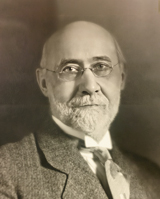
Paul Shorey was the proponent of a famous theory of Plato: In his own words, “My thesis is simply that Plato on the whole belongs rather to the type of thinkers whose philosophy is fixed in early maturity (Schopenhauer, Herbert Spencer), rather than to the class of those who receive a new revelation every decade (Schelling). And I have tried to show that the method which proceeds on the contrary assumption leads to misinterpretation of his writings.” He helped found and was managing editor of Classical Philology (1908-1934), was an able theorist and practitioner of the pedagogy of the Greek and Latin languages, and was a well-known social and cultural conservative and nationalist.
After earning an A.B. from Harvard, Shorey went to Europe to study at the Universities of Leipzig (1881-82) and Bonn (1882) and the American School of Classical Studies in Athens (1882-83). In Munich, his dissertation (1884) was directed by Wilhelm Christ; Shorey was thoroughly at home in the classics, especially in the writings of Plato. His phenomenal memory and nearly total recall of Plato’s writings impressed the German scholar. Shorey received eleven honorary degrees and was President of the American Philological Association in 1910. As the first Professor of Greek at the University of Chicago from 1892-1927, he directed over fifty dissertations and was an important influence in the development of classical philology in the United States from a philo-Germanic bias to a pro-English attitude.–Database of Classical Scholars
Note: In the creation of What Plato Said, Shorey’s faithful summary of Plato’s Dialogues is notable for its impeccable scholarship, research, references, and citations; Shorey’s endnotes are in themselves an education in Plato’s work.–Linda Mihalic
We have not included the Index of Names or the General Index because our search feature will achieve the same results.
Works Cited
Shorey, Paul. What Plato Said, University of Chicago Press, originally published 1933; second impression 1934.
Paul Shorey. Database of Classical Scholars: The School of Arts and Sciences, Rutgers, The State University of New Jersey.